


Report Overview
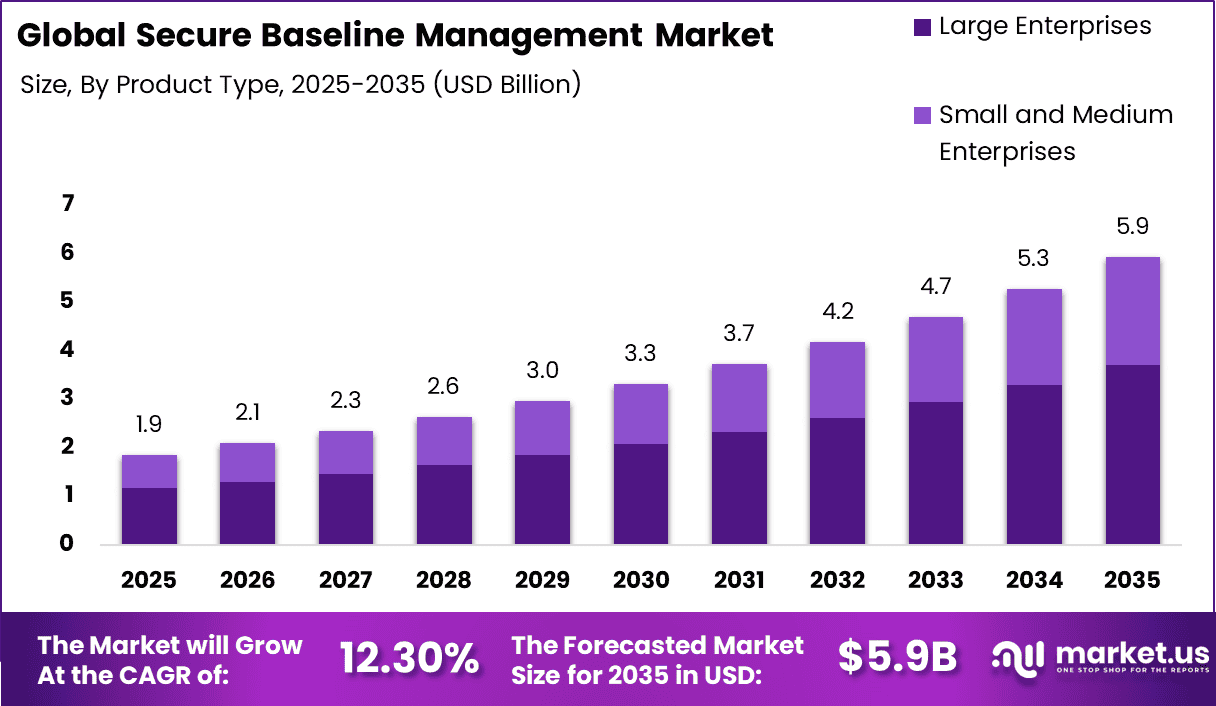
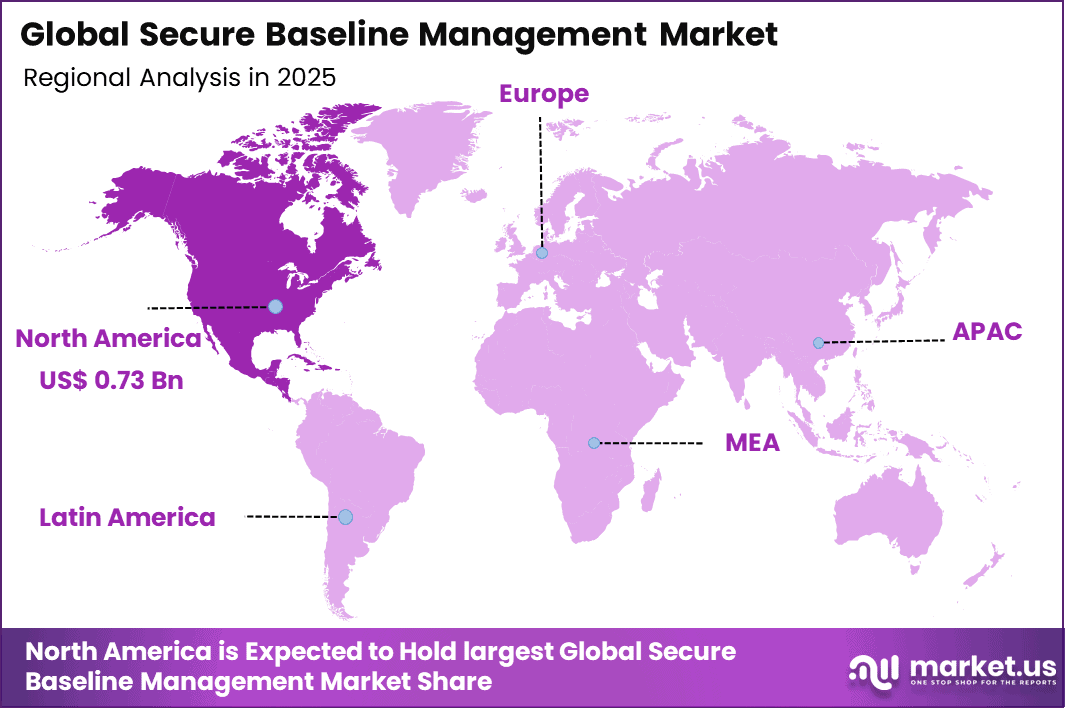
The Global Secure Baseline Management Market generated USD 1.9 billion in 2025 and is projected to grow from USD 2.1 billion in 2026 to about USD 5.9 billion by 2035, recording a CAGR of 12.3% over the forecast period. In 2025, North America held a dominant market position, capturing more than a 39.4% share, with USD 0.73 billion in revenue.
The secure baseline management market focuses on technologies and processes that establish and maintain approved system configurations across IT and operational environments. A baseline defines the standard security settings, software versions, and configuration parameters that systems must follow to remain compliant and secure.
Secure baseline management platforms monitor systems continuously to ensure that configurations do not drift from these approved standards. The market is shaped by organizations seeking stronger control over system integrity and consistent security practices across complex digital infrastructures. A key driving factor is the increasing complexity of enterprise technology environments.
Secure baseline management tools help detect deviations quickly and guide corrective actions before vulnerabilities can be exploited. Growth in the secure baseline management market is supported by rising regulatory expectations around cybersecurity governance and risk management. Many compliance frameworks require organizations to maintain documented configuration standards and demonstrate ongoing monitoring.
Top Market Takeaways
- By Component, software dominates with a 68.9% share, automating configuration hardening, drift detection, and continuous compliance validation across endpoints and infrastructure.
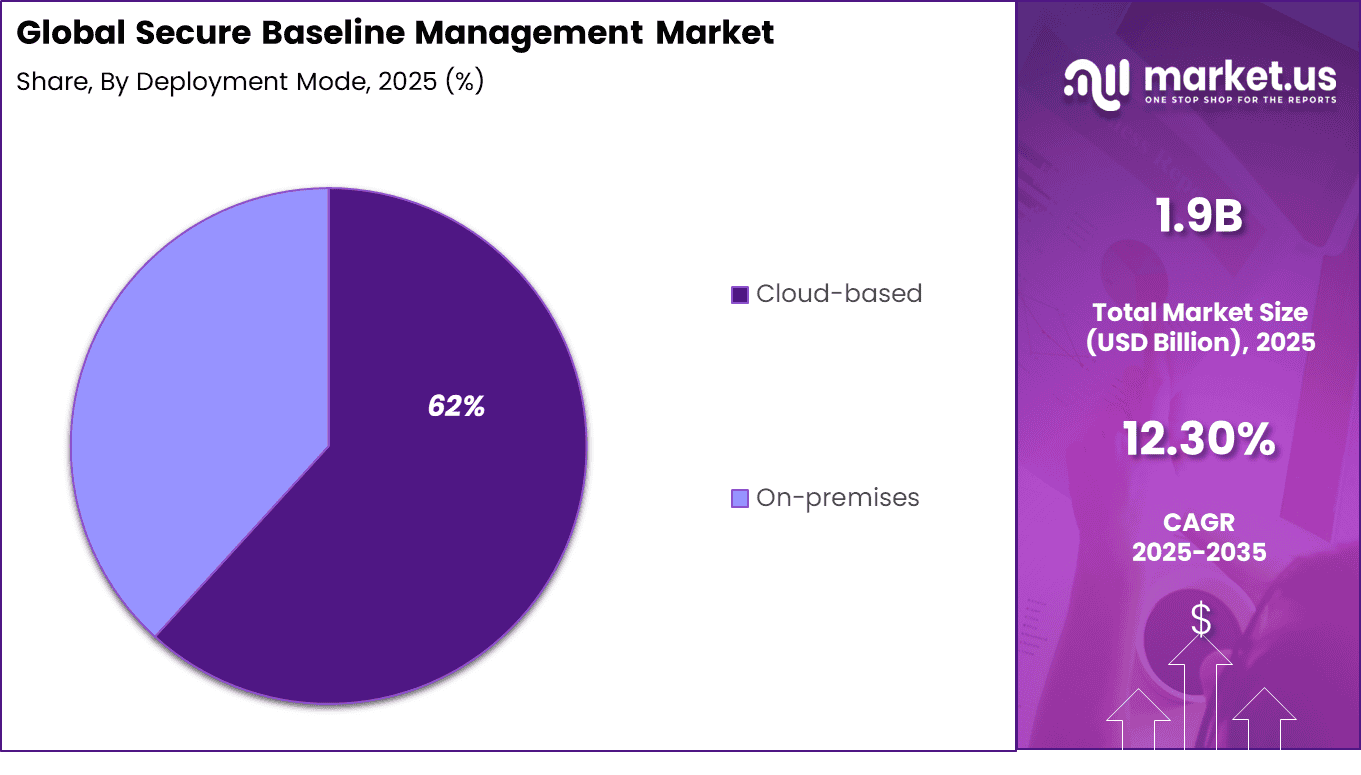
- By Deployment Mode, cloud-based captures 61.7%, enabling scalable baseline enforcement, automated remediation, and real-time posture assessment.
- By Organization, large enterprises hold 62.4%, orchestrating standardized security baselines across hybrid environments with audit-ready reporting.
- By Industry Vertical, government & defense commands 26.4%, enforcing DISA STIGs, CMMC frameworks, and classified system hardening requirements.
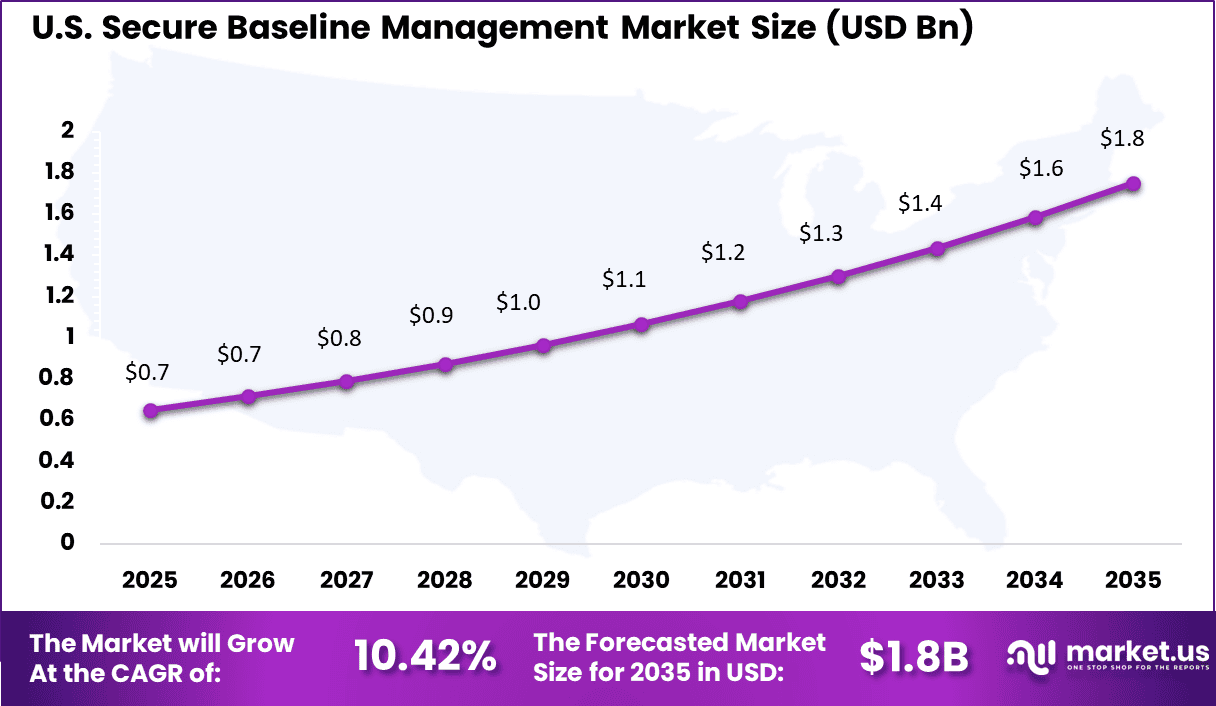
- Regionally, North America accounts for 39.47% global share, with the U.S. market valued at USD 0.65 billion and a CAGR of 10.42%, driven by executive orders on cybersecurity and supply chain risk management.
By Component
Software accounts for 68.9% of adoption in the secure baseline management market, as organizations require centralized tools to establish and maintain standardized security configurations across IT environments. These platforms define approved system settings for operating systems, applications, and network devices.
Maintaining consistent baselines reduces vulnerability exposure and improves overall system integrity. Security baseline software also automates configuration monitoring and policy enforcement. Continuous assessment helps detect deviations from approved standards. This capability continues to position software as the dominant component in secure baseline management solutions.
By Deployment Mode
Cloud-based deployment holds 62%, reflecting the increasing shift of enterprise workloads to cloud infrastructure. Cloud platforms allow organizations to monitor configuration baselines across distributed systems and remote environments. Centralized visibility improves governance and operational oversight.
Cloud deployment also supports rapid policy updates and automated compliance checks. Security teams benefit from scalable monitoring capabilities across hybrid environments. These operational advantages continue to drive cloud adoption.
By Organization
Large enterprises represent 62.4% of adoption due to their complex IT ecosystems and extensive infrastructure. These organizations operate numerous servers, endpoints, and applications that require consistent security configurations. Secure baseline management tools help standardize controls across large networks.
Large firms also face strict regulatory compliance and cybersecurity requirements. Automated baseline monitoring improves audit readiness and risk management. This sustains strong uptake among enterprise-scale organizations.
By Industry Vertical
Government and defense sectors account for 26.4% of vertical adoption, driven by strict cybersecurity standards and protection of sensitive national information. These organizations implement secure baseline management to enforce standardized system configurations across critical infrastructure.
Maintaining consistent security baselines helps prevent unauthorized system modifications and reduces cyber risk. Compliance with government security frameworks further strengthens demand for these platforms. This continues to position government and defense as an important industry vertical within the market.
Key Market Segments
By Component
- Software
- Hardware
- Services
By Deployment Mode
- On-Premises
- Cloud
By Organization Size
- Small and Medium Enterprises
- Large Enterprises
By Industry Vertical
- IT & Telecom
- BFSI
- Healthcare
- Government & Defense
- Retail
- Manufacturing
- Others
Regional Analysis
North America accounts for 39.47% of the secure baseline management market, supported by strong cybersecurity frameworks and widespread adoption of standardized security configurations across enterprise IT environments.
Organizations in the region are increasingly implementing baseline management platforms to maintain consistent system configurations, enforce security policies, and reduce vulnerabilities across networks, servers, and endpoints. Demand is driven by regulatory compliance requirements, increasing cyber threats, and the need to maintain secure operational environments across complex digital infrastructures.
The United States market is valued at USD 0.65 billion and is expanding at a CAGR of 10.42%, reflecting growing emphasis on configuration control and security governance. Adoption is influenced by the expansion of cloud environments, distributed workforce systems, and stricter internal security standards within enterprises.
Growth is further supported by integration of automated compliance monitoring, configuration drift detection, and policy enforcement tools that help organizations maintain stable and secure system baselines.
Key Regions and Countries
- North America
- US
- Canada
- Europe
- Germany
- France
- The UK
- Spain
- Italy
- Russia
- Netherlands
- Rest of Europe
- Asia Pacific
- China
- Japan
- South Korea
- India
- Australia
- Singapore
- Thailand
- Vietnam
- Rest of APAC
- Latin America
- Brazil
- Mexico
- Rest of Latin America
- Middle East & Africa
- South Africa
- Saudi Arabia
- UAE
- Rest of MEA
Drivers Impact Analysis
| Key Drivers | Impact on CAGR Forecast (~%) | Geographic Relevance | Impact Timeline | Strategic Importance |
|---|---|---|---|---|
| Increasing Cybersecurity Threat Landscape | +3.0% | Global | Short to Medium Term | Drives demand for standardized security baselines |
| Rising Adoption of Compliance and Regulatory Frameworks | +2.6% | North America, Europe | Medium Term | Encourages configuration monitoring and enforcement |
| Growth of Cloud and Hybrid IT Infrastructure | +2.2% | Global | Medium to Long Term | Expands need for consistent configuration policies |
| Expansion of Enterprise Security Governance Programs | +1.9% | North America, APAC | Medium Term | Improves IT security posture management |
| Integration with DevSecOps and Security Automation Tools | +1.6% | Global | Medium to Long Term | Enhances automated configuration compliance |
Restraints Impact Analysis
| Key Restraints | Impact on CAGR Forecast (~%) | Geographic Relevance | Impact Timeline | Market Constraint Level |
|---|---|---|---|---|
| Complexity of Managing Multi-cloud Security Configurations | -2.0% | Global | Medium Term | Increases operational challenges |
| High Implementation and Integration Costs | -1.7% | Emerging Markets | Short to Medium Term | Limits adoption among smaller organizations |
| Shortage of Skilled Cybersecurity Professionals | -1.4% | Global | Medium Term | Slows platform deployment and optimization |
| Integration Challenges with Legacy IT Systems | -1.1% | Europe, APAC | Medium Term | Delays adoption in traditional enterprise environments |
Investor Type Impact Analysis
| Investor Type | Growth Sensitivity | Risk Exposure | Geographic Focus | Investment Outlook |
|---|---|---|---|---|
| Venture Capital | Medium to High | Medium | North America | Focus on cybersecurity governance startups |
| Private Equity | Medium | Medium | North America, Europe | Attractive enterprise security software investments |
| Strategic Cybersecurity Vendors | High | Low to Medium | Global | Integration with security operations platforms |
| Institutional Investors | Medium | Medium | Developed Markets | Long-term cybersecurity infrastructure allocation |
| Government-backed Security Funds | Medium | Low | North America, Europe | National cybersecurity compliance initiatives |
Technology Enablement Analysis
| Technology Enabler | Impact on CAGR Forecast (~%) | Geographic Relevance | Impact Timeline | Adoption Momentum |
|---|---|---|---|---|
| Automated Security Configuration Management Systems | +3.4% | North America, Europe | Medium Term | Improves configuration compliance monitoring |
| AI-driven Security Policy Analysis | +2.7% | North America | Medium to Long Term | Enhances detection of configuration risks |
| Cloud-native Security Governance Platforms | +2.2% | Global | Medium Term | Supports scalable baseline enforcement |
| Integration with DevSecOps Security Pipelines | +1.8% | Global | Medium to Long Term | Strengthens automated security controls |
| Continuous Compliance Monitoring Tools | +1.5% | Europe, North America | Long Term | Ensures adherence to regulatory frameworks |
Key Challenges
- Difficulty in defining and maintaining consistent security baselines across systems
- Frequent software updates making baseline configurations outdated
- Integration challenges with existing security and IT management tools
- Limited visibility into configuration changes across large IT environments
- Shortage of skilled professionals to manage baseline security policies
Emerging Trends
In the Secure Baseline Management market, a notable trend is the growing focus on maintaining consistent security configurations across enterprise systems and devices. Organisations are implementing baseline management tools that define approved configuration standards for operating systems, applications, and network components.
These platforms continuously compare current system settings with the approved baseline and highlight deviations that may introduce risk. Another emerging trend is the use of automated compliance verification, where systems regularly check configuration status and provide clear alerts when changes move away from the approved security posture.
Growth Factors
A key growth factor in this market is the increasing complexity of enterprise IT environments that include cloud platforms, remote devices, and distributed networks. Managing security configurations across these environments manually can lead to inconsistencies and gaps in protection.
Secure baseline management platforms help organisations maintain uniform standards and reduce the likelihood of misconfigurations that could expose systems to threats. Another important factor is the rising emphasis on organisational accountability for cybersecurity practices.
Many organisations seek clear documentation of how systems are configured and maintained to ensure strong security governance. Baseline management tools support this need by providing structured oversight of system configurations and maintaining records of changes over time.
Competitive Analysis
The Secure Baseline Management market is led by established cybersecurity and enterprise technology providers such as Microsoft Corporation, IBM Corporation, Cisco Systems, Symantec under Broadcom, McAfee, Qualys, Tenable, Rapid7, Check Point Software Technologies, Trend Micro, Fortinet, and Palo Alto Networks.
These companies compete on configuration management tools, vulnerability assessment capabilities, and strong policy enforcement across enterprise systems. Their platforms are widely adopted by organizations that require consistent security configurations and compliance with industry security standards.
Competition in this market is driven by the ability to automate baseline checks, monitor configuration drift, and provide clear remediation guidance for security teams. Leading vendors focus on integrating baseline management with broader security operations and risk monitoring tools.
Top Key Players in the Market
- Microsoft Corporation
- IBM Corporation
- Cisco Systems, Inc.
- Symantec Corporation
- McAfee, LLC
- Broadcom Inc.
- Qualys, Inc.
- Tenable, Inc.
- Rapid7, Inc.
- Check Point Software Technologies Ltd.
- Trend Micro Incorporated
- Fortinet, Inc.
- Palo Alto Networks, Inc.
- Others
Future Outlook
The future outlook for the Secure Baseline Management Market is positive as organizations increasingly focus on maintaining consistent and secure system configurations across their IT environments. Secure baseline management solutions help define and monitor standard security settings, ensuring that systems remain compliant with internal policies and regulatory requirements.
As businesses adopt cloud platforms, remote work infrastructure, and complex digital systems, the need for automated configuration monitoring and control is expected to grow. Overall, the market is likely to expand as organizations prioritize stronger security posture, compliance management, and stable IT operations.
Recent Developments
- In June 2025, Microsoft announced the June 2025 revision of the security baseline package for Windows Server 2025, strengthening default hardening guidance and downloadable baseline content.
- In March 2026, Google announced completion of its acquisition of Wiz, a cloud and AI security platform, in a deal valued at 32 billion USD, aiming to improve default cloud security posture and secure-by-default configurations across cloud and AI workloads.
Report Scope
| Report Features | Description |
|---|---|
| Market Value (2025) | USD 1.9 Billion |
| Forecast Revenue (2035) | USD 5.9 Billion |
| CAGR(2025-2035) | 12.3% |
| Base Year for Estimation | 2024 |
| Historic Period | 2020-2024 |
| Forecast Period | 2025-2035 |
| Report Coverage | Revenue forecast, AI impact on Market trends, Share Insights, Company ranking, competitive landscape, Recent Developments, Market Dynamics and Emerging Trends |
| Segments Covered | By Component (Software, Hardware, Services), By Deployment Mode (On-Premises, Cloud), By Organization Size (Small and Medium Enterprises, Large Enterprises), By Industry Vertical (IT & Telecom, BFSI, Healthcare, Government & Defense, Retail, Manufacturing, Others) |
| Regional Analysis | North America – US, Canada; Europe – Germany, France, The UK, Spain, Italy, Russia, Netherlands, Rest of Europe; Asia Pacific – China, Japan, South Korea, India, New Zealand, Singapore, Thailand, Vietnam, Rest of Latin America; Latin America – Brazil, Mexico, Rest of Latin America; Middle East & Africa – South Africa, Saudi Arabia, UAE, Rest of MEA |
| Competitive Landscape | Microsoft Corporation, IBM Corporation, Cisco Systems, Inc., Symantec Corporation, McAfee, LLC, Broadcom Inc., Qualys, Inc., Tenable, Inc., Rapid7, Inc., Check Point Software Technologies Ltd., Trend Micro Incorporated, Fortinet, Inc., Palo Alto Networks, Inc., Others |
| Customization Scope | Customization for segments, region/country-level will be provided. Moreover, additional customization can be done based on the requirements. |
| Purchase Options | We have three licenses to opt for: Single User License, Multi-User License (Up to 5 Users), Corporate Use License (Unlimited Users and Printable PDF) |





































