


Overview
Global mHealth Services Market size is expected to be worth around US$ 253.2 Billion by 2034 from US$ 64.8 Billion in 2024, growing at a CAGR of 14.6% during the forecast period 2025 to 2034. In 2024, North America led the market, achieving over 41.2% share with a revenue of US$ 26.7 Billion.
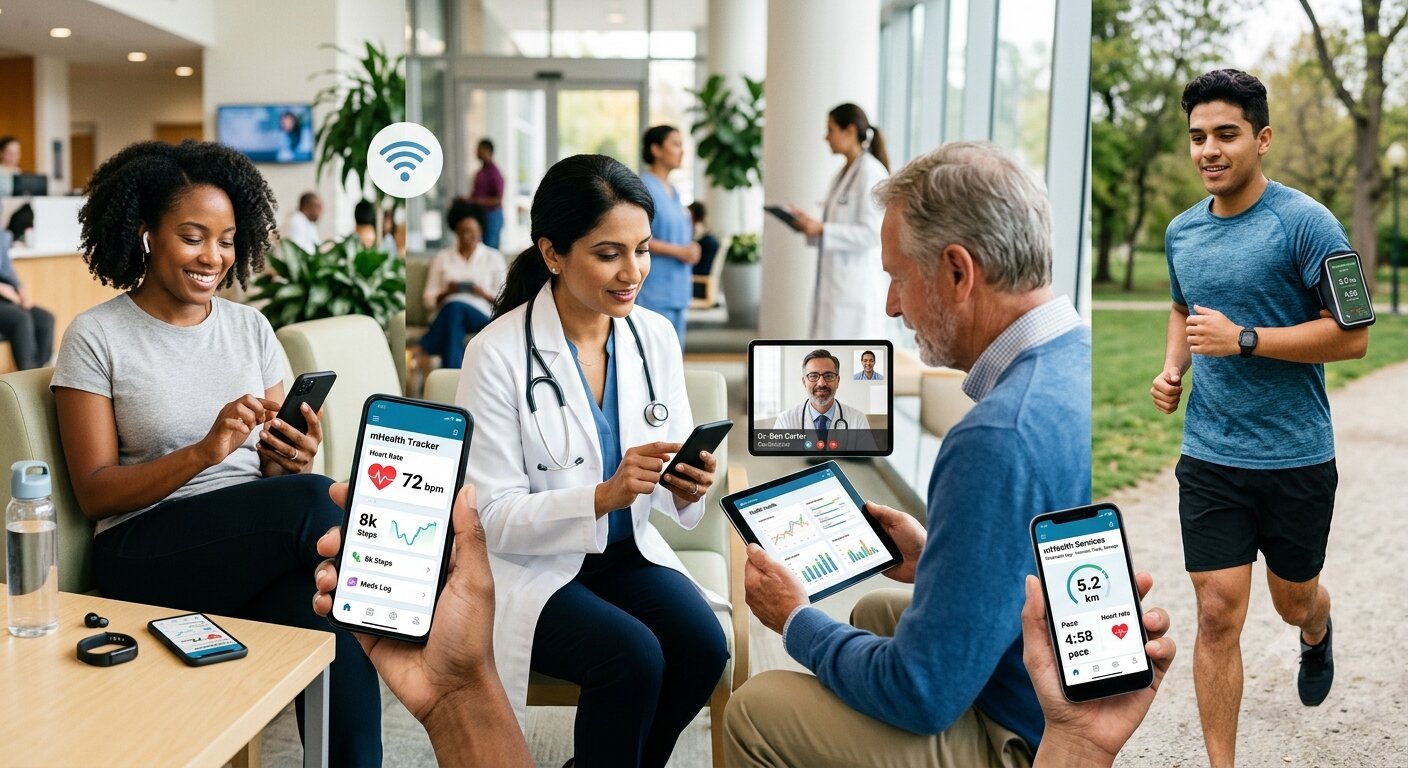
The global mHealth services market is witnessing strong momentum as healthcare providers increasingly integrate mobile technologies into routine patient care. Rising smartphone adoption, improved internet connectivity, and growing acceptance of virtual healthcare are enabling healthcare professionals to deliver medical services beyond traditional hospital settings. Mobile health solutions are becoming essential for remote consultations, medication management, chronic disease monitoring, fitness tracking, and preventive healthcare.
Digital transformation initiatives across healthcare systems are encouraging providers to adopt secure mobile platforms that improve communication between patients and clinicians while supporting personalized care. The integration of artificial intelligence, cloud computing, wearable devices, and remote patient monitoring technologies is further enhancing the efficiency and accessibility of healthcare services. These innovations are helping reduce unnecessary hospital visits, improve treatment adherence, and enable timely clinical interventions.
According to the World Health Organization (WHO), noncommunicable diseases are responsible for approximately 43 million deaths annually, highlighting the increasing need for digital tools that support continuous disease management and long-term patient monitoring.
Governments and healthcare organizations are also accelerating digital health adoption through supportive policies and investments. The U.S. Department of Health and Human Services (HHS) continues to promote healthcare interoperability through implementation of the 21st Century Cures Act, encouraging secure exchange of electronic health information and wider use of digital health technologies. Similar digital health initiatives across Europe and Asia-Pacific are strengthening healthcare infrastructure, improving access to care in remote regions, and creating favorable conditions for broader adoption of mHealth services worldwide.

Key Takeaways
- In 2024, the global mHealth Services Market was valued at US$ 64.8 billion and is projected to reach US$ 253.2 billion by 2033, expanding at a CAGR of 14.6% during the forecast period.
- By product type, the market is segmented into monitoring services, diagnosis services, healthcare systems strengthening services, and others. Monitoring services dominated the segment in 2024, accounting for 48.3% of the total market share.
- Based on participants, the market comprises mobile operators, device vendors, content players, and healthcare providers. Among these, mobile operators emerged as the leading segment, capturing 52.4% of the market share in 2024.
- By application, the market is categorized into general healthcare & fitness, medication information, healthcare management, and others. The general healthcare & fitness segment held the largest share, contributing 44.6% of the market revenue in 2024.
- Based on end user, the market is divided into healthcare providers, patients, and others. Healthcare providers led the segment, accounting for 62.1% of the total market revenue in 2024.
- North America dominated the global mHealth Services market in 2024, securing a 41.2% share of the overall market.
Statistical Information
- 95.0% of U.S. office-based physicians had adopted an Electronic Health Record (EHR) system in 2024, while 83.6% were using a certified EHR system. This widespread digital infrastructure supports integration of mHealth applications with healthcare delivery.
- 99.56% of U.S. Health Center Program-funded health centers had an Electronic Health Record (EHR) system in use in 2024, demonstrating the maturity of digital healthcare infrastructure supporting mobile health services.
- 94.7% of U.S. health centers engaged patients through patient portals in 2024, enabling patients to securely access health information and communicate with healthcare providers digitally.
- 81.1% of U.S. health centers offered secure messaging between patients and providers in 2024, reflecting the growing use of digital communication tools that complement mHealth services.
- 42.9% of U.S. health centers provided online or virtual appointment scheduling in 2024, improving patient convenience and supporting digital-first healthcare delivery.
- 58.7% of U.S. health centers used automated electronic outreach for preventive care reminders and care-gap closure in 2024, highlighting increasing adoption of mobile and digital engagement technologies.
- 20.7% of U.S. health centers enabled patients to access their health records through application programming interfaces (APIs) connected to mHealth apps in 2024, supporting interoperability and patient-controlled digital health information.
- The World Health Organization (WHO) states that telemedicine, mobile health (mHealth), and health chatbots are among the priority digital interventions for improving prevention and long-term management of noncommunicable diseases, supporting broader digital healthcare adoption worldwide.
Regional Analysis
North America dominated the global mHealth Services market, accounting for the largest revenue share of 41.2% in 2024. The region’s leadership is supported by widespread smartphone adoption, advanced healthcare infrastructure, and strong implementation of telehealth services. According to the U.S. Centers for Disease Control and Prevention (CDC), telemedicine has become an increasingly common way for adults to access healthcare, particularly for primary care, chronic disease management, and mental health services.
The U.S. Food and Drug Administration (FDA) continues to support the growth of mobile health by providing regulatory guidance for Software as a Medical Device (SaMD) and mobile medical applications, encouraging innovation while ensuring patient safety. Favorable reimbursement policies, increasing use of wearable health technologies, and high digital health awareness further strengthen the regional market.
Asia Pacific is projected to register the fastest growth during the forecast period. Government-led digital health initiatives, expanding internet connectivity, and rising smartphone penetration are accelerating mHealth adoption across the region.
Programs such as India’s Ayushman Bharat Digital Mission (ABDM) are building a nationwide digital health ecosystem that enables secure health records and digital healthcare services. Growing investments in digital healthcare, increasing chronic disease prevalence, and improved access to remote healthcare solutions are expected to further drive market growth across Asia Pacific.
Emerging Trends
- AI is becoming a key feature in mHealth platforms: The U.S. FDA recognizes artificial intelligence, machine learning, wearable devices, telehealth, and mobile health applications as major digital health technologies that improve diagnosis, patient monitoring, and personalized treatment while supporting safer healthcare delivery.
- Digital health services are becoming more connected through interoperable systems: According to the OECD, the availability of online digital health services increased to 82% in 2024, enabling better sharing of electronic health records, smoother patient access, and stronger integration of mHealth applications across healthcare systems.
- Remote patient monitoring is expanding beyond hospitals: The U.S. Centers for Medicare & Medicaid Services (CMS) supports connected devices that automatically transmit health data such as blood pressure, glucose levels, weight, and oxygen saturation, allowing clinicians to monitor patients from home and intervene earlier when needed.
- Governments are strengthening digital healthcare policies: The World Health Organization continues to promote telemedicine, mobile health, and digital care platforms as essential tools for preventing and managing chronic diseases, encouraging countries to expand digital health infrastructure and improve healthcare accessibility.
- Telemedicine is becoming a permanent healthcare service: OECD data show that remote consultations averaged 1.0 consultation per patient in 2023, remaining well above pre-pandemic levels, indicating that virtual healthcare has become an established part of routine medical care in many countries.
Use Cases
- Chronic disease management: is one of the fastest-growing applications of mHealth services Connected devices continuously transmit patient data such as blood pressure and glucose levels to healthcare providers, allowing timely interventions and reducing the need for frequent hospital visits.
- Wearable health monitoring: is improving preventive healthcare. The FDA states that digital health technologies use sensors, software, and connected devices to collect real-time health information, enabling continuous monitoring of patient conditions outside traditional clinical environments.
- Virtual consultations: are increasingly used for primary care, follow-up visits, and mental health services. WHO identifies telemedicine and mHealth as important digital interventions that improve healthcare access, especially for people living in remote or underserved communities.
- Medication adherence and patient engagement: They are improving through mobile applications that send reminders, provide educational content, and enable secure communication with healthcare providers, helping patients better manage long-term health conditions.
- Health information exchange through mobile platforms: is becoming more common. According to the OECD, expanding electronic health records and digital health infrastructure are improving continuity of care by allowing healthcare professionals to securely access patient information across different healthcare settings.
Conclusion
The global mHealth Services market is positioned for sustained growth as healthcare providers continue to embrace digital technologies that improve accessibility, patient engagement, and clinical outcomes. The increasing adoption of smartphones, wearable devices, telehealth platforms, and AI-powered healthcare applications is transforming the delivery of medical services across hospitals, clinics, and homecare settings. Government initiatives promoting digital health infrastructure, interoperability, and secure health information exchange are further supporting market expansion.
According to the World Health Organization (WHO), digital health, including mHealth, plays a critical role in strengthening health systems and expanding equitable access to quality healthcare. As innovation continues and connected care becomes more widespread, mHealth services are expected to remain a key pillar of modern healthcare delivery, creating significant opportunities for technology providers, healthcare organizations, and patients worldwide.




















