


Market Overview
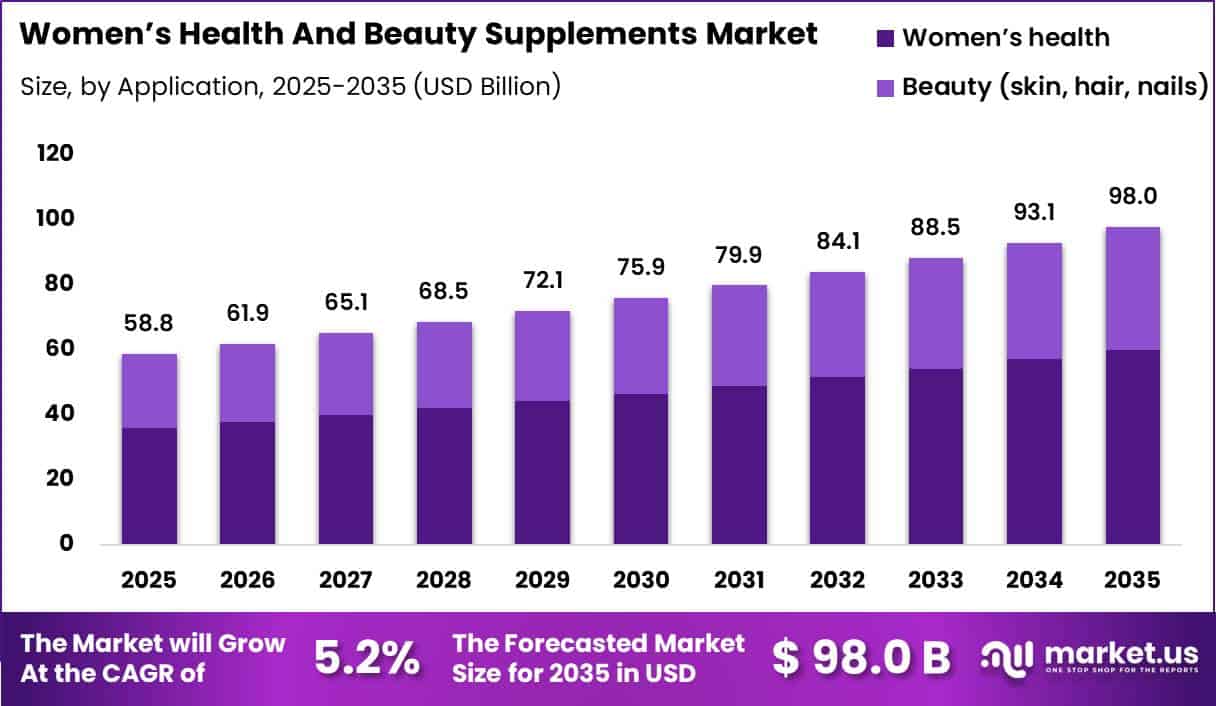
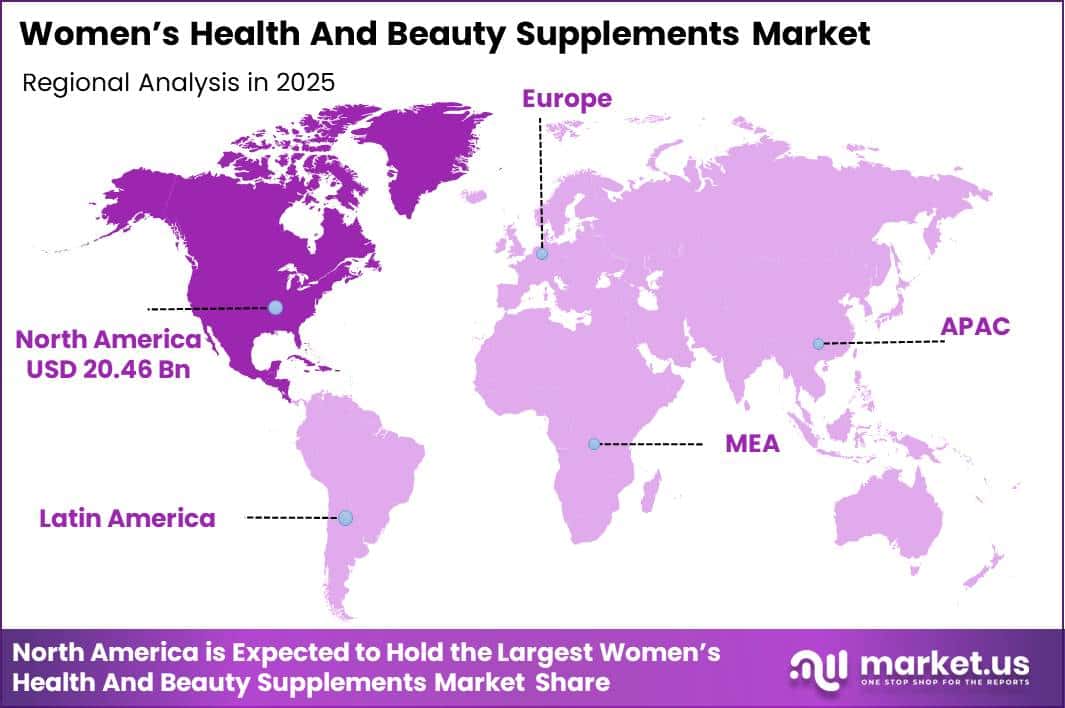
The Global Women’s Health and Beauty Supplements Market size is expected to be worth around US$ 98.0 Billion by 2035 from US$ 58.8 Billion in 2025, growing at a CAGR of 5.2% during the forecast period from 2026 to 2035. In 2025, North America led the market, achieving over 34.8% market share with revenue of US$ 20.46 Billion.
The global women’s health and beauty supplements market is witnessing steady growth as consumers increasingly prioritize preventive healthcare, nutritional wellness, healthy aging, skin health, and hormonal balance.
Rising awareness about micronutrient deficiencies, reproductive health, pregnancy nutrition, menopause management, and beauty-from-within products has encouraged women to include vitamins, minerals, collagen, probiotics, omega-3 fatty acids, and botanical supplements in their daily routines.
Governments and healthcare organizations continue to promote adequate nutrient intake, further supporting long-term demand for scientifically supported supplements. According to the U.S. CDC, approximately 1 in 8 women aged 12–49 years has iron deficiency, while about 1 in 4 women experience iron deficiency during pregnancy, highlighting the importance of targeted nutritional supplementation.
Demand is also expanding because women are seeking personalized nutrition solutions for different life stages, including adolescence, pregnancy, postpartum recovery, and menopause.
The World Health Organization (WHO) identifies micronutrient deficiencies including iron, vitamin A, and iodine deficiencies—as major global public health concerns affecting growth, productivity, and overall well-being, while emphasizing that appropriate supplementation can help prevent deficiencies where dietary intake is inadequate.
Regulatory agencies are also strengthening consumer awareness regarding supplement safety and informed usage. The U.S. FDA advises women to consult healthcare professionals before using dietary supplements, particularly during pregnancy or while taking medications, as some nutrients require specific dosage recommendations.
Meanwhile, the NIH Office of Dietary Supplements continues to provide evidence-based guidance on vitamins, minerals, probiotics, and herbal ingredients. These initiatives, combined with increasing health consciousness, expanding e-commerce access, and innovation in clean-label formulations, are expected to support sustained global growth in the women’s health and beauty supplements market.
Key Takeaways
- Market Size: The Global Women’s Health and Beauty Supplements Market size was US$ 58.8 billion in 2025. The market is estimated to grow to US$ 98.0 billion by 2035.
- Market Share: The Compound Annual Growth Rate (CAGR) of the market from 2026 to 2035 will be 5.2%.
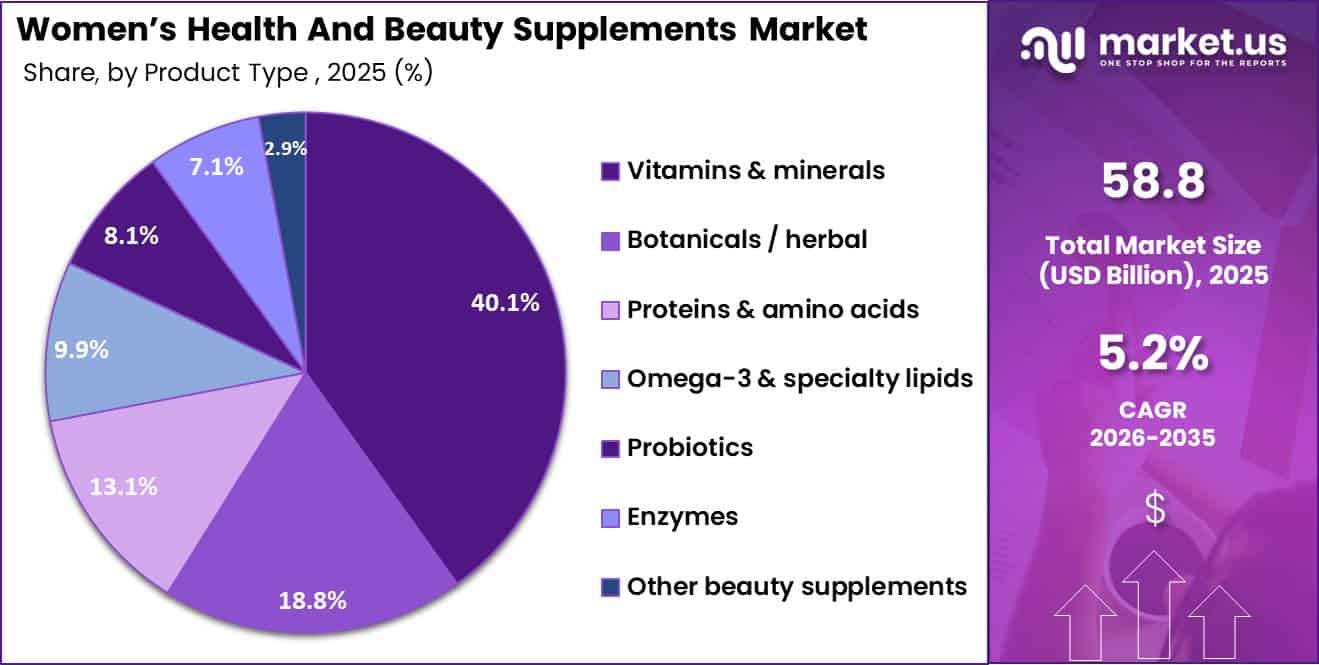
- Product Type: Vitamins & Minerals has the largest market share, accounting for 40.1% of total product type revenue.
- Application: Women’s Health leads the segment, accounting for 61.3% of total application revenue.
- Distribution Channel: Pharmacies/Drug Stores leads the segment, accounting for 31.7% of total distribution channel revenue.
- Regional: North America is the dominant regional market, accounting for 34.8% of global revenue, holding US$ 20.46 billion in revenue in 2025.
Product Type Analysis
The Vitamins & Minerals segment dominated the Women’s Health and Beauty Supplements Market with a 40.1% market share in 2025. The segment’s leadership is driven by the growing need to address common nutritional deficiencies among women, including iron, calcium, vitamin D, folic acid, and vitamin B12.
These supplements are widely recommended for bone health, immunity, pregnancy support, energy metabolism, and healthy aging. Increasing awareness of preventive healthcare and personalized nutrition has further strengthened demand for daily multivitamins and targeted mineral formulations.
Healthcare professionals also continue to recommend vitamin and mineral supplements during pregnancy, menopause, and other life stages, supporting consistent consumer adoption.
Product innovations featuring clean-label ingredients and age-specific formulations have further expanded the segment’s reach across different consumer groups.
The Botanicals / Herbal segment accounted for 18.8% of the market in 2025, supported by growing consumer preference for plant-based wellness products. Proteins & Amino Acids represented 13.1%, driven by active lifestyles and muscle health. Omega-3 & Specialty Lipids held 9.9%, benefiting cardiovascular and cognitive health awareness.
Probiotics captured 8.1%, reflecting increased focus on digestive and immune health. Enzymes contributed 7.1%, while Other Beauty Supplements, including collagen blends and specialty formulations, accounted for the remaining 2.9%, supported by demand for skin, hair, and nail health solutions.
Application Analysis
The Women’s Health segment led the Women’s Health and Beauty Supplements Market with a 61.3% market share in 2025. This dominance reflects increasing consumer demand for supplements that support reproductive health, pregnancy, fertility, menopause, bone strength, hormonal balance, immune function, and overall wellness.
Rising awareness of preventive healthcare and routine nutritional supplementation has encouraged women across different age groups to adopt products designed for specific life stages.
Healthcare organizations continue to emphasize adequate intake of essential nutrients such as iron, folic acid, calcium, and vitamin D, further supporting the widespread use of women’s health supplements. Growing healthcare expenditure, improved access to nutritional products, and personalized wellness programs have also contributed to the segment’s sustained leadership.
The Beauty (Skin, Hair, Nails) segment accounted for 38.7% of the market in 2025 and continues to experience strong consumer interest. Increasing demand for beauty-from-within products has encouraged the adoption of collagen, biotin, antioxidants, probiotics, hyaluronic acid, and botanical extracts that support healthier skin, stronger hair, and improved nail quality.
Social media influence, rising disposable income, and the growing preference for preventive beauty solutions have accelerated product adoption. Manufacturers are also introducing scientifically formulated, clean-label, and multifunctional supplements that combine beauty and wellness benefits, further strengthening growth across this application category.
Distribution Channel Analysis
The Pharmacies / Drug Stores segment dominated the Women’s Health and Beauty Supplements Market with a 31.7% market share in 2025. Consumers continue to prefer pharmacies because they offer trusted brands, professional pharmacist guidance, and reliable access to clinically recognized nutritional products.
Women purchasing supplements for pregnancy, menopause, bone health, immunity, and nutritional deficiencies often rely on recommendations from healthcare professionals, making pharmacies an important distribution channel.
Strong product availability, regulatory compliance, and consumer confidence in product authenticity have further strengthened pharmacy sales. Many pharmacy chains have also expanded their wellness portfolios by offering premium, condition-specific, and personalized supplement solutions.
Supermarkets / Hypermarkets remain an important distribution channel due to convenient shopping, competitive pricing, and broad product availability.
Health & Beauty Specialty Stores continue to attract consumers seeking premium wellness products, expert advice, and specialized formulations.
Online / E-Commerce & Direct-to-Consumer (D2C) channels are the fastest-expanding distribution platforms, supported by increasing digital adoption, subscription services, personalized recommendations, and home delivery convenience. Manufacturers are also using online platforms to introduce new products and engage directly with consumers.
Other Offline Channels, including wellness clinics, independent retailers, and fitness centers, continue to contribute to market growth by serving consumers looking for specialized nutritional and beauty supplement products.
Key Market Segments
By Product Type
- Vitamins & Minerals
- Botanicals/Herbal
- Proteins & Amino Acids
- Omega-3 & Specialty Lipids
- Probiotics
- Enzymes
- Other Beauty Supplements (Collagen Blends)
By Application
- Women’s Health
- Beauty (Skin, Hair, Nails)
By Distribution Channel
- Pharmacies/Drug Stores
- Supermarkets/Hypermarkets
- Health & Beauty Specialty Stores
- Online/E-Commerce & D2C
- Other Offline Channels
Driver
Iron Deficiency and Women’s Micronutrient Gap Targeting Driving Market Growth
Female micronutrient insufficiency remains one of the most commercially durable demand engines because it is directly linked to fatigue, menstrual health, pregnancy preparation, and daily functionality rather than discretionary wellness alone.
In the U.S., CDC FastStats reports anemia in 13.0% of females aged 2 years and older, while a 2024 JAMA Network Open analysis found iron deficiency prevalence among women aged 25–44 who reported pregnancy ranged from 5.44% to 18.05% depending on diagnostic definition, indicating that the addressable need is substantially larger than current treatment volumes suggest.
The economic impact on CAGR is significant because these products monetize both deficiency correction and preventive maintenance, converting pharmacy, OB-GYN, telehealth, and direct-to-consumer channels into recurring education-led acquisition funnels.
WHO’s long-standing target of reducing anemia among women of reproductive age by 50%, combined with CDC screening approaches for higher-risk women and pregnancy-stage iron supplementation recommendations, keeps iron-related supplementation embedded within clinical discussions rather than relying solely on consumer wellness trends.
This strengthens category resilience during periods of consumer spending pressure and supports continued growth of women-focused micronutrient platforms.
| Driver | (~) % Impact on CAGR Forecast | Geographic Relevance | Impact Timeline |
|---|---|---|---|
| Iron deficiency and women’s micronutrient gap targeting | +1.4% | North America core, EU, India, Southeast Asia, MENA | Short term |
| Menopause and healthy-aging formulation expansion | +1.1% | North America core, EU, Japan, South Korea, urban China | Medium term |
| Beauty-from-within convergence with collagen, biotin, and antioxidants | +1.6% | North America core, EU, South Korea, Japan, GCC, APAC metros | Short to Medium term |
| Evidence-based prenatal, fertility, and reproductive health demand | +1.2% | North America, EU, India, Southeast Asia, Latin America | Short term |
| Regulatory tightening on claims, labels, and post-market scrutiny | +0.8% | U.S. core, EU, UK, Australia spill-over | Medium term |
| Clinical-evidence filtering and premiumization of supplement portfolios | +1.0% | U.S., Canada, EU, Japan, South Korea | Medium to Long term |
Challenge
Complex Evolving Regulatory Oversight Limiting Supplement Market Growth
Complex and evolving regulatory oversight in 2026 creates operational friction by forcing supplement companies to navigate overlapping frameworks such as FDA dietary supplement guidance, FTC advertising standards, and emerging global labeling norms.
These requirements continuously tighten controls around structure/function claims, allergen disclosures, and contaminant limits, resulting in 10–15% of SKUs requiring annual label revisions and 3–4-week compliance review cycles before major marketing campaigns.
In the U.S., where more than 60% of adults report using at least one supplement within 30 days, and women’s usage exceeds 63%, even minor enforcement changes, such as updated warning thresholds for unsupported disease-prevention claims, can trigger portfolio-wide claim audits and delay new product launches by 1–2 quarters in highly promoted categories.
European markets add further complexity through country-specific interpretations of health claim regulations, requiring multilingual packaging, batch-level documentation, and higher per-SKU regulatory expenses of approximately 5–7% of product development budgets.
Meanwhile, emerging APAC markets continue to introduce hybrid food–drug classification approaches that can extend import clearance timelines from 7–10 days to 21–30 days when documentation packages are incomplete.
Strategically, companies must strengthen regulatory intelligence capabilities by monitoring 25–30 active guidance streams, integrating claim-substantiation reviews into R&D processes, adopting modular packaging systems that enable rapid artwork updates, and deploying automated label and digital-content monitoring to maintain non-compliant asset rates below 0.5%.
These measures can reduce mitigation timelines from 4–5 years to 2–3 years as regulatory agility becomes a core competitive advantage rather than a reactive function.
| Challenge | (~) % CAGR Friction Drag | Geographic Relevance | Mitigation Horizon |
|---|---|---|---|
| Fragmented clinical evidence base | -1.6% | North America, EU, APAC urban | Long-term (≥ 4 years) |
| Complex, evolving regulatory oversight | -1.3% | US core, EU, APAC tier-1 | Medium term (2-4 years) |
| Supply chain quality variability | -1.1% | Global, APAC manufacturing belts | Medium term (2-4 years) |
| Formulation and dosage standardization gaps | -0.9% | Global, emerging markets | Long-term (≥ 4 years) |
| Digital misinformation and compliance risk | -0.8% | North America, EU, APAC online | Medium term (2-4 years) |
| Long-term safety and adherence uncertainty | -1.0% | Global, aging cohorts | Long-term (≥ 4 years) |
Restraints
Safety NDI and Quality Control Compliance Burden Limiting Growth
Although dietary supplements do not undergo pre-market approval, increasing adoption of new dietary ingredients, high-dose formulations, and complex blends targeted at women across life stages is steadily increasing the frequency and cost of safety notifications.
GMP audits, and post-market surveillance obligations, effectively raising the minimum efficient scale required in the category. Under DSHEA, NDI notifications require submission at least 75 days before interstate commerce for ingredients not previously present in the food supply.
As more brands introduce novel plant extracts, bioactive peptides, and microbiome-active strains, development timelines can extend by 3–6 months when including safety dossier preparation, third-party toxicology evaluations, and stability testing requirements. Manufacturing establishments face increasing expectations around batch-to-batch potency, contaminant testing, and traceability.
Implementing robust quality management systems, validated analytical methods, and upgraded laboratory capabilities can add 2–4% to cost of goods sold. For smaller co-packer-dependent brands, per-SKU testing and documentation expenses can reach USD 30,000–50,000 annually, forcing rationalization of long-tail product portfolios and limiting innovation breadth.
Additionally, adverse event reporting and import examination protocols mean serious quality failures can trigger rapid market access disruptions, including 30–90-day inbound shipment holds or full product recalls, creating short-term revenue losses and long-term brand equity damage.
Overall, the rising compliance burden shifts investment away from growth initiatives such as new product formats and direct-to-consumer expansion toward defensive quality spending. This can increase operating expense ratios by 100–150 basis points and delay breakeven timelines for new launches by one to two fiscal cycles.
| Restraint | (~) % Impact on CAGR Forecast | Geographic Relevance | Impact Timeline |
|---|---|---|---|
| Tightening supplement claim enforcement | -1.2% | North America, EU core | Medium term (2–4 years) |
| Safety, NDI and quality-control compliance burden | -0.9% | North America, APAC formal, EU | Medium term (2–4 years) |
| Input cost inflation and supply chain volatility | -1.4% | Global, APAC corridors | Short–Medium term (≤ 4 years) |
| Competitive crowding and price compression | -0.8% | Global, online-led markets | Medium–Long term (≥ 3 years) |
| Shift to Rx / medical weight-loss and derm treatments | -0.7% | North America, EU, urban APAC | Long term (≥ 4 years) |
| Consumer trust erosion and misinformation cycles | -0.6% | Global, higher-income segments | Short–Medium term (≤ 4 years) |
Opportunity
Dermonutrition Aesthetic Clinic and E Derm Channel Expansion Opportunity
Although beauty-from-within supplements are already included in the baseline market, a distinct white space remains in integrating dermonutrition with dermatology and aesthetic clinic channels, as well as prescription-like e-dermatology platforms. This approach shifts the category from impulse retail toward quasi-medical regimens where supplements are protocolized alongside procedures and topical therapies.
It remains an opportunity rather than a current driver because most existing sales continue through mass retail and direct-to-consumer beauty brands with limited clinical integration.
Dermatologic and cosmetic procedures for women, including injectables, energy-based devices, and surgical interventions, already represent a multi-billion-dollar global market.
However, post-procedure care pathways remain largely focused on topical and pharmaceutical products, while internal nutrition protocols for wound healing, collagen support, pigmentation control, and skin barrier maintenance remain underutilized despite increasing recognition of nutrition’s role in skin health.
By developing peri- and post-procedure supplement bundles, such as 4–8 week peri-procedure skin recovery kits priced at USD 60–120 per episode or ongoing collagen and barrier maintenance subscriptions at USD 30–50 per month, brands can integrate supplements into standardized clinical pathways.
Achieving attach rates of 25–40% among women undergoing high-value aesthetic procedures across North America, Europe, the GCC, China, and South Korea could generate USD 2–4 billion in incremental revenue by 2032 if 10–15 million annual procedures are paired with such bundles at a USD 150–250 average ticket.
This channel can support gross margins above 60% due to clinical endorsement, lower price sensitivity among aesthetic consumers, and efficient distribution through established clinics and e-dermatology platforms.
If dermonutrition penetration increases from a low single-digit share of aesthetic procedure spending today to 8–12% by 2035, this integrated model could contribute around 1.3 % points of incremental CAGR. Key success factors include generating credible clinical evidence, improving dermatologist engagement, and establishing appropriate regulatory and promotional frameworks.
| Opportunity | (~) % Potential CAGR Upside | Geographic Relevance | Execution Window |
|---|---|---|---|
| Precision female-life-stage & hormonal stacks | +1.8% | North America, EU, urban APAC | Short–Medium term |
| Menopause & healthy aging performance platform | +1.5% | North America, EU, Japan, ANZ | Short–Medium term |
| Metabolic, PCOS & fertility-linked nutra | +1.7% | North America, India, MENA, Latin America | Medium term |
| Dermonutrition–aesthetic clinic & e-derm channel | +1.3% | North America, EU, GCC, China, South Korea | Medium term |
| Subscription, diagnostics & telehealth bundles | +2.0% | North America, EU, affluent APAC, GCC | Medium–Long term |
| Emerging-market mass affordability + compliance tech | +1.4% | India, wider APAC, Latin America, Africa | Long term |
Regional Analysis
In 2025, North America led the market, achieving over 34.8% market share with revenue of US$ 20.46 billion. The region’s leadership is supported by high consumer awareness of preventive healthcare, widespread use of dietary supplements, and strong demand for products targeting bone health, pregnancy, menopause, immunity, skin health, and healthy aging.
The United States represents the largest contributor due to advanced healthcare infrastructure, high disposable income, and broad availability of premium vitamins, minerals, probiotics, collagen, and botanical supplements. The presence of leading supplement manufacturers, well-established pharmacy chains, and expanding e-commerce platforms further strengthens regional growth.
Europe holds the second-largest market share, driven by increasing focus on healthy aging, nutritional wellness, and clean-label supplements. Countries such as Germany, the United Kingdom, France, Italy, and Spain continue to witness rising demand for women’s health products supported by growing awareness of preventive nutrition and stringent product quality standards.
Asia Pacific is expected to record the fastest growth during the forecast period. Rising disposable incomes, expanding middle-class populations, increasing urbanization, and greater awareness of women’s nutrition and beauty wellness are driving demand across China, Japan, India, South Korea, and Southeast Asia. Digital retail platforms and personalized nutrition trends are accelerating product accessibility throughout the region.
Latin America and the Middle East & Africa are emerging markets, supported by improving healthcare access, increasing consumer awareness, expanding retail distribution networks, and growing investments in nutritional wellness products. These regions are expected to contribute steadily to the market as supplement adoption continues to increase across diverse consumer groups.
Key Regions and Countries
North America
- The US
- Canada
Europe
- Germany
- France
- The U.K.
- Italy
- Spain
- Russia & CIS
- Rest of Europe
Asia Pacific
- China
- India
- Japan
- South Korea
- ASEAN
- Australia & New Zealand
- Rest of Asia Pacific
Middle East & Africa
- GCC
- South Africa
- Rest of Middle East & Africa
Latin America
- Brazil
- Mexico
- Rest of Latin America
Key Player Analysis
Suppliers in the global women’s health and beauty supplements market seek competitive advantage through science-backed formulation development incorporating clinically validated ingredient combinations addressing women’s specific life stage nutritional requirements across reproductive health, prenatal support, menopause management.
Alongside beauty-from-within supplement innovation targeting skin collagen synthesis, hair growth, and nail strength through evidence-supported ingredient portfolios that command premium pricing beyond commodity multivitamin alternatives.
Key strategic focus areas include life-stage targeted product line architecture spanning teen, reproductive age, prenatal, perimenopausal, and senior women’s nutritional needs, collagen peptide and beauty supplement category development.
Combining efficacy-validated marine collagen, biotin, hyaluronic acid, and antioxidant ingredients, and direct-to-consumer subscription platform development enabling personalized supplement protocol recommendation and auto-replenishment delivery generating high-lifetime-value consumer relationships.
Companies continue investing in clinical study generation supporting health claim substantiation across FDA structure/function and EU Article 13 claim frameworks, social media influencer and women’s wellness community marketing programs, and pharmacy and health specialty retailer category management partnership development securing premium shelf placement and pharmacist recommendation endorsement.
The progressive convergence of women’s health and beauty supplement categories where consumers increasingly seek products addressing both internal health and external aesthetic outcomes simultaneously through unified daily supplement routines is creating structural demand for multi-benefit combination formulations that expand average basket size and subscription revenue per consumer relationship through the forecast period to 2035.
Top Key Players
- Amway Corp.
- Herbalife Nutrition Ltd.
- GNC Holdings Inc.
- The Nature’s Bounty Co.
- Bayer AG
- Garden of Life
- Nestlé S.A.
- Pfizer Inc.
- Swisse Wellness Pty Ltd.
- Suntory Holdings Limited
- Taisho Pharmaceutical Co., Ltd.
- Blackmores Limited
- USANA Health Sciences Inc.
- Unilever PLC
- L’Oréal S.A.
- Other Key Players
Recent Developments
- In January 2026, The Nature’s Bounty Co. launched an expanded women’s life-stage supplement range covering teen health, prenatal, perimenopause, and healthy aging formulations across North American pharmacy and health specialty retail channels, targeting women’s health-conscious consumer demographics seeking science-backed stage-specific nutritional support.
- In February 2026, L’Oréal S.A. expanded its Nutricosmétics beauty supplement portfolio combining marine collagen, biotin, and hyaluronic acid formulations across European pharmacy and health beauty specialty retail channels, targeting women aged 35–55 seeking skin elasticity and hair health improvement through ingestible beauty supplement routines.
- In March 2026, Swisse Wellness Pty Ltd. secured expanded distribution for its women’s health and beauty supplement range across Asia Pacific pharmacy and e-commerce channels, targeting health-conscious female consumer demographics in China, South Korea, and Australia through social media influencer-driven direct-to-consumer acquisition programs.
- In May 2026, Nestlé S.A. launched a personalized women’s supplement subscription platform under its Garden of Life brand, delivering AI-recommended supplement protocols based on individual health assessment inputs across North American direct-to-consumer digital channels targeting women aged 25–50 seeking personalized preventive nutrition programs.
Report Scope
| Report Features | Description |
|---|---|
| Market Value (2025) | US$ 58.8 Billion |
| Forecast Revenue (2035) | US$ 98.0 Billion |
| CAGR (2026-2035) | 5.2% |
| Base Year for Estimation | 2025 |
| Historic Period | 2020-2024 |
| Forecast Period | 2026-2035 |
| Report Coverage | Revenue Forecast, Market Dynamics, Competitive Landscape, Recent Developments |
| Segments Covered | By Product Type (Vitamins & Minerals, Botanicals/Herbal, Proteins & Amino Acids, Omega-3 & Specialty Lipids, Probiotics, Enzymes, Other Beauty Supplements — Collagen Blends), By Application (Women’s Health, Beauty — Skin, Hair, Nails), By Distribution Channel (Pharmacies/Drug Stores, Supermarkets/Hypermarkets, Health & Beauty Specialty Stores, Online/E-Commerce & D2C, Other Offline Channels) |
| Regional Analysis | North America – The US, Canada; Europe – Germany, France, U.K., Italy, Spain, Russia & CIS, Rest of Europe; Asia Pacific – China, India, Japan, South Korea, ASEAN, Australia & New Zealand, Rest of Asia Pacific; Middle East & Africa – GCC, South Africa, Rest of Middle East & Africa; Latin America – Brazil, Mexico, Rest of Latin America |
| Competitive Landscape | Amway Corp., Herbalife Nutrition Ltd., GNC Holdings Inc., The Nature’s Bounty Co., Bayer AG, Garden of Life, Nestlé S.A., Pfizer Inc., Swisse Wellness Pty Ltd., Suntory Holdings Limited, Taisho Pharmaceutical Co., Ltd., Blackmores Limited, USANA Health Sciences Inc., Unilever PLC, L’Oréal S.A., Other Key Players |
| Customization Scope | Customization for segments, region/country-level will be provided. Moreover, additional customization can be done based on the requirements. |
| Purchase Options | We have three licenses to opt for: Single User License, Multi-User License (Up to 5 Users), Corporate Use License (Unlimited User and Printable PDF) |





































