


Market Overview
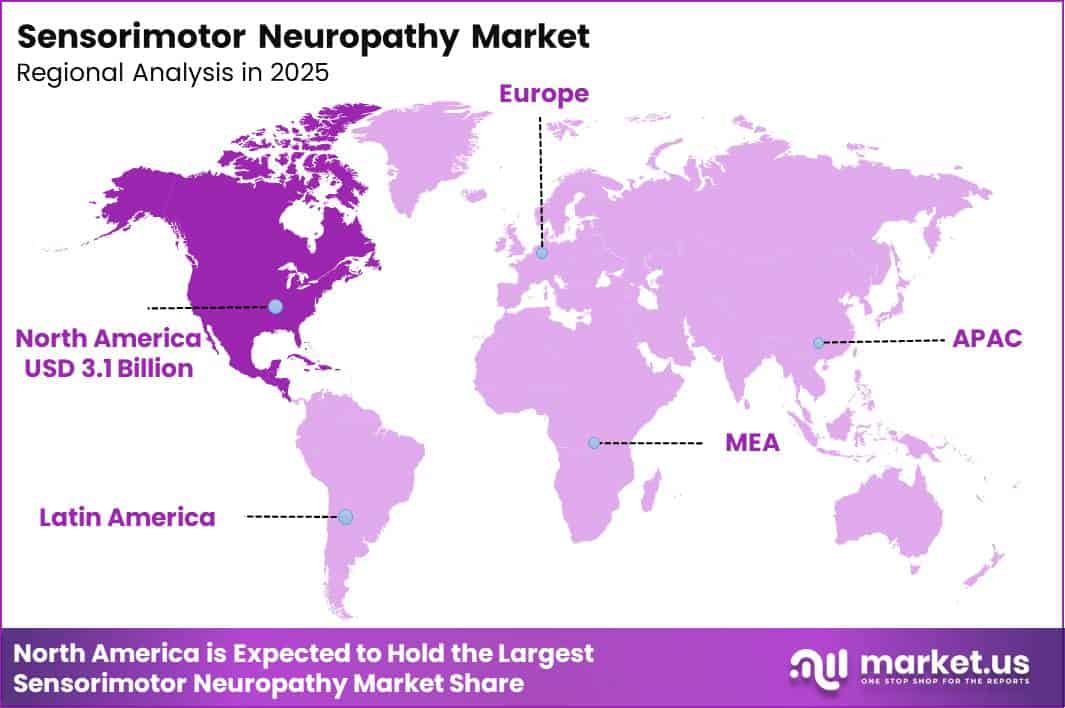
Global Sensorimotor Neuropathy Market size is expected to be worth around US$ 14.8 Billion by 2035 from US$ 8.3 Billion in 2025, growing at a CAGR of 5.9% during the forecast period from 2026 to 2035. In 2025, North America led the market, achieving over 37.6% share with a revenue of US$ 3.1 Billion.
Sensorimotor neuropathy is becoming a growing healthcare concern as the global burden of diabetes, aging, autoimmune diseases, infections, and chemotherapy-related nerve damage continues to increase. According to the U.S. National Institute of Neurological Disorders and Stroke (NINDS), diabetes remains the leading cause of peripheral neuropathy in the United States, with nearly two-thirds of people living with diabetes experiencing mild to severe nerve damage during the course of their disease.
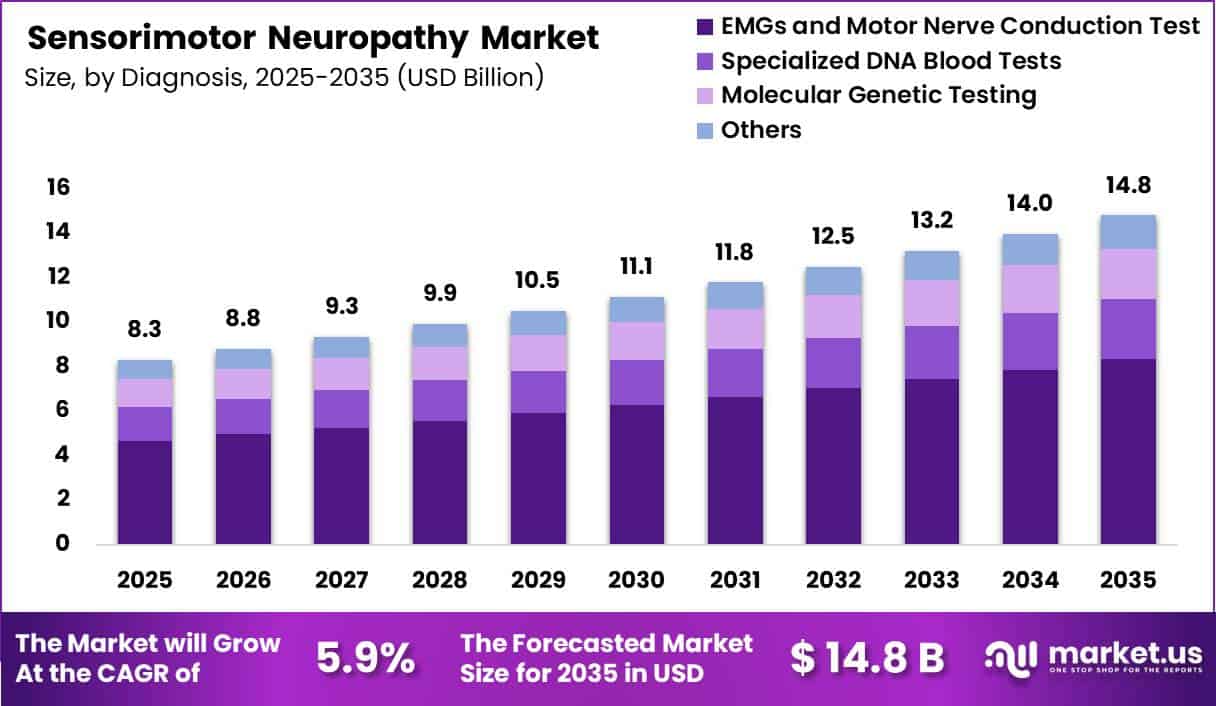
Sensorimotor neuropathy, which affects both sensory and motor nerves, commonly results in numbness, pain, muscle weakness, and impaired balance, increasing the risk of falls and disability. The rising prevalence of diabetes is expected to remain the strongest driver for future demand for sensorimotor neuropathy diagnosis and treatment.
The U.S. Centers for Disease Control and Prevention (CDC) estimates that 40.1 million Americans were living with diagnosed or undiagnosed diabetes in 2023, representing approximately 12.0% of the U.S. population, while an additional 115.2 million adults had prediabetes. These figures indicate a substantial population at risk of developing diabetic nerve complications over time.
Healthcare organizations are increasingly emphasizing earlier diagnosis through neurological examinations, nerve conduction studies, electromyography, and routine foot screening for high-risk patients. The National Institute of Diabetes and Digestive and Kidney Diseases (NIDDK) reports that up to one-half of people with diabetes develop peripheral neuropathy, highlighting the importance of preventive care and timely intervention.
Advances in pain management therapies, neuromodulation technologies, rehabilitation programs, and disease-modifying research are also supporting improvements in patient outcomes. Growing awareness campaigns, expanding access to specialized neurological care, and continued investments in research by public health agencies and pharmaceutical companies are expected to strengthen innovation and improve long-term management of sensorimotor neuropathy worldwide.
Key Takeaways
- Market Size : Sensorimotor Neuropathy Market size is expected to be worth around US$ 14.8 Billion by 2035 from US$ 8.3 Billion in 2025.
- Market Share : The market is growing at a CAGR of 5.9% during the forecast period from 2026 to 2035.
- Type Analysis : The Diabetic Neuropathy segment dominated the sensorimotor neuropathy market with 44.3% of the market share in 2025.
- Diagnosis Analysis : The EMGs and Motor Nerve Conduction Test segment accounted for the largest 56.3% market share in 2025.
- Treatment Analysis : The Medications segment held the largest 33.6% market share in 2025.
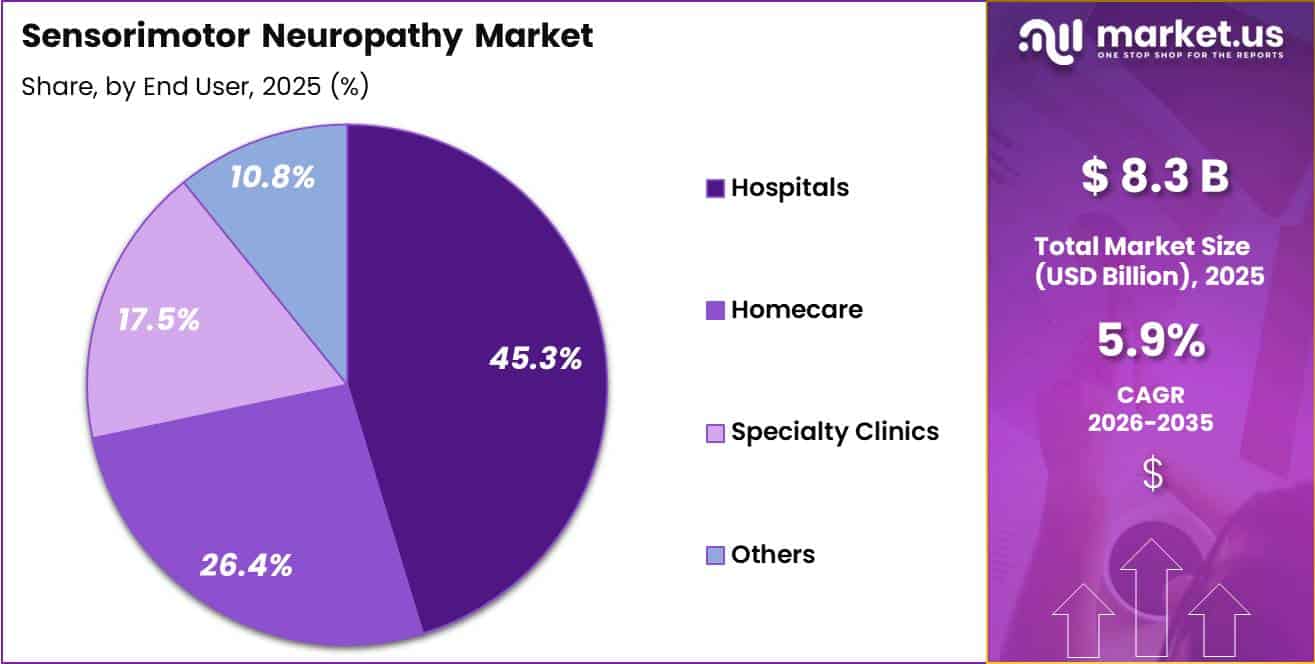
- End User Analysis : The Hospitals segment dominated the sensorimotor neuropathy market with 45.3% market share in 2025.
- Distribution Channel Analysis : The Hospital Pharmacies segment accounted for the largest 47.2% market share in 2025.
- Regional Analysis : In 2025, North America led the market, achieving over 37.6% share with a revenue of US$ 3.1 Billion.
Type Analysis
The Diabetic Neuropathy segment dominated the sensorimotor neuropathy market with 44.3% of the market share in 2025, primarily due to the rising global prevalence of diabetes and its well-established association with peripheral nerve damage.
Diabetic neuropathy is the most common form of peripheral neuropathy and often affects both sensory and motor nerves, resulting in pain, numbness, muscle weakness, and impaired mobility. Early screening programs and better diabetes management have increased diagnosis rates, while continued use of pain-modifying drugs and supportive therapies has sustained treatment demand.
Hereditary Neuropathy, including Charcot-Marie-Tooth (CMT) disease, represents an important segment driven by advances in genetic testing and improved disease awareness. CMT remains the most common inherited peripheral neuropathy, encouraging research into gene-based therapies.
Guillain-Barré Syndrome (GBS) contributes through demand for rapid diagnosis and immunotherapy because it develops suddenly and can lead to severe muscle weakness. Chronic Inflammatory Demyelinating Polyneuropathy (CIDP) continues to expand as access to immunoglobulin and biologic therapies improves.
Toxic Neuropathy, often associated with chemotherapy and environmental toxins, is increasing alongside cancer treatment rates, while Infectious Neuropathy remains relevant in patients affected by viral and bacterial infections. Growing recognition of these disorders, combined with better diagnostic technologies and specialized neurological care, is expected to support balanced growth across all type segments.
Diagnosis Analysis
The EMGs and Motor Nerve Conduction Test segment accounted for the largest 56.3% market share in 2025, as these tests remain the clinical standard for confirming sensorimotor neuropathy and evaluating the severity of nerve damage.
Electromyography (EMG) and nerve conduction studies help physicians distinguish between nerve and muscle disorders, identify demyelination or axonal injury, and guide treatment decisions. Their widespread availability in hospitals and neurology clinics has made them the preferred diagnostic tools for diabetic neuropathy, CIDP, Guillain-Barré syndrome, and hereditary neuropathies.
Specialized DNA Blood Tests are gaining importance as clinicians increasingly investigate inherited neuropathies and rare genetic disorders. These tests enable earlier identification of disease-causing mutations and improve family counseling.
Molecular Genetic Testing continues to expand with advances in genomic medicine, allowing precise diagnosis of conditions such as Charcot-Marie-Tooth disease and other hereditary neuropathies. Improved affordability of next-generation sequencing is supporting broader clinical adoption.
The Others category, including blood chemistry analysis, nerve biopsy, skin biopsy, imaging studies, quantitative sensory testing, and autonomic function testing, also contributes to the market by providing complementary diagnostic information. Increasing awareness of early diagnosis, combined with advances in precision medicine and neurological testing technologies, is expected to drive continued growth across all diagnostic segments.
Treatment Analysis
The Medications segment held the largest 33.6% market share in 2025, driven by their role as the first-line treatment for relieving neuropathic pain and managing underlying disease conditions. Physicians commonly prescribe anticonvulsants, antidepressants, topical therapies, immunoglobulins, corticosteroids, and disease-specific medicines depending on the type of neuropathy.
Medications remain the most accessible treatment option because they provide symptom relief while helping improve patients’ quality of life. Continued research into disease-modifying therapies is also supporting market growth.
Physical therapy represents an important segment by improving muscle strength, balance, flexibility, and walking ability in patients with long-term nerve damage. Occupational therapy helps patients maintain independence by improving daily functional activities and recommending assistive devices.
Transcutaneous Electrical Nerve Stimulation (TENS) is increasingly used as a non-invasive therapy for chronic neuropathic pain management, particularly in patients seeking alternatives to long-term medication. Surgery remains a smaller but essential segment, mainly for patients with nerve compression syndromes or structural abnormalities requiring decompression procedures.
The combination of pharmacological and non-pharmacological treatments is becoming increasingly common, enabling more personalized management strategies and improving long-term patient outcomes across different forms of sensorimotor neuropathy.
End User Analysis
The Hospitals segment dominated the sensorimotor neuropathy market with 45.3% market share in 2025, supported by comprehensive neurological services, advanced diagnostic equipment, multidisciplinary care teams, and access to specialized treatment options.
Hospitals perform the majority of EMG studies, nerve conduction tests, immunotherapy administration, and surgical interventions for complex neuropathy cases. The increasing number of diabetic patients and referrals for neurological evaluation continues to strengthen hospital-based care.
Homecare is experiencing steady growth as more patients require long-term rehabilitation, pain management, mobility assistance, and monitoring after hospital discharge. Improvements in portable medical devices and telehealth services are making home-based care more practical for chronic neuropathy management.
Specialty Clinics, particularly neurology and diabetes clinics, continue to expand due to faster diagnosis, individualized treatment plans, and regular follow-up care for hereditary, inflammatory, and diabetic neuropathies.
The Others segment, including rehabilitation centers, ambulatory care facilities, and academic medical institutions, also contributes to market development by supporting rehabilitation programs, clinical trials, and advanced neurological care. Increasing awareness, early diagnosis, and integrated healthcare services are expected to drive growth across all end-user segments.
Distribution Channel Analysis
The Hospital Pharmacies segment accounted for the largest 47.2% market share in 2025, owing to the high volume of prescription medicines dispensed during inpatient and outpatient neurological treatment.
These pharmacies ensure immediate availability of pain medications, corticosteroids, intravenous immunoglobulins, and supportive therapies while maintaining close coordination with neurologists and hospital specialists. Their role is particularly important for patients requiring intensive treatment or emergency management of severe neuropathic conditions.
Retail Pharmacies continue to represent a significant distribution channel by providing convenient access to prescription medicines, over-the-counter pain relief products, vitamin supplements, and chronic disease medications for patients managing neuropathy at home. Their widespread presence improves treatment continuity and medication adherence.
Online Pharmacies are witnessing rapid growth as digital healthcare adoption increases worldwide. Patients increasingly prefer online platforms because they offer home delivery, competitive pricing, electronic prescription services, and improved access to specialty medicines, particularly in remote areas.
Expanding e-pharmacy regulations, digital health platforms, and patient preference for convenient medicine access are expected to support sustained growth across all distribution channels in the sensorimotor neuropathy market.
Market Segmentations
Type
- Diabetic Neuropathy
- Hereditary Neuropathy
- Charcot-Marie-Tooth Disease
- Guillain-Barre Syndrome
- Chronic Inflammatory Demyelinating Polyneuropathy (CIDP)
- Toxic Neuropathy
- Infectious Neuropathy
Diagnosis
- EMGs and Motor Nerve Conduction Test
- Specialized DNA Blood Tests
- Molecular Genetic Testing
- Others
Treatment
- Medications
- Physical therapy
- Occupational therapy
- Transcutaneous electrical nerve stimulation (TENS)
- Surgery
End User
- Hospitals
- Homecare
- Specialty Clinics
- Others
Distribution Channel
- Hospital Pharmacies
- Retail Pharmacies
- Online Pharmacies
Drivers
Diabetes burden expansion lifting neuropathy case pool
Diabetes remains the most important volume driver for sensorimotor neuropathy because distal symmetric polyneuropathy is the most common diabetic neuropathy phenotype and affects roughly half of people with diabetes over time, materially enlarging the addressable pool for diagnostics, pharmacologic pain control, foot care monitoring, and interventional therapies.
The macro base continues to expand, with WHO reporting 830 million people living with diabetes in 2022 versus 200 million in 1990, and CDC and NIDDK data showing 38.4 million people in the United States with diabetes and 97.6 million adults with prediabetes, creating a large conversion funnel into neuropathy risk over the forecast window.
This driver matters commercially because each increase in diabetes prevalence does not only add new patients; it also raises the frequency of follow up visits, neuropathic pain treatment, foot ulcer surveillance, and complication management, increasing annual revenue per diagnosed patient rather than only expanding one time diagnosis volumes.
| Driver | (~) % Impact on CAGR Forecast | Geographic Relevance | Impact Timeline |
|---|---|---|---|
| Diabetes burden expansion lifting neuropathy case pool | +2.4% | North America core, EU5, China, India, Middle East spill-over | Medium term (2-4 years) |
| Earlier screening and work-up improving diagnosed volumes | +1.6% | North America core, EU, Japan, urban APAC | Short term (≤ 2 years) |
| Non-opioid pain therapies and neuromodulation widening treated population | +1.8% | U.S. core, Western Europe selective, developed APAC | Short term (≤ 2 years) |
| CMS and payer prevention coverage extending downstream neuropathy management demand | +1.1% | U.S. core, selective OECD follow-through | Medium term (2-4 years) |
| Aging, obesity, and cardiometabolic comorbidity deepening mixed-etiology neuropathy load | +1.5% | North America, Europe, East Asia, Gulf states | Long term (≥ 4 years) |
| Shift toward multidisciplinary chronic-care pathways increasing revenue per patient | +1.3% | U.S. core, EU, tertiary-care APAC corridors | Medium term (2-4 years) |
Challenges
Under-diagnosis and Late Detection Depress Treatable Neuropathy Volumes
Under-diagnosis and delayed detection of sensorimotor neuropathies reduce the identifiable and treatable patient pool relative to true prevalence. Peripheral neuropathy affects about 2.4 % of the general population and up to 8 % of older adults, yet only a fraction of cases are consistently coded and actively managed.
In diabetes, where up to 50 % of patients may develop diabetic peripheral neuropathy over their lifetime, only about 40 to 60 % of moderate to severe cases are formally documented, suppressing realized treatment volumes by roughly 20 to 30 % versus epidemiologic potential.
In India, some studies report neuropathy prevalence above 70 % among people with diabetes, while neurology referral rates often remain below 25 %, leaving many clinically relevant cases on low cost analgesics or unmanaged.
This diagnostic latency extends the time from symptom onset to specialist confirmation by 18 to 36 months in many systems, during which irreversible nerve damage accumulates and narrows the window for higher value interventions.
Overall, this diagnostic gap can trim about 1.0 to 1.5 % points from achievable CAGR, as rising diabetes prevalence does not fully translate into treated volumes. Addressing the drag will require broader screening in at risk populations, stronger coding and referral pathways, and EHR supported primary care workflows that lift detection and documentation rates over time.
| Challenge | (~) % CAGR Friction Drag | Geographic Relevance | Mitigation Horizon |
|---|---|---|---|
| Under-diagnosis, late detection | -1.2% | North America, EU, India, China | Long term (≥ 4 years) |
| Heterogeneous disease phenotypes | -1.0% | Global tertiary neurology hubs | Long term (≥ 4 years) |
| Fragmented care & coding | -0.8% | US, Europe, Emerging Asia | Medium term (2-4 years) |
| Limited specialist capacity | -0.9% | US, EU-5, Japan, Urban India | Long term (≥ 4 years) |
| Evidence gaps for novel agents | -0.7% | Global high-income payers | Medium term (2-4 years) |
| High chronic care cost burden | -0.6% | US, EU, Middle-income economies | Long term (≥ 4 years) |
Restraints
Fragmented multidisciplinary care pathways for neuropathy management
Fragmented care, with neuropathy managed across primary care, endocrinology, neurology, pain, and podiatry, creates inefficiencies that limit revenue realization despite rising prevalence. Many patients receive piecemeal symptomatic treatment rather than integrated care, leading to duplicated tests, inconsistent therapy sequencing, and irregular follow up. This fragmentation raises costs without proportional outcome gains.
In the United States, first year costs for painful diabetic neuropathy average about 16,000 to 17,000 USD, roughly double diabetic controls, reflecting reactive and uncoordinated care. For companies, fragmented pathways extend sales cycles and increase acquisition costs, as adoption requires engagement across multiple specialties and payers often delay coverage until integrated care models are demonstrated. The result is slower uptake of innovation, continued reliance on low cost analgesics, and an estimated 1.5 % point drag on baseline CAGR.
| Restraint | (~) % Impact on CAGR Forecast | Geographic Relevance | Impact Timeline |
|---|---|---|---|
| Under-diagnosis and late referral | -2.3% | North America, EU, emerging APAC | Short–Medium term |
| Limited disease-modifying options | -2.0% | Global tertiary care hubs | Medium–Long term |
| Reimbursement and coding frictions | -1.7% | US, EU public payers | Medium term |
| Fragmented care delivery pathways | -1.5% | US, EU, selected LATAM/APAC | Short–Medium term |
| High out-of-pocket and affordability gaps | -1.8% | Emerging APAC, LATAM, Africa | Medium–Long term |
| Trial design and regulatory complexity | -1.6% | US, EU, Japan | Long term |
Opportunity
Real-world evidence infrastructure enabling neuropathy risk-based contracts
The sensorimotor neuropathy market lacks large-scale real-world evidence linking specific therapies to hard outcomes such as fewer foot ulcers, amputations, falls, and hospitalizations, despite neuropathy being a major driver of morbidity and cost.
In the United States, neuropathy and its complications account for an estimated 4.6 to 13.7 billion dollars annually, yet reimbursement rarely uses outcome-linked or risk-sharing contracts. This creates an opportunity to build EMR-linked neuropathy registries and analytics platforms that track patient outcomes, generate comparative effectiveness evidence, and support risk-based contracts where payment is tied to reduced complications or total cost of care.
Such models are most feasible in markets with strong EMR adoption and value-based care frameworks. If 15 to 20 % of high-cost neuropathy patients were covered by outcome-based agreements by 2030, manufacturers could support premium pricing, improve realized net prices by low double-digit %s, and add data-driven service revenues. This could translate into roughly a 1.1 % point CAGR uplift, but it remains an opportunity rather than a current driver because neuropathy-specific RWE infrastructure and contracting models are still nascent.
| Opportunity | (~) % Potential CAGR Upside | Geographic Relevance | Execution Window |
|---|---|---|---|
| AI-first early screening & risk stratification | +2.0% | North America, EU, APAC urban | Short–Medium term |
| Disease-modifying & regenerative therapies | +2.8% | North America, EU, Japan, China | Medium–Long term |
| Integrated neuropathy–metabolic care platforms | +1.7% | North America, EU, GCC, East Asia | Short–Medium term |
| Home-based diagnostics & remote monitoring | +1.9% | North America, EU, APAC emerging | Medium term |
| Procedural & device-based pain interventions | +1.4% | North America core, EU5, select APAC | Short–Medium term |
| EMR-linked real-world evidence & risk contracts | +1.1% | US, UK, Nordics, Germany, Australia | Medium–Long term |
Regional Analysis
In 2025, North America dominated the sensorimotor neuropathy market, accounting for over 37.6% of global revenue. The region benefits from advanced neurological care, widespread availability of electrodiagnostic testing, favorable reimbursement systems, and significant investment in neuroscience research.
An additional factor supporting market growth is the increasing burden of neurological disorders. According to the World Health Organization (WHO), diabetic neuropathy affected approximately 206 million people globally in 2021, making it the fastest-growing neurological condition since 1990. This trend has strengthened demand for early diagnosis, rehabilitation, and long-term neuropathy management across the United States and Canada.
Europe represents the second-largest regional market, supported by universal healthcare systems and strong chronic disease management programs. According to the WHO European Region, around 300,000 children and adolescents and 74 million adults are living with diabetes, while the region has the highest burden of type 1 diabetes worldwide. These factors continue to increase the number of patients at risk of developing sensorimotor neuropathy and other diabetic nerve complications.
Asia-Pacific is projected to witness the fastest growth owing to rising diabetes prevalence, rapid population aging, expanding healthcare infrastructure, and improved access to neurological services across China, India, Japan, and Southeast Asia.
Latin America and the Middle East & Africa are also experiencing steady market expansion through improved chronic disease screening programs, greater awareness of neurological disorders, and increasing government efforts to strengthen non-communicable disease management.
Key Regions and Countries
North America
- The US
- Canada
Europe
- Germany
- France
- The U.K.
- Italy
- Spain
- Russia & CIS
- Rest of Europe
Asia Pacific
- China
- India
- Japan
- South Korea
- ASEAN
- Australia & New Zealand
- Rest of Asia Pacific
Middle East & Africa
- GCC
- South Africa
- Rest of Middle East & Africa
Latin America
- Brazil
- Mexico
- Rest of Latin America
Key Player Analysis
The sensorimotor neuropathy market is highly competitive, with leading pharmaceutical and healthcare companies focusing on therapies for diabetic neuropathy, peripheral nerve disorders, pain management, and neurological diseases.
Companies are investing in clinical research, precision medicine, biologics, and advanced diagnostics to improve patient outcomes, while expanding collaborations and strengthening their neuroscience portfolios. The growing prevalence of diabetes and other neurological disorders continues to encourage innovation in both disease-modifying therapies and symptom management.
Pfizer Inc. maintains a strong neuroscience portfolio and continues research into pain management and neurological disorders through clinical development programs. Eli Lilly and Company focuses on diabetes management and metabolic disease therapies, supporting efforts to reduce complications such as diabetic peripheral neuropathy.
Novartis AG continues expanding its neuroscience pipeline through investments in innovative medicines and precision therapies. Abbott Laboratories strengthens the market with continuous glucose monitoring systems and diagnostic technologies that support early diabetes management and reduce neuropathy risk.
GlaxoSmithKline plc (GSK) is advancing neurological research through strategic collaborations targeting neurodegenerative diseases and next-generation therapeutics. Johnson & Johnson continues to strengthen its neuroscience business through acquisitions and investment in central nervous system therapies.
Merck & Co. Inc. focuses on research collaborations and innovative drug development for neurological and chronic diseases. Sanofi S.A. is expanding its neurology and diabetes portfolio through strategic acquisitions, partnerships, and investments, reinforcing its position in treating neurological complications associated with chronic diseases.
Top Key Players
- Pfizer Inc.
- Eli Lilly and Company
- Novartis AG
- Abbott Laboratories
- GlaxoSmithKline plc
- Johnson & Johnson
- Merck & Co. Inc.
- Sanofi S.A.
- Biogen Inc.
- Teva Pharmaceutical Industries Ltd.
- Other Key Players
Recent Developments
- In May 2025, Sanofi agreed to acquire Vigil Neuroscience in a deal valued at approximately US$470 million to strengthen its neurology pipeline. The acquisition adds VG-3927, an investigational therapy for Alzheimer’s disease, reinforcing Sanofi’s strategic expansion in neurological disorders.
- In January 2025, Johnson & Johnson announced the acquisition of Intra-Cellular Therapies for approximately US$14.6 billion. The acquisition significantly expands J&J’s neuroscience portfolio by adding marketed and pipeline therapies for central nervous system disorders, including Parkinson’s disease and major depressive disorder.
- In January 2025, Novartis outlined more than 15 submission-enabling clinical readouts expected through 2026 and reaffirmed continued investment in neuroscience, RNA technologies, and precision medicine through its global R&D pipeline, strengthening its long-term position in neurological disease research.
Report Scope
| Report Features | Description |
|---|---|
| Market Value (2025) | US$ 8.3 Billion |
| Forecast Revenue (2035) | US$ 14.8 Billion |
| CAGR (2026-2035) | 5.9% |
| Base Year for Estimation | 2025 |
| Historic Period | 2020-2024 |
| Forecast Period | 2026-2035 |
| Report Coverage | Revenue Forecast, Market Dynamics, Competitive Landscape, Recent Developments |
| Segments Covered | Type (Diabetic Neuropathy, Hereditary Neuropathy, Charcot-Marie-Tooth Disease, Guillain-Barre Syndrome, Chronic Inflammatory Demyelinating Polyneuropathy (CIDP), Toxic Neuropathy, Infectious Neuropathy), Diagnosis (EMGs and Motor Nerve Conduction Test, Specialized DNA Blood Tests, Molecular Genetic Testing, Others), Treatment (Medications, Physical therapy, Occupational therapy, Transcutaneous electrical nerve stimulation (TENS), Surgery), End User (Hospitals, Homecare, Specialty Clinics , Others), Distribution Channel (Hospital Pharmacies, Retail Pharmacies, Online Pharmacies) |
| Regional Analysis | North America – The US, Canada; Europe – Germany, France, U.K., Italy, Spain, Russia & CIS, Rest of Europe; Asia Pacific – China, India, Japan, South Korea, ASEAN, Australia & New Zealand, Rest of Asia Pacific; Middle East & Africa – GCC, South Africa, Rest of Middle East & Africa; Latin America – Brazil, Mexico, Rest of Latin America |
| Competitive Landscape | Pfizer Inc., Eli Lilly and Company, Novartis AG, Abbott Laboratories, GlaxoSmithKline plc, Johnson & Johnson, Merck & Co. Inc., Sanofi S.A., Biogen Inc., Teva Pharmaceutical Industries Ltd., Other Key Players |
| Customization Scope | Customization for segments, region/country-level will be provided. Moreover, additional customization can be done based on the requirements. |
| Purchase Options | We have three licenses to opt for: Single User License, Multi-User License (Up to 5 Users), Corporate Use License (Unlimited User and Printable PDF) |





































