


Market Overview
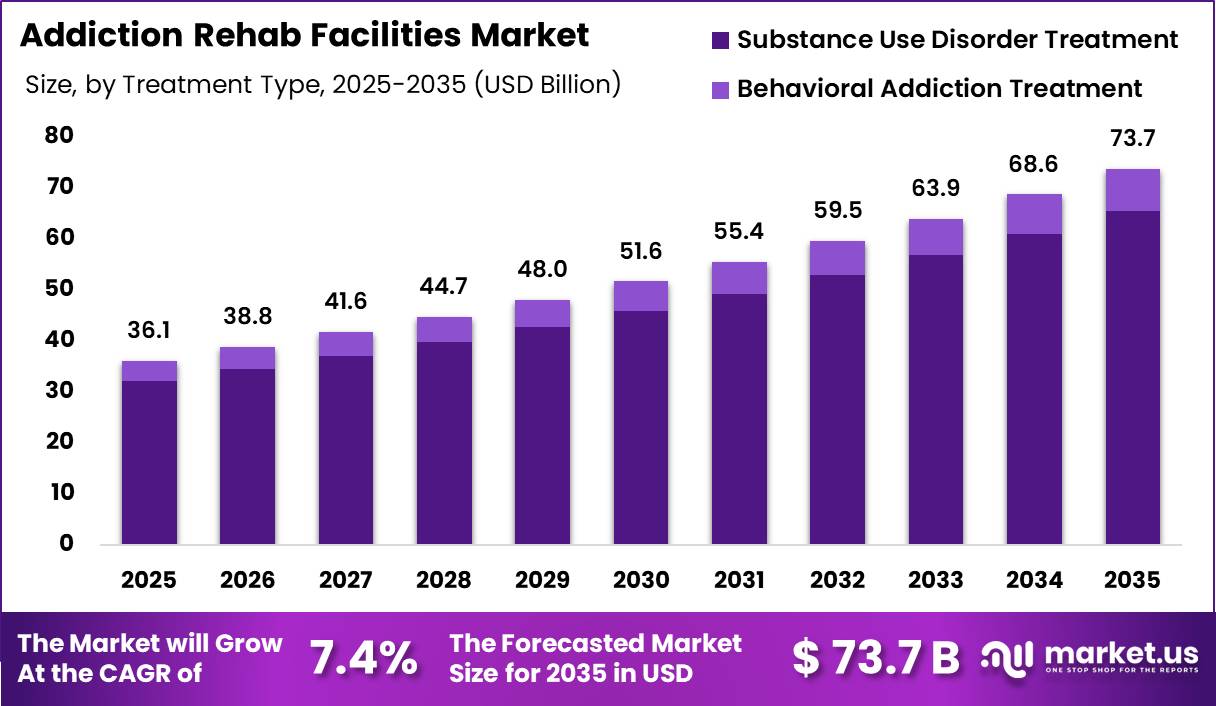
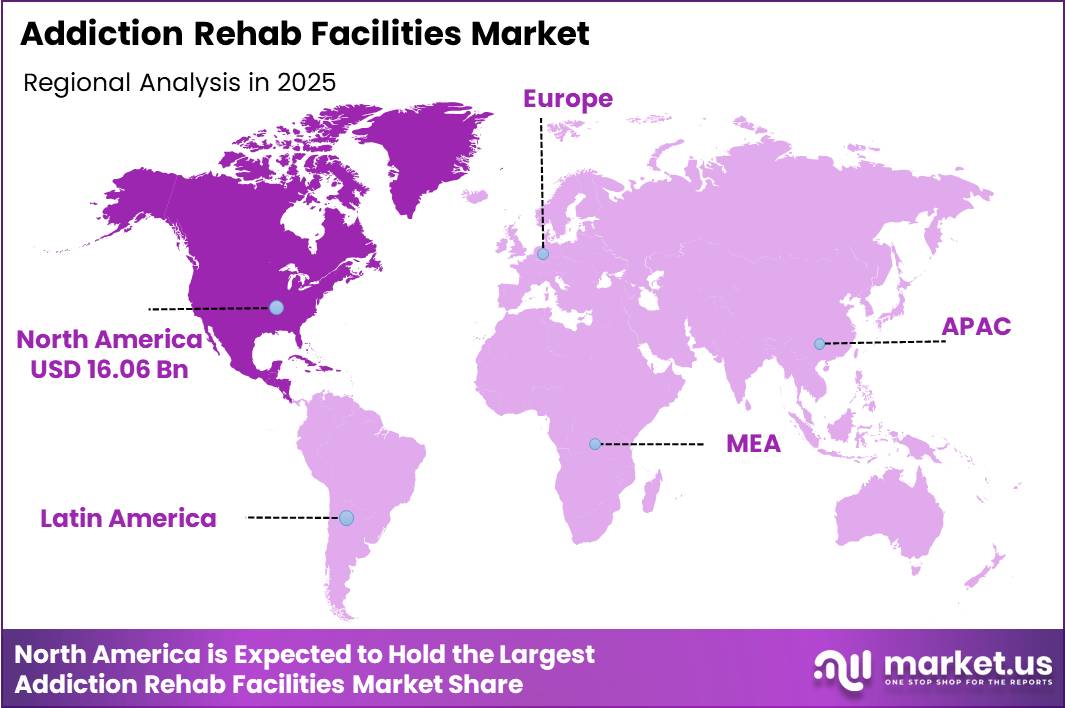
Global Addiction Rehab Facilities Market size is expected to be worth around US$ 73.7 Billion by 2035 from US$ 36.1 Billion in 2025, growing at a CAGR of 7.40% during the forecast period from 2026 to 2035. In 2025, North America led the market, achieving over 44.50% share with a revenue of US$ 16.06 Billion.
The growth of the addiction rehabilitation facilities market is primarily driven by the increasing global prevalence of substance use disorders, which require structured medical, psychological, and social recovery services. According to the World Health Organisation (WHO), specialised treatment facilities encompass inpatient and outpatient centres, hospital-based units, and community rehabilitation services tailored for alcohol and drug use disorders.
WHO also notes that many countries face limited service capacity, with treatment often concentrated in urban tertiary healthcare centres, leading to significant access gaps for rural populations. In India, the Ministry of Social Justice and Empowerment has expanded national rehabilitation infrastructure as part of the National Action Plan for Drug Demand Reduction.
According to official government data, India has approximately 342 Integrated Rehabilitation Centres for Addicts, 74 Outreach and Drop-In Centres, 47 Community-Based Peer-Led Intervention Programs, and 83 Addiction Treatment Facilities in government hospitals. Additionally, there are 53 District De-Addiction Centres that integrate prevention and treatment services within one system.
These facilities collectively provide detoxification, counselling, rehabilitation, relapse prevention, and social reintegration programs. Government records indicate that thousands of patients receive treatment each year through public de-addiction programs, highlighting an increasing demand for structured care services.
The market is further bolstered by the rising prevalence of substance use, the expansion of government-funded treatment networks, and the integration of mental health services into primary healthcare systems, which strengthens long-term rehabilitation infrastructure worldwide.
Key Takeaways
- Market Size: The Global Addiction Rehab Facilities Market size was US$ 36.1 billion in 2025. The market is estimated to grow to US$ 73.7 billion by 2035.
- Market Share: The Compound Annual Growth Rate (CAGR) of the market from 2026 to 2035 will be 7.4%.
- Treatment Type: Substance Use Disorder Treatment has the largest market share, accounting for 88.7% of total treatment type revenue.
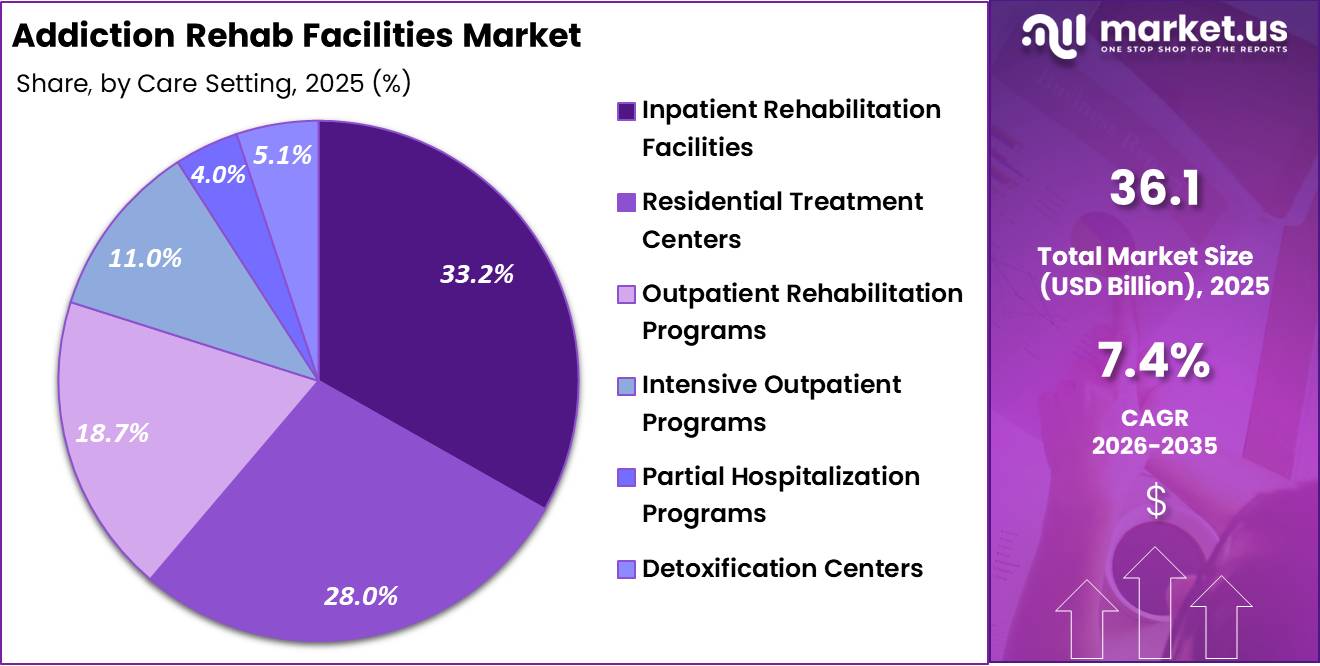
- Care Setting: Inpatient Rehabilitation Facilities lead the segment, accounting for 33.2% of total care setting revenue.
- Therapy Type: Cognitive Behavioural Therapy (CBT) leads the segment, accounting for 24.5% of total therapy type revenue.
- Age Group: Adults dominate the segment, accounting for 76.8% of total age group revenue.
- Ownership Type: Private Rehab Facilities leads the segment, accounting for 57.6% of total ownership type revenue.
- Regional: North America is the dominant regional market, accounting for 44.5% of global revenue.
Treatment Type Analysis
The Treatment Type segmentation within the Addiction Rehab Facilities Market is primarily driven by the overwhelming dominance of Substance Use Disorder (SUD) Treatment, which accounts for 88.7% of the market share in 2025.
This segment continues to lead due to the rising global burden of alcohol, opioid, and prescription drug dependence, alongside increasing clinical recognition of substance addiction as a chronic relapsing medical condition requiring structured, long-term intervention.
Expanding insurance coverage, government-funded rehabilitation programs, and integration of evidence-based treatment protocols further reinforce its leadership position. Within SUD treatment, multidisciplinary approaches combining detoxification, pharmacotherapy, and psychosocial support are increasingly standard, improving patient outcomes and retention rates.
In contrast, Behavioural Addiction Treatment represents 11.3% of the market but is gaining traction due to growing awareness of non-substance-related addictions such as gambling, internet gaming, and compulsive behaviours. Although smaller in share, this segment is expected to witness steady expansion driven by digital addiction trends and rising mental health awareness.
Overall, the treatment type landscape reflects a clear dominance of substance-related interventions while gradually evolving toward broader behavioural health integration and more holistic addiction care models.
Care Setting Analysis
The Care Setting segmentation in the Addiction Rehab Facilities Market is characterised by strong demand for structured inpatient and residential care models, with Inpatient Rehabilitation Facilities leading the market at 33.2% share in 2025. These facilities are preferred for patients requiring intensive medical supervision, especially in severe addiction cases involving withdrawal management, co-occurring mental health disorders, and high relapse risk.
Residential Treatment Centres follow closely with a 28.0% share, offering long-term therapeutic environments that emphasise behavioural modification, peer support, and sustained recovery planning. Outpatient Rehabilitation Programs account for 18.7% of the market, serving patients with moderate addiction severity who require flexibility to maintain daily responsibilities while receiving treatment.
Intensive Outpatient Programs (IOP), holding 11.0%, provide structured therapy sessions with higher intensity than standard outpatient care. Partial Hospitalisation Programs (4.0%) act as transitional care settings bridging inpatient and outpatient services, while Detoxification Centres (5.1%) remain critical as initial entry points into the treatment continuum.
Collectively, these care settings reflect a stepped-care model where treatment intensity is matched to clinical severity, improving accessibility and optimising long-term recovery outcomes across diverse patient populations.
Therapy Type Analysis
The Therapy Type segmentation in the Addiction Rehab Facilities Market reflects a strongly diversified but evidence-driven treatment landscape, with Cognitive Behavioural Therapy (CBT) leading at a 24.5% share in 2025. CBT’s dominance is attributed to its proven effectiveness in identifying and modifying negative thought patterns associated with substance use, making it a foundational component across both inpatient and outpatient rehabilitation programs.
Group Therapy follows closely at 20.3%, supported by its role in fostering peer accountability, shared experiences, and long-term relapse prevention through structured social reinforcement. Individual Counselling holds an 18.7% share, offering personalised intervention strategies tailored to patient-specific psychological and behavioural needs.
Medication-Assisted Treatment (MAT), accounting for 15.0%, remains critical for opioid and alcohol dependence management, combining pharmacological stabilisation with counselling to improve recovery outcomes and reduce relapse risk. Family Therapy (9.0%) plays a key supportive role by rebuilding interpersonal relationships and strengthening recovery environments at home.
Dialectical Behavioural Therapy (DBT), at 6.0%, is increasingly utilised for patients with emotional dysregulation and co-occurring mental health disorders. Holistic & Alternative Therapies (5.0%), including mindfulness and yoga-based interventions, are gaining gradual adoption as complementary approaches. The Others category (1.5%) includes emerging digital and experimental therapies, reflecting ongoing innovation in addiction care models.
Age Group Analysis
The Age Group segmentation in the Addiction Rehab Facilities Market is strongly dominated by the adult population, which accounts for 76.8% of total market share in 2025. This dominance is primarily attributed to higher exposure to substance use risks, workplace stress, socioeconomic pressures, and long-term patterns of addiction development that typically manifest or peak during adulthood.
Adults also represent the largest treatment-seeking cohort due to increased financial independence, insurance coverage, and greater awareness of rehabilitation options. Adolescents form a smaller but increasingly significant segment, driven by rising cases of early-onset substance use, behavioural addictions such as gaming disorder, and mental health comorbidities. Early intervention programs and school-based awareness initiatives are contributing to improved identification and referral rates within this group.
The geriatric population, while currently the smallest segment, is expanding gradually due to ageing demographics and increasing recognition of late-life substance misuse, often linked to chronic pain management, prescription drug dependency, and isolation-related behavioural issues.
Overall, the segmentation highlights a life-stage-dependent pattern of addiction treatment demand, with adults remaining the core focus while adolescent and geriatric care models evolve to address specialised clinical and psychosocial needs.
Ownership Type Analysis
The Ownership Type segmentation in the Addiction Rehab Facilities Market is led by Private Rehab Facilities, which command a 57.6% market share in 2025. Their dominance is driven by superior infrastructure, higher availability of specialised treatment programs, shorter waiting times, and greater adoption of advanced therapeutic modalities, including integrated dual-diagnosis care and personalised recovery plans.
Private facilities also benefit from strong insurance partnerships and rising demand for premium, confidential treatment services among high-income patient groups.
Public or Government Rehab Facilities represent a significant portion of the market, focusing on affordability, large-scale accessibility, and essential addiction treatment services, particularly for underserved and economically vulnerable populations. These facilities play a critical role in addressing the public health burden of addiction through subsidised care and nationwide rehabilitation initiatives.
Non-Profit Organizations also contribute meaningfully to the ecosystem by offering community-based support programs, awareness campaigns, and low-cost or free treatment options, often filling gaps left by public and private providers.
Together, these ownership structures create a diversified treatment landscape where private facilities lead in innovation and service quality, while public and non-profit providers ensure broad access and social inclusivity across addiction rehabilitation systems.
Key Market Segments
By Treatment Type
- Substance Use Disorder Treatment
- Alcohol Addiction Treatment
- Opioid Addiction Treatment
- Prescription Drug Addiction Treatment
- Cocaine Addiction Treatment
- Methamphetamine Addiction Treatment
- Cannabis Addiction Treatment
- Nicotine Addiction Treatment
- Others
- Behavioural Addiction Treatment
- Gambling Addiction
- Internet & Gaming Addiction
- Shopping Addiction
- Sex Addiction
- Others
By Care Setting
- Inpatient Rehabilitation Facilities
- Residential Treatment Centres
- Outpatient Rehabilitation Programs
- Intensive Outpatient Programs (IOP)
- Partial Hospitalisation Programs (PHP)
- Detoxification Centers
By Therapy Type
- Cognitive Behavioural Therapy (CBT)
- Group Therapy
- Individual Counseling
- Family Therapy
- Medication-Assisted Treatment (MAT)
- Dialectical Behavioural Therapy (DBT)
- Holistic & Alternative Therapies
- Others
By Age Group
- Adolescents
- Adults
- Geriatric
By Ownership Type
- Private Rehab Facilities
- Public/Government Rehab Facilities
- Non-Profit Organizations
Drivers
Government Funding & Opioid Settlement Reinvestment
Federal and state-level capital infusion represents the most immediate demand accelerator for addiction rehab facilities in 2026. In September 2025, SAMHSA allocated more than $ 1.5 billion in FY25 State Opioid Response (SOR) and Tribal Opioid Response (TOR) continuation grants, including $ 1.48 billion for state-level programs and approximately $63 million for tribal communities, directed toward prevention, access to medications for opioid use disorder, and recovery infrastructure.
At the same time, national pharmaceutical opioid litigation settlements have generated over $38 billion in total disbursements, including the initial $26 billion Johnson & Johnson and distributor settlement. An additional $12.59 to $13.62 billion from pharmacy chain settlements involving CVS, Walgreens, and Walmart, with funds largely directed toward treatment capacity, housing, and related recovery services.
Several states, including North Carolina, have also removed Certificate of Need barriers for chemical dependency treatment facilities through legislation such as HB 76 (2023), enabling faster expansion of treatment capacity. Together, these funding streams are accelerating facility development, staffing, and program expansion, shortening traditional build-out timelines and expanding access to treatment for a larger patient base.
| Driver | (~) % Impact on CAGR Forecast | Geographic Relevance | Impact Timeline |
|---|---|---|---|
| Government Funding & Opioid Settlement Reinvestment — SAMHSA’s $1.5B+ SOR grants and $26B+ pharma opioid settlement disbursements channelling capital into ATC infrastructure | +1.4% | North America core; select EU harm-reduction corridors | Short term (≤ 2 years) |
| Insurance Parity Expansion & Reimbursement Reform — MHPAEA enforcement and Medicare Physician Fee Schedule upgrades widening billable access for rehab services | +1.2% | North America dominant; EU secondary | Medium term (2–4 years) |
| Telehealth & Remote MAT Prescribing Permanency — Permanent DEA buprenorphine telemedicine rules and CMS billing reforms enabling at-home addiction care delivery | +1.1% | North America, EU, emerging APAC corridors | Short to Medium term |
| Rising Prevalence of Poly-Substance Use Disorder — Escalating SUD demand base across opioid, stimulant, alcohol, and behavioural addictions, particularly post-COVID | +0.9% | Global, North America & APAC fastest-growing demand centres | Short term (≤ 2 years) |
| GLP-1 Receptor Agonists as Novel Pharmacotherapy — Semaglutide and dulaglutide clinical trials demonstrating craving reduction, creating a new pharmacological pipeline for AUDs/OUDs | +0.8% | North America & EU (trial-stage); APAC (medium-term rollout) | Medium to Long term |
| Private Equity Consolidation & Digital Therapeutics Integration — PE ownership of ~30% of OTPs and 7.1% of all SUD facilities, driving DTx adoption and operational scale | +0.7% | North America dominant; EU growing | Medium term (2–4 years) |
Challenegs
Insurance Reimbursement Compression & Parity Enforcement Void
Reimbursement pressure in addiction treatment is increasing due to persistently low Medicaid reimbursement rates, weaker enforcement of mental health parity rules since 2025, and expanded insurer use of utilisation management tools such as prior authorisations, visit limits, and medical necessity reviews. Regulatory and audit reviews in 2026 also indicate frequent initial denials for inpatient rehabilitation admissions within Medicare Advantage plans.
About 43% of these denials are later overturned on appeal, suggesting overly restrictive first-pass decision-making and high administrative friction. At the same time, higher insurance out-of-pocket caps are reducing affordability for patients and increasing unpaid balances for residential treatment episodes.
Overall, these dynamics are tightening revenue cycles, increasing denial-related workload, slowing cash conversion, and creating uneven financial pressure across providers, with smaller and less diversified facilities experiencing the most severe strain.
| Challenge | (~) % CAGR Friction Drag | Geographic Relevance | Mitigation Horizon |
|---|---|---|---|
| Chronic Workforce Deficit & Burnout Cycle | -1.8% | North America core; rural U.S.; EU behavioural hubs | Long-term (≥ 4 years) |
| Insurance Reimbursement Compression & Parity Enforcement Void | -1.4% | North America; Medicaid-dependent U.S. states | Medium term (2–4 years) |
| Dual Diagnosis Integration Gap | -0.9% | North America; Western EU; urban APAC corridors | Long-term (≥ 4 years) |
| Digital & EHR Interoperability Bottleneck | -0.8% | Rural North America; EU regulatory hubs; emerging APAC | Medium term (2–4 years) |
| Societal Stigma & Patient Retention Leakage | -0.7% | APAC, MENA, Eastern EU; underserved North America | Long-term (≥ 4 years) |
| Operating Cost Inflation & Medicaid Funding Uncertainty | -1.1% | U.S. Medicaid-heavy states; publicly funded EU markets | Medium term (2–4 years) |
Restraint
Stigma and Treatment Gaps in Addiction Care Systems
Social stigma remains a primary structural barrier limiting conversion of clinically defined need into actual treatment demand in addiction care, creating a persistent gap between epidemiological prevalence and monetizable service utilisation.
In the United States, approximately 54.2 million people aged 12 and older were estimated to need substance use treatment in 2023, yet only about 12.8 million (around 23%) received care, leaving roughly 76% untreated despite recognised need.
Among those not seeking treatment, major barriers include cost or insurance limitations (about 32%) alongside stigma-driven concerns such as fear of social judgment (around 12%) and fear of job loss (around 12%), indicating that non-clinical factors significantly suppress demand conversion.
Globally, treatment gaps are even wider, with WHO and national surveys indicating that 70%–92% of individuals with substance use and mental health disorders in low- and middle-income countries receive no treatment. This includes an 86.3% treatment gap for alcohol use disorder in India (NIMHANS survey).
Even after entry into care, outcomes remain constrained, with fewer than 43% of patients completing treatment programs in many settings. Long-term studies across multiple countries further indicate that only a small minority achieve sustained recovery outcomes.
These dynamics increase acquisition costs, reduce facility utilisation efficiency, and weaken referral pipeline reliability, making stigma and dropout rates a sustained drag on system-level conversion and limiting the realised scale of addiction treatment markets.
| Restraint | (~) % Impact on CAGR Forecast | Geographic Relevance | Impact Timeline |
|---|---|---|---|
| Federal Medicaid & SAMHSA Funding Contraction | –1.8% | North America (U.S. core) | Short term (≤ 2 years) |
| Acute Behavioural Health Workforce Shortage | –1.5% | North America, Western Europe, APAC corridors | Medium term (2–4 years) |
| Persistent Social Stigma & Treatment Gap | –1.2% | Global; APAC & MEA dominant | Long-term (≥ 4 years) |
| Insurance Parity Gaps & Reimbursement Friction | –0.9% | North America, EU fringe markets | Medium term (2–4 years) |
| High Relapse Rates & Treatment Non-Completion | –0.7% | Global (all geographies) | Long-term (≥ 4 years) |
| Regulatory Uncertainty & Telehealth Policy Flux | –0.5% | North America, EU hybrid-care markets | Short–Medium term |
Opportunity
Corporate EAP & Employer-Sponsored Recovery Ecosystem
Corporate EAP and employer-sponsored recovery is an underutilised B2B channel where addiction treatment providers can directly partner with employers to bypass insurance friction and improve access to care. Instead of relying on fragmented referrals through EAP vendors, facilities can co-design structured treatment packages for employers that enable faster intake, often within 24 to 48 hours instead of 7 to 14 days, while improving conversion rates compared to traditional referral pathways.
Employers have a strong incentive to participate because substance use disorders significantly impact productivity and healthcare costs, and many already invest in wellness and recovery support tools.
By shifting to bundled, pre-approved care models billed directly to employer benefit programs, providers can reduce administrative delays, stabilise cash flow, and create more predictable referral pipelines. This approach also opens higher-value, outcomes-based contracts in both developed and emerging markets where employers are increasingly expanding behavioural health coverage.
| Opportunity | (~) % Potential CAGR Upside | Geographic Relevance | Execution Window |
|---|---|---|---|
| Digital Therapeutics (DTx) & AI-Powered Personalised Recovery | +2.5% | North America core, EU, APAC emerging | Short term (≤ 2 years) |
| PE-Led M&A Roll-Up & Platform Consolidation | +1.8% | North America, UK, Australia | Short–Medium term (1–3 years) |
| Co-Occurring Disorder (Dual Diagnosis) Integrated Care | +2.2% | North America, Western Europe | Medium term (2–4 years) |
| APAC Greenfield Expansion & Localised Market Entry | +2.8% | India, Southeast Asia, China secondary | Medium–Long term (3–5 years) |
| Value-Based Care (VBC) Contracting & Outcomes Monetisation | +1.5% | North America (Medicaid/Medicare), EU | Medium term (2–4 years) |
| Corporate EAP & Employer-Sponsored Recovery Ecosystem | +1.2% | North America, Northern EU, GCC | Short–Medium term (1–3 years) |
Regional Analysis
In 2025, North America led the addiction rehabilitation facilities market, capturing over 44.5% of the market share with a revenue of USD 16.06 billion. The global market exhibits significant regional variations influenced by differences in healthcare infrastructure, regulatory frameworks, stigma levels, and the availability of reimbursement for substance use disorder treatment.
North America, particularly the United States, dominates the market due to the high prevalence of substance use disorders, especially opioid and alcohol addictions. This is further supported by advanced insurance coverage and a well-established network of inpatient rehabilitation facilities. Strong policy initiatives and the expansion of tele-rehabilitation services contribute to regional growth, although affordability and stigma continue to present challenges.
Europe holds the second-largest market share, benefiting from universal healthcare systems and an increasing focus on mental health integration by governments. Countries such as Germany, the United Kingdom, and France are expanding both public and private rehabilitation capacities, emphasising harm reduction and outpatient treatment models.
The Asia-Pacific region is expected to experience the fastest growth, driven by rising rates of substance abuse, rapid urbanisation, and improving healthcare access in countries like India, China, and Australia. However, significant treatment gaps persist due to a lack of specialised facilities and strong social stigma.
Latin America and the Middle East & Africa remain emerging markets, where infrastructure limitations and low public awareness hinder treatment availability. Nevertheless, increasing government and NGO-led initiatives are gradually improving access to addiction rehabilitation services.
Key Regions and Countries
North America
- The US
- Canada
Europe
- Germany
- France
- The U.K.
- Italy
- Spain
- Russia & CIS
- Rest of Europe
Asia Pacific
- China
- India
- Japan
- South Korea
- ASEAN
- Australia & New Zealand
- Rest of Asia Pacific
Middle East & Africa
- GCC
- South Africa
- Rest of the Middle East & Africa
Latin America
- Brazil
- Mexico
- Rest of Latin America
Key Player Analysis
Suppliers in the global addiction rehab facilities market seek competitive advantage through evidence-based treatment protocol differentiation, including trauma-informed care integration, dual diagnosis co-occurring mental health disorder treatment capability and medication-assisted treatment program development alongside geographic network expansion through acquisition of independent residential and outpatient treatment facilities, enabling consolidation of a fragmented provider landscape.
Key strategic focus areas include telehealth-enabled outpatient and aftercare program development, expanding access beyond facility catchment areas, intensive outpatient and partial hospitalisation program capacity expansion meeting payer preference for cost-effective non-residential treatment options and outcome measurement infrastructure investment generating real-world sobriety and recovery data supporting reimbursement authorisation.
Companies continue investing in licensed clinical staff recruitment and retention programs, Joint Commission accreditation maintenance, and insurance network contracting relationships to secure referral volumes from hospitals, physician practices, employee assistance programs and court-mandated referrals globally.
Telehealth-enabled addiction treatment, enabling medication-assisted treatment, prescription counselling, and group therapy delivery through digital platforms, is expanding accessible treatment capacity beyond physical facility constraints through 2035.
Top Key Players
- Hazelden Betty Ford Foundation
- American Addiction Centres
- Acadia Healthcare Company Inc.
- Priory Group
- Springstone Inc.
- Recovery Centres of America
- Promises Behavioural Health
- Sunrise House Treatment Centre
- Caron Treatment Centres
- Phoenix House
- Crossroads Antigua
- The Cabin Chiang Mai
- Narconon International
- Sierra Tucson
- Gateway Foundation
- Other Key Players
Recent Developments
- In January 2026, Acadia Healthcare expanded its intensive outpatient program network across 12 new US metropolitan markets, targeting growing commercial insurance reimbursement demand for cost-effective outpatient addiction treatment alternatives to inpatient residential programs.
- In February 2026, American Addiction Centres launched a telehealth-enabled medication-assisted treatment platform across its North American network, targeting opioid use disorder patients requiring buprenorphine and naltrexone treatment access through remote clinical care delivery.
- In March 2026, Hazelden Betty Ford Foundation secured an expanded employee assistance program partnership with a leading US Fortune 500 employer coalition, covering addiction assessment, treatment referral, and aftercare program services across its national treatment facility network.
- In May 2026, Priory Group expanded its residential addiction treatment capacity across three new UK facility openings, targeting growing private pay and NHS-funded opioid and alcohol addiction treatment demand across its European institutional buyer and referral partner networks.
Report Scope
| Report Features | Description |
|---|---|
| Market Value (2025) | US$ 36.1 Billion |
| Forecast Revenue (2035) | US$ 73.7 Billion |
| CAGR (2026-2035) | 7.40% |
| Base Year for Estimation | 2025 |
| Historic Period | 2020-2024 |
| Forecast Period | 2026-2035 |
| Report Coverage | Revenue Forecast, Market Dynamics, Competitive Landscape, Recent Developments |
| Segments Covered | By Treatment Type (Substance Use Disorder Treatment, Behavioral Addiction Treatment), By Care Setting (Inpatient Rehabilitation Facilities, Residential Treatment Centers, Outpatient Rehabilitation Programs, Intensive Outpatient Programs (IOP), Partial Hospitalization Programs (PHP), Detoxification Centers), By Therapy Type (Cognitive Behavioral Therapy (CBT), Group Therapy, Individual Counseling, Family Therapy, Medication-Assisted Treatment (MAT), Dialectical Behavioral Therapy (DBT), Holistic & Alternative Therapies, Others), By Age Group (Adolescents, Adults, Geriatric), By Ownership Type (Private Rehab Facilities, Public/Government Rehab Facilities, Non-Profit Organizations) |
| Regional Analysis | North America – The US, Canada; Europe – Germany, France, U.K., Italy, Spain, Russia & CIS, Rest of Europe; Asia Pacific – China, India, Japan, South Korea, ASEAN, Australia & New Zealand, Rest of Asia Pacific; Middle East & Africa – GCC, South Africa, Rest of Middle East & Africa; Latin America – Brazil, Mexico, Rest of Latin America |
| Competitive Landscape | Hazelden Betty Ford Foundation, American Addiction Centers, Acadia Healthcare Company Inc., Priory Group, Springstone Inc., Recovery Centers of America, Promises Behavioral Health, Sunrise House Treatment Center, Caron Treatment Centers, Phoenix House, Crossroads Antigua, The Cabin Chiang Mai, Narconon International, Sierra Tucson, Gateway Foundation, Other Key Players |
| Customization Scope | Customization for segments, region/country-level will be provided. Moreover, additional customization can be done based on the requirements. |
| Purchase Options | We have three licenses to opt for: Single User License, Multi-User License (Up to 5 Users), Corporate Use License (Unlimited User and Printable PDF) |





































