


Market Overview
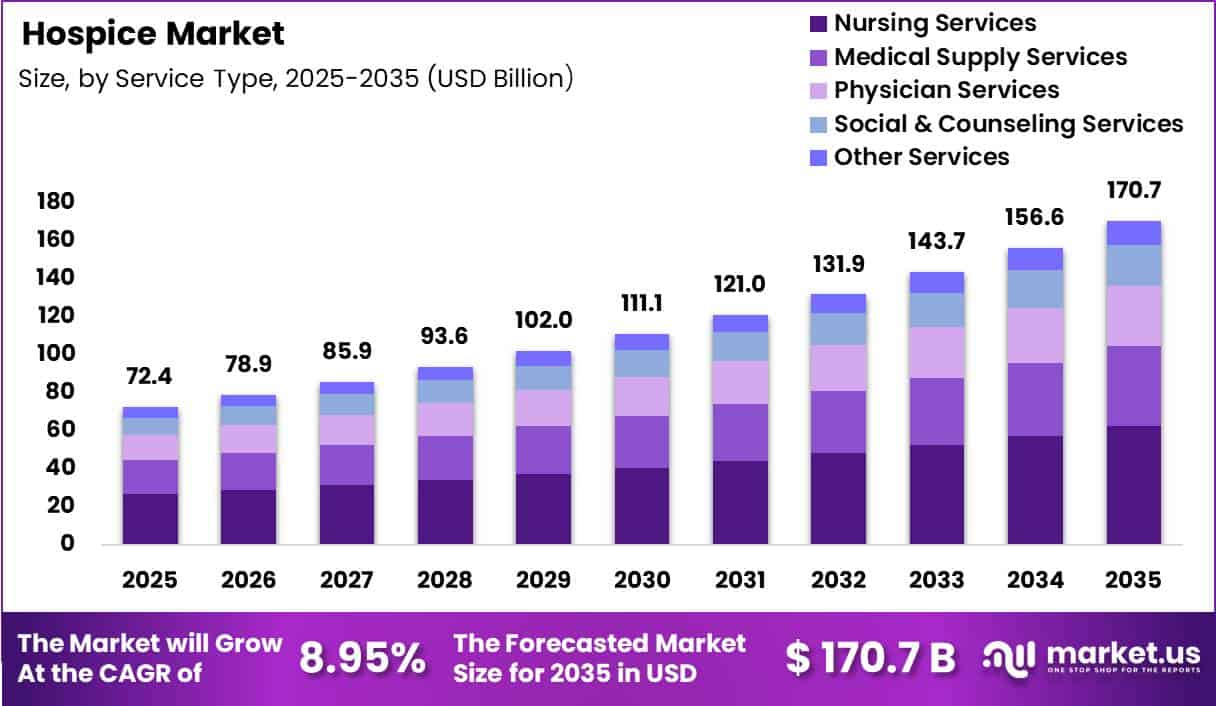
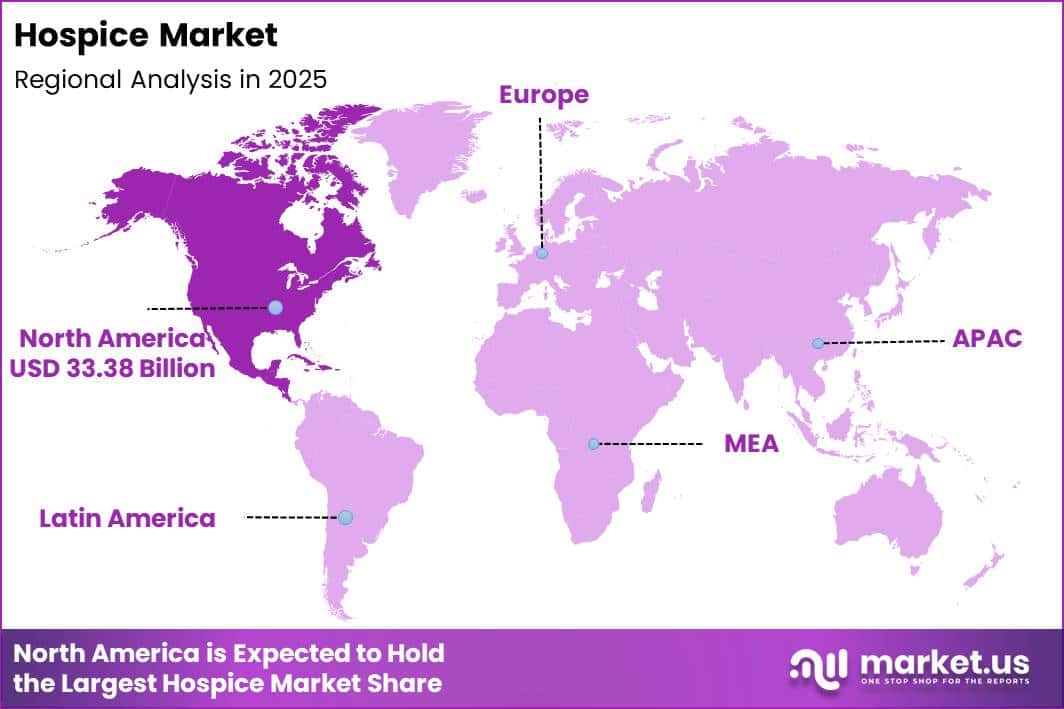
Global Hospice Market size is expected to be worth around US$ 170.66 Billion by 2035 from US$ 72.41 Billion in 2025, growing at a CAGR of 8.95% during the forecast period from 2026 to 2035. In 2025, North America led the market, achieving over 46.10% share with a revenue of US$ 33.38 Billion.
Hospice care has become an essential component of healthcare systems as populations age and the prevalence of chronic, life-limiting illnesses continues to rise worldwide. Hospice services focus on improving quality of life by managing pain, controlling symptoms, and providing emotional, psychological, and spiritual support for patients and their families.
Unlike curative treatment, hospice emphasizes comfort-oriented care for individuals with terminal illnesses, enabling patients to receive personalized support in homes, hospice centers, hospitals, and long-term care facilities.
Governments and healthcare organizations are increasingly recognizing hospice as a cost-effective and patient-centered approach that reduces unnecessary hospitalizations while improving patient satisfaction and dignity during end-of-life care.
According to the World Health Organization (WHO), an estimated 56.8 million people require palliative care every year, including 25.7 million in the last year of life. However, only about 14% of those in need currently receive such care, highlighting a significant gap in access across many countries.
WHO also reports that cardiovascular diseases account for 38.5% of adult palliative care needs, followed by cancer at 34%, chronic respiratory diseases at 10.3%, HIV/AIDS at 5.7%, and diabetes at 4.6%. These figures underscore the expanding demand for hospice and palliative services as chronic disease burdens increase globally.
In the United States, hospice utilization continues to grow steadily. The Centers for Medicare & Medicaid Services (CMS) reported that 1,840,874 Medicare beneficiaries received hospice services in 2024, compared with 1,781,875 in 2023.
CMS has also strengthened oversight through nationwide site visits, enhanced beneficiary protections, and expanded prepayment medical reviews to improve care quality and reduce fraud, supporting the long-term sustainability of hospice services.
Key Takeaways
- Market Size : Global Hospice Market size is expected to be worth around US$ 170.66 Billion by 2035 from US$ 72.41 Billion in 2025.
- Market Share : The market is growing at a CAGR of 8.95% during the forecast period from 2026 to 2035.
- Service Type Analysis : The Nursing Services segment dominated the hospice market in 2025, accounting for 36.60% of the global market share.
- Care Setting Analysis : The Home-Based Hospice Care segment held the largest share of the hospice market in 2025, capturing 51.20% of total revenue.
- Patient Type Analysis : The Cancer Patients segment dominated the hospice market in 2025, accounting for 42.10% of the global market share.
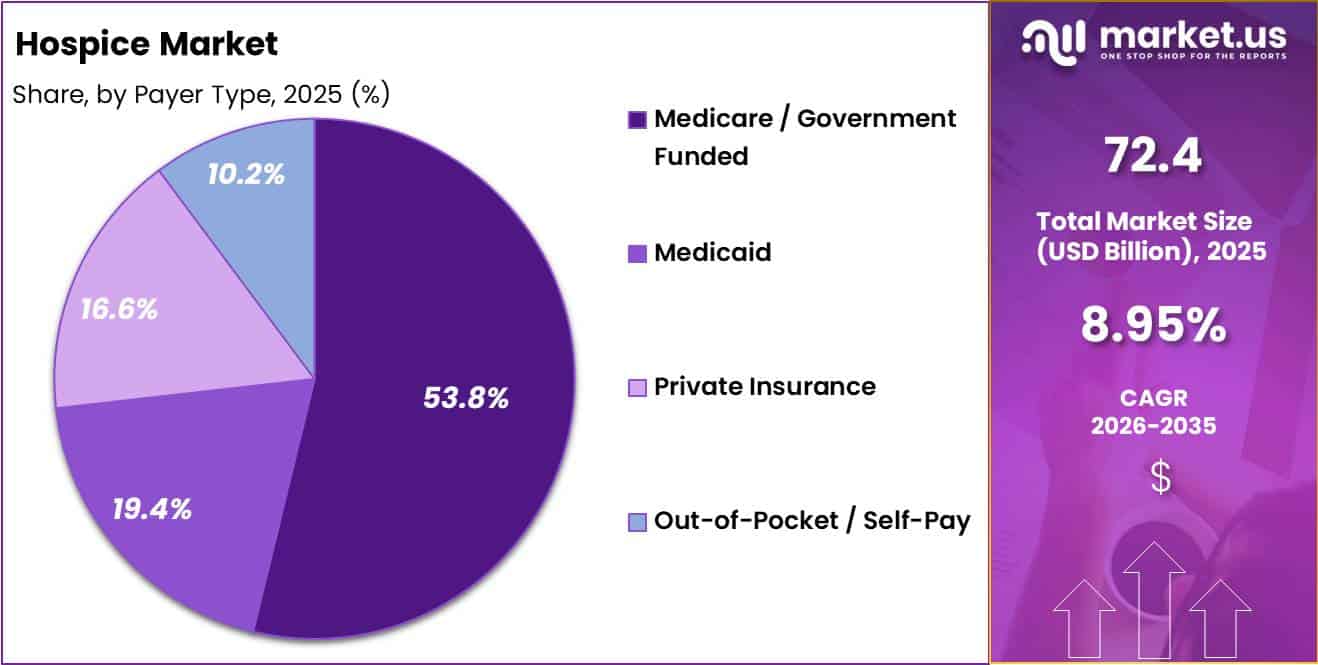
- Payer Type Analysis : The Medicare / Government Funded segment dominated the hospice market in 2025, holding 53.80% of the global market share.
- Regional Analysis : In 2025, North America led the market, achieving over 46.10% share with a revenue of US$ 33.38 Billion.
Service Type Analysis
The Nursing Services segment dominated the hospice market in 2025, accounting for 36.60% of the global market share. Nursing care forms the backbone of hospice services, as registered nurses and licensed practical nurses are responsible for pain management, symptom control, medication administration, patient assessment, and coordination of end-of-life care.
Hospice nurses also educate family caregivers, monitor changes in patient conditions, and collaborate with physicians and social workers to ensure personalized care plans. The Centers for Medicare & Medicaid Services (CMS) identifies nursing care as a core hospice service that must be provided qualified professionals, highlighting its central role in hospice delivery.
Medical Supply Services represent another important segment, providing hospital beds, oxygen equipment, mobility aids, wound-care products, and essential medications that improve patient comfort. Physician Services contribute through medical supervision, prognosis evaluation, treatment planning, and certification of hospice eligibility.
Social & Counseling Services continue to gain importance as patients and families increasingly seek emotional support, grief counseling, advance care planning, and spiritual guidance throughout the hospice journey. The Other Services category includes volunteer support, bereavement programs, therapy services, dietary counseling, and chaplain services that complement clinical care.
Growing awareness of holistic end-of-life care, rising chronic disease prevalence, and increasing preference for multidisciplinary care teams are expected to support balanced growth across all hospice service segments during the forecast period.
Care Setting Analysis
The Home-Based Hospice Care segment held the largest share of the hospice market in 2025, capturing 51.20% of total revenue. Home-based hospice is widely preferred because it allows patients to remain in familiar surroundings while receiving comprehensive medical, nursing, emotional, and spiritual support.
Families also benefit from greater involvement in caregiving, while healthcare providers can reduce unnecessary hospital admissions and improve patient comfort. CMS recognizes home as the primary setting for hospice care and emphasizes keeping patients at home whenever possible through coordinated interdisciplinary services.
Inpatient Hospice Facilities remain essential for patients requiring intensive symptom management or continuous medical supervision that cannot be safely delivered at home. Hospitals continue to provide hospice services for patients transitioning from curative treatment to comfort-focused care, particularly during advanced stages of illness.
Nursing Homes & Assisted Living Facilities are increasingly integrating hospice programs to support elderly residents with terminal conditions while maintaining continuity of care. Residential Hospice Facilities offer a home-like environment with specialized end-of-life services for patients without adequate caregiver support.
Rising aging populations, growing acceptance of hospice care, and improved reimbursement policies are encouraging providers to expand services across multiple care settings. This diversified care model enables patients and families to select the most appropriate environment based on clinical needs, caregiver availability, and personal preferences.
Patient Type Analysis
The Cancer Patients segment dominated the hospice market in 2025, accounting for 42.10% of the global market share. Cancer patients frequently require hospice care during advanced disease stages due to complex symptom management needs, including pain control, fatigue, nausea, and emotional support.
Earlier referrals to hospice and greater awareness among oncology providers have further strengthened demand for specialized end-of-life services for cancer patients. Multidisciplinary hospice teams help improve quality of life while supporting both patients and caregivers through coordinated medical and psychosocial care.
The Cardiovascular Disease Patients segment continues to expand as heart failure and other advanced cardiac conditions increasingly require palliative symptom management and supportive care. Dementia & Neurological Patients represent a growing share because progressive neurological disorders often require long-term comfort care, caregiver education, and behavioral support.
Respiratory Disease Patients, including those with advanced chronic obstructive pulmonary disease (COPD) and other chronic lung disorders, benefit from hospice through symptom relief, oxygen management, and respiratory comfort measures.
The Others category includes patients with kidney disease, liver disease, and multiple chronic illnesses requiring end-of-life support. Increasing life expectancy, rising chronic disease prevalence, and improved physician awareness of timely hospice referrals are expected to drive continued growth across all patient categories throughout the forecast period.
Payer Type Analysis
The Medicare / Government Funded segment dominated the hospice market in 2025, holding 53.80% of the global market share.
Government reimbursement programs remain the primary source of hospice funding, particularly in the United States, where Medicare covers a comprehensive range of hospice services, including nursing care, physician services, medications related to terminal illness, medical equipment, counseling, and bereavement support.
Stable reimbursement policies and broad beneficiary eligibility continue to support the widespread adoption of hospice services among elderly patients.
The Medicaid segment also contributes significantly providing hospice benefits for eligible low-income individuals, although coverage varies across jurisdictions. Private Insurance continues to expand as employers and commercial insurers increasingly recognize the value of hospice in improving patient outcomes while reducing unnecessary healthcare costs.
The Out-of-Pocket / Self-Pay segment remains comparatively smaller but serves patients whose services fall outside insurance coverage or who choose specialized hospice providers. Growing government investment in end-of-life care, expansion of value-based healthcare models, and increasing awareness of hospice benefits are expected to strengthen reimbursement support across both public and private payers.
As healthcare systems continue emphasizing quality, cost efficiency, and patient-centered care, payer diversification will remain an important driver of long-term market growth.
Market Segmentations
By Service Type
- Nursing Services
- Medical Supply Services
- Physician Services
- Social & Counseling Services
- Other Services
By Care Setting
- Home-Based Hospice Care
- Inpatient Hospice Facilities
- Hospitals
- Nursing Homes & Assisted Living
- Residential Hospice Facilities
By Patient Type
- Cancer Patients
- Cardiovascular Disease Patients
- Dementia / Neurological Patients
- Respiratory Disease Patients
- Others
By Payer Type
- Medicare / Government Funded
- Medicaid
- Private Insurance
- Out-of-Pocket / Self-Pay
Drivers
Stricter Regulatory Oversight Improves Hospice Market Quality
Stricter regulatory oversight is emerging as an important growth driver in the hospice market by reducing the presence of marginal operators and strengthening confidence in the sector.
CMS has expanded hospice scrutiny through measures such as high-risk provider screening, fingerprinting requirements for owners with 5% or more ownership in relevant enrollment situations, disclosure of administrators and medical directors as managing employees, and a shorter six-month Medicare billing deactivation period.
CMS also retained the ability to apply repeated surveys and enforcement actions under the Special Focus Program framework, although implementation for CY2025 was paused on February 14, 2025, for reevaluation.
These measures increase compliance costs but are expected to support healthier market development over the medium term. Stronger regulatory guardrails can improve confidence among hospitals, physicians, and families, while scaled providers may gain market share as weaker operators face greater challenges related to ownership, documentation, and survey readiness.
At the same time, continued OIG focus on hospice fraud and eligibility enforcement is making audit resilience, compliance, and referral quality increasingly important determinants of sustainable market growth.
| Driver | (~) % Impact on CAGR Forecast | Geographic Relevance | Impact Timeline |
|---|---|---|---|
| Aging + multi-chronic disease case mix expansion | +2.2% | North America core, EU, Japan, South Korea, urban China spill-over | Long term (≥ 4 years) |
| Reimbursement uplift + cap reset under FY2026 CMS rule | +1.4% | U.S. core, Medicare-dependent providers, secondary spill-over to integrated home-care models | Short term (≤ 2 years) |
| HOPE assessment rollout improving symptom-based care intensity | +1.1% | U.S. core first, selective adoption in other regulated hospice/palliative systems | Medium term (2-4 years) |
| Home-based and tele-palliative delivery widening access | +1.0% | Rural U.S., Canada, Australia, dispersed EU geographies | Medium term (2-4 years) |
| Regulatory scrutiny filtering low-quality supply | +0.8% | U.S. core, compliance-sensitive developed markets | Medium term (2-4 years) |
| Palliative integration into serious-illness pathways | +1.3% | North America core, EU, upper-middle-income APAC corridors | Long term (≥ 4 years) |
Challenges
Workforce Capacity Shortages Limit Hospice Service Expansion
Persistent workforce shortages across physicians, nurses, social workers, and allied palliative staff create a structural ceiling on hospice throughput despite rising need, with global estimates indicating that only about 14% of people requiring palliative care currently receive it, and most unmet need concentrated in low- and middle-income countries.
In high-income systems, hospice volume is growing off a relatively high base, Medicare alone served around 1.7 million hospice beneficiaries in 2022, but staffing growth lags demand as palliative specialists represent well under 5% of total clinician headcount in many regions, resulting in caseloads 20–40% above recommended levels and limiting the ability to expand average daily census without degrading quality.
This capacity tension manifests operationally as longer wait times for admission, often 3–5 days beyond clinical eligibility, shorter median lengths of stay, and higher staff turnover rates, which together subtract an estimated 1.6 % points from the sector’s unconstrained CAGR by forcing providers to leave 5–10% of potential referrals unserved or deferred annually.
Strategically, operators must invest in multi-year pipeline rebuilding, expanding fellowship slots, embedding primary palliative training into generalist curricula, and shifting some lower-acuity tasks to nurse practitioners or telehealth teams, to gradually raise staff-to-patient ratios by perhaps 10–15% over a 5–7 year horizon, with the expectation that meaningful easing of this constraint will only materialize toward the early 2030s rather than within a single planning cycle.
| Challenge | (~) % CAGR Friction Drag | Geographic Relevance | Mitigation Horizon |
|---|---|---|---|
| Workforce capacity gap | -1.6% | North America, EU, APAC urban | Long term (≥ 4 years) |
| Reimbursement–cost misalignment | -1.3% | US Medicare core, OECD payers | Medium term (2–4 years) |
| Quality & fraud oversight load | -0.9% | US Medicare, selected EU states | Medium term (2–4 years) |
| Unequal access & referral delays | -1.1% | LMICs, rural corridors, aging hubs | Long term (≥ 4 years) |
| Data, EHR & AI integration drag | -0.8% | US, EU, advanced APAC | Medium term (2–4 years) |
| Opioid & symptom management friction | -0.7% | North America, EU, selected LMICs | Long term (≥ 4 years) |
Restraints
Reimbursement Pressure and Budget Constraints Limit Hospice Growth
The content has been rewritten to approximately 200 words, with the quantitative values and market-research tone retained.
Reimbursement rate pressure and public-payer budget constraints represent a structural challenge to hospice market growth by reducing revenue per patient day and increasing margin volatility. This pressure is particularly evident across Medicare and national healthcare systems, where hospice spending growth has moderated to low single digits despite continued increases in patient enrollment.
In the U.S., Medicare hospice payments increased approximately 2.7% year-on-year, reaching USD 23.7 billion in 2022 and approximately USD 25.7 billion in 2023. The slower growth reflects a policy environment focused on cost containment, modest annual payment updates, and potential reforms targeting high-margin routine home care stays.
Across OECD markets, healthcare budgets remain constrained by competing priorities, including acute care, primary care, and pharmaceuticals. Hospice reimbursement rates are frequently adjusted below medical cost inflation, potentially resulting in a 1–2% annual decline in real reimbursement power after accounting for wage, drug, transportation, and compliance costs.
Consequently, providers may face 200–300 basis points of margin compression unless staffing, service intensity, and patient length of stay are optimized.
Strategically, constrained reimbursement is expected to limit capacity expansion, delay greenfield development, and encourage conservative CapEx strategies.
Capital is increasingly directed toward efficiency improvements rather than additional beds, favoring scaled operators that can distribute fixed costs across larger patient bases. Overall, reimbursement headwinds could reduce medium-term CAGR by approximately 1.8% points across North America and Europe.
| Restraint | (~) % Impact on CAGR Forecast | Geographic Relevance | Impact Timeline |
|---|---|---|---|
| Heightened fraud & compliance scrutiny | -1.5% | North America core | Short–Medium term |
| Reimbursement rate pressure & budget caps | -1.8% | North America, EU | Medium term |
| Workforce shortages & wage inflation | -1.4% | North America, EU, APAC corridors | Short–Medium term |
| Opioid access and controlled-substance regulation | -0.9% | EU, APAC, emerging markets | Medium–Long term |
| Structural under-penetration of palliative care | -2.2% | Emerging markets, APAC, LATAM, Africa | Long term |
| Digital / home-based care substitution | -1.0% | North America, EU, developed APAC | Medium term |
Opportunity
Hospice Expansion in Under-Served Aging Populations
While demographic aging is a baseline driver, the opportunity here is specifically the under-penetration of hospice and palliative care among eligible elderly in many OECD and advanced Asian markets, where only a minority of deaths occur under any form of palliative care despite rapid growth in the 75+ and 85+ cohorts.
Data from European ageing studies suggest that roughly 13 % of decedents die under palliative care on average across several EU countries, with wide variation from under 1 % in some markets to over 30 % in others, implying a multi-fold gap between current and “best observed” practice within the same macroeconomic context.
If systems converged toward higher-utilization benchmarks, say, moving low-penetration countries to 20–25 % of deaths under hospice or palliative care by 2035, this could unlock incremental revenue per 1,000 deaths on the order of 2–4 million dollars, assuming typical per-case hospice expenditures and length-of-stay adjustments, while also improving bed utilization and staffing leverage for providers.
Japan, Southern and Eastern Europe, and urban centers in Latin America with rapidly aging populations but limited structured hospice programs represent especially large white spaces where hospice could grow at mid-teens rates for an extended period before saturating, adding roughly 1.5 % points to global hospice CAGR if even 10–15 % of deaths in under-served markets transition from hospital-intensive trajectories to hospice-managed end-of-life pathways by 2035.
| Opportunity | (~) % Potential CAGR Upside | Geographic Relevance | Execution Window |
|---|---|---|---|
| Integrated home-based serious-illness programs | +1.8% | North America, Western Europe | Short term |
| Hospice penetration in under-served aging cohorts | +1.5% | EU, Japan, urban Latin America | Medium term |
| Digital triage, RPM, and virtual hospice models | +1.3% | North America core, APAC emerging | Medium term |
| Value-based & risk-bearing hospice contracts | +1.0% | US, UK, select EU payers | Medium term |
| Cross-border and multi-site hospice M&A roll-ups | +0.9% | North America, UK/EU platforms | Long term |
| Integrated palliative-oncology and chronic disease pathways | +1.2% | OECD markets, GCC growth hubs | Long term |
Regional Analysis
In 2025, North America dominated the global hospice market, accounting for 46.10% of total revenue, supported by its well-established healthcare infrastructure, favorable reimbursement framework, and growing elderly population. The United States represents the largest contributor within the region due to the extensive adoption of Medicare-funded hospice services and increasing awareness of end-of-life care.
The Centers for Medicare & Medicaid Services (CMS) continues to strengthen hospice delivery through quality reporting programs, provider oversight, and reimbursement policies that encourage access to patient-centered palliative care. Medicare remains the primary payer for hospice services, making hospice care widely accessible for eligible beneficiaries.
The region also benefits from the rising prevalence of chronic illnesses such as cancer, cardiovascular disease, dementia, and chronic respiratory disorders, all of which increase the demand for hospice and palliative care services.
Canada is likewise expanding palliative and hospice care through provincial healthcare initiatives, community-based programs, and investments aimed at improving access to end-of-life care. Healthcare providers across North America are increasingly integrating home-based hospice models, telehealth consultations, and multidisciplinary care teams to enhance patient comfort and reduce unnecessary hospital admissions.
Additionally, continuous investments in workforce training, digital health technologies, and quality improvement programs are strengthening service delivery. The presence of leading hospice organizations, supportive regulatory frameworks, and growing public acceptance of advance care planning further reinforce North America’s leadership position, enabling the region to maintain a strong share of the global hospice market throughout the forecast period.
Europe holds a significant share of the hospice market due to its mature public healthcare systems, expanding elderly population, and strong integration of palliative care into national health services. The WHO estimates that 4.4 million people require palliative care annually across the European Region.
Meanwhile, Asia-Pacific is projected to witness the fastest growth, driven by rapid population aging, increasing cancer prevalence, and government initiatives to strengthen community-based care.
WHO estimates that around 10 million people in South-East Asia alone require palliative care, accounting for nearly 17% of the global need. Latin America, the Middle East, and Africa are also experiencing gradual market expansion through improving healthcare infrastructure and policy support, although limited specialist workforce, inadequate funding, and restricted access to essential medicines continue to constrain hospice service availability across many countries
Key Regions and Countries
North America
- The US
- Canada
Europe
- Germany
- France
- The U.K.
- Italy
- Spain
- Russia & CIS
- Rest of Europe
Asia Pacific
- China
- India
- Japan
- South Korea
- ASEAN
- Australia & New Zealand
- Rest of Asia Pacific
Middle East & Africa
- GCC
- South Africa
- Rest of Middle East & Africa
Latin America
- Brazil
- Mexico
- Rest of Latin America
Key Player Analysis
The global hospice market is moderately consolidated, with leading providers focusing on expanding home-based hospice services, strengthening palliative care programs, and improving care coordination through multidisciplinary teams.
VITAS Healthcare Corporation remains one of the largest hospice providers in the United States, leveraging decades of experience, extensive geographic coverage, and 24/7 patient support to maintain its leadership position. Amedisys Inc. continues to strengthen its hospice business by integrating home health, palliative care, and hospital-at-home services, enabling comprehensive care for patients with advanced illnesses.
Other major participants, including LHC Group Inc., Kindred Healthcare LLC, Encompass Health Corporation, PruittHealth, and Covenant Care, are expanding their presence through partnerships with hospitals, physician networks, and community healthcare organizations. These companies are investing in skilled clinical staff, digital health technologies, and home-based care models to improve patient outcomes and increase service accessibility.
Market players are also emphasizing personalized care plans, caregiver support, bereavement services, and regulatory compliance to enhance quality standards. Growing demand for aging-in-place services, rising chronic disease prevalence, and supportive reimbursement policies continue to encourage providers to expand their hospice networks and strengthen their competitive position.
As healthcare systems increasingly prioritize value-based and patient-centered care, leading companies are expected to focus on operational efficiency, service quality, and broader regional expansion to capture future growth opportunities.
Top Key Players
- VITAS Healthcare Corporation
- Amedisys Inc.
- LHC Group Inc.
- Kindred Healthcare LLC
- Encompass Health Corporation
- PruittHealth
- Covenant Care
- Brookdale Senior Living Inc.
- Extendicare Inc.
- Agape Care Group
- National Hospice and Palliative Care Organization
- Seasons Hospice & Palliative Care
Recent Developments
- In September 2025, VITAS Healthcare Corporation was recognized as a 2025 Top Workplace in Healthcare and reaffirmed its continued investment in hospice care delivery. The company reported serving more than 22,000 patients daily with nearly 12,000 employees across 15 U.S. states and Washington, D.C., reflecting continued expansion of its hospice workforce and patient care capacity.
- In August 2025, UnitedHealth Group’s Optum completed its US$ 3.3 billion acquisition of Amedisys Inc. Following a settlement with the U.S. Department of Justice, UnitedHealth agreed to divest 164 home health and hospice locations across 19 U.S. states to preserve market competition in hospice and home healthcare services.
- In July 2025, VITAS Healthcare Corporation appointed Joel L. Wherley as President and Chief Executive Officer, succeeding Nick Westfall following his retirement. The leadership transition is intended to support VITAS’ continued expansion of hospice and palliative care services across its network serving 15 U.S. states and Washington, D.C.
Report Scope
| Report Features | Description |
|---|---|
| Market Value (2025) | US$ 72.41 Billion |
| Forecast Revenue (2035) | US$ 170.66 Billion |
| CAGR (2026-2035) | 8.95% |
| Base Year for Estimation | 2025 |
| Historic Period | 2020-2024 |
| Forecast Period | 2026-2035 |
| Report Coverage | Revenue Forecast, Market Dynamics, Competitive Landscape, Recent Developments |
| Segments Covered | By Service Type (Nursing Services, Medical Supply Services, Physician Services, Social & Counseling Services, Other Services), By Care Setting (Home-Based Hospice Care, Inpatient Hospice Facilities, Hospitals, Nursing Homes & Assisted Living, Residential Hospice Facilities), By Patient Type (Cancer Patients, Cardiovascular Disease Patients, Dementia / Neurological Patients, Respiratory Disease Patients, Others), By Payer Type (Medicare / Government Funded, Medicaid, Private Insurance, Out-of-Pocket / Self-Pay) |
| Regional Analysis | North America – The US, Canada; Europe – Germany, France, U.K., Italy, Spain, Russia & CIS, Rest of Europe; Asia Pacific – China, India, Japan, South Korea, ASEAN, Australia & New Zealand, Rest of Asia Pacific; Middle East & Africa – GCC, South Africa, Rest of Middle East & Africa; Latin America – Brazil, Mexico, Rest of Latin America |
| Competitive Landscape | VITAS Healthcare Corporation, Amedisys Inc., LHC Group Inc., Kindred Healthcare LLC, Encompass Health Corporation, PruittHealth, Covenant Care, Brookdale Senior Living Inc., Extendicare Inc., Agape Care Group, National Hospice and Palliative Care Organization, Seasons Hospice & Palliative Care |
| Customization Scope | Customization for segments, region/country-level will be provided. Moreover, additional customization can be done based on the requirements. |
| Purchase Options | We have three licenses to opt for: Single User License, Multi-User License (Up to 5 Users), Corporate Use License (Unlimited User and Printable PDF) |





































