


Market Overview
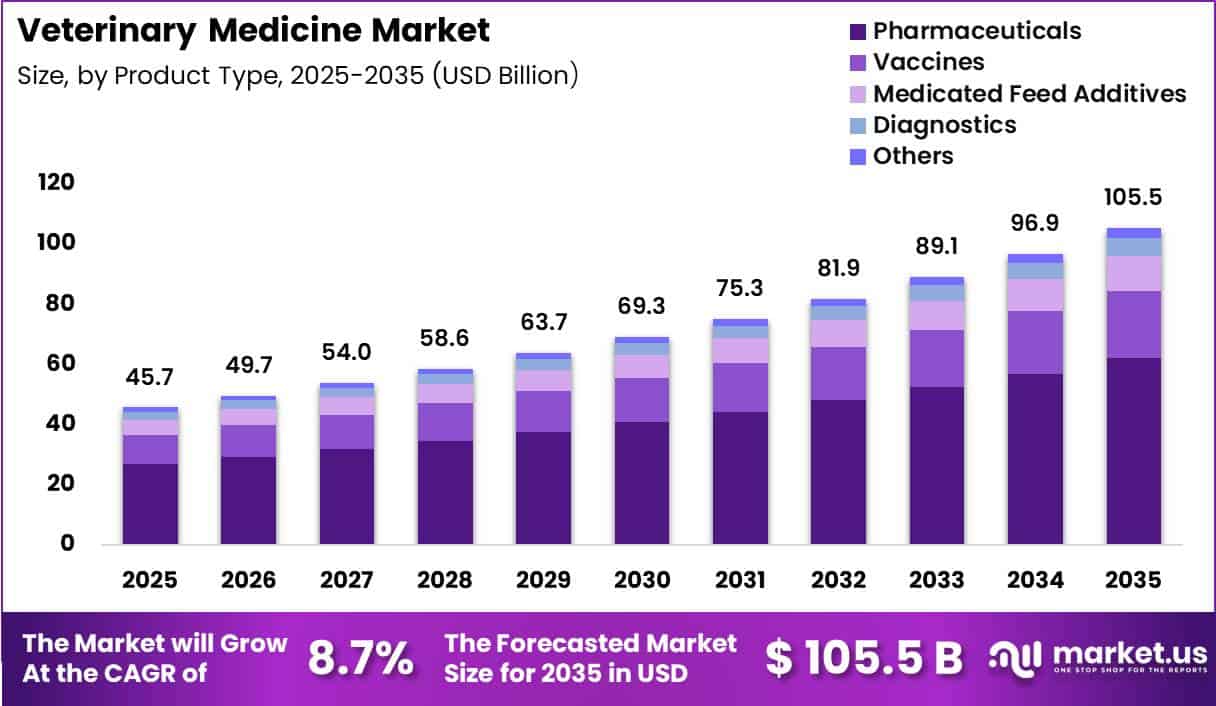
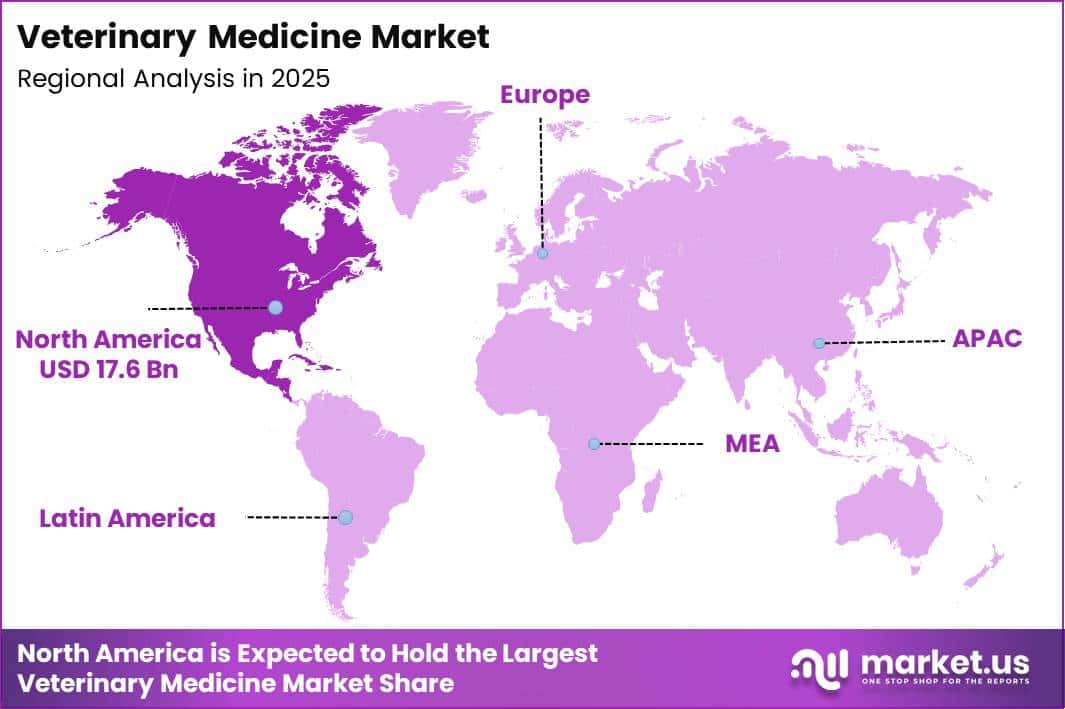
Global Veterinary Medicine Market size is expected to be worth around US$ 105.5 Billion by 2035 from US$ 45.7 Billion in 2025, growing at a CAGR of 8.7% during the forecast period from 2026 to 2035. In 2025, North America led the market, achieving over 38.6% share with a revenue of US$ 17.6 Billion.
The Veterinary Medicine Market is becoming increasingly important as governments, animal health organizations, and healthcare systems focus on disease prevention, food security, and the protection of human health through the One Health approach. Veterinary medicines include vaccines, anti-infectives, antiparasitic treatments, biological products, and other therapeutic solutions used for companion animals, livestock, and aquatic species.
Rising concerns regarding zoonotic diseases are strengthening the demand for advanced veterinary healthcare solutions. According to the World Organisation for Animal Health (WOAH), around 60% of known human infectious diseases originate from animals, while approximately 75% of emerging infectious diseases in humans have an animal origin. These risks highlight the importance of veterinary surveillance, vaccination, and disease-control programs.
Animal disease management is also critical for global food security. WOAH reported that more than 20% of global animal production losses are linked to animal diseases, creating a need for effective prevention strategies, improved veterinary services, and timely access to medicines.
Antimicrobial resistance (AMR) is another major factor influencing veterinary medicine practices. The U.S. Food and Drug Administration (FDA) highlights that inappropriate antimicrobial use in animals can contribute to resistant bacteria that may affect both animal and human health. In FY 2024, FDA’s Center for Veterinary Medicine developed a five-year action plan to support antimicrobial stewardship in veterinary settings.
Overall, the veterinary medicine sector continues to evolve with greater emphasis on preventive healthcare, vaccination programs, responsible medicine use, and stronger animal health systems to support public health and sustainable agriculture.
Key Takeaways
- Market Size: Global Veterinary Medicine Market size is expected to be worth around US$ 105.5 Billion by 2035 from US$ 45.7 Billion in 2025.
- Market Share: The market is growing at a CAGR of 8.7% during the forecast period from 2026 to 2035.
- Product Type: Pharmaceuticals segments dominate the market, accounting for 58.8% share in 2025.
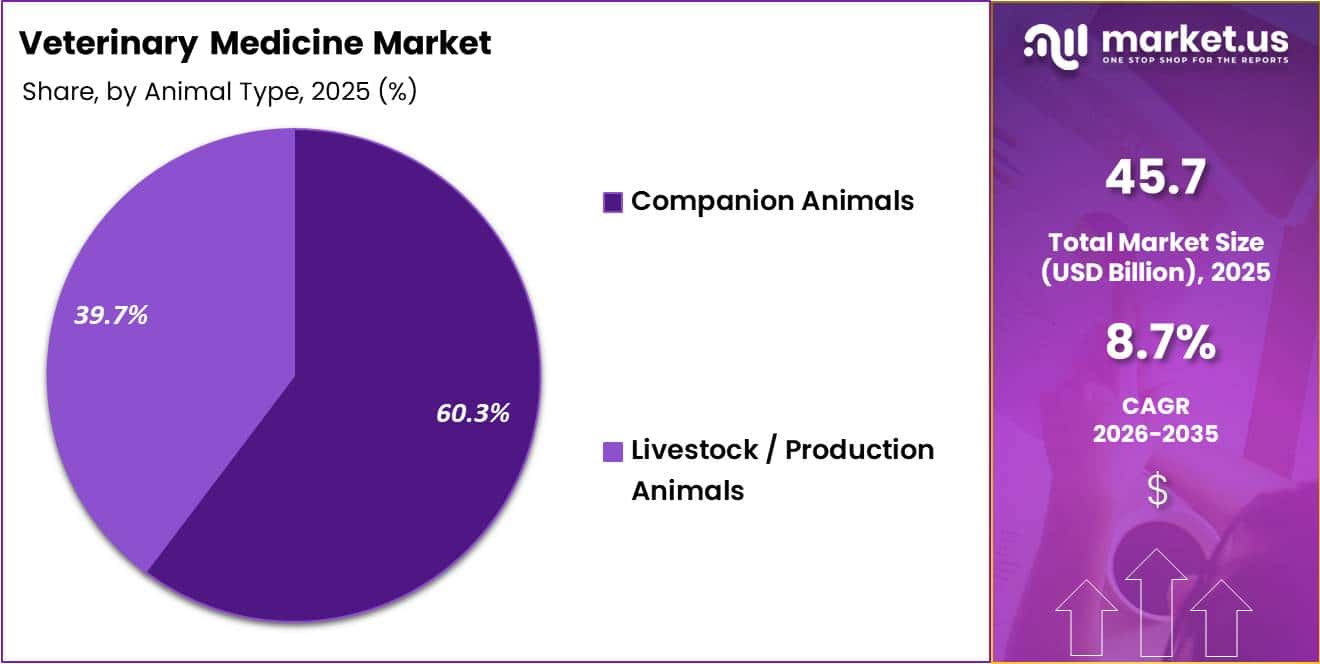
- Animal Type: Companion Animals segments dominate the market with a 60.3% share in 2025.
- Route of Administration: Parenteral segments dominate the market, accounting for 41.2% share in 2025.
- Distribution Channel: Veterinary Hospitals & Clinics segments dominate the market with a 54.4% share in 2025.
- Regional Analysis: In 2025, North America led the market, achieving over 38.6% share with a revenue of US$ 17.6 Billion.
Product Type Analysis
Pharmaceuticals segments dominate the market.
The Veterinary Medicine Market is segmented by product type into Pharmaceuticals, Vaccines, Medicated Feed Additives, Diagnostics, and Others. Among these, Pharmaceuticals segments dominate the market, accounting for 58.8% share in 2025, supported by the increasing demand for therapeutic treatments, disease management solutions, and advanced veterinary drugs for both companion and livestock animals.
Pharmaceutical products such as anti-infectives, parasiticides, anti-inflammatory drugs, and chronic disease management medications continue to experience strong adoption due to rising animal healthcare awareness and the growing need to improve animal productivity.
Vaccines represent a significant segment with a 21.4% market share in 2025, driven by preventive healthcare initiatives, increasing vaccination programs, and efforts to control infectious diseases among animals. Medicated Feed Additives account for 11.0% share, supported by their role in improving animal growth, nutrition, and disease prevention in livestock production.
Diagnostics contribute 5.7% share, with growth supported by advancements in veterinary testing technologies and early disease detection capabilities. The Others segment holds 3.1% share, including various supportive veterinary healthcare products. Overall, product innovation and preventive care approaches are shaping growth across veterinary medicine segments.
Animal Type Analysis
Companion Animals segments dominate the market.
The Veterinary Medicine Market is categorized by animal type into Companion Animals and Livestock / Production Animals. Companion Animals segments dominate the market with a 60.3% share in 2025, driven by increasing pet ownership, rising expenditure on pet healthcare, and growing demand for advanced veterinary treatments.
Dogs and cats represent the major contributors within this segment, with owners increasingly seeking preventive healthcare services, vaccinations, pharmaceuticals, and diagnostic solutions to improve animal longevity and quality of life.
The growing humanization of pets and increased awareness regarding routine veterinary care have further strengthened demand for companion animal medicines. Advanced treatments for chronic conditions, including dermatological disorders, infections, and age-related diseases, are supporting market expansion in this segment.
Livestock / Production Animals account for 39.7% share in 2025, supported by the need to maintain animal health, improve productivity, and ensure food safety across dairy, poultry, and meat production sectors.
Veterinary medicines play an essential role in disease prevention, herd management, and reducing production losses. Increasing focus on sustainable livestock farming and regulatory compliance is expected to further support adoption of veterinary healthcare products.
Route of Administration Analysis
Parenteral segments dominate the market.
The Veterinary Medicine Market is segmented by route of administration into Parenteral, Oral, and Topical. Among these, Parenteral segments dominate the market, accounting for 41.2% share in 2025, due to their effectiveness, faster therapeutic response, and higher reliability in delivering medications directly into the animal body.
Injectable veterinary medicines are widely used for vaccines, antibiotics, and critical treatments, particularly in livestock healthcare where rapid disease control is essential.
The adoption of parenteral administration is supported by increasing vaccination programs, improved veterinary practices, and the need for precise drug delivery in large animal populations. Veterinary professionals often prefer injectable solutions for their controlled dosage and better absorption compared with alternative administration methods.
Oral administration represents a significant segment, supported by the convenience of tablets, liquids, and feed-based medication methods. It is widely used for routine treatments, nutritional supplements, and chronic disease management, especially among companion animals.
The Topical segment continues to expand due to increasing demand for external treatments, including dermatological care, parasite control, and wound management. Growing innovation in drug delivery technologies is expected to enhance adoption across all administration routes.
Distribution Channel Analysis
Veterinary Hospitals & Clinics segments dominate the market.
The Veterinary Medicine Market is segmented by distribution channel into Veterinary Hospitals & Clinics, Retail Pharmacies & Pet Stores, and Online Stores. Veterinary Hospitals & Clinics segments dominate the market with a 54.4% share in 2025, supported by professional veterinary consultations, diagnostic services, and access to prescription-based medicines.
These channels provide integrated healthcare solutions, including disease diagnosis, treatment administration, vaccination services, and follow-up care, making them the preferred choice for pet owners and livestock operators.
The increasing number of veterinary facilities, rising demand for specialized animal healthcare services, and growing adoption of preventive care programs are strengthening the position of veterinary hospitals and clinics. These establishments also enable access to advanced pharmaceuticals, vaccines, and diagnostic products under professional supervision.
Retail Pharmacies & Pet Stores represent an important distribution segment by offering convenient access to over-the-counter veterinary products, supplements, and routine healthcare solutions. Online Stores are gaining momentum due to increasing digital adoption, easy product availability, and the growing preference for home delivery services among pet owners.
The expansion of e-commerce platforms and digital veterinary services is expected to further support online distribution growth in the veterinary medicine market.
Key Market Segments
By Product Type
- Pharmaceuticals
- Vaccines
- Medicated Feed Additives
- Diagnostics
- Others
By Animal Type
- Companion Animals
- Livestock / Production Animals
By Route of Administration
- Parenteral
- Oral
- Topical
By Distribution Channel
- Veterinary Hospitals & Clinics
- Retail Pharmacies & Pet Stores
- Online Stores
Drivers
Parasite and Vector Control Intensification Drives Preventive Care Growth.
Recent FDA approvals show continued momentum in ectoparasiticide and endectocide innovation, with 2025–2026 label expansions and approvals covering fleas, ticks, heartworm prevention, tapeworm prevention, mites, myiasis, and long-duration protection such as 12-month tick and flea claims in dogs and expanded tick-control indications in both dogs and cats.
That matters because parasite control has moved from a low-ticket seasonal category into a preventive platform tied to Lyme risk mitigation, clinic wellness plans, and recurring retail capture.
Products with 1-month, 2-month, and 12-month protection windows change adherence curves and lower dropout versus older monthly-only formats, while livestock labels tied to myiasis, coccidiosis, worm burdens, and productivity add a production-economics layer to demand.
CDC notes that animals can carry pathogens while appearing healthy, and FDA’s 2025–2026 approvals repeatedly reference vector-linked prevention claims. The growth effect comes from a mix shift toward premium broad-spectrum prevention, higher annual treatment penetration per animal, and broader geographic normalization of vector management as tick ranges and pathogen awareness expand.
| Driver | (~) % Impact on CAGR Forecast | Geographic Relevance | Impact Timeline |
|---|---|---|---|
| Pet chronic-care expansion in dermatology, cardiology, pain and anxiety | +1.9% | North America core, EU, Japan, urban APAC | Medium term (2-4 years) |
| Parasite and vector-control intensification across dogs, cats and livestock | +1.6% | North America core, EU, LATAM livestock belts, APAC corridors | Short term (≤ 2 years) |
| Livestock outbreak pressure raising demand for anti-infectives, vaccines and herd health protocols | +1.4% | U.S., EU poultry zones, Southeast Asia, Latin America | Short term (≤ 2 years) |
| Regulatory innovation flow and species-specific label expansion accelerating launch density | +1.2% | U.S. core, EU follow-on, Australia, advanced APAC | Medium term (2-4 years) |
| Telemedicine and digitally enabled follow-up improving treatment adherence and visit capture | +0.9% | North America core, UK, EU urban markets, India private clinics | Short term (≤ 2 years) |
| One Health antimicrobial stewardship shifting spend toward diagnostics, targeted therapy and premium alternatives | +0.7% | EU core, U.S., China, Southeast Asia, export-oriented livestock markets | Long term (≥ 4 years) |
Challenges
Solid Electrolyte Interface Instability Limits Battery Commercialization.
Solid electrolyte interface instability reflects the fact that many sulfide, oxide, and polymer systems still exhibit room-temperature ionic conductivities below 3–5 mS/cm versus 8–12 mS/cm typical for state-of-the-art liquid electrolytes, creating higher interfacial resistance and non-uniform lithium-metal plating that can raise cell impedance by 30–50% over the first 200–300 cycles.
At stack current densities above 3–5 mA/cm², small defects at the anode-electrolyte boundary can trigger localized current hotspots that accelerate dendrite nucleation; even when dendrite penetration is reduced versus conventional Li-ion, partial short events and latent mechanical damage can push early-life capacity fade from 10–15% to 20–25% over 500–800 cycles in aggressive EV duty profiles.
This instability forces conservative charge protocols, capping fast-charge rates at 2–3C rather than the 4–6C often highlighted in roadmap slides, which lengthens charge times by 10–15 minutes per session and reduces effective EV throughput in high-utilization fleets by 5–10% relative to marketing claims.
Strategically, cell makers must fund multi-year electrolyte chemistry programs exploring doped oxides, composite polymer-ceramic hybrids, and engineered interlayers, with target metrics such as interfacial resistance below 20–30 Ω·cm² at 25°C and cycle life above 1,500–2,000 cycles at 80% retention, while building cross-disciplinary teams in electrochemistry, materials science, and computational modeling.
Until this is achieved, OEMs will ring-fence solid-state packs to premium or niche platforms, shaving an estimated 1.2 % points off potential global CAGR.
| Challenge | (~) % CAGR Friction Drag | Geographic Relevance | Mitigation Horizon |
|---|---|---|---|
| Scale-up cell yield loss | -1.4% | East Asia gigafactories, EU auto belt, US battery hubs | Medium term (2-4 years) |
| Solid electrolyte interface instability | -1.2% | Japan & Korea R&D clusters, EU OEM pilots, US labs | Long term (≥ 4 years) |
| Critical materials cost volatility | -1.0% | Global lithium & nickel corridors, APAC mining, EU refineries | Medium term (2-4 years) |
| Specialized manufacturing equipment bottlenecks | -0.9% | East Asia equipment makers, EU integration lines, NA pilot plants | Medium term (2-4 years) |
| Thermal & mechanical validation complexity | -0.8% | Global EV platforms, aerospace & medical device nodes | Long term (≥ 4 years) |
| High-skill talent pipeline gap | -0.7% | US & EU advanced battery clusters, Japan & Korea tech hubs | Long term (≥ 4 years) |
Restraints
Persistent Animal Drug Shortages Disrupt Veterinary Market Growth.
Persistent animal drug shortages, characterized by fewer new shortage events but much longer durations, have become a structural restraint on veterinary medicine growth by constraining procedure volumes, increasing substitution frictions, and eroding customer confidence in supply reliability.
Recent data from broader pharmaceutical shortage monitoring show that, while year-end counts of drugs in shortage fell by roughly 20–25% between 2024 and 2025, the average duration of active shortages increased to more than 5 years, up from approximately 2 years in 2019, implying that when key animal products drop into shortage, they often remain unavailable across multiple business cycles and budgeting windows.
In the veterinary space, shortages of core products such as insulins for companion animals, parasiticides, and critical anesthetics have historically been linked to manufacturing site delays, discontinuations, and constrained fill-finish capacity, and in 2025–2026 regulators in the United States and other developed markets report multiple medically necessary veterinary products being under shortage review and mitigation planning.
At the practice level, elongated shortages translate into deferred procedures, where 5–10% of planned interventions in affected segments may be postponed or cancelled in given quarters, alongside revenue churn as veterinarians must allocate additional time to locate substitutes, renegotiate protocols, and manage client expectations, effectively adding 5–15 minutes per consult in shortage-affected cases and reducing daily throughput by an estimated 5–8% in busy clinics.
On the manufacturer side, this constraint exacerbates margin volatility; unplanned capacity outages can erase 3–5 % points of operating margin on affected lines due to expedited freight, overtime, and remediation costs, while inventory imbalances from partial component shortages increase wastage and write-offs.
Strategically, although regulators have issued guidance to accelerate reviews and encourage early reporting of shortages, the structural fragility of supply chains in sterile injectables and biologics means that, over a 3–4-year medium-term horizon, persistent shortages will realistically shave around 1.3% points off the global veterinary medicine CAGR versus a scenario with stable supply, especially in North America and Europe where complex, multi-source regulatory approvals are required for each substitution.
| Restraint | (~) % Impact on CAGR Forecast | Geographic Relevance | Impact Timeline |
|---|---|---|---|
| Intensifying antimicrobial stewardship & use restrictions | -1.5% | EU, North America, selected Asia | Long term (≥ 4 years) |
| Persistent animal drug shortages & elongated recovery cycles | -1.3% | North America core, EU, selective LATAM | Medium term (2-4 years) |
| High regulatory & compliance burden for veterinary medicinal products | -1.1% | EU, North America, emerging regulatory markets | Long term (≥ 4 years) |
| Cost inflation in APIs, biologics, and fill-finish operations | -0.9% | Global, with higher stress in import-dependent regions | Medium term (2-4 years) |
| Structural access gaps between companion and livestock segments | -0.8% | APAC corridors, Africa, Latin America smallholder systems | Long term (≥ 4 years) |
Opportunity
AI-Enabled Precision Livestock Platforms Transform Veterinary Care.
This opportunity centers on building farm-scale, integrated AI platforms that fuse sensor data (wearables, environmental monitors), herd health records, and productivity metrics to deliver predictive veterinary interventions across dairy, poultry, and aquaculture, capturing a largely untapped TAM in data-driven livestock medicine that sits above conventional drugs and vaccines.
Baseline veterinary medicine growth today is still mostly tied to unit volumes of pharmaceuticals and biologicals; digital decision-support and precision health optimization remain fragmented pilots with limited monetization, even though livestock and fish production are projected to rise about 14% from 2020–2030 globally, structurally increasing the value of marginal health gains per animal.
If an integrated platform model can lift feed-to-meat conversion efficiency by 2–4%, reduce morbidity episodes per 100 animals by 10–15%, and cut unnecessary antibiotic usage by 20–30% through earlier detection, farm-level EBIT margins could expand by 150–300 basis points, enabling veterinary platform fees of 2–4% of farm revenues and incremental per-animal lifetime value increases of USD 5–15.
At industry scale, this could unlock an additional USD 8–12 billion TAM in data services and AI-guided protocols by 2035 on top of existing drug spending, translating into roughly 2.2% points of incremental CAGR upside versus a 7–8% baseline, particularly in fast-industrializing APAC, LatAm, and African protein value chains where mechanization and sensor penetration are now reaching viable density.
Critically, this is an opportunity rather than a driver because current revenue projections for veterinary medicine to 2035 still predominantly assume traditional product sales; they do not fully embed recurring SaaS revenue streams tied to herd-level performance contracts, leaving this digital overlay as a genuine future upside rather than a baked-in baseline.
| Opportunity | (~) % Potential CAGR Upside | Geographic Relevance | Execution Window |
|---|---|---|---|
| AI-enabled precision livestock health platforms | +2.2% | APAC emerging, LatAm, Africa, EU agribusiness | Medium term (2-4 years) |
| Integrated chronic care programs for companion animals | +1.9% | North America core, Western EU, urban APAC | Short term (≤ 2 years) |
| Veterinary telehealth & remote monitoring monetization | +1.6% | North America, EU, India, China | Short–Medium term (≤ 4 years) |
| Preventive wellness subscriptions & insurance bundles | +1.8% | North America, EU, select APAC metros | Medium term (2-4 years) |
| One-Health antimicrobial stewardship & diagnostics solutions | +1.3% | Global (OECD focus, emerging hotspots) | Long term (≥ 4 years) |
| Emerging market veterinary infrastructure platforms | +2.5% | APAC emerging, SSA, LatAm, MENA | Long term (≥ 4 years) |
Regional Analysis
In 2025, North America dominated the Veterinary Medicine Market.
North America dominated the Veterinary Medicine Market in 2025, accounting for over 38.6% of the global market share with revenue of US$ 17.6 Billion. The region’s leading position is supported by advanced veterinary healthcare infrastructure, high pet ownership rates, increased spending on animal healthcare, and strong adoption of preventive veterinary solutions.
The presence of established pharmaceutical companies, research institutions, and advanced diagnostic capabilities further strengthens market growth across the United States and Canada.
The region is witnessing rising demand for companion animal medicines due to increasing awareness regarding pet wellness, vaccination programs, and chronic disease management. Growing investments in biologics, parasiticides, pain management therapies, and innovative therapeutics are encouraging product development and improving treatment outcomes.
Additionally, livestock production industries are driving demand for veterinary medicines focused on disease prevention, herd health management, and food safety.
The United States represents the largest contributor within North America due to favorable regulatory support, higher veterinary service utilization, and significant research and development activities by leading animal health companies. Strategic collaborations, acquisitions, and expansion of digital veterinary platforms are further enhancing market competitiveness.
Moreover, the integration of technologies such as telemedicine, AI-based diagnostics, and data-driven animal health monitoring is transforming veterinary care delivery. With continuous innovation, strong healthcare infrastructure, and increasing investments in animal disease prevention, North America is expected to maintain its leadership position in the global Veterinary Medicine Market.
Key Regions and Countries
North America
- The US
- Canada
Europe
- Germany
- France
- The U.K.
- Italy
- Spain
- Russia & CIS
- Rest of Europe
Asia Pacific
- China
- India
- Japan
- South Korea
- ASEAN
- Australia & New Zealand
- Rest of Asia Pacific
Middle East & Africa
- GCC
- South Africa
- Rest of Middle East & Africa
Latin America
- Brazil
- Mexico
- Rest of Latin America
Key Player Analysis
The Veterinary Medicine Market demonstrates a consolidated competitive structure, with leading global companies holding significant influence through broad product portfolios, advanced research capabilities, and extensive distribution networks.
Competition is driven by innovation in vaccines, pharmaceuticals, parasiticides, biologics, companion animal therapies, and livestock health solutions. Key players are focusing on R&D investments, strategic collaborations, product diversification, and integrated animal healthcare ecosystems to strengthen market positioning.
Zoetis Inc., Merck & Co., Inc., Elanco Animal Health Incorporated, and Boehringer Ingelheim Animal Health emphasize innovation through advanced vaccines, therapeutics, and digital health solutions that improve disease prevention and treatment outcomes. CEVA Santé Animale and Phibro Animal Health Corporation focus on livestock health management, biological solutions, and partnerships that enhance animal productivity.
Vetoquinol S.A., Virbac S.A., Dechra Pharmaceuticals PLC, Kindred Biosciences, Jurox Animal Health, and Norbrook Laboratories strengthen competition through specialized therapies, product innovation, and targeted animal healthcare solutions.
Companies are increasingly adopting ecosystem-based strategies by integrating diagnostics, digital monitoring platforms, veterinary services, and supply-chain partnerships to deliver comprehensive healthcare solutions for companion animals and livestock.
Top Key Players
- Zoetis Inc.
- Merck & Co., Inc. (MSD Animal Health)
- Elanco Animal Health Incorporated
- Boehringer Ingelheim Animal Health
- CEVA Santé Animale
- Phibro Animal Health Corporation
- Vetoquinol S.A.
- Virbac S.A.
- Dechra Pharmaceuticals PLC
- Kindred Biosciences (Elanco)
- Jurox Animal Health
- Norbrook Laboratories
Recent Developments
- In January 2025, Ceva Animal Health and Touchlight announced a long-term technology agreement to develop and manufacture next-generation animal health vaccines and therapeutics using Touchlight’s dbDNA technology. The partnership focuses on improving vaccine innovation by enabling faster and cleaner DNA-based product development for multiple animal health applications.
- In February 2025, MSD Animal Health signed a global distribution agreement with Union Agener Animal Health for LACTOTROPIN®. The agreement expanded access to a recombinant bovine somatotropin product designed to support dairy productivity by improving milk production efficiency in lactating cows.
- In August 2025, Zoetis strengthened its veterinary diagnostics ecosystem through its partnership with VitalRADS, focusing on teleradiology services, digital imaging, and AI-supported diagnostic workflows. The collaboration supports veterinarians with faster access to specialist interpretation and advanced diagnostic tools.
- In January 2026, Dechra Pharmaceuticals appointed Ian MacKellar as Chief Operating Officer and President of Global Manufacturing & Supply Chain. The leadership move aims to improve operational efficiency, manufacturing strength, and global supply chain performance.
Report Scope
| Report Features | Description |
|---|---|
| Market Value (2025) | US$ 45.7 Billion |
| Forecast Revenue (2035) | US$ 105.5 Billion |
| CAGR (2026-2035) | 8.7% |
| Base Year for Estimation | 2025 |
| Historic Period | 2020-2024 |
| Forecast Period | 2026-2035 |
| Report Coverage | Revenue Forecast, Market Dynamics, Competitive Landscape, Recent Developments |
| Segments Covered | By Product Type (Pharmaceuticals, Vaccines, Medicated Feed Additives, Diagnostics, Others), By Animal Type (Companion Animals, Livestock / Production Animals), By Route of Administration (Parenteral, Oral, Topical), By Distribution Channel (Veterinary Hospitals & Clinics, Retail Pharmacies & Pet Stores, Online Stores) |
| Regional Analysis | North America – The US, Canada; Europe – Germany, France, U.K., Italy, Spain, Russia & CIS, Rest of Europe; Asia Pacific – China, India, Japan, South Korea, ASEAN, Australia & New Zealand, Rest of Asia Pacific; Middle East & Africa – GCC, South Africa, Rest of Middle East & Africa; Latin America – Brazil, Mexico, Rest of Latin America |
| Competitive Landscape | Zoetis Inc., Merck & Co., Inc. (MSD Animal Health), Elanco Animal Health Incorporated, Boehringer Ingelheim Animal Health, CEVA Santé Animale, Phibro Animal Health Corporation, Vetoquinol S.A., Virbac S.A., Dechra Pharmaceuticals PLC, Kindred Biosciences (Elanco), Jurox Animal Health, Norbrook Laboratories |
| Customization Scope | Customization for segments, region/country-level will be provided. Moreover, additional customization can be done based on the requirements. |
| Purchase Options | We have three licenses to opt for: Single User License, Multi-User License (Up to 5 Users), Corporate Use License (Unlimited User and Printable PDF) |





































