


Market Overview
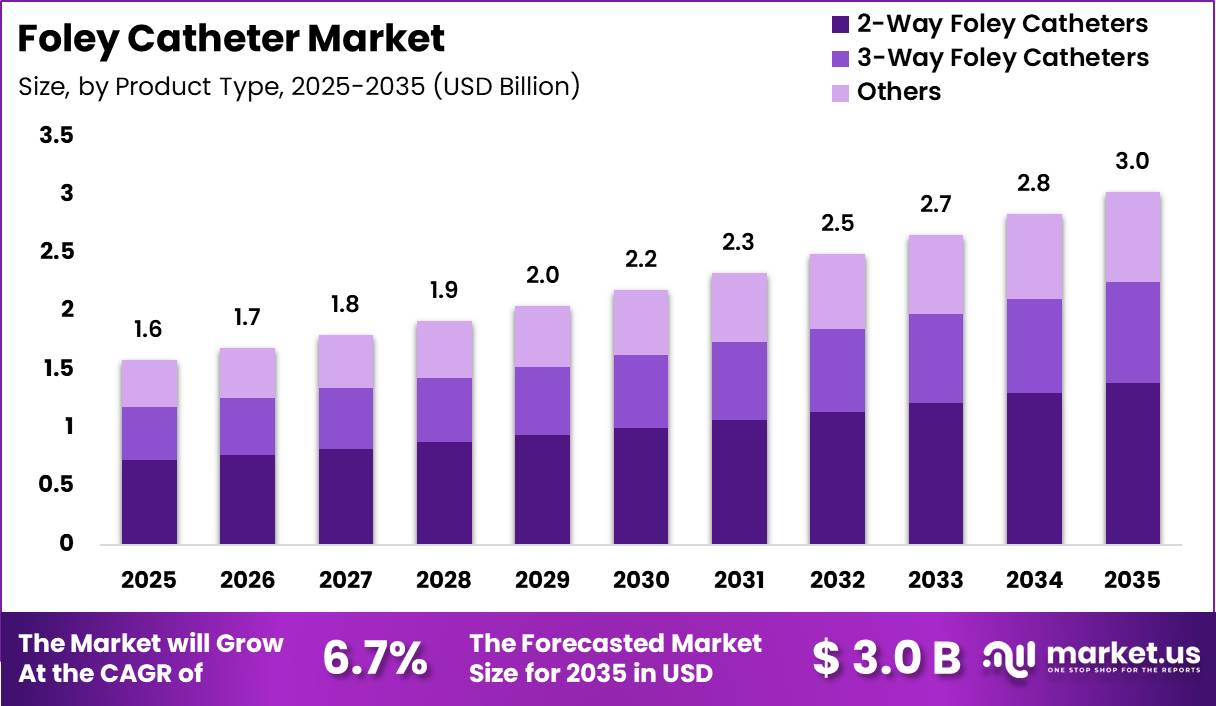
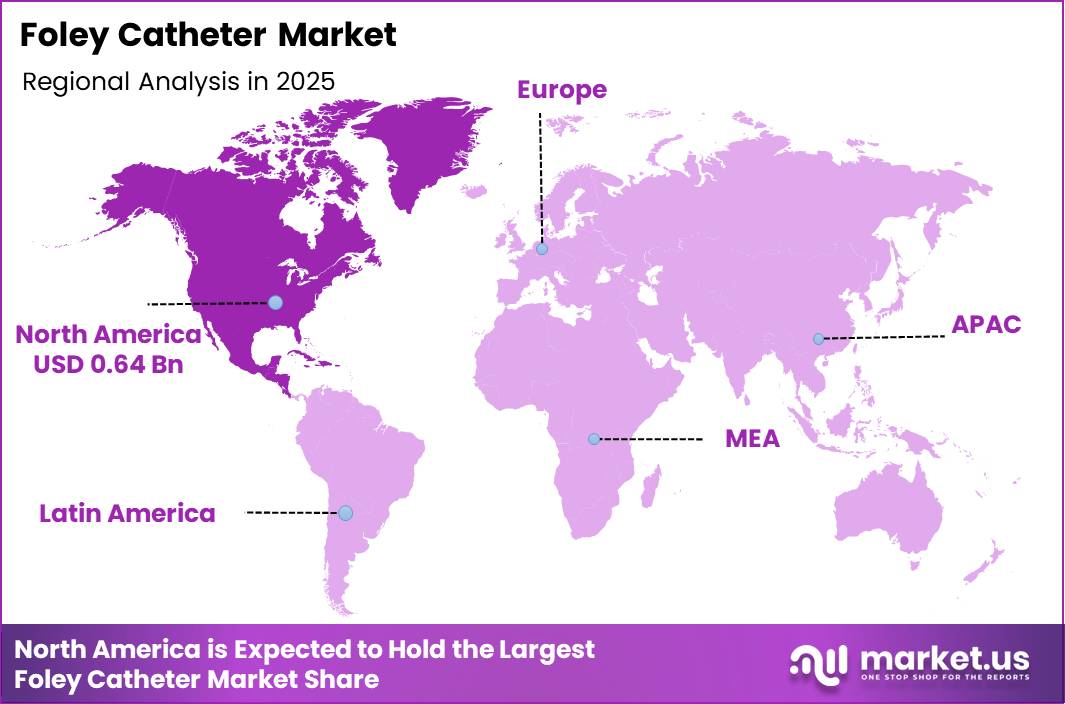
The Global Foley Catheter Market size is expected to reach around US$ 3.0 Billion by 2035, up from US$ 1.6 Billion in 2025, growing at a CAGR of 6.7% during the forecast period from 2026 to 2035. In 2025, North America led the market, achieving over 40.2% market share with revenue of US$ 0.64 Billion.
The global Foley catheter market is experiencing steady growth as healthcare systems increasingly focus on effective urinary drainage, infection prevention, and long-term patient care. Foley catheters are widely used in hospitals, surgical centres, rehabilitation facilities, and home healthcare for patients undergoing surgery, managing urinary retention, spinal cord injuries, neurological disorders, or chronic illnesses.
The rising number of elderly individuals, expanding surgical procedures, and growing prevalence of urological diseases continue to support product demand worldwide. Healthcare providers are also adopting antimicrobial-coated and silicone-based Foley catheters to reduce complications and improve patient comfort.
According to the U.S. Centres for Disease Control and Prevention (CDC), 15% to 25% of hospitalised patients receive a urinary catheter during their hospital stay, and approximately 75% of hospital-acquired urinary tract infections (UTIs) are associated with urinary catheters. These statistics emphasise the importance of safe catheter management and ongoing innovation in Foley catheter technologies.
Recent infection surveillance data from the CDC’s National Healthcare Safety Network (NHSN) reported 15,347 catheter-associated urinary tract infections (CAUTIs) across 3,782 U.S. general acute care hospitals in 2024. The national standardized infection ratio declined by 44% compared with the 2015 baseline, reflecting improvements in infection prevention programs while maintaining demand for advanced catheter products and evidence-based clinical practices.
Growing healthcare investments, expanding home-based care services, increasing awareness of catheter-associated infection prevention, and continuous product innovations are expected to strengthen the Foley catheter market over the coming years.
Demand is further supported by government-backed infection control guidelines, improved reimbursement frameworks in developed countries, and the increasing adoption of patient-centred urinary management solutions across acute and long-term care settings.
Key Takeaways
- Market Size: The Global Foley Catheter Market size was US$ 1.6 billion in 2025. The market is estimated to grow to US$ 3.0 billion by 2035.
- Market Share: The Compound Annual Growth Rate (CAGR) of the market from 2026 to 2035 will be 6.7%.
- Product Type: 2-Way Foley Catheters has the largest market share, accounting for 45.8% of total product type revenue.
- Material: Silicone Foley Catheters leads the segment, accounting for 41.8% of total material segment revenue.
- Patient Type: Adult leads the segment, accounting for 92.1% of total patient type revenue.
- Application: Urinary Retention leads the segment, accounting for 31.2% of total application revenue.
- End User: Hospitals lead the segment, accounting for 58.4% of total end-user revenue.
- Regional: North America is the dominant regional market, accounting for 40.2 % of global revenue, holding US$ 0.64 billion in revenue in 2025.
Product Type Analysis
The 2-Way Foley Catheters segment dominated the Foley Catheter Market in 2025, accounting for 45.8% of the total market share. This leadership is primarily attributed to the widespread use of 2-way catheters for routine urinary drainage in hospitals, outpatient clinics, and home care settings.
Their simple design, ease of insertion, cost-effectiveness, and suitability for both short-term and long-term catheterisation make them the preferred choice for healthcare professionals.
Increasing numbers of patients with urinary retention, benign prostatic hyperplasia (BPH), neurological disorders, and post-surgical recovery requirements continue to support demand. These catheters are also commonly recommended in emergency and critical care settings due to their reliability and broad clinical applicability.
The 3-Way Foley Catheters segment captured 28.6% of the market in 2025. These catheters are primarily utilised after urological surgeries, including transurethral resection of the prostate (TURP), where continuous bladder irrigation is necessary to prevent blood clot formation. Growing volumes of minimally invasive urological procedures are supporting segment expansion.
Meanwhile, the Others category, accounting for 25.6%, includes speciality Foley catheters designed for unique clinical situations such as temperature monitoring, antimicrobial protection, or customised drainage requirements. Continuous product innovation and specialised patient care are expected to sustain demand across these niche product categories.
Material Analysis
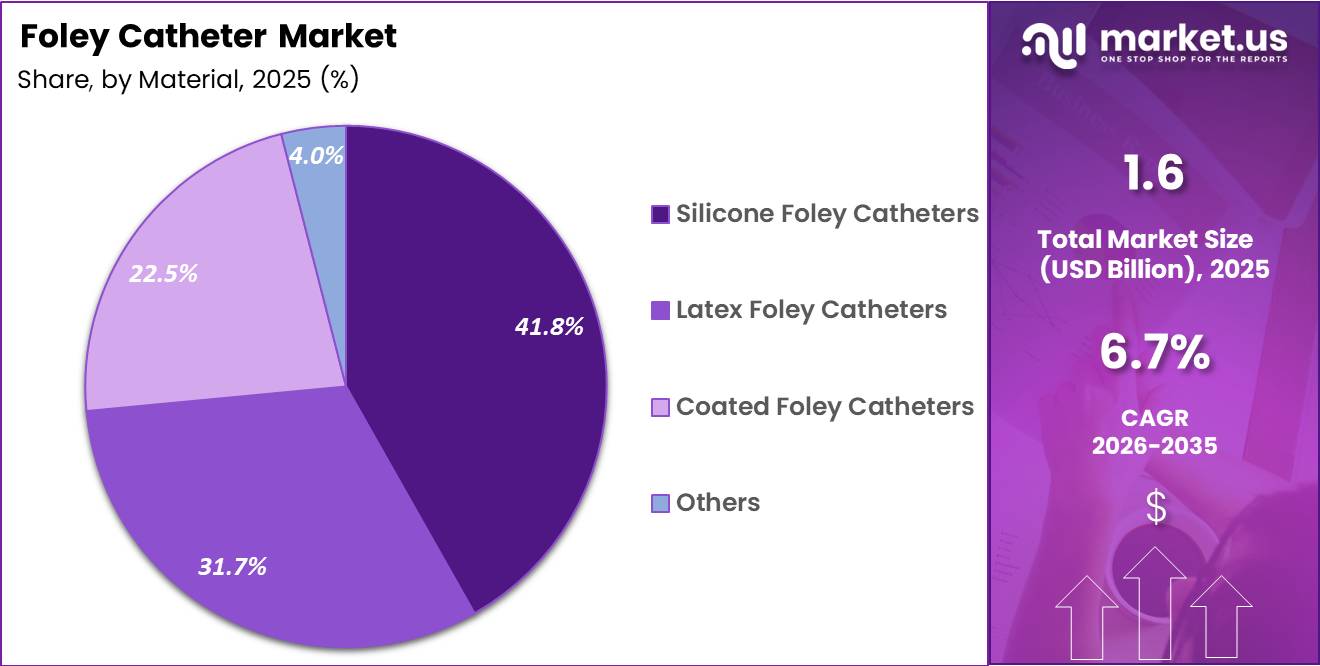
The Silicone Foley Catheters segment held the largest share of the Foley Catheter Market in 2025, representing 41.8% of total revenue.
Silicone catheters are increasingly preferred because they offer excellent biocompatibility, reduced tissue irritation, wider internal lumens, and lower risks of encrustation during prolonged catheterisation. Their latex-free composition makes them especially suitable for patients with latex allergies and individuals requiring long-term urinary management.
Hospitals and long-term care facilities continue to adopt silicone-based products due to improved patient comfort, reduced infection risks, and enhanced durability. The Latex Foley Catheters segment accounted for 31.7% of the market in 2025. Despite concerns regarding latex sensitivity, these catheters remain widely used because of their flexibility, affordability, and effectiveness in short-term catheterisation.
The Coated Foley Catheters segment represented 22.5% of the market, driven by increasing adoption of hydrogel-coated, PTFE-coated, and antimicrobial-coated products that minimise friction, improve insertion comfort, and help reduce catheter-associated urinary tract infections (CAUTIs).
The Others category contributed 4.0%, comprising advanced polymer blends and speciality materials developed for specific clinical applications. Continuous material innovation aimed at improving patient safety and infection prevention is expected to strengthen overall market growth.
Patient Type Analysis
The Adult segment dominated the Foley Catheter Market in 2025, accounting for 92.1% of the overall market share. Adults represent the largest patient population requiring urinary catheterisation due to the high prevalence of urinary retention, benign prostatic hyperplasia, urinary incontinence, spinal cord injuries, neurological disorders, and postoperative urinary management.
The rapidly growing elderly population further contributes to increased catheter utilisation, as ageing is strongly associated with chronic urinary dysfunction and reduced bladder control. Hospitals, rehabilitation centres, and long-term care facilities frequently use Foley catheters for adult patients requiring continuous bladder drainage or close urine output monitoring during critical care.
The Pediatric segment represented the remaining market share and continues to serve specialized clinical needs. Pediatric Foley catheters are primarily used for congenital urinary tract abnormalities, pediatric urological surgeries, trauma management, and select neurological conditions affecting bladder function. These catheters are specifically designed with smaller diameters and softer materials to improve patient safety and comfort.
Although pediatric procedures account for a smaller proportion of overall catheter demand, advancements in pediatric urology, improved neonatal care, and increasing awareness of specialised urinary management are gradually supporting growth. Manufacturers continue developing child-specific catheter designs that minimise trauma and enhance procedural outcomes.
Application Analysis
The Urinary Retention segment led the Foley Catheter Market in 2025, capturing 31.2% of the total market share. Urinary retention remains one of the most common clinical indications for Foley catheterisation, particularly among elderly individuals, patients with benign prostatic hyperplasia, neurological disorders, spinal cord injuries, and postoperative complications.
Foley catheters provide immediate bladder decompression, helping prevent kidney damage, bladder overdistension, and associated complications. Increasing diagnosis of lower urinary tract disorders and growing demand for effective urinary management continue to support segment leadership across hospitals and long-term care settings.
The Urinary Incontinence segment continues to generate substantial demand, particularly among patients with severe mobility limitations, neurological diseases, and chronic medical conditions requiring continuous urinary drainage.
The Post-operative & Surgical Procedures segment is also experiencing steady growth, supported by the increasing number of urological, gynaecological, orthopaedic, and general surgical procedures where temporary bladder drainage is essential for recovery and accurate urine monitoring.
The Others category includes trauma care, intensive care monitoring, palliative care, and specialised neurological applications. Growing awareness of catheter-associated infection prevention and improved catheter technologies are enhancing clinical outcomes across all application segments while supporting broader market expansion.
End User Analysis
The Hospitals segment dominated the Foley Catheter Market in 2025, accounting for 58.4% of total market revenue. Hospitals remain the primary end users because Foley catheters are extensively utilised in emergency departments, operating rooms, intensive care units, and inpatient wards.
Rising numbers of surgical procedures, critically ill patients, trauma cases, and urinary tract disorders continue to drive catheter demand. Hospitals also maintain standardised catheter management protocols, ensuring consistent utilisation for urine output monitoring, postoperative care, and long-term patient management.
The Long-term Care Facilities & Nursing Homes segment represents a significant portion of the market, supported by the increasing elderly population requiring chronic urinary management due to mobility limitations, neurological disorders, and urinary incontinence. These facilities frequently use long-term Foley catheterisation to improve patient care and quality of life.
The Homecare Settings segment is expanding steadily as healthcare systems increasingly encourage home-based management for stable patients requiring prolonged catheterisation. Improved caregiver education, portable drainage systems, and telehealth support are facilitating this trend.
The Others category includes rehabilitation centres, speciality clinics, ambulatory surgical centres, and hospice care facilities. Growing emphasis on patient-centred care and reduced hospital stays continues to support catheter adoption across diverse healthcare settings.
Key Market Segments
By Product Type
- 2-Way Foley Catheters
- 3-Way Foley Catheters
- Others
By Material
- Silicone Foley Catheters
- Latex Foley Catheters
- Coated Foley Catheters
- Others
By Patient Type
- Adult
- Pediatric
By Application
- Urinary Retention
- Urinary Incontinence
- Post-Operative & Surgical Procedures
- Others
By End User
- Hospitals
- Long-Term Care Facilities & Nursing Homes
- Homecare Settings
- Others
Drivers
Chronic disease burden raising long duration drainage demand
Diabetes rose from 200 million people globally in 1990 to 830 million in 2022, with 14 % of adults living with diabetes in 2022, while diabetes and diabetes related kidney disease caused more than 2 million deaths in 2021.
Separately, the IDF notes that up to 40 % of people living with diabetes develop chronic kidney disease. This clinical burden matters for Foley demand because diabetes, CKD, neuropathy, and recurrent hospitalisation increase the population needing monitored urine output, urinary retention management, and long-duration drainage during acute episodes and post-acute recovery, especially in older adults.
Commercially, this not only expands unit demand; it also raises the share of higher-value silicone, longer dwell, and obstruction management-oriented products because chronic and recurrent users have lower tolerance for encrustation, trauma, and repeat replacement, supporting an estimated 1.6 % point lift to market CAGR in 2026 based on forecasting.
| Driver | (~) % Impact on CAGR Forecast | Geographic Relevance | Impact Timeline |
|---|---|---|---|
| Chronic disease burden raises long-duration drainage demand | +1.6% | North America core, EU, Japan, urban China, Gulf | Medium term (2-4 years) |
| Hospital CAUTI penalties and surveillance tightening, lifting replacement cycles, and premium mix | +1.3% | U.S. core, Canada follow-through, EU tertiary hospitals | Short term (≤ 2 years) |
| Post-acute and home-care expansion is increasing long-term catheter utilisation | +1.1% | North America, Western Europe, Japan, Australia | Medium term (2-4 years) |
| Material shift toward silicone and speciality coatings is improving clinical preference | +0.9% | U.S., EU, Japan, South Korea, private APAC hospitals | Short term (≤ 2 years) |
| Nurse-led removal protocols and bladder-scan alternatives are reshaping the product mix rather than eliminating demand | +0.7% | U.S. and EU acute care; spill-over to APAC private chains | Short term (≤ 2 years) |
| Ageing and high-acuity surgical volumes sustaining perioperative catheter use | +1.0% | North America, EU, Japan, China metro hospitals, Latin America private hospitals | Long-term (≥ 4 years) |
Challenge
CAUTI Penalty Exposure and Infection Control-Driven Market Pressure
Catheter-associated urinary tract infections (CAUTI) remain a major hospital-acquired infection challenge, driven by Foley catheter use in inpatient settings where outcomes depend heavily on insertion technique, dwell time management, aseptic maintenance, and timely removal.
CDC guidance continues to stress catheter necessity review, closed drainage systems, and strict infection prevention protocols, while CMS maintains payment penalties of up to 1 % for hospitals performing poorly on HAC metrics, keeping financial pressure high on infection control programs.
As a result, catheter procurement is increasingly influenced by infection performance rather than unit cost alone. With 15 to 25 % of hospitalised patients receiving catheters and CAUTI tracking embedded in NHSN reporting systems, vendors face longer clinical evaluation cycles, higher requirements for training and documentation support, and stronger demand for outcome-based evidence.
This shifts competition toward infection risk reduction solutions rather than commodity drainage products, extending sales cycles and increasing commercial complexity. Overall, this creates an estimated 1.2 % point drag on category growth versus unconstrained demand due to added compliance burden and slower adoption cycles.
| Challenge | (~) % CAGR Friction Drag | Geographic Relevance | Mitigation Horizon |
|---|---|---|---|
| CAUTI Penalty Exposure | -1.2% | North America core, EU acute-care systems | Medium term (2-4 years) |
| Resistant UTI Escalation | -1.0% | APAC hospital corridors, North America, EU | Long-term (≥ 4 years) |
| Skilled Nursing Deficit | -0.9% | North America, EU ageing-care networks, developed APAC | Medium term (2-4 years) |
| Sterility Quality Volatility | -0.8% | North America core, EU regulatory hubs, APAC export bases | Medium term (2-4 years) |
| Coating Validation Bottlenecks | -0.7% | US FDA pathway, EU clinical evidence markets, Japan | Long term (≥ 4 years) |
| Multi-node Supply Fragility | -0.8% | APAC logistics corridors, North America import channels, EU procurement systems | Medium term (2-4 years) |
Restraints
Silicone and Medical Grade Polymer Cost Volatility
Medical-grade silicone and speciality polymers used in Foley catheters are subject to price and supply volatility driven by rising demand from minimally invasive devices, broader silicone market expansion, and periodic upstream disruptions. These materials sit in tightly regulated supply chains, so even modest feedstock fluctuations can translate directly into device cost pressure.
In recent cycles, silicone and liquid silicone rubber prices have shown double-digit % swings, creating instability for catheter manufacturers operating on thin, tender-based margins. A 10 to 15 % rise in input costs can compress gross margins by 150 to 250 basis points unless fully passed through, which is difficult in regulated procurement environments.
At the same time, lead times can extend from 4 to 6 weeks to 10 to 12 weeks during shortages, forcing 20 to 30 % higher inventory buffers and increasing working capital requirements. This volatility also complicates long-term contracting and discourages aggressive capacity expansion, particularly in high-growth APAC markets. Overall, it is estimated to reduce attainable category CAGR by about 0.8 % points due to cost pressure, procurement rigidity, and delayed scaling decisions.
| Restraint | (~) % Impact on CAGR Forecast | Geographic Relevance | Impact Timeline |
|---|---|---|---|
| Persistent CAUTI liability and penalties | -1.2% | North America, EU-5, Japan | Medium term (2-4 years) |
| Latex allergy and material substitution costs | -0.7% | North America core, EU, Japan, GCC | Long-term (≥ 4 years) |
| Silicone and medical-grade polymer cost volatility | -0.8% | EU, North America, APAC corridors | Short term (≤ 2 years) |
| Heightened recall and quality-compliance burden | -0.6% | U.S., EU-5, selected APAC | Medium term (2-4 years) |
| Reimbursement pressure and bed-day reduction focus | -0.9% | U.S., Western Europe, developed APAC | Long-term (≥ 4 years) |
Opportunity
Integrated Foley Plus Digital Continence Management Bundles
This opportunity shifts Foley catheters from standalone consumables into integrated digital continence management systems that combine catheter use tracking, bladder monitoring, risk scoring, and automated alerts aligned with guideline-recommended removal timing. It leverages the fact that catheter care today remains largely paper-based and fragmented, despite rising urinary dysfunction in ageing and multi-morbid populations.
By embedding low-cost digital identifiers such as RFID or sensor-enabled tags, vendors can enable real-time dashboards showing catheter days, CAUTI risk per 1,000 catheter days, and compliance with removal protocols.
This converts previously unmonetized clinical data into a service layer. Commercially, hospitals could pay 20 to 40 dollars per bed per month for analytics and compliance tools, shifting part of Foley revenue into 15 to 25 % recurring software like income.
If adoption reaches 10 to 15 % of acute beds in high-income markets by 2030, per-patient revenue could increase by 10 to 15 %, supporting about 1.9 % point CAGR upside through digitisation, efficiency gains, and value-based infection control alignment.
| Opportunity | (~) % Potential CAGR Upside | Geographic Relevance | Execution Window |
|---|---|---|---|
| CAUTI-minimizing Foley redesign & premium tier | +2.2% | North America, Western Europe, high-income APAC | Medium term (2–4 years) |
| Integrated Foley-plus-digital continence management bundles | +1.9% | North America core, EU, Japan, urban APAC | Medium term (2–4 years) |
| Diabetic and frail-elderly home-care Foley programs | +1.6% | North America, Europe, China, India | Short to medium term (≤ 4 years) |
| Emerging-market long-term care and rehab penetration | +1.8% | APAC emerging, Latin America, Middle East & Africa | Long-term (≥ 4 years) |
| Infection-risk-based value-based procurement & risk-sharing contracts | +1.4% | North America, UK, Nordics, selected APAC | Medium term (2–4 years) |
| Biodegradable / eco-optimised Foley product line for regulatory and ESG shifts | +1.3% | Europe, North America, and advanced APAC | Long-term (≥ 4 years) |
Regional Analysis
In 2025, North America led the market, achieving over 40.2% market share with revenue of US$0.64 billion. The region benefits from widespread adoption of infection-control protocols, increasing use of silicone and antimicrobial-coated Foley catheters, and strong reimbursement systems.
Hospitals and long-term care facilities remain major consumers due to the large number of patients requiring urinary catheterisation for postoperative care, chronic diseases, and critical care monitoring.
Europe accounted for a significant share of the market, driven by an expanding elderly population, rising incidence of benign prostatic hyperplasia, urinary incontinence, and neurological disorders requiring long-term bladder management.
Strict regulatory standards promoting patient safety and infection prevention have encouraged healthcare providers to adopt high-quality catheter materials and advanced drainage systems. Demand is further supported by increasing urological procedures and well-established public healthcare services.
The Asia-Pacific region is expected to register the fastest growth during the forecast period owing to expanding healthcare infrastructure, rising healthcare expenditure, growing awareness of urinary health, and increasing surgical volumes across countries such as China, Japan, South Korea, and Southeast Asian nations. A rapidly ageing population and improving access to hospital care are accelerating Foley catheter adoption.
Latin America and the Middle East & Africa are witnessing steady market expansion due to improving healthcare facilities, increasing diagnosis of urinary tract disorders, gradual modernisation of hospitals, and expanding access to urological care. Government investments in healthcare infrastructure and growing availability of medical devices are expected to further support market growth across these emerging regions.
Key Regions and Countries
North America
- The US
- Canada
Europe
- Germany
- France
- The U.K.
- Italy
- Spain
- Russia & CIS
- Rest of Europe
Asia Pacific
- China
- India
- Japan
- South Korea
- ASEAN
- Australia & New Zealand
- Rest of Asia Pacific
Middle East & Africa
- GCC
- South Africa
- Rest of the Middle East & Africa
Latin America
- Brazil
- Mexico
- Rest of Latin America
Key Player Analysis
Suppliers in the global Foley catheter market seek competitive advantage through antimicrobial and anti-biofilm catheter coating technology development addressing catheter-associated urinary tract infection as the most significant clinical complication and procurement risk factor in institutional hospital and long-term care facility.
Catheter purchasing decisions alongside silicone material formulation innovation delivering improved biocompatibility, reduced latex allergen exposure risk, and extended indwelling duration capability relative to conventional latex alternatives.
Key strategic focus areas include hydrophilic and antimicrobial silver alloy and nitrofurazone coating platform development, reducing catheter-associated urinary tract infection rates in high-risk long-term catheterised patient populations, catheter tip and balloon design refinement improving insertion ease and reducing urethral trauma in elderly and post-operative patient cohorts, and homecare-compatible catheter system development addressing growing demand for long-term catheter management outside institutional healthcare settings.
Companies continue investing in clinical evidence generation, demonstrating infection rate reduction outcomes supporting hospital value analysis committee procurement approval, FDA and CE Mark regulatory clearance programs for novel antimicrobial catheter technologies, and group purchasing organisation framework contract development securing institutional hospital and long-term care facility supply agreements.
The progressive expansion of homecare catheter management driven by healthcare system cost-containment pressure, ageing population demographics requiring long-term urological management, and patient preference for home-based care is creating structurally expanding demand for user-friendly, self-manageable catheter systems with simplified insertion and maintenance protocols through the forecast period to 2035.
Top Key Players
- Becton, Dickinson and Company (C. R. Bard)
- Coloplast A/S
- Teleflex Incorporated
- ConvaTec Group PLC
- B. Braun Melsungen AG
- Medtronic plc
- Hollister Incorporated
- Boston Scientific Corporation
- Cook Medical LLC
- Rochester Medical Corporation
- Cure Medical LLC
- Urotech Devices
- Well Lead Medical Co., Ltd.
- Poiesis Medical
- Apexmed International B.V.
- Other Key Players
Recent Developments
- In January 2026, Becton, Dickinson and Company launched an enhanced antimicrobial-coated Foley catheter with improved silver alloy coating technology, targeting hospital infection control procurement committees seeking catheter-associated urinary tract infection rate reduction across institutional inpatient and surgical care settings.
- In February 2026, Coloplast A/S expanded its silicone Foley catheter portfolio with a new hydrophilic-coated long-term indwelling catheter system targeting long-term care facility and home care institutional buyers managing chronic urinary retention patient populations.
- In March 2026, Teleflex Incorporated secured a multi-year group purchasing organisation supply agreement covering its antimicrobial Foley catheter range across a leading North American hospital health system network, targeting catheter-associated urinary tract infection reduction program procurement requirements across its regional institutional buyer base.
Report Scope
| Report Features | Description |
|---|---|
| Market Value (2025) | US$ 1.6 Billion |
| Forecast Revenue (2035) | US$ 3.0 Billion |
| CAGR (2026-2035) | 6.7% |
| Base Year for Estimation | 2025 |
| Historic Period | 2020-2024 |
| Forecast Period | 2026-2035 |
| Report Coverage | Revenue Forecast, Market Dynamics, Competitive Landscape, Recent Developments |
| Segments Covered | By Product Type (2-Way Foley Catheters, 3-Way Foley Catheters, Others), By Material (Silicone Foley Catheters, Latex Foley Catheters, Coated Foley Catheters, Others), By Patient Type (Adult, Pediatric), By Application (Urinary Retention, Urinary Incontinence, Post-Operative & Surgical Procedures, Others), By End User (Hospitals, Long-Term Care Facilities & Nursing Homes, Homecare Settings, Others) |
| Regional Analysis | North America – The US, Canada; Europe – Germany, France, U.K., Italy, Spain, Russia & CIS, Rest of Europe; Asia Pacific – China, India, Japan, South Korea, ASEAN, Australia & New Zealand, Rest of Asia Pacific; Middle East & Africa – GCC, South Africa, Rest of Middle East & Africa; Latin America – Brazil, Mexico, Rest of Latin America |
| Competitive Landscape | Becton, Dickinson and Company (C. R. Bard), Coloplast A/S, Teleflex Incorporated, ConvaTec Group PLC, B. Braun Melsungen AG, Medtronic plc, Hollister Incorporated, Boston Scientific Corporation, Cook Medical LLC, Rochester Medical Corporation, Cure Medical LLC, Urotech Devices, Well Lead Medical Co., Ltd., Poiesis Medical, Apexmed International B.V., Other Key Players |
| Customization Scope | Customization for segments, region/country-level will be provided. Moreover, additional customization can be done based on the requirements. |
| Purchase Options | We have three licenses to opt for: Single User License, Multi-User License (Up to 5 Users), Corporate Use License (Unlimited User and Printable PDF) |





































