


Market Overview
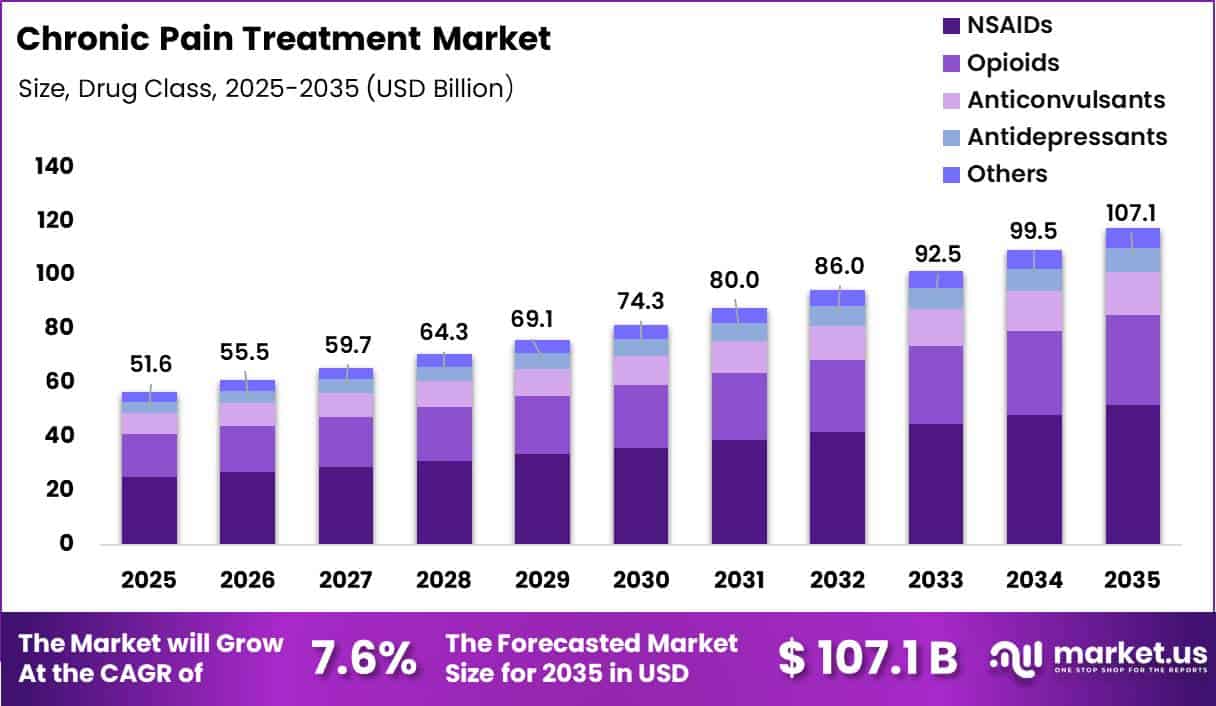
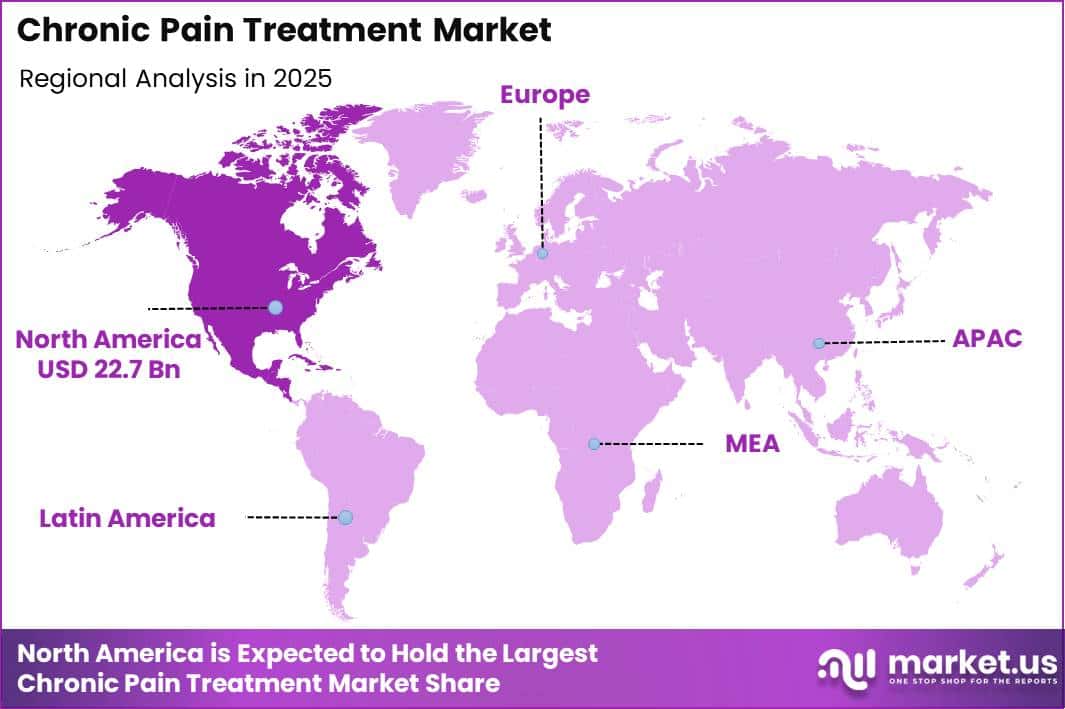
Global Chronic Pain Treatment Market size is expected to be worth around US$ 107.1 Billion by 2035 from US$ 51.6 Billion in 2025, growing at a CAGR of 7.6% during the forecast period from 2026 to 2035. In 2025, North America led the market, achieving over 44.0% share with a revenue of US$ 22.7 Billion.
The Chronic Pain Treatment Market is witnessing increased attention as healthcare systems worldwide address the growing burden of long-term pain conditions. Chronic pain, which commonly persists for three months or longer, affects physical function, mental well-being, and quality of life.
Treatment approaches include medications, physical rehabilitation, behavioral therapies, interventional procedures, and advanced technologies designed to improve pain control and patient outcomes.
The rising prevalence of chronic pain is creating significant demand for effective pain management solutions. According to the U.S. Centers for Disease Control and Prevention (CDC), 24.3% of U.S. adults experienced chronic pain in 2023, while 8.5% experienced high-impact chronic pain that frequently limited daily life or work activities.
In addition, the World Health Organization (WHO) reported that musculoskeletal conditions affect approximately 1.71 billion people globally, with low back pain recognized as a leading contributor to disability worldwide.
Healthcare providers are increasingly adopting multidisciplinary pain management strategies that combine pharmacological and non-pharmacological approaches. Research supported by the Agency for Healthcare Research and Quality (AHRQ) highlights the use of non-opioid treatments, including certain antidepressants, anticonvulsants, and anti-inflammatory medicines, for managing specific chronic pain conditions.
Innovation in the field is also focusing on safer and more personalized treatment options. The National Institutes of Health (NIH) continues to support research into non-opioid pain therapies, including new approaches targeting pain pathways to reduce dependence on traditional opioid-based treatments.
Growing awareness, aging populations, rising chronic disease prevalence, and advances in pain management technologies are expected to support continued development of the Chronic Pain Treatment Market.
Key Takeaways
- Market Size: Global Chronic Pain Treatment Market size is expected to be worth around US$ 107.1 Billion by 2035 from US$ 51.6 Billion in 2025.
- Market Share: The market is growing at a CAGR of 7.6% during the forecast period from 2026 to 2035.
- Drug Class: The Drug Class segment of the Chronic Pain Treatment Market is led by NSAIDs (Non-Steroidal Anti-Inflammatory Drugs), accounting for 48.5% market share in 2025.
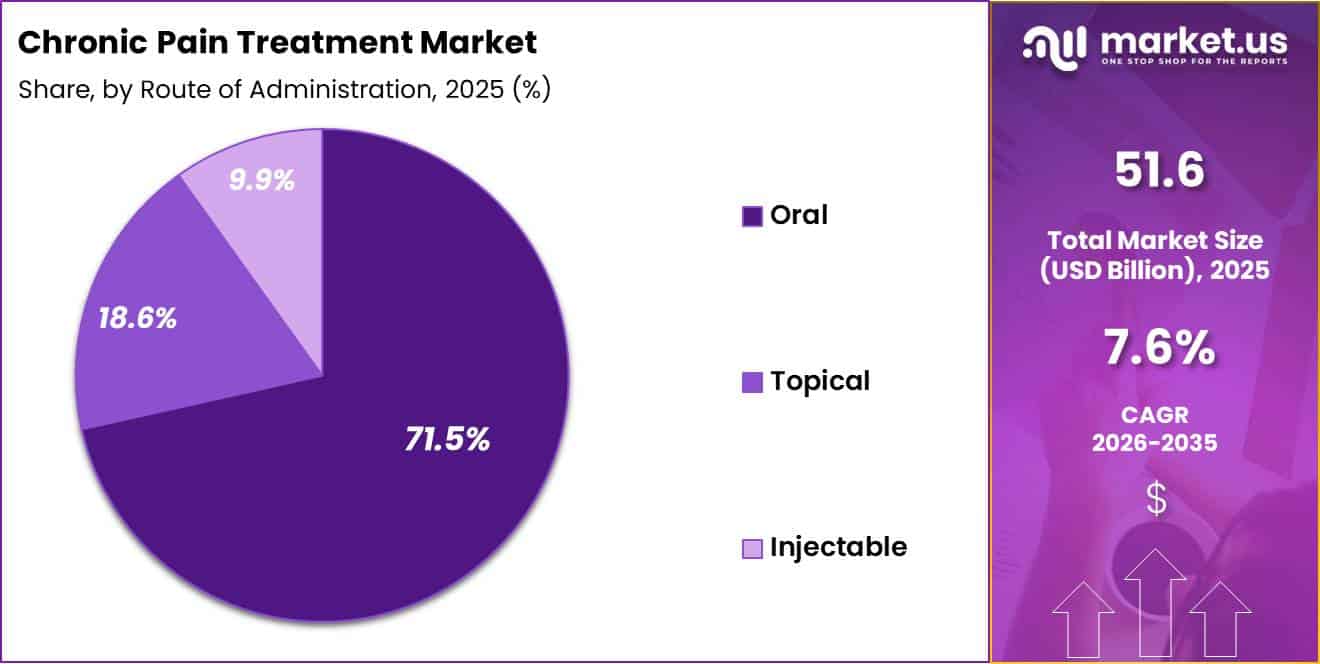
- Route of Administration: The Route of Administration segment of the Chronic Pain Treatment Market is dominated by the Oral segment, which holds 71.5% market share in 2025.
- Pain Type: The Pain Type segment of the Chronic Pain Treatment Market is led by Musculoskeletal Pain, capturing 42.5% market share in 2025.
- Distribution Channel: The Distribution Channel segment of the Chronic Pain Treatment Market is dominated by Retail Pharmacies, accounting for 52.8% market share in 2025.
- Regional Analysis: In 2025, North America led the market, achieving over 44.0% share with a revenue of US$ 22.7 Billion.
Drug Class Analysis
NSAIDs Segment Dominates with 48.5% Market Share in 2025.
The Drug Class segment of the Chronic Pain Treatment Market is led by NSAIDs (Non-Steroidal Anti-Inflammatory Drugs), accounting for 48.5% market share in 2025. NSAIDs remain the preferred treatment option for various chronic pain conditions due to their effectiveness in reducing inflammation, improving mobility, and managing conditions such as arthritis, lower back pain, and musculoskeletal disorders. Their widespread availability, affordability, and established clinical use support their leading position.
The Opioids segment holds 31.2% share in 2025, driven by their application in managing moderate to severe chronic pain, including cancer-related pain and advanced degenerative disorders. However, increasing concerns regarding dependence, misuse, and regulatory restrictions are influencing cautious prescribing practices.
The Anticonvulsants segment accounts for 14.8% share, primarily supported by their use in neuropathic pain management by controlling abnormal nerve signaling. The Antidepressants segment represents 8.5% share, with increasing adoption for chronic pain conditions involving nerve sensitivity and mood-related complications.
The Others segment contributes 7.0% share, including alternative therapies and specialized medications used for specific pain conditions.
Route of Administration Analysis
Oral Segment Dominates with 71.5% Market Share in 2025.
The Route of Administration segment of the Chronic Pain Treatment Market is dominated by the Oral segment, which holds 71.5% market share in 2025. Oral medications remain the most commonly preferred route due to ease of administration, patient convenience, cost-effectiveness, and availability across multiple healthcare settings. Tablets, capsules, and extended-release formulations are widely prescribed for long-term management of chronic pain conditions.
The Topical segment accounts for 18.6% share in 2025, supported by increasing demand for localized pain relief solutions with reduced systemic side effects. Topical creams, gels, and patches are commonly used for arthritis, muscle pain, and localized neuropathic pain.
The Injectable segment holds 9.9% share, primarily driven by applications requiring rapid pain relief or targeted drug delivery. Injectable therapies are commonly utilized in hospitals, specialty clinics, and pain management centers for severe chronic pain cases. Growing advancements in drug delivery technologies and patient-specific treatment approaches are expected to support innovation across all administration routes.
Pain Type Analysis
Musculoskeletal Pain Segment Dominates with 42.5% Market Share in 2025.
The Pain Type segment of the Chronic Pain Treatment Market is led by Musculoskeletal Pain, capturing 42.5% market share in 2025. The segment’s dominance is attributed to the increasing prevalence of conditions such as osteoarthritis, rheumatoid arthritis, back pain, and joint-related disorders. Aging populations, sedentary lifestyles, and rising physical strain contribute to the growing demand for effective musculoskeletal pain management solutions.
The Neuropathic Pain segment represents a significant portion of the market, driven by rising cases of diabetes-related nerve damage, spinal disorders, and nerve injuries. Treatment options such as anticonvulsants and antidepressants are frequently used for managing neuropathic pain symptoms.
The Cancer Pain segment continues to gain attention due to increasing cancer prevalence and the need for advanced pain management therapies, including opioids and supportive treatments. The Others segment includes chronic conditions such as fibromyalgia, migraine-related pain, and other persistent pain disorders. Increasing awareness regarding multidisciplinary pain management approaches is supporting growth across different pain categories.
Distribution Channel Analysis
Retail Pharmacies Segment Dominates with 52.8% Market Share in 2025.
The Distribution Channel segment of the Chronic Pain Treatment Market is dominated by Retail Pharmacies, accounting for 52.8% market share in 2025. Retail pharmacies remain the primary access point for chronic pain medications due to their widespread availability, convenience, and role in supporting long-term medication refills for patients managing persistent pain conditions.
The Hospital Pharmacies segment contributes significantly to the market, supported by demand for prescription-based therapies, injectable medications, and specialized pain management treatments administered under medical supervision. Hospitals play a crucial role in managing severe chronic pain cases requiring advanced therapeutic approaches.
The Online Pharmacies segment is expanding due to increasing digital healthcare adoption, home delivery services, and improved accessibility to prescription medications. Growing preference for convenient medication purchasing and remote healthcare solutions is supporting online pharmacy growth.
The Others segment includes specialty pharmacies, clinics, and institutional healthcare providers involved in chronic pain treatment distribution. Increasing healthcare accessibility and evolving pharmaceutical distribution networks continue to strengthen market reach across different channels.
Key Market Segments
By Drug Class
- NSAIDs
- Opioids
- Anticonvulsants
- Antidepressants
- Others
By Route of Administration
- Oral
- Topical
- Injectable
By Pain Type
- Musculoskeletal Pain
- Neuropathic Pain
- Cancer Pain
- Others
By Distribution Channel
- Retail Pharmacies
- Hospital Pharmacies
- Online Pharmacies
- Others
Drivers
Non opioid treatment shift in chronic pain management.
Clinical guidelines and regulatory policy are increasingly shifting chronic pain management away from opioid centric prescribing toward multimodal, non opioid approaches. CDC guidance emphasizes non opioid therapies as the preferred first line option for subacute and chronic pain, including NSAIDs, SNRIs, anticonvulsants, topical agents, physical therapy, weight management, cognitive behavioral therapy, acupuncture, and other rehabilitative interventions.
This shift is structurally broadening the chronic pain treatment market. Instead of concentrating value in opioid prescriptions, spending is now distributed across pharmaceuticals, rehabilitation services, behavioral health, and adjunct therapeutic devices.
As a result, reimbursement and adoption increasingly depend on demonstrated functional improvement, reduced opioid dependence, and improved safety outcomes rather than pain reduction alone. The trend is reinforced by ongoing public health and regulatory pressure tied to opioid stewardship policies, prescribing limits, and risk monitoring frameworks.
Even as overdose deaths have shown recent declines, health systems continue to prioritize prevention and long term risk reduction strategies rather than reverting to opioid heavy management.
Overall, this policy environment is reshaping demand toward integrated, multimodal pain care pathways, creating incremental growth opportunities for non opioid therapies and supporting a gradual expansion of the broader chronic pain treatment ecosystem.
| Driver | (~) % Impact on CAGR Forecast | Geographic Relevance | Impact Timeline |
|---|---|---|---|
| Rising chronic pain prevalence and disability burden | +1.9% | North America core, EU aging markets, APAC urban corridors | Short term (≤ 2 years) |
| Non-opioid treatment policy and prescribing shift | +1.6% | U.S. core, Canada, EU guideline-led markets | Short term (≤ 2 years) |
| Medicare/CMS reimbursement expansion for non-opioid pain care | +1.3% | U.S. core, private-payer spill-over | Medium term (2-4 years) |
| Behavioral, rehabilitative, and digital care integration | +1.1% | North America core, Western Europe, developed APAC | Medium term (2-4 years) |
| Aging population and musculoskeletal comorbidity load | +1.4% | Japan, EU, U.S., South Korea, urban China | Medium term (2-4 years) |
| Device-based and interventional pain innovation | +1.0% | U.S. specialty centers, EU procedural hubs, selected APAC private markets | Long term (≥ 4 years) |
Challenges
Fragmented chronic pain care pathways reduce treatment efficiency.
Chronic pain affects roughly 25–27% of adults globally, with high impact chronic pain impacting around 8–10% in developed markets. Despite this high burden, care delivery remains fragmented across primary care, specialty services, and behavioral health, resulting in disjointed treatment journeys and delayed optimization of therapy. Patients often require multiple sequential touchpoints across different providers, adding 2–4 extra visits and extending stabilization timelines by 3–6 months.
In the U.S., where about 60 million adults experience chronic pain, only a small proportion are managed through coordinated multidisciplinary programs. This leads to frequent follow ups every 4–8 weeks, repeated therapy adjustments, and inconsistent adherence to long term care plans.
Operationally, this fragmentation contributes to 15–25% no show rates, redundant imaging in 10–20% of cases for conditions like back pain, and administrative friction in approving non pharmacologic treatments.
Collectively, these inefficiencies slow care progression and reduce overall system effectiveness, acting as a measurable drag on market and treatment efficiency. Improving integration through EHR based standardized pain pathways, faster tele pain access, and bundled payment models could significantly streamline care.
Such approaches can reduce wait times, improve regimen continuity, and decrease treatment abandonment, helping to gradually improve system efficiency over a medium term horizon of 2–4 years.
| Challenge | (~) % CAGR Friction Drag | Geographic Relevance | Mitigation Horizon |
|---|---|---|---|
| Fragmented care pathways | -1.4% | North America, EU, APAC urban | Medium term (2-4 years) |
| Workforce & specialist gap | -1.6% | Low-income regions, rural North America/EU, LMICs | Long term (≥ 4 years) |
| Opioid risk governance load | -1.2% | North America core, EU regulatory hubs | Medium term (2-4 years) |
| Access & equity disparities | -1.5% | Rural belts, low-income communities, LMICs | Long term (≥ 4 years) |
| Limited multimodal infra | -1.3% | APAC corridors, Africa, Latin America | Long term (≥ 4 years) |
| Data fragmentation & metrics | -0.9% | Global, especially mixed-payer systems | Medium term (2-4 years) |
Restraints
Reimbursement barriers limiting multidisciplinary chronic pain care expansion.
Multidisciplinary chronic pain management combining pharmacologic therapy, physical rehabilitation, psychological support, and interventional procedures is widely recognized as the most effective approach for high impact chronic pain. However, reimbursement systems in most markets remain fragmented and favor isolated, fee for service components rather than integrated care pathways.
In the U.S., CMS fee schedules typically reimburse short physician visits and individual physical therapy sessions, while cognitive behavioral therapy, structured interdisciplinary pain programs, and digital therapeutics often face prior authorization requirements, restricted coverage, or outright exclusion.
Similar constraints exist in European social insurance systems and several high income APAC markets, where coverage is frequently capped or tightly rationed.Although global chronic pain prevalence affects roughly 25–30% of adults, reimbursement limitations reduce adoption of integrated programs, with participation rates significantly below clinical need.
Visit caps often 10–20 physical therapy sessions annually, limited coverage for intensive rehabilitation programs, and inconsistent tele rehab reimbursement collectively restrict care continuity and slow escalation into higher value treatment pathways.
As a result, realized growth in multidisciplinary pain services remains moderate rather than accelerating at full clinical demand potential, with reimbursement friction acting as a structural constraint that reduces system wide expansion and limits investment in capital intensive pain centers.
This also delays scaling of digital and behavioral health solutions, keeping care models largely episodic and procedure driven rather than fully integrated and longitudinal.
| Restraint | (~) % Impact on CAGR Forecast | Geographic Relevance | Impact Timeline |
|---|---|---|---|
| Opioid prescribing tightness & risk controls | -2.0% | North America, EU, selected APAC | Medium term (2–4 years) |
| Reimbursement frictions for multidisciplinary care | -1.8% | North America core, EU, high-income APAC | Long term (≥ 4 years) |
| Limited specialist capacity & care access gaps | -1.5% | North America, EU, emerging APAC, LATAM | Long term (≥ 4 years) |
| Slow uptake of non-opioid and interventional modalities | -1.2% | Global developed corridors | Medium term (2–4 years) |
| Pricing pressure and step-therapy on branded therapies | -1.0% | North America core, EU | Short–Medium term (≤ 4 years) |
Opportunity
Telehealth Anchored Chronic Pain Care Expansion Model.
Telehealth anchored chronic pain programs expand care beyond episodic clinic visits into structured longitudinal digital management using remote consultations, symptom tracking, and virtual coaching.
With an estimated 50–60 million U.S. adults experiencing chronic pain and nearly 19–20 million suffering high impact limitations, the addressable population is large, yet current telehealth utilization remains limited despite CMS allowing reimbursable virtual follow ups after an initial in person assessment.
These programs typically enable 12–24 structured annual patient touchpoints through monthly or biweekly check ins focused on pain scoring, medication adherence, behavioral therapy, and functional improvement compared with only 3–6 interactions in conventional care models.
This shift increases reimbursable service density while also improving continuity of care.If scaled to 10–15% of eligible patients around 6–9 million individuals and paired with measurable outcomes such as 20–25% reductions in emergency visits and opioid related complications, the model could generate meaningful incremental revenue through telehealth billing and care management codes, alongside payer savings from avoided utilization.
However, adoption is still early stage due to inconsistent provider workflows, limited coding standardization, and evolving reimbursement frameworks, making this more of a forward looking opportunity than an established growth driver.
| Opportunity | (~) % Potential CAGR Upside | Geographic Relevance | Execution Window |
|---|---|---|---|
| Integrated non-opioid care pathways | +2.0% | North America, EU, advanced APAC | Short–Medium (≤ 4 years) |
| Telehealth-anchored chronic pain programs | +1.8% | North America, EU, APAC urban | Short–Medium (≤ 4 years) |
| AI-enabled multimodal decision support | +1.5% | North America core, EU, APAC developed | Medium–Long (≥ 3 years) |
| Value-based pain bundles with payers | +1.7% | North America, EU | Medium term (2–4 years) |
| Community-based high-impact pain hubs | +1.3% | North America, EU, LATAM, APAC emerging | Medium–Long (≥ 3 years) |
| Employer-funded pain productivity programs | +1.2% | North America, EU, select APAC | Short–Medium (≤ 4 years) |
Regional Analysis
North America dominated the Chronic Pain Treatment Market.
North America dominated the Chronic Pain Treatment Market in 2025, accounting for over 44.0% of the global market share with revenue of approximately US$ 22.7 Billion. The region’s leadership is driven by the high prevalence of chronic pain conditions, advanced healthcare infrastructure, strong adoption of innovative pain management therapies, and increasing healthcare expenditure.
The growing burden of conditions such as arthritis, neuropathic pain, back pain, and cancer-related pain has increased demand for effective pharmacological and non-pharmacological treatment options across the United States and Canada.
The presence of well-established pharmaceutical companies, extensive clinical research activities, and favorable reimbursement frameworks has supported the adoption of advanced therapies, including targeted analgesics, biologics, neuromodulation devices, and personalized pain management approaches.
Additionally, rising awareness among patients and healthcare providers regarding opioid alternatives has accelerated the use of NSAIDs, anticonvulsants, antidepressants, and other therapeutic classes.
Europe represents another significant market, supported by an aging population, increasing incidence of musculoskeletal disorders, and expanding access to pain management services. Countries such as Germany, the United Kingdom, and France are investing in improved chronic disease management programs and integrated healthcare solutions.
The Asia Pacific region is expected to witness strong growth due to rising healthcare investments, increasing patient awareness, improving medical infrastructure, and the growing prevalence of chronic diseases.
Emerging economies are focusing on expanding access to affordable pain treatment options. Meanwhile, Latin America and the Middle East & Africa markets are progressing steadily with improvements in healthcare accessibility and government initiatives aimed at strengthening pain management services.
Key Regions and Countries
North America
- The US
- Canada
Europe
- Germany
- France
- The U.K.
- Italy
- Spain
- Russia & CIS
- Rest of Europe
Asia Pacific
- China
- India
- Japan
- South Korea
- ASEAN
- Australia & New Zealand
- Rest of Asia Pacific
Middle East & Africa
- GCC
- South Africa
- Rest of Middle East & Africa
Latin America
- Brazil
- Mexico
- Rest of Latin America
Key Player Analysis
The Chronic Pain Treatment Market demonstrates a moderately consolidated competitive structure, with major pharmaceutical companies leveraging strong R&D capabilities, established healthcare networks, and diversified pain management portfolios.
Competition is primarily focused on developing safer, more effective therapies, including non-opioid medications, advanced formulations, and targeted treatment approaches. Companies are increasingly investing in innovation, strategic collaborations, and patient-centric solutions to address the growing demand for chronic pain management.
Among the leading participants, Johnson & Johnson, Pfizer Inc., AbbVie Inc., Novartis AG, and Eli Lilly and Company hold significant market positions through extensive pharmaceutical expertise and continuous product development.
Johnson & Johnson focuses on expanding its pain management portfolio through research-driven therapies, healthcare partnerships, and integrated patient care solutions. Pfizer Inc. emphasizes R&D investments and innovative drug development strategies to improve treatment outcomes across chronic pain conditions.
AbbVie Inc. strengthens its position through specialty pharmaceutical innovation, targeted therapies, and collaborations supporting advanced pain management approaches. Novartis AG prioritizes scientific research, precision medicine, and technology-driven healthcare solutions to enhance therapeutic effectiveness.
Eli Lilly and Company continues to invest in novel treatment development, clinical research, and strategic partnerships to expand its presence in pain-related therapeutic areas.
Overall, competitive advantage in the market is increasingly determined by innovation capabilities, clinical development expertise, ecosystem partnerships, and the ability to deliver comprehensive pain management solutions beyond traditional pharmaceutical products.
Top Key Players
- Pfizer Inc.
- Johnson & Johnson
- Merck & Co., Inc.
- Novartis AG
- AbbVie Inc.
- Eli Lilly and Company
- Teva Pharmaceutical Industries Ltd.
- Purdue Pharma L.P.
- Mundipharma International Limited
- GlaxoSmithKline plc
- Sanofi S.A.
- Bayer AG
- AstraZeneca PLC
- Endo International plc
- Mallinckrodt Pharmaceuticals
- Others
Recent Developments
- In May 2026, Merck completed the acquisition of Terns Pharmaceuticals to strengthen its specialty pharmaceutical pipeline. Although focused primarily on oncology, the transaction highlights Merck’s broader strategy of using acquisitions to diversify therapeutic areas and enhance long-term innovation capabilities.
- In July 2026, Eli Lilly announced an agreement to acquire AtaiBeckley, expanding its neuroscience portfolio through advanced therapies targeting neurological and mental health conditions. The transaction reflects Lilly’s continued focus on neuroscience-driven innovation, an area closely connected with chronic pain research and central nervous system therapies.
- In July 2025, Johnson & Johnson expanded its pain management portfolio through a strategic agreement with Pacira BioSciences to promote ZILRETTA®, an extended-release injectable therapy for osteoarthritis knee pain. The collaboration reflects growing industry interest in non-opioid and minimally invasive approaches for managing chronic musculoskeletal pain.
Report Scope
| Report Features | Description |
|---|---|
| Market Value (2025) | US$51.6 Billion |
| Forecast Revenue (2035) | US$107.1 Billion |
| CAGR (2026-2035) | 7.6% |
| Base Year for Estimation | 2025 |
| Historic Period | 2020-2024 |
| Forecast Period | 2026-2035 |
| Report Coverage | Revenue Forecast, Market Dynamics, Competitive Landscape, Recent Developments |
| Segments Covered | By Drug Class (NSAIDs, Opioids, Anticonvulsants, Antidepressants, Others), By Route of Administration (Oral, Topical, Injectable), By Pain Type (Musculoskeletal Pain, Neuropathic Pain, Cancer Pain, Others), By Distribution Channel (Retail Pharmacies, Hospital Pharmacies, Online Pharmacies, Others) |
| Regional Analysis | North America – The US, Canada; Europe – Germany, France, U.K., Italy, Spain, Russia & CIS, Rest of Europe; Asia Pacific – China, India, Japan, South Korea, ASEAN, Australia & New Zealand, Rest of Asia Pacific; Middle East & Africa – GCC, South Africa, Rest of Middle East & Africa; Latin America – Brazil, Mexico, Rest of Latin America |
| Competitive Landscape | Pfizer Inc., Johnson & Johnson, Merck & Co., Inc., Novartis AG, AbbVie Inc., Eli Lilly and Company, Teva Pharmaceutical Industries Ltd., Purdue Pharma L.P., Mundipharma International Limited, GlaxoSmithKline plc, Sanofi S.A., Bayer AG, AstraZeneca PLC, Endo International plc, Mallinckrodt Pharmaceuticals, Others |
| Customization Scope | Customization for segments, region/country-level will be provided. Moreover, additional customization can be done based on the requirements. |
| Purchase Options | We have three licenses to opt for: Single User License, Multi-User License (Up to 5 Users), Corporate Use License (Unlimited User and Printable PDF) |





































