


Market Overview
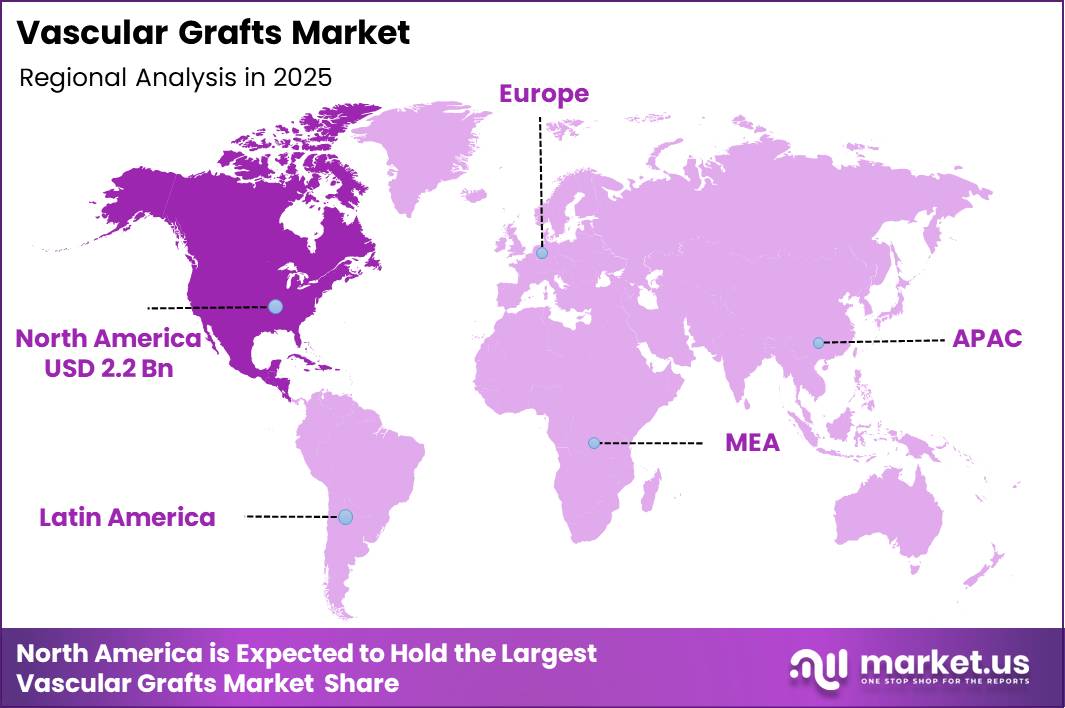
Global Vascular Grafts Market size is expected to be worth around US$ 7.5 Billion by 2035 from US$ 4.9 Billion in 2025, growing at a CAGR of 4.4% during the forecast period from 2026 to 2035. In 2025, North America led the market, achieving over 45.2% share with a revenue of US$ 2.2 Billion.
Vascular grafts are medical devices used to replace, repair, or bypass damaged or blocked blood vessels, helping restore normal blood flow in patients with cardiovascular diseases. These grafts are commonly utilized in procedures such as peripheral artery bypass surgery, abdominal aortic aneurysm repair, hemodialysis access creation, and trauma-related vascular reconstruction.
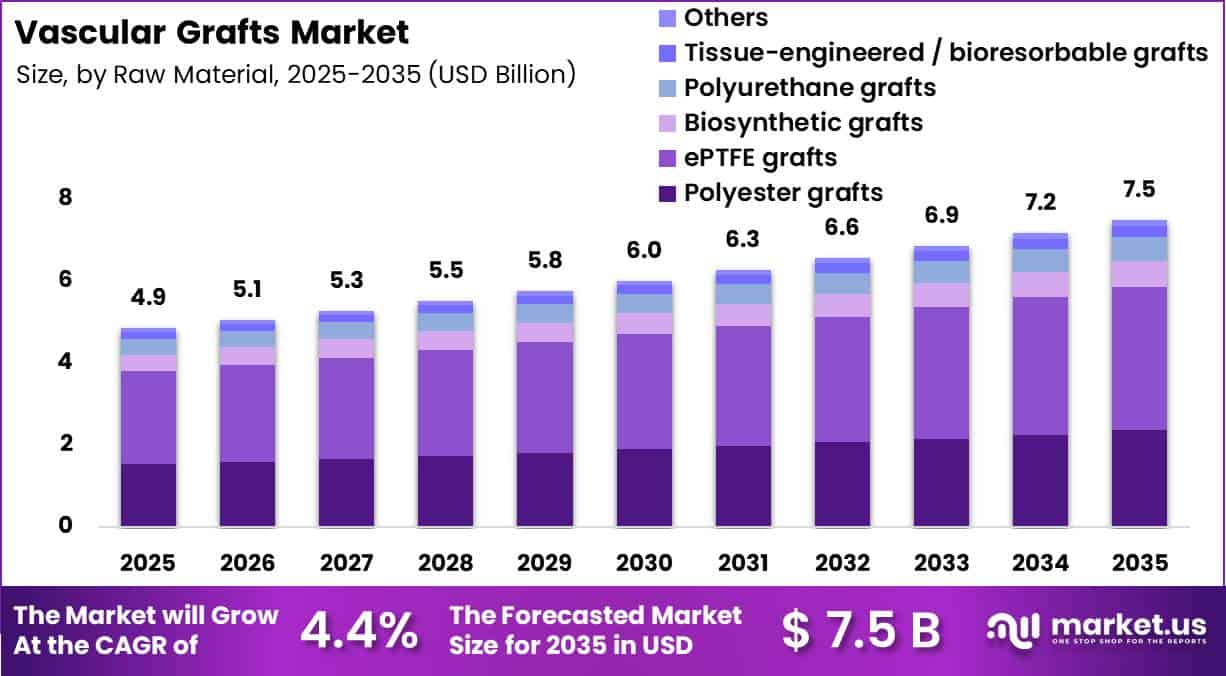
Vascular grafts may be manufactured from synthetic materials such as expanded polytetrafluoroethylene (ePTFE) and polyester (Dacron), or they may be created using biological tissues from the patient or donor sources. The selection of graft type depends on factors including the location of the blockage, vessel diameter, patient health status, and expected long-term performance.
The growing burden of cardiovascular diseases continues to increase the clinical need for vascular graft procedures worldwide. According to the U.S. Centers for Disease Control and Prevention (CDC), approximately 6.5 million adults aged 40 years and older in the United States are living with peripheral artery disease (PAD), one of the leading conditions requiring vascular bypass surgery.
Additionally, the U.S. National Heart, Lung, and Blood Institute (NHLBI) estimates that more than 8 million Americans aged 40 years and older are affected by PAD, highlighting the significant demand for effective vascular reconstruction therapies.
Advancements in biomaterials, infection-resistant graft coatings, tissue-engineered vascular grafts, and minimally invasive surgical techniques are improving graft durability and patient outcomes. Continued investments in cardiovascular research and increasing adoption of advanced vascular interventions are expected to support innovation and expand access to vascular graft technologies globally.
Key Takeaways
- Market Size: The Vascular Grafts Market size was US$ 4.9 Billion in 2025.The market is estimated to grow to US$ 7.5 Billion by 2035.
- Market Share: The Compound Annual Growth Rate (CAGR) of the market from 2026 to 2035 will be 4.4%.
- By Raw Material: ePTFE grafts has the largest market share, accounting for 46.7% of total sales.
- By Application: Coronary Artery Disease, accounting for 28.4% of total revenue.
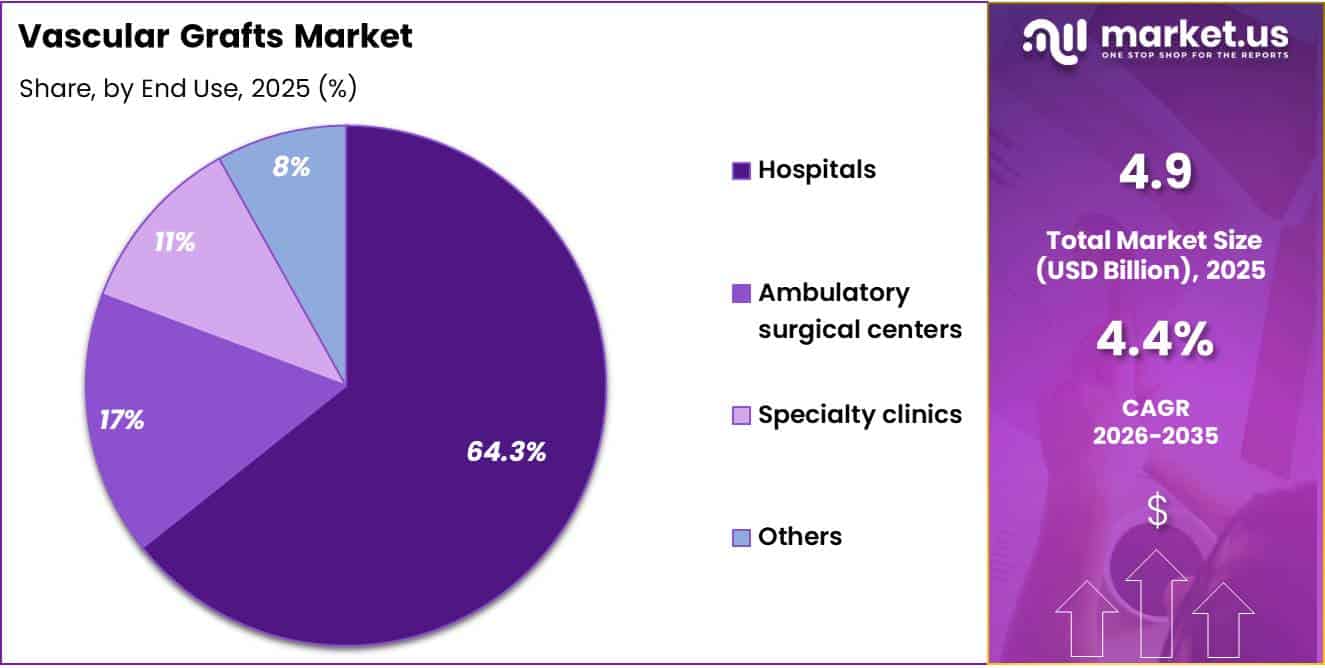
- By End User: Hospitals leads the segment, accounting for 64.3% of total revenue.
- By Distribution Channel: Direct leads the segment, accounting for 61.7% of total revenue.
- Regional: North America is the dominant regional market,accounting for 45.2% of global sales.
Raw Material Analysis
The vascular grafts market is segmented by raw material into ePTFE grafts, polyester grafts, biosynthetic grafts, polyurethane grafts, tissue-engineered/bioresorbable grafts, and others. ePTFE grafts dominate the market, accounting for 46.7% of the global market share in 2025, driven by their excellent biocompatibility, flexibility, low thrombogenicity, and long-term durability in vascular reconstruction procedures.
These grafts are extensively used in peripheral vascular bypass and hemodialysis access surgeries due to their consistent clinical performance. Polyester grafts hold the second-largest share at 31.6%, supported by widespread adoption in large-diameter vascular and aortic repair procedures because of their superior mechanical strength and proven long-term outcomes.
Biosynthetic grafts represent 8.4% of the market, gaining traction for their infection-resistant properties and improved tissue integration. Polyurethane grafts account for 7.9%, benefiting from enhanced elasticity and compliance with native blood vessels.
Tissue-engineered and bioresorbable grafts contribute 3.5%, reflecting growing research investments in regenerative vascular therapies. The others segment holds 1.9%, comprising niche materials developed for specialized cardiovascular applications, collectively supporting innovation across the vascular grafts market.
Application Analysis
Based on application, the vascular grafts market is segmented into coronary artery disease, peripheral artery disease, aortic aneurysm, hemodialysis access, vascular trauma, and other vascular reconstruction procedures. Coronary artery disease (CAD) is the leading application segment, accounting for 28.4% of the global market share in 2025.
The segment’s dominance is attributed to the increasing prevalence of cardiovascular diseases, rising coronary artery bypass graft (CABG) procedures, and the growing elderly population requiring surgical revascularization. Continuous improvements in graft materials and surgical techniques have further strengthened demand in this category.
Peripheral artery disease represents another significant application, supported by increasing incidences of diabetes, smoking-related vascular disorders, and aging demographics. Aortic aneurysm repair also contributes substantially, driven by greater adoption of synthetic vascular grafts in complex vascular surgeries.
Hemodialysis access procedures continue to generate stable demand owing to the expanding population of patients with chronic kidney disease requiring long-term dialysis. Vascular trauma and other reconstructive vascular procedures collectively account for a notable market share as trauma cases, congenital vascular abnormalities, and complex vascular interventions continue to increase worldwide, supporting sustained market expansion across diverse clinical applications.
End Use Analysis
The vascular grafts market is segmented by end use into hospitals, ambulatory surgical centers, specialty clinics, and others. Hospitals dominate the market, capturing 64.3% of the global market share in 2025, owing to their advanced surgical infrastructure, availability of specialized cardiovascular surgeons, intensive care facilities, and ability to manage complex vascular reconstruction procedures.
The growing volume of cardiovascular surgeries and increasing investments in hospital-based vascular care continue to reinforce this segment’s leadership. Ambulatory surgical centers (ASCs) account for 16.4% of the market, benefiting from rising preference for minimally invasive vascular procedures, lower treatment costs, shorter hospital stays, and faster patient recovery.
Specialty clinics hold 11.2%, supported by expanding outpatient vascular services, personalized treatment approaches, and increasing availability of specialized diagnostic and interventional vascular care. The others segment contributes 8.1%, including research institutions, military healthcare facilities, and community healthcare centers performing selected vascular procedures.
The continued expansion of specialized healthcare infrastructure and growing demand for advanced vascular treatments across multiple care settings are expected to strengthen all end-use segments while hospitals remain the primary contributors to overall market revenue.
Distribution Channel Analysis
Based on distribution channel, the vascular grafts market is segmented into direct sales and distributors & third-party channels. Direct sales dominate the market, accounting for 61.7% of the global market share in 2025.
This leadership is driven by strong relationships between manufacturers and hospitals, improved supply chain efficiency, customized product support, and direct access to advanced vascular graft technologies. Large medical device companies increasingly rely on direct sales networks to provide technical assistance, clinical training, and timely product delivery, particularly for high-value cardiovascular procedures.
Direct distribution also enables better inventory management, regulatory compliance, and faster adoption of newly launched graft technologies across major healthcare institutions. Meanwhile, the distributors and third-party channels segment continues to play an important role by expanding market reach, particularly in emerging economies and smaller healthcare facilities where manufacturers have limited direct presence.
These partners facilitate broader product availability, localized logistics, and after-sales support, helping improve access to vascular graft products across regional markets. As healthcare infrastructure expands globally, both distribution channels are expected to grow, although direct sales will continue to maintain a competitive advantage through stronger customer engagement, integrated service offerings, and greater control over product commercialization.
Market Segmentations
By Raw Material
- Polyester grafts
- ePTFE grafts
- Biosynthetic grafts
- Polyurethane grafts
- Tissue-engineered / bioresorbable grafts
- Others
By Application
- Coronary Artery Disease
- Endovascular aneurysm repair
- Abdominal aortic aneurysm repair
- Thoracic aortic aneurysm repair
- Hemodialysis access
- Peripheral vascular repair
- Renal Failure
- Others
By End Use
- Hospitals
- Ambulatory surgical centers
- Specialty clinics
- Others
By Distribution Channel
- Direct
- Indirect
Driver
Rising PAD and diabetes-linked revascularization demand
WHO reports that 830 million people were living with diabetes in 2022, up from 200 million in 1990, and notes that high blood glucose contributes to about 11% of cardiovascular deaths, while diabetes also caused 530,000 kidney-disease deaths, reinforcing the vascular-complication pipeline that ultimately feeds peripheral bypass and limb-salvage procedures.
In parallel, contemporary diabetes-focused PAD literature shows the disease burden is materially elevated in diabetic populations, with one 2025 pooled analysis in sub-Saharan Africa estimating PAD prevalence at 35.7% among people with type 2 diabetes and another 2025 clinical study reporting PAD in 22.7% of diabetic patients with disease duration beyond five years, indicating how diabetes duration, dyslipidemia, BMI, and age progressively widen the candidate pool for vascular intervention.
Commercially, this driver supports above-baseline graft demand because more patients present with diffuse, calcified, or multi-level disease that is not always amenable to endovascular-only treatment, increasing the need for bypass conduits in infrainguinal reconstruction, hybrid procedures, and limb-salvage pathways.
The strongest monetization remains in North America and Europe, where diagnosis rates and revascularization intensity are highest, while the volume runway is increasingly shifting toward APAC and other middle-income regions where diabetes prevalence is rising faster than in high-income countries.
| Driver | (~) % Impact on CAGR Forecast | Geographic Relevance | Impact Timeline |
|---|---|---|---|
| Rising PAD and diabetes-linked revascularization demand | +1.6% | North America core, EU core, APAC urban corridors, Middle East spill-over | Medium term (2-4 years) |
| Cardiovascular disease burden expanding bypass and trauma reconstruction volumes | +1.2% | North America, EU, China, India, Latin America | Medium term (2-4 years) |
| FDA-backed tissue-engineered graft commercialization broadening product mix | +1.4% | U.S. core, EU watchlist, selective APAC tertiary centers | Short term (≤ 2 years) |
| Dialysis access optimization and catheter-reduction programs supporting AVG uptake | +1.1% | U.S. core, Canada, Western Europe, GCC hospital networks | Short term (≤ 2 years) |
| Infection-control economics shifting demand toward durable and lower-complication conduits | +0.9% | North America, EU, Japan, South Korea | Medium term (2-4 years) |
| Advanced care concentration in tertiary vascular centers improving addressable graft utilization | +0.8% | U.S., Germany, UK, Japan, India metros, China tier-1/2 cities | Long term (≥ 4 years) |
Challenge
Limited Biologic Graft Capacity Restricts Vascular Graft Expansion
Biologic grafts, including bovine, porcine, and cryopreserved human vessels, face a chronic supply constraint driven by limited donor or abattoir sourcing, tissue-bank processing capacity, and stringent sterility and decellularization requirements, which together cap global annual biologic graft availability well below the theoretical demand implied by the tens of millions of patients living with advanced coronary and peripheral arterial disease.
In many high-income settings, only 10–20% of vascular bypass patients are clinically optimal candidates for biologics, yet biologic grafts are often reserved for complex redo or infection-prone cases because tissue banks can process only thousands to low tens of thousands of units per year per facility, with processing cycles of 4–8 weeks including quality assurance, freezing, and documentation.
Cold-chain logistics add an additional 5–10% to landed cost and introduce an effective maximum shipping radius of 1,500–3,000 km for time-sensitive grafts, which particularly limits access in low- and middle-income countries , where more than three-quarters of cardiovascular deaths occur and where the need for durable, infection-resistant conduits is growing as chronic disease management improves survival.
To reduce this friction, the industry will need to expand regional tissue-bank networks by at least 30–50% in the next decade, invest in decellularization technologies that can increase usable graft yield per donor by 20–30%, and advance off-the-shelf bioengineered scaffolds that can be produced at 5–10 the volume of current biologic lines without donor constraints.
This is why many strategic roadmaps assume a ≥4-year horizon before biologic supply ceases to be a binding drag on segment growth.
| Challenge | (~) % CAGR Friction Drag | Geographic Relevance | Mitigation Horizon |
|---|---|---|---|
| Complex, high-spec manufacturing | -1.3% | North America, EU, Japan, South Korea | Long term (≥ 4 years) |
| Limited biologic graft capacity | -1.0% | North America, EU, China, India | Long term (≥ 4 years) |
| Talent gaps in vascular surgery | -0.8% | North America, EU, APAC metros | Medium term (2–4 years) |
| Procedural mix shift to endovascular | -0.9% | North America core, EU hubs, China | Medium term (2–4 years) |
| Regulatory and post-market evidence demands | -0.7% | US, EU, Japan, China | Medium term (2–4 years) |
| Hospital capital and reimbursement friction | -0.8% | US, EU, Emerging LMICs | Short–Medium term (≤ 4 years) |
Restraints
Biocompatibility and thrombosis limits in small-diameter grafts
Persistent clinical performance constraints in small-diameter synthetic vascular grafts (≤6 mm) remain a structural barrier to broader adoption, with early thrombosis rates often reported in the high single-digit to low double-digit range and late neointimal hyperplasia driving 20–30% loss of patency at 12–24 months in challenging peripheral and coronary indications.
At root, current PTFE and polyester-based constructs struggle to mimic native compliance and endothelialization, leading to mismatched mechanical properties, disturbed flow profiles, and platelet activation, which in turn increases downstream costs per procedure by an estimated 10–15% due to higher re-intervention rates and anticoagulation management.
From an economic standpoint, these performance limitations cap the addressable market in small-diameter segments at perhaps 60–70% of theoretical demand, constraining volume growth even as underlying cardiovascular disease prevalence continues to rise; device makers must also dedicate 20–30% of vascular graft R&D budgets to incremental surface modifications, hybrid biomaterial blends, and tissue-engineered concepts without near-term revenue certainty.
Strategically, payers and hospital value analysis committees react to this evidence by tightening indication criteria, increasing utilization of autologous conduits where feasible, and demanding risk-sharing arrangements, which collectively limit price increases to low single digits annually and keep gross margins under pressure at 55–60% versus 65%+ in larger-diameter and aortic graft segments, resulting in an approximate 0.9 point drag on baseline CAGR through 2033.
| Restraint | (~) % Impact on CAGR Forecast | Geographic Relevance | Impact Timeline |
|---|---|---|---|
| Stricter high-risk device regulation (FDA, EU MDR) | -1.0% | North America core, EU | Medium term (2–4 years) |
| Biocompatibility and thrombosis limits in small-diameter grafts | -0.9% | North America, EU, APAC corridors | Long term (≥ 4 years) |
| Polyester/PTFE and specialty polymer cost inflation | -0.7% | North America, EU, APAC corridors | Short to medium term (≤ 4 years) |
| Hospital CapEx and reimbursement pressure | -1.1% | North America core, EU, selected APAC | Medium term (2–4 years) |
| Manufacturing capacity and QA bottlenecks | -0.8% | North America, EU, APAC corridors | Short to medium term (≤ 4 years) |
Opportunity
Endovascular-First Graft Platforms Expand PAD Treatment Opportunities
This opportunity centers on creating integrated endovascular-first graft systems tailored to the rapidly growing peripheral artery disease (PAD) population, especially in aging urban cohorts, rather than relying on traditional open surgical graft paradigms that underpin today’s baseline vascular graft volumes.
PAD affects over 200 million people globally and exceeds 20% prevalence in some Asian and developing regions, but only a fraction progress to revascularization surgery due to access and complexity barriers, leaving a sizable procedural gap that dedicated low-profile, long-segment, drug-functionalized graft platforms for infra-inguinal and below-knee disease could tap.
By 2035, cardiothoracic and vascular surgical caseloads in the US alone are projected to grow by about 61%, to more than 850,000 procedures, implying that if even 8–10% of incremental PAD revascularizations globally adopted these new endovascular graft systems, incremental unit demand could rise by 25–30% over baseline in high-income settings and 10–15% in emerging urban centers.
Assuming ASPs only 10–15% above conventional grafts but with procedure volumes materially higher, this endovascular-first pivot could add roughly 2.2 % points to global vascular graft CAGR, with operating margins expanding 150–250 basis points due to shorter OR time, reduced ICU stays, and lower complication-driven readmissions, while still remaining distinct from current drivers that are largely focused on standard bypass grafts and stent-centric therapies rather than an integrated, graft-anchored endovascular platform strategy.
| Opportunity | (~) % Potential CAGR Upside | Geographic Relevance | Execution Window |
|---|---|---|---|
| Endovascular-first graft platforms for PAD | +2.2% | North America, EU, urban APAC | Medium term (2-4 years) |
| CKD/ESRD access graft ecosystems | +1.9% | North America, APAC emerging, Middle East | Medium term (2-4 years) |
| Biologic and bioengineered graft premium segment | +1.6% | North America core, EU, Japan | Long term (≥ 4 years) |
| Value-based vascular bundles and subscription models | +1.3% | US, UK, Germany, Nordics | Short–Medium term (≤ 3 years) |
| AI-enabled planning and digital twin integration | +1.1% | US, EU5, China, South Korea | Long term (≥ 4 years) |
| Emerging-market trauma and limb salvage expansion | +1.0% | APAC emerging, Africa, Latin America | Medium term (2-4 years) |
Regional Analysis
In 2025, North America led the market, achieving over 45.2% share with a revenue of US$ 2.2 Billion.
North America leadership is driven by the region’s advanced healthcare infrastructure, high adoption of innovative vascular graft technologies, and increasing prevalence of cardiovascular diseases and peripheral artery disease.
The presence of leading medical device manufacturers, favorable reimbursement policies, and strong investments in research and development further support market expansion. Additionally, the growing number of vascular surgeries, coupled with an aging population and rising awareness regarding minimally invasive treatment options, continues to fuel demand across the United States and Canada.
Europe represented the second-largest regional market, supported by well-established healthcare systems, increasing incidence of chronic vascular disorders, and continuous technological advancements in synthetic and biologic graft materials. Countries such as Germany, the United Kingdom, and France remain key contributors due to high healthcare spending and widespread access to specialized vascular care.
The Asia-Pacific region is expected to register the fastest growth during the forecast period, driven by expanding healthcare infrastructure, a large patient population, increasing healthcare expenditure, and improving access to advanced surgical procedures.
Rapid urbanization, rising prevalence of diabetes and cardiovascular diseases, and government initiatives to strengthen healthcare systems are creating significant opportunities in countries such as China, India, and Japan.
Meanwhile, Latin America and the Middle East & Africa are witnessing steady market growth, supported by gradual improvements in healthcare facilities, increasing awareness of vascular diseases, and growing investments in medical technologies, although market expansion remains comparatively slower due to limited access to advanced treatment options in certain areas.
Key Regions and Countries
North America
- The US
- Canada
Europe
- Germany
- France
- The U.K.
- Italy
- Spain
- Russia & CIS
- Rest of Europe
Asia Pacific
- China
- India
- Japan
- South Korea
- ASEAN
- Australia & New Zealand
- Rest of Asia Pacific
Middle East & Africa
- GCC
- South Africa
- Rest of Middle East & Africa
Latin America
- Brazil
- Mexico
- Rest of Latin America
Key Player Analysis
The Vascular Grafts Market exhibits a moderately consolidated competitive structure, with established medical device manufacturers maintaining strong market positions while specialized vascular technology developers continue to expand through targeted innovation.
The market is characterized by steady technological advancement, with participants prioritizing next-generation graft materials, improved biocompatibility, minimally invasive treatment compatibility, and long-term clinical performance to strengthen competitive positioning.
The competitive landscape can be viewed across three strategic tiers. Large multinational medical device companies, including Medtronic plc, Abbott Laboratories, B. Braun Melsungen AG, Getinge AB, Maquet (Getinge Group), BD (Becton, Dickinson and Company), Cardinal Health (Cordis), Terumo Medical Corporation, Cook Medical, W. L. Gore & Associates, Inc., and CryoLife, Inc., leverage extensive manufacturing capabilities, global commercialization networks, and broad cardiovascular portfolios.
Mid-tier specialists such as Endologix Inc., Heart Medical Europe BV, and BIOVIC Sdn Bhd focus on niche vascular applications, regional expansion, and product differentiation. Innovation-driven companies including Vascular Graft Solutions Ltd., Vascudyne, Inc., and VASCULAR GENESIS emphasize emerging graft technologies and specialized development programs.
Competition is primarily driven by sustained R&D investment, product innovation, and clinical evidence generation supporting safety and durability. Companies increasingly pursue strategic collaborations with healthcare providers and research organizations to accelerate product development, optimize clinical trial execution, and strengthen regulatory pathways.
Competitive differentiation is further supported through integrated treatment workflows, advanced biomaterial engineering, and continuous portfolio enhancement, enabling participants to address evolving procedural requirements while reinforcing long-term market positioning.
Top Key Players
- CryoLife, Inc.
- Medtronic plc
- Cook Medical
- Terumo Medical Corporation
- B. Braun Melsungen AG
- Getinge AB
- W. L. Gore & Associates, Inc.
- Cardinal Health (Cordis)
- Abbott Laboratories
- Endologix Inc.
- Vascular Graft Solutions Ltd.
- Heart Medical Europe BV
- Maquet (Getinge Group)
- BD (Becton, Dickinson and Company)
- Vascudyne, Inc.
- VASCULAR GENESIS
- BIOVIC Sdn Bhd
Recent Developments
- In January 2025, Artivion completed the acquisition of Endospan Ltd., strengthening its portfolio of endovascular aortic repair technologies through the addition of the NEXUS® Aortic Arch System.
- In March 2025, W. L. Gore & Associates, Inc. launched four new large-diameter tapered sizes of the GORE® TAG® Conformable Thoracic Stent Graft with ACTIVE CONTROL System following U.S. FDA approval, expanding treatment options for thoracic aortic disease.
- In June 2026, Artivion, Inc. (formerly CryoLife) received U.S. FDA approval and launched the AMDS™ Hybrid Prosthesis in the U.S., the company’s aortic arch remodeling device for acute DeBakey Type I aortic dissection.
Report Scope
| Report Features | Description |
|---|---|
| Market Value (2025) | US$ 4.9 Billion |
| Forecast Revenue (2035) | US$ 7.5 Billion |
| CAGR (2026-2035) | 4.4% |
| Base Year for Estimation | 2025 |
| Historic Period | 2020-2024 |
| Forecast Period | 2026-2035 |
| Report Coverage | Revenue Forecast, Market Dynamics, Competitive Landscape, Recent Developments |
| Segments Covered | By Raw Material (Polyester grafts, ePTFE grafts, Biosynthetic grafts, Polyurethane grafts, Tissue-engineered / bioresorbable grafts, Others) By Application (Coronary Artery Disease, Endovascular aneurysm repair, Abdominal aortic aneurysm repair, Thoracic aortic aneurysm repair, Hemodialysis access, Peripheral vascular repair, Renal Failure, Others) By End Use(Hospitals, Ambulatory surgical centers, Specialty clinics, Others) By Distribution Channel (Direct, Indirect) By Region and Companies – Industry Segment Outlook, Market Assessment, Competition Scenario, Trends and Forecast 2026-2035 |
| Regional Analysis | North America – The US, Canada; Europe – Germany, France, U.K., Italy, Spain, Russia & CIS, Rest of Europe; Asia Pacific – China, India, Japan, South Korea, ASEAN, Australia & New Zealand, Rest of Asia Pacific; Middle East & Africa – GCC, South Africa, Rest of Middle East & Africa; Latin America – Brazil, Mexico, Rest of Latin America |
| Competitive Landscape | CryoLife, Inc. ,Medtronic plc ,Cook Medical ,Terumo Medical Corporation ,B. Braun Melsungen AG ,Getinge AB ,W. L. Gore & Associates, Inc. ,Cardinal Health (Cordis) ,Abbott Laboratories ,Endologix Inc. ,Vascular Graft Solutions Ltd. ,Heart Medical Europe BV ,Maquet (Getinge Group) ,BD (Becton, Dickinson and Company) ,Vascudyne, Inc. ,VASCULAR GENESIS ,BIOVIC Sdn Bhd |
| Customization Scope | Customization for segments, region/country-level will be provided. Moreover, additional customization can be done based on the requirements. |
| Purchase Options | We have three licenses to opt for: Single User License, Multi-User License (Up to 5 Users), Corporate Use License (Unlimited User and Printable PDF) |





































