


Market Overview
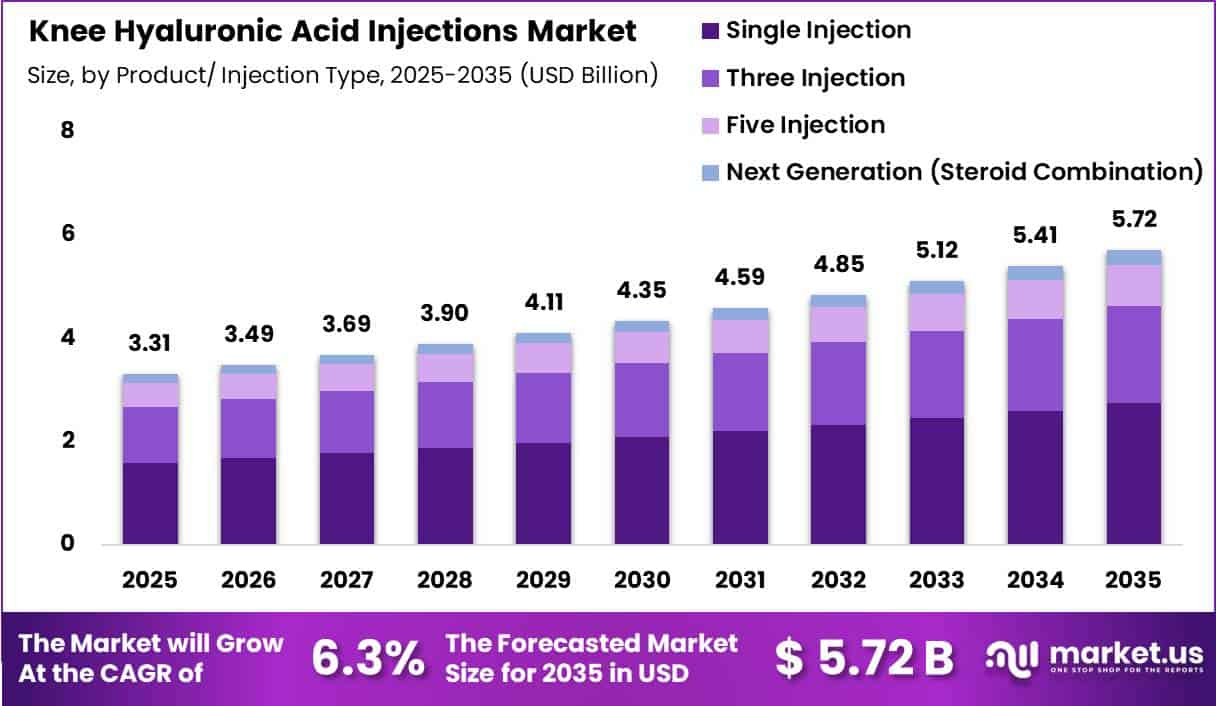
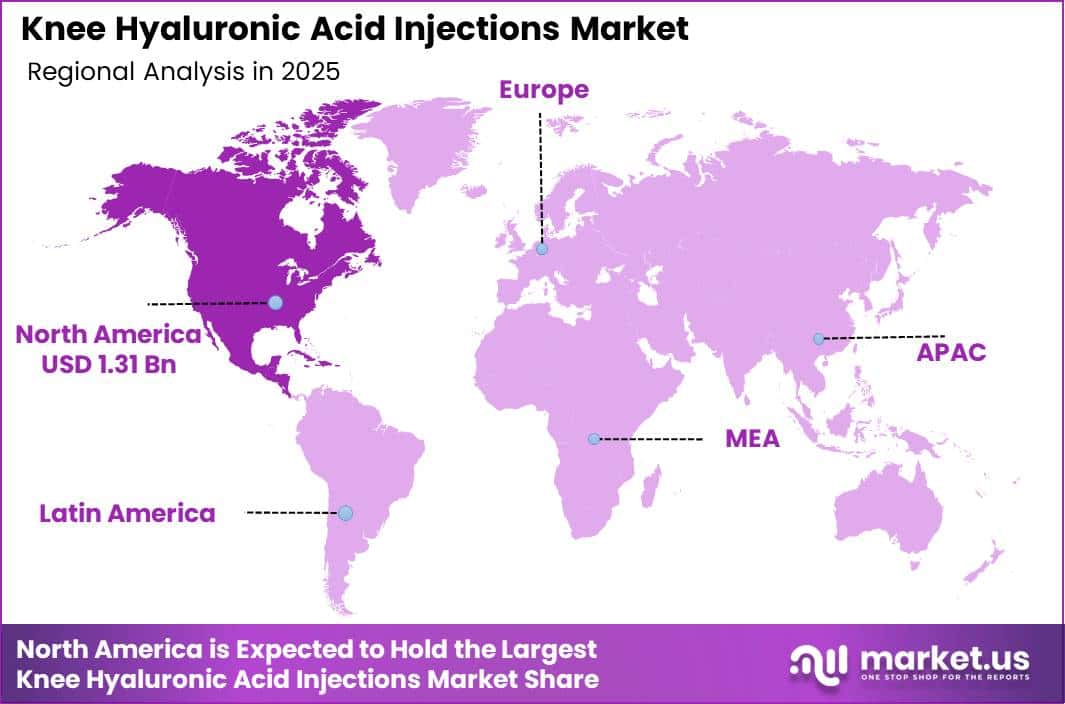
The Global Knee Hyaluronic Acid Injections Market size is expected to be worth around US$ 5.72 Billion by 2035 from US$ 3.31 Billion in 2025, growing at a CAGR of 6.3% during the forecast period from 2026 to 2035. In 2025, North America led the market, accounting for over 42% of the market share with a revenue of US$ 1.31 Billion.
Knee hyaluronic acid injections are widely used as a non-surgical treatment option for patients with knee osteoarthritis, particularly when pain persists despite exercise, weight management, physical therapy, or oral medications. Hyaluronic acid is a naturally occurring substance found in synovial fluid that helps lubricate joints and absorb mechanical shock.
According to the U.S. Centers for Disease Control and Prevention (CDC), an estimated 32.5 million U.S. adults are affected by osteoarthritis, making it one of the leading causes of pain and mobility limitations. The World Health Organization (WHO) also reports that more than 528 million people worldwide were living with osteoarthritis in 2019, with knee osteoarthritis accounting for a significant proportion of cases.
The growing burden of aging populations, obesity, and sports-related joint injuries is increasing demand for minimally invasive treatment options that may help delay surgical intervention in selected patients. Healthcare providers continue to evaluate hyaluronic acid injections based on individual patient needs, as clinical recommendations differ across medical organizations.
The American Academy of Orthopaedic Surgeons (AAOS) notes that evidence regarding routine use remains mixed, emphasizing personalized treatment decisions, while the National Institute for Health and Care Excellence (NICE) recommends careful consideration of available evidence and patient-specific circumstances.
Continuous research, improved injection formulations, and increasing awareness of joint preservation strategies are expected to support ongoing clinical interest in knee hyaluronic acid injections, particularly as healthcare systems seek effective approaches to managing the long-term burden of osteoarthritis.
Key Takeaways
- Market Size: Knee Hyaluronic Acid Injections Market size was US$ 3.31 Million in 2025. The market is estimated to grow to US $5.72 million by 2035.
- Market Share: The Compound Annual Growth Rate (CAGR) of the market from 2026 to 2035 will be 6.3%.
- By Product / Injection Cycle: Single Injection has the largest market share, accounting for 48% of total sales.
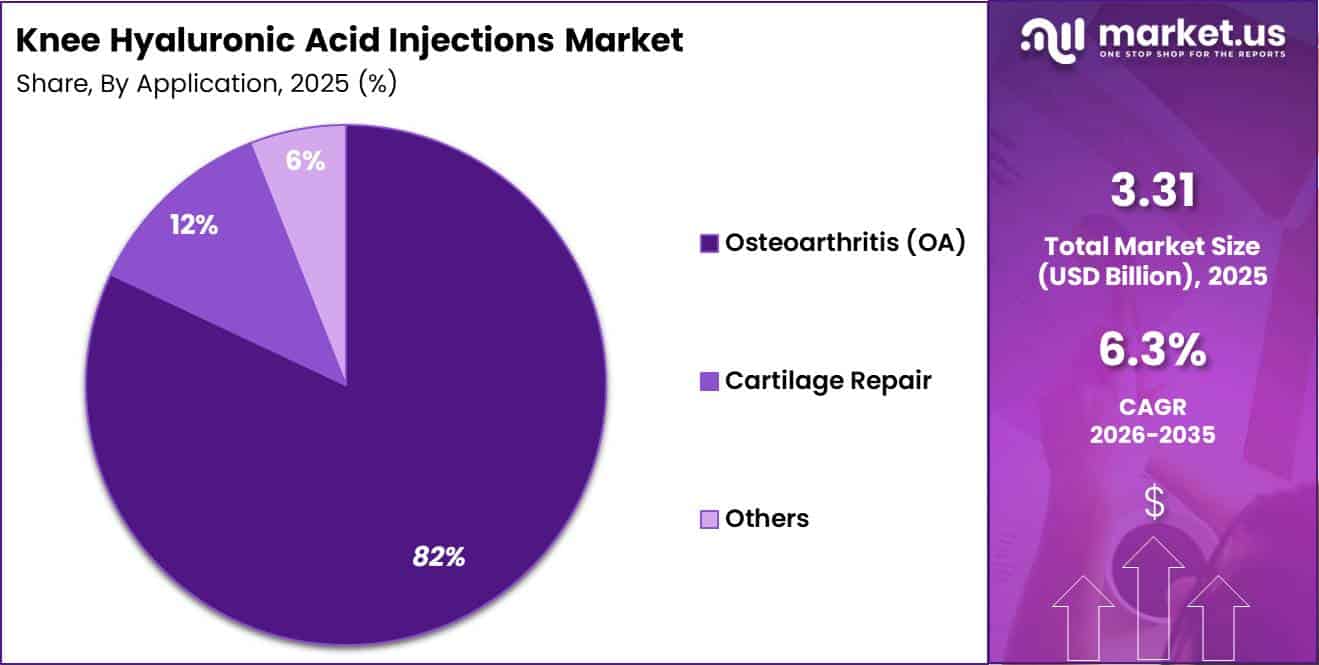
- By Application: Osteoarthritis (OA), accounting for 82% of total revenue.
- By End User: Hospitals leads the segment, accounting for 36% of total revenue.
- By Distribution Channel: Direct Sales (Hospital Procurement) leads the segment, accounting for 45% of total revenue.
- Regional: North America is the dominant regional market, accounting for 42% of global sales.
Product/Injection Cycle Analysis
The Single Injection segment dominated the Knee Hyaluronic Acid Injections Market in 2025, accounting for 48% of the total market share. Its leadership is driven by growing demand for convenient treatment options that reduce the number of hospital visits while improving patient compliance.
Single-injection formulations are widely preferred by physicians for patients with mild to moderate knee osteoarthritis because they simplify treatment schedules and minimize discomfort associated with repeated injections. These products also help reduce healthcare resource utilization, making them attractive to hospitals and outpatient clinics.
The Three Injection segment captured 33% of the market, supported by its long-established clinical use and balanced cost-effectiveness. Many orthopedic specialists continue recommending this regimen due to its proven efficacy and familiarity among healthcare providers.
The Five Injection segment represented 14% of the market and remains relevant in regions where traditional viscosupplementation protocols are routinely practiced. Although requiring multiple visits, it continues to serve selected patient groups.
The Next Generation (Steroid Combination) segment accounted for 5% of the market, gaining attention for combining hyaluronic acid with corticosteroids to provide faster pain relief alongside longer-lasting joint lubrication, particularly for patients experiencing acute inflammatory symptoms.
Application Analysis
The Osteoarthritis (OA) segment led the Knee Hyaluronic Acid Injections Market in 2025, capturing 82% of the total market share. Osteoarthritis remains the primary indication for hyaluronic acid injections due to its increasing prevalence among aging populations, obese individuals, and physically active adults.
These injections are commonly used to relieve knee pain, improve joint mobility, and delay surgical intervention in patients who do not respond adequately to oral medications or physical therapy. Growing awareness of minimally invasive treatment options continues to support the dominance of this segment across developed and emerging healthcare markets.
The Cartilage Repair segment accounted for 12% of the market, driven by expanding use of viscosupplementation following cartilage restoration procedures and sports-related knee injuries. Orthopedic surgeons increasingly incorporate hyaluronic acid into rehabilitation protocols to support joint lubrication and recovery.
The Others segment represented 6% of the market and includes applications such as post-arthroscopic care, traumatic joint injuries, and other degenerative knee conditions. Although comparatively smaller, these specialized applications are gradually expanding with advances in regenerative medicine and personalized orthopedic treatment approaches, contributing to broader clinical utilization of hyaluronic acid injections.
End User Analysis
The Hospitals segment dominated the Knee Hyaluronic Acid Injections Market in 2025, accounting for 36% of the total market share. Hospitals remain the leading end users because they manage a high volume of osteoarthritis patients requiring comprehensive orthopedic evaluation, diagnostic imaging, and injection-based therapies.
Many hospitals have specialized orthopedic departments equipped with experienced physicians and advanced imaging technologies that enable accurate intra-articular injection procedures. Additionally, favorable reimbursement policies in several countries and integrated patient care services continue to strengthen hospital-based treatment adoption.
Orthopedic clinics represent another significant end-user category, benefiting from increasing patient preference for specialized musculoskeletal care and shorter waiting times. These facilities perform a substantial number of outpatient viscosupplementation procedures while offering personalized follow-up care.
Ambulatory surgical centers are also expanding their role as minimally invasive orthopedic treatments become more common, providing cost-effective alternatives for selected patients. Other end users, including rehabilitation centers and specialty pain management clinics, contribute to overall market growth by offering supportive therapies for chronic knee conditions.
The growing emphasis on outpatient care, early intervention, and multidisciplinary management of osteoarthritis is expected to drive demand across all healthcare settings while hospitals maintain their leadership due to their comprehensive treatment capabilities.
Distribution Channel Analysis
The Direct Sales (Hospital Procurement) segment led the Knee Hyaluronic Acid Injections Market in 2025, capturing 45% of the total market share. Direct procurement remains the preferred distribution model because hospitals purchase hyaluronic acid injections through long-term supplier agreements that ensure consistent product availability, competitive pricing, and regulatory compliance.
Large healthcare institutions often negotiate bulk contracts with manufacturers, enabling efficient inventory management and uninterrupted treatment delivery. This procurement model also supports quality assurance and traceability for injectable orthopedic products.
Medical distributors constitute another important distribution channel by supplying orthopedic clinics, ambulatory surgical centers, and regional healthcare facilities that do not procure directly from manufacturers. Retail pharmacies contribute to the market by dispensing physician-prescribed products where local regulations permit patient purchase before administration.
Online and specialty pharmaceutical distribution channels are gradually expanding, supported by digital procurement systems and improved supply chain efficiency for healthcare providers. Government and institutional tenders also play a notable role in public healthcare systems by facilitating large-volume purchases for hospitals and specialty clinics.
Overall, increasing demand for viscosupplementation therapies, stronger manufacturer-provider partnerships, and improvements in healthcare logistics continue to support growth across all distribution channels, with direct hospital procurement maintaining the largest market position.
Market Segmentations
By Product/Injection Cycle
- Single Injection
- Three Injection
- Five Injection
- Next Generation (Steroid Combination)
By Application
- Osteoarthritis (OA)
- Cartilage Repair
- Others
By End User
- Hospitals
- Orthopedic Clinics
- Ambulatory Surgical Centers (ASCs)
- Retail Pharmacies
- Online Sales
- Others
By Distribution Channel
- Direct Sales (Hospital Procurement)
- Retail Pharmacies
- Online Channels
- Specialty Distributors
Driver
Obesity and Metabolic Comorbidity Worsening Knee Symptoms
Obesity is a second major demand accelerator because it increases both biomechanical load and inflammatory burden, pushing more patients from radiographic disease into symptomatic, treatment-seeking disease.
A 2025 burden analysis reported that osteoarthritis years lived with disability attributable to high BMI rose substantially from 1990 to 2021, and another 2025 projection-focused study noted that the highest current burden is concentrated in China, the U.S., and India, with further worsening expected by 2050.
WHO also emphasizes weight as a modifiable osteoarthritis risk and symptom factor, meaning rising obesity prevalence enlarges the subgroup that cycles through multiple non-surgical pain interventions before surgery is considered.
This changes market economics because heavier, more symptomatic patients tend to consume more follow-up care, more multimodal pain management, and more episodic interventions, making injections commercially relevant as part of a repeated-care pathway rather than a one-off therapy.
The implication for 2026 is strongest in the U.S. and large urban APAC systems, where obesity, sedentary lifestyles, and aging are compounding rather than offsetting each other.
| Driver | (~) % Impact on CAGR Forecast | Geographic Relevance | Impact Timeline |
|---|---|---|---|
| Aging knee OA pool and higher treatable pain burden | +1.9% | North America core, EU, Japan, urban China, India private care | Medium term |
| Obesity and metabolic comorbidity worsening knee symptoms | +1.4% | U.S., Gulf, UK, China, India metro corridors | Medium term |
| Surgery deferral and step-care demand for non-operative relief | +1.6% | U.S., EU5, South Korea, Japan, Brazil private orthopedics | Short term |
| Product-cycle optimization toward fewer injections and better workflow economics | +1.1% | U.S., EU, APAC specialty clinics | Short term |
| Selective reimbursement access under documentation-heavy pathways | +0.8% | U.S. Medicare/commercial, Western Europe mixed, APAC private pay | Short term |
| International guideline support despite U.S. routine-use skepticism | +0.9% | EU, MENA, Latin America, parts of APAC | Medium term |
Challenge
Mixed Clinical Efficacy Signals Limiting Hyaluronic Acid Injection Adoption
Mixed clinical efficacy outcomes for intra-articular hyaluronic acid knee injections introduce a sustained challenge because payers, hospital committees, and clinicians increasingly calibrate procedure volumes to statistically meaningful effect sizes, not anecdotal relief, creating a measurable 1.0–1.5 % point drag on the market’s otherwise higher growth ceiling.
Meta-analyses and large trials between 2016 and 2025 show that average pain score improvements over placebo, frequently in the range of 5–10 points on 100-point scales or 1–2 points on common 10-point numeric rating systems, cluster with wide confidence intervals and heterogeneous responses by age, BMI, Kellgren–Lawrence grade, and prior steroid exposure.
This leads to institutional thresholds, such as a minimum 20–30% expected pain reduction, that many payers now use when authorizing viscosupplementation. Clinically, 30–40% of patients may experience at least 50% pain improvement lasting 3–6 months.
While another 30–40% report only marginal benefit, forcing orthopedic centers to tighten inclusion criteria based on radiographic severity, prior conservative therapy duration, often ≥12 weeks, and functional impairment scores. This indirectly caps new patient inflow by 10–20% in high-volume centers.
Strategically, manufacturers must respond with higher-resolution post-marketing data stratified by phenotypes, such as activity level and synovial inflammatory markers, and real-world evidence registries with at least 5,000–10,000 patients per brand over 3–5 years.
These datasets should include standard deviation bands for pain, WOMAC, and KOOS outcomes, enabling hospitals to build more precise patient selection algorithms that convert efficacy ambiguity into targeted utilization rather than indiscriminate volume cuts.
Without such evidence, mixed clinical signals continue to reduce incremental CAGR by more than one % point, especially in systems where comparative effectiveness committees review intra-articular injections every 2–3 years.
| Challenge | (~) % CAGR Friction Drag | Geographic Relevance | Mitigation Horizon |
|---|---|---|---|
| Mixed clinical efficacy signal | -1.4% | North America, EU, urban Asia | Medium term (2–4 years) |
| Reimbursement and coverage ambiguity | -1.2% | North America core, EU payers | Medium term (2–4 years) |
| Procedure capacity and workflow strain | -1.0% | Urban hospital hubs, large ambulatory centers | Short term (≤ 2 years) |
| Talent and skills concentration | -0.8% | Orthopedic rheumatology clusters | Long term (≥ 4 years) |
| Comparative therapy and guideline drift | -1.1% | OECD health systems, high-income APAC | Medium term (2–4 years) |
| Product differentiation and long-term safety data gaps | -0.9% | Global branded HA portfolios | Long term (≥ 4 years) |
Restraints
Negative or Neutral Clinical Guideline Stance Limiting HA Injection Adoption
Clinical practice guidelines have moved toward a neutral or negative stance on routine use of intra-articular hyaluronic acid injections for knee osteoarthritis, reshaping physician behavior and downstream demand even in regions where reimbursement is still available.
The AAOS guideline revisions and other orthopedic and rheumatology bodies have highlighted that HA injections often fail to meet minimum clinically important improvement thresholds at a population level, recommending against or refraining from endorsing routine use, while favoring intra-articular steroids for short-term relief alongside weight loss and exercise for longer-term management.
This narrative, amplified across professional education and payer utilization reviews, reframes HA injections as low-value care in many health systems, leading quality-focused practices to reduce indications and limit use to narrow subgroups or patient-driven preferences.
This particularly affects new-start rates among guideline-conscious physicians in academic and large group settings. Although millions of HA administrations were still reimbursed annually in earlier Medicare data, evolving guidance encourages utilization committees to flag high HA volumes for review and may drive hospital systems to establish internal thresholds or require shared-decision documentation.
This adds friction and pushes some physicians toward alternative interventions with perceived stronger evidence. From a commercial perspective, this erodes the promotional ROI of detailing and CME-style education programs for HA, as incremental prescribing lift per promotional dollar declines and payers become more receptive to step-therapy protocols that place HA behind multiple lower-cost options.
The cumulative effect is a forecasted 0.9 %-point drag on CAGR over the short term (2026–2027), as guideline-aligned prescribing reductions appear first in North American and European procedure volumes before extending into protocol updates in other regions.
| Restraint | (~) % Impact on CAGR Forecast | Geographic Relevance | Impact Timeline |
|---|---|---|---|
| Drug reclassification & stricter trials | -1.5% | US, EU core | Medium term (2–4 years) |
| Reimbursement tightening & high out-of-pocket | -1.3% | US, EU, selective APAC | Short–Medium term (≤ 4 years) |
| Negative/neutral clinical guideline stance | -0.9% | North America, Europe | Short term (≤ 2 years) |
| Supply chain & tariff shocks in HA inputs | -0.7% | US, APAC corridors | Short–Medium term (≤ 4 years) |
| Competition from steroids, PRP and RF | -0.8% | Global, urban tertiary hubs | Medium–Long term (≥ 4 years) |
| Procedure cost inflation vs OA affordability | -0.6% | US, EU, high-cost systems | Long term (≥ 4 years) |
Opportunity
Emerging Market OA Access Platforms Expanding HA Injection Adoption
This opportunity focuses on building low-cost, high-throughput delivery platforms for knee HA injections in emerging regions where knee OA prevalence is rising but intra-articular therapies remain underpenetrated, distinguishing it clearly from current drivers that are concentrated in high-income health systems with relatively saturated access.
By 2030, emerging markets in APAC, Latin America, the Middle East, and Africa could account for more than 45% of global knee OA prevalence, around 180 million patients, yet today fewer than 5–7% of these patients receive any intra-articular HA, implying an untapped TAM of well over 150 million potential procedures per year as urbanization, obesity, and aging accelerate incidence.
If dedicated OA access platforms using standardized protocols, task-shifted delivery models, and tiered pricing capture even 3–5% of this unmet pool by 2035, this could translate into 5–8 million incremental HA procedures annually, adding roughly 25–30% volume upside across emerging regions and 1.5 % points to global market CAGR relative to baseline.
These models can operate with lean unit economics, with per-procedure operational costs 20–30% lower than hospital outpatient departments through optimized staffing and shared infrastructure, while maintaining gross margins of 40–45% by leveraging bulk procurement and simplified supply chains.
They also open ancillary revenue streams for diagnostics, follow-up visits, and adjunct therapies that can raise per-patient lifetime value by 1.3–1.5 times without significantly increasing payer or out-of-pocket burdens.
| Opportunity | (~) % Potential CAGR Upside | Geographic Relevance | Execution Window |
|---|---|---|---|
| Value-based HA OA care bundles | +2.0% | North America, EU, high-income APAC | Short term (≤ 2 years) |
| Emerging-market OA access platforms | +1.5% | APAC emerging, LATAM, Middle East, Africa | Medium term (2-4 years) |
| Combination and extended-release HA formulations | +1.2% | North America core, EU, Japan, South Korea | Medium term (2-4 years) |
| Digital triage and longitudinal OA patient registries | +0.8% | Global urban centers | Long term (≥ 4 years) |
| Employer- and payer-sponsored OA prevention programs | +1.0% | North America, EU, selected APAC | Medium term (2-4 years) |
| Procedure standardization and center-of-excellence models | +0.7% | North America, EU, GCC | Short–medium term (≤ 4 years) |
Regional Analysis
In 2025, North America led the market, accounting for over 42% of the market share with a revenue of US$1.31 billion.
In 2025, North America region’s leadership is supported by the high prevalence of knee osteoarthritis, particularly among the aging population, increasing obesity rates, and widespread adoption of minimally invasive treatments.
The United States represents the largest contributor within the region due to its advanced orthopedic healthcare infrastructure, strong reimbursement coverage for eligible patients, and high awareness of viscosupplementation therapies.
Orthopedic specialists and sports medicine clinics increasingly recommend hyaluronic acid injections as a non-surgical option to reduce pain and improve joint mobility before considering knee replacement procedures.
Rising participation in recreational sports and physical activities has also increased the number of patients seeking early intervention for joint degeneration and cartilage damage. Continuous product innovation, including single-injection formulations and combination therapies, further supports market expansion by improving patient convenience and treatment adherence.
Additionally, favorable regulatory approvals and the presence of leading manufacturers strengthen product availability across hospitals, ambulatory surgical centers, and specialty orthopedic clinics. Growing healthcare expenditure, increasing diagnostic rates of osteoarthritis, and expanding access to advanced musculoskeletal care continue to reinforce North America’s dominant position.
The region is expected to maintain its market leadership throughout the forecast period, driven by ongoing research into next-generation viscosupplementation products, a well-established distribution network, and rising demand for effective non-operative solutions to manage chronic knee pain.
Key Regions and Countries
North America
- The US
- Canada
Europe
- Germany
- France
- The U.K.
- Italy
- Spain
- Russia & CIS
- Rest of Europe
Asia Pacific
- China
- India
- Japan
- South Korea
- ASEAN
- Australia & New Zealand
- Rest of Asia Pacific
Middle East & Africa
- GCC
- South Africa
- Rest of Middle East & Africa
Latin America
- Brazil
- Mexico
- Rest of Latin America
Key Player Analysis
The Knee Hyaluronic Acid Injections Market is moderately consolidated, with a mix of established multinational healthcare companies and specialized orthopedic and viscosupplementation manufacturers competing through product quality, clinical evidence, and geographic expansion.
Market competition is driven by continuous research and development, regulatory approvals, and the introduction of advanced formulations that improve lubrication, pain relief, and patient convenience. Companies are increasingly investing in single-injection and next-generation hyaluronic acid products to address growing demand for minimally invasive osteoarthritis treatments.
Innovation is focused on enhancing injection efficacy, extending therapeutic duration, and improving patient outcomes while complying with evolving regulatory standards.
Sanofi S.A., Bioventus LLC, Zimmer Biomet Holdings, Smith & Nephew plc, TRB Chemedica International, OrthogenRx Inc., Meiji Seika Pharma Co. Ltd., Shanghai Jingfeng Pharmaceutical, Galderma S.A., and LG Chem (LG Life Sciences) remain key participants shaping competitive developments through diversified product portfolios and strong distribution capabilities.
Competitive strategies across the market increasingly emphasize research and development to create improved cross-linked hyaluronic acid formulations with enhanced durability and clinical performance. Companies are expanding strategic partnerships with hospitals, orthopedic clinics, and distributors to strengthen market access while supporting physician education and patient awareness programs.
Product innovation remains central, particularly in developing single-injection therapies and combination formulations that improve treatment convenience. Workflow integration through digital ordering systems, inventory optimization, and clinical support services helps streamline healthcare provider operations.
Ecosystem-based competition is also growing, with manufacturers integrating orthopedic implants, rehabilitation solutions, biologics, and musculoskeletal care services to deliver comprehensive treatment pathways and strengthen long-term customer relationships across global healthcare markets.
Top Key Players
- Sanofi S.A.
- Bioventus LLC
- Zimmer Biomet Holdings
- Anika Therapeutics Inc.
- Seikagaku Corporation
- Fidia Farmaceutici S.p.A.
- Ferring Pharmaceuticals
- Johnson & Johnson (DePuy Synthes)
- Smith & Nephew plc
- TRB Chemedica International
- OrthogenRx Inc.
- Meiji Seika Pharma Co. Ltd.
- Shanghai Jingfeng Pharmaceutical
- Galderma S.A.
- LG Chem (LG Life Sciences)
Recent Developments
- In July 2025, Sanofi S.A. completed the acquisition of Blueprint Medicines, strengthening its immunology and specialty medicines portfolio. Although not specific to knee hyaluronic acid injections, the acquisition expands Sanofi’s musculoskeletal and inflammatory disease capabilities.
- In July 2025, Zimmer Biomet Holdings announced a definitive agreement to acquire Monogram Technologies, enhancing its orthopedic robotics and navigation portfolio for knee, hip, and shoulder procedures. The acquisition supports advanced orthopedic treatment ecosystems that complement its osteoarthritis product portfolio, including viscosupplementation products.
- In May 2026, Johnson & Johnson (DePuy Synthes) announced an agreement to acquire rights to Gemtrack™ radiofrequency tracking technology from MinMaxMedical to expand its VELYS™ orthopedic robotics platform for knee and other joint reconstruction procedures.
Report Scope
| Report Features | Description |
|---|---|
| Market Value (2025) | US$ 3.31 Billion |
| Forecast Revenue (2035) | US$ 5.72 Billion |
| CAGR (2026-2035) | 6.3% |
| Base Year for Estimation | 2025 |
| Historic Period | 2020-2024 |
| Forecast Period | 2026-2035 |
| Report Coverage | Revenue Forecast, Market Dynamics, Competitive Landscape, Recent Developments |
| Segments Covered | By Product / Injection Cycle(Single Injection, Three Injection, Five Injection, Next Generation (Steroid Combination))By Application (Osteoarthritis (OA), Cartilage Repair, Others)By End User(Hospitals, Orthopedic Clinics, Ambulatory Surgical Centers (ASCs), Retail Pharmacies, Online Sales, Others)By Distribution Channel(Direct Sales (Hospital Procurement), Retail Pharmacies, Online Channels, Specialty Distributors)By Region and Companies – Industry Segment Outlook, Market Assessment, Competition Scenario, Trends and Forecast 2026-2035 |
| Regional Analysis | North America – The US, Canada; Europe – Germany, France, U.K., Italy, Spain, Russia & CIS, Rest of Europe; Asia Pacific – China, India, Japan, South Korea, ASEAN, Australia & New Zealand, Rest of Asia Pacific; Middle East & Africa – GCC, South Africa, Rest of Middle East & Africa; Latin America – Brazil, Mexico, Rest of Latin America |
| Competitive Landscape | Sanofi S.A., Bioventus LLC, Zimmer Biomet Holdings, Anika Therapeutics Inc., Seikagaku Corporation, Fidia Farmaceutici S.p.A., Ferring Pharmaceuticals, Johnson & Johnson (DePuy Synthes), Smith & Nephew plc, TRB Chemedica International, OrthogenRx Inc., Meiji Seika Pharma Co. Ltd., Shanghai Jingfeng Pharmaceutical, Galderma S.A., LG Chem (LG Life Sciences) |
| Customization Scope | Customization for segments, region/country-level will be provided. Moreover, additional customization can be done based on the requirements. |
| Purchase Options | We have three licenses to opt for: Single User License, Multi-User License (Up to 5 Users), Corporate Use License (Unlimited User and Printable PDF) |





































