


Market Overview
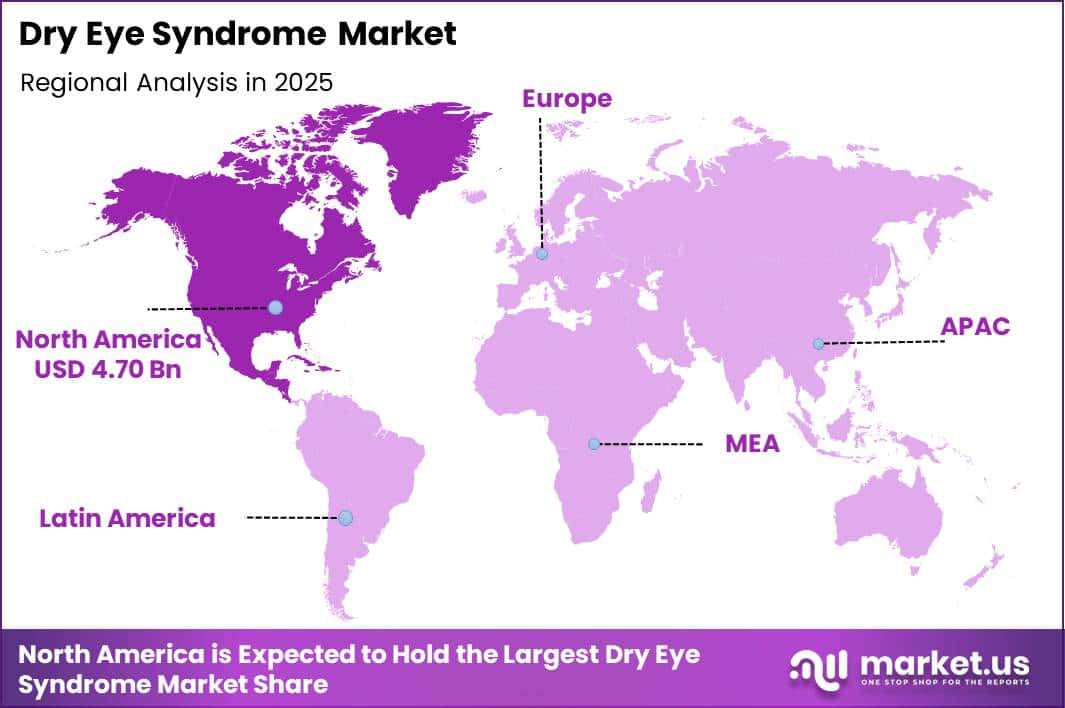
The Global Dry Eye Syndrome Market size is expected to be worth around US$ 12.57 Billion by 2035 from US$ 6.70 Billion in 2025, growing at a CAGR of 6.5% during the forecast period from 2026 to 2035. In 2025, North America led the market, achieving over 70.3% share with a revenue of US$ 4.70 Billion.
The global Dry Eye Syndrome (DES) market is witnessing increasing attention due to the rising burden of ocular surface disorders, the growing ageing population, expanding digital screen exposure, and increased diagnosis of tear film abnormalities.
Dry eye syndrome occurs when the eyes fail to produce sufficient tears or when tears evaporate too quickly, leading to symptoms such as irritation, burning sensation, redness, blurred vision, and discomfort. According to the National Eye Institute, dry eye affects nearly 16.4 million people in the United States, highlighting its significant clinical impact.
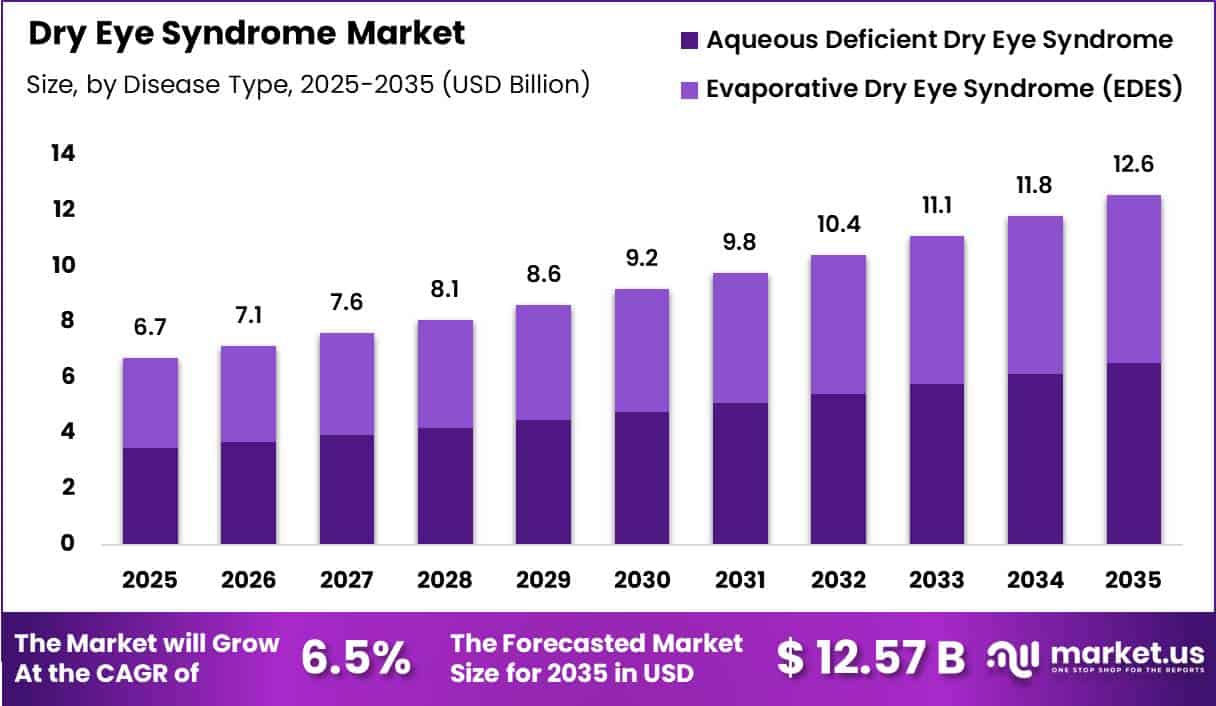
The disease is categorised mainly into aqueous-deficient dry eye, caused by reduced tear production, and evaporative dry eye, commonly associated with meibomian gland dysfunction and poor tear quality. Increasing prevalence of chronic conditions, contact lens usage, eye surgeries, environmental factors, and prolonged exposure to computers, smartphones, and other digital devices are contributing to higher demand for effective treatment options.
Treatment approaches include artificial tears, lubricating eye drops, prescription anti-inflammatory therapies, tear-conserving procedures, and advanced drug delivery solutions. The U.S. Food and Drug Administration has approved prescription therapies such as lifitegrast for managing dry eye disease symptoms, expanding therapeutic options for patients with chronic conditions.
Growing investment in innovative ophthalmic treatments, improved diagnostic technologies, and rising awareness regarding ocular health are expected to support continued development of the dry eye syndrome market. The focus is shifting toward personalised therapies targeting inflammation, tear production, and underlying ocular surface dysfunction
Key Takeaways
- Market Size: The Global Dry Eye Syndrome Market size was US$ 6.70 billion in 2025. The market is estimated to grow to US$ 12.57 billion by 2035.
- Market Share: The Compound Annual Growth Rate (CAGR) of the market from 2026 to 2035 will be 6.5%.
- Disease Type: Aqueous Deficient Dry Eye Syndrome has the largest market share, accounting for 52% of total disease type revenue.
- Product & Drug Class: Artificial Tears and Lubricants leads the segment, accounting for 61.1% of total product & drug class revenue.
- Dosage Form: Eye Drops/Solutions leads the segment, accounting for 58.3% of total dosage form revenue.
- Distribution Channel: Hospital Pharmacies lead the segment, accounting for 28.3% of total distribution channel revenue.
- Regional: North America is the dominant regional market, accounting for 70.3% of global revenue.
Disease Type Analysis
The Aqueous Deficient Dry Eye Syndrome segment dominated the Dry Eye Syndrome market, accounting for 52.0% market share in 2025. This segment leads due to the increasing prevalence of reduced tear production caused by lacrimal gland dysfunction, autoimmune disorders, ageing-related tear deficiency, and chronic ocular surface inflammation.
Aqueous-deficient dry eye is commonly associated with insufficient aqueous tear volume, resulting in persistent dryness, irritation, and discomfort among affected individuals. Growing diagnosis rates and increasing adoption of prescription therapies targeting tear production and inflammation are supporting segment expansion.
The Evaporative Dry Eye Syndrome (EDES) segment accounted for 48.0% market share in 2025 and is projected to be the fastest-growing segment during the forecast period. Growth is driven by rising cases of meibomian gland dysfunction, prolonged digital device usage, environmental stress factors, contact lens adoption, and changes in lifestyle patterns.
Evaporative dry eye occurs due to excessive tear evaporation caused by poor lipid layer function, making it a major focus area for advanced diagnostic tools and targeted treatments. Increasing research on therapies addressing tear film instability and eyelid gland dysfunction is expected to accelerate growth in this segment.
Product & Drug Class Analysis
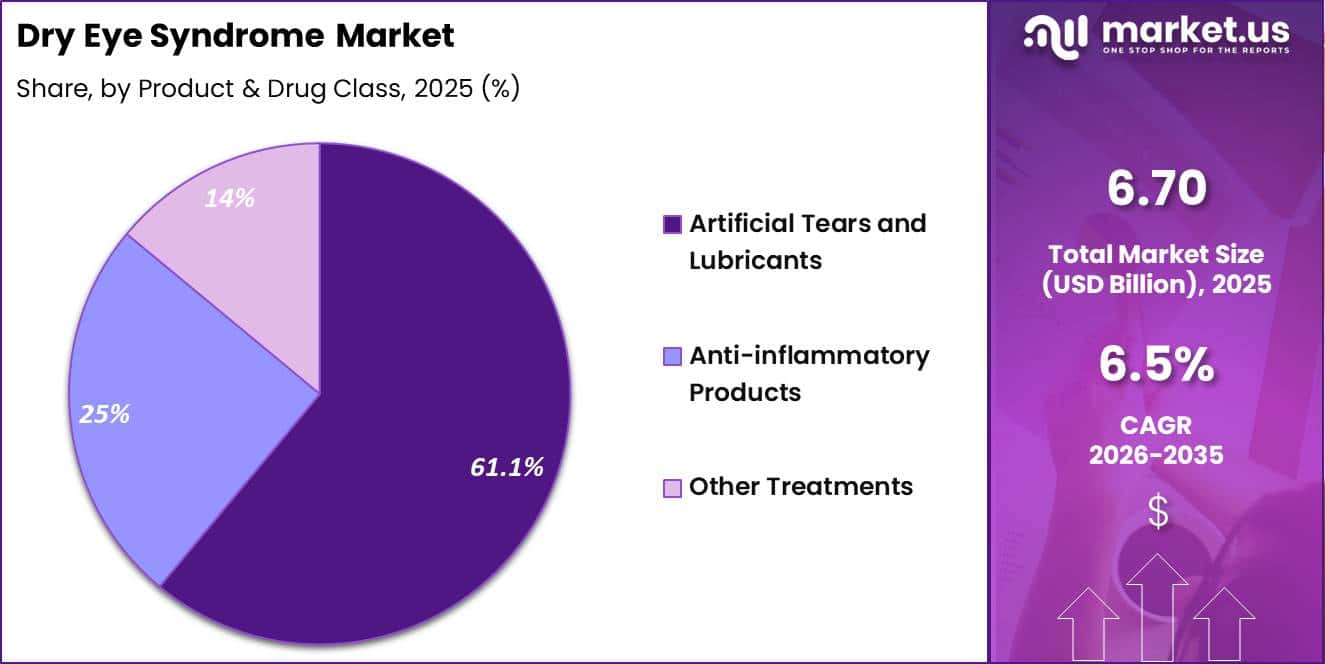
The Artificial Tears and Lubricants segment dominated the Dry Eye Syndrome market, capturing 61.1% market share in 2025. These products remain the most widely used treatment option due to their accessibility, affordability, rapid symptom relief, and suitability for mild to moderate dry eye conditions. Increasing patient preference for over-the-counter lubricating eye drops and preservative-free formulations is supporting segment growth.
The Anti-inflammatory Products segment held 25.0% market share in 2025 and is anticipated to be the fastest-growing segment during the forecast period. Rising recognition of inflammation as a key contributor to chronic dry eye disease is increasing demand for prescription therapies such as immunomodulators and anti-inflammatory medications. Advances in ophthalmic drug development are focused on improving long-term disease management by targeting inflammatory pathways involved in ocular surface damage.
The Other Treatments segment accounted for 14.0% market share in 2025, including therapies such as tear duct procedures, advanced devices, and supportive treatment approaches. Growing adoption of combination treatment strategies is contributing to segment development.
Dosage Form Analysis
The Eye Drops / Solutions segment dominated the Dry Eye Syndrome market with 58.3% market share in 2025. Eye drops represent the preferred dosage form due to their direct application, rapid action, convenience, and widespread availability across prescription and non-prescription categories. Increasing availability of advanced formulations, including preservative-free artificial tears and targeted ophthalmic solutions, is further strengthening segment dominance.
The Ointments and Gels segment is gaining traction due to its longer-lasting lubricating effect and suitability for patients experiencing severe nighttime dryness. These formulations provide extended moisture retention on the ocular surface and are commonly recommended for individuals with persistent symptoms requiring prolonged lubrication.
The Capsules & Tablets segment represents a developing category within the dry eye treatment landscape. Although less commonly used compared with topical formulations, oral supplements and systemic therapies are gaining attention due to their potential role in supporting tear production and managing underlying inflammatory conditions. Growing research into nutritional approaches, including omega-3 fatty acids and other supportive therapies, is contributing to segment growth.
Distribution Channel Analysis
The Hospital Pharmacies segment dominated the Dry Eye Syndrome market, accounting for 28.3% market share in 2025. Hospitals remain an important distribution channel due to the availability of specialist ophthalmology services, prescription-based therapies, advanced diagnostic facilities, and access to chronic disease management programs. Increasing patient visits for eye disorders and rising adoption of specialised treatments are supporting hospital pharmacy growth.
The Online Pharmacies segment is expected to be the fastest-growing segment during the forecast period. Growth is driven by increasing digital healthcare adoption, convenient medication purchasing, home delivery services, and improved access to over-the-counter eye care products. Online platforms are becoming increasingly important for patients requiring regular purchases of artificial tears and long-term dry eye management products.
The Retail Pharmacies segment continues to hold a significant position due to easy accessibility, widespread availability of lubricating eye drops, and consumer preference for immediate purchase of symptom-relief products. Expansion of pharmacy networks and increasing awareness about self-management of mild dry eye symptoms are supporting continued growth in this channel.
Key Market Segments
By Disease Type
- Aqueous Deficient Dry Eye Syndrome
- Evaporative Dry Eye Syndrome (EDES)
By Product & Drug Class
- Artificial Tears and Lubricants
- Anti-Inflammatory Products
- Cyclosporines (e.g., Restasis, Cequa)
- Corticosteroids
- LFA-1 Antagonists (e.g., Xiidra)
- Nicotinic Receptor Agonists (e.g., Tyrvaya)
- Other Treatments
By Dosage Form
- Eye Drops/Solutions
- Ointments and Gels
- Capsules & Tablets
By Distribution Channel
- Hospital Pharmacies
- Retail Pharmacies
- Online Pharmacies
Driver
Prescription expansion via new dry eye mechanisms
The 2025 U.S. approval of TRYPTYR (acoltremon ophthalmic solution 0.003 %) introduced a first-in-class TRPM8 pathway option into an already established dry eye therapeutic landscape that includes cyclosporine, lifitegrast, corticosteroid drops, perfluorohexyloctane, and varenicline nasal spray.
Rather than simply substituting one product for another, each new mechanism expands the ability of clinicians to match therapy to symptom subtypes, including aqueous-deficient, inflammatory, evaporative, and neurosensory presentations. This improves personalisation and increases overall treatment initiation, persistence, and combination therapy use.
Given dry eye prevalence estimates of approximately 8 % in the U.S. adult population and meibomian gland dysfunction affecting around 20 % or more, even modest improvements in diagnosis-to-treatment conversion can significantly expand treated patient volumes.
Broader mechanism diversity also supports earlier intervention and more frequent add-on prescribing, strengthening refill continuity and long-term management. Overall, this mechanism diversification increases the effective addressable treated population and supports incremental prescription growth by improving segmentation and reducing therapeutic drop-off across heterogeneous dry eye subtypes.
| Driver | (~) % Impact on CAGR Forecast | Geographic Relevance | Impact Timeline |
|---|---|---|---|
| Prescription expansion via new dry-eye mechanisms | +2.1% | North America core, EU speciality ophthalmology, APAC urban private care | Short term (≤ 2 years) |
| Digital exposure and screen-linked symptom load | +1.7% | North America, EU, Japan, South Korea, China urban, India metro spill-over | Short term (≤ 2 years) |
| Ageing population and chronic disease overlap | +1.9% | North America core, Western Europe, Japan, and China coastal cities | Medium term (2-4 years) |
| Meibomian gland dysfunction pathway adoption | +1.6% | U.S. speciality clinics, EU ophthalmology centres, Gulf private care, APAC tertiary hubs | Medium term (2-4 years) |
| Diagnosis normalisation through broader clinical awareness | +1.3% | U.S., Canada, UK, Germany, Australia, India urban hospital networks | Short term (≤ 2 years) |
| Multi-modal care is shifting toward chronic management | +1.4% | North America core, EU, Japan, premium APAC self-pay segments | Medium term (2-4 years) |
Challenge
Chronic patient non-adherence in dry eye disease
Chronic non-adherence to dry eye regimens is a structural constraint on both clinical outcomes and market growth because dry eye disease requires long-term, behaviour-dependent management involving frequent topical dosing, lid hygiene, and environmental adjustments.
Real-world data suggest that 30 to 50 % of patients discontinue lubricants or prescription anti-inflammatory drops within 3 to 6 months. By 12 months, many patients reduce dosing from the recommended 3 to 4 times daily to once daily or less, and consistent lid hygiene practices remain low beyond the initial treatment phase.
Key drivers of non-adherence include treatment fatigue, delayed symptom relief, cost burden, workplace dosing constraints, and transient side effects such as burning or irritation. As a result, effective treatment days often fall to approximately 150 to 200 per year versus the more than 300 days needed for optimal ocular surface control.
This erosion leads to recurrent symptom flares, irregular follow-up patterns, and reduced persistence on higher-value therapies. It also weakens physician confidence in treatment escalation and limits long-term prescription continuity, collectively reducing potential CAGR by approximately 1.0 % point.
Addressing this gap requires adherence-focused interventions such as multi-month dispensing, digital reminder systems, bundled pricing to lower per-day cost, and outcome-linked reimbursement models. Incorporating adherence tracking metrics such as proportion of days covered and dosing frequency logs into routine care can help recover lost treatment continuity and improve both clinical and commercial performance.
| Challenge | (~) % CAGR Friction Drag | Geographic Relevance | Mitigation Horizon |
|---|---|---|---|
| Diagnostic heterogeneity & under-coding | -1.2% | North America, EU, East Asia urban | Medium term (2–4 years) |
| Chronic patient non-adherence | -1.0% | Global ageing clusters | Long-term (≥ 4 years) |
| Limited advanced device penetration | -0.9% | North America core, EU private care, APAC metros | Medium term (2–4 years) |
| Talent & workflow bottlenecks in ocular surface care | -0.8% | North America, EU, GCC, East Asia | Long-term (≥ 4 years) |
| Data & endpoint misalignment in R&D | -0.7% | Global trial hubs | Long-term (≥ 4 years) |
| Macroeconomic & reimbursement friction | -0.6% | US managed care, EU payers, emerging markets | Medium term (2–4 years) |
Restraints
Supply chain and device capacity bottlenecks in dry eye markets
Supply chain and device capacity bottlenecks, while less severe than in heavy manufacturing sectors, still create a meaningful short-term constraint on the dry eye syndrome market by limiting the availability of key therapies and slowing the rollout of procedural technologies.
Ophthalmic pharmaceuticals are particularly sensitive to disruptions in sterile fill-finish capacity, active pharmaceutical ingredient sourcing, and packaging components such as specialised droppers and single-use vials.
When production sites operate near full capacity or face quality-related shutdowns, even short interruptions of 2 to 3 months can reduce annual sales of leading dry eye agents by approximately 5 to 10 % in affected markets, especially if patients permanently switch to alternative brands.
Device-based therapies face additional constraints due to longer production and logistics cycles. Systems such as intense pulsed light or thermal pulsation devices often require 4 to 6 months from order to installation, and this can extend to 9 to 12 months during component shortages or shipping delays.
Such delays slow clinic expansion and defer revenue realisation for higher-margin procedural offerings. Consumables and maintenance supply chains also introduce variability. Delays in treatment tips, light guides, or service parts can reduce device throughput by 10 to 20 %, limiting clinic scheduling efficiency and lowering realised utilisation versus planned capacity.
In aggregate, these constraints are most impactful over the near term of 1 to 2 years, reducing realised growth versus underlying demand and shaving an estimated 0.6 % points off CAGR until supply chains stabilise and capacity expands.
| Restraint | (~) % Impact on CAGR Forecast | Geographic Relevance | Impact Timeline |
|---|---|---|---|
| Under-diagnosis and low treatment penetration | -1.4% | North America, EU, APAC urban | Long-term (≥ 4 years) |
| Reimbursement and formulary access constraints | -1.1% | US core, EU public systems | Medium term (2-4 years) |
| Regulatory latency for novel therapies | -0.9% | US, EU, Japan | Medium term (2-4 years) |
| Rising input and operating costs | -0.7% | Global, esp. US/EU | Short–Medium term (≤ 4 years) |
| Supply chain and device capacity bottlenecks | -0.6% | North America, EU, selective APAC | Short term (≤ 2 years) |
| Clinical practice inertia and generic bias | -0.5% | Global ophthalmology corridors | Long-term (≥ 4 years) |
Opportunity
Integrated digital dry eye syndrome (DES) care platforms
Integrated digital DES care platforms represent a forward-looking opportunity to unify screening, triage, monitoring, and adherence support through teleophthalmology, remote symptom tracking, and home-based diagnostics layered on top of existing pharmacologic and procedural treatments.
Dry eye prevalence varies widely, and a large proportion of symptomatic individuals remain undiagnosed. This suggests a global under managed population potentially exceeding 200 to 300 million adults when extrapolated across regions and age structures.
By 2030, capturing even 10 to 15 % of this undiagnosed or undertreated segment through digital-first care pathways such as symptom apps, virtual consultations, and structured questionnaires could add 20 to 30 million managed patients.
This translates into an incremental total addressable market expansion of roughly USD 4 to 6 billion, assuming a typical annual spend per patient of USD 150 to 200 in high-income markets and USD 40 to 80 in middle-income markets. These platforms also improve unit economics.
Shifting 30 to 40 % of follow-ups and adherence checks to virtual channels can reduce per-patient care delivery costs by 20 to 30 %, supporting margin expansion of roughly 300 to 500 basis points for integrated care networks.
This remains a future opportunity rather than a current driver, as most DES care is still episodic and clinic-based, with limited longitudinal data capture or subscription-style models. As a result, there is substantial white space for digital-first platforms that combine clinical management, adherence optimisation, and payer-aligned reimbursement structures.
| Opportunity | (~) % Potential CAGR Upside | Geographic Relevance | Execution Window |
|---|---|---|---|
| Integrated digital DES care platforms | +2.5% | North America, EU, urban APAC | Short term |
| Procedural & device-centric DES centres | +2.2% | North America core, GCC, East Asia | Medium term |
| DES–metabolic comorbidity programs | +1.8% | North America, EU, East Asia | Medium term |
| Pediatric & young adult screen-use DES | +2.0% | APAC emerging, Latin America, MENA | Long term |
| Value-tier DES therapies for emerging markets | +1.7% | APAC emerging, Africa, Latin America | Long term |
| Enterprise & insurer-sponsored DES prevention | +1.5% | North America, EU, developed APAC | Medium term |
Regional Analysis
In 2025, North America led the market, achieving over 70.3% share with a revenue of US$ 4.70 billion. The global Dry Eye Syndrome market is experiencing significant regional growth due to increasing disease prevalence, rising awareness of ocular health, expanding geriatric populations, and growing adoption of advanced ophthalmic therapies.
North America represents a leading market, supported by a high burden of dry eye disease, strong healthcare infrastructure, advanced diagnostic capabilities, and widespread availability of prescription and over-the-counter treatment options.
The region benefits from increasing ophthalmology consultations, growing demand for innovative therapies, and strong research activities focused on ocular surface disorders. The presence of major pharmaceutical and ophthalmic device companies further supports product development and commercialisation.
Europe represents another significant market, driven by the increasing prevalence of age-related eye disorders, rising healthcare expenditure, and growing adoption of advanced dry eye management approaches. Countries across the region are focusing on improving access to ophthalmic care, early diagnosis, and patient-centred treatment strategies.
The Asia-Pacific region is expected to witness strong growth due to a rapidly ageing population, increasing screen exposure among younger populations, rising prevalence of lifestyle-related eye conditions, and improving healthcare accessibility. Expanding healthcare facilities and growing awareness about eye care are accelerating diagnosis and treatment adoption.
Latin America and the Middle East & Africa are emerging markets, supported by improving healthcare infrastructure, increasing availability of ophthalmic products, and growing recognition of untreated ocular surface disorders. Rising investment in healthcare services and expanding access to specialised eye care are expected to contribute to future market development in these regions.
Key Regions and Countries
North America
- The US
- Canada
Europe
- Germany
- France
- The U.K.
- Italy
- Spain
- Russia & CIS
- Rest of Europe
Asia Pacific
- China
- India
- Japan
- South Korea
- ASEAN
- Australia & New Zealand
- Rest of Asia Pacific
Middle East & Africa
- GCC
- South Africa
- Rest of the Middle East & Africa
Latin America
- Brazil
- Mexico
- Rest of Latin America
Key Player Analysis
Suppliers in the global dry eye syndrome market are focusing on innovative therapies that target underlying ocular surface inflammation and meibomian gland dysfunction rather than providing only symptomatic relief through conventional artificial tears. Increasing emphasis is being placed on preservative-free formulations, as frequent exposure to preservatives may cause ocular surface toxicity and negatively affect treatment adherence among patients requiring long-term, daily therapy.
Key strategic priorities include advanced drug delivery systems designed to provide sustained ocular drug release through punctal plugs, contact lens matrices, and biodegradable implants. These technologies are intended to improve drug exposure and reduce dependence on multiple daily eye-drop administrations.
Innovation is also being directed toward evaporative dry eye, with companies developing treatments based on thermal pulsation, intense pulsed light, and lipid-based artificial tear formulations. Prescription anti-inflammatory therapies are being expanded to address patients who experience inadequate outcomes with lubricant monotherapy.
Companies are also investing in FDA new drug applications and supplemental approvals, while strengthening relationships with ophthalmologists and negotiating with pharmacy benefit managers to improve reimbursement and retail distribution.
Furthermore, rising screen exposure is creating a new growth opportunity. Remote work, prolonged device use, and reduced blinking are contributing to higher rates of digital screen-related dry eye. This expanding patient population is expected to support treatment initiation and market growth through 2035, complementing traditional ageing-related disease prevalence.
Top Key Players
- AbbVie Inc. (Allergan)
- Alcon Inc.
- Novartis AG
- Johnson & Johnson Vision (J&J Services)
- Bausch + Lomb (Bausch Health Companies)
- Santen Pharmaceutical Co., Ltd.
- Otsuka Pharmaceutical Co., Ltd.
- Sun Pharmaceutical Industries Ltd.
- Rohto Pharmaceutical Co., Ltd.
- I-MED Pharma Inc.
- Lumenis Be Ltd.
- Thea Pharmaceuticals (Laboratoires Théa)
- Noveome Biotherapeutics/Aldeyra Therapeutics
- Palatin Technologies Inc.
- AFT Pharmaceuticals
- Other Key Players
Recent Developments
- In January 2026, AbbVie Inc. (Allergan) launched an enhanced preservative-free cyclosporine ophthalmic solution formulation across North American retail and hospital pharmacy channels, targeting improved tolerability and treatment adherence among chronic dry eye patients requiring long-term anti-inflammatory therapy.
- In February 2026, Alcon Inc. expanded its Systane lubricant eye drop portfolio with a new lipid-layer stabilising formulation targeting patients with evaporative dry eye syndrome, securing retail pharmacy shelf placement across North American and European mass merchandise and pharmacy chain distribution networks.
- In March 2026, Johnson & Johnson Vision secured expanded insurance reimbursement authorisation for its Xiidra LFA-1 antagonist across three additional European national health service formularies, targeting ophthalmologist prescribing adoption among moderate-to-severe aqueous-deficient dry eye syndrome patients.
- In May 2026, Santen Pharmaceutical launched its next-generation sustained-release dry eye treatment platform across Japanese and Asian ophthalmic clinic institutional buyers, targeting improved patient compliance through reduced daily dosing frequency compared to conventional multiple daily instillation eye drop regimens.
Report Scope
| Report Features | Description |
|---|---|
| Market Value (2025) | US$ 6.70 Billion |
| Forecast Revenue (2035) | US$ 12.57 Billion |
| CAGR (2026-2035) | 6.5% |
| Base Year for Estimation | 2025 |
| Historic Period | 2020-2024 |
| Forecast Period | 2026-2035 |
| Report Coverage | Revenue Forecast, Market Dynamics, Competitive Landscape, Recent Developments |
| Segments Covered | By Disease Type (Aqueous Deficient Dry Eye Syndrome, Evaporative Dry Eye Syndrome (EDES)), By Product & Drug Class (Artificial Tears and Lubricants, Anti-Inflammatory Products, Other Treatments), By Dosage Form (Eye Drops/Solutions, Ointments and Gels, Capsules & Tablets), By Distribution Channel (Hospital Pharmacies, Retail Pharmacies, Online Pharmacies) |
| Regional Analysis | North America – The US, Canada; Europe – Germany, France, U.K., Italy, Spain, Russia & CIS, Rest of Europe; Asia Pacific – China, India, Japan, South Korea, ASEAN, Australia & New Zealand, Rest of Asia Pacific; Middle East & Africa – GCC, South Africa, Rest of Middle East & Africa; Latin America – Brazil, Mexico, Rest of Latin America |
| Competitive Landscape | AbbVie Inc. (Allergan), Alcon Inc., Novartis AG, Johnson & Johnson Vision (J&J Services), Bausch + Lomb (Bausch Health Companies), Santen Pharmaceutical Co., Ltd., Otsuka Pharmaceutical Co., Ltd., Sun Pharmaceutical Industries Ltd., Rohto Pharmaceutical Co., Ltd., I-MED Pharma Inc., Lumenis Be Ltd., Thea Pharmaceuticals (Laboratoires Théa), Noveome Biotherapeutics/Aldeyra Therapeutics, Palatin Technologies Inc., AFT Pharmaceuticals, Other Key Players |
| Customization Scope | Customization for segments, region/country-level will be provided. Moreover, additional customization can be done based on the requirements. |
| Purchase Options | We have three licenses to opt for: Single User License, Multi-User License (Up to 5 Users), Corporate Use License (Unlimited User and Printable PDF) |





































