


Market Overview
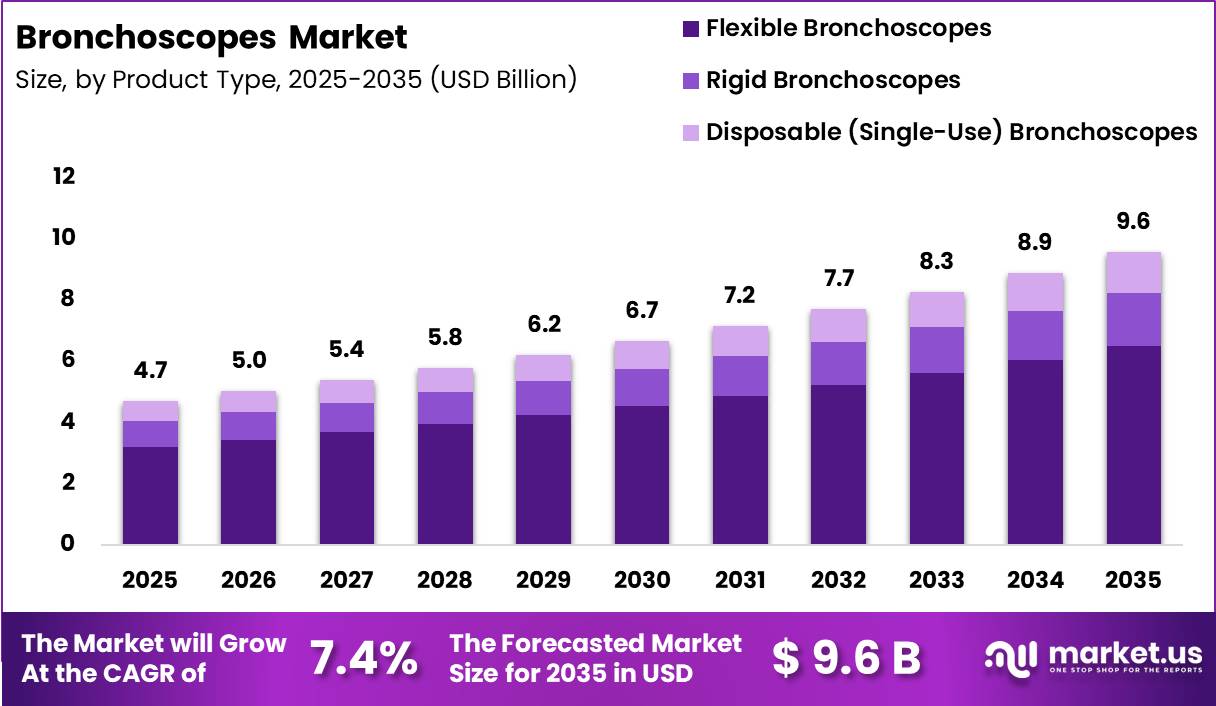
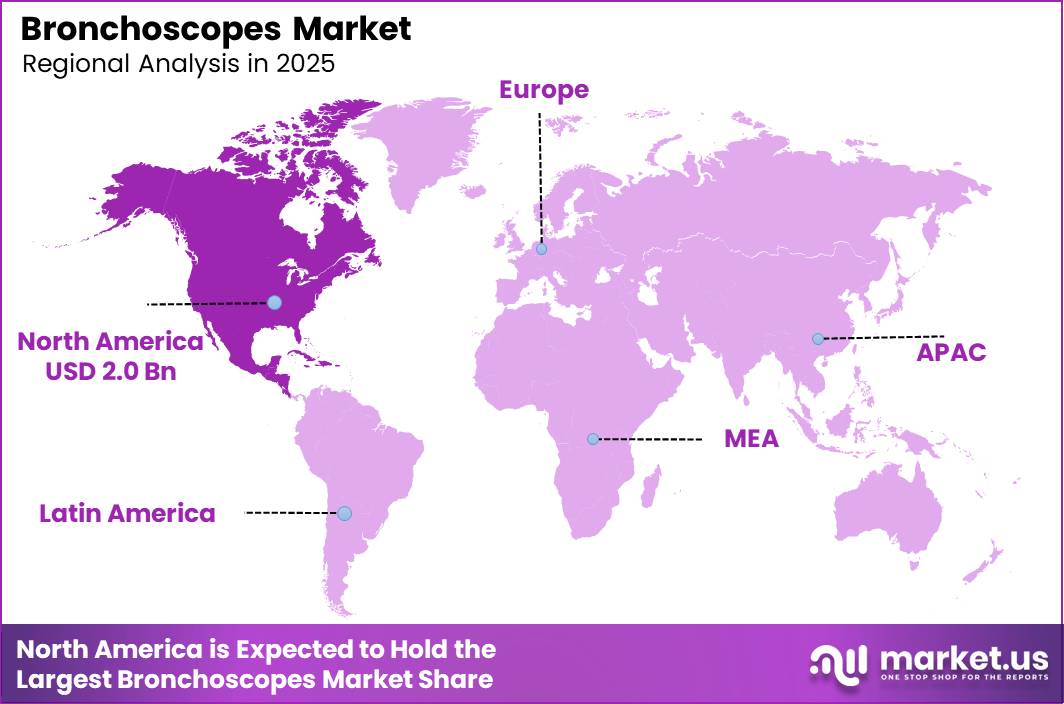
Global Bronchoscopes Market size is expected to be worth around US$ 9.6 Billion by 2035 from US$ 4.7 Billion in 2025, growing at a CAGR of 7.4% during the forecast period from 2026 to 2035. In 2025, North America led the market, achieving over 39% share with a revenue of US$ 2 Billion.
Bronchoscopes are essential medical devices used to examine the airways and lungs, playing a critical role in diagnosing and treating respiratory disorders. The increasing burden of chronic respiratory diseases, coupled with technological advances in minimally invasive procedures, continues to support demand for bronchoscopic interventions worldwide.
According to the World Health Organization (WHO), chronic respiratory diseases affect hundreds of millions of people globally, with asthma impacting over 260 million individuals and chronic obstructive pulmonary disease (COPD) remaining one of the leading causes of death worldwide. Rising incidences of lung cancer and pulmonary infections are also contributing to greater utilization of bronchoscopy procedures in hospitals and specialized clinics.
Healthcare institutions are increasingly adopting advanced flexible and single-use bronchoscopes to reduce cross-contamination risks and improve patient safety. Disposable bronchoscopes have gained attention due to their ability to eliminate reprocessing requirements and support infection prevention initiatives.
Data from the U.S. Centers for Disease Control and Prevention (CDC) indicate that millions of adults suffer from chronic lung conditions requiring regular diagnostic evaluation and monitoring. In addition, the growing elderly population is expected to increase the number of respiratory examinations, as older adults are more susceptible to pulmonary diseases.
Continued investments in pulmonary care infrastructure, physician training, and innovative imaging technologies are anticipated to strengthen the adoption of bronchoscopy across healthcare systems, supporting improved diagnosis, therapeutic precision, and patient outcomes.
Key Takeaways
- Market Size : Bronchoscopes Market size is expected to be worth around US$ 9.6 Billion by 2035 from US$ 4.7 Billion in 2025.
- Market Share : The Market is growing at a CAGR of 7.4% during the forecast period from 2026 to 2035.
- Product Type Analysis : Flexible Bronchoscopes dominated the Bronchoscopes Market in 2025, accounting for 68% of the total market share.
- Usability Analysis : Reusable Bronchoscopes held the leading position in the Bronchoscopes Market in 2025, capturing 72% of the market share.
- Application Analysis : Diagnostic Procedures dominated the Bronchoscopes Market in 2025, accounting for 57% of the total market share.
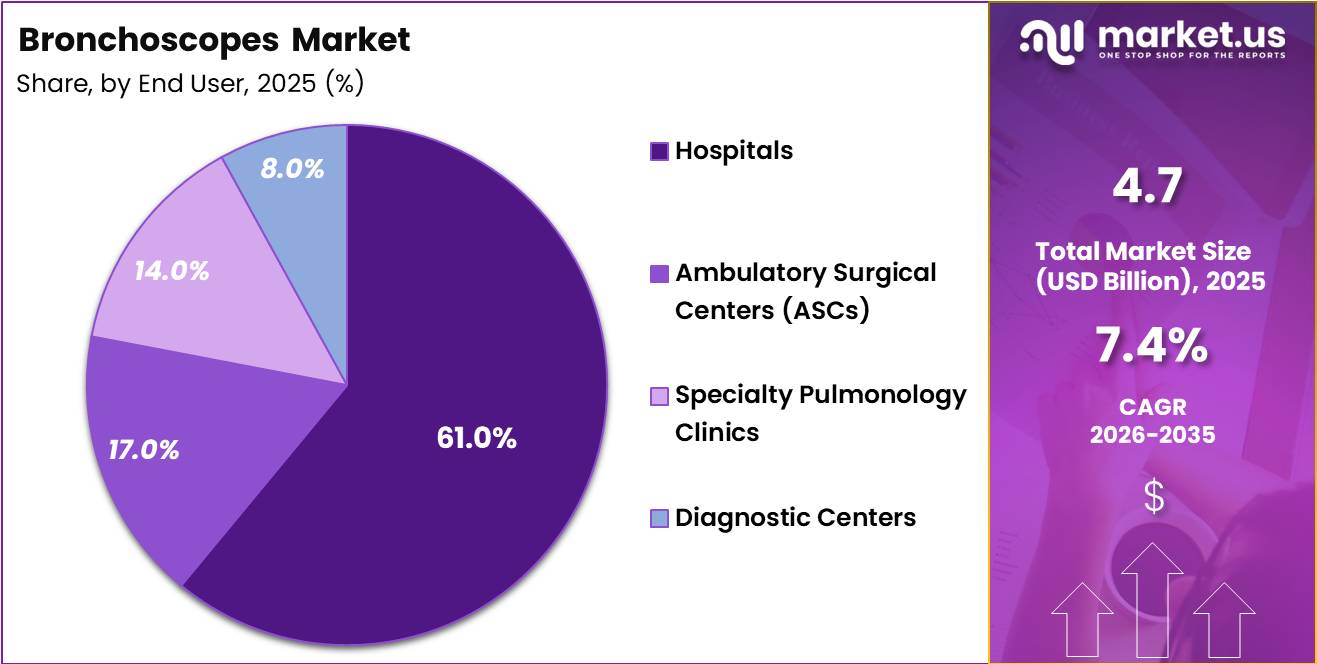
- End User Analysis : Hospitals emerged as the dominant end-user segment in the Bronchoscopes Market in 2025, holding 61% of the total market share.
- Patient Type Analysis : Adult Patients dominated the Bronchoscopes Market in 2025, representing 84% of the total market share.
- Technology Analysis : Video Bronchoscopes dominated the Bronchoscopes Market in 2025, capturing 63% of the overall market share.
- Regional Analysis : In 2025, North America led the market, achieving over 39% share with a revenue of US$ 2 Billion.
Product Type Analysis
Flexible Bronchoscopes dominated the Bronchoscopes Market in 2025, accounting for 68% of the total market share. Their widespread adoption is attributed to superior flexibility, enhanced patient comfort, and the ability to access complex airway structures with minimal invasiveness. These devices are extensively used for diagnostic examinations, tissue sampling, and therapeutic interventions in pulmonary diseases.
Advances in imaging quality, maneuverability, and integrated visualization systems continue to strengthen their market position. Flexible bronchoscopes are preferred in hospitals and specialized pulmonary centers because they support a broad range of procedures while reducing patient recovery times.
Rigid Bronchoscopes represented 18% of the market and remain important for complex airway management, foreign body removal, and certain interventional procedures that require greater stability and airway control.
Disposable (Single-Use) Bronchoscopes captured 14% of the market share owing to growing emphasis on infection prevention and reduced risks of cross-contamination. Increasing awareness regarding patient safety, coupled with the elimination of reprocessing requirements, is encouraging healthcare facilities to adopt single-use devices, particularly in intensive care units and emergency settings.
Usability Analysis
Reusable Bronchoscopes held the leading position in the Bronchoscopes Market in 2025, capturing 72% of the market share. Their dominance is largely associated with their cost-effectiveness over long-term usage, durability, and widespread availability in hospitals and large healthcare facilities.
Reusable devices are commonly utilized in high-volume clinical settings where bronchoscopy procedures are frequently performed. Continuous technological improvements in cleaning systems, sterilization methods, and device longevity have further supported their adoption. Healthcare providers often prefer reusable bronchoscopes due to their advanced imaging capabilities and compatibility with multiple diagnostic and therapeutic procedures.
Disposable Bronchoscopes accounted for 28% of the market share in 2025 and are witnessing increasing demand due to growing concerns related to hospital-acquired infections and contamination risks. These devices eliminate the need for complex reprocessing procedures and provide immediate availability for emergency interventions.
Rising investments in infection control measures, along with increased use in critical care environments and outpatient facilities, are expected to contribute to the expansion of the disposable bronchoscope segment during the forecast period.
Application Analysis
Diagnostic Procedures dominated the Bronchoscopes Market in 2025, accounting for 57% of the total market share. The increasing prevalence of respiratory disorders, including chronic obstructive pulmonary disease, lung cancer, pulmonary infections, and asthma, has significantly increased the demand for bronchoscopic diagnostic procedures.
Bronchoscopes are extensively used for airway examinations, tissue biopsies, bronchoalveolar lavage, and early detection of pulmonary abnormalities. Growing emphasis on early disease diagnosis and improved patient outcomes continues to support segment growth.
Technological advancements in visualization systems and minimally invasive procedures have further enhanced diagnostic accuracy and procedural efficiency. Therapeutic Procedures constitute the remaining market share and continue to gain importance due to increasing adoption of interventional pulmonology techniques.
Bronchoscopes are widely utilized in procedures such as airway stenting, tumor debulking, foreign body extraction, and management of airway obstructions. Rising preference for minimally invasive treatment options, coupled with advancements in bronchoscopic tools and accessories, is expected to drive demand for therapeutic applications in the coming years.
End User Analysis
Hospitals emerged as the dominant end-user segment in the Bronchoscopes Market in 2025, holding 61% of the total market share. Hospitals perform a substantial number of bronchoscopy procedures due to the availability of advanced infrastructure, specialized respiratory care departments, and experienced healthcare professionals.
These facilities are equipped to manage both routine diagnostic procedures and complex therapeutic interventions, making them the preferred setting for bronchoscopy services. Increasing patient admissions for respiratory diseases and expanding investments in advanced medical technologies continue to strengthen hospital demand for bronchoscopes.
Ambulatory Surgical Centers (ASCs), Specialty Pulmonology Clinics, and Diagnostic Centers collectively account for the remaining market share. ASCs are gaining traction because they offer cost-efficient and convenient outpatient services.
Specialty pulmonology clinics focus on comprehensive respiratory care and disease management, while diagnostic centers are increasingly adopting bronchoscopy technologies to provide early and accurate detection of pulmonary conditions. Growing demand for outpatient procedures is expected to support expansion across these healthcare settings.
Patient Type Analysis
Adult Patients dominated the Bronchoscopes Market in 2025, representing 84% of the total market share. The high prevalence of chronic respiratory disorders among adults, including chronic obstructive pulmonary disease, lung cancer, pulmonary fibrosis, and infections, remains a major factor supporting segment growth.
Adults are more likely to require bronchoscopy procedures for diagnosis, monitoring, and treatment of various pulmonary conditions. The rising aging population also contributes significantly, as older individuals are more susceptible to respiratory diseases that require regular bronchoscopic evaluation.
Increasing awareness regarding early diagnosis and advancements in minimally invasive technologies continue to encourage procedure adoption among adult patients. Pediatric Patients accounted for 16% of the market share in 2025.
Bronchoscopy procedures in children are commonly performed for congenital airway abnormalities, recurrent respiratory infections, foreign body removal, and diagnostic investigations. Continuous improvements in pediatric bronchoscopy equipment, including smaller and more flexible devices designed specifically for younger patients, are supporting growth within this segment and enhancing procedural safety and effectiveness.
Technology Analysis
Video Bronchoscopes dominated the Bronchoscopes Market in 2025, capturing 63% of the overall market share. Their strong market position is attributed to superior image quality, real-time visualization capabilities, and enhanced diagnostic precision.
Video bronchoscopes provide physicians with clear airway images, facilitating accurate diagnosis and effective treatment planning for a wide range of respiratory conditions. Continuous innovations in high-definition imaging systems, digital integration, and improved maneuverability have further accelerated adoption across healthcare facilities.
Fiber Optic Bronchoscopes remain an important segment and continue to be used in several healthcare settings due to their established clinical utility and reliability. These devices are particularly valuable in facilities seeking cost-effective bronchoscopy solutions.
Robotic-Assisted Bronchoscopes are emerging as an advanced technology segment driven by increasing demand for precision-guided procedures and minimally invasive interventions. Robotic systems enable improved navigation within peripheral lung structures and support enhanced biopsy accuracy.
Ongoing technological developments and increasing investments in interventional pulmonology are expected to create significant growth opportunities for robotic-assisted bronchoscopy technologies in the future.
Market Segmentations
Product Type
- Flexible Bronchoscopes
- Rigid Bronchoscopes
- Disposable (Single-Use) Bronchoscopes
Usability
- Reusable Bronchoscopes
- Disposable Bronchoscopes
Application
- Diagnostic Procedures
- Therapeutic Procedures
End User
- Hospitals
- Ambulatory Surgical Centers (ASCs)
- Specialty Pulmonology Clinics
- Diagnostic Centers
Patient Type
- Adult Patients
- Pediatric Patients
Technology
- Video Bronchoscopes
- Fiber Optic Bronchoscopes
- Robotic-Assisted Bronchoscopes
Drivers
EVIS X1 platform refresh and installed-base replacement
Olympus launched EVIS X1-compatible bronchoscopes in 2024, including a diagnostic model with a 2.2 mm working channel and an 11% increase in suction capability and a therapeutic model with a 3.0 mm channel and a 29% increase in suction, directly improving secretion management, biopsy throughput, and accessory compatibility in interventional pulmonary workflows.
In 2025 Olympus also announced FDA clearance for its most advanced imaging endoscopes and accelerated local EVIS X1 production in China, while a U.S. market update in March 2026 confirmed new Olympus bronchoscopes were FDA-cleared and ready for market, signaling that the platform transition has moved beyond product introduction into real replacement-cycle monetization.
Strategically, this driver lifts market growth because hospitals replacing aging BF-180/BF-190 era fleets are not only buying scopes but often upgrading processors, service contracts, and compatible accessories, which expands revenue per account and shifts purchasing from single-unit replacement to platform-based capital refresh.
| Driver | (~) % Impact on CAGR Forecast | Geographic Relevance | Impact Timeline |
|---|---|---|---|
| EVIS X1 platform refresh and installed-base replacement | +1.9% | North America core, Japan, EU tertiary centers, China premium hospitals | Short term (≤ 2 years) |
| Single-use adoption from infection-control and workflow priorities | +1.6% | North America core, UK, Nordics, Western Europe ICU/OR settings, selective APAC metros | Short term (≤ 2 years) |
| Lung cancer screening expansion raising diagnostic bronchoscopy referrals | +1.4% | U.S. core, Canada, Western Europe, high-income APAC | Medium term (2-4 years) |
| Robotic and advanced navigational bronchoscopy for peripheral lesions | +1.8% | U.S. academic hubs, EU reference centers, Japan, South Korea, China tier-1 hospitals | Medium term (2-4 years) |
| EBUS and therapeutic bronchoscopy capability upgrades | +1.2% | U.S., EMEA referral centers, APAC oncology corridors | Medium term (2-4 years) |
| Regulatory safety actions accelerating fleet renewal and labeling discipline | +0.9% | U.S. core, EU compliance-led markets, APAC imported-device markets | Short term (≤ 2 years) |
Challenges
Reprocessing workflows and infection-control compliance burden
Reusable bronchoscopy remains structurally penalized by the operational complexity of cleaning, high-level disinfection, drying, storage, traceability, and leak-test compliance across every procedure cycle, and the FDA continues to emphasize meticulous adherence to reprocessing instructions and the use of single-use scopes in higher-risk situations or when immediate reprocessing support is unavailable.
In practice, this creates a recurring 18- to 35-minute labor and turnaround penalty per scope cycle, a 2– to 4-person workflow dependency, and a hidden contamination-risk premium that can suppress effective throughput by roughly 6% to 12% in high-volume hospital settings, which is why I estimate a –1.4% drag on maximum market CAGR even though demand remains intact.
Over 2026–2028, manufacturers and providers will need tighter reprocessing automation, audit-ready workflow software, sealed storage discipline, and a stronger split between reusable and single-use portfolios to reduce nonclinical friction without sacrificing procedure availability.
| Challenge | (~) % CAGR Friction Drag | Geographic Relevance | Mitigation Horizon |
|---|---|---|---|
| Reprocessing burden | -1.4% | North America, EU hospital networks, APAC tertiary care | Medium term (2-4 years) |
| Single-use cost gap | -1.1% | North America, Western Europe, Japan, GCC | Short term (≤ 2 years) |
| Skilled operator shortage | -0.9% | North America, EU, India metro hospitals | Long term (≥ 4 years) |
| Component lead-time volatility | -0.8% | APAC manufacturing hubs, EU medtech clusters, North America imports | Medium term (2-4 years) |
| Repair and uptime friction | -0.7% | Global installed-base markets, especially large hospital systems | Medium term (2-4 years) |
| Procurement and reimbursement pressure | -0.6% | North America, EU reimbursement markets, select APAC public systems | Short term (≤ 2 years) |
Restraints
Capital budget strain on bronchoscopy equipment investments
Bronchoscope procurement in 2026 is being constrained less by clinical need than by provider-side capital rationing, because bronchoscopy platforms compete with higher-priority ICU, imaging, oncology, and surgical investments inside hospital CapEx committees while outpatient reimbursement growth remains relatively modest versus labor and compliance inflation.
CMS’s 2025 hospital outpatient payment framework continued to rely on APC-based reimbursement logic and a system-wide update that does not fully neutralize rising staffing, sterilization, maintenance, and procedural overhead at the pulmonary service-line level, which means many hospitals are still managing bronchoscopy expansion under negative real-margin conditions.
In practical market terms, that environment extends replacement cycles for reusable scopes by an estimated 12 to 24 months, lowers fleet standardization rates by roughly 10% to 15%, and delays conversion into premium visualization or navigation-enabled platforms, especially in public systems and multi-hospital networks.
The resulting business effect is slower ASP expansion, deferred tower-and-scope refresh programs, weaker service-contract attachment, and a measurable reduction in realized unit demand versus underlying respiratory care demand, justifying an estimated 210 basis-point drag on baseline CAGR.
| Restraint | (~) % Impact on CAGR Forecast | Geographic Relevance | Impact Timeline |
|---|---|---|---|
| Capital budget strain | -2.1% | North America core, EU, Japan, GCC | Short term (≤ 2 years) |
| Reprocessing burden | -1.9% | US, EU, APAC tier-1 | Short term (≤ 2 years) |
| Reimbursement pressure | -1.6% | US core, EU5, Japan | Medium term (2-4 years) |
| Service-chain concentration | -1.4% | US, EU, China+, ASEAN | Medium term (2-4 years) |
| Specialist capacity gap | -1.3% | Emerging APAC, LatAm, MEA, CEE | Medium term (2-4 years) |
| Safety compliance tightening | -1.1% | US, EU, UK, China | Long term (≥ 4 years) |
Opportunity
Robotic Platforms for Peripheral Pulmonary Lesion Access
Robotic-assisted bronchoscopy represents a significant growth opportunity beyond the existing demand for conventional bronchoscopy by enabling access to peripheral lung lesions that were previously difficult or impossible to reach.
This capability shifts biopsy procedures away from CT-guided percutaneous biopsies and watchful waiting toward advanced robotic platforms integrated with navigation software, imaging systems, and recurring service contracts.
Clinical evidence supports this transition, with pooled studies reporting an approximately 80.4% diagnostic yield and a 3.0% complication rate, while early German data demonstrated a 78% overall yield and over 90% yield in cone-beam CT (CBCT)-supported procedures. Vendors that combine navigation planning, CBCT integration, and cryobiopsy capabilities can improve procedural eligibility and diagnostic accuracy, particularly for small peripheral lesions.
These integrated solutions are estimated to generate 2.0–3.5 times higher revenue per procedure than conventional bronchoscopy and contribute approximately 200–350 basis points of gross-margin improvement through recurring disposable, catheter, sheath, software, and imaging-related revenues, particularly in major tertiary oncology centers.
| Opportunity | (~) % Potential CAGR Upside | Geographic Relevance | Execution Window |
|---|---|---|---|
| Robotic peripheral platforms | +2.4% | North America core, EU, Japan, South Korea | Medium term |
| Single-use beyond ICU | +1.9% | North America, EU, GCC, urban APAC | Short term |
| Bronchoscopy-linked molecular testing | +2.1% | US, EU5, China, Japan | Medium term |
| ASC and office migration | +1.4% | US, Western Europe, Australia | Medium term |
| Pediatric specialty expansion | +1.2% | India, Southeast Asia, Middle East, Latin America | Long term |
| AI workflow and SaaS layers | +1.6% | North America, EU, developed APAC | Short term |
Regional Analysis
North America dominated the Bronchoscopes Market in 2025, accounting for more than 39% of the global market and generating approximately US$ 2 billion in revenue. The region’s leadership is supported by a high prevalence of respiratory diseases, well-established healthcare infrastructure, and widespread adoption of advanced minimally invasive diagnostic technologies.
Increasing incidences of chronic obstructive pulmonary disease (COPD), lung cancer, asthma, and other pulmonary disorders continue to drive demand for bronchoscopy procedures across hospitals and specialty clinics in the United States and Canada.
The presence of leading medical device manufacturers, strong reimbursement frameworks, and continuous investments in healthcare innovation further strengthen the regional market position. Growing adoption of single-use bronchoscopes, particularly for infection control and improved patient safety, has also contributed to market expansion.
Additionally, favorable regulatory pathways and increasing awareness regarding early diagnosis of respiratory conditions support procedure volumes. Europe represents the second-largest regional market, benefiting from an aging population, expanding pulmonary care services, and increasing utilization of advanced endoscopic technologies.
Meanwhile, Asia Pacific is anticipated to witness the fastest growth during the forecast period due to rising healthcare expenditure, improving hospital infrastructure, growing patient awareness, and the increasing burden of respiratory diseases in emerging economies such as China and India.
Key Regions and Countries
North America
- The US
- Canada
Europe
- Germany
- France
- The U.K.
- Italy
- Spain
- Russia & CIS
- Rest of Europe
Asia Pacific
- China
- India
- Japan
- South Korea
- ASEAN
- Australia & New Zealand
- Rest of Asia Pacific
Middle East & Africa
- GCC
- South Africa
- Rest of Middle East & Africa
Latin America
- Brazil
- Mexico
- Rest of Latin America
Key Player Analysis
The Bronchoscopes Market is characterized by the presence of established medical technology companies that focus on product innovation, imaging quality, and infection control solutions. Manufacturers are investing in advanced visualization systems, improved maneuverability, and single-use technologies to meet the growing demand for minimally invasive respiratory procedures.
Olympus Corporation remains a prominent participant in the market with its broad portfolio of flexible bronchoscopes and endoscopy systems designed for diagnostic and therapeutic applications. FUJIFILM Holdings Corporation emphasizes high-definition imaging technologies to support accurate pulmonary diagnosis. Ambu A/S has strengthened its position through the expansion of disposable bronchoscope offerings that help reduce contamination risks.
Boston Scientific Corporation focuses on minimally invasive solutions for respiratory care. Karl Storz SE & Co. KG continues to enhance its endoscopic technologies, while PENTAX Medical supports market growth through advanced imaging capabilities and physician-focused innovations.
Top Key Players
- Olympus Corporation
- FUJIFILM Holdings Corporation
- Ambu A/S
- Boston Scientific Corporation
- Karl Storz SE & Co. KG
- PENTAX Medical
- Medtronic plc
- Johnson & Johnson MedTech
- Cook Medical
- CONMED Corporation
- Hoya Corporation
- Richard Wolf GmbH
- Broncus Medical Inc.
- Body Vision Medical Ltd.
- Creo Medical Group plc
Recent Developments
- In January 2026 – Boston Scientific Corporation entered into a definitive agreement to acquire Penumbra, Inc. for approximately USD 14.5 billion, one of the largest MedTech transactions announced in 2026. The acquisition expands Boston Scientific’s capabilities in thrombectomy and clot-removal technologies used in pulmonary embolism, vascular, and neurovascular interventions.
- In September 2025 – Olympus Corporation launched the BF-UCP190F Endobronchial Ultrasound (EBUS) Bronchoscope across Europe, the Middle East, Africa, and Asia-Pacific. The bronchoscope features a 5.9 mm outer diameter and enhanced maneuverability, allowing improved access to peripheral lung regions for EBUS-guided tissue sampling and lung cancer staging. The launch strengthens Olympus’ position in advanced pulmonary diagnostics and minimally invasive bronchoscopy procedures.
- In 2025 – Ambu A/S continued the global expansion of its aScope™ 5 Broncho platform across North America, Europe, and Asia-Pacific. The latest generation single-use bronchoscope portfolio was introduced to address increasing demand for sterile pulmonary endoscopy solutions and to support the shift from reusable to disposable bronchoscopes in hospital settings.
Report Scope
| Report Features | Description |
|---|---|
| Market Value (2025) | US$ 4.7 Billion |
| Forecast Revenue (2035) | US$ 9.6 Billion |
| CAGR (2026-2035) | 7.4% |
| Base Year for Estimation | 2025 |
| Historic Period | 2020-2024 |
| Forecast Period | 2026-2035 |
| Report Coverage | Revenue Forecast, Market Dynamics, Competitive Landscape, Recent Developments |
| Segments Covered | Product Type (Flexible Bronchoscopes, Rigid Bronchoscopes, Disposable (Single-Use) Bronchoscopes), Usability (Reusable Bronchoscopes, Disposable Bronchoscopes), Application (Diagnostic Procedures, Therapeutic Procedures), End User (Hospitals, Ambulatory Surgical Centers (ASCs), Specialty Pulmonology Clinics, Diagnostic Centers), Patient Type (Adult Patients, Pediatric Patients), Technology(Video Bronchoscopes, Fiber Optic Bronchoscopes, Robotic-Assisted Bronchoscopes) |
| Regional Analysis | North America – The US, Canada; Europe – Germany, France, U.K., Italy, Spain, Russia & CIS, Rest of Europe; Asia Pacific – China, India, Japan, South Korea, ASEAN, Australia & New Zealand, Rest of Asia Pacific; Middle East & Africa – GCC, South Africa, Rest of Middle East & Africa; Latin America – Brazil, Mexico, Rest of Latin America |
| Competitive Landscape | Olympus Corporation, FUJIFILM Holdings Corporation, Ambu A/S, Boston Scientific Corporation, Karl Storz SE & Co. KG, PENTAX Medical, Medtronic plc, Johnson & Johnson MedTech, Cook Medical, CONMED Corporation, Hoya Corporation, Richard Wolf GmbH, Broncus Medical Inc., Body Vision Medical Ltd., Creo Medical Group plc |
| Customization Scope | Customization for segments, region/country-level will be provided. Moreover, additional customization can be done based on the requirements. |
| Purchase Options | We have three licenses to opt for: Single User License, Multi-User License (Up to 5 Users), Corporate Use License (Unlimited User and Printable PDF) |





































