Market Overview
Global Microsurgery Robot Market size is expected to be worth around US$ 3.4 Billion by 2035 from US$ 1.6 Billion in 2025, growing at a CAGR of 8.1% during the forecast period from 2026 to 2035. In 2025, North America led the market, achieving over 43.62% share with a revenue of US$ 0.69 Billion.
The global Microsurgery Robot Market is witnessing steady growth as healthcare providers increasingly adopt robotic-assisted technologies to improve surgical precision, reduce tissue damage, and enhance patient recovery. The growing use of microsurgical robots in neurosurgery, plastic and reconstructive surgery, ophthalmology, vascular surgery, and urology is driving demand for advanced robotic platforms capable of performing highly delicate procedures.
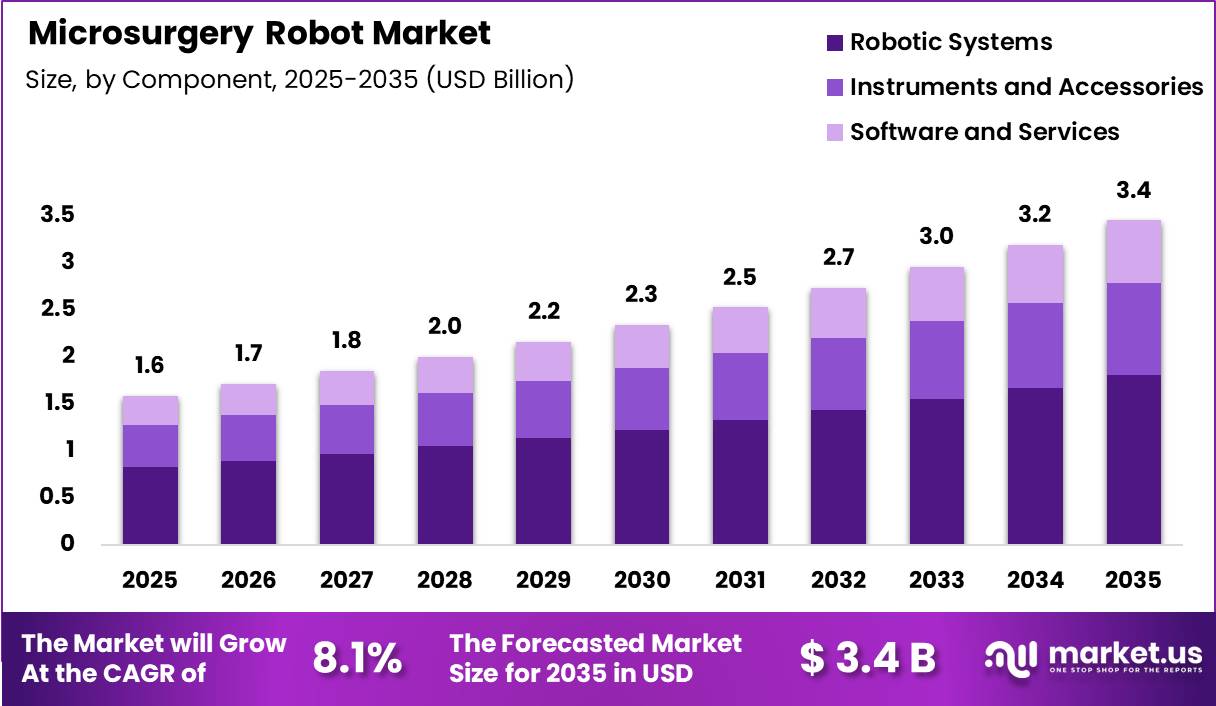
According to the World Health Organization (WHO), noncommunicable diseases account for approximately 43 million deaths each year, representing nearly 75% of all non-pandemic deaths globally. Many of these conditions require complex surgical interventions, increasing the importance of precision-guided surgical technologies.
The U.S. Centers for Disease Control and Prevention (CDC) also reports that about 129 million people in the United States live with at least one major chronic disease, including cardiovascular disease, cancer, and diabetes, creating sustained demand for advanced surgical care.
The U.S. Food and Drug Administration (FDA) continues to regulate robotically assisted surgical devices through rigorous safety and performance requirements. The agency has authorized multiple robotic-assisted surgical systems across various specialties while emphasizing surgeon training, device monitoring, and post-market surveillance to improve patient safety.
Meanwhile, the National Institutes of Health (NIH) continues to support research in surgical robotics, artificial intelligence, image-guided surgery, and robotic-assisted microsurgical techniques through federally funded biomedical research programs.
Hospitals and academic medical centers are expanding robotic surgery programs as demand grows for minimally invasive procedures that can shorten hospital stays, reduce complications, and improve clinical outcomes.
Improvements in robotic visualization, motion scaling, tremor filtration, and instrument dexterity are enabling surgeons to perform increasingly complex microsurgical procedures with greater confidence. As healthcare systems continue investing in digital operating rooms and precision medicine, microsurgery robots are expected to play an increasingly important role in the future of advanced surgical care.
Key Takeaways
- Market Size : Microsurgery Robot Market size is expected to be worth around US$ 3.4 Billion by 2035 from US$ 1.6 Billion in 2025.
- Market Share : The market is growing at a CAGR of 8.1% during the forecast period from 2026 to 2035.
- Component Analysis : The Robotic Systems segment dominated the Microsurgery Robot Market in 2025, accounting for 52.4% of the total market share.
- Application Analysis : The Reconstructive Microsurgery segment held the largest share of the Microsurgery Robot Market in 2025, accounting for 38.5% of the market.
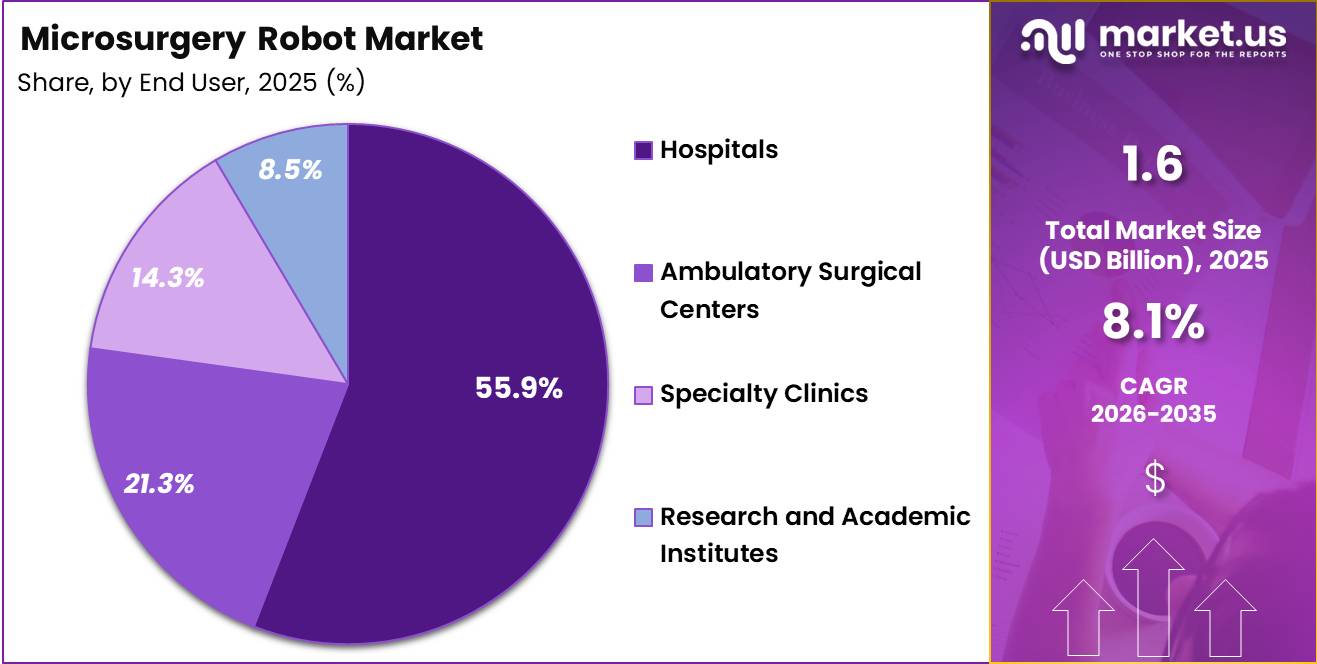
- End User Analysis : The Hospitals segment dominated the Microsurgery Robot Market in 2025, capturing 55.9% of the total market share.
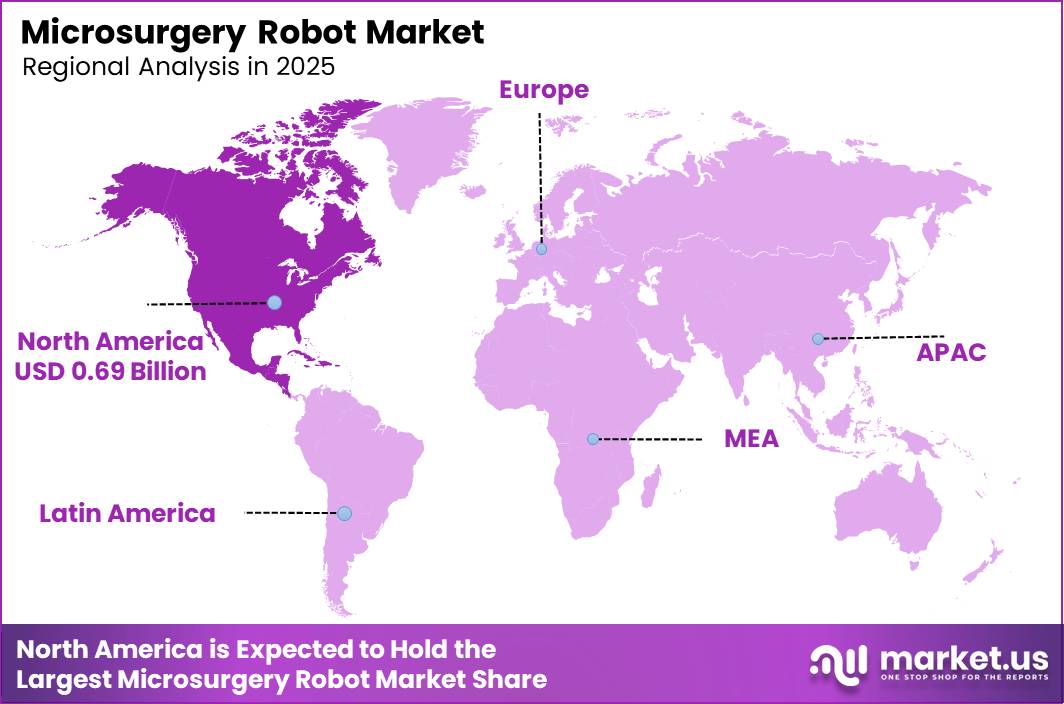
- Regional Analysis : In 2025, North America led the market, achieving over 43.62% share with a revenue of US$ 0.69 Billion.
Component Analysis
The Robotic Systems segment dominated the Microsurgery Robot Market in 2025, accounting for 52.4% of the total market share. This leadership is driven by the increasing adoption of advanced robotic platforms that provide surgeons with enhanced precision, tremor filtration, motion scaling, and high-definition three-dimensional visualization during delicate microsurgical procedures.
Modern robotic systems typically include a surgeon console, robotic arms, patient cart, and imaging components, enabling accurate manipulation in complex surgeries. Hospitals continue to invest in complete robotic platforms as they improve surgical accuracy, reduce tissue trauma, and support minimally invasive procedures. Continuous technological advancements and regulatory approvals are further strengthening this segment.
The Instruments and Accessories segment represents another important market category, supported by the recurring demand for specialized microsurgical forceps, scissors, needle holders, disposable instruments, cameras, and robotic end-effectors. Growing procedure volumes increase the replacement and maintenance requirements for these accessories, creating a stable revenue stream.
Meanwhile, the Software and Services segment is expanding steadily as healthcare providers increasingly adopt robotic system maintenance, software upgrades, artificial intelligence-assisted planning, cybersecurity solutions, remote diagnostics, and surgeon training programs.
Continuous software improvements enhance workflow efficiency and system performance, while service contracts help hospitals maximize equipment uptime and ensure compliance with regulatory and safety standards.
Application Analysis
The Reconstructive Microsurgery segment held the largest share of the Microsurgery Robot Market in 2025, accounting for 38.5% of the market. The segment leads because reconstructive procedures require exceptional precision for delicate tissue transfer, blood vessel anastomosis, and nerve repair.
Robotic-assisted systems improve dexterity, reduce hand tremors, and provide enhanced visualization, enabling surgeons to perform highly complex reconstructive procedures with greater consistency. Increasing demand for breast reconstruction, trauma repair, and lymphatic surgery continues to support segment growth.
The Ophthalmic Microsurgery segment is expanding with rising adoption of robotic technologies for retinal and delicate eye procedures requiring micron-level accuracy. Neurosurgery benefits from robotic precision during complex brain and spinal operations where minimizing damage to surrounding tissues is essential. Orthopedic Microsurgery is growing as robotic assistance improves precision in intricate bone and joint procedures.
Urological Microsurgery continues to expand with increasing use of robotic systems for minimally invasive interventions. Plastic and Reconstructive Surgery remains a significant application due to growing cosmetic and restorative procedures worldwide.
The Gynecology segment is also witnessing increased robotic adoption for minimally invasive surgical techniques, while the Others category includes vascular, pediatric, and specialized microsurgical procedures that continue to benefit from advances in robotic technology.
End User Analysis
The Hospitals segment dominated the Microsurgery Robot Market in 2025, capturing 55.9% of the total market share. Hospitals remain the primary end users because they possess the infrastructure, skilled surgical teams, and financial resources required to install and operate advanced robotic surgical systems.
Large tertiary care hospitals and academic medical centers perform high volumes of complex microsurgical procedures, making investments in robotic technologies economically viable. Growing patient preference for minimally invasive surgery, combined with improved clinical outcomes and shorter hospital stays, continues to strengthen hospital demand for robotic platforms.
Ambulatory Surgical Centers (ASCs) are experiencing rapid growth as compact robotic systems become more accessible for outpatient procedures, helping reduce healthcare costs and improve patient convenience. Specialty Clinics are increasingly adopting microsurgery robots for ophthalmology, plastic surgery, urology, and other focused surgical specialties where precision is critical.
Research and Academic Institutes also contribute significantly by evaluating next-generation robotic technologies, conducting clinical studies, training surgeons, and supporting innovation in robotic-assisted microsurgery. Their collaborations with manufacturers and healthcare organizations continue to accelerate technological development and expand future clinical applications across the global microsurgery robot market.
Market Segmentations
By Component
- Robotic Systems
- Instruments and Accessories
- Software and Services
By Application
- Reconstructive Microsurgery
- Ophthalmic Microsurgery
- Neurosurgery
- Orthopedic Microsurgery
- Urological Microsurgery
- Plastic and Reconstructive Surgery
- Gynecology
- Others
By End User
- Hospitals
- Ambulatory Surgical Centers
- Specialty Clinics
- Research and Academic Institutes
Driver
Precision Robotics Driving Adoption in Advanced Super-microsurgical Procedures
The core technical driver is that robotic super-microsurgery addresses a real human-performance bottleneck: stable manipulation and suturing at vessel diameters where tremor filtration, motion scaling, and wristed articulation can matter more than the broad automation features seen in conventional laparoscopy robots.
A 2025 review of robotic-assisted super-microsurgery reported operating times about 1.5 times longer than manual techniques but also cited mean anastomotic patency around 99.38% and day-0 patency around 99.72%, alongside reduced microtrauma and fast learning curves in the literature base.
That trade-off is commercially acceptable in tertiary centers because the value driver is not minutes saved per case in 2026; it is the ability to expand the feasible surgeon pool for technically demanding procedures, reduce conversion risk in delicate anatomy, and improve confidence in anastomosis quality where revision costs and downstream complications are expensive.
This supports a 1.4 %-point uplift to baseline CAGR: the precision gain is clinically compelling, but widespread monetization still depends on training capacity, procedural coding, and surgeon champions rather than pure hardware superiority. Another structural driver is the way hospital robotics spending is evolving.
Large systems still dominate multispecialty soft-tissue robotics, but by 2026 many tertiary centers are increasingly willing to approve narrower platforms when they map to high-value service lines such as oncology reconstruction, lymphatic surgery, and advanced plastic surgery, especially if those platforms create referral differentiation or support ambulatory migration for selected workflows.
This is important because microsurgery robots do not need the same installed-base economics as broad abdominal systems; they need a smaller number of high-intensity accounts with concentrated reconstructive volume, strong surgeon advocacy, and reputational incentives.
The resulting CAGR uplift, estimated at 1.2 % points, reflects a selective but durable budgeting shift: not every hospital will buy, but the hospitals that do are often regional centers whose procurement decisions influence neighboring institutions, surgeon training pipelines, and distributor commitment across North America, Western Europe, Japan, and advanced APAC private hubs.
| Driver | (~) % Impact on CAGR Forecast | Geographic Relevance | Impact Timeline |
|---|---|---|---|
| FDA-cleared microsurgery platforms convert pilot interest into purchasable hospital capital programs | +2.1% | North America core, EU tertiary centers, APAC flagship hospitals | Short term |
| CMS/CPT pathway for robotic lymphatic procedures improves U.S. procedure economics | +1.8% | U.S. core, EU follow-on, APAC private hubs | Short term |
| Lymphedema and breast/head-neck reconstruction volumes expand high-value use cases | +1.6% | North America core, EU, Japan, South Korea, GCC referral centers | Medium term |
| Precision gain in super-microsurgery raises surgeon adoption for sub-millimetric anastomosis | +1.4% | EU early adopters, U.S. academic centers, Japan advanced microsurgery units | Medium term |
| Hospital robotics budgets migrate from multi-specialty systems to niche outcome-driven platforms | +1.2% | U.S. and Western Europe core, selective APAC spill-over | Medium term |
| Training curve compression and evidence generation reduce adoption friction | +0.9% | North America, EU, South Korea, Singapore | Long term |
Challenge
Microsurgical Training Barriers Limiting Robotic Adoption Growth
Unlike conventional robotic surgery, microsurgery robots demand mastery of fine bimanual coordination, tremor suppression, and depth perception at high magnification, which significantly steepens the learning curve and expands the training hours required per surgeon before independent practice.
Studies of robot‑assisted microsurgery training report steep early learning curves, with novices needing on the order of 50–100 hours of simulator and bench practice plus at least 20–30 supervised cases to approach proficiency thresholds, yet structured curricula such as Fundamentals of Robotic Surgery currently focus more on general robotic tasks than on sub‑millimeter microvascular or intraocular maneuvers.
In parallel, simulation and training systems themselves add 5–10% to capital budgets and introduce recurring operating costs in the form of faculty time, lab consumables, and maintenance; for many hospitals, this translates into a training throughput constraint where only a limited number of surgeons often fewer than 5–10 per center per year can be fully credentialed on microsurgery robots, thereby capping installed system utilization and reducing the effective demand curve by an estimated 1.2 % points of CAGR.
Vendors and health systems must respond by embedding high‑fidelity microsurgery modules into existing robotic simulators, pushing for cloud‑based training content to reduce per‑trainee costs, establishing regional microsurgical training hubs to achieve economies of scale in faculty utilization, and aligning credentialing requirements so that a standardized 2‑stage pathway can compress time‑to‑credential by 20–30% without compromising safety.
| Challenge | (~) % CAGR Friction Drag | Geographic Relevance | Mitigation Horizon |
|---|---|---|---|
| Sub-micron control bottlenecks | -1.4% | North America, EU R&D hubs, East Asia | Long term (≥ 4 years) |
| Surgeon training capacity gap | -1.2% | North America tertiary, EU teaching centers, APAC metros | Medium term (2–4 years) |
| Health workforce and OR time squeeze | -0.9% | Global tertiary hospitals, LMIC referral centers | Long term (≥ 4 years) |
| Supply chain fragility in precision parts | -1.0% | EU and US OEMs, APAC contract manufacturers | Medium term (2–4 years) |
| Clinical evidence and data-quality drag | -0.8% | North America regulators, EU notified bodies | Long term (≥ 4 years) |
| Integration and interoperability complexity | -0.7% | High-volume hospitals, integrated delivery networks | Medium term (2–4 years) |
Restraints
Supply Chain Constraints Limiting Microsurgery Robot Market Expansion
Supply chain fragility around specialized components and subassemblies exerts another measurable restraint, rooted in the dependence of microsurgery robots on narrow vendor bases for micro‑scale actuators, fiber‑optic bundles, and high‑precision haptic sensors manufactured in limited APAC and EU clusters, which creates single‑source risk and long lead times.
Over 2024–2026, global medical‑technology supply chains have faced intermittent disruptions from tariff volatility, logistics bottlenecks, and localized manufacturing outages; for surgical robotics, these translate into order‑to‑delivery lead times stretching from a nominal 4–6 months to 9–12 months, and component backlogs where specific instrument sets experience 15–25% fulfillment delays, directly constraining installed base growth and day‑to‑day procedure capacity.
Quantitatively, OEMs report that safety‑critical components now require higher inventory buffers often 60–90 days of stock instead of 30 but carrying this inventory ties up working capital and raises the effective cost of goods sold by 2–3 % points, while freight and logistics surcharges add USD 50,000–100,000 in incremental cost per system for cross‑border installations in regions affected by trade frictions.
Strategically, this fragility forces OEMs to stagger deliveries, prioritize high‑margin accounts, and occasionally reschedule planned installations, which can shift hospital go‑live dates by 1–2 fiscal years.
For providers, uncertainty around instrument availability and service response times (e.g., rising from 24–48 hours to 72–96 hours following field failures) dis-incentivizes heavy reliance on microsurgery robots for critical reconstructive or neurovascular cases, keeping utilization rates below the 70–80% threshold needed for optimal ROI and thereby clipping CAGR by roughly 1.5 % points from an operations standpoint.
| Restraint | (~) % Impact on CAGR Forecast | Geographic Relevance | Impact Timeline |
|---|---|---|---|
| High system and procedure economics | -2.3% | North America core, EU, high-income APAC | Medium term (2–4 years) |
| Regulatory and evidence burden for microsurgery indication expansion | -1.7% | North America, EU, selective APAC hubs | Medium to long term (2–6 years) |
| Specialized component and subassembly supply chain fragility | -1.5% | North America, EU, APAC corridors | Short to medium term (1–3 years) |
| Surgeon training, credentialing, and adoption bottlenecks | -1.4% | Global, sharper in LMICs | Medium term (2–4 years) |
| Reimbursement misalignment and DRG/payment lag | -1.2% | North America core, EU social payers | Medium term (2–4 years) |
| Hospital CapEx prioritization and budget cyclicality | -1.0% | Global acute care systems | Short to medium term (1–3 years) |
Opportunity
Neurovascular Applications Expanding Microsurgery Robot Opportunities
The neurovascular and peripheral nerve microsurgery domain represents a distinct TAM pool where ultra-fine vessel anastomosis and nerve repair demand micro-scale precision that is only partially addressed by current surgical robots, which are primarily optimized for minimally invasive abdominal and thoracic procedures rather than millimeter-scale cranial or extremity microsurgery.
Baseline growth trajectories up to 2035 assume that neurosurgical robotics adoption follows broader surgical trends with limited incremental use in aneurysm clipping, AVM resection, cranial nerve decompression, and complex peripheral nerve reconstructions due to instrumentation and haptic constraints.
However, stroke incidence and neurodegenerative disease burden are projected to rise 25–35% in many markets by 2035, and peripheral nerve injuries linked to trauma, diabetes, and occupational hazards are increasing procedure volumes across Europe, North America, and APAC, implying that neurovascular and nerve microsurgery could constitute an additional USD 1.5–2.0 billion in robot-compatible procedure revenues if technology evolves to consistently deliver sub-millimeter accuracy and tremor elimination.
Strategically, OEMs can design cranial and extremity-focused microsurgery robots with specialized micro-instruments, enhanced haptics, and integration with intraoperative navigation to cut operative time by 15–25%, reduce revision rates by 10–15%, and support complex bypass and nerve repair operations in high-volume centers, thereby improving OR economics sufficiently for hospitals to justify incremental capital allocation despite absence of separate robotics reimbursement.
Capturing even 8–12% penetration of eligible high-complexity neurosurgical and peripheral nerve centers across the U.S., EU5, Japan, and select APAC hubs by 2035 could add around 1.9 % points to the global microsurgery robot CAGR, firmly above the baseline that currently reflects broader surgical robotics growth but not this specific micro-specialty expansion.
| Opportunity | (~) % Potential CAGR Upside | Geographic Relevance | Execution Window |
|---|---|---|---|
| Dedicated ophthalmic microsurgery platforms | +2.3% | EU, North America, East Asia | Medium term (2-4 years) |
| Neurovascular and peripheral nerve expansion | +1.9% | North America core, EU, APAC emerging | Medium term (2-4 years) |
| Ambulatory microsurgery robotics-as-a-service | +2.1% | North America, EU, GCC, Urban APAC | Short term (≤ 2 years) |
| AI-guided precision and training ecosystems | +1.6% | Global tertiary centers, China, India | Long term (≥ 4 years) |
| Value-based reimbursement and bundled outcomes | +1.4% | U.S., Western Europe, Japan | Medium term (2-4 years) |
| Emerging market microsurgery access programs | +1.7% | India, ASEAN, LatAm, Africa urban hubs | Long term (≥ 4 years) |
Regional Analysis
In 2025, North America dominated the global Microsurgery Robot Market, accounting for over 43.62% of total revenue and generating approximately US$ 0.69 billion. The region benefits from advanced healthcare infrastructure, early adoption of robotic-assisted surgery, and continuous investment in surgical innovation.
The United States leads regional demand due to the presence of major robotic surgery manufacturers, strong clinical research, and widespread use of minimally invasive procedures. Government agencies such as the U.S. FDA continue to regulate and monitor robotically assisted surgical systems while supporting safe clinical adoption through post-market surveillance and training initiatives.
Academic hospitals and specialty surgical centers are also increasing the use of robotic platforms for reconstructive, ophthalmic, neurosurgical, and vascular procedures. Recent FDA approvals for new robotic systems further strengthen North America’s leadership in advanced surgical technologies.
Europe represents the second-largest regional market, supported by strong healthcare systems, increasing adoption of microsurgical robotics, and strict medical device regulations under the European Medical Device Regulation (MDR). Countries such as Germany, France, Italy, and the UK continue investing in robotic surgery programs and clinical research.
Asia-Pacific is projected to register the fastest growth due to rising healthcare spending, expanding hospital infrastructure, and increasing robotic surgery adoption across China, Japan, South Korea, and India. Government initiatives supporting digital healthcare and advanced surgical technologies are encouraging hospitals to invest in robotic platforms.
Latin America and the Middle East & Africa are emerging markets where adoption is gradually increasing through investments in tertiary hospitals, improving healthcare infrastructure, and growing access to minimally invasive surgery. Although market penetration remains lower than in developed regions, expanding healthcare modernization programs and increasing surgeon training are expected to support steady future growth.
Key Regions and Countries
North America
- The US
- Canada
Europe
- Germany
- France
- The U.K.
- Italy
- Spain
- Russia & CIS
- Rest of Europe
Asia Pacific
- China
- India
- Japan
- South Korea
- ASEAN
- Australia & New Zealand
- Rest of Asia Pacific
Middle East & Africa
- GCC
- South Africa
- Rest of Middle East & Africa
Latin America
- Brazil
- Mexico
- Rest of Latin America
Key Player Analysis
The Microsurgery Robot Market is supported by leading medical technology companies that are investing in robotic precision, digital surgery, and minimally invasive procedures. Intuitive Surgical Inc. remains a major innovator with its robotic-assisted surgery platforms and continuous investments in advanced imaging, software, and surgeon training.
Stryker Corporation strengthens the market through robotic technologies used in orthopedic and surgical procedures while expanding its digital healthcare capabilities. Medtronic plc focuses on robotic-assisted surgery by combining robotics, artificial intelligence, and visualization technologies to improve surgical accuracy. Zimmer Biomet Holdings Inc. develops robotic systems that enhance precision in complex procedures and supports hospitals with integrated surgical solutions.
Smith & Nephew plc expands robotic-assisted surgery through technologies that improve clinical workflows and patient outcomes. Microsure B.V. specializes in microsurgical robotic systems designed to increase precision in delicate procedures such as lymphatic and reconstructive surgery.
Distalmotion SA develops compact robotic platforms that make robotic surgery more accessible for hospitals with flexible and cost-effective solutions. Galileo Surgical Inc. is advancing robotic technologies focused on improving dexterity and control during microsurgical procedures.
Memic Innovative Surgery Ltd. develops multi-arm robotic systems that enhance surgeon movement and precision for minimally invasive surgeries, supporting innovation across specialized surgical applications.
Top Key Players
- Intuitive Surgical Inc.
- Stryker Corporation
- Medtronic plc
- Zimmer Biomet Holdings Inc.
- Smith & Nephew plc
- Microsure B.V.
- Distalmotion SA
- Galileo Surgical Inc.
- Memic Innovative Surgery Ltd.
- Synaptive Medical Inc.
- Corindus Vascular Robotics Inc.
- Preceyes B.V.
- Medicaroid Corporation
- Titan Medical Inc.
- Sony Corporation
- Others
Recent Developments
- In February 2026, Medtronic plc announced the first U.S. clinical procedure using the FDA-cleared Hugo™ Robotic-Assisted Surgery System at Cleveland Clinic, supporting the commercial rollout of the platform in the U.S. market.
- In January 2026, Intuitive Surgical Inc. announced that more than 20 million patients worldwide have undergone da Vinci robotic-assisted procedures, highlighting continued global adoption of its robotic surgery ecosystem.
- In November 2025, Distalmotion SA raised US$150 million in a Series G financing round, led by Revival Healthcare Capital, to accelerate U.S. commercialization of the DEXTER® Robotic Surgery System, expand manufacturing capacity, and strengthen its ambulatory surgery center (ASC) strategy.
Report Scope
| Report Features | Description |
|---|---|
| Market Value (2025) | US$ 1.6 Billion |
| Forecast Revenue (2035) | US$ 3.4 Billion |
| CAGR (2026-2035) | 8.1% |
| Base Year for Estimation | 2025 |
| Historic Period | 2020-2024 |
| Forecast Period | 2026-2035 |
| Report Coverage | Revenue Forecast, Market Dynamics, Competitive Landscape, Recent Developments |
| Segments Covered | By Component (Robotic Systems, Instruments and Accessories, Software and Services), By Application (Reconstructive Microsurgery, Ophthalmic Microsurgery, Neurosurgery, Orthopedic Microsurgery, Urological Microsurgery, Plastic and Reconstructive Surgery, Gynecology, Others), By End User (Hospitals, Ambulatory Surgical Centers, Specialty Clinics, Research and Academic Institutes) |
| Regional Analysis | North America – The US, Canada; Europe – Germany, France, U.K., Italy, Spain, Russia & CIS, Rest of Europe; Asia Pacific – China, India, Japan, South Korea, ASEAN, Australia & New Zealand, Rest of Asia Pacific; Middle East & Africa – GCC, South Africa, Rest of Middle East & Africa; Latin America – Brazil, Mexico, Rest of Latin America |
| Competitive Landscape | Intuitive Surgical Inc., Stryker Corporation, Medtronic plc, Zimmer Biomet Holdings Inc., Smith & Nephew plc, Microsure B.V., Distalmotion SA, Galileo Surgical Inc., Memic Innovative Surgery Ltd., Synaptive Medical Inc., Corindus Vascular Robotics Inc., Preceyes B.V., Medicaroid Corporation, Titan Medical Inc., Sony Corporation, Others |
| Customization Scope | Customization for segments, region/country-level will be provided. Moreover, additional customization can be done based on the requirements. |
| Purchase Options | We have three licenses to opt for: Single User License, Multi-User License (Up to 5 Users), Corporate Use License (Unlimited User and Printable PDF) |