


Global Indoor Plant Market Size, Share, And Industry Analysis Report By Plant Type (Foliage Plants, Succulents and Cacti, Herbs and Edible Indoor Plants, Aquatic Indoor Plants), By Light Requirement (Low Light, Medium Indirect Light, High/Direct Light), By Product Form (Potted Soil-based, Hydroponic/Water-based, Terrariums and Miniature Landscapes, Smart Potted/IoT-enabled), By Application (Air Purification and Wellness, Home and Interior Decoration, Commercial and Corporate Landscaping), By End User (Residential, Commercial), By Distribution Channel (Offline, Online), By Region and Companies - Industry Segment Outlook, Market Assessment, Competition Scenario, Statistics, Trends and Forecast 2026-2035
- Published date: March 2026
- Report ID: 181391
- Number of Pages: 371
- Format:
-
keyboard_arrow_up
Quick Navigation
- Report Overview
- Key Takeaways
- By Plant Type Analysis
- By Light Requirement Analysis
- By Product Form Analysis
- By Application Analysis
- By End User Analysis
- By Distribution Channel Analysis
- Key Market Segments
- Emerging Trends
- Drivers
- Restraints
- Growth Factors
- Regional Analysis
- Key Regions and Countries
- Key Players Analysis
- Recent Developments
- Report Scope
Report Overview
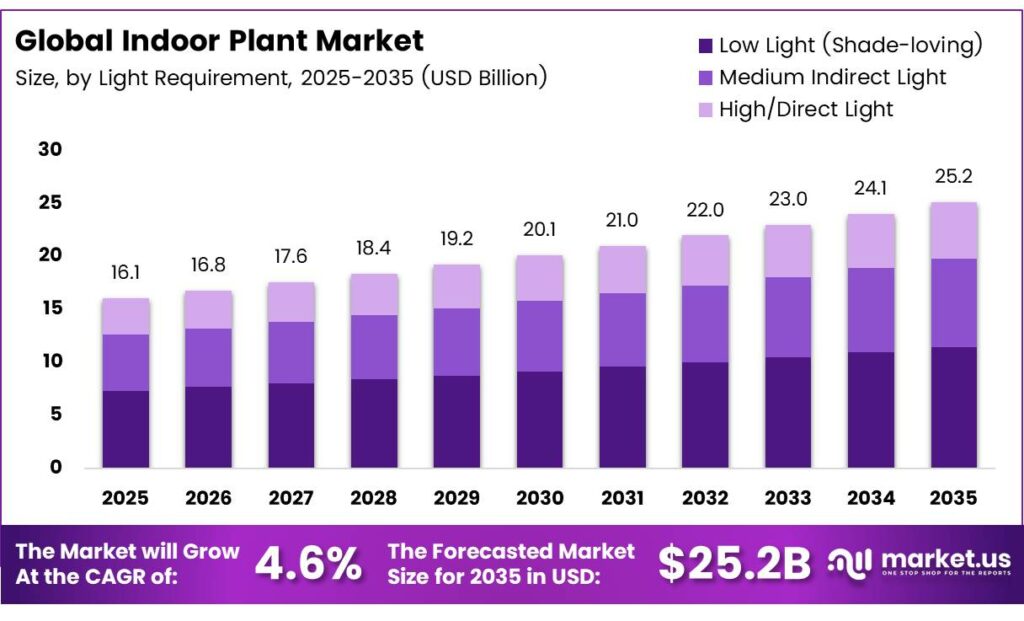
The Global Indoor Plant Market size is expected to be worth around USD 25.2 billion by 2035 from USD 16.1 billion in 2025, growing at a CAGR of 4.6% during the forecast period 2026 to 2035.
The indoor plant market covers the cultivation, distribution, and retail of plants grown primarily inside homes, offices, and commercial spaces. It includes foliage plants, flowering plants, succulents, herbs, aquatic plants, and preserved varieties. Consumers and businesses use these plants for decoration, air purification, wellness, and biophilic design purposes.
Growing awareness of mental health benefits drives strong consumer interest in indoor greenery. Urban populations, especially in dense cities, increasingly seek nature-connected living environments. Consequently, indoor plants have shifted from a niche hobby to a mainstream lifestyle product across residential and commercial segments globally.
The United States total floriculture sales reached $6.71 billion in 2024, reflecting steady consumer demand across indoor and outdoor categories. This figure signals the depth of the North American market and validates continued grower investment in production capacity expansion.
Biophilic design principles now influence architecture and interior planning at a large scale. Designers and architects integrate living plants into commercial buildings, healthcare facilities, and hospitality venues. Moreover, corporate wellness programs actively promote green workspaces to improve employee productivity and satisfaction.
The United States foliage plants for indoor and patio use generated $928.4 million in sales in 2024 among operations with over $100,000 in revenue. This performance confirms that foliage plants hold a central position in the broader indoor plant market ecosystem.
Key Takeaways
- The Global Indoor Plant Market is valued at USD 16.1 billion in 2025 and is projected to reach USD 25.2 billion by 2035 at a CAGR of 4.6% during the forecast period 2026 to 2035.
- Foliage Plants dominate with a market share of 37.8% in 2025.
- Low-light (Shade-loving) plants lead the segment with 44.7% share.
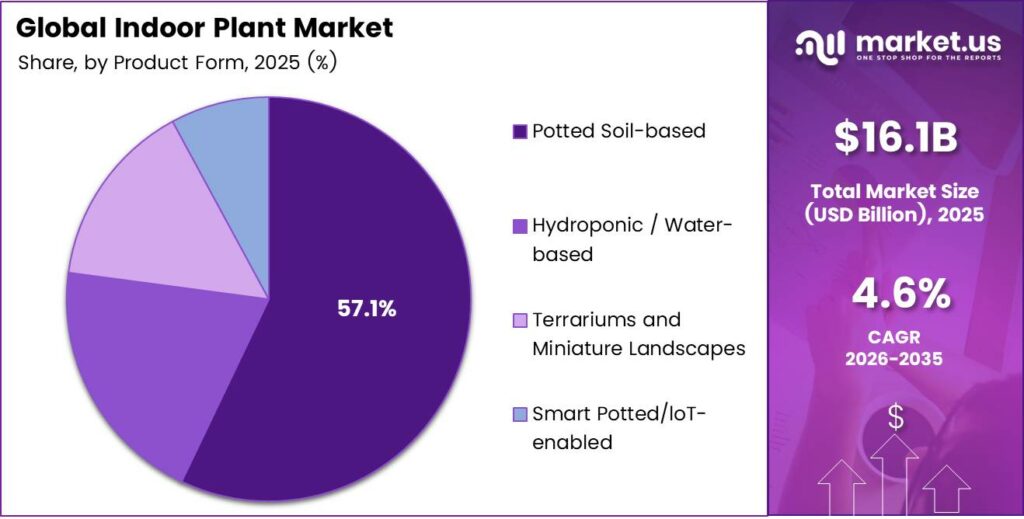
- Potted Soil-based plants hold the largest share at 57.1%.
- Air Purification and Wellness is the dominant segment with 31.4% share.
- Residential users account for 76.2% of the market demand.
- The Offline channels lead with a 67.9% share.
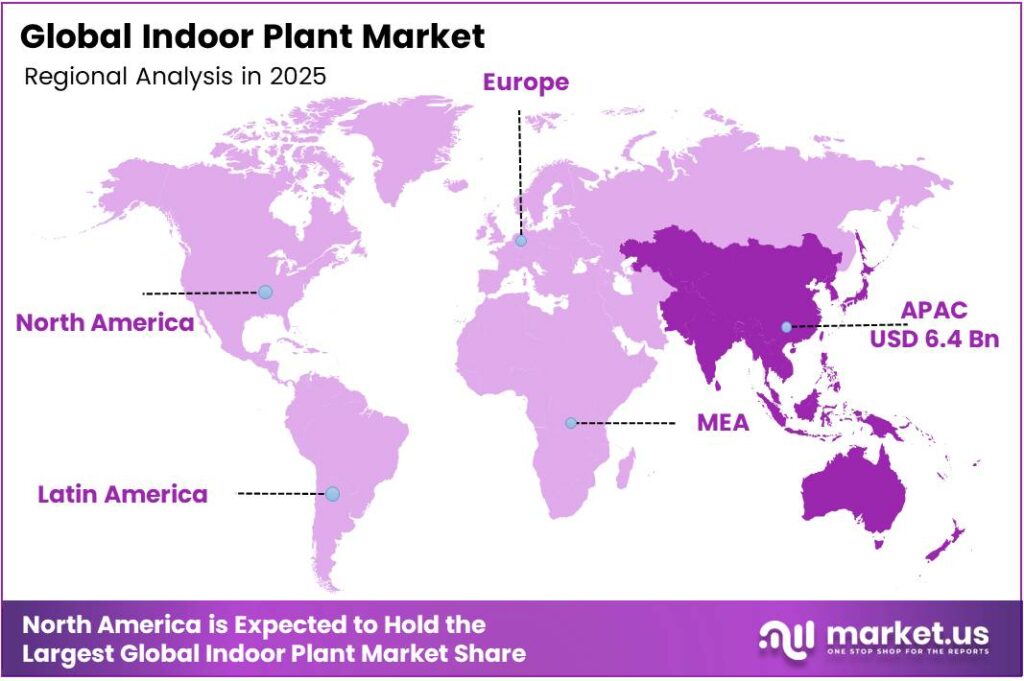
- Asia Pacific dominates the regional landscape with a 39.7% share, valued at USD 6.4 billion.
By Plant Type Analysis
Foliage Plants dominate with 37.8% due to widespread residential and commercial decorative use.
In 2025, Foliage Plants held a dominant market position in the By Plant Type segment of the Indoor Plant Market, with a 37.8% share. These plants attract buyers due to their low maintenance requirements and strong visual appeal. Moreover, they suit diverse interior environments from homes to corporate lobbies, making them a first-choice product for both individual and bulk buyers.
Flowering and Ornamental Plants attract seasonal and gifting demand across retail channels. Consumers purchase these plants for celebrations, home staging, and decorative events. However, their relatively shorter bloom cycles limit repeat purchase frequency compared to foliage varieties, requiring retailers to maintain high inventory turnover and fresh stock availability.
By Light Requirement Analysis
Low-light (Shade-loving) plants dominate with 44.7% due to suitability for typical indoor environments.
In 2025, low-light (Shade-loving) plants held a dominant market position in the By Light Requirement segment of the Indoor Plant Market, with a 44.7% share. Most indoor spaces receive limited natural sunlight, making shade-tolerant species the most practical and popular choice. Moreover, these plants require minimal repositioning and adapt easily to standard room conditions, driving consistent demand.
Medium Indirect Light plants serve consumers who have moderately lit homes or offices with filtered sunlight. This sub-segment occupies the middle ground between low-light and high-light varieties. Therefore, it attracts buyers who want more plant diversity without the constraints of full sunlight requirements or specialized grow lighting.
By Product Form Analysis
Potted Soil-based plants dominate with 57.1% as the traditional and widely accessible product format.
In 2025, Potted Soil-based plants held a dominant market position in the By Product Form segment of the Indoor Plant Market, with a 57.1% share. This format remains the most familiar and affordable option for consumers across all income levels. Additionally, potted plants are available through nearly every retail channel, from supermarkets to specialty nurseries.
Hydroponic and Water-based systems attract urban consumers seeking cleaner, soil-free plant care. These systems reduce pest risk and simplify maintenance routines. Consequently, they appeal strongly to tech-savvy buyers and commercial interior designers who prioritize aesthetics alongside plant health in limited indoor spaces.
Terrariums and Miniature Landscapes serve the gifting, décor, and hobbyist segments simultaneously. These self-contained ecosystems require minimal intervention and offer high visual impact in compact spaces. Moreover, their premium presentation drives higher price points, making them attractive for specialty retailers and boutique home décor brands.
By Application Analysis
Air Purification and Wellness dominate with 31.4% as consumer health awareness accelerates indoor plant adoption.
In 2025, Air Purification and Wellness held a dominant market position in the By Application segment of the Indoor Plant Market, with a 31.4% share. Rising consumer awareness about indoor air quality and mental wellness drives this demand. Moreover, scientific recognition of plants as natural air filters reinforces purchasing decisions among health-conscious residential and commercial buyers.
Home and Interior Decoration represents the largest volume-driven application outside of wellness. Interior designers and homeowners use plants as living décor elements to enhance spaces without renovation costs. Additionally, growing interest in aesthetic lifestyle content on social media platforms boosts decorative plant purchases year-round.
By End User Analysis
Residential users dominate with 76.2% as home-based plant adoption accelerates globally.
In 2025, Residential users held a dominant market position in the end-user segment of the Indoor Plant Market, with a 76.2% share. Homeowners and renters across urban and suburban areas purchase plants for decoration, wellness, and hobby purposes. Moreover, the post-pandemic shift toward home improvement continues to sustain strong residential plant buying behavior globally.
Commercial users form the second major end-user category and include several distinct sub-segments. Offices and Co-working Spaces invest in plants to enhance employee well-being and productivity. Hospitality venues use indoor greenery to create premium guest experiences. Additionally, Healthcare Facilities adopt therapeutic plant environments to support patient recovery and staff wellness programs.
By Distribution Channel Analysis
Offline channels dominate with 67.9% due to the tactile nature of plant purchasing decisions.
In 2025, Offline channels held a dominant market position in the By Distribution Channel segment of the Indoor Plant Market, with a 67.9% share. Consumers prefer to inspect plant health, size, and appearance before purchasing. Moreover, Garden Centers and Nurseries, Home Improvement and DIY Stores offer expert guidance that builds purchase confidence among new and experienced plant buyers.
Supermarkets and Hypermarkets capture impulse plant purchases by placing small potted plants near checkout areas. Specialty Boutiques and Concept Stores cater to premium and design-conscious buyers seeking curated plant collections. Consequently, offline retail remains deeply embedded in consumer plant shopping habits despite strong digital channel growth.
Key Market Segments
By Plant Type
- Foliage Plants
- Flowering/Ornamental Plants
- Succulents and Cacti
- Herbs and Edible Indoor Plants
- Aquatic Indoor Plants
- Artificial and Preserved Indoor Plants
By Light Requirement
- Low Light (Shade-loving)
- Medium Indirect Light
- High/Direct Light
By Product Form
- Potted Soil-based
- Hydroponic / Water-based
- Terrariums and Miniature Landscapes
- Smart Potted/IoT-enabled
By Application
- Air Purification and Wellness
- Home and Interior Decoration
- Commercial and Corporate Landscaping
- Gifting and Events
- Research and Biotechnology
By End User
- Residential
- Commercial
- Offices and Co-working Spaces
- Hospitality
- Healthcare Facilities
- Educational Institutions
- Retail and Shopping Malls
- Government and Public Infrastructure
By Distribution Channel
- Offline
- Garden Centers and Nurseries
- Home Improvement and DIY Stores
- Supermarkets/Hypermarkets
- Specialty Boutiques and Concept Stores
- Online
- E-commerce Marketplaces
- Direct-to-Consumer Brand Websites
- Subscription Services
- B2B Horticulture Platforms
Emerging Trends
Rare Varieties and Social Media Drive New Plant Collector Culture
Collectors actively seek rare and exotic houseplant varieties through online communities, plant swaps, and specialty retailers. Social media platforms amplify plant enthusiasm through influencer content and viral care videos. The United States floriculture production area reached 969 million square feet in 2024, up from 851 million square feet in 2023, reflecting grower investment to meet rising consumer demand for diverse plant varieties.
Sustainable Living and Vertical Gardening Reshape Indoor Design Choices
Consumers increasingly choose indoor plants as part of eco-conscious home décor philosophies. Vertical gardening systems address space limitations in urban apartments and offices simultaneously. Moreover, sustainable living trends push buyers toward natural materials, living walls, and space-efficient plant systems that align with broader environmental values and minimal-footprint lifestyle preferences.
Drivers
Health Awareness and Urbanization Accelerate Indoor Plant Demand
Rising consumer awareness about air purification, stress reduction, and mental wellness drives indoor plant adoption. Urban residents with limited outdoor space actively seek green alternatives inside their homes. The United States floriculture producers reached 11,262 in 2024, up from 10,216 in 2023, indicating strong supply-side growth responding to intensifying urban consumer demand for indoor greenery.
Biophilic Design and E-Commerce Expansion Fuel Market Growth
Architects and interior designers integrate biophilic elements into residential and commercial spaces to support occupant wellness. This design movement significantly expands bulk plant purchasing across the construction and fit-out industries. Additionally, e-commerce platforms make plant products accessible to consumers in regions lacking local nursery infrastructure, broadening the market’s geographic reach considerably.
Restraints
Limited Consumer Knowledge Creates Barriers to Sustained Plant Ownership
Many first-time buyers lack the knowledge to identify correct watering, lighting, and soil conditions for their plants. This knowledge gap leads to plant losses, buyer frustration, and reduced repurchase rates. Consequently, retailers and brands must invest in educational content and after-sales support to improve customer confidence and long-term market retention.
Pest and Disease Challenges Increase Maintenance Burden for Indoor Plant Owners
Indoor plants face pest infestations and fungal diseases that beginners often struggle to manage effectively. High maintenance requirements deter casual buyers from investing in larger or more expensive collections. Moreover, these challenges drive product return rates and negative reviews, which reduce consumer trust and slow adoption among new market entrants seeking low-effort greenery solutions.
Growth Factors
Smart Planters and Hydroponic Systems Open New Urban Market Opportunities
Smart planter technology with automated watering and IoT monitoring removes core care barriers for urban consumers. Hydroponic systems offer clean, soil-free plant growth suitable for compact apartment environments. The Netherlands ‘ plant export value reached €2.8 billion in 2025, up 4.4% from 2024, demonstrating strong global demand growth for diverse plant products, including innovative growing formats.
Commercial Expansion and Sustainable Design Solutions Accelerate Market Scale
Commercial adoption of indoor plants in offices, hotels, and healthcare facilities creates large-volume, recurring demand. Facility managers source plants through B2B channels, driving wholesale market growth considerably. Additionally, the development of sustainable, plant-based interior design solutions strengthens the value proposition for architects, developers, and corporate buyers prioritizing environmental responsibility in their project specifications.
Regional Analysis
Asia Pacific Dominates the Indoor Plant Market with a Market Share of 39.7%, Valued at USD 6.4 Billion
Asia Pacific leads the global indoor plant market with a 39.7% share, valued at USD 6.4 billion in 2025. Rapid urbanization across China, India, Japan, and Southeast Asia drives strong household demand for indoor greenery. Moreover, deep cultural traditions of home gardening and nature-inspired living fuel consistent consumer spending on foliage plants and decorative varieties throughout the region.
North America represents a mature and high-value indoor plant market driven by wellness culture and home improvement spending. The United States leads regional demand across both residential and commercial segments. Additionally, a large and growing network of growers, retailers, and e-commerce platforms supports strong product availability and consumer access across urban and suburban markets.
Latin America presents an emerging indoor plant market with growing middle-class spending on home décor and wellness. Brazil and Mexico lead regional demand, supported by tropical climate advantages that reduce production costs. However, economic volatility and underdeveloped retail infrastructure in certain markets limit the speed of indoor plant adoption among lower-income consumer segments.
The Middle East and Africa region shows growing interest in indoor plants driven by commercial real estate development and luxury hospitality projects. Gulf Cooperation Council countries invest heavily in green interior design for hotels, malls, and government buildings. Moreover, urban greening initiatives in South Africa and GCC nations further support long-term indoor plant market expansion in the region.
Key Regions and Countries
North America
- US
- Canada
Europe
- Germany
- France
- The UK
- Spain
- Italy
- Rest of Europe
Asia Pacific
- China
- Japan
- South Korea
- India
- Australia
- Rest of APAC
Latin America
- Brazil
- Mexico
- Rest of Latin America
Middle East & Africa
- GCC
- South Africa
- Rest of MEA
Key Players Analysis
Costa Farms operates as the largest indoor plant grower in the United States, serving mass-market retail channels including major home improvement and grocery chains. The company maintains a vast production infrastructure supporting year-round availability of popular foliage and flowering plants. Costa Farms continuously expands its plant variety portfolio to meet evolving consumer preferences across residential and commercial buyer segments.
Dummen Orange specializes in the breeding and production of ornamental plants with a strong global presence across multiple continents. The company focuses on developing new flowering plant varieties with enhanced performance, longer bloom cycles, and improved disease resistance. Dummen Orange supports its grower network through technical services, ensuring consistent product quality from propagation through to final retail delivery.
Syngenta Flowers operates as a leading developer of flower and ornamental plant genetics, supplying professional growers worldwide with high-performance varieties. The company invests significantly in research and development to deliver plants that meet commercial grower and retailer specifications. Syngenta Flowers targets both indoor and outdoor plant markets, strengthening its position across the full value chain of ornamental horticulture.
LiveTrends Design Group differentiates itself through creative plant and container design concepts targeting retail and lifestyle consumers. The company combines plant selection with decorative packaging to create visually compelling, ready-to-display products. LiveTrends serves major retail partners with trend-driven collections that appeal to design-conscious buyers seeking distinctive, stylish indoor plant options beyond standard nursery offerings.
Top Key Players in the Market
- Costa Farms
- Dummen Orange
- Syngenta Flowers
- LiveTrends Design Group
- IKEA (Indoor Greenery Line)
- The Sill
- Bakker Holland
- Mother
- Leon and George
- Miracle-Gro (Scotts)
- Click and Grow
- AeroGarden
Recent Developments
- In March 2026, Costa Farms introduced a new self-watering container system called Twist.Lift.Water. Designed to simplify houseplant care, it is available for their Trending Tropicals collection and select Exotic Angel Plants. The system aims to remove the guesswork from watering for consumers. At the Tropical Plant International Expo (TPIE), Costa Farms received multiple awards, highlighting its commitment to innovation.
- In September 2025, Dummen Orange released its 2026 catalog for this indoor succulent and foliage program. It features over 80 varieties, including the highly sought-after Tradescantia Nanouk and five new Echeveria varieties for 2026: Blue Jay, Blue Lola, Emerald Ocean, Rainy Day, and Tamasopo.
Report Scope
Report Features Description Market Value (2025) USD 16.1 Billion Forecast Revenue (2035) USD 25.2 Billion CAGR (2026-2035) 4.6% Base Year for Estimation 2025 Historic Period 2020-2024 Forecast Period 2026-2035 Report Coverage Revenue Forecast, Market Dynamics, Competitive Landscape, Recent Developments Segments Covered By Plant Type (Foliage Plants, Flowering/Ornamental Plants, Succulents and Cacti, Herbs and Edible Indoor Plants, Aquatic Indoor Plants, Artificial and Preserved Indoor Plants), By Light Requirement (Low Light, Medium Indirect Light, High/Direct Light), By Product Form (Potted Soil-based, Hydroponic/Water-based, Terrariums and Miniature Landscapes, Smart Potted/IoT-enabled), By Application (Air Purification and Wellness, Home and Interior Decoration, Commercial and Corporate Landscaping, Gifting and Events, Research and Biotechnology), By End User (Residential, Commercial), By Distribution Channel (Offline, Online) Regional Analysis North America (US and Canada), Europe (Germany, France, The UK, Spain, Italy, and Rest of Europe), Asia Pacific (China, Japan, South Korea, India, Australia, and Rest of APAC), Latin America (Brazil, Mexico, and Rest of Latin America), Middle East & Africa (GCC, South Africa, and Rest of MEA) Competitive Landscape Costa Farms, Dummen Orange, Syngenta Flowers, LiveTrends Design Group, IKEA (Indoor Greenery Line), The Sill, Bakker Holland, Mother, Leon and George, Miracle Gro (Scotts), Click and Grow, AeroGarden Customization Scope Customization for segments, region/country-level will be provided. Moreover, additional customization can be done based on the requirements. Purchase Options We have three licenses to opt for: Single User License, Multi-User License (Up to 5 Users), Corporate Use License (Unlimited Users and Printable PDF) 
-
-
- Costa Farms
- Dummen Orange
- Syngenta Flowers
- LiveTrends Design Group
- IKEA (Indoor Greenery Line)
- The Sill
- Bakker Holland
- Mother
- Leon and George
- Miracle-Gro (Scotts)
- Click and Grow
- AeroGarden
Our Clients

- 181391
- March 2026






