One Stop Shop For Reports One Stop Shop For Reports
  • All Reports
  • All Sectors
    • Chemicals & Materials
      • Advanced Materials
      • Bulk Chemicals
      • Coatings | Paints and Additives
      • Composites
      • Renewable | Speciality chemicals
    • Consumer Goods
      • Baby Products
      • Consumer Electronics
      • Consumer Packaging
      • Cosmetics & Personal Care
      • Homecare & Decor
      • Luxury & premium products
    • Energy and Power
      • Energy Efficiency and Conservation
      • Green | Renewable Energy
      • Non Renewable | Conventional Energy
      • Power Equipment and Devices
    • Life Science
      • Biotechnology
      • Diagnostics
      • Healthcare
      • Healthcare IT
      • Medical Devices & Supplies
      • Pharmaceuticals
    • Food and Beverage
      • Agriculture & Agri Products
      • Beverages
      • Food Ingredients
      • Food Services and Hospitality
      • Nutraceutical | Wellness Food
      • Processed & Frozen Foods
    • Automotive and Transportation
      • Automotive components
      • Automotive Logistics
      • Automotive systems and accessories
    • Information and Communications Technology
      • E Commerce and Outsourcing
      • Entertainment & Media
      • High Tech | Enterprise & Consumer IT
      • Information & Network Security
      • Mobility | Telecom & Wireless
      • Software and Services
    • Semiconductor and Electronics
      • Semiconductor Materials and Components
      • Display Technology
      • Electronics System and Components
      • Emerging technologies
      • Security and Surveillance
      • Sensors and Controls
    • Building and Construction
      • Construction Materials
      • HVAC
      • Residential Construction and Improvement
      • Roads & Highways
    • Manufacturing
      • Manufacturing Services
      • Heavy Manufacturing
      • Packaging
      • Engineering | Equipment and Machinery
  • Who Trust Us
  • [email protected]
  • +1 718 874 1545 (International)
  • +91 78878 22626 (Asia)

More Results

One Stop Shop For Reports One Stop Shop For Reports
  • All Reports
  • All Sectors
    • Chemicals & Materials
      • Advanced Materials
      • Bulk Chemicals
      • Coatings | Paints and Additives
      • Composites
      • Renewable | Speciality chemicals
    • Consumer Goods
      • Baby Products
      • Consumer Electronics
      • Consumer Packaging
      • Cosmetics & Personal Care
      • Homecare & Decor
      • Luxury & premium products
    • Energy and Power
      • Energy Efficiency and Conservation
      • Green | Renewable Energy
      • Non Renewable | Conventional Energy
      • Power Equipment and Devices
    • Life Science
      • Biotechnology
      • Diagnostics
      • Healthcare
      • Healthcare IT
      • Medical Devices & Supplies
      • Pharmaceuticals
    • Food and Beverage
      • Agriculture & Agri Products
      • Beverages
      • Food Ingredients
      • Food Services and Hospitality
      • Nutraceutical | Wellness Food
      • Processed & Frozen Foods
    • Automotive and Transportation
      • Automotive components
      • Automotive Logistics
      • Automotive systems and accessories
    • Information and Communications Technology
      • E Commerce and Outsourcing
      • Entertainment & Media
      • High Tech | Enterprise & Consumer IT
      • Information & Network Security
      • Mobility | Telecom & Wireless
      • Software and Services
    • Semiconductor and Electronics
      • Semiconductor Materials and Components
      • Display Technology
      • Electronics System and Components
      • Emerging technologies
      • Security and Surveillance
      • Sensors and Controls
    • Building and Construction
      • Construction Materials
      • HVAC
      • Residential Construction and Improvement
      • Roads & Highways
    • Manufacturing
      • Manufacturing Services
      • Heavy Manufacturing
      • Packaging
      • Engineering | Equipment and Machinery
  • Who Trust Us
Home ➤ Food and Beverage ➤ Chromatography Resin Market
Chromatography Resin Market
Published date: Sep 2026 • Formats:
[email protected] +1 718 874 1545
Request Sample Schedule a Call
Table of Contents
  • Report Overview
  • Key Takeaways
  • Resin Type Analysis
  • Technique Analysis
  • End-Use Analysis
  • Key Market Segments
  • Driver Analysis
  • Restraint Analysis
  • Opportunity Analysis
  • Challenges Analysis
  • Geopolitical Impact Analysis
  • Regional Analysis
  • Key Players Analysis
  • Key Development
  • Report Scope
  • Home ➤ Food and Beverage ➤ Chromatography Resin Market

Chromatography Resin Market Size, Share And Report Analysis By Resin Type (Natural, Synthetic, and Others), By Technique (Ion Exchange Chromatography, Affinity Chromatography, Hydrophobic Interaction, and Others), By End-Use (Pharmaceutical & Biotechnology, Food & Beverage, and Others), By Region and Companies - Industry Segment Outlook, Market Assessment, Competition Scenario, Trends and Forecast 2026-2035

  • Published date: Sep 2026
  • Report ID: 193079
  • Number of Pages: 236
  • Format:
Fact Checked
Chromatography Resin Market https://market.us/report/global-chromatography-resin-market/
Cite this Research
  • Overview
  • Table of Contents
  • Segmentation
  • currency-icon
    Revenue, 2025 (US$B)
    2.9 Bn
    growth-icon
    Forecast, 2035 (US$B)
    6.0 Bn
    chart-icon
    CAGR, 2025 - 2035
    7.7%
    globe-icon
    Leading Region
    North America

    Quick Navigation

    • Report Overview
    • Key Takeaways
    • Resin Type Analysis
    • Technique Analysis
    • End-Use Analysis
    • Key Market Segments
    • Driver Analysis
    • Restraint Analysis
    • Opportunity Analysis
    • Challenges Analysis
    • Geopolitical Impact Analysis
    • Regional Analysis
    • Key Players Analysis
    • Key Development
    • Report Scope

    Report Overview

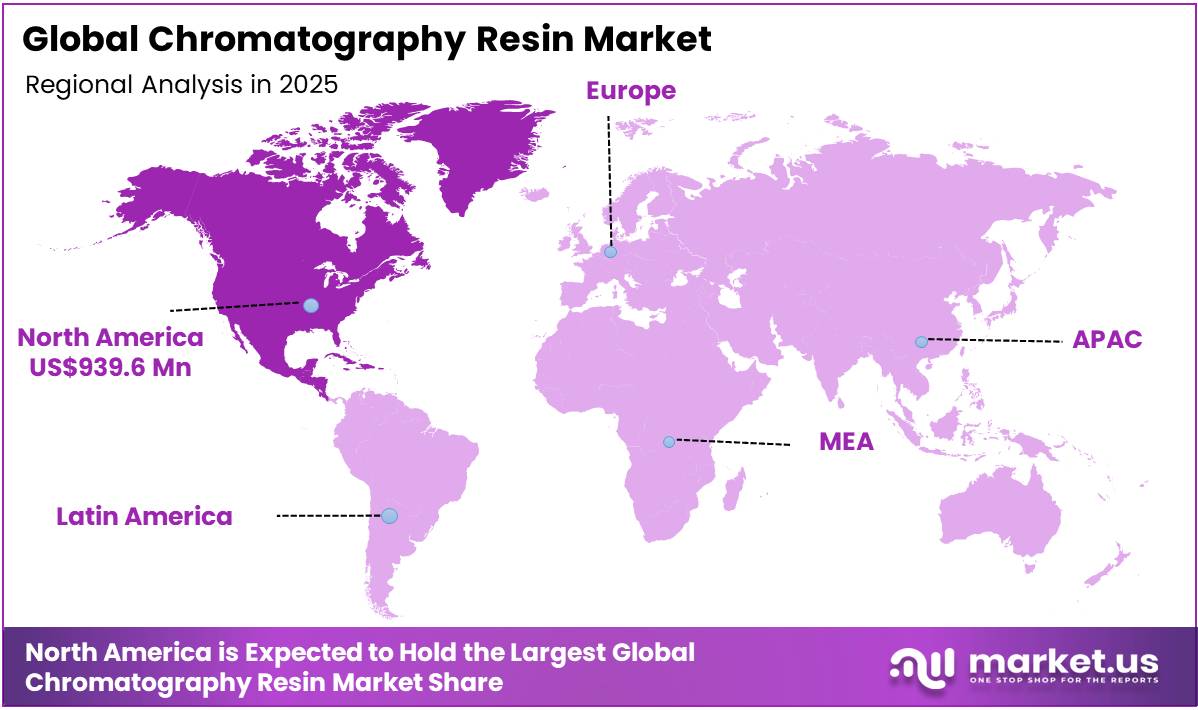
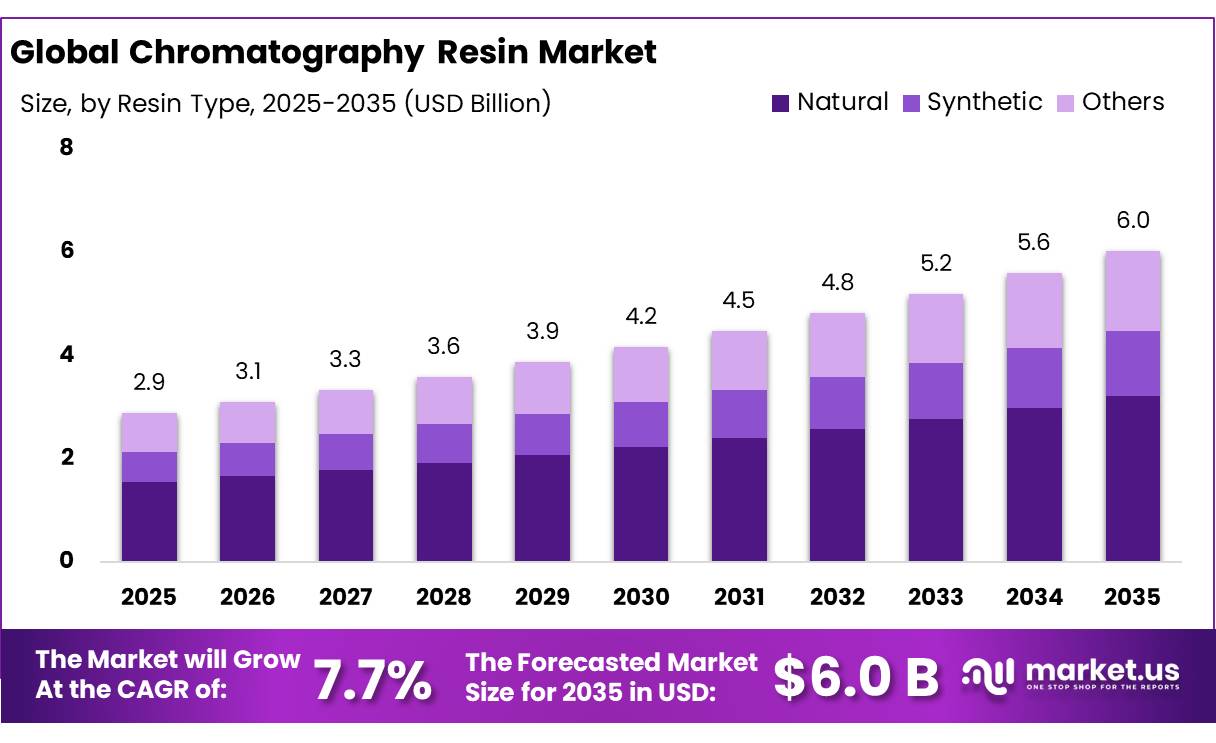
    In 2025, the Global Chromatography Resin Market was valued at USD 2.9 billion, and between 2026 and 2035, this market is estimated to register a CAGR of 7.7%, reaching about USD 6.0 billion by 2035. In 2025, North America held a dominant market position, capturing more than a 32.4% share, holding USD 939.6 Billion revenue.

    Chromatography resin is a critical separation material used to purify proteins, monoclonal antibodies, vaccines, enzymes, plasma products, and other biological molecules. Major resin categories include affinity, ion-exchange, hydrophobic-interaction, and mixed-mode materials. Their industrial importance is increasing as biopharmaceutical manufacturers seek higher purity, better recovery, faster processing, and lower buffer consumption.

    • Thermo Fisher’s POROS XS cation-exchange resin provides dynamic binding capacity above 100 mg/mL at 5% breakthrough and can operate with conductivity up to 15 mS/cm, illustrating the productivity levels now required in downstream processing.
    Chromatography Resin Market

    The industrial scenario is strongly linked with the expanding pipeline of biological and specialty medicines. The U.S. FDA approved 46 novel drugs in 2025, with 23, or 50%, receiving orphan-drug designation. In Europe, the EMA recommended 104 medicines for marketing authorization during 2025, including 38 containing new active substances and 16 medicines targeting rare diseases. A broader drug pipeline supports recurring consumption of purification resins during process development, clinical manufacturing, commercial production, and biosimilar manufacturing.

    Higher upstream titers are also pushing resin manufacturers toward greater binding capacity. Thermo Fisher’s POROS XQ anion-exchange resin offers at least 140 mg/mL dynamic binding capacity, while its resin particles average 50 µm and withstand mechanical pressure up to 100 bar. These characteristics can support smaller columns, faster flow rates, reduced buffer requirements, and efficient impurity removal.

    • Sartorius generated approximately EUR 3.538 billion in revenue during 2025, increasing 7.6% in constant currencies, while investment in research and production infrastructure reached EUR 442 million. Its Bioprocess Solutions business is expected to grow around 6–10% in 2026, mainly supported by consumables. Thermo Fisher also completed its approximately USD 4.0 billion acquisition of Solventum’s Purification & Filtration business in September 2025, adding technologies used across upstream and downstream bioprocess workflows.

    Government biotechnology policy is creating further growth opportunities. The European Commission reported that biological medicines represented EUR 95 billion of EU pharmaceutical sales and 41% of pharmaceutical spending in 2024. Its BioTechEU initiative is expected to mobilize up to EUR 10 billion in biotechnology investment during 2026–2027, while strategic biotechnology projects could attract EUR 19–40 billion by 2038.

    Key Takeaways

    • The global chromatography resin market was valued at USD 2.9 billion in 2025.
    • The global market is projected to grow at a CAGR of 7.7% and is estimated to reach USD 6.0 billion by 2035.
    • On the basis of resin type, natural resins dominated the market, constituting 53.4% of the total market share.
    • Based on the technique, ion exchange chromatography led the market, comprising 40.5% of the total market.
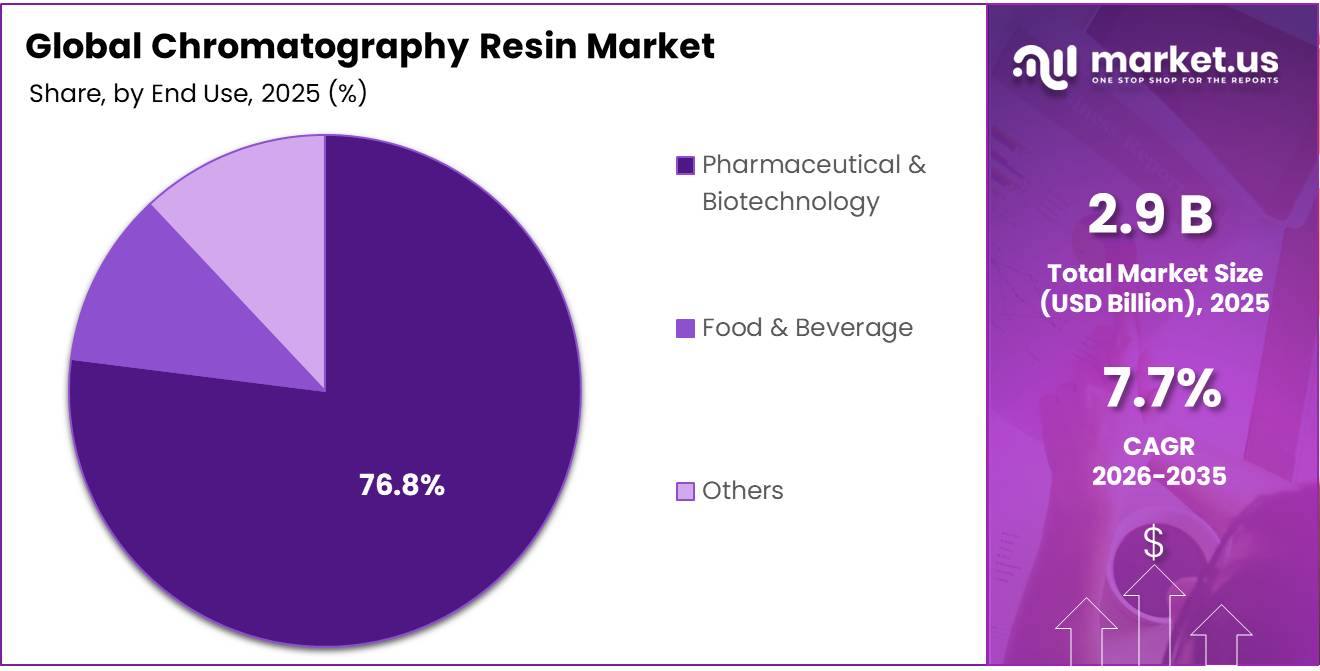
    • Among the end-uses, the pharmaceutical & biotechnology industry held a major share in the chromatography resin market, 76.8% of the market share.
    • In 2025, North America was the most dominant region in the chromatography resin market, accounting for 32.4% of the total global consumption.

    Resin Type Analysis

    Natural Resins are a Prominent Segment in the Market.

    Natural resins hold the dominant position in the chromatography resins market, accounting for 53.4% share, primarily due to their strong biocompatibility and widespread use in biologics purification processes. These resins, typically derived from agarose and cellulose matrices, offer excellent hydrophilicity, low non-specific binding, and high structural stability, making them particularly suitable for protein-based separations.

    In biopharmaceutical manufacturing, natural resins are extensively utilized in affinity and ion-exchange chromatography, especially for monoclonal antibody and vaccine production, where high purity standards are essential. Their established validation history in regulated environments further strengthens adoption in GMP-compliant facilities. Additionally, improved cross-linking and functionalization techniques have enhanced their mechanical strength and binding capacity, enabling scalability in large-volume production systems.

    Technique Analysis

    Ion Exchange Chromatography Held a Major Share of the Chromatography Resin Market.

    Ion exchange chromatography holds the leading position in the technique segment, accounting for 40.5% share, driven by its versatility, cost-effectiveness, and broad applicability across biomolecule purification processes. This technique separates molecules based on charge differences, making it highly effective for proteins, peptides, and nucleic acids under varying buffer and pH conditions.

    In industrial bioprocessing, ion exchange resins are widely used in capture and polishing steps, particularly for monoclonal antibodies and recombinant proteins, where they help remove host cell proteins, DNA, and other impurities. Their high binding capacity and compatibility with continuous processing systems further enhance process efficiency.

    End-Use Analysis

    Chromatography Resins Are Mostly Utilized in the Pharmaceutical & Biotechnology Industry.

    The pharmaceutical and biotechnology segment dominates the chromatography resins market with a 76.8% share, primarily driven by its extensive application in biologics manufacturing and advanced therapeutic development. Chromatography resins are integral to downstream purification processes for monoclonal antibodies, recombinant proteins, vaccines, and emerging cell and gene therapies, where stringent purity and safety standards are required.

    The rapid expansion of biologics pipelines, combined with increasing regulatory scrutiny on product purity and impurity removal, has significantly reinforced resin utilization in this segment. Large-scale bioprocessing facilities rely heavily on ion exchange, affinity, and hydrophobic interaction resins to achieve multi-step purification efficiency.
    Chromatography Resin Market Share

    Key Market Segments

    By Resin Type

    • Natural
    • Synthetic
    • Others

    By Technique

    • Ion Exchange Chromatography
    • Affinity Chromatography
    • Hydrophobic Interaction
    • Others

    By End Use

    • Pharmaceutical & Biotechnology
    • Food & Beverage
    • Others

    Driver Analysis

    Biologics and Biosimilar Purification Scale-Up

    FDA’s Center for Biologics Evaluation and Research approved nine Biologics License Applications in 2025, while FDA’s full 2025 approval listing includes products such as FESILTY, WASKYRA, ITVISMA, and blood-grouping biologic reagents, demonstrating that the regulatory pipeline continues to create new commercial purification requirements rather than merely replacing legacy volumes.

    The commercial consequence is a shift from opportunistic resin purchasing toward platform-qualified, multi-year supply arrangements: a typical antibody process may use a Protein A capture step plus two to four polishing operations, and a 2,000-L to 20,000-L campaign can consume tens to hundreds of liters of resin depending on titer, dynamic binding capacity, cycle count, and target recovery.

    Resin vendors that improve usable binding capacity by 15-30%, extend validated lifetime from roughly 100 cycles toward 200-plus cycles, or provide pre-packed format and regulatory support can reduce customers’ downstream footprint and buffer use while increasing switching costs, supporting an estimated +1.6 percentage-point uplift to baseline market CAGR through higher-value affinity, ion-exchange, mixed-mode, and multimodal resin mix.

    Drivers Impact Analysis

    Driver (~) % Impact on CAGR Geographic Relevance Impact Timeline
    Biologics and biosimilar purification scale-up +1.6% North America, EU, India, China Medium term (2-4 years)
    Cell and gene therapy downstream capacity +1.3% North America core, EU, Japan, China Medium term (2-4 years)
    mRNA and LNP impurity-control workflows +1.1% North America, EU, APAC biopharma hubs Short term (≤ 2 years)
    Continuous chromatography process intensification +1.0% North America, EU, India, Singapore Medium term (2-4 years)
    CDMO capacity expansion and platform standardization +0.9% North America, EU, India, China, South Korea Long term (≥ 4 years)
    Purity and sustainability-driven resin redesign +0.6% EU core, North America, Japan Medium term (2-4 years)

    Restraint Analysis

    Premium Resin Cost Burden

    High-performance chromatography media, particularly Protein A affinity resin used as the primary capture step for monoclonal antibodies, remains a material capital and operating-cost barrier for biopharma manufacturers because commercial-grade Protein A resins commonly cost approximately $10,000-$15,000 per liter before column hardware, packing, validation, buffer, cleaning, and inventory costs are included. A conventional 2,000-L antibody purification train may require 100-500 L of capture resin depending on upstream titer, target loading, dynamic binding capacity, target recovery, number of cycles, and facility configuration, creating a potential single-resin procurement value of roughly $1-7.5 million; larger commercial columns can take the required inventory well above that range.

    This cost intensity is particularly restrictive for early-stage biotechnology companies and emerging-market biosimilar producers because resin purchase decisions occur before commercial revenue certainty, converting downstream development into a working-capital burden rather than a variable operating expense. Resins are widely identified as one of bioprocessing’s largest cost centers, and finance teams are increasingly evaluating usable lifetime, supply assurance, and cost per gram recovered instead of purchase price alone.

    The direct market effect is slower adoption of premium affinity and multimodal products, greater reliance on lower-cost ion-exchange or membrane alternatives where technically feasible, smaller-volume pilot purchases, and extended reuse programs; suppliers must therefore defend pricing through higher dynamic binding capacity, longer clean-in-place tolerance, application support, and performance guarantees, but the up-front cost barrier is modeled to deduct 1.3 percentage points from maximum 2026-2028 market CAGR in cost-sensitive CDMO, biosimilar, and pre-commercial customer segments.

    Restraint Impact Analysis

    Restraint (~) % Impact on CAGR Geographic Relevance Impact Timeline
    Premium resin cost burden -1.3% North America, EU, India, China Short term (≤ 2 years)
    GMP reuse-validation burden -1.0% North America core, EU, Japan Medium term (2-4 years)
    Biotech funding and pipeline delays -0.9% North America, EU, APAC biotech hubs Short term (≤ 2 years)
    Resin fouling and cycle-life risk -0.8% Global biomanufacturing hubs Medium term (2-4 years)
    Extractables and leachables scrutiny -0.6% North America, EU, Japan Medium term (2-4 years)
    Trade and supply-chain cost exposure -0.5% North America, EU, APAC corridors Short term (≤ 2 years)

    Opportunity Analysis

    RNA Impurity-Selective Resin Platforms

    RNA purification is an underexploited specialty-resin opportunity because current mRNA and nucleic-acid workflows commonly rely on adaptable ion exchange, reversed-phase, hydrophobic-interaction, size-exclusion, or affinity methods, but no broadly standardized, high-throughput resin platform has yet become the default solution for selectively removing double-stranded RNA, truncated transcripts, template DNA, enzymes, nucleotides, and related in-vitro-transcription impurities across different mRNA sizes and constructs.

    This remains an opportunity rather than a baseline driver because existing demand is embedded in conventional purification media, whereas the upside requires suppliers to introduce purpose-designed ligands, mixed-mode chemistries, and prevalidated operating windows that produce superior impurity removal at commercial scale. NIST-linked work published in 2026 demonstrated 81.8% target mRNA recovery through a modified size-exclusion approach for double-stranded RNA separation, underscoring both the commercial value of recovery and the absence of a fully settled purification standard.

    If a specialty resin improves target recovery by 5-15%, lowers dsRNA carryover sufficiently to reduce a second polishing step, and shortens downstream processing by 10-20%, it can create a cost-per-dose improvement larger than its resin premium; for a 1-10 g RNA batch, avoiding one low-recovery unit operation can preserve hundreds of patient-dose equivalents depending on the final dose.

    Opportunity Impact Analysis

    Opportunity (~) % Potential CAGR Upside Geographic Relevance Execution Window
    RNA impurity-selective resin platforms +1.4% North America, EU, China, Japan, South Korea Medium term (2-4 years)
    Viral-vector affinity resin platforms +1.2% North America, EU, Japan, China Medium term (2-4 years)
    Resin lifecycle-as-a-service +1.0% North America, EU, India, Singapore Short term (≤ 2 years)
    Biosimilar localization supply hubs +1.1% India, China, Southeast Asia, Latin America Medium term (2-4 years)
    Continuous multi-column resin systems +0.9% North America, EU, Japan, Singapore Medium term (2-4 years)
    Regenerated-resin circularity programs +0.7% EU core, North America, Japan Long term (≥ 4 years)

    Challenges Analysis

    Downstream Talent Shortage

    In 2026, 36% of biopharma facilities reported difficulty hiring process-development staff, 28% reported difficulty hiring downstream production personnel, and 27% lacked sufficient process engineers; the shortage is especially acute for cell and gene therapy, viral vectors, and other advanced modalities where specialized separation expertise is not readily available in the general biomanufacturing workforce.

    The staffing gap creates an operational penalty because each new resin, ligand, cleaning protocol, or column format may require 3-9 months of process characterization, scale-down model work, design-of-experiments testing, analytical transfer, and GMP documentation, while unfilled positions increase dependence on consultants and contract labor that can raise process-development cost by a modeled 15-30%.

    Long-term mitigation requires suppliers to provide application laboratories, standardized platform processes, digital process models, automated method-development tools, remote training, and pre-packed column options, while CDMOs need apprenticeship, university, and cross-training programs; because expertise typically takes 3-5 years to develop and qualified staff are globally mobile, this remains a long-horizon friction with an estimated -0.8 percentage-point drag on maximum market CAGR.

    Challenges Impact Analysis

    Challenge (~) % CAGR Friction Geographic Relevance Mitigation Horizon
    Downstream talent shortage -0.8% North America, EU, APAC hubs Long term (≥ 4 years)
    Large-column packing variability -0.7% Global biologics hubs Medium term (2-4 years)
    Modality-specific impurity complexity -0.9% North America, EU, Japan, China Long term (≥ 4 years)
    Agarose and ligand sourcing -0.6% Europe, North America, APAC Medium term (2-4 years)
    Continuous-process integration complexity -0.7% North America, EU, Singapore, Japan Medium term (2-4 years)
    Waste and solvent intensity -0.5% EU core, North America, Japan Long term (≥ 4 years)

    Geopolitical Impact Analysis

    Geopolitical Disruptions and the Reconfiguration of Global Chromatography Resin Supply Chains.

    Geopolitical tensions are increasingly influencing the production and distribution dynamics of chromatography resins through their integration within biologics and pharmaceutical supply chains. Export controls on key chemical intermediates and specialty polymers used in resin matrices have been periodically tightened by major producing economies, creating procurement uncertainty for downstream bioprocessing users.

    • For instance, restrictions on dual-use chemical exports and advanced materials under strategic trade frameworks have affected cross-border availability of high-purity agarose and methacrylate derivatives, which are essential for affinity and ion-exchange resin manufacturing.

    The disruptions linked to trade barriers and export bans can contribute to measurable production delays, with global drug shortage risks under modeled geopolitical disruption scenarios in integrated supply chain systems, particularly affecting biologics-dependent therapies. Since chromatography resins are critical consumables in monoclonal antibody purification, such disruptions indirectly propagate through downstream bioprocessing capacity constraints.

    Regulatory tightening around chemical sourcing and regionalization of manufacturing has further encouraged nearshoring of bioprocessing inputs, reducing dependence on concentrated supply hubs in East Asia and Europe. This restructuring is evident in the diversification of raw material sourcing strategies by biopharmaceutical manufacturers seeking to mitigate logistics and tariff exposure.

    Regional Analysis

    North America Held the Largest Share of the Global Chromatography Resin Market.

    In 2025, North America dominated the global chromatography resin market, holding about 32.4% of the total global consumption, supported by a highly concentrated biopharmaceutical manufacturing base and extensive regulatory oversight for biologics production. The region accounts for the majority of global market share, reflecting its dominant role in downstream bioprocessing activities tied to monoclonal antibodies, vaccines, and recombinant proteins.

    High regulatory requirements from agencies such as the U.S. FDA and Health Canada have reinforced the adoption of validated, high-purity separation media in GMP environments, particularly for therapies requiring purity levels above 98% in final drug substances. Demand is further reinforced by strong clinical pipelines in biologics, where increasing volumes of CHO-cell-derived products necessitate scalable ion-exchange and affinity chromatography systems.

    Expanding investments in bioprocessing infrastructure, coupled with widespread adoption of advanced purification technologies in CDMOs and integrated manufacturing facilities, continue to sustain resin consumption intensity across the region’s biologics value chain.

    Chromatography Resin Market Regional Analysis

    Key Regions and Countries Covered

    • North America
      • The US
      • Canada
    • Europe
      • Germany
      • France
      • The UK
      • Spain
      • Italy
      • Russia & CIS
      • Rest of Europe
    • APAC
      • China
      • Japan
      • South Korea
      • India
      • ASEAN
      • Rest of APAC
    • Latin America
      • Brazil
      • Mexico
      • Rest of Latin America
    • Middle East & Africa
      • GCC
      • South Africa
      • Rest of MEA

    Key Players Analysis

    Companies in the chromatography resins space focus on strengthening performance differentiation through continuous improvements in resin chemistry, including higher binding capacity, improved selectivity, and enhanced stability under harsh cleaning conditions such as repeated sodium hydroxide exposure. Significant emphasis is placed on developing mixed-mode and multimodal resins that reduce purification steps and improve process efficiency in biologics manufacturing. Firms further invest in expanding platform technologies for monoclonal antibody purification, particularly Protein A resins with extended cycle life and improved ligand stability.

    Strategic partnerships with biopharmaceutical manufacturers and CDMOs are commonly used to co-develop process-specific solutions, ensuring tighter integration into downstream workflows. Capacity expansion of manufacturing facilities and localization of production help reduce supply chain risks and improve delivery timelines. Additionally, companies prioritize regulatory compliance support, offering validated resins and technical services to meet stringent GMP requirements.

    The Major Players in The Industry

    • Merck KGaA
    • Bio – Rad Laboratories, Inc.
    • WIPRO GE HEALTHCARE PVT LTD
    • Purolite Corporation
    • GRACE
    • Tosoh Corporation
    • Thermo Fisher Scientific Inc.
    • Sartorius AG
    • Avantor, Inc
    • Bio-Works
    • Cytiva
    • Dupont
    • JSR Life Sciences, LLC
    • Kaneka Eurogentec S.A.
    • Ecolab Life Sciences
    • Other Key Players

    Key Development

    • In April 2026, DuPont announced the launch of DuPont AmberChrom XT20 SL and XT30 SL chromatography resins, expanding its bioprocessing portfolio. The new products are designed to support purification processes for oligonucleotide and peptide therapeutics, helping manufacturers streamline bioprocessing operations.
    • In June 2025, Ecolab Life Sciences launched its Purolite AP+50 affinity chromatography resin at the Biotechnology Innovation Organization (BIO) International Convention in Boston. The resin is designed to optimize operational efficiency in antibody manufacturing processes.

    Report Scope

    Report Features Description
    Market Value (2025) USD 2.9 Bn
    Forecast Revenue (2035) USD 6.1 Bn
    CAGR (2026-2035) 7.7%
    Base Year for Estimation 2025
    Historic Period 2020-2024
    Forecast Period 2026-2035
    Report Coverage Revenue Forecast, Market Dynamics, Competitive Landscape, Recent Developments
    Segments Covered By Resin Type (Natural, Synthetic, and Others), By Technique (Ion Exchange Chromatography, Affinity Chromatography, Hydrophobic Interaction, and Others), By End-Use (Pharmaceutical & Biotechnology, Food & Beverage, and Others)
    Regional Analysis North America – The US & Canada; Europe – Germany, France, The UK, Spain, Italy, Russia & CIS, Rest of Europe; APAC– China, Japan, South Korea, India, ASEAN & Rest of APAC; Latin America– Brazil, Mexico & Rest of Latin America; Middle East & Africa– GCC, South Africa, & Rest of MEA
    Competitive Landscape Merck KGaA, Bio – Rad Laboratories, Inc., WIPRO GE HEALTHCARE PVT LTD., Purolite Corporation, GRACE, Tosoh Corporation, Thermo Fisher Scientific Inc., Sartorius AG, Avantor, Inc., Bio-Works, Cytiva, Dupont, JSR Life Sciences, LLC, Kaneka Eurogentec S.A., and Other Players.
    Customization Scope Customization for segments, region/country-level will be provided. Moreover, additional customization can be done based on the requirements.
    Purchase Options We have three licenses to opt for: Single User License, Multi-User License (Up to 5 Users), Corporate Use License (Unlimited Users and Printable PDF)


    keyboard_arrow_up
  • Segments Sub-segments
    By Resin Type
    • Natural
    • Synthetic
    • Others

    By Technique
    • Ion Exchange Chromatography
    • Affinity Chromatography
    • Hydrophobic Interaction
    • Others
    By End-Use
    • Pharmaceutical & Biotechnology
    • Food & Beverage
    • Others

     
    North America Europe Asia Pacific Latin America Middle East & Africa
    • US
    • Canada
    • Germany
    • France
    • The UK
    • Spain
    • Italy
    • Rest of Europe
    • China
    • Japan
    • South Korea
    • India
    • Australia
    • Rest of APAC
    • Brazil
    • Mexico
    • Rest of Latin America
    • GCC
    • South Africa
    • Rest of MEA
Chromatography Resin Market
Published date: Sep 2026
add_shopping_cartBuy Now get_appDownload Sample

Related Reports

  • Feed Mycotoxin Binders and Modifiers Market
  • Livestock Flooring Market
  • Brewing Ingredients Market
  • Pea Processed Ingredients Market
  • Feed Anticoccidials Market
  • Food And Beverage Industry Pumps Market
  • Bottled Water Processing Market
  • Plasma Feed Market
  • Egg Processing Market
  • Feed Packaging Market
Chromatography Resin Market
  • 193079
  • Sep 2026
    • ★★★★★
      ★★★★★
Buy Now
Trusted by more than 17382 organizations globally
  • Client Logo
  • Client Logo
  • Client Logo
  • Client Logo
  • Client Logo
  • Client Logo
  • Client Logo
  • Client Logo
  • Client Logo
  • Client Logo
  • Client Logo
  • Client Logo
  • Client Logo
  • Client Logo
  • Client Logo
  • Client Logo

Our Clients

philips
pentair
suez
ecowater
ergobaby
fabricato
genomatica
lenzing
lilly
siemens
honeywell
valspar
pactiv
petsure
schweitzer-online
sappi
pfizer
unilabs
lonza
BD
mckinsey
hilti
✖
Request a Sample Report
We'll get back to you as quickly as possible

✖
Request a Sample Report
We'll get back to you as quickly as possible

  • location_on420 Lexington Avenue, Suite 300 New York City, NY 10170,
    United States
  • phone+1 718 874 1545 (International)
  • phone+91 78878 22626 (Asia)
  • email[email protected]
  • Facebook Logo
  • Twitter Logo
  • LinkedIn Logo
Find Help
  • Contact Us
  • How to Order
Legal
  • Privacy Policy
  • Refund Policy
  • Frequently Asked Questions
  • Terms and Conditions
Explore
  • About Us
  • Our Clients
  • Media Mentions
  • Infographics
  • Statistics and Facts
  • Research Methodology
  • Why Choose Us?
Secured Payment Options

© 2026 Market.Us. All Rights Reserved.