


Global Animal Feed Antioxidant Market Size, Share, And Industry Analysis Report By Type (Butylated Hydroxytoluene (BHT), Butylated Hydroxyanisole (BHA), Ethoxyquin, Vitamin, Botanical Extract), By Form (Powder, Granular, Liquid, Pellet), By Animal (Poultry, Swine, Cattle, Aquaculture, Pet Food, Others), By Region and Companies - Industry Segment Outlook, Market Assessment, Competition Scenario, Statistics, Trends and Forecast 2026-2035
- Published date: March 2026
- Report ID: 181537
- Number of Pages: 387
- Format:
-
keyboard_arrow_up
Quick Navigation
Report Overview
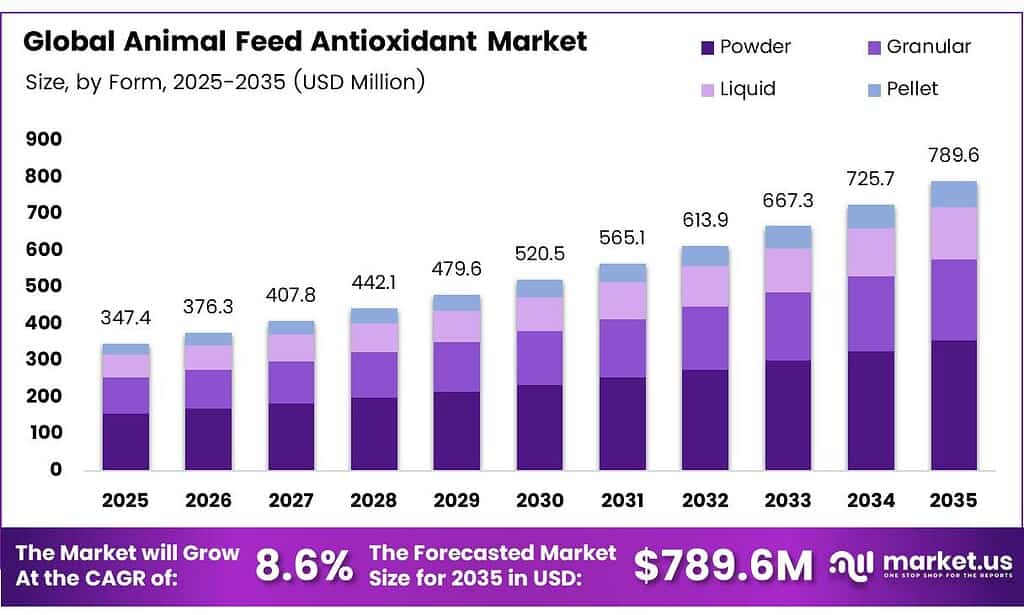
The Global Animal Feed Antioxidant Market size is expected to be worth around USD 789.6 million by 2035 from USD 347.4 million in 2025, growing at a CAGR of 8.6% during the forecast period 2026 to 2035.
The animal feed antioxidant market covers specialty additives that prevent oxidative degradation in animal feed. These compounds protect fats, vitamins, and other nutrients from spoilage during storage and handling. Manufacturers use them to extend shelf life, improve feed quality, and support animal health outcomes across livestock and aquaculture segments.
Feed antioxidants play a critical role in modern commercial farming. They reduce nutrient loss caused by heat, moisture, and oxygen exposure. Additionally, these ingredients support immune function and reduce oxidative stress in animals. Consequently, producers rely on them to maintain consistent feed performance and reduce economic losses linked to spoilage.
Animal Nutrition and Health adjusted EBITDA reached €343 million in 2024, up from €128 million on the pro forma 2023 base. This improvement reflects stronger commercial performance across feed nutrition and antioxidant ingredient categories globally.
DSM-Firmenich Animal Nutrition and Health adjusted EBITDA margin improved to 10.3% in 2024 from 4.0% on the pro forma 2023 base. This margin recovery signals improved earnings conversion across the animal nutrition supply chain, including vitamins and antioxidant ingredients critical to feed quality management.
Global demand for animal protein continues to rise. Growing populations in Asia, Africa, and Latin America accelerate the need for efficient livestock production. Moreover, expanding middle-class consumption of meat, eggs, and dairy products pushes producers to adopt feed solutions that improve output quality. This demand directly benefits the animal feed antioxidant sector.
Key Takeaways
- The Global Animal Feed Antioxidant Market, valued at USD 347.4 million in 2025, is projected to reach USD 789.6 million by 2035, at a CAGR of 8.6%.
- Butylated Hydroxytoluene (BHT) leads with a 28.4% market share in 2025.
- Powder dominates with a 45.2% share among all form segments.
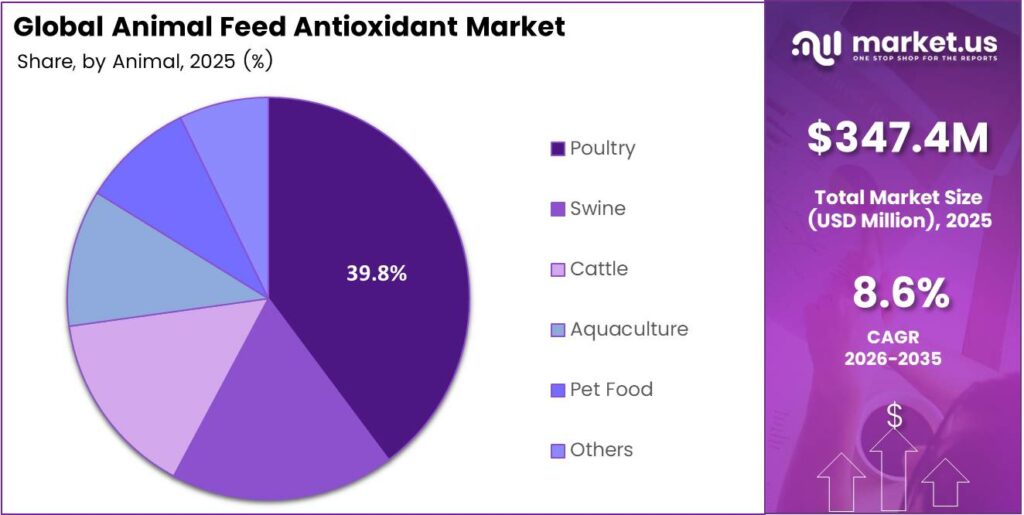
- Poultry holds the largest share at 39.8% of the animal segment.
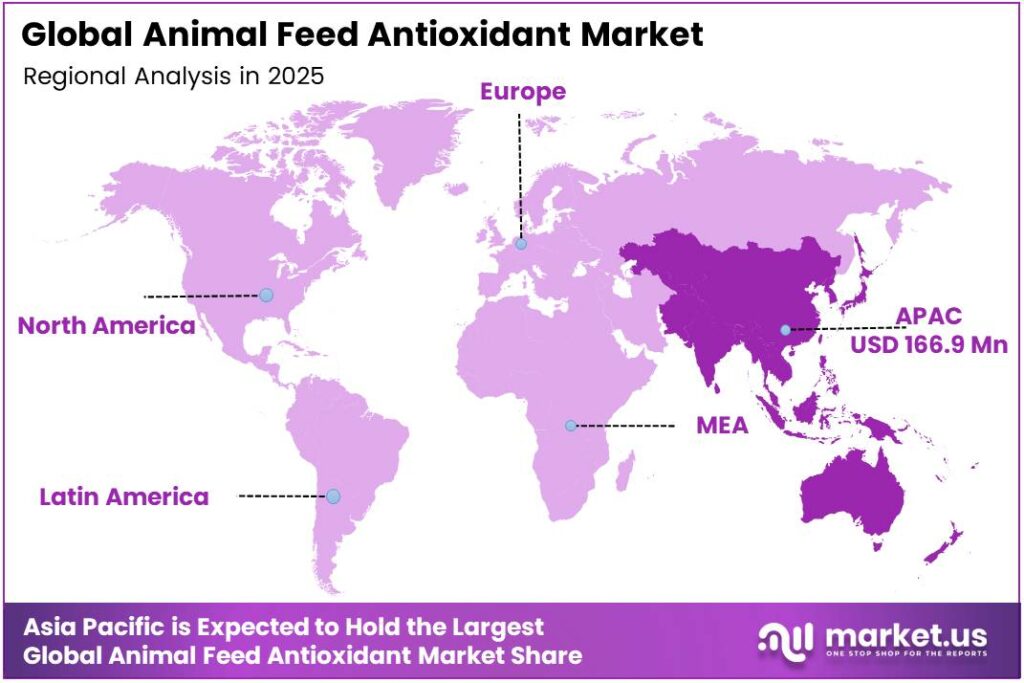
- Asia Pacific leads all regions with a 47.9% share, valued at USD 166.9 million.
By Type Analysis
Butylated Hydroxytoluene (BHT) dominates with 28.4% due to its cost-effectiveness, proven stability, and wide acceptance in commercial feed manufacturing.
In 2025, Butylated Hydroxytoluene (BHT) held a dominant market position in the By Type segment of the Animal Feed Antioxidant Market, with a 28.4% share. BHT delivers reliable oxidative protection at competitive cost levels. Feed manufacturers prefer it for high-volume poultry and swine applications where shelf-life extension directly reduces economic losses.
Ethoxyquin remains widely used in aquaculture and fishmeal preservation applications. It delivers strong antioxidant protection under high-temperature processing conditions. However, ongoing regulatory scrutiny in Europe has prompted some manufacturers to evaluate alternative stabilizers. This dynamic continues to influence product development strategies across the feed additives sector.
By Form Analysis
Powder dominates with 45.2% due to ease of blending, handling stability, and compatibility with standard feed mixing equipment.
In 2025, Powder held a dominant market position in the By Form segment of the Animal Feed Antioxidant Market, with a 45.2% share. Powder form integrates efficiently into dry feed mixing operations. Feed manufacturers favor it for consistent dosing, lower logistics costs, and broad compatibility across multiple animal feed types.
Granular form offers improved handling and reduced dust generation during mixing operations. It suits large-scale commercial feed mills that prioritize worker safety and operational efficiency. Moreover, granular antioxidants provide controlled release properties in certain feed matrix applications, making them valuable for specialized livestock nutrition programs.
By Animal Analysis
Poultry dominates with 39.8% due to the high volume of commercial poultry farming and feed quality requirements for broiler and layer operations.
In 2025, Poultry held a dominant market position in the By Animal segment of the Animal Feed Antioxidant Market, with a 39.8% share. Poultry farming operates at a massive commercial scale globally. Feed antioxidants protect high-fat poultry diets from oxidative rancidity, directly improving flock performance and meat quality outcomes.
Swine represents the second-largest animal segment for feed antioxidants. Pork production intensity across Asia and North America drives consistent demand for feed stabilization. Moreover, swine diets with high corn and soybean oil content are especially vulnerable to oxidative degradation, creating a sustained need for effective antioxidant solutions.
Cattle feed antioxidant demand grows alongside expanding beef and dairy production. Producers use antioxidants to protect stored feed quality and support cattle’s immune response under intensive farming conditions. Therefore, this segment benefits from both feedlot expansion in North America and intensifying dairy operations across Asia and Latin America.
Key Market Segments
By Type
- Butylated Hydroxytoluene (BHT)
- Butylated Hydroxyanisole (BHA)
- Ethoxyquin
- Vitamin
- Botanical Extract
By Form
- Powder
- Granular
- Liquid
- Pellet
By Animal
- Poultry
- Swine
- Cattle
- Aquaculture
- Pet Food
- Others
Emerging Trends
Natural Antioxidants and Encapsulation Technology Reshape Feed Additive Formulation
Feed manufacturers accelerate their shift toward natural antioxidants derived from rosemary, Vitamin E extracts, and botanical sources. Encapsulation technologies improve the stability and controlled release of these compounds in complex feed matrices. India imported vitamin E and derivatives from China worth $25.3 million in 2024, equal to 1,999,530 kg, reflecting strong supply chain activity for natural antioxidant inputs.
Multi-Functional Feed Additives Drive Demand for Combined Antioxidant and Antimicrobial Solutions
Producers increasingly adopt multi-functional feed additives that combine antioxidant protection with antimicrobial and mycotoxin management benefits. This trend reduces the total number of additives required per formulation. Moreover, growing focus on oxidative stress reduction in aquaculture and companion animal nutrition expands application scope. Kemin produces more than 500 specialty ingredients and serves more than 120 countries, illustrating the commercial scale of multi-functional feed additive delivery.
Drivers
Rising Global Demand for Animal Protein Fuels Feed Shelf-Life Extension Requirements
Global consumption of meat, eggs, dairy, and seafood rises steadily across emerging economies. Commercial livestock producers require feed antioxidants to extend shelf life and maintain nutritional quality during storage. ADM Animal Nutrition’s revenue reached $3,405 million in 2024, reflecting the commercial scale of feed nutrition demand.
Perstorp inaugurated its Sayakha manufacturing site in Gujarat, India, in February 2024, covering approximately 28 acres and employing around 120 people, adding fresh antioxidant-acid capacity to serve India’s intensifying livestock sector.
Commercial Livestock Expansion and Prepared Feed Adoption Accelerate Market Growth
Commercial farmers replace traditional feeding practices with scientifically formulated prepared feeds. This transition creates sustained demand for consistent antioxidant protection in high-volume feed production. Additionally, rising livestock disease prevalence makes immune-boosting feed additives essential. Producers expand operations to meet food security demands, particularly across the Asia Pacific and Latin America, directly driving antioxidant ingredient consumption.
Restraints
Volatile Raw Material Prices Increase Production Cost Pressure for Antioxidant Manufacturers
Synthetic antioxidant production depends on petrochemical-derived raw materials with unpredictable price cycles. Cost volatility squeezes manufacturer margins and disrupts product pricing strategies. DSM-Firmenich’s discontinued operations, including Animal Nutrition and Health, generated €3,487 million in net sales in 2025, confirming the multibillion-euro scale at which raw material cost shifts impact profitability in this sector.
Stringent Regulatory Frameworks Slow Synthetic Feed Additive Approvals in Key Markets
Regulatory bodies in the European Union and other major markets impose strict approval processes for synthetic feed additives. Ethoxyquin faces continued regulatory review that constrains usage in certain regions. Therefore, manufacturers must invest in compliance documentation, safety studies, and reformulation efforts. These requirements increase time-to-market and raise development costs for new or reformulated synthetic antioxidant products.
Growth Factors
Synergistic Antioxidant Blends and Clean-Label Botanical Formulations Open New Revenue Streams
Manufacturers develop synergistic antioxidant blends that combine synthetic and natural compounds for superior feed protection. Clean-label formulations derived from novel botanical sources attract premium pricing in pet food and specialty livestock markets. BASF Nutrition and Health sales reached €1,978 million in 2024, confirming significant commercial demand for nutritional and antioxidant ingredient categories within the feed supply chain.
Aquaculture Expansion and Developing Region Demand Create High-Growth Market Opportunities
Global aquaculture production accelerates as seafood demand outpaces wild-catch supply. Aquafeed manufacturers require advanced antioxidant systems to protect omega-3-rich diets from rapid oxidation. Moreover, developing regions across Southeast Asia, Africa, and Latin America are intensifying animal agriculture operations. The European Union exported $164.97 million of vitamin E and derivatives in 2024, equal to 12,019,900 kg, reflecting active global trade flows that support these high-growth markets.
Regional Analysis
Asia Pacific Dominates the Animal Feed Antioxidant Market with a Market Share of 47.9%, Valued at USD 166.9 Million
Asia Pacific holds the largest share of the global animal feed antioxidant market at 47.9%, valued at USD 166.9 million in 2025. The region drives demand through its massive poultry, swine, and aquaculture industries. China, India, and Southeast Asian nations lead consumption as commercial livestock intensification continues.
North America represents a mature, high-value market for feed antioxidants. The United States leads regional demand through large-scale poultry, swine, and cattle operations. Moreover, stringent FDA and USDA feed quality regulations drive consistent adoption of approved antioxidant systems. Premium pet food manufacturing further supports demand for natural and clean-label antioxidant ingredients across this region.
Europe maintains a strong demand for natural and botanical feed antioxidants, driven by regulatory preferences and consumer clean-label trends. The EU restricts several synthetic antioxidants, accelerating the transition toward vitamin-based and plant-derived alternatives. Therefore, European feed manufacturers invest actively in natural antioxidant formulation. Germany, France, and the Netherlands serve as key manufacturing and distribution hubs for the region.
Latin America presents significant growth opportunities for animal feed antioxidants, particularly in Brazil and Mexico. The region’s large beef cattle, poultry, and aquaculture sectors require feed stabilization solutions. Moreover, Brazil’s dominant role in global soy and poultry exports creates consistent demand for high-quality feed additives. Expanding commercial farming practices accelerate antioxidant product adoption throughout the region.
Key Regions and Countries
North America
- US
- Canada
Europe
- Germany
- France
- The UK
- Spain
- Italy
- Rest of Europe
Asia Pacific
- China
- Japan
- South Korea
- India
- Australia
- Rest of APAC
Latin America
- Brazil
- Mexico
- Rest of Latin America
Middle East & Africa
- GCC
- South Africa
- Rest of MEA
Key Players Analysis
ADM operates as one of the largest global animal nutrition platforms. The company supplies a broad portfolio of feed premixes, amino acids, and antioxidant ingredients to commercial livestock producers worldwide. ADM leverages its extensive grain processing and nutrition infrastructure to serve poultry, swine, cattle, and aquaculture customers across North America, Europe, and the Asia Pacific markets.
Altech specializes in innovative mineral and nutritional technology solutions for animal agriculture. The company’s research-driven approach supports the development of feed additives that address oxidative stress, gut health, and performance needs in commercial livestock. Altech serves producers in more than 100 countries, building its market position through proprietary ingredient technologies and strong technical sales support networks.
BTSA focuses specifically on natural antioxidant development for animal feed and food applications. The company produces rosemary-based and mixed tocopherol antioxidant systems that meet growing clean-label demand. Moreover, BTSA’s botanical antioxidant portfolio aligns directly with European regulatory preferences that favor natural alternatives. Its targeted formulation expertise strengthens its competitive position in premium feed antioxidant categories.
Camlin Fine Sciences delivers a diversified antioxidant product range covering both synthetic and natural solutions for feed, food, and industrial applications. The company produces BHA, BHT, TBHQ, and mixed tocopherols for animal feed stabilization needs. Camlin’s integrated manufacturing and global distribution network enables cost-competitive supply across multiple antioxidant categories. Additionally, the company actively expands its natural antioxidant product line to capture clean-label market demand.
Top Key Players in the Market
- ADM
- Altech
- BTSA
- Camlin Fine Sciences
- Cargill Inc
- Corbion
- Food Safe Technologies
- Kemin
- Lallemand Nutrition
- Miavit
Recent Developments
- In 2025, ADM’s subsidiary, ADM International Sàrl, was part of a group of companies that successfully renewed the EU authorisation for Vitamin E-based feed antioxidants (tocopherols). The European Food Safety Authority (EFSA) confirmed the additives remain safe for animals, consumers, and the environment.
- In 2025, Altech received registration from the Canadian Food Inspection Agency (CFIA) for its algae-based products, ForPlus and All-G Rich. These are now approved for use in feed for pigs, dairy cows, and laying hens in Canada. BTSA is collaborating with Brenntag to present its organic antioxidant solutions specifically for the pet food sector.
Report Scope
Report Features Description Market Value (2025) USD 347.4 Million Forecast Revenue (2035) USD 789.6 Million CAGR (2026-2035) 8.6% Base Year for Estimation 2025 Historic Period 2020-2024 Forecast Period 2026-2035 Report Coverage Revenue Forecast, Market Dynamics, Competitive Landscape, Recent Developments Segments Covered By Type (Butylated Hydroxytoluene (BHT), Butylated Hydroxyanisole (BHA), Ethoxyquin, Vitamin, Botanical Extract), By Form (Powder, Granular, Liquid, Pellet), By Animal (Poultry, Swine, Cattle, Aquaculture, Pet Food, Others) Regional Analysis North America (US and Canada), Europe (Germany, France, The UK, Spain, Italy, and Rest of Europe), Asia Pacific (China, Japan, South Korea, India, Australia, and Rest of APAC), Latin America (Brazil, Mexico, and Rest of Latin America), Middle East & Africa (GCC, South Africa, and Rest of MEA) Competitive Landscape ADM, Altech, BTSA, Camlin Fine Sciences, Cargill Inc, Corbion, Food Safe Technologies, Kemin, Lallemand Nutrition, Miavit Customization Scope Customization for segments, region/country-level will be provided. Moreover, additional customization can be done based on the requirements. Purchase Options We have three licenses to opt for: Single User License, Multi-User License (Up to 5 Users), Corporate Use License (Unlimited Users and Printable PDF)  Animal Feed Antioxidant MarketPublished date: March 2026add_shopping_cartBuy Now get_appDownload Sample
 -
-
- ADM
- Altech
- BTSA
- Camlin Fine Sciences
- Cargill Inc
- Corbion
- Food Safe Technologies
- Kemin
- Lallemand Nutrition
- Miavit
Our Clients

- 181537
- March 2026






