


Report Overview
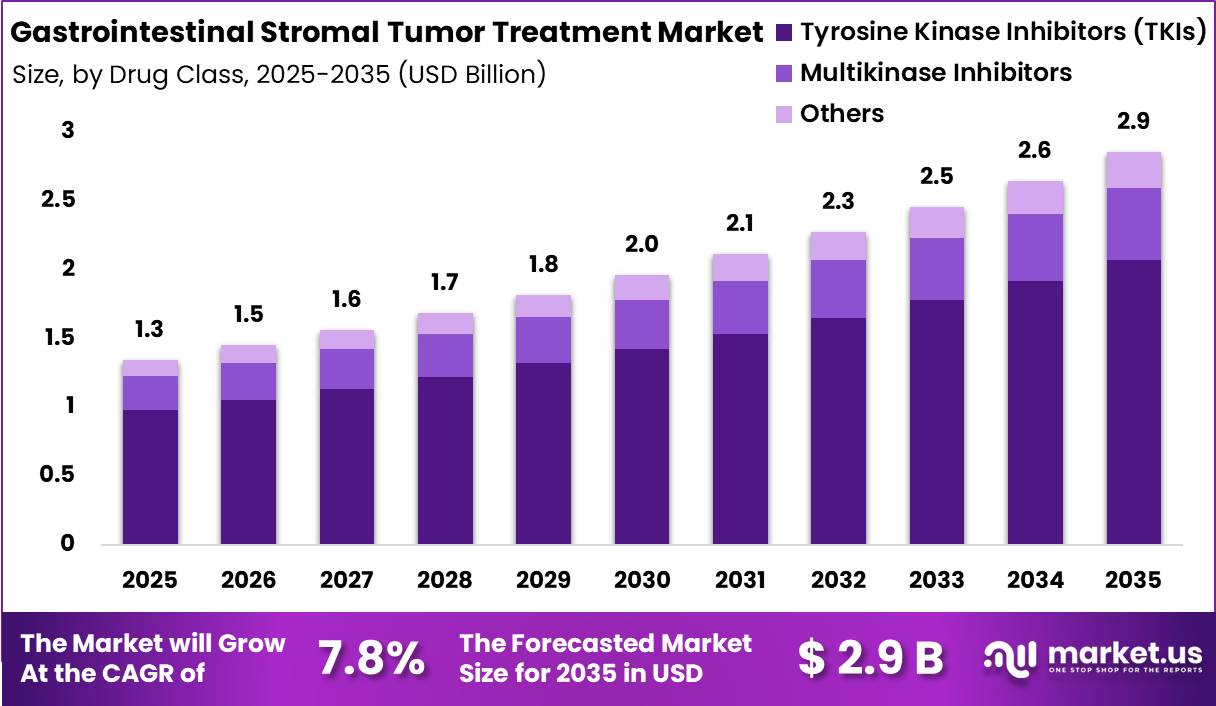
Global Gastrointestinal Stromal Tumor Treatment Market size is expected to be worth around US$ 2.9 Billion by 2035 from US$ 1.3 Billion in 2025, growing at a CAGR of 7.8% during the forecast period from 2026 to 2035. In 2025, North America led the market, achieving over 46.2% share with a revenue of US$ 0.6 Billion.
The gastrointestinal stromal tumor (GIST) treatment market is a specialized segment of the oncology therapeutics industry, driven by advances in targeted therapies, molecular diagnostics, and precision medicine. GISTs are rare tumors that develop in the gastrointestinal tract and represent less than 1% of all gastrointestinal cancers.
However, they are the most common mesenchymal tumors of the digestive system. According to the U.S. National Cancer Institute (NCI), more than 6,000 new GIST cases are diagnosed annually in the United States, with most patients diagnosed between the ages of 50 and 70 years. Approximately 60% of tumors originate in the stomach, while 30–35% occur in the small intestine.
The treatment landscape has evolved significantly with the introduction of tyrosine kinase inhibitors (TKIs), which have become the standard treatment for unresectable, recurrent, and metastatic GIST. Research has shown that nearly 85% of GIST cases are associated with KIT or PDGFRA gene mutations, enabling the development of targeted therapies that inhibit tumor growth at the molecular level. This shift from conventional chemotherapy to precision-based treatment approaches has improved disease management and patient outcomes.
Growing adoption of genomic testing and companion diagnostics is further supporting market expansion by enabling personalized treatment selection. The approval of targeted therapies such as imatinib, sunitinib, regorafenib, ripretinib, and avapritinib has expanded therapeutic options for patients with advanced or treatment-resistant disease. These therapies have demonstrated improved progression-free survival and disease control compared to traditional treatment approaches.
Market growth is also supported by advancements in diagnostic imaging, endoscopic technologies, molecular pathology testing, and increasing awareness regarding early diagnosis. Continuous investments in oncology research and clinical trials are accelerating the development of next-generation therapies designed to overcome treatment resistance.
With increasing emphasis on personalized medicine and mutation-specific treatments, the gastrointestinal stromal tumor treatment market is expected to experience sustained growth, supported by ongoing therapeutic innovation and expanding access to targeted treatment options worldwide.
Key Takeaways
- Market Size: Global Gastrointestinal Stromal Tumor Treatment Market size is expected to be worth around US$ 2.9 Billion by 2035 from US$ 1.3 Billion in 2025.
- Market Share: The market growing at a CAGR of 7.8% during the forecast period from 2026 to 2035.
- Drug Class Analysis: Tyrosine Kinase Inhibitors (TKIs) are expected to dominate the market, accounting for 72.5% of the total market share in 2025.
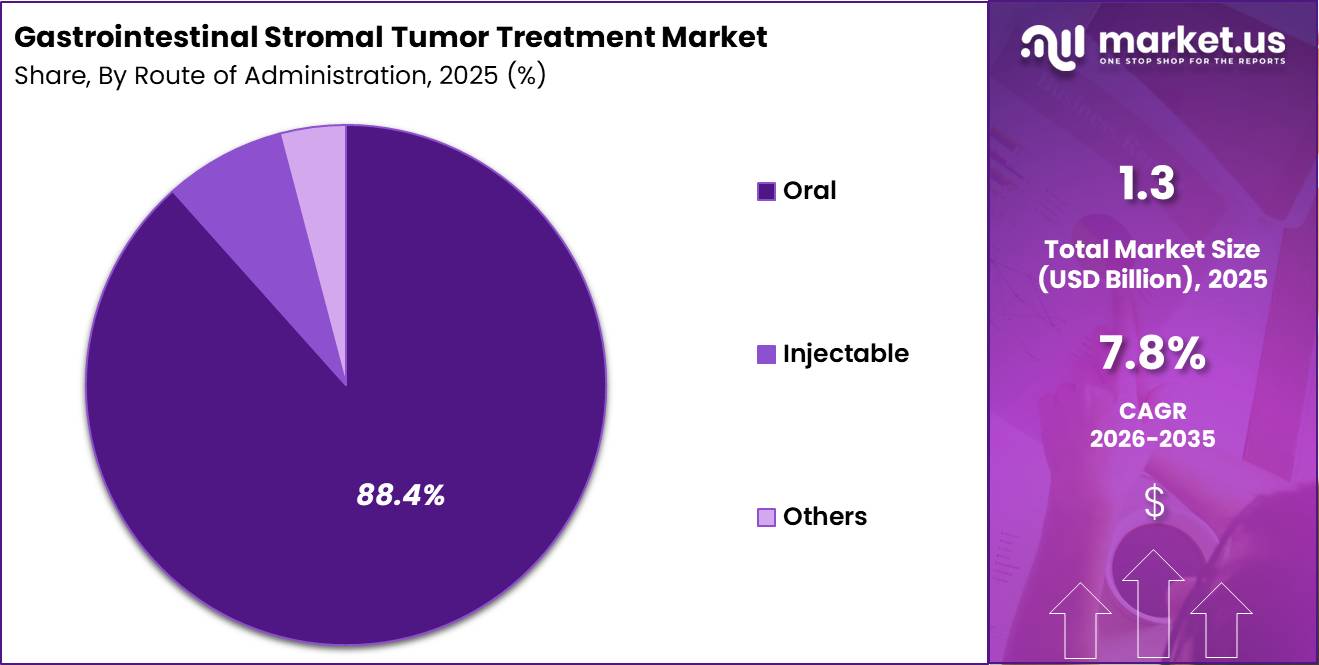
- Route of Administration Analysis: The Oral segment is projected to hold the largest market share of 88.4% in 2025, reflecting the strong preference for orally administered targeted therapies in GIST management.
- End User Analysis: Hospitals are anticipated to dominate the market, accounting for 58.5% of the total market share in 2025.
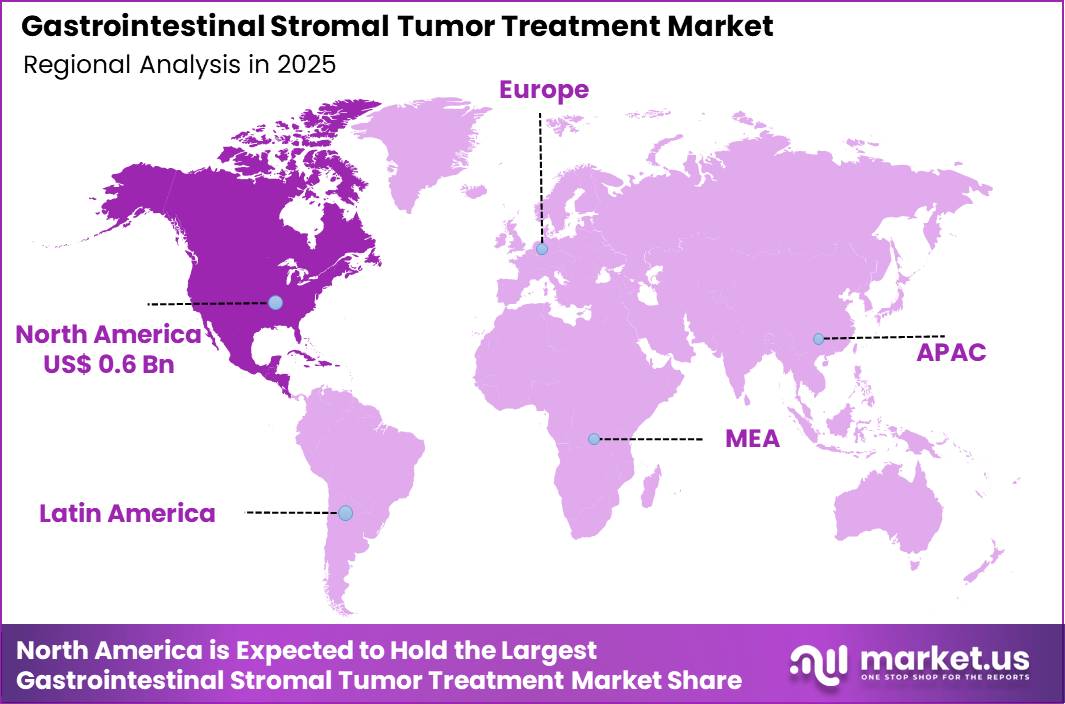
- Regional Analysis: In 2025, North America led the market, achieving over 46.2% share with a revenue of US$ 0.6 Billion.
Market Dynamics
Driving Factors - Increasing Availability of Orphan Drug Incentives
Government support for rare disease therapies is accelerating innovation in the GIST treatment market. Since GIST is classified as a rare cancer, developers benefit from orphan drug incentives that include market exclusivity, regulatory assistance, and fee reductions. According to the U.S. FDA, orphan-designated products receive 7 years of market exclusivity after approval, encouraging investment in niche oncology indications.
The European Medicines Agency (EMA) grants 10 years of market exclusivity for orphan medicines in the European Union. These incentives have facilitated the development of several targeted therapies for advanced and metastatic GIST. Additionally, rare cancers account for approximately 24% of all cancer diagnoses in Europe, highlighting the need for specialized treatment development. Government-backed regulatory pathways reduce development risks and improve commercial viability for manufacturers.
As more pharmaceutical companies pursue orphan oncology programs, investment in novel GIST therapies is expected to increase, supporting market expansion and improving access to advanced treatments for patients with rare gastrointestinal malignancies.
Trending Factors - Rising Use of Comprehensive Genomic Profiling in Oncology Centers
A significant trend in the GIST treatment market is the increasing adoption of comprehensive genomic profiling (CGP) to guide treatment decisions. Modern sequencing technologies enable clinicians to identify actionable mutations and optimize targeted therapy selection.
According to the U.S. National Institutes of Health (NIH), next-generation sequencing can identify clinically relevant genomic alterations in more than 60% of advanced cancer patients, supporting precision oncology initiatives. The growing integration of molecular diagnostics into cancer care pathways is particularly relevant for GIST, where treatment outcomes are strongly influenced by mutation status.
Furthermore, the U.S. Centers for Medicare & Medicaid Services (CMS) expanded coverage for FDA-approved next-generation sequencing tests in eligible cancer patients, increasing access to genomic testing. The trend toward personalized treatment planning is improving therapeutic effectiveness and supporting demand for mutation-specific drugs. As healthcare systems continue to invest in precision medicine infrastructure, genomic profiling is expected to become a routine component of GIST diagnosis and treatment selection.
Restraining Factors - Limited Patient Pool for Large-Scale Clinical Trials
The rarity of GIST presents a major challenge for clinical development and market growth. Rare cancers often face difficulties in recruiting sufficient patient populations for randomized clinical trials, resulting in longer study timelines and higher development costs.
According to the U.S. National Cancer Institute, rare cancers collectively account for approximately 25% of all cancer diagnoses, yet individual rare tumor types frequently lack adequate patient enrollment for large studies. Small sample sizes can delay regulatory approvals and limit the generation of robust long-term efficacy data.
In addition, healthcare providers may have limited experience managing rare tumor subtypes, particularly in developing regions. The scarcity of eligible participants also contributes to increased research expenditure per patient compared with more common oncology indications. These challenges may restrict the pace of innovation and delay the introduction of new therapies, particularly for patients with uncommon mutation variants requiring specialized treatment approaches.
Opportunity - Expansion of Artificial Intelligence in Rare Cancer Drug Discovery
The increasing use of artificial intelligence (AI) in oncology research presents a significant opportunity for the GIST treatment market. AI-driven drug discovery platforms are helping researchers identify therapeutic targets, predict drug responses, and accelerate clinical development timelines.
According to the U.S. FDA, AI and machine learning technologies are being increasingly incorporated into medical product development and regulatory science initiatives. Studies published by NIH-supported research programs indicate that AI-based approaches can reduce early-stage drug discovery timelines by 30–50% compared with conventional screening methods.
For rare cancers such as GIST, where patient populations are limited, AI can improve biomarker identification and optimize clinical trial design. Additionally, computational modeling supports the development of therapies targeting drug-resistant tumor mutations. As pharmaceutical companies increase investment in digital drug discovery platforms, opportunities are expected to emerge for novel GIST therapies with improved efficacy and reduced development timelines, strengthening future market growth.
Drug Class Analysis
The drug class segment of the Gastrointestinal Stromal Tumor (GIST) Treatment Market is categorized into Tyrosine Kinase Inhibitors (TKIs), Multikinase Inhibitors, and Others. Tyrosine Kinase Inhibitors (TKIs) are expected to dominate the market, accounting for 72.5% of the total market share in 2025.
The leadership of this segment is primarily attributed to the established role of TKIs as the standard first-line and subsequent-line treatment for GIST patients harboring KIT and PDGFRA mutations. The widespread clinical adoption of targeted therapies such as imatinib, sunitinib, and regorafenib has significantly improved patient outcomes, progression-free survival, and disease management. Continuous advancements in precision oncology and the introduction of next-generation kinase inhibitors further support segment growth.
The Multikinase Inhibitors segment represents the second-largest share of the market. These therapies are increasingly utilized in patients who develop resistance or intolerance to conventional TKIs. Their broader mechanism of action targeting multiple signaling pathways enhances treatment effectiveness in advanced and refractory GIST cases. Ongoing clinical research and regulatory approvals are expected to strengthen market penetration.
The Others segment includes emerging targeted therapies, immunotherapies, and investigational agents. Although currently representing a smaller market share, increasing research investments and novel therapeutic developments are anticipated to create future growth opportunities within this segment.
Route of Administration Analysis
Based on route of administration, the Gastrointestinal Stromal Tumor Treatment Market is segmented into Oral, Injectable, and Others. The Oral segment is projected to hold the largest market share of 88.4% in 2025, reflecting the strong preference for orally administered targeted therapies in GIST management.
Most approved tyrosine kinase inhibitors, including imatinib, sunitinib, regorafenib, and ripretinib, are available in oral formulations, offering convenience, improved patient compliance, and reduced dependence on hospital-based treatment settings. Oral therapies enable long-term disease management while minimizing healthcare resource utilization, making them the preferred treatment option among physicians and patients.
The Injectable segment accounts for a comparatively smaller share but remains important in specific clinical scenarios. Injectable therapies are primarily used for supportive care, combination treatment regimens, and investigational biologic agents undergoing clinical evaluation. Growing research activities involving monoclonal antibodies and advanced oncology therapeutics may contribute to gradual segment expansion over the forecast period.
The Others segment includes alternative administration methods that are currently limited in use. Although adoption remains low, technological advancements in drug delivery systems and the development of innovative formulations may support future growth. Overall, the dominance of oral therapies is expected to continue due to their proven efficacy, convenience, and favorable patient adherence rates.
End User Analysis
Based on end users, the Gastrointestinal Stromal Tumor Treatment Market is segmented into Hospitals, Specialty Clinics, Cancer Research Centers, Homecare Settings, and Others. Hospitals are anticipated to dominate the market, accounting for 58.5% of the total market share in 2025.
This dominance is driven by the availability of comprehensive oncology services, advanced diagnostic capabilities, multidisciplinary treatment teams, and access to specialized surgical and pharmacological interventions. Hospitals serve as the primary treatment centers for newly diagnosed and advanced GIST patients, facilitating accurate diagnosis, treatment planning, and continuous monitoring.
The Specialty Clinics segment represents a significant portion of the market due to increasing demand for focused cancer care and personalized treatment approaches. These facilities provide specialized oncology expertise, shorter waiting times, and convenient access to targeted therapies, contributing to growing patient preference.
Cancer Research Centers play a crucial role in the market through clinical trials, investigational therapies, and translational research activities. Their involvement in developing innovative treatment options supports market expansion and therapeutic advancements.
The Homecare Settings segment is gaining traction due to the widespread use of oral targeted therapies, enabling patients to manage treatment outside traditional healthcare facilities. Improved patient convenience and reduced hospitalization requirements support segment growth.
The Others category includes ambulatory care centers and community healthcare facilities that contribute to the overall treatment ecosystem, particularly in regions with expanding oncology care infrastructure.
Key Market Segments
By Drug Class
- Tyrosine Kinase Inhibitors (TKIs)
- Multikinase Inhibitors
- Others
By Route of Administration
- Oral
- Injectable
- Others
By End User
- Hospitals
- Specialty Clinics
- Cancer Research Centers
- Homecare Settings
- Others
Regional Analysis
North America dominated the global Gastrointestinal Stromal Tumor (GIST) Treatment Market in 2025, accounting for over 46.2% of the total market share and generating approximately US$ 0.6 billion in revenue. The region’s leadership can be attributed to its advanced healthcare infrastructure, widespread adoption of targeted therapies, and strong presence of leading pharmaceutical and biotechnology companies involved in oncology research. The increasing prevalence of gastrointestinal cancers and rising awareness regarding early diagnosis have further supported market growth across the United States and Canada.
The availability of innovative treatment options, including tyrosine kinase inhibitors (TKIs), has significantly improved patient outcomes, contributing to higher treatment adoption rates.
Additionally, favorable reimbursement policies, substantial healthcare expenditure, and ongoing clinical trials focused on novel GIST therapies continue to strengthen the regional market landscape. Regulatory support for orphan drugs and precision medicine approaches has also accelerated the commercialization of advanced treatment solutions.
Europe represented the second-largest market, driven by robust cancer care programs and increasing investments in oncology research. Meanwhile, the Asia Pacific region is expected to witness the fastest growth during the forecast period due to expanding healthcare access, improving diagnostic capabilities, and a growing patient population in countries such as China, Japan, and India.
Latin America and the Middle East & Africa are anticipated to experience gradual growth supported by improving healthcare infrastructure and rising cancer awareness initiatives.
Key Regions and Countries
North America
- The US
- Canada
Europe
- Germany
- France
- The U.K.
- Italy
- Spain
- Russia & CIS
- Rest of Europe
Asia Pacific
- China
- India
- Japan
- South Korea
- ASEAN
- Australia & New Zealand
- Rest of Asia Pacific
Middle East & Africa
- GCC
- South Africa
- Rest of Middle East & Africa
Latin America
- Brazil
- Mexico
- Rest of Latin America
Key Players Analysis
The gastrointestinal stromal tumor (GIST) treatment market is characterized by the presence of several leading pharmaceutical companies focused on targeted therapies and oncology innovation. Novartis AG remains a dominant player with its tyrosine kinase inhibitor (TKI) therapies, which have significantly improved treatment outcomes for advanced and metastatic GIST patients.
Pfizer Inc. maintains a strong market position through its targeted cancer treatment portfolio and ongoing clinical research activities. Bayer AG contributes to market growth with advanced kinase inhibitor therapies addressing treatment-resistant GIST cases. Emerging competitors such as Deciphera Pharmaceuticals and Blueprint Medicines Corporation are expanding their presence through novel precision medicines and next-generation kinase inhibitors.
Strategic collaborations, acquisitions, and investments in clinical trials remain key competitive strategies. The increasing focus on personalized medicine, biomarker-based therapies, and expanding regulatory approvals is expected to strengthen competition and drive innovation within the global GIST treatment market.
Market Key Players
- Novartis AG
- Pfizer Inc.
- Bayer AG
- Blueprint Medicines Corporation
- Deciphera Pharmaceuticals Inc.
- Johnson & Johnson
- Merck & Co., Inc.
- Bristol-Myers Squibb Company
- Eli Lilly and Company
- Roche Holding AG
- Sun Pharmaceutical Industries Ltd.
- Teva Pharmaceutical Industries Ltd.
- Mylan N.V. (Viatris)
- Cipla Inc.
- Dr. Reddy’s Laboratories Ltd.
- Others
Recent Developments
- June 2025 – Blueprint Medicines Corporation: Blueprint Medicines entered into a definitive agreement to be acquired by Sanofi in a transaction valued at approximately US$ 9.5 billion. The acquisition highlights the strategic importance of KIT-driven diseases within oncology and rare disease markets. Blueprint’s expertise in KIT-targeted therapies, including avapritinib, is expected to enhance Sanofi’s long-term oncology and immunology pipeline capabilities.
- November 2025 – Cogent Biosciences: Cogent Biosciences reported positive Phase III PEAK trial results for bezuclastinib in combination with sunitinib for patients with imatinib-resistant or intolerant GIST. The combination achieved a median progression-free survival of 16.5 months, compared with 9.2 months for sunitinib alone. Following these results, the company announced plans to submit a New Drug Application (NDA) during the first half of 2026, representing one of the most significant clinical advances in second-line GIST treatment in more than two decades.
- November 2025 – Deciphera Pharmaceuticals, Inc.: Deciphera announced new clinical data presentations for its investigational candidate DCC-3009 in advanced GIST at the Connective Tissue Oncology Society (CTOS) Annual Meeting 2025. The presentations demonstrated continued investment in expanding the company’s GIST pipeline beyond QINLOCK® (ripretinib), reinforcing its commitment to addressing treatment resistance and unmet clinical needs in advanced GIST patients.
Report Scope
| Report Features | Description |
|---|---|
| Market Value (2025) | US$ 1.3 Billion |
| Forecast Revenue (2035) | US$ 2.9 Billion |
| CAGR (2026-2035) | 7.8% |
| Base Year for Estimation | 2025 |
| Historic Period | 2020-2024 |
| Forecast Period | 2026-2035 |
| Report Coverage | Revenue Forecast, Market Dynamics, Competitive Landscape, Recent Developments |
| Segments Covered | By Drug Class (Tyrosine Kinase Inhibitors (TKIs), Multikinase Inhibitors, Others) By Route of Administration (Oral, Injectable, Others) By End User (Hospitals, Specialty Clinics, Cancer Research Centers, Homecare Settings, Others) |
| Regional Analysis | North America – The US, Canada; Europe – Germany, France, U.K., Italy, Spain, Russia & CIS, Rest of Europe; Asia Pacific – China, India, Japan, South Korea, ASEAN, Australia & New Zealand, Rest of Asia Pacific; Middle East & Africa – GCC, South Africa, Rest of Middle East & Africa; Latin America – Brazil, Mexico, Rest of Latin America |
| Competitive Landscape | Novartis AG, Pfizer Inc., Bayer AG, Blueprint Medicines Corporation, Deciphera Pharmaceuticals Inc., Johnson & Johnson, Merck & Co., Inc., Bristol-Myers Squibb Company, Eli Lilly and Company, Roche Holding AG, Sun Pharmaceutical Industries Ltd., Teva Pharmaceutical Industries Ltd., Mylan N.V. (Viatris), Cipla Inc., Dr. Reddy’s Laboratories Ltd., Others, |
| Customization Scope | Customization for segments, region/country-level will be provided. Moreover, additional customization can be done based on the requirements. |
| Purchase Options | We have three licenses to opt for: Single User License, Multi-User License (Up to 5 Users), Corporate Use License (Unlimited User and Printable PDF) |





































