


Report Overview
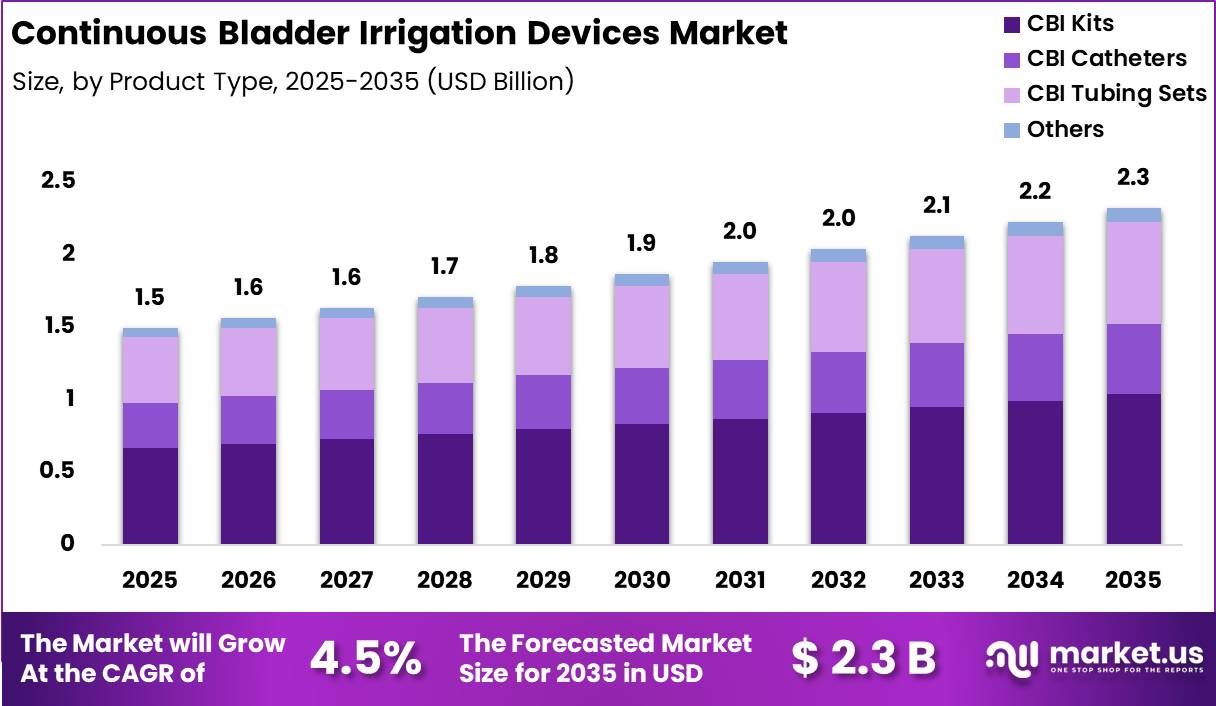
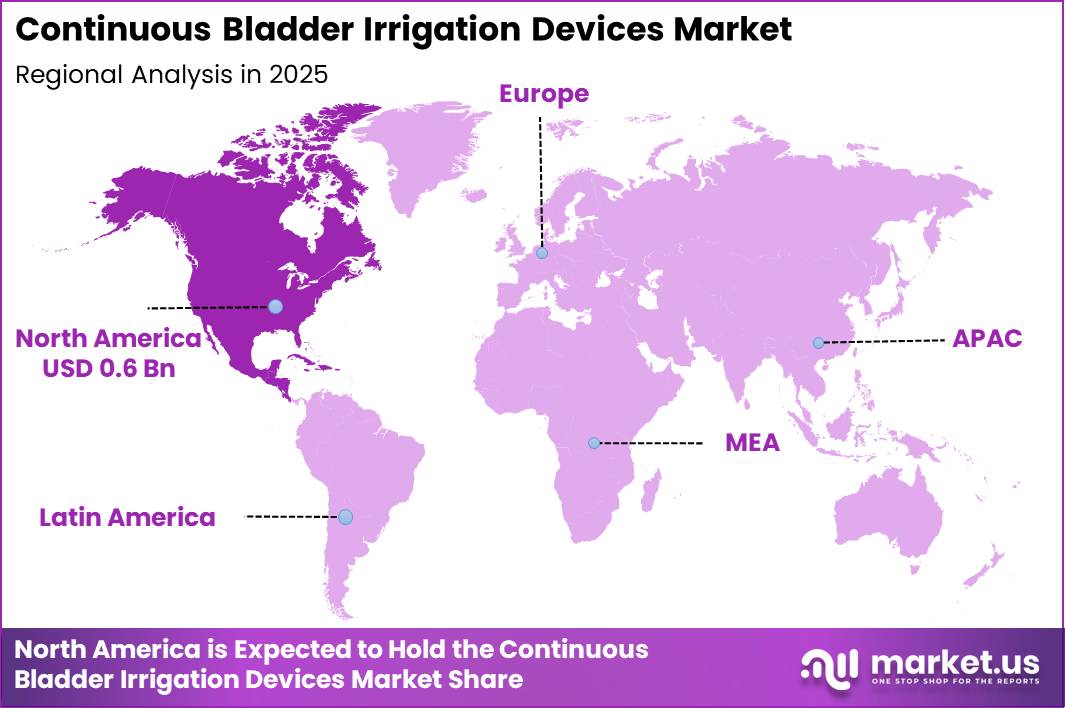
Global Continuous Bladder Irrigation Devices Market size is expected to be worth around US$ 2.3 Billion by 2035 from US$ 1.5 Billion in 2025, growing at a CAGR of 4.5% during the forecast period from 2026 to 2035. In 2025, North America led the market, achieving over 41.5% share with a revenue of US$ 0.6 Billion.
The Continuous Bladder Irrigation (CBI) Devices Market is witnessing steady growth due to the rising prevalence of urological disorders, increasing incidence of bladder cancer, and growing demand for postoperative urinary care across hospitals and specialty clinics.
Continuous bladder irrigation devices are primarily used to prevent blood clot formation and maintain catheter patency after urological surgeries such as transurethral resection of the prostate (TURP), bladder tumor removal procedures, and other urinary tract interventions. These systems generally include Foley three-way catheters, irrigation bags, drainage systems, and flow-control accessories that support continuous saline circulation within the bladder.
The increasing burden of bladder cancer remains a major factor driving demand for CBI devices. According to the World Health Organization, bladder cancer was the 10th most common cancer globally, with nearly 573,000 new cases and 213,000 deaths reported in 2020. In the United States alone, the American Cancer Society estimated approximately 83,190 new bladder cancer cases in 2024, highlighting the growing need for postoperative bladder management solutions.
The aging global population is also contributing significantly to market expansion, as elderly individuals are more susceptible to benign prostatic hyperplasia (BPH), urinary retention, hematuria, and other chronic urological conditions. The United Nations reported that by 2050, one in six people globally will be aged 65 years or older, compared with one in eleven in 2019. This demographic transition is expected to increase hospital admissions for age-related urinary disorders and catheter-based treatments.
Technological advancements in catheter materials, infection-resistant coatings, and irrigation monitoring systems are further improving patient safety and clinical efficiency. However, the market continues to face challenges associated with catheter-associated urinary tract infections (CAUTIs).
The Centers for Disease Control and Prevention states that nearly 75% of hospital-acquired urinary tract infections are associated with urinary catheters, while 15%–25% of hospitalized patients receive urinary catheters during their stay. Consequently, healthcare providers are increasingly emphasizing advanced irrigation systems and strict infection-control protocols to reduce complications and improve patient outcomes.
Key Takeaways
- Market Size: Global Continuous Bladder Irrigation Devices Market size is expected to be worth around US$ 2.3 Billion by 2035 from US$ 1.5 Billion in 2025.
- Market Share: The market growing at a CAGR of 4.5% during the forecast period from 2026 to 2035.
- Product Type Analysis: the CBI Kits segment accounted for the largest market share of 44.6% in 2025.
- Material Analysis: The Silicone segment dominated the market with a 49.2% share in 2025
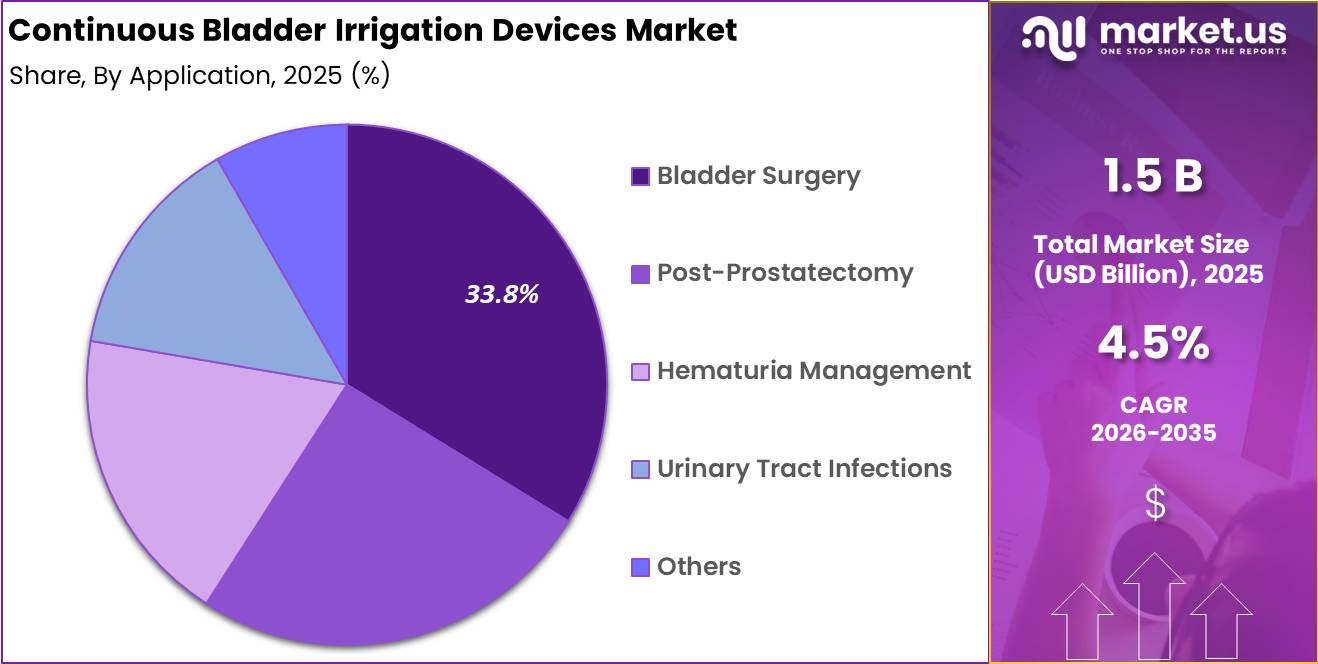
- Application Analysis: The Bladder Surgery segment held the leading market share of 33.8% in 2025
- End User Analysis: Hospitals dominated the market with a 58.6% share in 2025
- Regional Analysis: In 2025, North America led the market, achieving over 41.5% share with a revenue of US$ 0.6 Billion.
Product Type Analysis
The product type segment of the Continuous Bladder Irrigation Devices Market is categorized into CBI Kits, CBI Catheters, CBI Tubing Sets, and Others. Among these, the CBI Kits segment accounted for the largest market share of 44.6% in 2025, owing to the increasing preference for integrated and ready-to-use irrigation solutions in hospitals and surgical centers.
These kits simplify clinical workflows by combining essential components such as catheters, tubing, and collection systems into a single package, thereby reducing procedural preparation time and minimizing the risk of contamination. The growing volume of urological surgeries and post-operative bladder management procedures has further supported segment expansion.
The CBI Catheters segment is also witnessing stable growth due to rising incidences of urinary retention, hematuria, and prostate-related disorders requiring continuous drainage and irrigation. Demand for advanced multi-lumen catheters with improved patient comfort and infection control capabilities is increasing across healthcare facilities.
Meanwhile, CBI Tubing Sets continue to gain traction due to their critical role in ensuring uninterrupted irrigation flow and fluid management. The Others segment, including accessories and connectors, contributes to market growth through ongoing product innovations and increasing adoption of disposable urology consumables.
Material Analysis
Based on material, the Continuous Bladder Irrigation Devices Market is segmented into Silicone, Latex, and Plastic. The Silicone segment dominated the market with a 49.2% share in 2025, primarily due to its superior biocompatibility, flexibility, and lower risk of allergic reactions compared to conventional materials.
Silicone-based irrigation devices are widely preferred in long-term catheterization and post-surgical bladder irrigation procedures because they reduce tissue irritation and improve patient comfort. In addition, the increasing emphasis on infection prevention and patient safety in healthcare settings has accelerated the adoption of silicone devices across hospitals and specialty clinics.
The Latex segment continues to maintain a significant presence in the market owing to its cost-effectiveness and widespread availability. Latex-based devices are commonly utilized in short-term irrigation procedures, particularly in cost-sensitive healthcare environments. However, concerns regarding latex allergies and associated complications are gradually limiting their adoption in developed healthcare systems.
The Plastic segment is expected to witness notable growth during the forecast period due to advancements in medical-grade polymer technologies and the increasing demand for disposable irrigation products. Plastic materials offer durability, lightweight properties, and manufacturing flexibility, making them suitable for tubing systems and accessory components in continuous bladder irrigation procedures.
Application Analysis
The application segment of the Continuous Bladder Irrigation Devices Market includes Bladder Surgery, Post-Prostatectomy, Hematuria Management, Urinary Tract Infections, and Others. The Bladder Surgery segment held the leading market share of 33.8% in 2025, supported by the growing number of bladder tumor resections, cystectomy procedures, and other urological surgeries requiring post-operative irrigation.
Continuous bladder irrigation is widely utilized after surgical interventions to prevent blood clot formation, maintain catheter patency, and reduce complications associated with urinary obstruction. The increasing prevalence of bladder cancer and rising geriatric population are further contributing to segment growth globally.
The Post-Prostatectomy segment is experiencing substantial expansion due to the increasing number of prostate surgeries performed for benign prostatic hyperplasia and prostate cancer management. Continuous irrigation devices are essential in minimizing bleeding and supporting recovery after these procedures.
The Hematuria Management segment also represents a significant share, driven by the rising incidence of urinary bleeding disorders and trauma-related complications. Additionally, the Urinary Tract Infections segment is gaining traction as bladder irrigation is increasingly used in severe infection management and catheter-associated complications. The Others category includes neurological bladder disorders and chronic urinary conditions requiring long-term bladder drainage and irrigation support.
End User Analysis
Based on end users, the Continuous Bladder Irrigation Devices Market is segmented into Hospitals, Ambulatory Surgical Centers, Clinics, and Others. Hospitals dominated the market with a 58.6% share in 2025, primarily due to the high volume of urological surgeries, advanced healthcare infrastructure, and greater availability of specialized postoperative care services.
Hospitals remain the primary settings for bladder irrigation procedures because they provide continuous patient monitoring, infection management, and access to skilled healthcare professionals. The increasing number of inpatient admissions related to prostate disorders, bladder cancer, and urinary complications continues to strengthen segment demand.
Ambulatory Surgical Centers are witnessing increasing adoption of continuous bladder irrigation devices due to the growing preference for minimally invasive procedures and same-day surgical treatments. These facilities offer cost-effective surgical care with shorter patient recovery times, supporting market growth.
The Clinics segment is also expanding steadily, particularly in developing regions where outpatient urology services are becoming more accessible. Clinics increasingly utilize portable and disposable irrigation systems for minor urological procedures and follow-up care. The Others segment includes rehabilitation centers and long-term care facilities where bladder irrigation devices are used for chronic urinary management and post-surgical patient support.
Key Market Segments
By Product Type
- CBI Kits
- CBI Catheters
- CBI Tubing Sets
- Others
By Material
- Silicone
- Latex
- Plastic
By Application
- Post-Prostatectomy
- Bladder Surgery
- Hematuria Management
- Urinary Tract Infections
- Others
By End User
- Hospitals
- Ambulatory Surgical Centers
- Clinics
- Others
Driving Factors
Continuous bladder irrigation (CBI) devices are driven primarily by the high incidence of urological conditions requiring intravesical flushing to prevent clot retention and infection. For example, the World Health Organization reports that lower urinary tract symptoms and hematuria-related hospital admissions are common in aging populations; prevalence of benign prostatic hyperplasia (BPH) a major cause of gross hematuria is ~30% in men aged 60–79 years.
Postoperative bleeding after transurethral resection of the prostate (TURP) occurs in up to 10–15% of cases, necessitating irrigation to maintain patency. CBI devices provide continuous flow rates typically between 50–200 mL/hour, which reduces manual interventions and nursing time. Reduced catheter obstruction lowers the need for re-catheterization; published clinical guidelines (e.g., American Urological Association) recommend irrigation to prevent clot retention after significant hematuria.
Growing surgical volumes WHO estimates global surgery rates rose to ~4,500 procedures per 100,000 population annually also increase use. These epidemiologic and operational factors drive adoption of CBI systems in hospitals, particularly in urology wards and postoperative care units where efficient fluid management and reduced complication rates are priorities.
Trending Factors
A key trend in continuous bladder irrigation (CBI) is integration of automated, closed-loop systems that monitor flow and detect occlusions. Technology enhancements include pressure sensors and flow meters delivering real-time alerts; devices now commonly support irrigation rates from 30 to 300 mL/hour to match clinical needs. Evidence-based protocols from healthcare authorities (for example NHS clinical guidance on urinary retention management) emphasize minimizing infection risk by reducing open-system exposure, pushing adoption of closed, single-use irrigation sets.
Single-use disposable consumables are rising hospital infection-control data indicate single-use reduces cross-contamination risk and cleaning burden, supporting stewardship policies. Remote monitoring and electronic medical record integration allow nursing staff to track irrigation volumes and duration; many facilities aim to reduce manual charting time by 20–40%. Additionally, emphasis on value-based care has increased focus on devices that lower length of stay and re-intervention rates.
Demographic shifts the global population aged 65+ is projected to grow from ~10% to over 16% by 2050 per UN data increase prevalence of urologic conditions, reinforcing demand for advanced, safer CBI solutions across ambulatory and inpatient settings.
Restraining Factors
A principal restraint for continuous bladder irrigation (CBI) devices is infection risk and regulatory constraints associated with urinary catheter use. National healthcare agencies (e.g., CDC guidance on catheter-associated urinary tract infection prevention) highlight that indwelling catheters are a major driver of healthcare-associated infections; catheter-associated urinary tract infections (CAUTI) represent roughly 75–80% of all hospital-acquired UTIs, prompting strict stewardship and reductions in unnecessary catheterization.
Such policies can limit prolonged irrigation use and favor intermittent alternatives when clinically feasible. Cost is another barrier: disposable, sensor-enabled irrigation sets increase per-patient consumable expenses compared with simple saline bags; hospital procurement must balance higher device costs against potential savings from fewer interventions. Reimbursement frameworks can restrict uptake where specific device coding or hospital charges do not cover advanced CBI systems.
Finally, variability in clinical protocols differences in recommended irrigation rates, dwell times, and indications across institutions and countries complicates standardization and broader adoption. These clinical, economic, and regulatory factors collectively restrain rapid expansion of CBI device utilization despite clear clinical indications in selected patient groups.
Opportunity
Opportunities for continuous bladder irrigation (CBI) devices lie in infection-control innovations, remote monitoring, and expansion into ambulatory care. Implementing closed-system, single-use irrigation sets aligns with public health targets to reduce catheter-associated urinary tract infections; CDC data indicate CAUTI reductions of up to 50% are achievable with bundled interventions, creating demand for safer CBI disposables.
Telemetry-enabled devices that transmit flow and pressure data can support earlier discharge by allowing outpatient monitoring; hospitals seeking to shorten length of stay (average postoperative stays vary by procedure but reductions of 0.5–1.5 days can yield measurable cost savings) may adopt remote-capable CBI solutions. There is also scope for irrigation fluids with antimicrobial properties or coatings that reduce biofilm formation; studies show biofilm contributes significantly to catheter malfunction and infection.
Emerging markets with growing surgical volumes present geographic expansion potential: OECD and WHO data show elective urologic surgery rates increasing as access to care improves. Finally, developing clear clinical guidelines and reimbursement pathwaysaligned with governmental health agencies and professional societieswould facilitate wider procurement and standardized use of advanced CBI technologies, potentially reducing re-intervention rates and improving patient outcomes.
Regional Analysis
North America dominated the Continuous Bladder Irrigation Devices Market in 2025, accounting for over 41.5% of the global market share and generating revenue of approximately US$ 0.6 Billion. The regional market growth has been primarily supported by the high prevalence of urological disorders, increasing number of prostate and bladder surgeries, and the presence of advanced healthcare infrastructure across the United States and Canada.
The growing geriatric population, which is more susceptible to urinary tract complications and bladder-related conditions, has further contributed to the rising demand for continuous bladder irrigation devices in hospitals and long-term care facilities. In addition, favorable reimbursement policies, higher healthcare expenditure, and rapid adoption of technologically advanced medical devices have strengthened market expansion in the region.
The strong presence of leading medical device manufacturers and continuous product innovation have also accelerated market penetration. Furthermore, increasing awareness regarding infection prevention and post-operative bladder management has encouraged healthcare providers to adopt efficient irrigation systems.
The market is also benefiting from the rising number of minimally invasive urological procedures, where effective bladder irrigation plays a critical role in patient recovery and complication management. Consequently, North America is expected to maintain its leading position throughout the forecast period.
Key Regions and Countries
North America
- The US
- Canada
Europe
- Germany
- France
- The U.K.
- Italy
- Spain
- Russia & CIS
- Rest of Europe
Asia Pacific
- China
- India
- Japan
- South Korea
- ASEAN
- Australia & New Zealand
- Rest of Asia Pacific
Middle East & Africa
- GCC
- South Africa
- Rest of Middle East & Africa
Latin America
- Brazil
- Mexico
- Rest of Latin America
Key Players Analysis
The competitive landscape of the Continuous Bladder Irrigation Devices Market is characterized by the presence of established medical device manufacturers focusing on product innovation, strategic partnerships, and geographic expansion. Key players such as Becton, Dickinson and Company, B. Braun Melsungen AG, Cardinal Health, Baxter International Inc., and Cook Medical are actively strengthening their product portfolios to address the increasing demand for advanced urological care solutions.
Companies are emphasizing the development of user-friendly, infection-resistant, and automated irrigation systems to improve patient safety and operational efficiency in hospitals and ambulatory surgical centers. In addition, mergers, acquisitions, and collaborations with healthcare providers are supporting market penetration across emerging economies.
Continuous investments in research and development, along with rising adoption of minimally invasive urological procedures, are expected to intensify competition and drive technological advancements within the market during the forecast period.
Market Key Players
- Becton, Dickinson and Company
- Coloplast Group
- Boston Scientific Corporation
- Teleflex Incorporated
- Medline Industries, Inc.
- B. Braun Melsungen AG
- Hollister Incorporated
- Convatec Group PLC
- Cook Medical
- Rochester Medical Corporation
- UROMED
- Richard Wolf GmbH
- Coopersurgical, Inc.
- Urotech Devices
- Porer Medical Corporation
- Others
Recent Developments
- February 2025 – Teleflex Incorporated announced plans to separate its Urology, Acute Care, and OEM businesses into an independent publicly traded company. The move was aimed at strengthening focus on high-growth urology and bladder management segments, including its interventional urology portfolio and bladder care solutions. The separation is expected to be completed by mid-2026.
- May 2025 – Coloplast Group revised its interventional urology outlook following product recovery initiatives in its bladder health business. The company highlighted ongoing efforts to stabilize supply and strengthen its urology care portfolio after earlier product-related disruptions.
- July 2025 – Becton, Dickinson and Company entered into a major transaction with Waters Corporation involving the combination of BD’s Biosciences & Diagnostic Solutions business in a deal valued at approximately USD 17.5 billion. The development reflects BD’s broader strategy to strengthen its medical technology portfolio and focus on core high-growth healthcare segments.
Report Scope
| Report Features | Description |
|---|---|
| Market Value (2025) | US$ 1.5 Billion |
| Forecast Revenue (2035) | US$ 2.3 Billion |
| CAGR (2026-2035) | 4.5% |
| Base Year for Estimation | 2025 |
| Historic Period | 2020-2024 |
| Forecast Period | 2026-2035 |
| Report Coverage | Revenue Forecast, Market Dynamics, Competitive Landscape, Recent Developments |
| Segments Covered | By Product Type (CBI Kits, CBI Catheters, CBI Tubing Sets, Others) By Material (Silicone, Latex, Plastic) By Application (Post-Prostatectomy, Bladder Surgery, Hematuria Management, Urinary Tract Infections, Others) By End User (Hospitals, Ambulatory Surgical Centers, Clinics, Others) |
| Regional Analysis | North America – The US, Canada; Europe – Germany, France, U.K., Italy, Spain, Russia & CIS, Rest of Europe; Asia Pacific – China, India, Japan, South Korea, ASEAN, Australia & New Zealand, Rest of Asia Pacific; Middle East & Africa – GCC, South Africa, Rest of Middle East & Africa; Latin America – Brazil, Mexico, Rest of Latin America |
| Competitive Landscape | Becton, Dickinson and Company, Coloplast Group, Boston Scientific Corporation, Teleflex Incorporated, Medline Industries, Inc., B. Braun Melsungen AG, Hollister Incorporated, Convatec Group PLC, Cook Medical, Rochester Medical Corporation, UROMED, Richard Wolf GmbH, Coopersurgical, Inc., Urotech Devices, Porer Medical Corporation, Others |
| Customization Scope | Customization for segments, region/country-level will be provided. Moreover, additional customization can be done based on the requirements. |
| Purchase Options | We have three licenses to opt for: Single User License, Multi-User License (Up to 5 Users), Corporate Use License (Unlimited User and Printable PDF) |





































