Market Overview
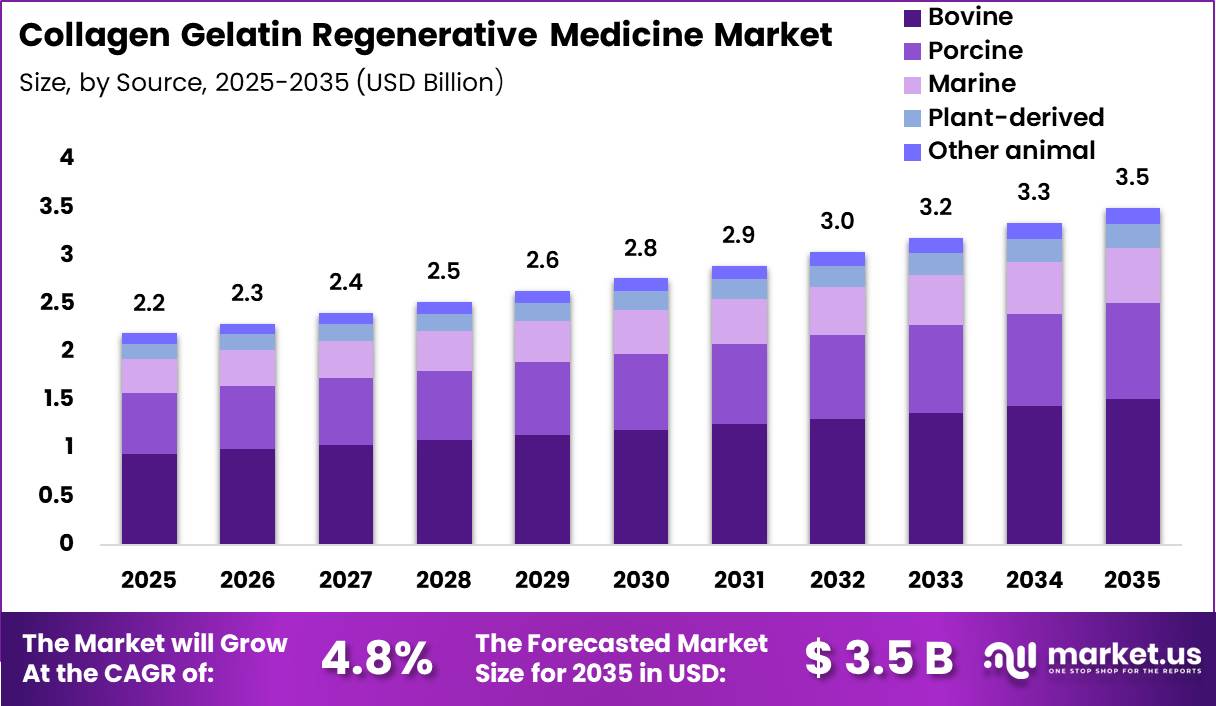
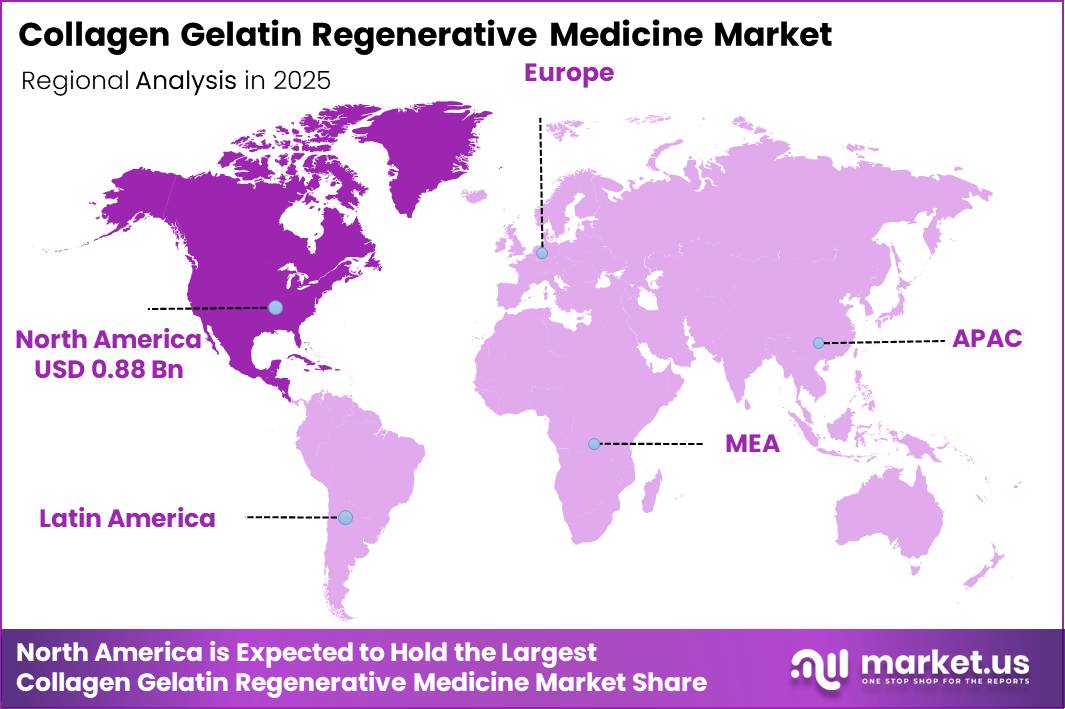
The Global Collagen Gelatin Regenerative Medicine Market size is expected to be worth around US$ 3.5 Billion by 2035 from US$ 2.2 Billion in 2025, growing at a CAGR of 4.8% during the forecast period from 2026 to 2035. In 2025, North America led the market, achieving over 40.1% share with a revenue of US$ 0.88 Billion.
The global Collagen Gelatin Regenerative Medicine Market is gaining strong momentum as healthcare systems increasingly adopt biologically derived materials for tissue repair, wound healing, orthopedic reconstruction, dental regeneration, and advanced tissue engineering.
Collagen, the most abundant structural protein in the human body, and gelatin, a denatured form of collagen, are widely used as scaffolds, hydrogels, wound dressings, and drug delivery matrices because of their excellent biocompatibility, biodegradability, and ability to support cell attachment and tissue growth.
Scientific evidence published by the U.S. National Library of Medicine highlights collagen as one of the most important biomaterials for bone, cartilage, skin, corneal, dental, and nerve tissue engineering applications. Growing investments in regenerative medicine are further supporting demand.
According to the U.S. Food and Drug Administration (FDA), regenerative medicine includes cell therapies, tissue-engineered products, and combination products designed to restore or replace damaged tissues.
The FDA’s Regenerative Medicine Advanced Therapy (RMAT) program accelerates the development of innovative therapies for serious diseases. As of September 30, 2025, the FDA had granted approvals to multiple RMAT-designated products, demonstrating continued regulatory progress in advanced regenerative technologies. The market is also benefiting from increasing cases of chronic wounds, musculoskeletal disorders, sports injuries, and an aging global population requiring tissue repair solutions.
Continuous advances in recombinant collagen, 3D bioprinting, bioengineered scaffolds, and collagen-gelatin composite biomaterials are expanding clinical applications while improving safety and performance. Supported by ongoing biomedical research, favorable regulatory initiatives, and rising adoption of regenerative therapies, collagen- and gelatin-based biomaterials are expected to remain essential building blocks in next-generation regenerative medicine.
Key Takeaways
- Market Size: The Global Collagen Gelatin Regenerative Medicine Market size was US$ 2.2 Billion in 2025. The market is estimated to grow to US$ 3.5 Billion by 2035.
- Market Share: The Compound Annual Growth Rate (CAGR) of the market from 2026 to 2035 will be 4.8%.
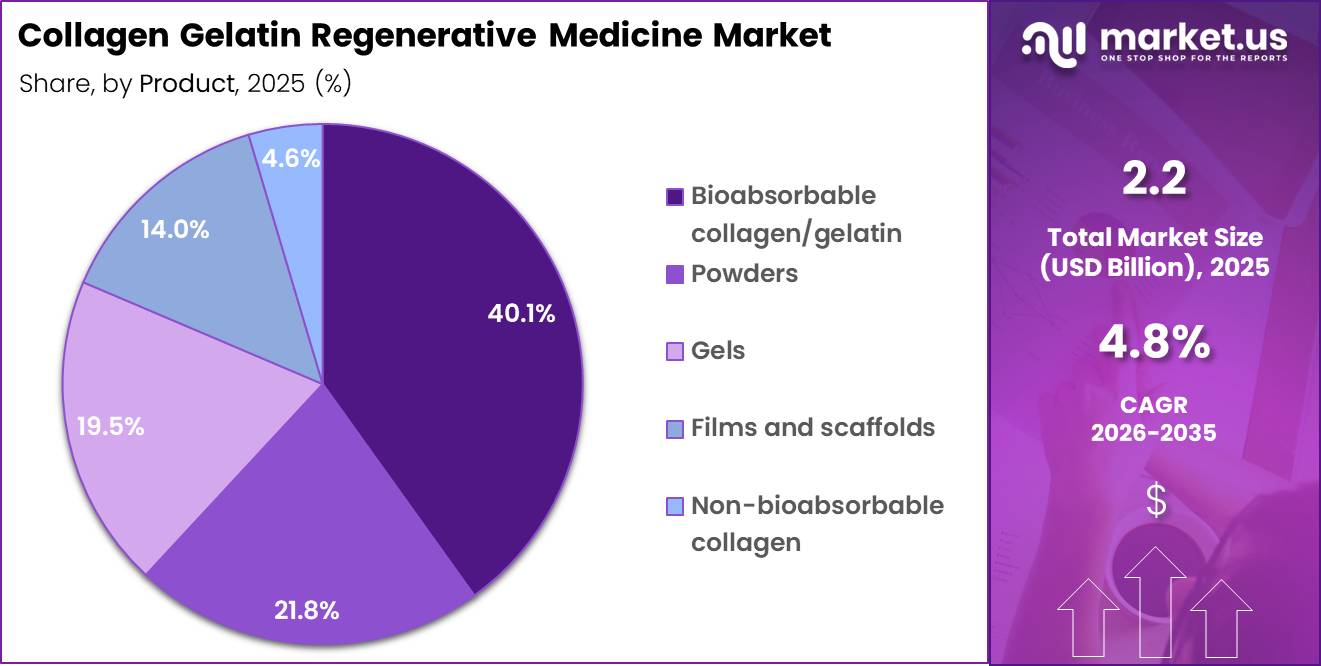
- Product: Bioabsorbable Collagen/Gelatin has the largest market share, accounting for 40.1% of total sales.
- Source: Bovine dominates the segment, accounting for 43.1% of total revenue.
- Service Type: Orthopedic and Musculoskeletal Repair leads the segment, accounting for 34.5% of total revenue.
- Regional: North America is the dominant regional market, accounting for 40.1% of global sales.
Product Analysis
The Bioabsorbable collagen/gelatin segment dominated the Collagen Gelatin Regenerative Medicine Market in 2025, accounting for 40.1% of the total market share. Its leadership is driven by widespread use in regenerative therapies where the material gradually degrades and is naturally replaced by newly formed tissue, eliminating the need for surgical removal.
Bioabsorbable collagen and gelatin are extensively used in wound dressings, hemostatic agents, bone graft substitutes, and tissue engineering scaffolds because they support cell attachment and promote tissue regeneration. Research published by the U.S. National Library of Medicine (NCBI) highlights collagen-based biomaterials as key components in regenerative medicine due to their excellent biocompatibility and biodegradability.
The Powders segment held 21.8% of the market, supported by applications in bone regeneration, pharmaceutical formulations, and injectable biomaterials. Gels accounted for 19.5%, benefiting from increasing demand in chronic wound care, drug delivery, and cosmetic regenerative procedures owing to their moisture-retaining and cell-supportive properties.
Films and scaffolds represented 14.0%, driven by expanding use in tissue engineering and 3D cell culture. Non-bioabsorbable collagen contributed 4.6%, primarily serving specialized reconstructive and long-term implant applications where prolonged structural support is required.
Source Analysis
The Bovine segment led the Collagen Gelatin Regenerative Medicine Market in 2025 with a 43.1% market share. Bovine-derived collagen remains the preferred source due to its high collagen yield, structural similarity to human collagen, broad clinical acceptance, and established manufacturing processes. It is extensively used in orthopedic implants, wound dressings, surgical hemostats, and tissue engineering products.
Regulatory agencies such as the U.S. FDA recognize collagen-based biomaterials as important components in regenerative medicine, while advances in purification technologies continue to improve their safety profile. The Porcine segment captured 28.7% of the market, supported by its excellent mechanical properties and widespread use in dermal matrices, cardiovascular patches, and reconstructive surgery.
Marine-derived collagen accounted for 16.2%, gaining popularity because of lower zoonotic disease concerns, favorable biocompatibility, and increasing use in skin regeneration and cosmetic medicine. Plant-derived biomaterials represented 7.2%, reflecting growing interest in sustainable and animal-free regenerative materials, although commercial availability remains comparatively limited.
The Other animal segment held 4.8%, including collagen from poultry and equine sources used in selected biomedical and research applications where specific biological characteristics are required.
Service Type Analysis
The Orthopedic and musculoskeletal repair segment dominated the Collagen Gelatin Regenerative Medicine Market in 2025, securing 34.5% of the overall market share. Rising cases of fractures, osteoarthritis, sports injuries, and age-related musculoskeletal disorders continue to increase demand for collagen- and gelatin-based biomaterials in bone grafts, cartilage repair, tendon reconstruction, and spinal surgery.
The U.S. National Institutes of Health (NIH) and National Library of Medicine have reported significant progress in collagen scaffold technologies for bone and cartilage regeneration, supporting continued adoption in orthopedic care. Wound healing and tissue engineering formed the second-largest segment, driven by the increasing prevalence of chronic wounds, diabetic foot ulcers, burns, and advanced regenerative dressings that accelerate tissue repair.
Dental and oral surgery also represented a significant share, with collagen membranes widely used in guided bone regeneration, periodontal therapy, and implant procedures. Cardiovascular and surgical reconstruction maintained steady demand through collagen-based vascular patches, surgical sealants, and tissue repair products used during complex procedures.
Aesthetic and cosmetic procedures continued to expand as regenerative dermatology increasingly adopted collagen biomaterials for skin rejuvenation, soft tissue restoration, scar management, and minimally invasive cosmetic treatments.
Key Market Segments
By Product
- Bioabsorbable Collagen/Gelatin
- Powders
- Gels
- Films and Scaffolds
- Non-Bioabsorbable Collagen
By Source
- Bovine
- Porcine
- Marine
- Plant-Derived
- Other Animal
By Service Type
- Orthopedic and Musculoskeletal Repair
- Wound Healing and Tissue Engineering
- Dental and Oral Surgery
- Cardiovascular and Surgical Reconstruction
- Aesthetic and Cosmetic Procedures
Driver
Chronic wound and surgical matrix demand
Chronic wound care remains the most immediate commercial engine because collagen and gelatin matrices improve hemostasis, support granulation, and promote vascular and epithelial regeneration, making them usable across diabetic ulcers, venous ulcers, pressure injuries, burns, and post-surgical defects.
A 2024 biomaterials review specifically notes that gelatin-based wound materials promote hemostasis and vascular and epithelial cell regeneration, while payer medical-necessity guidelines in 2026 continue to cover a broad list of skin and soft-tissue substitutes including Integra, Oasis, PriMatrix, PuraPly, and related matrices for chronic wounds under defined treatment criteria, with limits such as a maximum of 10 applications per wound episode in at least one payer framework.
From a market-mechanics perspective, this expands recurring volume rather than one-time implant revenue: every added chronic wound protocol increases per-patient material consumption, clinic throughput, and reorder rates, which is why this driver contributes the largest near-term uplift to CAGR.
The effect is strongest in North America and Western Europe, where wound centers, hospital outpatient departments, and podiatry networks already procure collagen-based matrices under standardized coding and treatment pathways.
| Driver | (~) % Impact on CAGR Forecast | Geographic Relevance | Impact Timeline |
|---|---|---|---|
| Chronic wound and surgical matrix demand | +2.2% | North America core, EU core, Japan, urban China | Short term (≤ 2 years) |
| Reimbursement-backed skin substitute adoption | +1.6% | U.S. core, Western Europe selective | Short term (≤ 2 years) |
| 3D bioprinting and tissue-engineering bioinks | +1.9% | U.S., EU, Israel-linked innovation hubs, Japan, South Korea | Medium term (2-4 years) |
| Fast-track regenerative regulation and product approvals | +1.4% | U.S., Japan core, EU moderated | Medium term (2-4 years) |
| Ageing-driven orthopaedic and soft-tissue repair need | +1.7% | North America, EU, Japan, South Korea | Medium term (2-4 years) |
| Recombinant and high-purity collagen supply shift | +1.2% | U.S., EU, APAC premium corridors, Middle East halal-sensitive demand | Long term (≥ 4 years) |
Challenge
Raw Material Variability
Collagen and gelatin-based regenerative products continue to face significant batch-to-batch variability because animal-derived raw materials differ in tissue origin, extraction methods, impurity levels, and molecular weight across suppliers and harvest lots. These differences can reduce manufacturing consistency even when market demand remains strong.
In regenerative medicine, where material quality directly affects clinical performance, variations in scaffold porosity, cross-link density, degradation rate, and cell attachment properties make product standardization more challenging than in conventional biomaterials.
Such variability can increase release specification deviations by an estimated 8% to 15%, while batch rejection or rework rates may reach 4% to 9%. In addition, manufacturers often require 30 to 75 days to complete incoming quality qualification when introducing new raw material suppliers.
These challenges are becoming more pronounced as companies reduce reliance on traditional animal-derived collagen and gelatin and transition toward recombinant or engineered alternatives that offer improved consistency and quality control.
The resulting friction drag is modeled at roughly 1.2 % points of attainable CAGR because manufacturers must hold higher safety inventory, duplicate analytical testing, and redesign validation protocols to preserve consistency across wound matrices, hemostats, tissue scaffolds, and implantable formulations, while long run mitigation requires dual sourcing, tighter collagen fingerprinting assays, greater use of recombinant feedstocks, and digital lot genealogy that can connect upstream tissue provenance to downstream clinical performance.
| Challenge | (~) % CAGR Friction Drag | Geographic Relevance | Mitigation Horizon |
|---|---|---|---|
| Raw Material Variability | -1.2% | North America core, EU quality systems, APAC sourcing hubs | Medium term (2-4 years) |
| GMP Scale-Up Bottlenecks | -1.5% | U.S. biomanufacturing clusters, EU advanced therapy hubs, Japan/Korea | Medium term (2-4 years) |
| Regulatory Evidence Burden | -1.0% | U.S. FDA channels, EU notified pathways, UK translational centers | Long term (≥ 4 years) |
| Sterility Validation Complexity | -0.8% | Global export manufacturers, hospital supply chains, EU/U.S. device markets | Medium term (2-4 years) |
| Specialized Talent Shortage | -1.1% | North America core, Western Europe, Singapore, South Korea | Long term (≥ 4 years) |
| Supplier Qualification Fragmentation | -0.9% | APAC logistics corridors, EU import-dependent markets, U.S. multi-site networks | Medium term (2-4 years) |
Restraints
Stringent device and biologics regulation
Stringent regulation around collagen and gelatin regenerative products stems from their positioning at the interface of medical devices, combination products, and advanced therapies, which forces manufacturers into higher-cost, longer-cycle approval pathways such as PMA-equivalent or Class III CE marking under the EU Medical Devices Regulation (MDR) fully applicable since May 2021.
Root causes include historical safety concerns with animal-derived materials and higher expectations for biocompatibility, immunogenicity, and long-term degradation products versus purely synthetic devices, which in turn pushes regulators and notified bodies to require multi-year clinical follow-up and robust post-market surveillance plans for regenerative indications like wound healing, osteochondral repair, and soft-tissue augmentation.
At an operational level, MDR and comparable FDA expectations often extend dossier preparation by 9–18 months versus legacy directives and add 20–40% to pre-market evidence budgets, as firms must finance extended animal studies, histopathology, and prospective outcome registries with 24- to 36-month endpoints, while also complying with tighter clinical evaluation consultation by expert panels for higher-risk tissues.
For smaller and mid-tier players, this leads to tangible CapEx and OpEx compression: regulatory and clinical evidence spending can rise from roughly 8–10% of revenue to 12–15% in the pre-commercial phase, pushing out break-even for niche collagen scaffolds by 2–3 years and forcing portfolio rationalization away from borderline indications where payback periods exceed 7–8 years.
Strategically, the impact is a 1.4 % point drag on the collagen gelatin regenerative medicine CAGR to 2030 as delayed product launches, stalled indication expansions, and increased certification failure risk in the EU and selected Asian markets compress pipeline throughput and advantage larger diversified medtech players that can amortize regulatory overhead across broader device platforms.
| Restraint | (~) % Impact on CAGR Forecast | Geographic Relevance | Impact Timeline |
|---|---|---|---|
| Stringent device and biologics regulation | -1.4% | North America, EU, Japan, South Korea | Medium term (2–4 years) |
| Biomedical collagen sourcing risks | -0.9% | EU, North America, Middle East, selective APAC | Long term (≥ 4 years) |
| High medical-grade collagen cost inflation | -1.1% | North America core, EU, high-income APAC | Short term (≤ 2 years) |
| Reimbursement and HTA barriers | -0.8% | EU, UK, Canada, selective APAC | Medium term (2–4 years) |
| Manufacturing scale-up and QA complexity | -1.0% | North America, EU, China, ASEAN hubs | Long term (≥ 4 years) |
Opportunity
Recombinant collagen shift
Recombinant and other non-animal-derived collagen platforms represent an opportunity rather than a current market driver because most present collagen-gelatin revenues still depend on established bovine or porcine sourcing economics, whereas validated clinical-grade recombinant supply only began entering a more commercially usable phase for partners in 2026, creating a future white space around premium regulatory positioning, pathogen-risk reduction, faith-compliance access, and composition-controlled IP licensing.
Shifting 15% to 20% of regenerative device portfolios to recombinant collagen or gelatin could create meaningful strategic advantages for manufacturers. Companies adopting these materials may achieve a 20% to 35% premium in average selling prices (ASP), reduce scrap caused by batch variability by an estimated 5% to 8%, and improve gross margins by 300 to 500 basis points.
These benefits are particularly valuable in high-performance applications such as implant coatings, soft-tissue matrices, and bioinks, where material consistency and traceability are critical. The transition can also strengthen market access in regions and healthcare systems that increasingly prefer animal-free, traceable biomaterials.
However, widespread adoption is still limited by high conversion costs and lengthy supplier qualification processes, which typically take 18 to 30 months. Many existing products continue to compete primarily on price rather than traceability or advanced material performance.
As a result, the greatest opportunities are likely to come from selective portfolio upgrades, strategic co-development partnerships, and targeted acquisitions that strengthen recombinant production capabilities, rather than from overall market demand growth alone.
| Opportunity | (~) % Potential CAGR Upside | Geographic Relevance | Execution Window |
|---|---|---|---|
| Recombinant collagen shift | +1.8% | EU, North America, Japan core | Medium term |
| Bioink platform expansion | +2.1% | North America core, EU, APAC advanced | Medium term |
| Wound care to office-based bundles | +1.4% | U.S. core, EU selective | Short term |
| China local GMP roll-up | +1.6% | China, ASEAN export hubs | Medium term |
| Adjacent dental-ortho matrices | +1.3% | EU, Japan, South Korea, U.S. | Short term |
| In situ scaffold delivery systems | +2.4% | U.S., EU, Japan | Long term |
Regional Analysis
In 2025, North America led the market, achieving over 40.1% share with a revenue of US$ 0.88 billion. The region’s leadership is supported by a well-established biotechnology industry, advanced healthcare infrastructure, and strong investment in regenerative medicine research.
The United States remains the primary contributor, driven by increasing adoption of collagen-based wound care products, orthopedic biomaterials, dental regeneration solutions, and tissue-engineered implants.
Supportive regulatory initiatives from the U.S. Food and Drug Administration (FDA), including pathways for regenerative medicine products, continue to encourage innovation and commercialization. Additionally, growing numbers of orthopedic procedures, chronic wound cases, and an ageing population are sustaining demand for collagen- and gelatin-based biomaterials.
Europe held the second-largest share, benefiting from extensive biomedical research, favorable reimbursement systems in several countries, and rising demand for advanced wound management and reconstructive surgery. Countries including Germany, France, and the United Kingdom continue to invest in tissue engineering and biomaterial innovation through academic and clinical collaborations.
The Asia-Pacific region is expected to record the fastest growth during the forecast period. Increasing healthcare expenditure, expanding biotechnology capabilities, improving access to advanced surgical procedures, and growing investments in regenerative medicine research across China, Japan, South Korea, and Australia are driving market expansion.
Meanwhile, Latin America and the Middle East & Africa are witnessing gradual growth as healthcare infrastructure improves, awareness of regenerative therapies increases, and access to advanced biomaterials expands, although adoption remains comparatively lower than in developed regions.
Key Regions and Countries
North America
- The US
- Canada
Europe
- Germany
- France
- The U.K.
- Italy
- Spain
- Russia & CIS
- Rest of Europe
Asia Pacific
- China
- India
- Japan
- South Korea
- ASEAN
- Australia & New Zealand
- Rest of Asia Pacific
Middle East & Africa
- GCC
- South Africa
- Rest of Middle East & Africa
Latin America
- Brazil
- Mexico
- Rest of Latin America
Key Player Analysis
Competitive advantage in the global collagen gelatin regenerative medicine market is achieved through broad product portfolio coverage spanning bioabsorbable powder, gel, and film and scaffold formats across multiple animal and plant-derived collagen source platforms, established relationships with orthopedic, dental, and wound care institutional buyers, and continued investment in marine and plant-derived collagen source development addressing growing demand for non-bovine and non-porcine collagen alternatives for religious, ethical, and allergenicity reasons.
Major strategic priorities for leading manufacturers include expansion of bioabsorbable collagen gel and scaffold product lines addressing the dominant orthopedic and musculoskeletal repair service type segment, development of marine and plant-derived collagen formulations targeting clean-label and vegan-compliant regenerative medicine applications, and growing investment in hospital orthopedic, dental surgery, and wound care center institutional procurement relationships.
Strong hospital and surgical center procurement relationships, combined with expanding dental and aesthetic procedure clinic distribution presence, represent a critical competitive differentiator for manufacturers serving the dominant bioabsorbable collagen product segment globally.
Top Key Players
- GELITA AG
- Nitta Gelatin Inc.
- Rousselot
- PB Leiner
- Collagen Solutions plc
- DSM-Firmenich
- Symatese
- Collagen Matrix, Inc.
- Advanced BioMatrix
- Integra LifeSciences Holdings Corporation
- Jellagen Ltd.
- Vornia Biomaterials
- EnColl Corporation
- XIAMEN HYFINE GELATIN CO., LTD.
- Weishardt Group
- Other Key Players
Recent Developments
- In January 2026, GELITA AG launched an expanded bioabsorbable collagen gel portfolio for orthopedic and musculoskeletal repair applications, targeting hospital orthopedic surgery departments and bone graft substitute manufacturers seeking enhanced collagen carrier materials for bone regeneration procedures.
- In February 2026, Rousselot introduced a new marine-derived collagen scaffold product line for wound healing and tissue engineering applications, targeting wound care center and tissue engineering research institutional buyers seeking non-bovine and non-porcine bioabsorbable collagen alternatives with improved biocompatibility profiles.
- In March 2026, Integra LifeSciences Holdings Corporation expanded its collagen-based wound healing and tissue regeneration product portfolio with new bilayer scaffold formulations, targeting hospital wound care and plastic surgery department buyers seeking advanced dermal regeneration template solutions.
- In April 2026, Collagen Matrix, Inc. secured a multi-year supply agreement with a leading Asian dental implant and oral surgery product manufacturer covering its bioabsorbable collagen membrane and powder portfolio, expanding its institutional presence across dental and oral surgery regenerative material procurement channels in the Asia Pacific region.
Report Scope
| Report Features | Description |
|---|---|
| Market Value (2025) | US$ 2.2 Billion |
| Forecast Revenue (2035) | US$ 3.5 Billion |
| CAGR (2026-2035) | 4.8% |
| Base Year for Estimation | 2025 |
| Historic Period | 2020-2024 |
| Forecast Period | 2026-2035 |
| Report Coverage | Revenue Forecast, Market Dynamics, Competitive Landscape, Recent Developments |
| Segments Covered | By Product (Bioabsorbable Collagen/Gelatin, Powders, Gels, Films and Scaffolds, Non-Bioabsorbable Collagen), By Source (Bovine, Porcine, Marine, Plant-Derived, Other Animal), By Service Type (Orthopedic and Musculoskeletal Repair, Wound Healing and Tissue Engineering, Dental and Oral Surgery, Cardiovascular and Surgical Reconstruction, Aesthetic and Cosmetic Procedures) |
| Regional Analysis | North America – The US, Canada; Europe – Germany, France, U.K., Italy, Spain, Russia & CIS, Rest of Europe; Asia Pacific – China, India, Japan, South Korea, ASEAN, Australia & New Zealand, Rest of Asia Pacific; Middle East & Africa – GCC, South Africa, Rest of Middle East & Africa; Latin America – Brazil, Mexico, Rest of Latin America |
| Competitive Landscape | GELITA AG, Nitta Gelatin Inc., Rousselot, PB Leiner, Collagen Solutions plc, DSM-Firmenich, Symatese, Collagen Matrix, Inc., Advanced BioMatrix, Integra LifeSciences Holdings Corporation, Jellagen Ltd., Vornia Biomaterials, EnColl Corporation, XIAMEN HYFINE GELATIN CO., LTD., Weishardt Group, Other Key Players |
| Customization Scope | Customization for segments, region/country-level will be provided. Moreover, additional customization can be done based on the requirements. |
| Purchase Options | We have three licenses to opt for: Single User License, Multi-User License (Up to 5 Users), Corporate Use License (Unlimited User and Printable PDF) |