


Market Overview
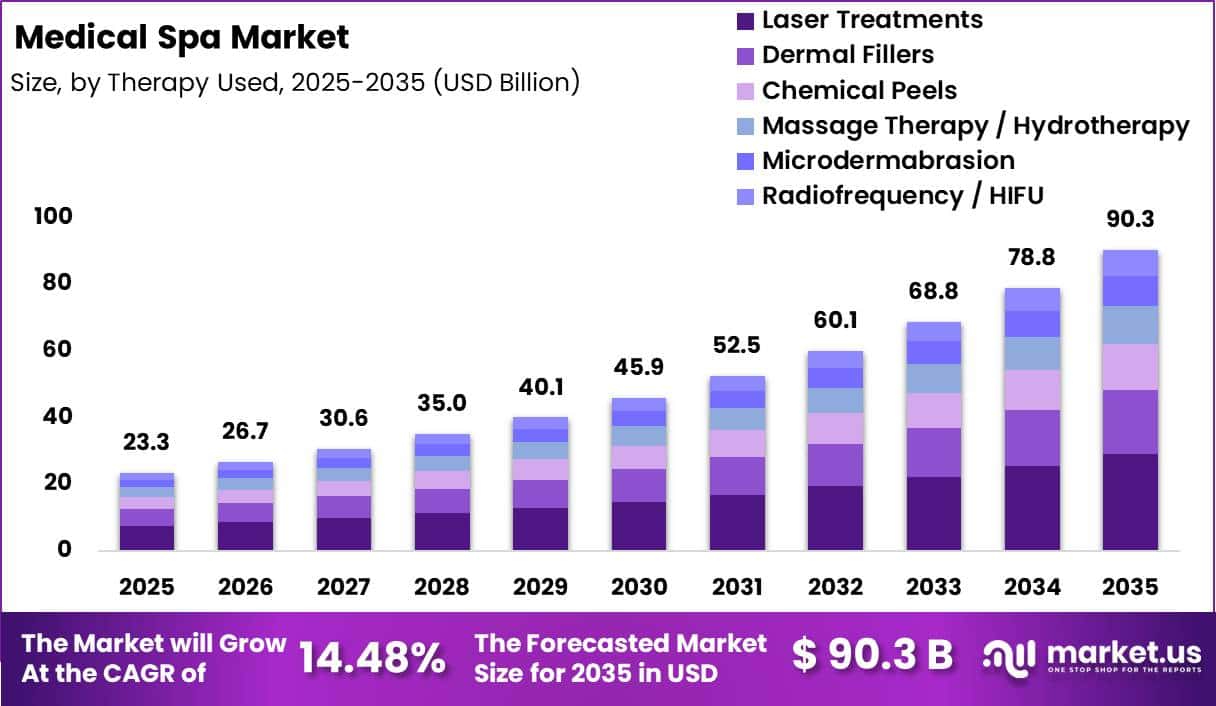
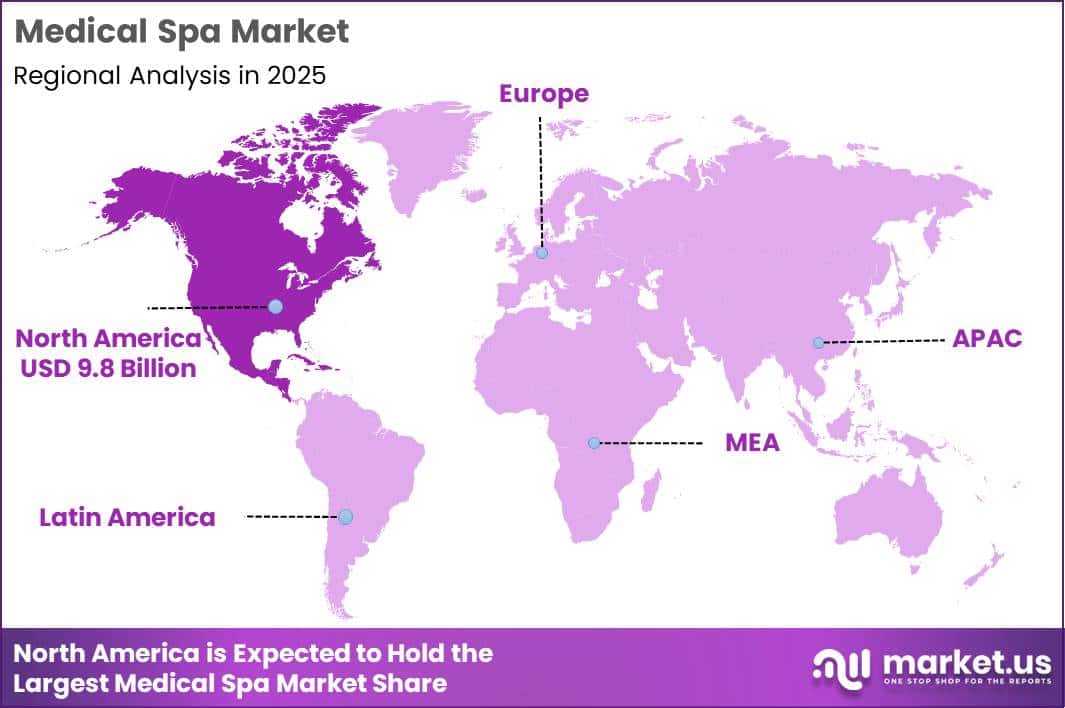
Global Medical Spa Market size is expected to be worth around US$ 90.27 Billion by 2035 from US$ 23.34 Billion in 2025, growing at a CAGR of 14.48% during the forecast period from 2026 to 2035. In 2025, North America led the market, achieving over 42.00% share with a revenue of US$ 9.8 Billion.
Medical spas have become an important part of the modern aesthetic healthcare industry as more consumers seek minimally invasive cosmetic procedures that offer shorter recovery times than traditional surgery.
The growing focus on healthy aging, skin rejuvenation, and preventive aesthetic care is encouraging individuals across different age groups to choose treatments such as botulinum toxin injections, dermal fillers, laser skin resurfacing, body contouring, and chemical peels.
The increasing acceptance of aesthetic procedures among both women and men, combined with rising disposable incomes and greater awareness through digital platforms, continues to expand the customer base worldwide.
According to the International Society of Aesthetic Plastic Surgery (ISAPS), nearly 38 million aesthetic procedures were performed globally in 2024, including approximately 20.5 million non-surgical procedures and 17.4 million surgical procedures, representing a 42.5% increase compared with 2020.
Technological innovation is further strengthening the medical spa industry by improving treatment precision, patient comfort, and clinical outcomes. Advanced laser systems, radiofrequency devices, ultrasound-based skin tightening technologies, and AI-assisted skin analysis tools are allowing providers to offer more personalized treatment plans with minimal downtime.
In the United States, the American Society of Plastic Surgeons (ASPS) reported over 3.0 million neuromodulator injection procedures and more than 1.1 million hyaluronic acid filler procedures in 2024, highlighting sustained demand for minimally invasive aesthetic treatments.
As demand continues to rise, regulatory agencies are emphasizing patient safety and treatment quality. In 2025, the U.S. Food and Drug Administration (FDA) issued warning letters against websites selling unapproved botulinum toxin products, reinforcing the importance of receiving cosmetic injections only from qualified healthcare professionals using FDA-approved products.
Key Takeaways
- Market Size : Medical Spa Market size is expected to be worth around US$ 90.27 Billion by 2035 from US$ 23.34 Billion in 2025.
- Market Share : The market is growing at a CAGR of 14.48% during the forecast period from 2026 to 2035.
- Service Analysis : In 2025, Facial Treatments (Peels, Microdermabrasion) accounted for the largest share of the Medical Spa Market, capturing 29.40% of the global market.
- Therapy Used Analysis : In 2025, Laser Treatments dominated the Medical Spa Market, accounting for 32.20% of the total market share.
- Age Group Analysis : In 2025, Adults (18–60 years) held the largest share of the Medical Spa Market, accounting for 62.70% of total revenue.
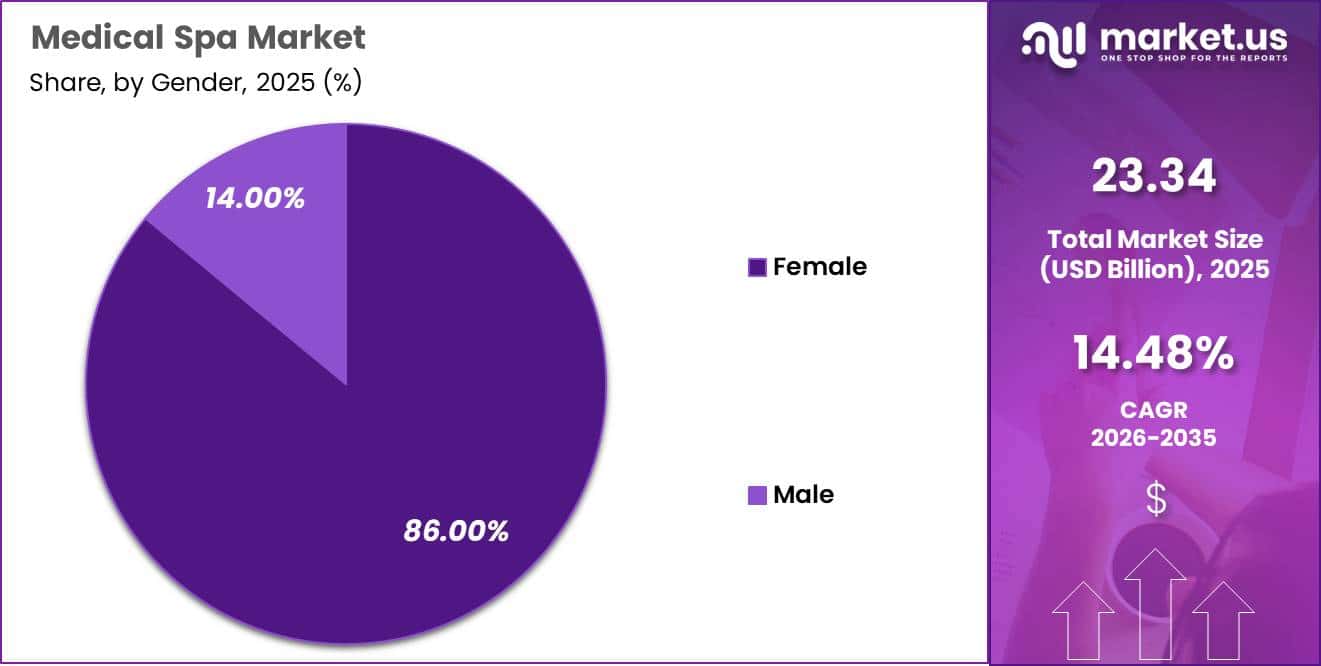
- Gender Analysis : In 2025, Female consumers accounted for the largest share of the Medical Spa Market, representing 86.00% of total revenue.
- Service Provider Analysis : In 2025, Medical Spas / Medspas accounted for the largest share of the Medical Spa Market, capturing 55.10% of global revenue.
- Regional Analysis : In 2025, North America led the market, achieving over 42.00% share with a revenue of US$ 9.8 Billion.
Service Analysis
In 2025, Facial Treatments (Peels, Microdermabrasion) accounted for the largest share of the Medical Spa Market, capturing 29.40% of the global market. The segment leads because consumers increasingly seek non-invasive procedures that improve skin texture, reduce pigmentation, minimize fine lines, and restore a youthful appearance with little recovery time.
Chemical peels and microdermabrasion are widely preferred due to their affordability, quick treatment sessions, and suitability for various skin types. Rising awareness of preventive skincare, growing demand for anti-aging treatments, and social media influence have further increased the popularity of facial treatments. Many medical spas also combine these procedures with customized skincare plans, enhancing customer retention and repeat visits.
Injectables (Botox, Fillers) represent another major segment as demand for wrinkle reduction and facial volume restoration continues to rise among middle-aged consumers. Body Shaping & Contouring is expanding rapidly due to increasing interest in non-surgical fat reduction and body sculpting technologies.
Hair Removal remains a consistent revenue contributor as laser-based procedures become more accessible and effective. Tattoo Removal is witnessing steady demand with advancements in laser technology, while Scar / Acne Revision treatments are gaining popularity among younger consumers seeking long-term skin improvement and enhanced confidence.
Therapy Used Analysis
In 2025, Laser Treatments dominated the Medical Spa Market, accounting for 32.20% of the total market share. The segment maintains its leading position because laser technology offers effective solutions for skin rejuvenation, hair removal, pigmentation correction, vascular lesions, tattoo removal, and acne scar treatment.
Continuous technological advancements have improved treatment precision, safety, and patient comfort while reducing recovery time. Medical spas increasingly invest in advanced laser platforms to provide multiple services using a single device, improving operational efficiency and treatment outcomes. Growing consumer preference for minimally invasive cosmetic procedures has further accelerated demand for laser therapies.
Dermal Fillers continue to experience strong growth as patients seek immediate facial volume enhancement and wrinkle correction with natural-looking results. Chemical Peels remain popular for improving skin texture, pigmentation, and overall complexion through controlled exfoliation.
Microdermabrasion is widely used for routine skin maintenance and mild resurfacing procedures. Radiofrequency / HIFU therapies are gaining attention due to their non-surgical skin tightening and collagen stimulation benefits. Meanwhile, Massage Therapy / Hydrotherapy continues to support wellness-focused medical spa services by promoting relaxation, stress reduction, and holistic patient care alongside aesthetic treatments.
Age Group Analysis
In 2025, Adults (18–60 years) held the largest share of the Medical Spa Market, accounting for 62.70% of total revenue. This age group represents the primary customer base due to greater spending power, increasing awareness of personal appearance, and strong demand for preventive and corrective aesthetic treatments.
Adults frequently seek facial rejuvenation, injectables, laser therapies, body contouring, and skin maintenance procedures to address signs of aging while maintaining a youthful appearance. Busy lifestyles and the preference for minimally invasive procedures with limited downtime further support demand within this segment. The growing influence of social media and virtual interactions has also encouraged more individuals to invest in cosmetic and skincare treatments.
The Geriatric (60+ years) segment continues to grow steadily as older adults increasingly choose non-surgical anti-aging procedures, skin tightening treatments, and facial rejuvenation therapies to improve skin quality and confidence.
Healthcare advancements have also made aesthetic procedures safer for aging populations. Meanwhile, the Adolescents (<18 years) segment represents a smaller portion of the market but is gradually expanding due to increasing demand for acne management, scar revision, and dermatologist-supervised skin treatments, supported by rising awareness of skincare and early intervention.
Gender Analysis
In 2025, Female consumers accounted for the largest share of the Medical Spa Market, representing 86.00% of total revenue. The segment dominates because women continue to be the primary users of cosmetic and aesthetic treatments aimed at maintaining healthy skin, reducing visible signs of aging, and enhancing facial and body appearance.
Popular services among female consumers include injectables, laser treatments, chemical peels, body contouring, skin rejuvenation, and anti-aging therapies. Rising disposable income, increased beauty awareness, social media influence, and growing acceptance of minimally invasive procedures continue to drive demand. Women also tend to participate in regular skincare routines and preventive aesthetic care, contributing to higher treatment frequency and customer loyalty.
The Male segment is expanding at a notable pace as aesthetic treatments become more socially accepted among men. Increasing interest in facial rejuvenation, laser hair removal, body sculpting, acne scar treatment, and skin maintenance is encouraging more male consumers to visit medical spas.
Service providers are also introducing customized treatment packages specifically designed for male skincare needs, further supporting market growth and broadening the customer base across different age groups.
Service Provider Analysis
In 2025, Medical Spas / Medspas accounted for the largest share of the Medical Spa Market, capturing 55.10% of global revenue. The segment leads because dedicated medical spas offer a broad range of minimally invasive cosmetic procedures under the supervision of licensed healthcare professionals while providing a relaxing wellness environment.
Consumers increasingly prefer medspas due to their combination of advanced aesthetic technologies, personalized treatment plans, and shorter recovery times compared with surgical alternatives. Continuous investment in laser systems, injectables, skin rejuvenation devices, and body contouring equipment further strengthens the competitive position of medical spas.
Dermatology Clinics represent another important segment, particularly for medically supervised treatments involving acne, pigmentation disorders, scar management, and advanced skin therapies. Wellness / Luxury Resorts continue to gain popularity by integrating aesthetic procedures with holistic wellness, preventive healthcare, nutrition, and relaxation services, attracting premium consumers and medical tourists.
Meanwhile, Hospital-based Aesthetic Departments maintain a significant presence by offering complex cosmetic procedures, physician expertise, and access to multidisciplinary medical care, making them a preferred option for patients requiring comprehensive aesthetic treatment and enhanced clinical safety.
Market Segmentations
By Service
- Facial Treatments (Peels, Microdermabrasion)
- Body Shaping & Contouring
- Injectables (Botox, Fillers)
- Hair Removal
- Tattoo Removal
- Scar / Acne Revision
By Therapy Used
- Laser Treatments
- Dermal Fillers
- Chemical Peels
- Massage Therapy / Hydrotherapy
- Microdermabrasion
- Radiofrequency / HIFU
By Age Group
- Adults (18–60 years)
- Geriatric (60+ years)
- Adolescents (<18 years)
By Gender
- Female
- Male
By Service Provider
- Medical Spas / Medspas
- Dermatology Clinics
- Wellness / Luxury Resorts
- Hospital-based Aesthetic Departments
Drivers
GLP-1 weight-loss aftercare and body contouring demand
A major near-term demand accelerator is the rise of post-weight-loss aesthetic correction, especially skin tightening, scar revision, and body contouring linked to widespread weight-loss medication adoption and rapid body-composition change.
Plastic surgery trend coverage for 2026 explicitly identifies “GLP-1 makeovers” as a continuing theme and ties them to increased interest in tummy tucks, arm and thigh lifts, breast lifts, and circumferential body lifts, with spillover into non-surgical tightening and contouring services typically offered in med spa settings.
This is commercially important because it converts a pharmaceutical weight-loss wave into adjacent appearance-restoration demand, broadening the funnel beyond legacy anti-ageing consumers. The epidemiology backdrop makes the demand pool economically meaningful.
CDC reports that in 2024, all U.S. states and territories had adult obesity prevalence of at least 25%, with the Midwest at 35.9% and the South at 34.5%, while NIDDK reports 38.4 million people in the U.S. had diabetes in 2021 and 97.6 million adults had prediabetes.
Those figures do not mean all affected adults become med spa users, but they show the scale of weight-management and metabolic-health populations now intersecting with aesthetic aftercare. That supports an estimated +1.9 %-point CAGR contribution, strongest in the U.S., Canada, UK, EU5, and Australia, where prescription uptake, self-pay wellness behavior, and outpatient aesthetic adoption are comparatively advanced.
| Driver | (~) % Impact on CAGR Forecast | Geographic Relevance | Impact Timeline |
|---|---|---|---|
| Minimally invasive aesthetic migration | +2.4% | North America core, EU urban centers, APAC tier-1 cities, GCC premium clusters | Short term |
| GLP-1 weight-loss aftercare and body contouring demand | +1.9% | U.S. core, Canada, UK, EU5, Australia spill-over | Short term |
| Aging, prejuvenation, and maintenance spending shift | +1.6% | North America, Japan, South Korea, Western Europe, affluent China metros | Medium term |
| Chronic disease and metabolic-health appearance effects | +1.3% | U.S. South and Midwest, Latin America metros, GCC, selected APAC corridors | Medium term |
| FDA-led compliance formalization and trusted sourcing | +1.1% | U.S. core, then Canada and EU compliance-sensitive operators | Short term |
| Higher-acuity injectables and regenerative service mix | +1.5% | U.S. premium chains, South Korea, Japan, EU specialty clinics | Medium term |
Challenges
Talent and Intellectual Property Concentration Limits SSB Market Expansion
The SSB innovation landscape is characterized by a tight cluster of patents and specialized know‑how held by a relatively small number of corporates, start‑ups, and research institutes in the US, Japan, Korea, Germany, and China, creating a structural shortage of deep technical talent and accessible IP that contributes an estimated 0.8 % point drag on market CAGR through at least the early 2030s.
Process engineers with hands‑on experience in high‑volume ceramic or sulfide electrolyte processing, solid‑state interface engineering, and SSB cell design number only in the low thousands globally, while many OEMs and new entrants need dozens to hundreds of such specialists to staff each new pilot or giga‑line, leading to wage inflation and multi‑year hiring and training cycles.
The IP landscape is likewise dense and fragmented, with key patents covering electrolyte compositions, protective coatings, and cell architectures expiring only gradually over the 2030s, forcing most latecomers into licensing negotiations, cross‑licensing bundles, or high‑risk workarounds that slow technology selection and raise legal uncertainty.
This concentration means that a handful of technology leaders can effectively set the pace of industrialization, creating a scenario where demand is broad but the number of teams capable of delivering fully engineered, production‑ready SSB solutions at scale remains limited for several years.
Strategically, governments and large OEMs are funding consortia and public‑private R&D programs to broaden the talent base often targeting the training of hundreds of specialists per year and to support more open pre‑competitive research.
However, such initiatives take 4–6 years to translate into seasoned engineers able to manage full‑scale industrial programs. Until the skills and IP base becomes significantly more distributed, the speed at which additional high‑quality capacity can be brought online will remain constrained, keeping global growth below potential despite strong downstream appetite.
| Challenge | (~) % CAGR Friction Drag | Geographic Relevance | Mitigation Horizon |
|---|---|---|---|
| Interface stability bottlenecks | -1.8% | North America, EU, East Asia | Long term (≥ 4 years) |
| Scale-up yield volatility | -1.5% | East Asia giga-clusters, NA pilot hubs | Long term (≥ 4 years) |
| Critical materials tightness | -1.2% | Global EV hubs, APAC mining belts | Medium term (2–4 years) |
| Standards and safety validation lag | -0.9% | EU regulatory hubs, US, Japan | Medium term (2–4 years) |
| Talent and IP concentration | -0.8% | US, Japan, Korea, Germany, China | Long term (≥ 4 years) |
| Capital intensity vs EV timing | -1.0% | Global OEM supply chains | Medium term (2–4 years) |
Restraints
Limited Insurance Coverage and Out-of-Pocket Costs Restrain Market Growth
The medical spa market remains fundamentally cash-pay, as Medicare and most commercial insurers generally exclude purely cosmetic procedures from coverage, except for limited reconstructive or medically necessary indications.
Consequently, 70–90% of front-of-house revenue in aesthetic-focused clinics is dependent on discretionary consumer spending and overall economic confidence. The limited role of reimbursement reduces operators’ ability to offset demand fluctuations through insurance payments.
As household financial pressure increases, medical spas are increasingly required to manage affordability through promotional offers, memberships, package discounts, and patient financing. These measures can reduce realized prices by approximately 10–15% compared with standard list prices, particularly during periods of economic uncertainty.
With high-value injectables and energy-based treatments typically costing USD 500–2,000 per session, changes in inflation, interest rates, and household disposable income can significantly influence treatment decisions.
A 5–10% increase in borrowing costs or local inflation may lead consumers to postpone elective procedures and multi-session packages, contributing to an estimated 5–8% decline in treatment frequency over 12–18 months, particularly among households earning below USD 75,000 annually.
Over the medium to long term, this reliance on out-of-pocket spending may limit adoption among older and lower-income consumers, constrain expansion into price-sensitive markets, and encourage clinics to prioritize high-margin aesthetic services. These structural constraints could reduce market CAGR by approximately 0.8 percentage points.
| Restraint | (~) % Impact on CAGR Forecast | Geographic Relevance | Impact Timeline |
|---|---|---|---|
| Tightening clinical & licensure enforcement | -1.0% | North America core, EU, selective APAC | Short–Medium term |
| Coverage gaps & out-of-pocket sensitivity | -0.8% | North America, EU, LatAm urban | Medium–Long term |
| Device & injectable regulatory friction | -0.7% | North America, EU, GCC, East Asia | Short–Medium term |
| Compliance risk in digital marketing | -0.5% | North America, EU, GCC | Short term |
| Skilled labor & supervision shortages | -0.5% | North America, EU, APAC metros | Medium term |
| Input cost inflation & capex drag | -0.4% | Global, more acute in EU, LatAm | Short–Medium term |
Opportunity
Hybrid Tele-Aesthetics Unlock New Medical Spa Revenue Opportunities
Integrated metabolic and longevity programs are emerging as a significant growth opportunity for the medical spa industry, extending offerings beyond traditional aesthetic procedures. These programs can target the expanding population using GLP-1 agonists, cardiometabolic therapies, nutritional interventions, and structured lifestyle programs, which are currently managed largely through fragmented endocrinology, primary care, and weight-management channels.
By 2030, global spending on obesity and diabetes management is expected to reach several hundred billion dollars. Capturing even 1–2% of this spending through physician-supervised medical spa programs could create an incremental USD 4–6 billion addressable opportunity, in addition to the sector’s estimated USD 30 billion-plus 2026 baseline. Services could combine body contouring, skin tightening, nutrition counseling, metabolic monitoring, and ongoing patient support.
This opportunity remains largely underdeveloped because most medical spas continue to operate through episodic, procedure-based models with limited chronic-care integration and outcome tracking. In contrast, multi-month programs can generate 20–30% higher lifetime value per client and potentially improve contribution margins by 5–10 percentage points through recurring subscriptions and standardized protocols.
Between 2026 and 2030, improved regulatory clarity, greater collaboration with endocrinologists, HIPAA-compliant data systems, and outcome-based care models could enable medical spas to participate more actively in metabolic health. This evolution could contribute approximately 2.2 percentage points to sector CAGR, particularly across North America, Europe, and affluent APAC markets.
| Opportunity | (~) % Potential CAGR Upside | Geographic Relevance | Execution Window |
|---|---|---|---|
| Metabolic & obesity programs integration | +3.0% | North America, EU, high-BMI LATAM | Medium term (2–4 years) |
| Chronic skin & NCD-linked derm wellness | +2.2% | North America, EU, APAC urban | Medium term (2–4 years) |
| Hybrid tele-aesthetics & remote care | +1.8% | North America core, EU, APAC developed | Short term (≤ 2 years) |
| Evidence-based men’s health & longevity suites | +1.5% | North America, EU, GCC, East Asia | Medium term (2–4 years) |
| Integrated medical tourism spa hubs | +2.8% | APAC emerging, GCC, LATAM coastal | Long term (≥ 4 years) |
| Regulated data-driven outcome contracting | +1.3% | North America, EU | Long term (≥ 4 years) |
Regional Analysis
In 2025, North America held the largest share of the medical spa market, accounting for over 42.00% of global revenue. The region’s leadership is supported by high consumer awareness of aesthetic wellness, widespread availability of board-certified dermatologists and plastic surgeons, and rapid adoption of minimally invasive cosmetic procedures.
The United States remains the primary contributor, supported by advanced healthcare infrastructure, favorable consumer spending on elective aesthetic treatments, and continuous innovation in laser devices, injectables, and skin rejuvenation technologies.
According to the American Society of Plastic Surgeons (ASPS), minimally invasive procedures accounted for 28.2 million procedures, representing 91.5% of all reported plastic surgery procedures in 2024, reflecting the strong preference for non-surgical treatments that are commonly offered by medical spas.
Europe represents another significant regional market, driven by increasing demand for anti-aging treatments, supportive regulatory standards, and growing acceptance of physician-led aesthetic procedures across Germany, France, Italy, and the United Kingdom.
Asia-Pacific is expected to witness the fastest growth during the forecast period due to rising disposable incomes, expanding medical tourism, rapid urbanization, and increasing beauty consciousness. Countries such as South Korea, China, Japan, and India continue to invest in advanced aesthetic technologies and specialized cosmetic clinics.
Latin America, particularly Brazil and Mexico, maintains strong demand owing to a well-established cosmetic surgery culture, while the Middle East & Africa is gradually expanding as luxury wellness centers and premium aesthetic clinics become more accessible. These regional trends continue to support the long-term expansion of the global medical spa market.
Key Regions and Countries
North America
- The US
- Canada
Europe
- Germany
- France
- The U.K.
- Italy
- Spain
- Russia & CIS
- Rest of Europe
Asia Pacific
- China
- India
- Japan
- South Korea
- ASEAN
- Australia & New Zealand
- Rest of Asia Pacific
Middle East & Africa
- GCC
- South Africa
- Rest of Middle East & Africa
Latin America
- Brazil
- Mexico
- Rest of Latin America
Key Player Analysis
The Medical Spa Market is highly competitive, with leading companies focusing on expanding treatment portfolios, improving patient experience, and adopting advanced aesthetic technologies. Allergan Aesthetics (AbbVie) remains a major industry participant through its injectable aesthetics portfolio, physician training programs, and continuous product innovation in facial aesthetics and skin quality treatments.
Clinique La Prairie and SHA Wellness Clinic differentiate themselves by combining preventive healthcare, longevity medicine, and luxury wellness services with medical aesthetics. Lanserhof Group and Chiva-Som International Health Resorts strengthen their market presence by integrating evidence-based wellness, regenerative therapies, and personalized health programs into premium medical spa offerings.
Companies such as VIO Med Spa, American Laser Skincare (ALS), and Cocoona Centre of Aesthetic Transformation are expanding their regional footprints by offering minimally invasive cosmetic procedures, laser treatments, body contouring, and skin rejuvenation services that meet growing consumer demand.
These providers continue to invest in modern aesthetic devices, digital patient engagement, and customized treatment plans to improve clinical outcomes and customer satisfaction. Strategic partnerships with technology providers, practitioner training, and service expansion remain common growth strategies.
As demand for non-surgical cosmetic procedures increases worldwide, key players are expected to strengthen their competitive positions through innovation, geographic expansion, and high-quality patient care.
Top Key Players
- Allergan Aesthetics (AbbVie)
- SHA Wellness Clinic
- Clinique La Prairie
- VIO Med Spa
- Lanserhof Group
- Cocoona Centre of Aesthetic Transformation
- Chiva-Som International Health Resorts
- American Laser Skincare (ALS)
- Ideal Image Development Corp.
- Young Medical Spa
- SkinSpirit Skincare Clinic & Spa
- Laser Away (MedAesthetics)
Recent Developments
- In April 2026, SkinSpirit expanded its strategic partnership with Nordstrom by opening another in-store medical aesthetics clinic, extending its premium aesthetic services to additional retail locations in the United States.
- In April 2026, Allergan Aesthetics (AbbVie) opened its third Allergan Medical Institute (AMI) training center in Austin, Texas, expanding physician education and hands-on clinical training for injectable and aesthetic procedures across the U.S.
- In March 2026, LaserAway expanded its treatment portfolio by launching Salmon DNA Facial, XTherma, and Wellness Injections across its clinics, enhancing regenerative aesthetic and wellness services for medical spa patients.
- In October 2025, Clinique La Prairie launched its CLP Holistic Health Longevity Supplements in the United States through an exclusive partnership with Bergdorf Goodman, expanding its premium longevity and wellness portfolio into the U.S. retail market.
Report Scope
| Report Features | Description |
|---|---|
| Market Value (2025) | US$ 23.34 Billion |
| Forecast Revenue (2035) | US$ 90.27 Billion |
| CAGR (2026-2035) | 14.48% |
| Base Year for Estimation | 2025 |
| Historic Period | 2020-2024 |
| Forecast Period | 2026-2035 |
| Report Coverage | Revenue Forecast, Market Dynamics, Competitive Landscape, Recent Developments |
| Segments Covered | By Service (Facial Treatments (Peels, Microdermabrasion), Body Shaping & Contouring, Injectables (Botox, Fillers), Hair Removal, Tattoo Removal, Scar / Acne Revision), By Therapy Used (Laser Treatments, Dermal Fillers, Chemical Peels, Massage Therapy / Hydrotherapy, Microdermabrasion, Radiofrequency / HIFU), By Age Group (Adults (18–60 years), Geriatric (60+ years), Adolescents (<18 years)), By Gender (Female, Male), By Service Provider (Medical Spas / Medspas, Dermatology Clinics, Wellness / Luxury Resorts, Hospital-based Aesthetic Departments) |
| Regional Analysis | North America – The US, Canada; Europe – Germany, France, U.K., Italy, Spain, Russia & CIS, Rest of Europe; Asia Pacific – China, India, Japan, South Korea, ASEAN, Australia & New Zealand, Rest of Asia Pacific; Middle East & Africa – GCC, South Africa, Rest of Middle East & Africa; Latin America – Brazil, Mexico, Rest of Latin America |
| Competitive Landscape | Allergan Aesthetics (AbbVie), SHA Wellness Clinic, Clinique La Prairie, VIO Med Spa, Lanserhof Group, Cocoona Centre of Aesthetic Transformation, Chiva-Som International Health Resorts, American Laser Skincare (ALS), Ideal Image Development Corp., Young Medical Spa, SkinSpirit Skincare Clinic & Spa, Laser Away (MedAesthetics) |
| Customization Scope | Customization for segments, region/country-level will be provided. Moreover, additional customization can be done based on the requirements. |
| Purchase Options | We have three licenses to opt for: Single User License, Multi-User License (Up to 5 Users), Corporate Use License (Unlimited User and Printable PDF) |





































