


Market Overview
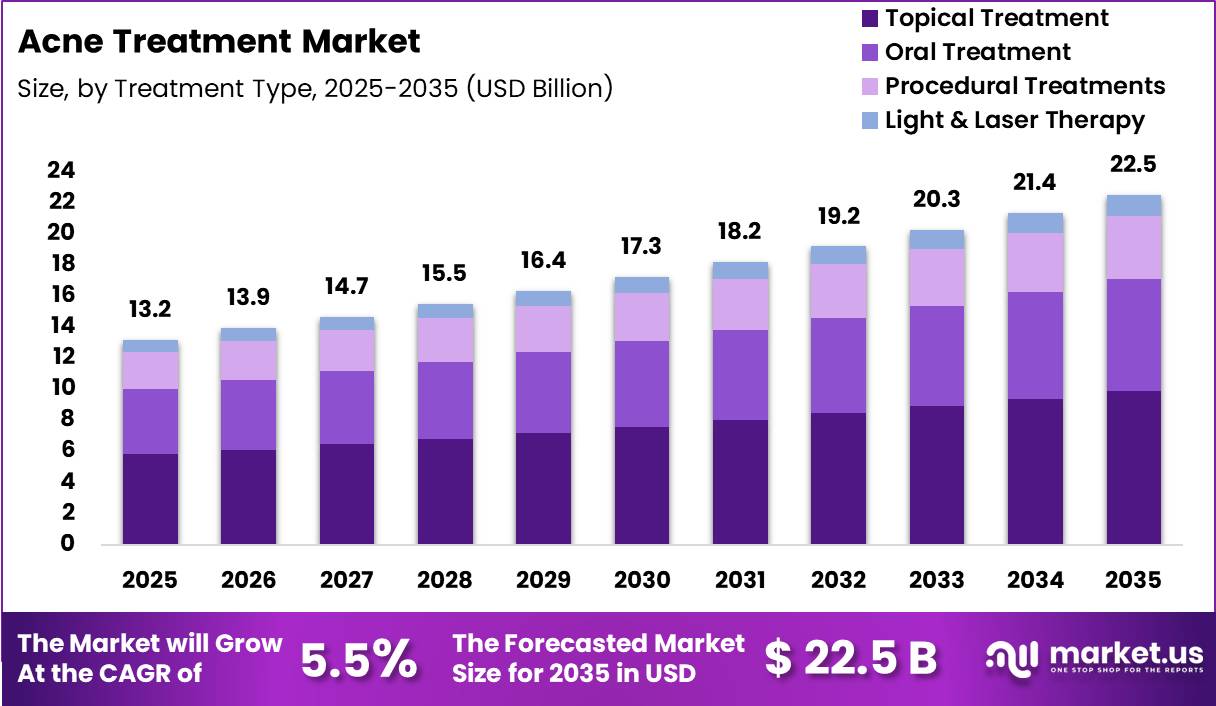
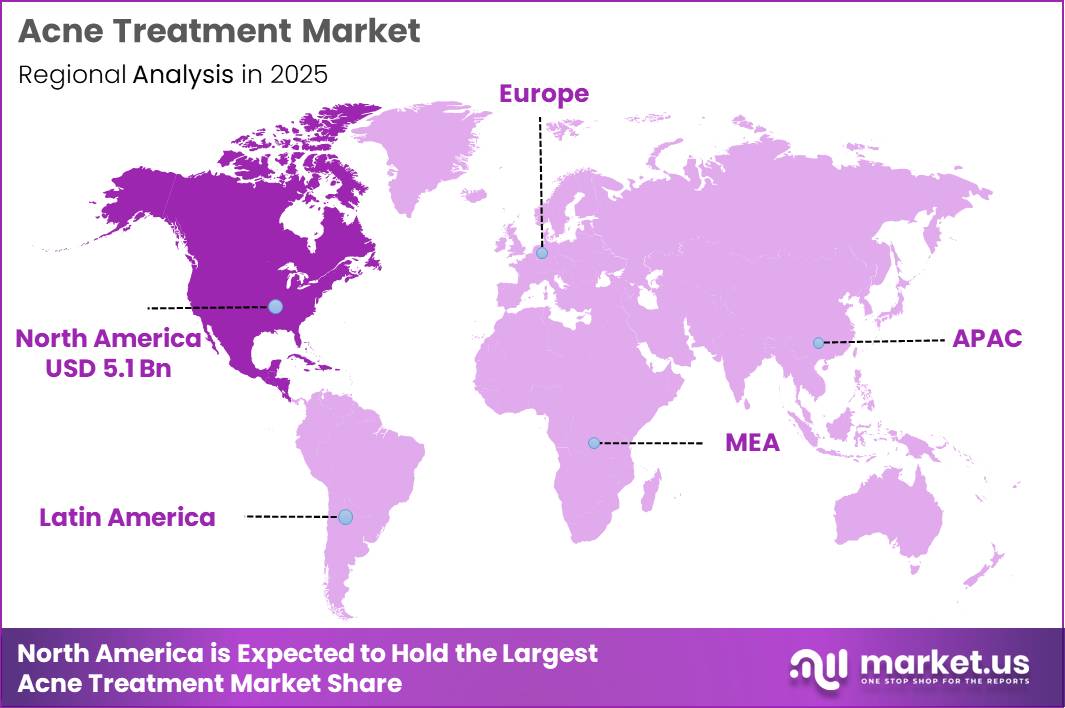
Global Acne Treatment Market size is expected to be worth around US$ 22.55 Billion by 2035 from US$ 13.20 Billion in 2025, growing at a CAGR of 5.5% during the forecast period from 2026 to 2035. In 2025, North America led the market, achieving over 39.00% share with a revenue of US$ 5.1 Billion.
Acne is one of the most common chronic inflammatory skin conditions worldwide, caused by hair follicles becoming clogged with excess oil (sebum), dead skin cells and bacteria, leading to pimples, blackheads, whiteheads and painful cysts.
It most frequently affects the face, chest, shoulders and back, areas with many oil glands, and can result in scarring and emotional distress if untreated.Globally, acne is estimated to affect about 9.4 % of the world’s population, making it one of the most prevalent dermatologic diseases across all ages.
Epidemiological data show that up to 85 % of adolescents and young adults experience acne at some point, and it remains common into adulthood. In the United States alone, acne affects up to 50 million people annually and is the most diagnosed skin condition.
Treatment depends on severity and goals to reduce new lesions and prevent scarring. Common evidence-based options include topical therapies (e.g., benzoyl peroxide, salicylic acid, retinoids), oral antibiotics for bacterial control, and oral retinoids like isotretinoin for severe cases.
Dermatologists may also recommend hormonal therapies for some adults. Severe or scarring acne may require laser, light, or chemical peel procedures.Early and medically guided treatment improves outcomes and reduces long-term physical and psychological impacts of acne, emphasizing public awareness and access to qualified health care providers.
Key Takeaways
- The global Acne Treatment Market was valued at US$ 13.20 Billion in 2025.
- The global Acne Treatment Market is projected to grow at a CAGR of 5.5% and is estimated to reach US$ 22.55 Billion by 2035.
- By Treatment Type,Topical Treatment dominated the market, accounting for 44.00% of the total market share in 2025.
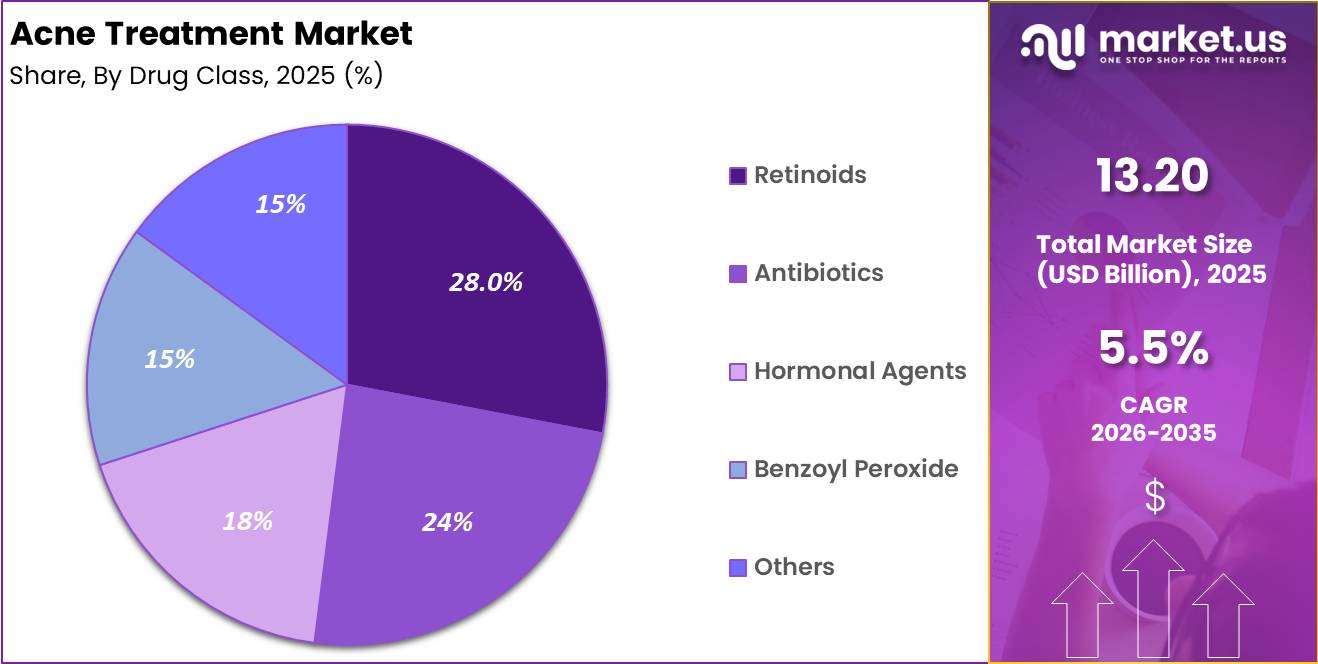
- By Drug Class,Retinoids dominated the market, constituting 28.00% of the total market share.
- By Acne Type, Inflammatory Acne dominated the market,constituting 48.00% of the total market share.
- By Route of Administration, Topical dominated the market,constituting 52.00% of total market share.
- By Distribution Channel, Retail Pharmacies dominated the market, constituting 46.00% of the total market share
- Among End User, Dermatology Clinics dominated the market, constituting 41.00% of the total market share
- In 2025, North America led the market, achieving over 39.00% share with a revenue of US$ 5.1 Billion.
Treatment Type Analysis
The acne treatment market is segmented by treatment type into topical treatments, oral treatments, procedural treatments, and light & laser therapy. Topical treatments dominated the market with a 44.00% share in 2025, reflecting their position as the first-line therapy for mild to moderate acne.
These products, including creams, gels, and lotions, are widely preferred due to ease of use, lower systemic side effects, and strong availability through over-the-counter and prescription channels. Continuous product innovation, such as combination formulations and improved drug delivery systems, further supports this segment’s leadership.
Oral treatments accounted for 32.00% of the market, driven by rising prevalence of moderate to severe acne cases requiring systemic intervention. Oral antibiotics and isotretinoin remain essential for managing inflammatory and nodulocystic acne, particularly among adolescent and adult populations.
Procedural treatments represented 18.00% market share, supported by growing adoption of chemical peels, comedone extraction, and microneedling in dermatology clinics, especially for acne scarring and resistant cases. Meanwhile, light and laser therapy, holding 6.00% share, is gaining gradual traction as a non-invasive adjunct therapy, particularly in urban and aesthetic-focused markets.
Drug Class Analysis
Based on drug class, the acne treatment market is segmented into retinoids, antibiotics, hormonal agents, benzoyl peroxide, and others. Retinoids led the market with a 28.00% share in 2025, owing to their proven efficacy in normalizing follicular keratinization, reducing comedone formation, and preventing new lesions. Their central role in both monotherapy and combination regimens makes them a cornerstone of acne management across severity levels.
Antibiotics accounted for 24.00% of the market, supported by their effectiveness in controlling Cutibacterium acnes–related inflammation. However, increasing concerns around antimicrobial resistance are gradually shifting clinical practice toward limited-duration use and combination therapies.
Hormonal agents captured 18.00% share, driven by rising diagnosis of hormonally driven acne in adult women and growing acceptance of oral contraceptives and anti-androgens. Benzoyl peroxide represented 15.00%, benefiting from its strong antibacterial action without resistance risk. The others segment, also at 15.00%, includes salicylic acid and newer therapeutic agents, reflecting continued diversification of treatment options.
Acne Type Segmentation Analysis
By acne type, the market is segmented into inflammatory acne and non-inflammatory acne. Inflammatory acne dominated with a 48.00% market share in 2025, highlighting the high global burden of papules, pustules, nodules, and cysts that often require medical intervention. This segment benefits from higher treatment intensity, longer therapy duration, and greater reliance on prescription medications, all of which drive higher market value contribution.
Inflammatory acne is frequently associated with pain, scarring risk, and psychosocial distress, prompting patients to seek early dermatological care. As a result, combination therapies involving retinoids, antibiotics, and oral agents are commonly prescribed, supporting strong demand across multiple treatment classes.
In contrast, non-inflammatory acne, primarily characterized by comedones, is often managed with topical OTC products, contributing comparatively lower revenue despite high prevalence. Growing awareness of acne-related quality-of-life impacts and rising adult acne cases continue to reinforce the dominance of the inflammatory acne segment within the overall market.
Route of Administration Segmentation Analysis
The acne treatment market is segmented by route of administration into topical, oral, and others. Topical administration dominated the market with a 52.00% share in 2025, reflecting its widespread use as the preferred initial treatment approach. Topical therapies offer targeted drug delivery, reduced systemic exposure, and suitability for long-term maintenance, making them highly favored by both clinicians and patients.
The dominance of this segment is further supported by strong OTC availability and continuous innovation in formulations that improve skin tolerability and adherence. Oral administration represents a significant portion of the market, driven by moderate to severe acne cases requiring systemic therapy.
These treatments are typically prescribed under medical supervision due to potential side effects, which limits their broader adoption. Other routes, including injectable or device-assisted delivery, remain niche but are gaining visibility in advanced dermatological practices. Overall, the safety profile, convenience, and cost-effectiveness of topical administration continue to underpin its leading market position.
Distribution Channel Segmentation Analysis
By distribution channel, the market is segmented into retail pharmacies, hospital pharmacies, online pharmacies, and others. Retail pharmacies dominated the market with a 46.00% share in 2025, owing to their extensive geographic reach, immediate product availability, and strong consumer trust. Both prescription and OTC acne treatments are widely dispensed through this channel, making it the primary access point for patients.
Retail pharmacies benefit from pharmacist recommendations, brand visibility, and convenient walk-in purchasing, particularly for mild to moderate acne management. Hospital pharmacies hold a notable share, driven by prescription-based dispensing for severe cases managed in clinical settings.
Online pharmacies are emerging rapidly, supported by digital health adoption, home delivery convenience, and competitive pricing, especially among younger consumers. However, regulatory constraints and prescription requirements limit their share in certain regions.
Overall, retail pharmacies remain the cornerstone of acne treatment distribution due to accessibility and integrated patient support.
End User Analysis
The acne treatment market is segmented by end user into dermatology clinics, hospitals, and others. Dermatology clinics led the market with a 41.00% share in 2025, reflecting their central role in diagnosis, treatment customization, and long-term acne management. Patients with moderate to severe or treatment-resistant acne increasingly prefer specialist care, driving sustained demand through this segment.
Dermatology clinics offer access to prescription medications, procedural treatments, and advanced therapies, enabling comprehensive management under expert supervision. Hospitals contribute a substantial share, particularly for severe cases requiring systemic therapy monitoring.
Other end users, including homecare and aesthetic centers, are gaining traction due to rising self-care awareness and cosmetic-driven demand. However, the specialized expertise, personalized treatment protocols, and procedural capabilities of dermatology clinics continue to position them as the dominant end-user segment in the global acne treatment market.
Market Segmentations
By Treatment Type
- Topical Treatment
- Oral Treatment
- Procedural Treatments
- Light & Laser Therapy
By Drug Class
- Retinoids
- Antibiotics
- Hormonal Agents
- Benzoyl Peroxide
- Others
By Acne Type
- Inflammatory Acne
- Comedonal Acne
- Cystic Acne
- Hormonal Acne
By Route of Administration
- Topical
- Oral
- Injectable
By Distribution Channel
- Retail Pharmacies
- Online Pharmacies
- Hospital Pharmacies
By End User
- Dermatology Clinics
- Hospitals
- Homecare Settings
- Beauty & Aesthetic Centers
Drivers
Rising global acne burden and treatment duration shift
Acne remains the most common skin condition in the U.S., affecting nearly 50 million Americans annually, while AAD states that 85% of adolescents are affected and adult persistence remains common, especially in women. Globally, age standardized prevalence among adolescents and young adults increased from 8,563.4 per 100,000 in 1990 to 9,790.5 per 100,000 in 2021, and prevalent cases rose 39.2% to 184.3 million over the same period.
This matters commercially because the demand pool is no longer limited to short cycle teenage use: the market gains more recurrent users, more maintenance therapy, and a broader mix of inflammatory, hormonal, and post inflammatory sequelae requiring multi product regimens.
India alone recorded 30.7 million prevalent cases among adolescents and young adults in 2021, while Western Europe showed some of the highest standardized burden levels, supporting stronger volume growth in Asia and stronger value growth in developed dermatology markets.The net effect is a larger treated population, longer therapy duration, and higher annual revenue per patient, which justifies the roughly plus 1.4 percentage point uplift to baseline CAGR.
| Driver | (~) % Impact on CAGR Forecast | Geographic Relevance | Impact Timeline |
|---|---|---|---|
| Rising adolescent and adult acne burden, especially female persistence | +1.4% | North America core, Western Europe, India, China, Middle East | Medium term (2-4 years) |
| Guideline-led shift to combination topicals and earlier dermatology intervention | +1.1% | U.S. core, EU, Japan, South Korea, urban APAC | Short term (≤ 2 years) |
| Isotretinoin access easing through iPLEDGE simplification | +0.8% | U.S. core, Canada spill-over | Short term (≤ 2 years) |
| Expansion of hormonal and novel non-antibiotic options | +0.9% | U.S., EU5, Australia, high-income APAC | Medium term (2-4 years) |
| Teledermatology and e-pharmacy improving diagnosis-to-fill conversion | +1.0% | North America, India, Southeast Asia, GCC, Latin America urban | Short term (≤ 2 years) |
| Antibiotic stewardship accelerating premiumization and regimen intensity | +0.7% | U.S., EU, UK, developed APAC | Medium term (2-4 years) |
Challenges
Dermatology access bottlenecks and delayed specialist driven acne care
Acne demand continues to expand with the global adolescent and young adult burden rising to 184.3 million prevalent cases in 2021 and age standardized prevalence reaching 9,790.5 per 100,000, yet treatment conversion remains constrained by specialist access bottlenecks rather than by lack of need.
In practice, average dermatology wait times around 34.5 days in the U.S., multi month waits reported in Canada, and persistent workforce deficits in markets such as Australia create a 4 to 8 week delay between flare escalation and therapy optimization, which pushes a meaningful share of patients into low persistence OTC cycling, primary care antibiotic overuse, or delayed isotretinoin escalation.
This friction lowers market growth efficiency because every 30 day extension in specialist access typically stretches time to regimen stabilization by roughly one prescription cycle, suppresses procedure and premium topical uptake, and raises dropout risk among mild to moderate patients who improve partially then disengage.
Corporate mitigation therefore requires channel redesign rather than pure volume expansion, including hybrid teledermatology triage, wider prescriber education in primary care, standardized digital follow up for 8 to 12 week acne review intervals, and broader use of combination protocols that can be initiated before specialist review, but these operating adjustments need 2 to 4 years to normalize because workforce training, reimbursement alignment, and referral path restructuring move more slowly than consumer demand.
| Challenge | (~) % CAGR Friction Drag | Geographic Relevance | Mitigation Horizon |
|---|---|---|---|
| Dermatology access bottlenecks | -1.2% | North America core, Western Europe urban clusters, India metros, ANZ | Medium term (2-4 years) |
| Antibiotic stewardship pressure | -0.9% | North America core, EU regulatory hubs, East Asia specialty care, India | Medium term (2-4 years) |
| Isotretinoin compliance complexity | -0.7% | U.S. REMS channel, Canada, EU teratogenic-risk markets | Short term (≤ 2 years) |
| Formulation stability scrutiny | -0.8% | U.S. retail chains, EU quality markets, APAC e-commerce corridors | Medium term (2-4 years) |
| Rx-to-OTC adherence leakage | -1.1% | North America mass retail, Latin America urban retail, Southeast Asia | Long term (≥ 4 years) |
| Specialty manufacturing concentration | -0.6% | U.S. generics base, EU API routes, India-China supply corridors | Medium term (2-4 years) |
Restraints
Antibiotic stewardship limits high-volume acne prescriptions
Long-standing acne treatment norms are being tightened by 2024 to 2026 dermatology guidance that explicitly pushes clinicians to limit systemic antibiotic duration and pair antibiotics with benzoyl peroxide to reduce resistance risk, which directly suppresses repeat prescribing, elongates decision cycles, and shifts demand away from historically high-volume oral and topical antibiotic regimens.
In commercial terms, this creates a measurable bottleneck because many moderate to severe patients now require earlier escalation to combination therapy, hormonal options, or isotretinoin, raising per-patient treatment complexity while shrinking the addressable volume of low cost antibiotic monotherapy
A practical forecast haircut of roughly 0.8% points is justified in markets where guideline compliance is strongest and physician audits are more active, especially the US, UK, Germany, and tier 1 APAC metros. The value impact is not just unit loss but mix erosion: shorter antibiotic courses reduce refill frequency, compress pharmacy gross to net economics, and push brands into lower margin combination products.
| Restraint | (~) % Impact on CAGR Forecast | Geographic Relevance | Impact Timeline |
|---|---|---|---|
| Antibiotic stewardship | -0.8% | North America core, EU5, urban APAC | Medium term |
| OTC safety recalls | -0.6% | North America, EU online retail, selected APAC | Short term |
| Isotretinoin access friction | -0.9% | North America, UK/EU, advanced APAC | Medium term |
| API import dependence | -0.7% | India export chain, US/EU import markets | Short term |
| Hormonal therapy barriers | -0.5% | North America, EU, female-led segments APAC | Medium term |
| Adherence-related drop-off | -0.8% | All major markets, strongest in mass retail channels | Long term |
Opportunity
Emerging market dermatology retailization and access models
This is not a current driver because baseline demand in emerging economies is already lifted by population scale and acne incidence, yet formal monetization remains weak due to low dermatologist density, fragmented retail channels, and inconsistent treatment sequencing.
The upside lies in retailizing simplified acne care through pharmacy protocols, trained non dermatologist prescribers where permitted, standardized starter kits, and mobile first follow up that unlocks paying demand currently sitting outside specialist channels.
The white space is especially large because India alone had 30.7 million prevalent adolescent and young adult acne cases in 2021, and regional prevalence is elevated in Latin America, East Asia, and Africa, but these populations are not fully captured by premium branded regimens.
Companies that localize price ladders, push sachet or small pack formats, and combine OTC cleansing with algorithmic prescription escalation could expand treated patient penetration by 8 to 12 percentage points in target cities, improve channel throughput by 20 to 30 percent, and produce upside above baseline through volume formalization rather than mere category awareness.
| Opportunity | (~) % Potential CAGR Upside | Geographic Relevance | Execution Window |
|---|---|---|---|
| Adult female hormonal platforms | +1.9% | North America, EU, urban APAC | Short term (≤ 2 years) |
| OTC-to-Rx digital conversion | +1.6% | North America core, EU, India, SEA | Short term (≤ 2 years) |
| Scar-care adjacencies | +2.2% | North America, GCC, India, Brazil, East Asia | Medium term (2-4 years) |
| Microbiome therapeutics | +1.4% | EU, U.S., Japan, South Korea | Medium term (2-4 years) |
| Emerging-market derm retailization | +2.0% | India, Indonesia, Philippines, Africa, LatAm | Medium term (2-4 years) |
| Portfolio roll-up and combo assets | +1.7% | U.S., EU, Japan, selective APAC | Long term (≥ 4 years) |
Regional Analysis
In 2025, North America led the market, achieving over 39.00% share with a revenue of US$ 5.148 Billion.
The acne treatment market demonstrates varied regional dynamics shaped by healthcare infrastructure, demographic trends, and consumer awareness. North America represents a highly mature market, supported by strong dermatology penetration, widespread use of prescription therapies, and high adoption of premium topical, oral, and procedural treatments. Robust insurance coverage and early uptake of novel drug formulations further support sustained demand.
Europe follows closely, driven by increasing prevalence of acne among adolescents and adults, rising preference for evidence-based dermatological care, and strong regulatory support for advanced topical and combination therapies. Western European countries show high utilization of prescription retinoids and antibiotics, while Eastern Europe is witnessing gradual expansion through improved access to dermatology services.
The Asia-Pacific region is the fastest-growing, propelled by a large youth population, rising disposable incomes, urbanization, and growing awareness of skin health. Expansion of medical aesthetics clinics and e-commerce availability of over-the-counter products are accelerating market penetration across key economies.
In Latin America, market growth is supported by increasing cosmetic consciousness and improving access to dermatological treatments, though affordability constraints persist. Meanwhile, Middle East and Africa shows steady growth, driven by expanding private healthcare sectors, rising demand for aesthetic treatments, and gradual improvements in dermatology care access across urban centers.
Key Regions and Countries
North America
- The US
- Canada
Europe
- Germany
- France
- The U.K.
- Italy
- Spain
- Russia & CIS
- Rest of Europe
Asia Pacific
- China
- India
- Japan
- South Korea
- ASEAN
- Australia & New Zealand
- Rest of Asia Pacific
Middle East & Africa
- GCC
- South Africa
- Rest of Middle East & Africa
Latin America
- Brazil
- Mexico
- Rest of Latin America
Key Player Analysis
The acne treatment market is moderately consolidated, characterized by the presence of several multinational pharmaceutical companies alongside strong specialty dermatology and generics-focused players. The market reflects a mature therapeutic landscape with incremental innovation, where competition is shaped by lifecycle management, formulation improvements, and differentiated delivery systems rather than disruptive new drug classes.
Innovation efforts increasingly emphasize disease-modifying approaches, precision dermatology, biomarker-led patient stratification, and genetics-informed therapy optimization, particularly for moderate-to-severe and treatment-resistant acne.
Market Structure and Player Tiers
The first tier comprises large, research-intensive multinational companies such as Johnson & Johnson, Pfizer Inc., Bayer AG, AbbVie Inc., and Eli Lilly and Company. These players leverage deep R&D capabilities, global clinical trial infrastructure, and cross-therapy platform integration to sustain competitive positioning.
The second tier includes dermatology-focused and specialty pharmaceutical companies such as Galderma S.A., Almirall S.A., Leo Pharma A/S, Pierre Fabre Group, and Bausch Health Companies Inc., which compete through dermatology specialization, formulation science, and targeted pipeline expansion.
The third tier consists of generics and value-driven players including Sun Pharmaceutical Industries Ltd., Teva Pharmaceutical Industries Ltd., Viatris Inc., Cipla Ltd., and Reckitt Benckiser Group plc, focusing on cost efficiency, broad distribution, and accessibility across emerging and developed markets.
Competitive Strategy Dynamics
Across tiers, competition is shaped by R&D intensity, strategic partnerships, pipeline differentiation, and integrated clinical development workflows, with gradual movement toward ecosystem-based competition combining therapeutics, diagnostics, and personalized treatment pathways.
Top Key Players
- Galderma S.A.
- Johnson & Johnson
- Bausch Health Companies Inc.
- Sun Pharmaceutical Industries Ltd.
- Pfizer Inc.
- Bayer AG
- Almirall S.A.
- Viatris Inc.
- Teva Pharmaceutical Industries Ltd.
- AbbVie Inc.
- Eli Lilly and Company
- Cipla Ltd.
- Leo Pharma A/S
- Pierre Fabre Group
- Reckitt Benckiser Group plc
Recent Developments
- In July 2025, Waldencast acquired Novaestiq Corp. and U.S. rights to the Saypha injectable HA gel line under the Obagi Medical brand, expanding the dermatology portfolio ahead of the Obagi sale.
- In December 2025, L’Oréal agreed to increase its stake in Galderma to 20%, acquiring an additional equity share and strengthening its strategic position in clinical dermatology and skincare markets.
- In June 2026, Waldencast announced the sale of Obagi Medical to Bridgepoint for up to US $460 million, expanding private-equity ownership of a dermatological skincare brand with acne and professional product lines.
Report Scope
| Report Features | Description |
|---|---|
| Market Value (2025) | US$ 13.20 Billion |
| Forecast Revenue (2035) | US$ 22.55 Billion |
| CAGR (2026-2035) | 5.5% |
| Base Year for Estimation | 2025 |
| Historic Period | 2020-2024 |
| Forecast Period | 2026-2035 |
| Report Coverage | Revenue Forecast, Market Dynamics, Competitive Landscape, Recent Developments |
| Segments Covered | By Treatment Type(Topical Treatment,Oral Treatment,Procedural Treatments,Light & Laser Therapy) By Drug Class (Retinoids,Antibiotics,Hormonal,Agents,Benzoyl Peroxide,Others) By Acne Type (Inflammatory Acne,Comedonal Acne,Cystic Acne,Hormonal Acne) By Route of Administration (Topical,Oral,Injectable) By Distribution Channel (Retail Pharmacies,Online Pharmacies,Hospital Pharmacies) By End User ( Dermatology Clinics,Hospitals,Homecare Settings,Beauty & Aesthetic Centers) |
| Regional Analysis | North America – The US, Canada; Europe – Germany, France, U.K., Italy, Spain, Russia & CIS, Rest of Europe; Asia Pacific – China, India, Japan, South Korea, ASEAN, Australia & New Zealand, Rest of Asia Pacific; Middle East & Africa – GCC, South Africa, Rest of Middle East & Africa; Latin America – Brazil, Mexico, Rest of Latin America |
| Competitive Landscape | Galderma S.A. ,Johnson & Johnson ,Bausch Health Companies Inc. ,Sun Pharmaceutical Industries Ltd. ,Pfizer Inc. ,Bayer AG ,Almirall S.A. ,Viatris Inc. ,Teva Pharmaceutical Industries Ltd. ,AbbVie Inc. ,Eli Lilly and Company ,Cipla Ltd. ,Leo Pharma A/S ,Pierre Fabre Group ,Reckitt Benckiser Group plc. |
| Customization Scope | Customization for segments, region/country-level will be provided. Moreover, additional customization can be done based on the requirements. |
| Purchase Options | We have three licenses to opt for: Single User License, Multi-User License (Up to 5 Users), Corporate Use License (Unlimited User and Printable PDF) |





































