


Overview
The Global Medical Telepresence Robots Market Size is expected to be worth around US$ 439.3 Billion by 2034, from US$ 80.6 Billion in 2024, growing at a CAGR of 18.3% during the forecast period from 2025 to 2034.
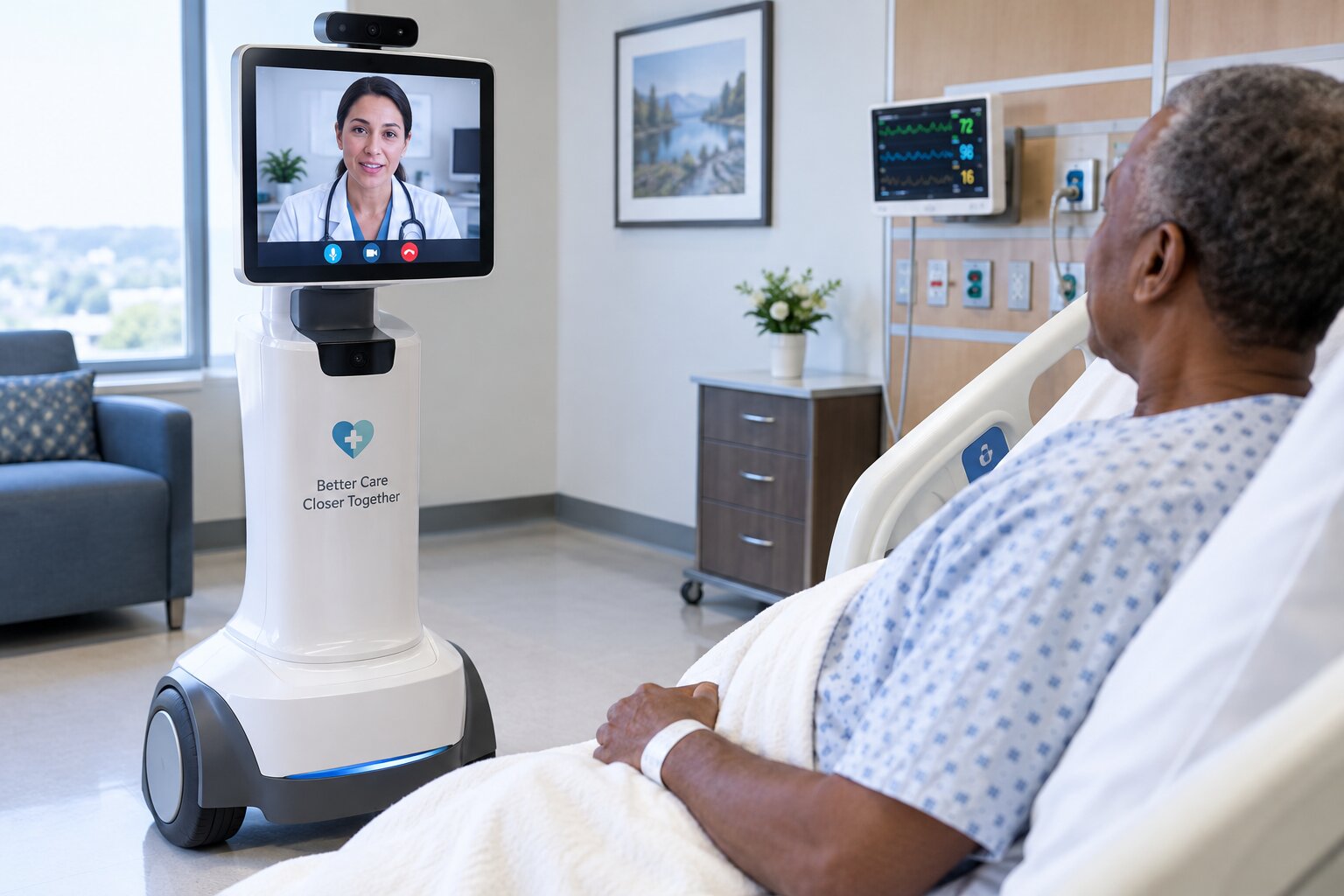
The growing integration of robotics, telehealth, and remote clinical communication is creating new opportunities for medical telepresence robots across hospitals, intensive care units, rehabilitation centers, nursing facilities, and home-based care. These systems allow healthcare professionals to interact with patients remotely through mobile robotic platforms equipped with cameras, microphones, displays, and navigation capabilities.
The World Health Organization (WHO) has highlighted digital health as an important pathway for improving access to healthcare and strengthening health-service delivery. In August 2025, WHO also partnered with the Society of Robotic Surgery to advance virtual care and telesurgery, emphasizing remote mentoring, locally adaptable technologies, and equitable access to healthcare expertise.
Clinical research demonstrates several practical applications for telepresence robotics. A 2026 study evaluating remote telementoring for robot-assisted prostate surgery reported successful implementation across 23 procedures, with no mentor intervention required at the surgical console. Research published in PubMed has also shown that mobile telepresence robots can support remote medical consultations and improve interaction compared with conventional communication methods.
Telepresence robots are increasingly being explored for remote specialist consultations, virtual ward rounds, intensive-care support, rehabilitation, patient observation, and healthcare delivery in geographically underserved locations. However, cybersecurity, connectivity, interoperability, patient acceptance, clinical safety, training, and regulatory requirements remain important considerations. WHO stresses that successful digital-health adoption requires appropriate infrastructure, workforce capabilities, governance, and ethical safeguards.

Key Takeaways
- The Medical Telepresence Robots Market generated US$ 80.60 Billion in revenue and is projected to reach US$ 439.64 Billion, registering a CAGR of 18.3% during the forecast period.
- Based on Type, the Mobile segment dominated the Medical Telepresence Robots Market, accounting for the highest revenue contribution with a 55.2% market share.
- Based on Component, the Camera segment emerged as the leading contributor to the Medical Telepresence Robots Market, securing a 23.8% market share.
- Based on End-Use, Hospitals & Assisted Living Facilities held the dominant position in the Medical Telepresence Robots Market, representing a 69.3% market share.
- Region-wise, North America remained the leading contributor to the Medical Telepresence Robots Market, capturing the highest regional market share of 46.40%.
Statistical Information
- 71.4% of U.S. physicians used telehealth in 2024, compared with just 25.1% in 2018, showing that virtual care has become substantially more established in clinical practice.
- 63.2% of U.S. physicians reported using videoconferencing with patients in 2024, providing a strong digital-care foundation for advanced telepresence technologies.
- 20.3% of U.S. physicians used remote patient monitoring in 2024, highlighting growing adoption of connected technologies for managing patients beyond traditional clinical settings.
- 79.7% of physicians in hospital-owned practices used telehealth in 2024, while 73.5% used videoconferencing with patients, making hospitals a particularly important environment for telepresence solutions.
- Medicare payments for remote patient monitoring exceeded US$ 500 million in 2024, demonstrating substantial healthcare spending on technology-enabled remote monitoring services.
- U.S. employment of home health and personal care aides is projected to grow 17% from 2024 to 2034, with approximately 765,800 job openings annually, strengthening the case for technologies that can support home-based and long-term care.
- In a British Columbia study, 51 participants across four long-term-care homes evaluated telepresence robots, with findings indicating benefits for maintaining family connections, resident autonomy, and caregiver support.
- 19.5% of Canada’s population was aged 65 or older in 2025, representing 8.1 million people; the senior population increased 3.4% in one year, supporting demand for remote-care and aging-in-place technologies.
- Statistics Canada projects Canada’s 65+ population share to reach between 22.6% and 32.5% by 2075, depending on the demographic scenario, indicating a substantial long-term opportunity for elderly-care technologies.
- Canada’s 85+ population is expected to increase rapidly, particularly from 2031 to 2050, as large baby-boomer cohorts enter an age group with increasing healthcare and health-service needs.
Market Segmentation Analysis
Type Analysis
In 2024, the Mobile segment dominated the Medical Telepresence Robots Market, accounting for 55.2% market share. Mobile telepresence robots are increasingly adopted because of their advanced capabilities, including autonomous navigation, obstacle avoidance, adjustable height, head movement, and virtual monitoring.
These features support efficient teleconsultations, remote patient interactions, and smoother healthcare workflows. Their ability to operate with limited physical intervention makes them valuable in hospitals and other healthcare environments requiring flexible remote communication.
The Stationary segment is also expected to expand at a strong CAGR during the forecast period, supported by its comparatively lower cost and ease of operation. Stationary systems provide controlled remote observation and communication through integrated screens, making them suitable for healthcare facilities seeking cost-effective telepresence solutions.
Component Analysis
In 2024, the Camera segment led the Medical Telepresence Robots Market with a 23.8% market share. Cameras are essential for enabling high-quality visual communication between healthcare professionals and patients during remote consultations and monitoring. Advanced camera systems with high-definition imaging, zoom, pan, and tilt capabilities improve visibility and support more effective remote examinations. These technologies allow clinicians to observe patients clearly and communicate in real time, strengthening telehealth delivery.
Meanwhile, the Sensors and Control Systems segment is anticipated to register the fastest CAGR during the forecast period. Rising investments in artificial intelligence and Internet of Things technologies are encouraging the development of smarter robotic systems. Funding initiatives supporting healthcare AI and robotics validation are also contributing to technological advancement and adoption.
End-Use Analysis
In 2024, Hospitals & Assisted Living Facilities represented the largest end-use segment in the Medical Telepresence Robots Market, accounting for a 69.3% market share. The strong position of this segment is supported by increasing healthcare infrastructure and the adoption of robotic technologies for teleconsultation, remote monitoring, and virtual patient interaction.
Telepresence robots can help healthcare professionals communicate with patients remotely while supporting medication management, routine check-ups, and social engagement in assisted living environments. They can also help facilities address staffing constraints and improve access to timely medical support.
Meanwhile, the Home Use segment is projected to record the fastest CAGR during the forecast period. Growing demand for convenient remote healthcare, along with increasing chronic disease management and elderly care needs, is encouraging adoption in residential settings.
Regional Analysis
In 2024, North America accounted for 46.40% of the global Medical Telepresence Robots Market, supported by advanced healthcare infrastructure, established telemedicine networks, and growing adoption of remote-care technologies. Evidence from PubMed shows that remote-presence robots have been deployed across North American intensive-care units, demonstrating their ability to support remote physician rounds and patient care.
The U.S. remains a major contributor, benefiting from increasing use of remote healthcare technologies and established applications of telepresence robotics. Research has also demonstrated positive patient and family perceptions of robotic telepresence in critical-care settings, with 92% of surveyed respondents supporting continued use.
Canada is positioned for strong growth, particularly as its aging population increases demand for technologies supporting remote care and aging in place. The Government of Canada reports that the population aged 65 and older is expected to double between 2009 and 2036, while national initiatives are supporting digital health, remote monitoring, telehealth, and virtual medicine. Research in British Columbia has further demonstrated telepresence robots’ usefulness in long-term care, including maintaining connections between residents and families.
Business Opportunities
The Medical Telepresence Robots Market presents significant business opportunities as healthcare providers seek scalable solutions for remote consultations, patient monitoring, specialist access, and elderly care. Telepresence robots can support hospitals, assisted-living facilities, rehabilitation centers, and home healthcare providers where physical presence is difficult or costly. Research indicates that these systems can support healthcare delivery when physical presence is impossible or isolation is required.
A major opportunity lies in developing AI-enabled mobile robots with autonomous navigation, intelligent patient monitoring, voice interaction, and integration with electronic health records. Companies can also pursue robot-as-a-service and subscription models, reducing upfront costs for healthcare facilities. WHO is encouraging scalable digital-health innovation, interoperability, and cross-sector partnerships, creating opportunities for technology developers and healthcare organizations.
Additional opportunities exist in remote specialist consultation, chronic-care management, rehabilitation, nursing education, and senior care. Cybersecurity and compliance services represent another attractive segment as connected medical devices become increasingly networked. The FDA’s 2026 cybersecurity guidance emphasizes secure device design, labeling, and premarket documentation, creating demand for built-in security solutions, software updates, monitoring, and risk-management services.
Emerging Trends
- AI-Powered Autonomous Navigation: Telepresence robots are moving toward smarter navigation using AI, sensors, and real-time environment mapping. This allows robots to move around patients and clinical areas with less manual control. FDA guidance on connected medical devices is also encouraging stronger attention to safe software design and system reliability.
- Interoperable Connected Robots: A key trend is connecting telepresence robots with hospital information systems and other medical technologies. Interoperability can allow information to be exchanged between devices and software platforms, supporting smoother clinical workflows and reducing isolated technology systems.
- Remote Specialist Collaboration: Telepresence technology is increasingly moving beyond basic video calls toward remote provider-to-provider collaboration. WHO’s 2025 virtual-care initiative specifically highlights remote mentoring and cross-border access to healthcare expertise, supporting wider development of robotic virtual-care models.
- Stronger Cybersecurity-by-Design: As robots become connected to hospital networks, cybersecurity is becoming a core product-development priority. FDA’s February 2026 guidance recommends cybersecurity considerations in device design, labeling, and premarket documentation, encouraging manufacturers to build security into the product lifecycle.
- Robotics Integrated With Broader Digital Health: Telepresence robots are increasingly being considered as part of wider digital-health ecosystems rather than standalone machines. WHO identifies robotics alongside telemedicine, AI, and other digital interventions, creating opportunities for integrated virtual-care platforms.
Use Cases
- Remote Specialist Support: Hospitals can use telepresence robots to connect specialists with clinical teams without requiring the specialist to be physically present. This is particularly useful when specialist expertise is limited locally. WHO specifically supports remote mentoring and virtual-care models to expand access to expertise.
- Remote Rehabilitation: Robots can provide a physical presence during rehabilitation sessions, allowing clinicians to communicate with patients and observe therapy activities remotely. Recent healthcare robotics research identifies rehabilitation and mobility support as important applications for care robots across hospital and community settings.
- Remote Clinical Education: Medical institutions can use telepresence robots to allow students, trainees, or specialists to observe clinical environments remotely. This can expand educational access without requiring every learner to be physically present, supporting WHO’s broader emphasis on digital capacity-building.
- Care in Hard-to-Reach Communities: Telepresence robots can connect healthcare professionals with patients in geographically difficult locations where regular specialist access is limited. WHO identifies telemedicine and advanced technologies such as robotics as tools for improving healthcare access in remote and hard-to-reach populations.
- Remote Palliative and Supportive Care: Telepresence systems can enable healthcare professionals and caregivers to maintain communication with patients receiving ongoing supportive care. WHO’s digital-health framework includes remote healthcare and palliative-care delivery among areas where digital technologies can extend access and continuity of services.
Recent Developments
- In July 2026, 3C GROUPS announced the acquisition of the remaining shares of Blue Ocean Robotics, making it the company’s sole owner. The transaction followed Blue Ocean Robotics’ commercial progress in pharmaceuticals and its return to positive equity, although the purchase price was not disclosed.
- In March 2026, Blue Ocean Robotics appointed PSC Biotech Corporation as a new partner for its UVD Robot Pharma business, covering the United States, Australia, and Singapore. The agreement expands distribution of autonomous UV-C disinfection technology for pharmaceutical and cleanroom environments.
- In August 2025, Blue Ocean Robotics appointed Thomas Knudsen as CEO as part of its renewed commercial strategy. Knudsen brought experience in global sales and business development from Mobile Industrial Robots, while 3C GROUPS continued its role as majority owner.
- In March 2025, OhmniLabs announced that SynchronyMD had implemented OhmniCare for rural healthcare delivery. The deployment focused on autonomous mobility, diagnostic-grade imaging, and interoperability, with the robot featuring a 21-inch 4K display, wayfinding software, and HIPAA-compliant encryption.
Conclusion
The Medical Telepresence Robots Market is positioned for strong expansion as healthcare providers increasingly adopt remote care, robotics, and connected digital technologies. Growing telehealth utilization, aging populations, healthcare workforce pressures, and demand for specialist access are creating opportunities across hospitals, assisted living facilities, rehabilitation centers, and home care.
Mobile robots remain important because of their flexibility, while advanced cameras, sensors, autonomous navigation, and cybersecurity capabilities are improving functionality. Continued investments, partnerships, and product development are supporting commercialization. However, interoperability, patient acceptance, connectivity, regulatory compliance, and data security will remain critical factors shaping adoption and long-term market development.




















