


Overview
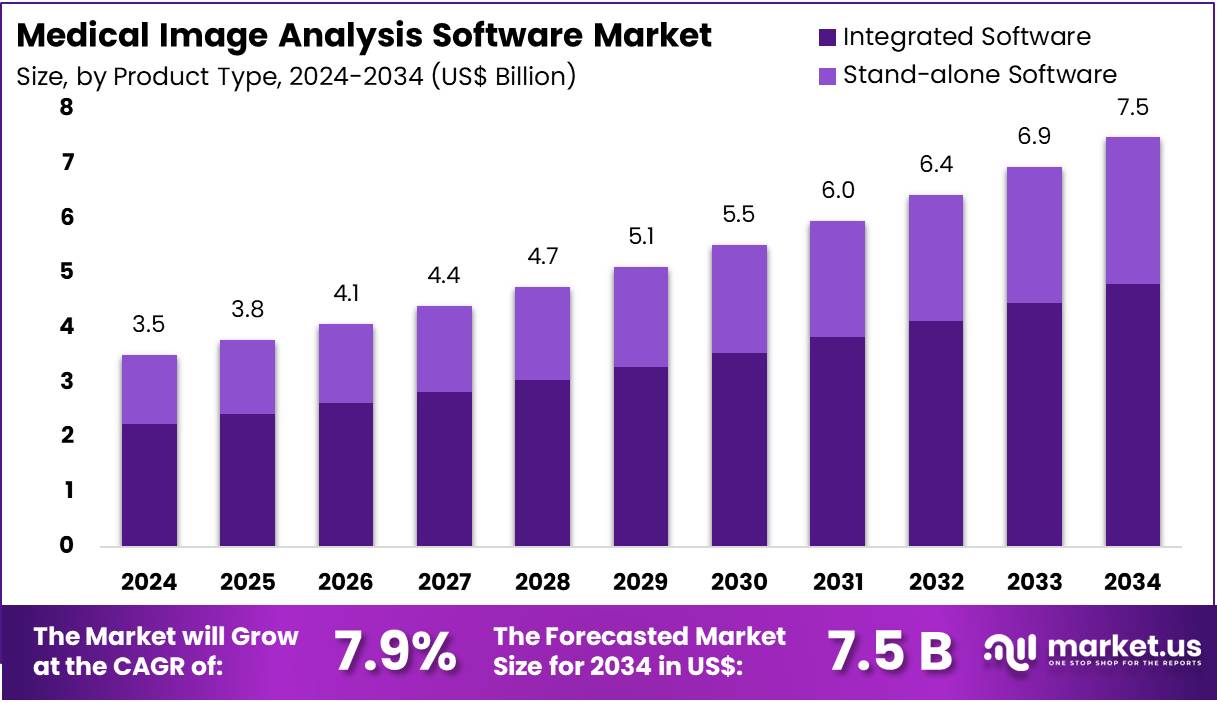
The Global Medical Image Analysis Software Market size is expected to be worth around US$ 7.5 Billion by 2034, from US$ 3.5 Billion in 2024, growing at a CAGR of 7.9% during the forecast period from 2025 to 2034.
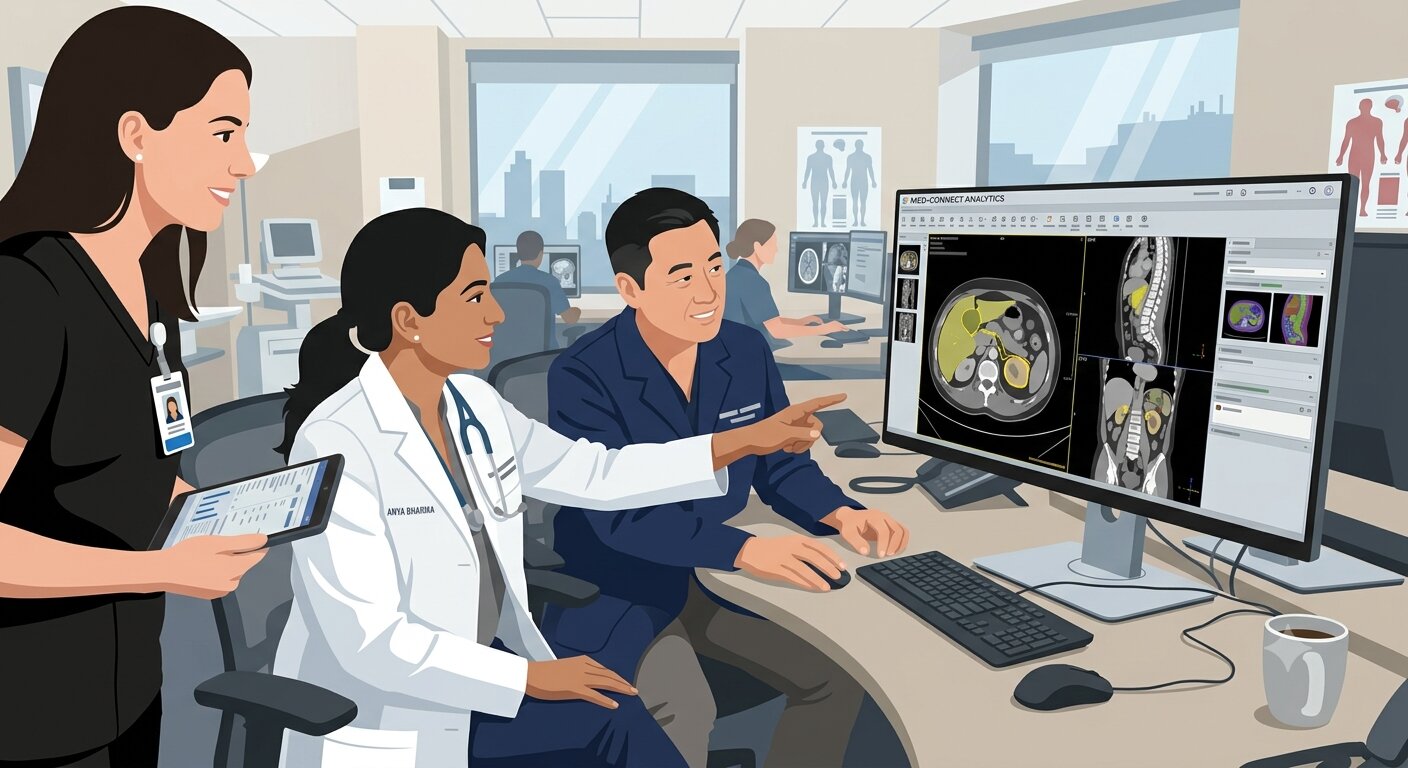
The medical image analysis software landscape is gaining momentum as healthcare providers increasingly adopt artificial intelligence (AI), machine learning, and advanced image-processing technologies to support clinical decision-making. These solutions can assist with image interpretation, segmentation, quantification, visualization, workflow prioritization, and detection of abnormalities across modalities such as CT, MRI, ultrasound, and X-ray.
The U.S. Food and Drug Administration (FDA) recognizes automated radiological image-processing software as a medical-device category and describes applications that use AI and machine learning to analyze human-derived imaging data. The agency classifies these products as Class 2 medical devices under its radiology framework, highlighting the importance of regulatory oversight for safety and effectiveness.
Recent regulatory activity also demonstrates continued innovation. The FDA’s AI-enabled medical-device list includes numerous radiology-focused products receiving marketing authorization during 2025 and 2026, spanning cardiovascular imaging, oncology, neurological assessment, ultrasound, MRI, and CT applications.
For example, the agency recorded radiology-related decisions as recently as March 30, 2026. A 2024 American College of Radiology AI survey received nearly 1,000 responses, with 86% of respondents reporting AI use in some part of their radiology practice, compared with 58% in 2022. The main motivations included automating repetitive tasks, saving time, and improving accuracy or precision.
Key Takeaways
- In 2024, the Medical Image Analysis Software Market generated US$ 3.5 billion in revenue and is expected to reach US$ 7.5 billion by 2034, registering a 7.9% CAGR during the forecast period.
- The product type segment comprises integrated and stand-alone software. Integrated software dominated the segment in 2024, accounting for a 64.3% market share.
- Based on technology, the market is segmented into 2D/3D imaging and 4D imaging. 2D/3D imaging held the leading position in 2024, capturing a 70.2% market share.
- By application, the market includes orthopedic, dental, neurology, cardiology, oncology, and others. Cardiology dominated the segment, accounting for the largest revenue share of 42.4%.
- By modality, the market is categorized into tomography, ultrasound imaging, radiographic imaging, combined modalities, and mammography. Tomography led the segment with a 43.5% revenue share.
- The end-user segment comprises hospitals, diagnostic centers, ASCs, and others. Hospitals held the dominant position in 2024, accounting for a significant 56.8% market share.
- North America emerged as the leading regional market for medical image analysis software in 2024. The region accounted for a 38.7% share of the global market.
Statistical Information
- 71.0% of surveyed patients preferred AI to be used as a second reader for mammograms, while only 4.44% were comfortable with AI interpreting mammograms independently.
- 88.9% of surveyed patients wanted a radiologist review after an AI-reported abnormal mammogram, highlighting strong demand for human oversight.
- 74.1% of patients considered consent necessary before AI was used for mammogram interpretation, emphasizing transparency and patient-control requirements.
- An analysis of 249,402 mammograms found that AI could reduce screening-read volume by 48.8% when replacing the first reader without reducing cancer-detection accuracy.
- AI-supported PET/CT processing reduced the reported examination time from 30-40 minutes to 6-8 minutes, while maintaining image accuracy in the cited clinical implementation.
- A GE HealthCare implementation reported a 15–22% increase in radiologist productivity after deploying intelligent workload-management technology.
- 76.6% of surveyed patients were concerned that AI could reduce interaction between radiologists and patients, underscoring the importance of maintaining clinician involvement alongside automated image analysis.
- 77% reduction in turnaround time was reported in a prospective real-world evaluation of an AI-assisted chest X-ray triage system, demonstrating the potential of image-analysis software to accelerate diagnostic workflows.
- 84% of radiologists in a 2024 survey considered final assessment by a radiologist essential, highlighting continued demand for human oversight alongside AI-based medical image analysis.
Market Segmentation Analysis
Product Type Analysis
The integrated software segment dominated the medical image analysis software market, accounting for a 64.3% market share. Its strong position is supported by growing demand for seamless integration of image analysis capabilities with healthcare IT infrastructure. Integrated solutions can connect medical imaging systems with electronic health records, clinical workflows, and hospital management platforms, helping healthcare providers improve interoperability and operational efficiency. The increasing emphasis on faster diagnostics and coordinated patient care is encouraging healthcare organizations to adopt integrated platforms.
In addition, advances in artificial intelligence and machine learning are strengthening automated image interpretation and analytical capabilities. As healthcare providers increasingly prioritize connected workflows, streamlined data exchange, and improved diagnostic support, integrated medical image analysis software is expected to maintain its leading position.
Technology Analysis
The 2D/3D imaging segment held a 70.2% market share, making it the leading technology category in the medical image analysis software market. Its dominance is largely associated with the growing need for detailed visualization of anatomical structures across diagnostic and treatment procedures.
Two-dimensional and three-dimensional imaging technologies support the assessment of complex conditions involving the brain, heart, bones, and other organs. Their applications in diagnosis, treatment planning, surgical preparation, and follow-up monitoring continue to expand. The increasing adoption of 3D visualization also supports more precise clinical assessment and procedural planning.
Furthermore, improvements in imaging software, processing capabilities, and visualization tools are making advanced imaging solutions increasingly accessible to healthcare providers. Growing demand for accurate, high-quality diagnostic information is expected to support continued adoption.
Application Analysis
The cardiology segment accounted for a 42.4% revenue share, representing the largest application category in the medical image analysis software market. Its leading position is supported by the continued need for advanced imaging technologies to detect, assess, and monitor cardiovascular conditions. Medical image analysis software can enhance the interpretation of echocardiography, computed tomography, magnetic resonance imaging, and other cardiac imaging modalities.
These capabilities can help clinicians evaluate anatomical structures, identify abnormalities, and support treatment planning. The increasing emphasis on non-invasive diagnostic procedures is further contributing to demand for sophisticated image analysis technologies in cardiology.
In addition, software developments incorporating artificial intelligence, automated measurements, three-dimensional visualization, and real-time analysis are improving clinical workflows. As healthcare systems increasingly emphasize early diagnosis and personalized treatment, demand for advanced cardiac image analysis is expected to remain strong.
Modality Analysis
The tomography segment held a 43.5% revenue share, making it the leading modality category in the medical image analysis software market. Tomography-based technologies, including CT and PET imaging, provide detailed cross-sectional views that support the assessment of complex anatomical structures and disease conditions. These imaging capabilities are widely used across oncology, neurology, cardiology, and other clinical areas where precise visualization is essential.
Medical image analysis software can further enhance tomography workflows by supporting image reconstruction, visualization, segmentation, and quantitative assessment. The growing emphasis on early disease detection and accurate treatment planning is encouraging healthcare providers to adopt advanced analytical tools for tomographic imaging. Technological progress in image resolution, reconstruction algorithms, and automated analysis is also improving the clinical utility of these solutions. These developments are expected to sustain tomography’s leading market position.
End-user Analysis
The hospital segment held a 56.8% market share, representing the leading end-user category in the medical image analysis software market. Hospitals perform a broad range of diagnostic and therapeutic procedures, creating significant demand for advanced imaging and analytical technologies.
Medical image analysis software can support radiologists, cardiologists, oncologists, neurologists, and other specialists by improving image visualization, measurement, segmentation, and interpretation. The increasing use of sophisticated imaging modalities within hospitals is further strengthening demand for software-based analytical capabilities.
At the same time, healthcare organizations are focusing on improving workflow efficiency, interoperability, and patient outcomes through connected digital systems. Integration with electronic health records and hospital IT infrastructure can further streamline clinical information management. As hospitals continue investing in advanced diagnostic technologies and digital healthcare infrastructure, demand for medical image analysis software is expected to remain robust.
Regional Analysis
North America led the Medical Image Analysis Software Market with a 38.7% share in 2024, supported by advanced healthcare infrastructure, increasing AI adoption, and demand for sophisticated diagnostic technologies. The U.S. FDA’s AI-enabled medical-device list includes numerous radiology applications covering CT, MRI, ultrasound, cardiovascular imaging, and other diagnostic areas, reflecting continued innovation in AI-supported healthcare.
Asia Pacific is expected to register the fastest CAGR during the forecast period, driven by healthcare digitization, AI investments, and expanding access to advanced diagnostics. WHO highlights the growing role of digital technologies and AI across Southeast Asia, while China’s National Health Commission has promoted AI applications for medical imaging, including image analysis, reporting, quality assessment, and clinical decision support. These developments, combined with expanding digital-health infrastructure and government support, are expected to accelerate regional adoption of medical image analysis software.
Business Opportunities
The Medical Image Analysis Software Market presents significant business opportunities as healthcare providers increasingly adopt AI-enabled tools for diagnosis, workflow optimization, and clinical decision support. The FDA continues to authorize AI-enabled medical devices, creating opportunities for developers to build specialized solutions for radiology, cardiology, oncology, neurology, and other imaging-intensive specialties.
A major opportunity lies in AI-powered image interpretation, automated segmentation, detection, and quantification, particularly solutions that can integrate with existing imaging and electronic health record systems. NIH highlights the potential of combining clinical imaging with EHR, genomic, laboratory, and other multimodal data to advance precision medicine. Companies can also develop cloud-based platforms for remote image analysis, scalable diagnostic workflows, and collaborative care.
Another promising area is explainable and trustworthy AI, including tools for validation, bias monitoring, data governance, and cybersecurity. NIH identifies explainable AI, automated annotation, and validated de-identification as important development priorities. Meanwhile, WHO emphasizes responsible AI governance, safety, equity, and regulatory readiness, creating opportunities for compliance and lifecycle-management services.
Emerging Trends
- Foundation Models: Foundation models are emerging as flexible alternatives to narrow AI tools. They can be adapted for multiple imaging tasks using smaller labeled datasets, supporting image interpretation, report generation, and multimodal analysis. This could reduce development time and broaden software capabilities across clinical specialties.
- Multimodal AI: Medical image analysis is moving toward multimodal AI that combines scans with clinical notes, laboratory results, and other patient information. This trend can provide a broader clinical picture instead of analyzing images separately, supporting more personalized and comprehensive diagnostic decision-making.
- Photon-Counting CT: Photon-counting CT is gaining attention as an advanced imaging technology, with AI increasingly positioned alongside it to improve image quality and clinical interpretation. The combination may support more detailed visualization while helping healthcare providers extract additional information from modern CT examinations.
- Privacy-Preserving AI: Privacy-preserving approaches such as federated learning are becoming important for medical imaging. These systems can allow institutions to collaborate on AI development without directly sharing raw patient data. This trend addresses privacy concerns while enabling access to broader datasets for model improvement.
- Portable AI-Enhanced Imaging: AI is helping make advanced imaging more practical outside traditional hospital environments. NIH-supported research has demonstrated the potential of AI-enhanced portable MRI for brain imaging, creating opportunities for imaging in intensive-care settings and communities where conventional MRI infrastructure is limited.
Use Cases
- Automated Radiology Report Generation: Multimodal AI can analyze medical images and generate draft radiology reports, helping radiologists handle high-volume examinations. These systems can combine image understanding with language models to produce structured documentation, potentially reducing repetitive reporting work and allowing specialists to concentrate on complex cases.
- Automated Clinical History Extraction: Large language models can extract important clinical information from electronic health records and create structured histories for imaging examinations. This use case can give radiologists more complete patient context before interpretation, particularly for oncology imaging where relevant clinical information may be scattered across records.
- Opportunistic Disease Screening: AI can analyze routine imaging originally performed for another reason and identify additional health risks. NIH-supported research, for example, used routine chest CT scans to identify cardiac factors associated with mortality, demonstrating how existing images could provide additional screening information.
- AI-Assisted 3D Pathology Analysis: AI-based image analysis can examine three-dimensional pathology images and identify patterns associated with disease outcomes. NIH-funded researchers have developed platforms for this purpose, creating opportunities to combine detailed tissue visualization with automated analysis and potentially improve prognostic assessment in complex diseases.
- Secure Medical Image De-identification: AI can automatically identify and remove protected health information from medical images and accompanying reports before data are used for research or collaboration. Uncertainty-aware de-identification is emerging as a practical application for improving data security while supporting responsible sharing of imaging datasets.
Recent Developments
- In July 2026, Siemens Healthineers and Vanderbilt Health launched an $87 Million multi-year Value Partnership in the U.S. to modernize diagnostic imaging and radiation oncology, standardize technology, and expand scalable AI applications in radiology, personalized medicine, and workflow automation.
- In June 2026, Canon Medical Systems Europe and Fraiya announced a strategic collaboration to introduce AI-powered prenatal ultrasound workflow support, combining Canon’s ultrasound imaging capabilities with Fraiya’s AI technology to improve workflow efficiency and consistency in women’s health imaging.
- In June 2026, Canon Medical launched the Aplio me X, a next-generation diagnostic ultrasound system, expanding its imaging portfolio with new ultrasound capabilities and workflow-focused technology for clinical applications.
- In May 2026, Siemens Healthineers and Cercare Medical announced a global collaboration combining Cercare’s vendor-neutral Neurosuite automated perfusion-analysis software with Siemens’ Syngo DynaCT Multiphase technology to advance cone-beam CT perfusion-guided treatment for acute stroke.
- In May 2026, Bruker commissioned an 18-Tesla BioSpec preclinical MRI system at the Champalimaud Foundation in Lisbon, Portugal, described as the world’s highest-field horizontal-bore MRI system, supporting neuroscience and oncology research and the discovery of advanced imaging biomarkers.
- In February 2026, Siemens Healthineers and Mayo Clinic expanded their strategic collaboration to advance AI-enabled MRI protocols for neurodegenerative diseases and patient monitoring, while also exploring digital-twin technologies for surgical-care pathways and operational efficiency.
- In January 2026, Bruker announced $500 million in multi-year orders from two global healthcare companies for high-performance superconductors used in MRI systems, supporting the supply of advanced MRI technology and strengthening Bruker’s position in the high-field imaging ecosystem.
Conclusion
The Medical Image Analysis Software Market is positioned for sustained growth as healthcare providers increasingly adopt AI, advanced imaging, and integrated digital solutions to improve diagnostic workflows and clinical decision-making. Integrated software, 2D/3D imaging, cardiology, tomography, and hospitals currently represent leading market segments, while North America maintains a strong position.
Regulatory activity, AI adoption, multimodal analysis, privacy-preserving technologies, and portable imaging are creating new opportunities for software developers and healthcare organizations. Recent partnerships and technology launches from major imaging companies further demonstrate continued innovation. Going forward, successful market expansion will depend on clinical validation, interoperability, cybersecurity, responsible AI governance, and scalable solutions that deliver measurable healthcare value.




















