


Report Overview
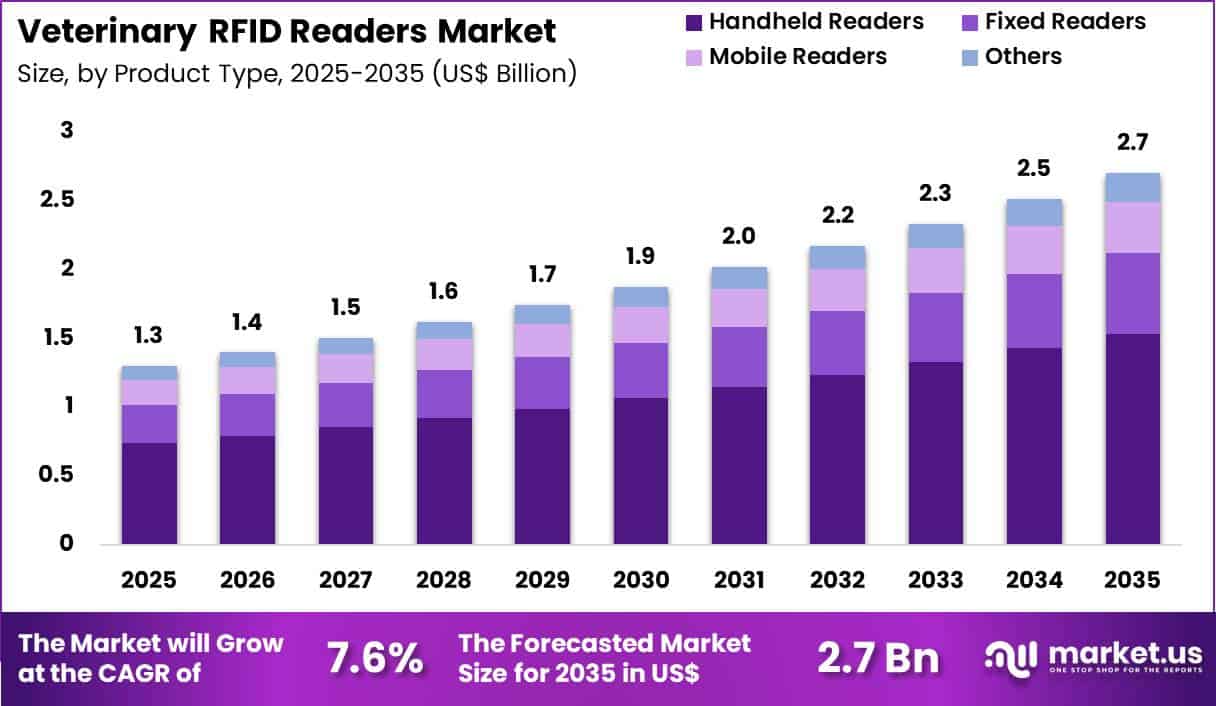
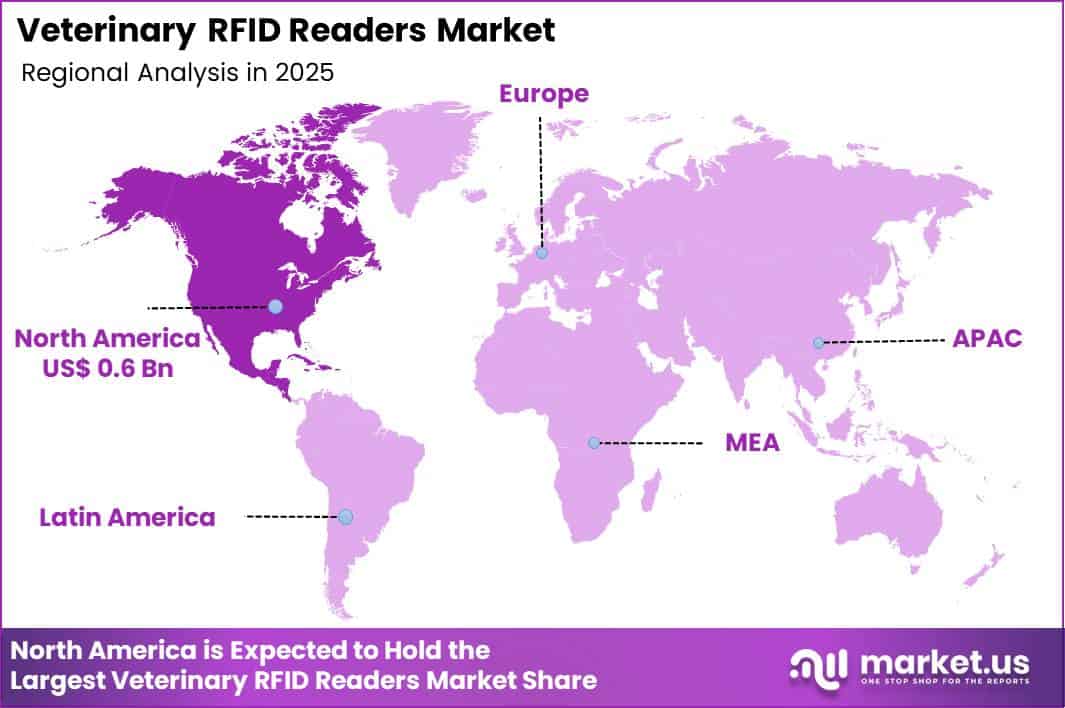
Global Veterinary RFID Readers Market size is expected to be worth around US$ 2.7 Billion by 2035 from US$ 1.3 Billion in 2025, growing at a CAGR of 7.6% during the forecast period 2026-2035. In 2025, North America led the market, achieving over 45.1% share with a revenue of US$ 0.6 Billion.
Increasing emphasis on traceability, disease control, and supply chain transparency accelerates the Veterinary RFID Readers market as livestock producers and regulatory bodies adopt electronic identification systems to monitor individual animals throughout their lifecycle.
Large-scale cattle and buffalo operations increasingly deploy fixed RFID readers at weighing scales, feed stations, and sorting gates to automatically record animal movement, weight gain, and health events, enabling data-driven decisions on breeding, feeding, and culling strategies.
Handheld RFID readers support mobile applications such as on-farm health checks, vaccination campaigns, and compliance audits, allowing veterinarians and stockmen to quickly scan ear tags and update records without manual data entry.
These readers play a critical role in national traceability programs by verifying individual animal identity during transport, slaughter, and export, helping prevent disease spread and meeting international food safety standards.
In dairy herds, RFID readers integrated with milking parlors track individual milk yield and health indicators, supporting precision management of mastitis and reproductive performance. The technology also aids in companion animal identification and lost-pet recovery, where shelters and veterinary clinics scan microchips to reunite animals with owners or verify ownership in legal disputes.
Technology providers pursue opportunities to develop rugged, long-range RFID readers with improved read accuracy in harsh farm environments, expanding applications in extensive grazing systems and feedlot operations where animals move freely over large areas.
These advancements support integration with farm management software and IoT sensors, creating comprehensive digital records that enhance biosecurity and supply chain visibility.
Entering 2026, Datamars has emerged as a key technology partner in Brazil’s National Plan for Individual Identification of Cattle and Buffalo (PNIB). This government-driven program, being implemented in phases from 2025 onward, mandates individual traceability for a cattle population exceeding 200 million by 2032.
The scale of this initiative is expected to drive substantial demand for both fixed and handheld RFID readers across Latin America, particularly in large-scale livestock operations.
Recent trends emphasize multi-frequency readers, cloud-based data platforms, and automation-friendly designs, positioning the Veterinary RFID Readers market for sustained growth in modern, traceable, and efficient animal production systems.
Key Takeaways
- In 2025, the market generated a revenue of US$ 1.3 Billion, with a CAGR of 7.6%, and is expected to reach US$ 2.7 Billion by the year 2035.
- The product type segment is divided into handheld readers, fixed readers, mobile readers and others, with handheld readers taking the lead with a market share of 56.8%.
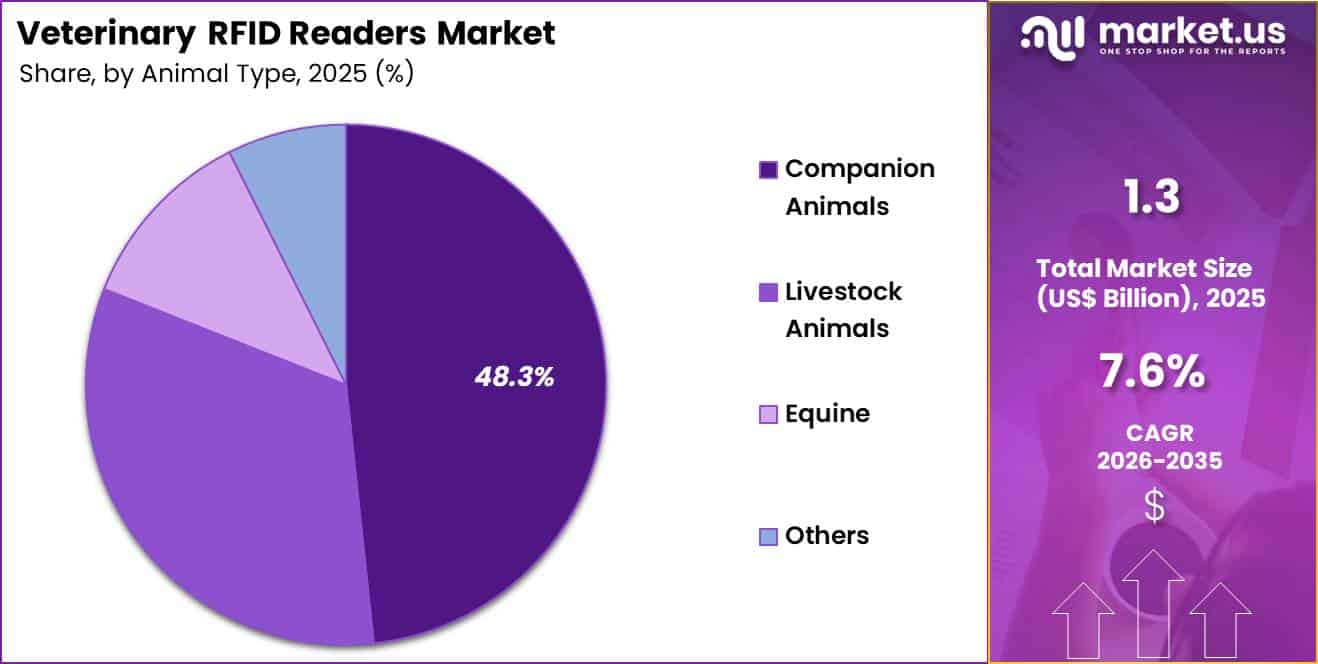
- Considering animal type, the market is divided into companion animals, livestock animals, equine and others. Among these, companion animals held a significant share of 48.3%.
- Furthermore, concerning the application segment, the market is segregated into animal identification, traceability and tracking, inventory management, breeding management, health monitoring and others. The animal identification sector stands out as the dominant player, holding the largest revenue share of 42.1% in the market.
- The end user segment is segregated into veterinary hospitals and clinics, animal shelters and rescues, farms and ranches, research laboratories, zoos and wildlife sanctuaries and pet owners, with the veterinary hospitals and clinics segment leading the market, holding a revenue share of 38.2%.
- North America led the market by securing a market share of 45.1%..
Product Type Analysis
Handheld readers accounted for 56.8% of growth within product type and dominate the veterinary RFID readers market due to their portability, ease of use, and flexibility across multiple care settings. Veterinarians and field professionals prefer handheld devices because they allow quick scanning of RFID tags during routine checkups, emergency situations, and animal transfers.
These devices are expected to expand further as demand for mobile veterinary services and on-site animal identification increases. Handheld readers are likely to remain preferred because they require minimal infrastructure and offer immediate results in real-time environments.
The segment benefits from widespread use in both companion animal care and livestock management. Advancements in battery life, scanning range, and device durability are projected to enhance usability.
Increasing need for efficient animal identification and record management is anticipated to support adoption. As veterinary practices continue to prioritize mobility and convenience, handheld readers are estimated to retain their dominant position in this market.
Animal Type Analysis
Companion animals accounted for 48.3% of growth within animal type and dominate the veterinary RFID readers market due to rising pet ownership and increased emphasis on pet identification and safety. Dogs and cats frequently receive RFID microchips to ensure traceability in cases of loss or theft, which drives demand for compatible readers.
Veterinary data indicates that microchipping adoption continues to grow globally, especially in urban regions. This segment is expected to expand as regulatory requirements and awareness campaigns promote pet identification.
Pet owners are likely to invest in identification technologies to improve recovery rates and ensure pet security. The segment benefits from frequent veterinary visits, where RFID scanning becomes part of routine care.
Increasing integration of RFID systems into pet management platforms is projected to support growth. As the global pet population expands, companion animals are anticipated to maintain their dominant position in this market.
Application Analysis
Animal identification accounted for 42.1% of growth within application and dominates the veterinary RFID readers market due to its critical role in ensuring accurate animal tracking and ownership verification. Identification systems help veterinarians, shelters, and authorities quickly retrieve animal records, which improves care and recovery outcomes.
RFID technology is expected to expand as governments and organizations implement mandatory identification programs for pets and livestock. The segment is likely to benefit from increasing awareness of animal safety and traceability.
Veterinary professionals rely on identification systems to maintain accurate medical histories and vaccination records. Growing concerns over animal theft and loss are projected to further support adoption. As identification remains the foundation of RFID applications in animal care, this segment is estimated to retain its leading position in the market.
End-User Analysis
Veterinary hospitals and clinics accounted for 38.2% of growth within end user and dominate the veterinary RFID readers market due to their central role in animal diagnosis, treatment, and record management. These facilities use RFID readers to identify animals, access medical records, and ensure accurate treatment delivery.
Veterinary hospitals and clinics are expected to remain dominant as they handle a high volume of companion animal visits. The segment benefits from increasing adoption of digital record systems and integrated veterinary technologies.
Clinics are likely to use RFID systems to improve workflow efficiency and reduce identification errors. Rising demand for advanced veterinary services is projected to support further adoption. As animal healthcare becomes more technology-driven, veterinary hospitals and clinics are anticipated to maintain their leading position in this market.
Key Market Segments
By Product Type
- Handheld Readers
- Fixed Readers
- Mobile Readers
- Others
By Animal Type
- Companion Animals
- Livestock Animals
- Equine
- Others
By Application
- Animal Identification
- Traceability and Tracking
- Inventory Management
- Breeding Management
- Health Monitoring
- Others
By End User
- Veterinary Hospitals and Clinics
- Animal Shelters and Rescues
- Farms and Ranches
- Research Laboratories
- Zoos and Wildlife Sanctuaries
- Pet Owners
Drivers
Rising demand for animal identification and traceability systems is driving the Veterinary RFID Readers market.
The expanding need for accurate and permanent identification of both companion animals and livestock has propelled the adoption of RFID-based solutions in veterinary practices and farm operations. Microchipping has become a standard recommendation for pets to facilitate rapid reunification in cases of loss or displacement.
Studies consistently demonstrate that microchipped dogs return to owners at rates exceeding 50%, compared to approximately 20% for those without chips, while microchipped cats show markedly higher reunion success than unchipped counterparts. In the United States, an estimated 10 million dogs and cats are reported lost or stolen annually, underscoring the practical value of reliable scanning technology.
Livestock sectors benefit from RFID readers through enhanced disease surveillance, movement tracking, and compliance with interstate transport regulations. Regulatory mandates, such as the U.S. Department of Agriculture requirement effective in 2023 designating RFID tags as the sole official identification for certain cattle movements, have accelerated hardware deployment.
Veterinary clinics and shelters increasingly integrate handheld and stationary readers to streamline intake processes and maintain digital records. These identification imperatives extend across clinical, agricultural, and regulatory contexts, generating sustained procedural demand.
The technology supports broader goals of animal welfare, biosecurity, and supply chain transparency. Consequently, identification and traceability requirements constitute a primary driver sustaining market expansion during the 2022–2025 period.
Restraints
Limited awareness and inconsistent registration practices are restraining the Veterinary RFID Readers market.
Despite technological availability, a substantial proportion of implanted microchips remain unregistered or incorrectly documented, diminishing the overall effectiveness of scanning efforts. Reports indicate that only about six in ten microchips in pets are properly registered, creating gaps that reduce return rates and undermine user confidence in the system.
This inconsistency leads some owners and practitioners to question the investment in reader equipment when outcomes remain uncertain. Smaller veterinary facilities and rural operations often lack the training or resources to maintain up-to-date scanning protocols, resulting in underutilization of available devices.
Budget constraints further discourage upgrades from basic visual identification methods to electronic systems in cost-sensitive environments. Logistical challenges in remote areas complicate timely access to compatible readers during emergencies or routine checks.
These operational and behavioral barriers slow the transition toward widespread, standardized use of RFID technology. Persistent gaps in education and follow-through moderate the pace of reader adoption despite underlying identification needs. As a result, awareness and registration shortfalls impose measurable restraint on accelerated market growth throughout the 2022–2025 timeframe.
Opportunities
Integration of RFID systems with digital health records and livestock management platforms is creating growth opportunities in the Veterinary RFID Readers market.
Seamless connectivity between readers and electronic databases enables real-time data capture, automated record updates, and improved traceability across clinical and production settings. Opportunities arise for multi-species applications that combine pet microchip scanning with livestock herd management software, supporting comprehensive animal health oversight.
Cloud-based platforms facilitate remote access and analytics, allowing veterinarians and producers to monitor compliance, vaccination status, and movement history efficiently. Expansion into emerging agricultural regions benefits from scalable, portable reader designs that address varying infrastructure levels.
Potential exists for value-added services such as subscription-based data management or integration with biosecurity alert systems. These capabilities align with regulatory trends emphasizing electronic identification for disease control and food safety.
Partnerships between technology providers and veterinary networks accelerate deployment while reducing implementation barriers for end users. Enhanced data accuracy contributes to better clinical decisions and operational efficiencies.
Overall, digital integration unlocks substantial prospects for diversified applications and long-term market development across companion and production animal segments.
Impact of Macroeconomic / Geopolitical Factors
Macroeconomic and geopolitical conditions are exerting a structured influence on the veterinary RFID readers market by shaping capital allocation, supply chain reliability, and technology adoption cycles. Expansion in livestock populations and stricter animal traceability regulations are reinforcing demand for RFID-based identification systems, particularly across commercial farming and veterinary ecosystems.
At the same time, inflationary pressure is increasing the cost of electronic components, handheld devices, and integration systems, which can slow procurement decisions among smaller farms and clinics. Currency instability and global trade uncertainty are complicating sourcing strategies for manufacturers that rely on internationally supplied semiconductors and sensing technologies.
Geopolitical tensions are further affecting cross-border equipment movement and delaying deployment timelines in regions dependent on imports. Current US tariffs on electronic components and embedded technologies are elevating production costs for RFID readers, which directly impacts pricing structures and compresses margins across the value chain.
These cost pressures may moderate adoption in price-sensitive agricultural markets in the near term. However, regulatory mandates for livestock tracking and rising focus on animal health monitoring continue to anchor long-term demand. In this context, industry participants are increasingly investing in localized manufacturing and integrated digital solutions, which positions the market for sustained and structurally resilient growth.
Latest Trends
Regulatory mandates for electronic identification combined with portable reader innovations represents a recent trend in the Veterinary RFID Readers market.
In 2024 and 2025, government initiatives have strengthened requirements for RFID-based tracking, notably through finalized rules mandating electronic tags for interstate cattle movement in the United States. This regulatory push has coincided with advancements in compact, handheld reader designs that offer improved battery life, faster scan times, and wireless connectivity for field use.
Livestock operations have increasingly adopted these portable solutions to comply with traceability standards while maintaining operational flexibility. Companion animal shelters and clinics have incorporated multi-frequency readers capable of detecting various microchip types, addressing compatibility issues across manufacturers.
Industry developments during this period emphasize user-friendly interfaces and integration with mobile applications for instant database lookups. The trend reflects a broader shift toward technology that supports both regulatory adherence and practical efficiency in diverse veterinary environments.
Continued emphasis on durable, cost-effective hardware has supported wider deployment in production agriculture and clinical settings alike. Prominent in 2024–2025, these combined regulatory and technological movements continue to shape more robust and accessible identification practices within the veterinary domain.
Regional Analysis
North America is leading the Veterinary RFID Readers Market
North America accounted for 45.1% of the veterinary RFID readers market in 2025, reflecting strong adoption of animal identification and traceability systems across both companion animal care and livestock management.
Regulatory frameworks in the United States and Canada increasingly emphasize traceability for disease control, ownership verification, and livestock movement monitoring, which has accelerated deployment of RFID-based identification tools.
The U.S. Department of Agriculture continues to advance animal disease traceability initiatives that promote electronic identification to improve response time during outbreaks. Veterinary clinics and shelters are routinely using RFID readers to identify microchipped pets, support reunification efforts, and maintain accurate medical records.
Livestock producers are integrating RFID systems into herd management to track health status, breeding cycles, and movement across supply chains. Technological improvements in handheld and portable readers have enhanced scanning accuracy and operational efficiency in field conditions.
Integration with digital databases and cloud platforms is enabling real-time data access for veterinarians and farm operators. Industry stakeholders are also emphasizing interoperability standards to ensure seamless identification across regions.
These factors have collectively supported consistent expansion of RFID-based identification technologies across North America in 2025.
The Asia Pacific region is expected to experience the highest CAGR during the forecast period
Asia Pacific is expected to expand steadily over the forecast period as governments strengthen livestock monitoring systems and urban pet ownership continues to rise. Countries such as China, India, Australia, and Southeast Asian nations are increasingly implementing animal identification programs to improve disease surveillance and agricultural productivity.
he Food and Agriculture Organization highlights the importance of traceability systems in managing livestock health and ensuring food safety across global supply chains. Veterinary authorities in the region are promoting electronic tagging and identification to enhance monitoring of animal populations and control transboundary diseases.
Growing awareness among pet owners regarding microchipping is also contributing to higher demand for identification technologies. Veterinary clinics and animal welfare organizations are expanding use of RFID readers for pet tracking and record management.
Manufacturers are introducing cost-effective and rugged devices suited for diverse environmental conditions. Training programs are improving familiarity with digital livestock management tools among farmers and veterinarians. These developments are expected to support continued growth of animal identification technologies across Asia Pacific.
Key Regions and Countries
North America
- The US
- Canada
Europe
- Germany
- France
- The U.K.
- Italy
- Spain
- Russia & CIS
- Rest of Europe
Asia Pacific
- China
- India
- Japan
- South Korea
- ASEAN
- Australia & New Zealand
- Rest of Asia Pacific
Middle East & Africa
- GCC
- South Africa
- Rest of Middle East & Africa
Latin America
- Brazil
- Mexico
- Rest of Latin America
Key Players Analysis
Key participants in the Veterinary RFID Readers Market expand growth by developing high-precision identification devices, strengthening partnerships with livestock producers and veterinary clinics, and enhancing compatibility with global animal identification standards.
Companies invest in handheld and fixed RFID readers with improved scanning range, durability, and data integration capabilities that support efficient animal tracking and health management. They also focus on cloud-based livestock management platforms and mobile applications that enable real-time data capture and traceability across supply chains.
Datamars represents a prominent participant in the Veterinary RFID Readers Market and operates as a Switzerland-based company that develops animal identification systems, RFID technology, and livestock management solutions for global agricultural and companion animal sectors.
The company emphasizes innovation in digital identification and data-driven animal management. Industry competitors continue to introduce advanced RFID technologies, expand distribution networks, and strengthen regulatory compliance to support accurate animal tracking and sustained market growth.
Top Key Players
- Allflex USA, Inc. (MSD Animal Health)
- Datamars SA
- Bayer AG
- Merck & Co., Inc. (MSD Animal Health)
- HID Global Corporation
- Pethealth Inc.
- Cryo-Tag
- Ardes
- Certis Europe
- Korthax
- LAIPAC
Recent Developments
- In August 2025, the Animal and Plant Health Inspection Service under the United States Department of Agriculture awarded a major contract to Merck Animal Health to strengthen swine traceability systems across the United States. Beginning in fall 2025, the program initiated the distribution of RFID tags and supporting infrastructure at no cost to producers, with total support reaching up to $20 million. This initiative is expected to significantly accelerate the adoption of handheld RFID readers among pork producers, improving disease tracking and response capabilities through 2026.
- In early 2026, HID Global introduced a new generation of ultra-compact glass transponders along with compatible multi-frequency readers. These innovations are designed to support applications in companion animals and research laboratories, enabling less invasive tagging for small animals such as exotics and laboratory rodents. The advancement ensures high read accuracy while maintaining compatibility with compact handheld scanning devices, supporting precision tracking in sensitive environments.
Report Scope
| Report Features | Description |
|---|---|
| Market Value (2025) | US$ 1.3 Billion |
| Forecast Revenue (2035) | US$ 2.7 Billion |
| CAGR (2026-2035) | 7.6% |
| Base Year for Estimation | 2025 |
| Historic Period | 2020-2024 |
| Forecast Period | 2026-2035 |
| Report Coverage | Revenue Forecast, Market Dynamics, COVID-19 Impact, Competitive Landscape, Recent Developments |
| Segments Covered | By Product Type (Handheld Readers, Fixed Readers, Mobile Readers and Others), By Animal Type (Companion Animals, Livestock Animals, Equine and Others), By Application (Animal Identification, Traceability and Tracking, Inventory Management, Breeding Management, Health Monitoring and Others), By End User (Veterinary Hospitals and Clinics, Animal Shelters and Rescues, Farms and Ranches, Research Laboratories, Zoos and Wildlife Sanctuaries and Pet Owners) |
| Regional Analysis | North America – The US, Canada; Europe – Germany, France, The U.K., Italy, Spain, Russia & CIS, Rest of Europe; Asia Pacific – China, India, Japan, South Korea, ASEAN, Australia & New Zealand, Rest of Asia Pacific; Middle East & Africa – GCC, South Africa, Rest of Middle East & Africa; Latin America – Brazil, Mexico, Rest of Latin America |
| Competitive Landscape | Allflex USA, Inc., Datamars SA, Bayer AG, Merck & Co., Inc., HID Global Corporation, Pethealth Inc., Cryo-Tag, Ardes, Certis Europe, Korthax, LAIPAC. |
| Customization Scope | Customization for segments, region/country-level will be provided. Moreover, additional customization can be done based on the requirements. |
| Purchase Options | We have three licenses to opt for: Single User License, Multi-User License (Up to 5 Users), Corporate Use License (Unlimited User and Printable PDF) |





































