


Market Overview
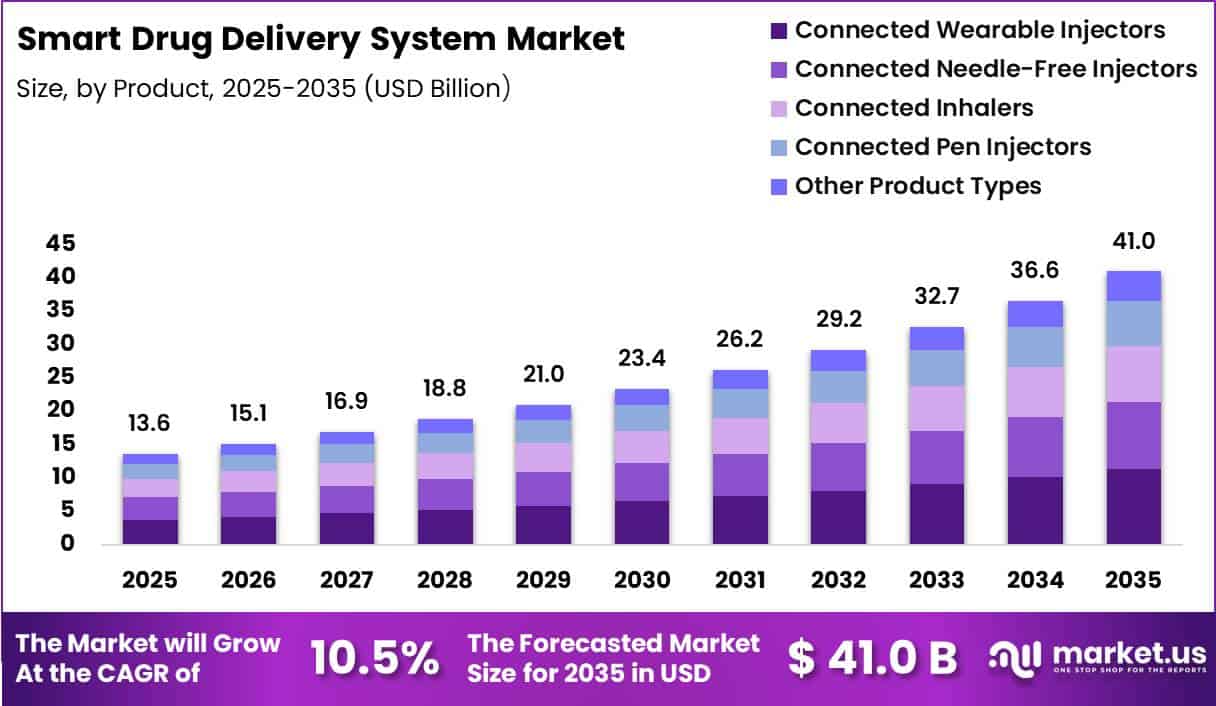
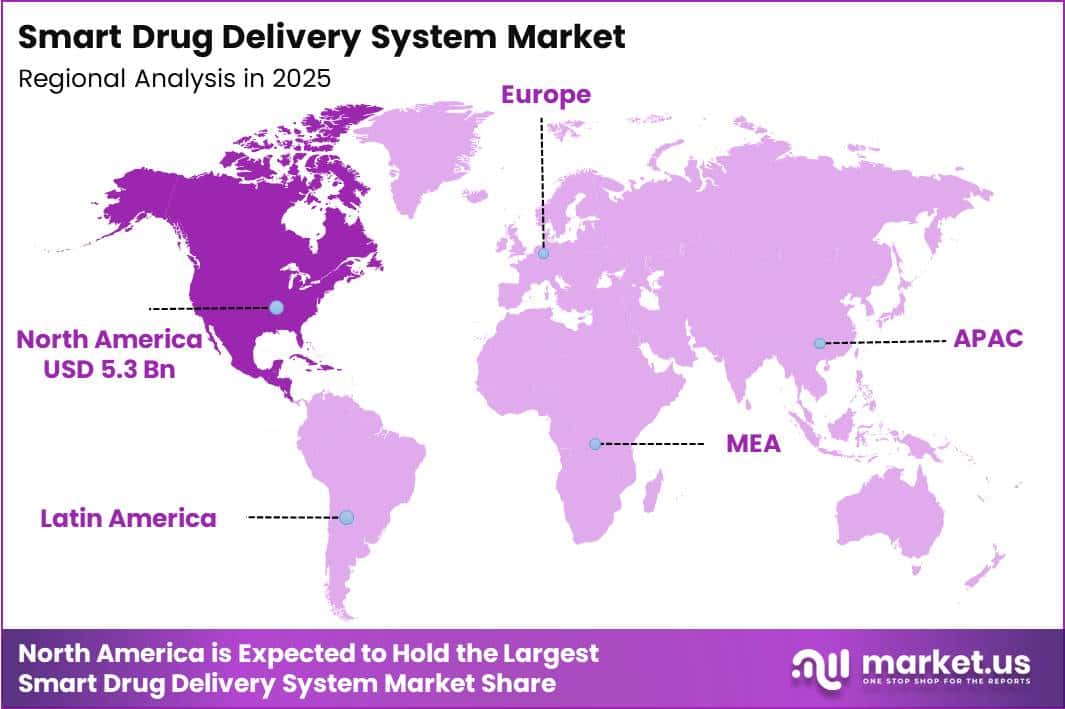
Global Smart Drug Delivery System Market size is expected to be worth around US$ 41.0 Billion by 2035 from US$ 13.6 Billion in 2025, growing at a CAGR of 10.5% during the forecast period from 2026 to 2035. In 2025, North America led the market, achieving over 38.8% share with a revenue of US$ 5.3 Billion.
The Smart Drug Delivery System Market is witnessing significant transformation as healthcare systems increasingly adopt connected technologies, digital therapeutics, and patient-centric medication management solutions.
Smart drug delivery systems integrate sensors, connectivity platforms, software, and advanced delivery mechanisms to improve dosing accuracy, monitor adherence, and enable personalized treatment approaches. These systems include connected wearable injectors, smart inhalers, connected pen injectors, needle-free injectors, and automated infusion technologies.
The rising burden of chronic diseases is accelerating demand for intelligent medication delivery solutions. According to the World Health Organization (WHO), approximately 830 million people globally are living with diabetes, creating strong demand for advanced insulin delivery technologies, including connected insulin pens, pumps, and automated delivery systems. Smart delivery platforms help patients and healthcare providers track medication usage, reduce missed doses, and support remote monitoring through digital health ecosystems.
Government healthcare initiatives and regulatory advancements are also supporting innovation in connected medical devices. The U.S. Food and Drug Administration (FDA) recognizes sensor-based digital health technologies, including wearable and connected medical devices designed for continuous or intermittent health monitoring in home and clinical environments.
Increasing adoption of self-administration therapies, growth in home healthcare, and demand for improved treatment compliance are key factors driving market expansion. Additionally, integration of Bluetooth connectivity, mobile applications, artificial intelligence, and cloud-based analytics is enabling real-time medication insights and improving clinical decision-making.
The market is expected to continue evolving as pharmaceutical and medical device companies focus on safer, smarter, and more efficient drug delivery solutions.
Key Takeaways
- Market Size: Global Smart Drug Delivery System Market size is expected to be worth around US$ 41.0 Billion by 2035 from US$ 13.6 Billion in 2025.
- Market Share: The market is growing at a CAGR of 10.5% during the forecast period from 2026 to 2035.
- Product: Connected Wearable Injectors segments dominate the market, accounting for 27.8% share in 2025.
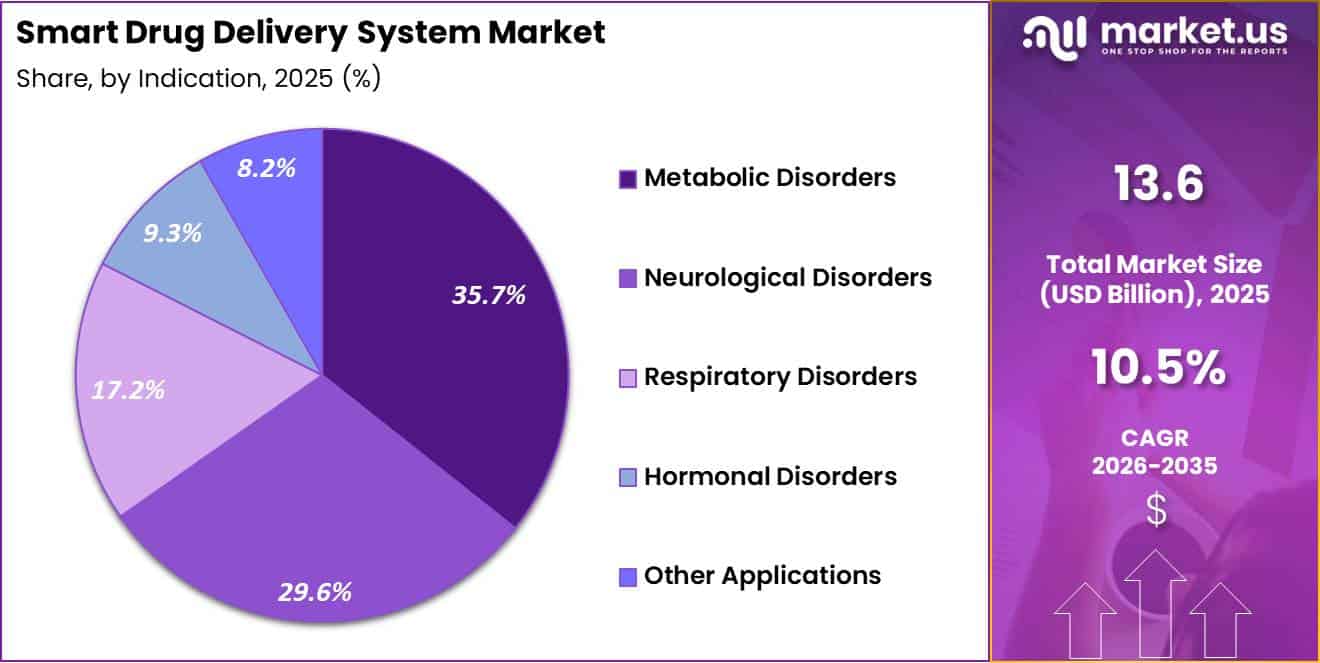
- Indication: Metabolic Disorders segments dominate the market, accounting for 35.7% share in 2025.
- End User: Hospitals and Clinics segments dominate the market, accounting for 45.7% share in 2025.
- Regional Analysis: In 2025, North America led the market, achieving over 38.8% share with a revenue of US$ 5.3 Billion.
Product Analysis
Connected Wearable Injectors segments dominate the market.
By product type into Connected Wearable Injectors, Connected Needle-Free Injectors, Connected Inhalers, Connected Pen Injectors, and Other Product Types. Among these, Connected Wearable Injectors segments dominate the market, accounting for 27.8% share in 2025.
The growth of this segment is driven by increasing demand for automated, patient-friendly delivery solutions that enable continuous monitoring, improved dosing accuracy, and enhanced treatment adherence for chronic disease management. These devices are increasingly adopted for biologics and complex therapies requiring frequent administration.
Connected Needle-Free Injectors represent a significant segment with a 24.4% market share, supported by rising preference for painless drug administration and reduced needle-related concerns among patients. Connected Inhalers hold a 20.7% share, driven by the growing adoption of digital respiratory care solutions that support medication tracking and remote patient monitoring.
Connected Pen Injectors account for 16.3% of the market, benefiting from their convenience and widespread use in diabetes and hormone therapies. Other Product Types contribute 10.8% share, including emerging smart delivery technologies focused on improving personalized healthcare outcomes. Increasing integration of sensors, connectivity platforms, and data analytics continues to strengthen product innovation across the market.
Indication Analysis
Metabolic Disorders segments dominate the market.
By indication into Metabolic Disorders, Neurological Disorders, Respiratory Disorders, Hormonal Disorders, and Other Applications. Among these, Metabolic Disorders segments dominate the market, accounting for 35.7% share in 2025.
This dominance is attributed to the rising prevalence of diabetes and other metabolic conditions requiring long-term medication management. Smart delivery systems, particularly connected injectors and monitoring-enabled devices, help improve medication adherence, dosage accuracy, and patient self-management.
Neurological Disorders represent the second-largest segment with a 29.6% market share, supported by increasing adoption of advanced delivery technologies for conditions requiring precise and controlled drug administration.
The use of connected systems enables better monitoring of therapy schedules and treatment effectiveness. Respiratory Disorders account for 17.2% share, driven by increasing demand for connected inhalers that provide real-time usage insights and support improved respiratory disease management.
Hormonal Disorders contribute 9.3% share, with smart delivery solutions gaining importance in therapies requiring regular hormone administration. Other Applications hold 8.2% share, including emerging therapeutic areas where digital drug delivery technologies are improving personalized treatment approaches and patient outcomes.
End User Analysis
Hospitals and Clinics segments dominate the market.
The Smart Drug Delivery System Market is segmented by end user into Hospitals and Clinics, Home Care, Rehabilitation Centers, and Other End-Users. Among these, Hospitals and Clinics segments dominate the market, accounting for 45.7% share in 2025.
The leading position of this segment is supported by the increasing adoption of advanced drug delivery technologies in clinical settings for accurate medication administration, patient monitoring, and improved treatment management. Healthcare providers are increasingly integrating connected delivery systems to enhance care quality and optimize therapeutic outcomes.
Home Care represents a rapidly expanding segment due to the growing shift toward patient-centric healthcare and self-administration of medications. Smart drug delivery devices allow patients to manage chronic conditions remotely while enabling healthcare professionals to monitor adherence and treatment progress through connected platforms.
Rehabilitation Centers contribute to market growth through the adoption of digital healthcare solutions that support long-term recovery programs and medication management for patients requiring continuous care. Other End-Users include specialty care facilities and research institutions adopting smart delivery technologies for advanced therapeutic applications.
Increasing demand for remote monitoring, personalized treatment, and decentralized healthcare models is expected to further accelerate adoption across all end-user segments.
Key Market Segments
Product
- Connected Wearable Injectors
- Connected Needle-Free Injectors
- Connected Inhalers
- Connected Pen Injectors
- Other Product Types
Indication
- Metabolic Disorders
- Neurological Disorders
- Respiratory Disorders
- Hormonal Disorders
- Other Applications
End User
- Hospitals and Clinics
- Home Care
- Rehabilitation Centers
- Other End-Users
Driver
Reimbursement expansion for remote diabetes monitoring.
Reimbursement is becoming a direct demand driver as connected delivery devices increasingly generate billable data flows rather than simply dispensing therapy, and 2026 CMS linked coding changes for remote monitoring lower the revenue threshold required for providers to operationalize diabetes technology programs.
New code structures that cover shorter device data periods and lower management time bands make partial month engagement economically viable, while established CGM related codes already show national Medicare payment benchmarks of about $64 for CPT 95249, about $139 for CPT 95250, and about $33 for CPT 95251, giving clinics a clearer path to recover onboarding, interpretation, and follow up effort.This shifts purchasing behavior.
Providers and integrated delivery networks are more willing to recommend connected pens, CGMs, and digital titration workflows when staff time and data review can be directly mapped to reimbursement, supporting higher attachment rates for smart delivery devices and better persistence after initiation.
The effect is strongest in the United States in 2026, but the strategic signal extends into Canada and parts of Europe, as payer acceptance of remote management logic enables vendors to invest in provider dashboards, adherence analytics, and population level contracting rather than relying solely on device margins.
| Driver | (~) % Impact on CAGR Forecast | Geographic Relevance | Impact Timeline |
|---|---|---|---|
| Connected insulin delivery with CGM-linked smart pens | +2.4% | North America core, EU, developed APAC | Short term |
| Reimbursement expansion for remote diabetes monitoring | +1.8% | U.S. core, Canada spill-over, selective EU | Short term |
| Rising diabetes burden and treatment-access gap | +1.6% | APAC corridors, Middle East, Latin America, U.S. | Medium term |
| Wearable on-body injectors for high-value biologics | +1.4% | U.S., EU, Japan, South Korea | Medium term |
| Microneedle and advanced material platforms improving adherence | +1.1% | U.S., EU, China, South Korea | Medium to long term |
| Clearer digital health and combination-product pathways | +0.9% | U.S. core, EU, global export markets | Short to medium term |
Challenge
Smart nanoformulation CMC scale up, yield and stability challenges.
Scaling nanomaterial based and stimuli responsive formulations from small laboratory reactors to large GMP units remains difficult because particle size, zeta potential, and release kinetics must stay within tight quality limits.
Variability that is minimal at development scale often doubles during scale up, leading to 10 to 20 percent batch rejection rates and adding 6 to 9 months of CMC optimization in late stage programs.Regulatory expectations for nanomaterial products require strict control of size distribution, aggregation, surface chemistry, and stability across the full shelf life, which drives conservative process design and heavier lot release testing.
For smart carriers that depend on pH, temperature, or magnetic responsiveness, small formulation shifts can materially alter release profiles, triggering repeat stability and bioequivalence work and delaying commercial technology transfer.
While sponsors are investing in digital twins, inline process analytics, and standardized nano platforms to improve reproducibility, building these capabilities and aligning manufacturing, quality, and regulatory functions typically takes several years, creating a sustained drag on commercialization speed and market growth.
| Challenge | (~) % CAGR Friction Drag | Geographic Relevance | Mitigation Horizon |
|---|---|---|---|
| Nano-CMC scale-up complexity | -1.4% | North America, EU, Japan, India | Long term (≥ 4 years) |
| Data-rich clinical validation load | -1.2% | North America, EU, China | Long term (≥ 4 years) |
| Cybersecurity–interoperability tension | -0.9% | North America, EU, APAC hospitals | Medium term (2-4 years) |
| Manufacturing talent and skills gap | -0.8% | North America, EU, Emerging Asia | Long term (≥ 4 years) |
| Regulatory heterogeneity for nanotech | -1.0% | US, EU, India, China | Medium term (2-4 years) |
| Hospital integration and workflow drag | -0.7% | North America, EU, GCC, Urban APAC | Medium term (2-4 years) |
Restraints
Persistent nanotoxicity and systemic safety concerns in nanomedicine platforms.
Safety concerns remain a structural drag on smart nanomedicine adoption because regulators require extensive evaluation of nanoparticle biodistribution, genotoxicity, and immunogenicity, significantly expanding preclinical scope versus conventional formulations.
Reviews of nanomedicine safety show that some nanoparticles can trigger oxidative stress, DNA damage, and immune reactions, leading regulators to mandate broader toxicology programs, long term animal studies, and detailed genotoxicity testing that can extend nonclinical timelines by 12 to 24 months and increase preclinical costs by 10 to 20 percent.
Caution extends into clinical and commercial stages, where heightened pharmacovigilance expectations drive large post marketing registries and long follow up periods, adding millions in ongoing costs per indication.
These uncertainties favor conservative particle designs, narrower labels, and lower dosing, particularly for chronic use, while steering capital toward lower risk delivery approaches. Collectively, safety related friction reduces near term addressable patient pools, raises risk premiums, and trims roughly 0.9 percentage points from global smart drug delivery CAGR over 2026 to 2030.
| Restraint | (~) % Impact on CAGR Forecast | Geographic Relevance | Impact Timeline |
|---|---|---|---|
| Combination product regulatory drag | -1.2% | US, EU, Japan | Medium term (2-4 years) |
| Nanotoxicity and safety concerns | -0.9% | US, EU, APAC metros | Medium term (2-4 years) |
| Digital health / data compliance burden | -0.8% | US, EU, UK, Canada | Short–Medium (≤ 4 years) |
| Reimbursement and HTA resistance | -1.0% | US, EU, OECD payers | Long term (≥ 4 years) |
| High CapEx and GMP manufacturing complexity | -0.9% | US, EU, Asia manufacturing hubs | Medium–Long (≥ 3 years) |
| Clinical development and trial design complexity | -0.7% | Global oncology & chronic care trials | Medium term (2-4 years) |
Opportunity
Biosensor-integrated oncology implants enabling adaptive, localized drug delivery.
Biosensor-integrated implantable drug delivery systems in oncology represent a long-horizon opportunity, as current treatment models still rely mainly on systemic infusions and oral therapies, with implantables remaining limited to niche indications. However, combining sensors with micro-reservoir drug systems could enable adaptive dosing based on local biochemical signals, improving efficacy and reducing systemic toxicity.
As global oncology drug spending exceeds 300 billion USD by the early 2030s, even a 3 to 5% shift of high-cost therapies to sensor-controlled implants could unlock 8 to 15 billion USD in device-linked revenues, including procedures, monitoring, and replacement cycles, with higher gross margins than standard infusion supplies.
Early adoption would likely concentrate in North America, Europe, and Japan across a limited set of high-value tumor types, with per-patient device and service revenue of 10,000 to 20,000 USD over a treatment course.This remains an emerging opportunity rather than a current driver due to regulatory uncertainty, surgical workflow constraints, and limited long-term clinical evidence.
Broader uptake depends on reimbursement evolution, multi-year safety data, and integration into oncology care pathways, positioning it as a +2.3 percentage point potential CAGR upside between 2028 and 2035 rather than near-term growth.
| Opportunity | (~) % Potential CAGR Upside | Geographic Relevance | Execution Window |
|---|---|---|---|
| Integrated insulin data-as-a-service platforms | +2.0% | North America, EU, APAC urban | Short–Medium term |
| Smart inhaler ecosystems for respiratory NCDs | +1.5% | North America, EU, GCC, APAC | Short–Medium term |
| Biosensor-integrated implants for oncology | +2.3% | North America core, EU5, Japan | Medium–Long term |
| DHT-enabled decentralized clinical trial kits | +1.2% | North America, EU, APAC developed | Short–Medium term |
| Subscription-based adherence and outcomes programs for LMICs | +1.8% | APAC emerging, Latin America, Africa | Medium–Long term |
| SaMD-first closed-loop titration engines | +2.5% | North America, EU, East Asia | Medium term |
Regional Analysis
North America led the Smart Drug Delivery System Market.
In 2025, North America led the Smart Drug Delivery System Market, achieving over 38.8% share with a revenue of US$ 5.3 Billion. The region’s dominance is supported by the strong presence of advanced healthcare infrastructure, increasing adoption of connected medical devices, and growing demand for personalized and patient-centric drug administration solutions.
The United States remains a major contributor due to high healthcare expenditure, rapid integration of digital health technologies, and significant investments in smart inhalers, wearable drug delivery devices, and connected injection systems.
Europe represents another significant market, driven by supportive regulatory frameworks, increasing focus on home-based healthcare, and rising adoption of automated drug delivery technologies for chronic disease management. Countries such as Germany, the United Kingdom, and France are witnessing increased deployment of smart devices that improve medication adherence and enable remote patient monitoring.
The Asia-Pacific region is expected to experience substantial growth due to the rising prevalence of chronic diseases, expanding healthcare access, and increasing investments in medical technology infrastructure. Countries including Japan, China, and South Korea are adopting advanced drug delivery systems to improve treatment efficiency and reduce healthcare burdens.
Latin America and the Middle East & Africa are emerging markets supported by improving healthcare facilities, increasing awareness of advanced therapies, and gradual adoption of digital healthcare solutions. However, limited affordability and technology access remain challenges. Overall, regional growth is driven by the shift toward connected, automated, and personalized drug delivery platforms worldwide.
Key Regions and Countries
North America
- The US
- Canada
Europe
- Germany
- France
- The U.K.
- Italy
- Spain
- Russia & CIS
- Rest of Europe
Asia Pacific
- China
- India
- Japan
- South Korea
- ASEAN
- Australia & New Zealand
- Rest of Asia Pacific
Middle East & Africa
- GCC
- South Africa
- Rest of Middle East & Africa
Latin America
- Brazil
- Mexico
- Rest of Latin America
Key Player Analysis
The Smart Drug Delivery System Market demonstrates a moderately consolidated competitive structure, with established pharmaceutical, medical device, and digital health companies competing alongside specialized technology innovators.
Major players are strengthening their positions through connected delivery platforms, patient adherence solutions, intelligent monitoring technologies, and advanced drug administration systems. Competitive dynamics are driven by integration of hardware, software, analytics, and therapeutic expertise, with companies focusing on personalized treatment experiences and improved medication compliance.
Novo Nordisk, Abbott, West Pharmaceutical Services, Inc., Findair Sp. z o. o., Adherium, BIOCORP, Propeller Health (ResMed Inc.), Cognita Labs, LLC, CeQur Corporation, Medtronic plc, BD, and Other Key Players are actively investing in R&D, strategic collaborations, and product innovation to expand smart delivery capabilities.
Companies are developing connected insulin pens, smart inhalers, wearable injectors, digital adherence platforms, and automated delivery systems to support chronic disease management. Novo Nordisk emphasizes advanced drug delivery technologies and partnerships to enhance treatment accessibility and patient outcomes, while West Pharmaceutical Services focuses on intelligent injectable delivery solutions.
The competitive landscape is increasingly shaped by ecosystem-based strategies, where companies combine medical devices, digital platforms, remote monitoring, and data-driven insights. Partnerships between pharmaceutical firms, technology providers, and healthcare platforms are accelerating workflow integration and enabling real-time patient management.
Companies such as Abbott, Medtronic plc, BD, Adherium, and Propeller Health (ResMed Inc.) are strengthening digital healthcare ecosystems, while emerging innovators focus on specialized smart delivery technologies. Overall, competition is centered on innovation speed, connected healthcare integration, and scalable patient-centric delivery solutions
Top Key Players
- Novo Nordisk
- Abbott
- West Pharmaceutical Services, Inc.
- Findair Sp. z o. o.
- Adherium
- BIOCORP
- Propeller Health (ResMed Inc.)
- Cognita Labs, LLC
- CeQur Corporation
- Medtronic plc
- BD
- Other Key Players
Recent Developments
- In December 2025, Medtronic began the U.S. commercial launch of the MiniMed™ 780G system integrated with Abbott’s Instinct sensor, advancing automated insulin delivery capabilities. The connected system combines continuous glucose monitoring with automated insulin adjustment, supporting more personalized diabetes management.
- In January 2026, West Pharmaceutical Services entered into an agreement with AbbVie to transfer manufacturing and supply rights for its SmartDose® 3.5mL On-Body Delivery System. The transaction, valued at $112.5 million, strengthens AbbVie’s control over large-volume wearable drug delivery technology while allowing West to continue focusing on broader injectable delivery innovations.
- In January 2026, Novo Nordisk expanded its advanced drug delivery research capabilities through a new partnership phase with Aspect Biosystems focused on developing next-generation cellular medicines for diabetes. The collaboration supports Novo Nordisk’s broader strategy of combining biotechnology platforms with innovative treatment delivery approaches.
Report Scope
| Report Features | Description |
|---|---|
| Market Value (2025) | US$ 13.6 Billion |
| Forecast Revenue (2035) | US$ 41.0 Billion |
| CAGR (2026-2035) | 10.5% |
| Base Year for Estimation | 2025 |
| Historic Period | 2020-2024 |
| Forecast Period | 2026-2035 |
| Report Coverage | Revenue Forecast, Market Dynamics, Competitive Landscape, Recent Developments |
| Segments Covered | By Product (Connected Wearable Injectors, Connected Needle-Free Injectors, Connected Inhalers, Connected Pen Injectors, Other Product Types), By Indication (Metabolic Disorders, Neurological Disorders, Respiratory Disorders, Hormonal Disorders, Other Applications), By End User (Hospitals and Clinics, Home Care, Rehabilitation Centers, Other End-Users) |
| Regional Analysis | North America – The US, Canada; Europe – Germany, France, U.K., Italy, Spain, Russia & CIS, Rest of Europe; Asia Pacific – China, India, Japan, South Korea, ASEAN, Australia & New Zealand, Rest of Asia Pacific; Middle East & Africa – GCC, South Africa, Rest of Middle East & Africa; Latin America – Brazil, Mexico, Rest of Latin America |
| Competitive Landscape | Novo Nordisk, Abbott, West Pharmaceutical Services, Inc., Findair Sp. z o. o., Adherium, BIOCORP, Propeller Health (ResMed Inc.), Cognita Labs, LLC, CeQur Corporation, Medtronic plc, BD, Other Key Players |
| Customization Scope | Customization for segments, region/country-level will be provided. Moreover, additional customization can be done based on the requirements. |
| Purchase Options | We have three licenses to opt for: Single User License, Multi-User License (Up to 5 Users), Corporate Use License (Unlimited User and Printable PDF) |





































