


Report Overview
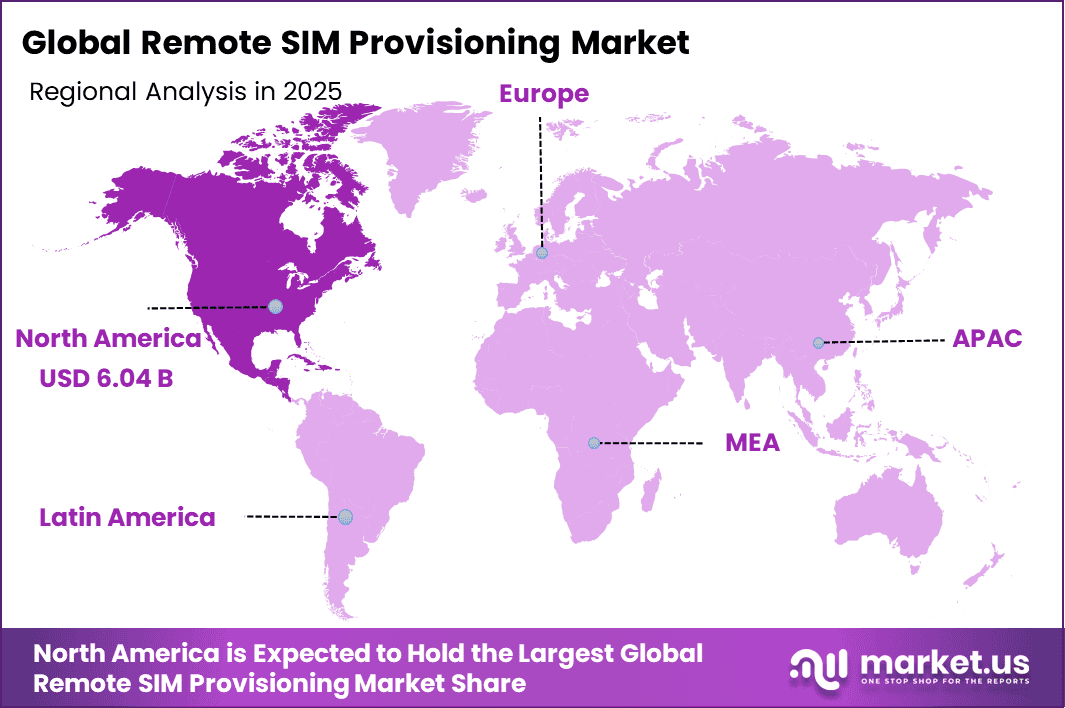
The Global Remote SIM Provisioning Market generated USD 16 billion in 2025 and is predicted to register growth from USD 18.72 billion in 2026 to about USD 76.91 billion by 2035, recording a CAGR of 17% throughout the forecast span. In 2025, North America held a dominant market position, capturing more than a 37.8% share, holding USD 6.04 Billion revenue.
Top Market Takeaways
- LEO orbit type commands 41.3% market share, delivering low-latency global coverage, optical inter-satellite links, and resilient mesh networking for real-time tactical communications.
- Satellite platforms capture 62.5%, enabling direct-to-device 5G NTN, hybrid terrestrial-space architectures, and rapid constellation scalability through reusable launch vehicles.
- Defense & security end-users hold 34.2%, leveraging NTN for contested environment operations, proliferated LEO architectures, and jam-resistant beyond-line-of-sight connectivity.
- North America drives 40.5% global value, with U.S. market at USD 3.77 billion and 30.4% CAGR, fueled by SpaceX Starshield, DoD LEO initiatives, and commercial-military convergence.
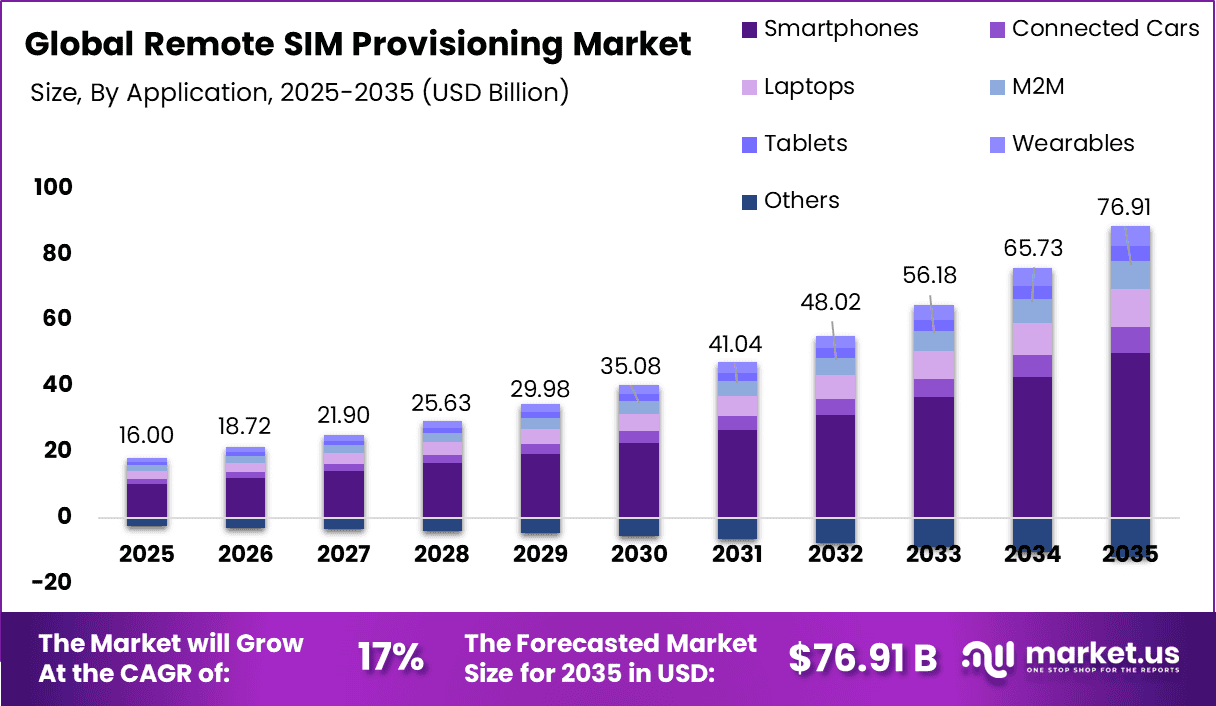
Remote SIM provisioning is changing how mobile connectivity is managed by allowing SIM profiles to be activated, updated, or switched over the air without the need for a physical SIM card. This technology is widely used in embedded SIM and integrated SIM solutions, enabling devices to connect to mobile networks without manual intervention.
It is becoming important across smartphones, connected vehicles, wearable devices, and industrial systems where remote management of connectivity is required. As devices become more connected and mobile, remote SIM provisioning is helping simplify operations and improve flexibility in managing network access.
One of the main driving factors is the rapid growth of connected devices that require seamless and scalable connectivity. Managing large numbers of devices with physical SIM cards is complex and time consuming, and remote provisioning offers a more efficient approach.
In addition, businesses are looking for ways to reduce operational costs and improve device lifecycle management, which is supported by remote updates and network switching. The increasing adoption of embedded SIM technology is also pushing this market forward, as it removes the need for physical SIM handling. Regulatory support for digital SIM solutions and the need for global connectivity across different regions are further encouraging adoption.
Demand for remote SIM provisioning solutions is rising as organizations seek greater control and flexibility over their connectivity operations. There is a strong preference for solutions that can manage multiple network profiles, support secure updates, and provide real time control over device connectivity. Industries such as automotive, telecommunications, logistics, and consumer electronics are actively adopting this technology to improve efficiency and reduce manual processes.
The demand is also driven by the need to support devices that operate across different countries and networks without interruption. As connectivity requirements continue to expand, the need for automated and scalable SIM management solutions is expected to grow steadily.
Drivers Impact Analysis
| Key Driver | Impact on CAGR Forecast (~%) | Geographic Relevance | Impact Timeline | Additional Insight |
|---|---|---|---|---|
| Rising adoption of eSIM-enabled devices | +4.8% | North America, Europe, Asia Pacific | Short to medium term | eSIM devices reduce need for physical SIM cards |
| Increasing demand for remote device management | +4.2% | Global | Medium term | Remote provisioning simplifies connectivity management |
| Growth in IoT and connected device ecosystem | +3.9% | Global | Medium to long term | IoT expansion drives SIM automation needs |
| Expansion of telecom digital transformation initiatives | +3.5% | Developed and emerging markets | Medium to long term | Operators are modernizing SIM management systems |
| Rising cross-border connectivity requirements | +3.1% | Global | Medium term | Supports seamless global network access |
Restraints Impact Analysis
| Key Restraint | Impact on CAGR Forecast (~%) | Geographic Relevance | Impact Timeline | Additional Insight |
|---|---|---|---|---|
| Security concerns related to remote provisioning | -3.6% | Global | Medium term | Security risks affect trust levels |
| High initial integration and deployment costs | -3.2% | Emerging markets | Short to medium term | Cost barriers slow adoption |
| Limited interoperability across telecom operators | -2.7% | Global | Medium to long term | Lack of standardization creates friction |
| Regulatory and compliance complexities | -2.4% | Europe, Asia Pacific | Medium term | Policy differences affect implementation |
| Resistance from traditional SIM ecosystem players | -2.1% | Global | Medium to long term | Legacy systems slow transition |
By SIM Type Analysis
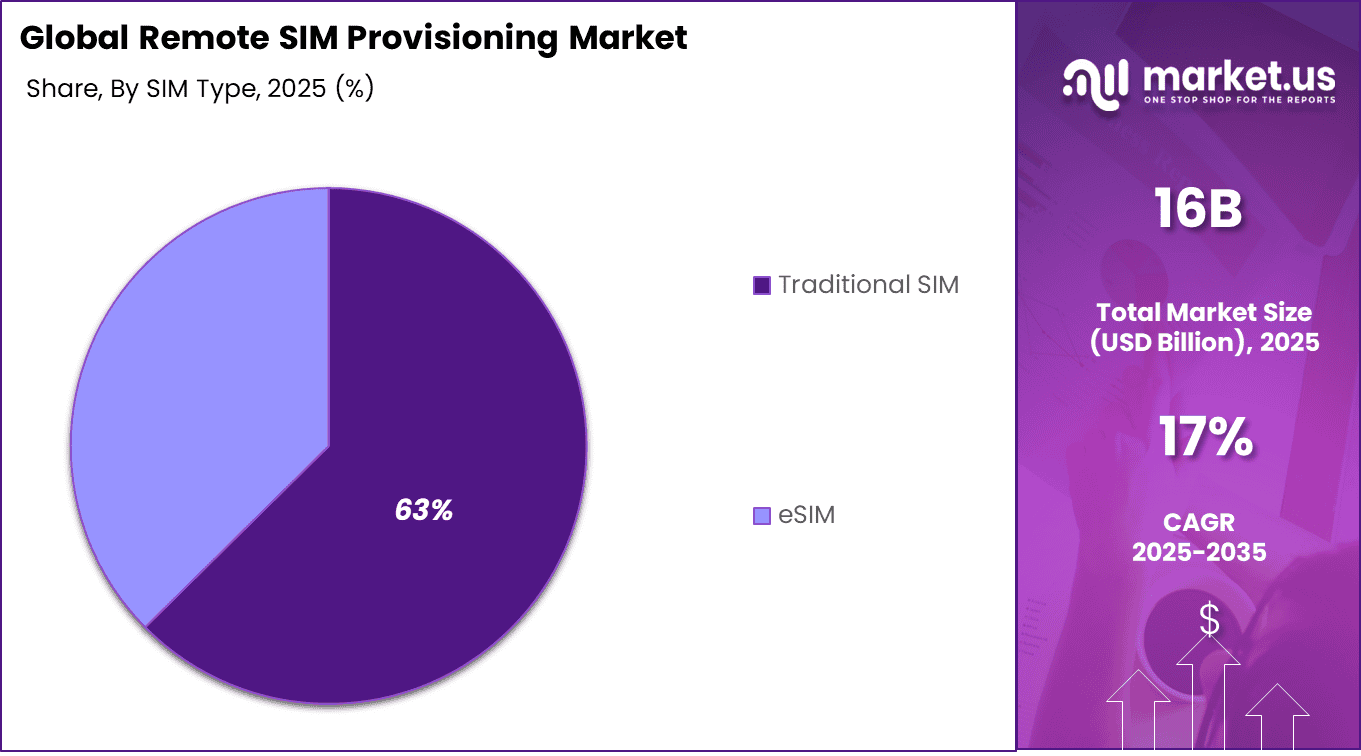
The traditional SIM segment accounted for 63% of the market share, reflecting its continued dominance due to widespread usage and established infrastructure. This segment is supported by the large installed base of devices that still rely on physical SIM cards for connectivity. Many users and network providers continue to prefer traditional SIM due to its familiarity, ease of replacement, and compatibility across a wide range of devices.
Another factor driving this segment is the gradual transition toward digital SIM solutions, which has not yet fully replaced physical SIM cards in many regions. Traditional SIM remains a reliable option, especially in markets where digital adoption is still evolving. Its cost-effectiveness and ease of deployment continue to sustain its relevance in the remote provisioning ecosystem.
By Application Analysis
The smartphones segment held 65.3% share, driven by the high penetration of mobile devices and increasing demand for seamless connectivity. Smartphones are the primary platform for remote SIM provisioning as users seek flexibility in switching network operators without changing physical SIM cards. This has encouraged the integration of advanced provisioning capabilities within modern mobile devices.
In addition, the growing reliance on smartphones for communication, entertainment, and digital services has increased the need for efficient connectivity management. Remote provisioning allows users to activate and manage subscriptions easily, improving user experience and supporting the expanding mobile ecosystem.
By Vertical Analysis
The consumer electronics segment captured 37.4% of the market, driven by the rising number of connected devices such as wearables, tablets, and smart home products. These devices require efficient and flexible connectivity solutions, making remote SIM provisioning an important feature. It enables manufacturers to simplify device setup and provide seamless network access to users.
Furthermore, the expansion of the connected device ecosystem has increased the demand for scalable and remote management solutions. Consumer electronics companies are adopting provisioning technologies to enhance product functionality and improve user convenience. This trend is expected to support continued growth in this segment as more devices become connected.
Investor Type Impact Analysis
| Investor Type | Growth Sensitivity | Risk Exposure | Geographic Focus | Investment Outlook |
|---|---|---|---|---|
| Venture capital firms | High | High | US, Europe | Investing in eSIM and connectivity startups |
| Private equity firms | Moderate to high | Moderate | North America and Europe | Scaling telecom technology providers |
| Corporate investors | High | Moderate | Global | Strategic focus on telecom and device ecosystems |
| Institutional investors | Moderate | Low to moderate | Developed markets | Prefer stable telecom infrastructure players |
| Government and public funding bodies | Moderate to high | Low | Asia Pacific, Europe | Supporting digital connectivity initiatives |
Technology Enablement Analysis
| Technology | Impact on CAGR Forecast (~%) | Geographic Relevance | Impact Timeline | Additional Insight |
|---|---|---|---|---|
| eSIM and iSIM technology advancements | +5.0% | Global | Medium to long term | Eliminates need for physical SIM cards |
| Cloud-based SIM provisioning platforms | +4.3% | North America and Europe | Short to medium term | Enables remote activation and updates |
| Integration with IoT connectivity platforms | +3.8% | Global | Medium term | Supports large-scale device management |
| 5G network integration | +3.5% | Global | Medium to long term | Enhances connectivity performance |
| AI-driven subscriber management systems | +3.0% | Developed markets | Medium term | Improves automation and efficiency |
Key Challenges
- Compatibility issues with older devices that do not support remote SIM technology.
- Complex integration with mobile network operator systems.
- Security concerns related to remote SIM activation and data transfer.
- Lack of standardization across different regions and service providers.
- High initial implementation cost for operators and enterprises.
- Limited awareness among consumers about remote SIM benefits.
- Dependence on reliable internet connectivity for activation and updates.
- Regulatory challenges in different countries affecting deployment.
- Data privacy concerns with remote profile management.
- Technical issues during SIM profile download or switching processes.
Emerging Trends
The remote SIM provisioning market is moving toward more flexible and software driven connectivity management across devices and industries. One of the key emerging trends is the rapid shift from physical SIM cards to embedded and integrated SIM technologies that allow users to activate and switch network profiles digitally. This is making device setup faster and reducing the need for physical handling.
Another important trend is the growing use of remote provisioning in IoT environments, where large numbers of devices can be managed, updated, and connected without manual intervention. There is also increasing focus on secure profile management systems that ensure safe download and storage of operator credentials. In addition, interoperability across different network operators is improving, enabling seamless connectivity across regions. The integration of remote SIM provisioning with device lifecycle management platforms is also gaining traction, allowing businesses to control connectivity from deployment to maintenance through a single interface.
Growth Factors
The growth of this market is driven by the rising demand for connected devices and the need for simplified connectivity management. As industries adopt IoT solutions at scale, managing SIM cards manually becomes inefficient, which is encouraging the shift toward remote provisioning. The expansion of global device deployment, especially in sectors such as automotive, logistics, and consumer electronics, is also supporting this demand as devices require reliable connectivity across different geographies.
Another major factor is the increasing need for operational efficiency, where organizations aim to reduce time and cost associated with device activation and network switching. The growing importance of digital transformation is further pushing businesses to adopt solutions that offer remote control and flexibility. Additionally, the demand for better user experience is encouraging service providers to offer instant activation and seamless network switching, which is strengthening the adoption of remote SIM provisioning solutions.
Key Market Segments
By SIM Type
- eSIM
- Traditional SIM
By Application
- Connected Cars
- Laptops
- M2M
- Smartphones
- Tablets
- Wearables
- Others
By Vertical
- Automotive
- Consumer Electronics
- Energy & Utilities
- Manufacturing
- Retail
- Transportation & Logistics
- Others
Regional Analysis
North America accounted for 37.8% of the Remote SIM Provisioning market, supported by strong adoption of connected devices and growing demand for flexible mobile connectivity. The region is witnessing increasing use of eSIM technology across smartphones, wearables, and IoT devices, which allows users to switch networks without physical SIM replacement.
Enterprises are also adopting remote provisioning to manage large fleets of connected devices more efficiently, reducing operational complexity. In addition, rising focus on digital services, seamless connectivity, and device portability is strengthening the demand for remote SIM solutions across telecom and consumer electronics ecosystems.
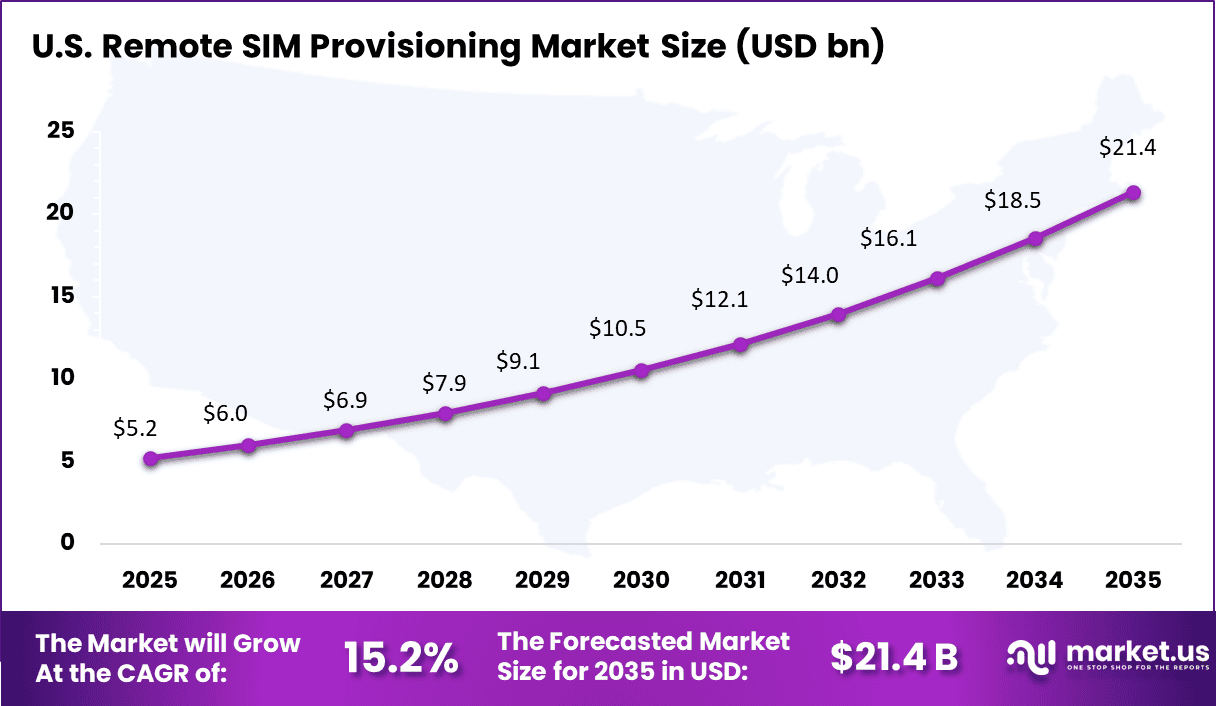
The U.S. market reached USD 5.19 Billion and is projected to grow at a CAGR of 15.2%, driven by rapid expansion of IoT deployments and increasing consumer preference for eSIM-enabled devices. Telecom operators are actively promoting remote SIM capabilities to simplify activation processes and improve customer experience.
The growth is also supported by rising adoption of connected cars, smart devices, and enterprise mobility solutions that require scalable and secure connectivity management. As digital transformation continues across industries, the demand for remote SIM provisioning in the US is expected to remain strong over the coming years.
Key Regions and Countries
- North America
- US
- Canada
- Europe
- Germany
- France
- The UK
- Spain
- Italy
- Russia
- Netherlands
- Rest of Europe
- Asia Pacific
- China
- Japan
- South Korea
- India
- Australia
- Singapore
- Thailand
- Vietnam
- Rest of APAC
- Latin America
- Brazil
- Mexico
- Rest of Latin America
- Middle East & Africa
- South Africa
- Saudi Arabia
- UAE
- Rest of MEA
Competitive Analysis
The competitive landscape of the Remote SIM Provisioning Market is driven by a mix of digital security providers, semiconductor companies, and telecom technology vendors. Companies such as Giesecke Devrient, Morpho (Safran), Oberthur Technologies, and Oasis Smart SIM focus on secure SIM lifecycle management and embedded SIM solutions.
These players provide platforms that enable remote activation, management, and updating of SIM profiles, supporting telecom operators and device manufacturers. At the same time, chipset and technology providers like Qualcomm, STMicroelectronics, and Huawei integrate remote SIM capabilities into devices, ensuring compatibility across smartphones, IoT modules, and connected systems.
In addition, large technology and telecom companies such as Microsoft, Samsung, Sony, LG, Ericsson, ZTE, and Cisco Systems are expanding their presence by supporting remote SIM provisioning through devices, cloud platforms, and network infrastructure. These companies focus on improving interoperability, security, and seamless connectivity across global networks.
Competition in this market is driven by the need for secure data management, ease of remote activation, and support for a wide range of connected devices, as adoption of eSIM technology continues to grow across consumer and industrial applications.
Top Key Players in the Market
- Giesecke
- Devrient
- Morpho (Safran)
- Oasis Smart SIM
- Oberthur Technologies
- Qualcomm
- STMicroelectronics
- Huawei
- LG
- Microsoft
- Samsung
- Sony
- Ericsson
- Huawei
- ZTE
- Cisco Systems
- Others
Future Outlook
The future outlook for the Remote SIM Provisioning Market looks strong as more devices move toward digital connectivity and flexible network management. The market is expected to grow with the rising adoption of eSIM technology in smartphones, wearables, and connected devices, allowing users to switch networks without physical SIM cards. Telecom operators are anticipated to expand remote provisioning capabilities to improve user experience and reduce operational complexity. In the coming years, growth in IoT deployments, smart vehicles, and global roaming services is expected to further drive demand, making remote SIM provisioning an important part of next-generation connectivity solutions.
Recent Developments
- March, 2026 – G+D AirOn Connect platform achieves GSMA SGP.32 certification for full IoT orchestration supporting 10M profile switches daily. Partners NXP for edge-optimized eUICC modules and serves global utilities with 99.99% uptime SLAs. Automotive V2X profiles enable cross-border roaming while bulk provisioning APIs integrate with AWS IoT Core and Azure DPS for hyperscale deployments.
- February, 2026 – Idemia launches AirOn IoT Edition with SGP.32 multi-IM support for industrial sensors and smart meters. Handles 1B+ M2M connections across 190 countries with real-time network switching based on signal quality and cost optimization. France leads European connected car deployments while factory automation profiles support predictive maintenance use cases with offline profile caching for remote sites.
Report Scope
| Report Features | Description |
|---|---|
| Market Value (2025) | USD 16 Billion |
| Forecast Revenue (2035) | USD 76.91 Billion |
| CAGR(2025-2035) | 17% |
| Base Year for Estimation | 2024 |
| Historic Period | 2020-2024 |
| Forecast Period | 2026-2035 |
| Report Coverage | Revenue forecast, AI impact on Market trends, Share Insights, Company ranking, competitive landscape, Recent Developments, Market Dynamics and Emerging Trends |
| Segments Covered | By SIM Type (eSIM, Traditional SIM), By Application (Connected Cars, Laptops, M2M, Smartphones, Tablets, Wearables, Others), By Vertical (Automotive, Consumer Electronics, Energy & Utilities, Manufacturing, Retail, Transportation & Logistics, Others) |
| Regional Analysis | North America – US, Canada; Europe – Germany, France, The UK, Spain, Italy, Russia, Netherlands, Rest of Europe; Asia Pacific – China, Japan, South Korea, India, New Zealand, Singapore, Thailand, Vietnam, Rest of Latin America; Latin America – Brazil, Mexico, Rest of Latin America; Middle East & Africa – South Africa, Saudi Arabia, UAE, Rest of MEA |
| Competitive Landscape | Giesecke, Devrient, Morpho (Safran), Oasis Smart SIM, Oberthur Technologies, Qualcomm, STMicroelectronics, Huawei, LG, Microsoft, Samsung, Sony, Ericsson, Huawei, ZTE, Cisco Systems, Others |
| Customization Scope | Customization for segments, region/country-level will be provided. Moreover, additional customization can be done based on the requirements. |
| Purchase Options | We have three license to opt for: Single User License, Multi-User License (Up to 5 Users), Corporate Use License (Unlimited User and Printable PDF) |





































