


Report Overview
The Global Embedded Device Management Market size is expected to be worth around USD 24.29 billion by 2035, from USD 5.46 billion in 2025, growing at a CAGR of 16.1% during the forecast period from 2025 to 2035. North America held a dominant market position, capturing more than a 36.3% share, holding USD 315.4 billion in revenue.
Embedded Device Management refers to the process of monitoring, updating, and controlling devices that have built-in computing systems. It enables businesses to manage connected equipment remotely, ensure software reliability, improve security, and reduce downtime. This approach helps maintain performance, extend device life, and support efficient operations across distributed environments.
Growth is driven by the rapid rise of connected devices across industries. Around 75% of new industrial equipment includes embedded technology that needs constant monitoring to avoid failures. Remote management also reduces on-site maintenance costs, which can consume 30-40% of budgets, making centralized control a practical and cost-efficient solution.
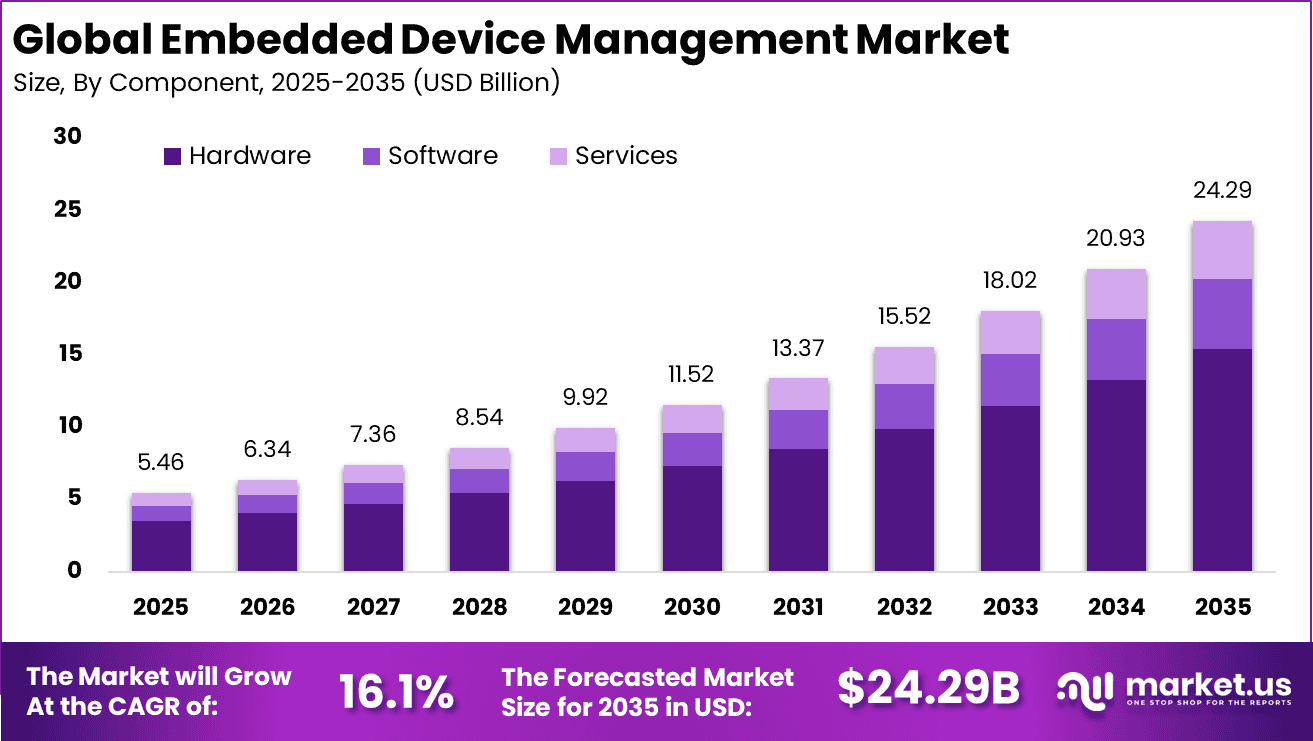
The market for Embedded Device Management is driven by the rapid expansion of connected devices across industries and the need for reliable remote monitoring. Businesses are adopting these solutions to reduce downtime, improve operational efficiency, and manage large device networks effectively. Increasing focus on automation, data-driven maintenance, and system security is further strengthening demand for advanced device management capabilities.
Demand is increasing as businesses aim to avoid costly downtime and ensure continuous operations. With devices distributed across multiple locations, centralized systems reduce response times by over 50%. Industries such as manufacturing and healthcare depend on millions of connected units, making reliable remote management essential for daily operations and service continuity.
For instance, in February 2026, Amazon Web Services Inc. launched AWS IoT Fleetwise Edge Manager, a breakthrough platform handling 5 million device updates daily across automotive fleets. This innovation slashed deployment times by 70% for U.S. manufacturers, solidifying AWS’s dominance in scalable embedded management solutions while enabling real-time edge analytics.
Key Takeaway
- In 2025, the Hardware segment accounted for the largest share of the global Embedded Device Management market, representing 68% of the overall market.
- In 2025, the Sensors segment emerged as the leading category, contributing approximately 60% of the global market share.
- In 2025, On-premises deployment remained the preferred approach, securing a dominant share of 65% in the Embedded Device Management market.
- In 2025, Large Enterprises continued to be the primary adopters, holding around 65% of the total market share.
- In 2025, the Consumer Electronics segment led among end-use industries, capturing nearly 65% of the global market.
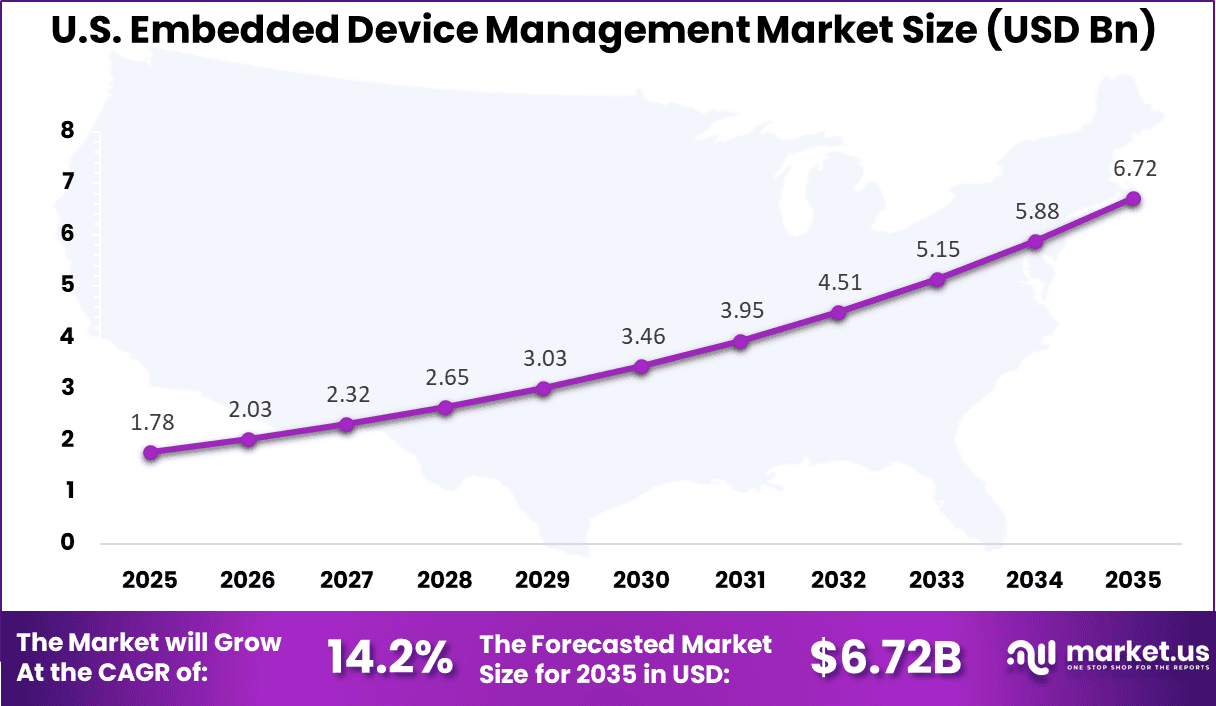
- The U.S. Embedded Device Management market was valued at USD 1.78 billion in 2025 and is projected to expand at a CAGR of 14.2%, reflecting steady adoption across industries.
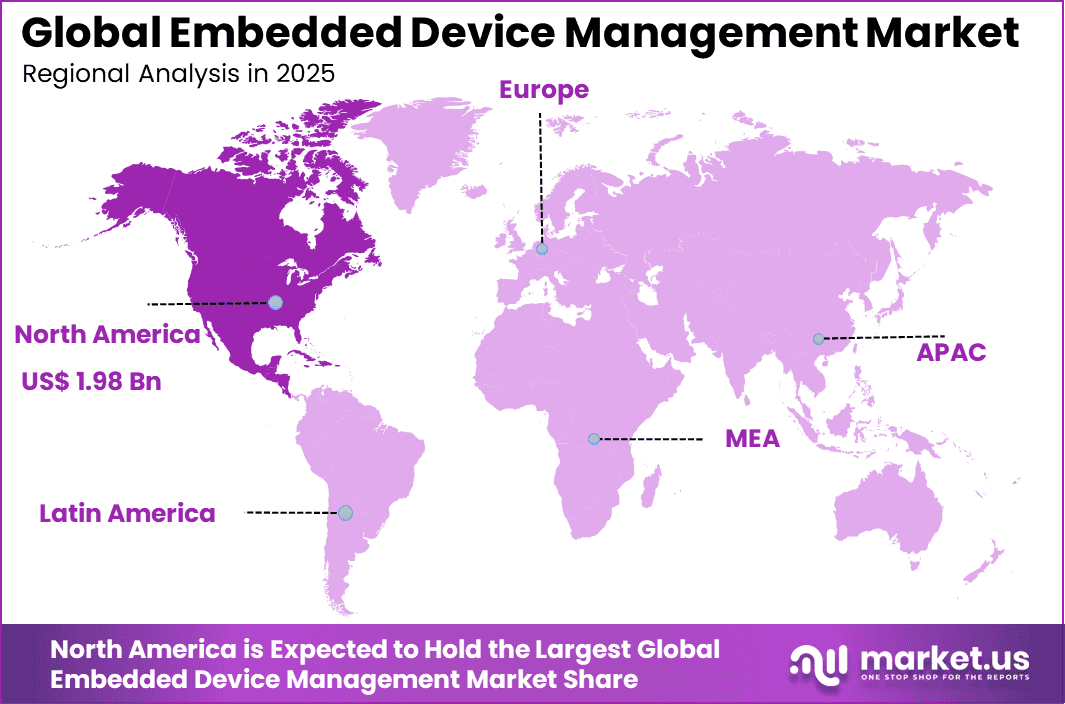
- In 2025, North America maintained its leading regional position, accounting for more than 36.3% of the global Embedded Device Management market.
Role of Generative AI
Generative AI is making device management more proactive by identifying potential failures before they occur. By analyzing usage patterns and system data, it reduces downtime by nearly 30% in industrial environments. It also automates firmware development, improving deployment speed by 40% and reducing manual engineering effort significantly.
This shift allows teams to focus more on innovation rather than routine maintenance tasks. Automated code generation and predictive insights help streamline operations, improve efficiency, and enhance system reliability. As adoption grows, generative AI is expected to play a key role in simplifying complex device ecosystems.
By Component
Hardware accounts for 63.5% of the market, reflecting the importance of physical infrastructure used to manage and control embedded devices. These components include gateways, controllers, and processing units that enable communication between devices and management platforms. Hardware plays a critical role in ensuring reliable connectivity and data transmission across device networks.
The dominance of hardware is also supported by its role in enabling device level processing and secure communication. Organizations deploy hardware solutions to support real time monitoring and device control in distributed environments. As embedded systems become more complex, hardware components remain essential for effective device management.
For Instance, in February 2026, Cisco Systems Inc. launched updated edge hardware kits tailored for embedded systems. These kits boost connectivity for controllers in tough spots, letting devices talk faster without constant tweaks. Field techs love how it simplifies installs, keeping hardware reliable even in remote sites. Growth here ties right to hardware’s core role in stable networks.
By Device Type
Sensors represent 32.4% of the device type segment, highlighting their widespread use in monitoring environmental and operational conditions. Embedded sensors collect data related to temperature, pressure, motion, and other variables, which is essential for system performance and automation. These devices are widely deployed across consumer electronics, industrial equipment, and smart infrastructure.
The increasing adoption of Internet of Things technologies has significantly expanded the use of sensors in embedded systems. Organizations rely on sensor data to optimize operations and improve decision making. As connected ecosystems continue to grow, sensors remain a key component in embedded device management.
For instance, in March 2026, Tata Consultancy Services Limited announced sensor optimization tools for real-time monitoring. Their platform spots patterns in sensor data from industrial floors, cutting false alerts. This keeps sensors humming in warehouses and fields, where quick reads prevent breakdowns and save hours of troubleshooting.
By Deployment Mode
On premises deployment accounts for 61.8% of the market, indicating a strong preference for maintaining device management systems within internal infrastructure. Many organizations manage sensitive operational data and therefore require strict control over device communication and data processing. On premises systems enable customized configurations and enhanced security controls.
Internal deployment also supports integration with existing enterprise systems and legacy infrastructure. Industries with regulatory requirements often prefer on premises environments to ensure compliance with data protection standards. As device networks expand, on premises deployment continues to maintain significant adoption.
For Instance, in February 2026, HCL Technologies Limited released an on-site management suite for embedded networks. Built for local servers, it locks down device control without cloud pings. Companies running critical ops pick this to avoid outages, keeping everything in-house and responsive during power dips or network issues.
By Organization Size
Large enterprises represent 73.4% of market adoption due to the scale and complexity of their device ecosystems. These organizations manage large numbers of embedded devices across multiple locations and operational environments. Device management platforms help centralize monitoring, configuration, and maintenance processes.
Large enterprises also maintain dedicated teams responsible for managing connected devices and ensuring system performance. Automated management tools enable efficient handling of large device networks and reduce operational risks. As enterprise digital transformation accelerates, large organizations remain the primary adopters of embedded device management solutions.
For Instance, in March 2026, Digi International Inc. partnered on a multi-site management console for enterprises. It unifies oversight of device networks in retail chains and logistics firms. Features like automated patching reduce IT overhead for massive deployments. This supports why enterprises lead, as they need tools that match their vast scope.
By End User
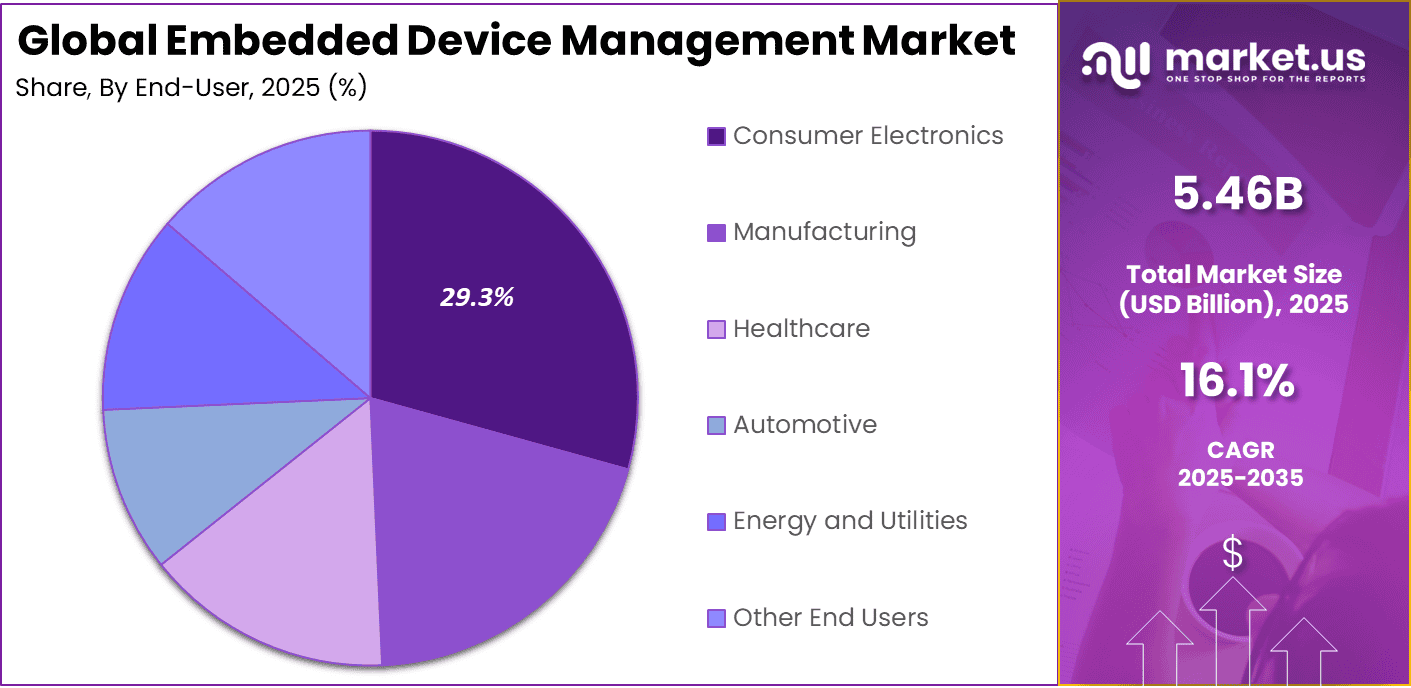
Consumer electronics account for 29.3% of market adoption due to the widespread use of embedded devices in everyday products such as smartphones, smart home systems, and wearable devices. These products rely on embedded systems for functionality and performance, requiring effective management and updates.
Manufacturers use embedded device management platforms to monitor device performance, deploy firmware updates, and ensure product reliability. As consumer demand for connected devices continues to increase, the need for structured device management solutions remains strong within the consumer electronics sector.
For Instance, in February 2026, Telit Cinterion Deutschland GmbH debuted a connectivity module for wearables and smart appliances. It enables over-the-air updates for home gadgets, keeping them responsive. Consumers enjoy hassle-free performance, while makers cut support calls. This pushes consumer electronics forward by blending ease with robust control.
U.S. Market Size
The market for Embedded Device Management within the U.S. is growing tremendously and is currently valued at USD 1.78 billion, the market has a projected CAGR of 14.2%. The market is growing due to strong adoption of IoT across industries such as manufacturing, healthcare, and smart infrastructure. Businesses are investing in remote monitoring and automation to improve efficiency and reduce operational risks.
In addition, rising cybersecurity concerns and the need for reliable device performance are encouraging organizations to deploy advanced management solutions. For instance, in March 2026, Verizon 5G Edge expanded its embedded device management platform with AI-driven anomaly detection for nationwide private networks.
For instance, in March 2026, Verizon 5G Edge expanded its embedded device management platform with AI-driven anomaly detection for nationwide private networks. This strengthens U.S. leadership in mission-critical IoT deployments across logistics and utilities, offering unmatched network reliability and remote management capabilities.
In 2025, North America held a dominant market position in the Global Embedded Device Management Market, capturing more than a 36.3% share, holding USD 1.98 billion in revenue. This dominance is due to strong digital infrastructure and early adoption of connected technologies across industries.
Organizations in the region actively invest in automation, remote monitoring, and cybersecurity solutions. The presence of advanced industrial ecosystems and high use of smart devices further supports demand, while continuous innovation helps maintain leadership in managing complex device networks.
For instance, in March 2026, SOTI Surf enhanced enterprise mobility management for embedded Android devices across retail and healthcare. The North American platform now supports zero-trust security and AI-driven compliance, strengthening regional dominance in frontline worker device orchestration and application lifecycle management.
For instance, in March 2026, SOTI Surf enhanced enterprise mobility management for embedded Android devices across retail and healthcare. The North American platform now supports zero-trust security and AI-driven compliance, strengthening regional dominance in frontline worker device orchestration and application lifecycle management.
Emerging Trends
One emerging trend in the embedded device management market is the integration of artificial intelligence and advanced analytics. AI-powered systems analyze device performance data, detect anomalies, and automate maintenance actions. This enhances predictive maintenance capabilities and improves system reliability.
Another trend is the adoption of cloud-based device management platforms. Cloud deployment enables real-time monitoring, scalability, and centralized control over large fleets of devices. Organizations increasingly prefer cloud-based solutions to support distributed IoT environments and reduce infrastructure complexity.
Growth Factors
One of the primary growth factors driving the embedded device management market is the rapid expansion of IoT and connected device ecosystems. Industries are deploying sensors, smart devices, and embedded systems across distributed environments, creating a strong need for centralized management solutions. These platforms enable efficient monitoring and control of devices at scale, improving operational efficiency.
Another key growth factor is the increasing need for remote device management. Organizations require the ability to configure, monitor, and update devices without physical access. Remote management capabilities reduce operational costs, improve response times, and ensure continuous device performance across geographically dispersed systems.
Key Market Segments
By Component
- Software
- Device Monitoring and Control
- Remote Configuration Management
- Firmware and Software Update Management
- Security and Access Management
- Data Analytics and Reporting
- Hardware
- Embedded Controllers
- Communication Modules
- Sensors and Actuators
- Gateways and Edge Devices
- Processing Units
- Services
- Professional Services
- Managed Services
By Device Type
- Sensors
- Actuators
- Controllers
- Gateways
- Other Devices
By Deployment Mode
- On-Premises
- Cloud-Based
By Organization Size
- Small and Medium Enterprises
- Large Enterprises
By End-User
- Consumer Electronics
- Manufacturing
- Healthcare
- Automotive
- Energy and Utilities
- Other End Users
Key Regions and Countries
North America
- US
- Canada
Europe
- Germany
- France
- The UK
- Spain
- Italy
- Russia
- Netherlands
- Rest of Europe
Asia Pacific
- China
- Japan
- South Korea
- India
- Australia
- Singapore
- Thailand
- Vietnam
- Rest of APAC
Latin America
- Brazil
- Mexico
- Rest of Latin America
Middle East & Africa
- South Africa
- Saudi Arabia
- UAE
- Rest of MEA
Drivers
Rising Need for Remote Device Monitoring
This driver is supported by the growing use of connected devices across industries where continuous monitoring is essential for smooth operations. Organizations are increasingly relying on remote systems to track device performance, detect issues early, and reduce the need for manual inspections across multiple locations.
Remote monitoring also improves operational efficiency by allowing faster response to system issues. It helps reduce downtime and lowers maintenance effort, especially in industries with widely distributed assets. This shift is encouraging businesses to adopt advanced device management solutions for better visibility and control.
For instance, in January 2026, AWS rolled out new features in its IoT Device Management console, making it simpler for teams to track and update devices spread across remote sites like warehouses and farms. This move cuts down on travel time for fixes, letting staff handle alerts from anywhere with a dashboard that shows live status and pushes software tweaks over the air. It fits right into the growing push for oversight without being there in person.
Restraint
Complexity in System Integration
This restraint arises from the difficulty of integrating embedded device management systems with existing infrastructure. Many organizations operate with diverse hardware and software environments, making it challenging to ensure compatibility and smooth communication between different systems.
The integration process often requires technical expertise and additional resources, which can slow down adoption. Businesses may face delays and increased costs while aligning legacy systems with modern platforms, limiting the pace at which they can fully implement advanced device management solutions.
For instance, in February 2026, TCS shared a case on blending legacy factory sensors with cloud platforms, noting how mismatched protocols slow down the process and need custom bridges. Their team spent months aligning data flows to avoid gaps, a common snag that frustrates quick setups in mixed environments. It shows the hands-on work required to knit systems together smoothly.
Opportunities
Growth in Predictive Maintenance Solutions
This opportunity is driven by the increasing demand for proactive maintenance strategies that help prevent unexpected failures. Predictive maintenance uses data insights to identify potential issues before they impact operations, allowing organizations to take timely corrective actions and improve system reliability.
As businesses focus on efficiency and cost optimization, predictive maintenance solutions are gaining strong attention. These tools help extend device life, reduce repair costs, and improve overall performance, creating new growth avenues for embedded device management providers across various industries.
For instance, in March 2026, PTC enhanced its ThingWorx platform with sensor data analytics that predict wear on industrial machines, helping plants schedule fixes before breaks occur. Users now pull insights from device streams to plan, turning raw info into steps that extend equipment life and steady workflows. This opens doors for smarter upkeep routines.
Challenges
Managing Evolving Regulations
This challenge is linked to the changing regulatory landscape surrounding data security, device safety, and compliance standards. Organizations must continuously update their systems to meet new requirements, which can be complex and time consuming across different regions and industries.
Keeping up with evolving regulations also requires ongoing monitoring and system adjustments. Businesses need to invest in compliance frameworks and ensure their device management practices align with legal standards, adding operational pressure and increasing the complexity of managing connected device ecosystems.
For instance, in September 2025, Verizon faced hurdles updating carrier-grade devices for stricter U.S. security standards, requiring firmware revamps and tests that delayed rollouts. Their report stresses the need for flexible designs to handle such changes, as overlooking them risks fines or service gaps in regulated spaces.
Key Players Analysis
The Embedded Device Management Market is driven by cloud platform providers and enterprise technology companies that enable secure device connectivity and lifecycle management. Amazon Web Services Inc., Cisco Systems Inc., and Verizon provide scalable platforms for device provisioning, monitoring, and remote management across IoT ecosystems. These solutions support real time data exchange and secure communication between connected devices.
IT services and industrial software providers contribute significantly through integration and IoT platform development. Tata Consultancy Services, Infosys, HCL Technologies, and PTC Inc. deliver enterprise solutions that combine device management with analytics and digital transformation services. Their platforms help organizations manage large scale device deployments and optimize operational efficiency.
Specialized IoT and connectivity solution providers further expand the competitive ecosystem. Digi International Inc., Telit Cinterion, HMS Networks, SOTI Inc., and Aeris Communications Inc. provide platforms for device connectivity, firmware updates, and data management. Additional vendors such as Smith Micro Software, Eseye, Blynk, Zerynth, ThingsBoard, Balena, Cesanta, and SocketXP focus on developer friendly tools and cloud based device management solutions.
Top Key Players in the Market
- Amazon Web Services Inc.
- Cisco Systems Inc.
- Tata Consultancy Services Limited
- Infosys Limited
- HCL Technologies Limited
- Verizon Business Group
- PTC Inc.
- Digi International Inc.
- Telit Cinterion Deutschland GmbH
- HMS Networks AB
- SOTI Inc.
- Aeris Communications Inc.
- Smith Micro Software Inc.
- Eseye Limited
- Blynk Technologies Inc.
- Zerynth S.r.l.
- ThingsBoard Inc.
- Balena Ltd.
- Cesanta Software Limited
- SocketXP Inc.
- Others
Recent Developments
- In February 2026, Infosys Limited unveiled InfoEdge Secure, a quantum-resistant embedded management suite securing 1.2 million healthcare devices for the Cleveland Clinic. The platform’s automated compliance engine passed FDA cybersecurity audits on the first attempt, positioning Infosys as the go-to partner for regulated embedded deployments across North America.
- In March 2026, PTC Inc. introduced ThingWorx Navigate Pro at Embedded World, managing 750,000 factory robots across Ford’s U.S. plants. The platform’s digital twin synchronization cut commissioning time by 62%, driving $120 million ARR and establishing PTC as the industrial automation management leader.
Report Scope
| Report Features | Description |
|---|---|
| Market Value (2025) | USD 5.4 Bn |
| Forecast Revenue (2035) | USD 24.2 Bn |
| CAGR (2026-2035) | 16.1% |
| Base Year for Estimation | 2025 |
| Historic Period | 2020-2024 |
| Forecast Period | 2026-2035 |
| Report Coverage | Revenue forecast, AI impact on Market trends, Share Insights, Company ranking, competitive landscape, Recent Developments, Market Dynamics and Emerging Trends |
| Segments Covered | By Component (Software, Hardware, Services), By Device Type (Sensors, Actuators, Controllers, Gateways, Other Devices), By Deployment Mode (On-Premises, Cloud-Based), By Organization Size (Small and Medium Enterprises, Large Enterprises), By End-User (Manufacturing, Healthcare, Automotive, Energy and Utilities, Consumer Electronics, Other End Users) |
| Regional Analysis | North America – US, Canada; Europe – Germany, France, The UK, Spain, Italy, Russia, Netherlands, Rest of Europe; Asia Pacific – China, Japan, South Korea, India, New Zealand, Singapore, Thailand, Vietnam, Rest of Latin America; Latin America – Brazil, Mexico, Rest of Latin America; Middle East & Africa – South Africa, Saudi Arabia, UAE, Rest of MEA |
| Competitive Landscape | Amazon Web Services Inc., Cisco Systems Inc., Tata Consultancy Services Limited, Infosys Limited, HCL Technologies Limited, Verizon Business Group, PTC Inc., Digi International Inc., Telit Cinterion Deutschland GmbH, HMS Networks AB, SOTI Inc., Aeris Communications Inc., Smith Micro Software Inc., Eseye Limited, Blynk Technologies Inc., Zerynth S.r.l., ThingsBoard Inc., Balena Ltd., Cesanta Software Limited, SocketXP Inc., Others |
| Customization Scope | Customization for segments, region/country-level will be provided. Moreover, additional customization can be done based on the requirements. |
| Purchase Options | We have three license to opt for: Single User License, Multi-User License (Up to 5 Users), Corporate Use License (Unlimited User and Printable PDF) |





























