


Market Overview
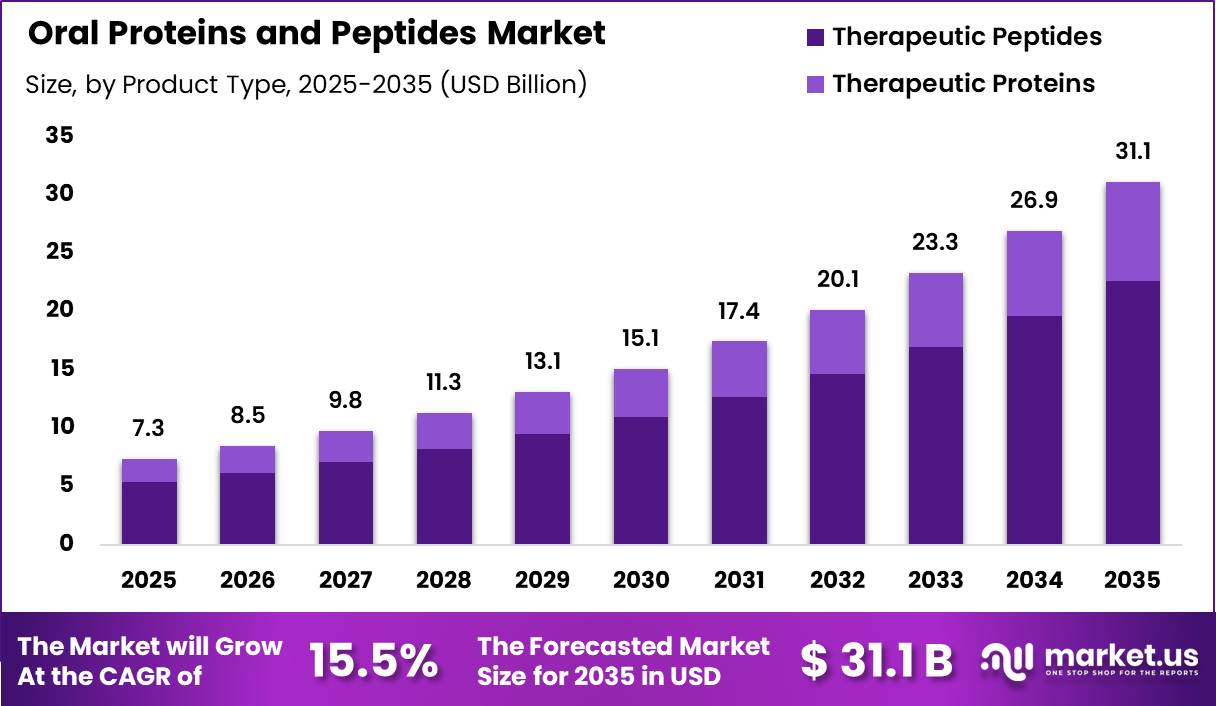
The Global Oral Proteins and Peptides Market size is expected to be worth around US$ 31.1 Billion by 2035 from US$ 7.3 Billion in 2025, growing at a CAGR of 15.5% during the forecast period from 2026 to 2035. In 2025, North America led the market, achieving over 41.3% market share with revenue of US$ 3.02 Billion.
The global oral proteins and peptides market is gaining strong attention as pharmaceutical companies develop patient-friendly alternatives to injectable biologic therapies.
Proteins and peptides offer high target specificity and improved therapeutic outcomes for chronic diseases such as diabetes, obesity, gastrointestinal disorders, and hormonal deficiencies. However, oral delivery has historically been difficult because digestive enzymes and stomach acid degrade these molecules before they reach the bloodstream.
Recent advances in formulation technologies, including absorption enhancers, protective coatings, nanocarriers, and carrier-based delivery systems, are helping overcome these barriers and supporting the expansion of oral biologics.
The U.S. Food and Drug Administration (FDA) continues to strengthen the regulatory framework for peptide therapeutics through updated clinical pharmacology guidance, supporting the safe development of innovative peptide drug products.
As of March 2020, the FDA’s Center for Drug Evaluation and Research had approved 96 Biologics License Applications (BLAs), reflecting the increasing role of biologic medicines in modern healthcare.
Additionally, recent scientific reviews indicate that less than 2% of FDA-approved peptide and protein therapeutics are currently available as oral formulations, highlighting the significant opportunity for innovation in oral drug delivery technologies. Growing demand for convenient, non-invasive therapies is accelerating research in oral GLP-1 receptor agonists, insulin, calcitonin, and other peptide-based medicines.
Improved patient adherence, reduced dependence on injections, and advances in biotechnology are expected to support broader clinical adoption. Ongoing collaborations among pharmaceutical companies, academic institutions, and regulatory agencies continue to advance novel oral delivery platforms, positioning oral proteins and peptides as an important next-generation therapeutic approach for chronic disease management worldwide.
Key Takeaways
- Market Size: The Global Oral Proteins and Peptides Market size was US$ 7.3 billion in 2025. The market is estimated to grow to US$ 31.1 billion by 2035.
- Market Share: The Compound Annual Growth Rate (CAGR) of the market from 2026 to 2035 will be 15.5%.
- Product Type: Therapeutic Peptides has the largest market share, accounting for 72.8% of total product type revenue.
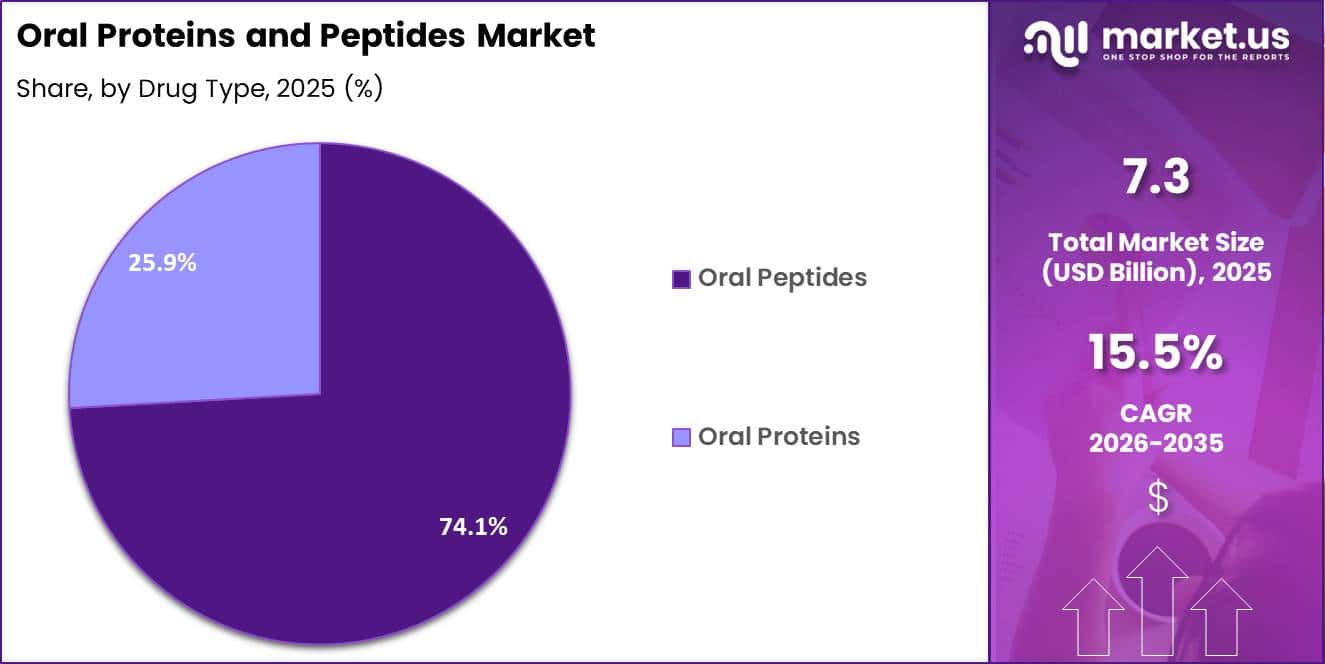
- Drug Type: Oral Peptides leads the segment, accounting for 74.1% of total drug type revenue.
- Formulation Type: Tablets leads the segment, accounting for 36.7% of total formulation type revenue.
- Indication: Diabetes leads the segment, accounting for 42.5% of total indication revenue.
- Distribution Channel: Retail Pharmacies leads the segment, accounting for 47.6% of total distribution channel revenue.
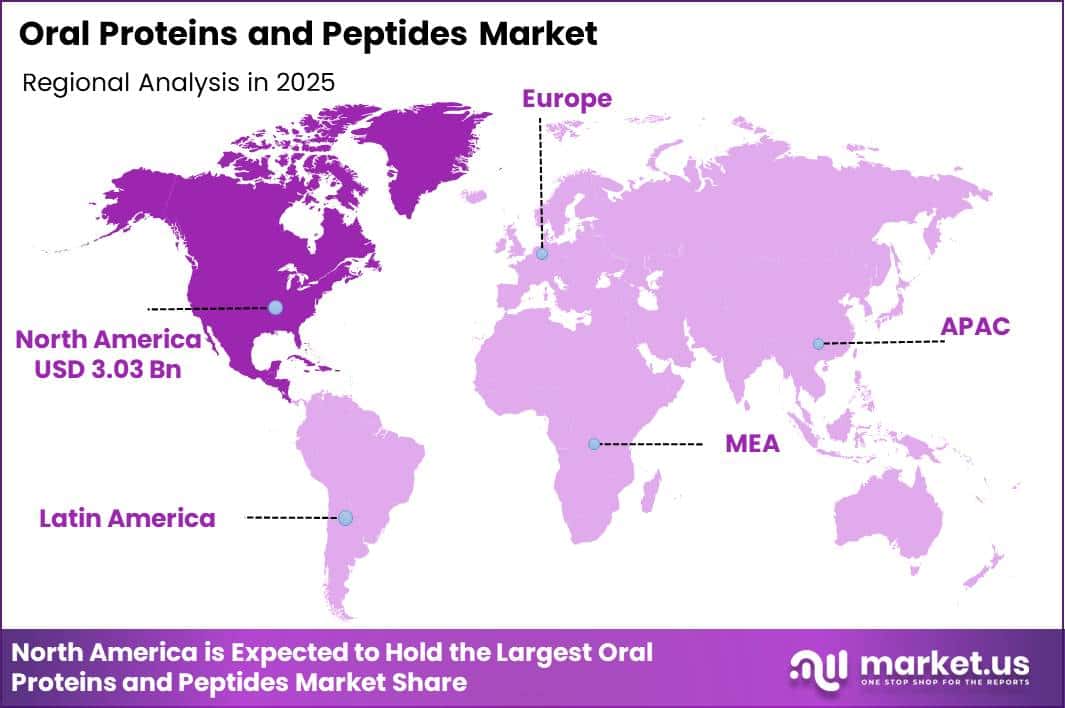
- Regional: North America is the dominant regional market, accounting for 41.3% of global revenue, holding US$ 3.02 billion in revenue in 2025.
Product Type Analysis
The Therapeutic Peptides segment dominated the global Oral Proteins and Peptides Market with 72.8% of the market share in 2025. The segment’s leadership is driven by the increasing clinical success of peptide-based medicines in treating chronic diseases such as diabetes, obesity, osteoporosis, and endocrine disorders.
Advances in oral delivery technologies, including permeation enhancers and enzyme inhibitors, have significantly improved peptide stability and absorption, making oral administration more feasible.
Pharmaceutical companies are also investing heavily in developing next-generation oral peptide therapies that improve patient convenience compared to injectable alternatives. Rising acceptance of peptide therapeutics by healthcare providers and patients further supports segment growth. Continuous regulatory approvals and expanding clinical pipelines are expected to strengthen demand over the forecast period.
The Therapeutic Proteins segment accounted for 27.2% of the market in 2025. Although oral delivery of proteins remains more technically challenging because of their larger molecular size and susceptibility to degradation, ongoing advancements in encapsulation technologies, nanoparticle carriers, and protective formulations are improving their oral bioavailability.
Increasing research into oral insulin and other protein-based therapies is expected to create new growth opportunities for this segment in the coming years.
Drug Type Analysis
The Oral Peptides segment held the largest share of the global Oral Proteins and Peptides Market, accounting for 74.1% in 2025. This dominance is supported by the growing commercialization of peptide-based oral therapies for metabolic and endocrine diseases.
Peptides generally exhibit better stability and can be formulated more effectively using advanced oral drug delivery technologies than larger protein molecules.
Strong research activity in oral GLP-1 receptor agonists and other peptide therapeutics has accelerated product development, while increasing patient preference for non-invasive treatment options has further strengthened demand.
Pharmaceutical manufacturers continue to expand clinical pipelines for oral peptide drugs due to their ability to improve treatment adherence and reduce dependence on injections. The segment is expected to remain the primary revenue contributor throughout the forecast period.
The Oral Proteins segment represented 25.9% of the market in 2025. Despite facing challenges related to enzymatic degradation and poor gastrointestinal absorption, significant progress in carrier systems, protective coatings, and absorption-enhancing technologies is improving the commercial viability of oral protein therapeutics.
Continued innovation is expected to expand future applications across multiple chronic disease areas.
Formulation Type Analysis
The Tablets segment dominated the Oral Proteins and Peptides Market with 36.7% of the market share in 2025. Tablets remain the preferred formulation because they offer convenient administration, accurate dosing, better patient compliance, and cost-effective large-scale manufacturing.
Continuous improvements in tablet formulation technologies, including absorption enhancers, enzyme inhibitors, and protective coatings, have significantly increased the feasibility of oral peptide delivery.
Pharmaceutical companies also favor tablets because they provide longer shelf life and greater formulation flexibility for chronic disease therapies. As more oral biologic products enter the market, tablet formulations are expected to maintain their leading position.
The Capsules segment continues to grow steadily due to improved formulation flexibility and enhanced protection of active ingredients. Enteric-Coated Tablets are increasingly adopted to protect proteins and peptides from stomach acid while enabling intestinal absorption. Sustained-Release Formulations support prolonged therapeutic effects and reduce dosing frequency.
Nanoparticle-Based Oral Formulations are gaining attention for improving drug stability and absorption across biological barriers. Lipid-Based Oral Formulations enhance bioavailability by promoting efficient transport through the gastrointestinal tract.
The Others category includes innovative polymer-based systems, microencapsulation technologies, and emerging oral delivery platforms under clinical development.
Indication Analysis
The Diabetes segment accounted for the largest share of the Oral Proteins and Peptides Market, representing 42.5% in 2025.
The increasing global prevalence of diabetes, coupled with growing demand for patient-friendly alternatives to injectable insulin and GLP-1 therapies, continues to drive this segment. Oral peptide medicines improve treatment adherence by reducing injection burden while supporting long-term disease management.
Continuous innovation in oral delivery systems has accelerated the development of effective diabetes therapies, making this indication the largest contributor to market revenue. Strong clinical research activity and expanding regulatory approvals further reinforce segment growth.
Other major indications include Osteoporosis, where peptide therapies support bone metabolism; acromegaly, requiring long-term hormone regulation; and Hormonal Disorders, benefiting from targeted peptide therapeutics.
Gastrointestinal Disorders and Metabolic Disorders are experiencing growing research investment due to rising disease prevalence. Infectious Diseases, Cancer, Cardiovascular Diseases, and Autoimmune Diseases represent expanding therapeutic areas as advanced oral delivery technologies improve systemic absorption of biologic medicines.
The Others segment includes rare diseases and emerging peptide-based therapeutic applications currently under clinical investigation.
Distribution Channel Analysis
The Retail Pharmacies segment dominated the global Oral Proteins and Peptides Market with 47.6% of the market share in 2025. Retail pharmacies remain the primary distribution channel because they provide convenient patient access, broad geographic coverage, and continuous availability of prescription medicines for chronic disease management.
Patients receiving long-term therapies for diabetes, hormonal disorders, and metabolic diseases frequently obtain medications through community pharmacy networks.
Growing healthcare awareness, expanding pharmacy chains, and improved reimbursement policies have further strengthened retail pharmacy sales. Pharmacist-led patient counseling also supports medication adherence, reinforcing the segment’s leading position.
The Hospital Pharmacies segment continues to play an important role in dispensing newly approved oral biologics, specialized therapies, and medications requiring physician supervision during treatment initiation. Hospitals also contribute significantly through inpatient care and specialty clinics managing complex chronic diseases.
Meanwhile, Online Pharmacies are experiencing rapid expansion due to increasing digital healthcare adoption, home delivery services, competitive pricing, and greater accessibility for patients requiring long-term medication refills.
The growth of telemedicine and electronic prescriptions is expected to further support online pharmacy sales during the forecast period, making it one of the fastest-evolving distribution channels.
Key Market Segments
By Product Type
- Therapeutic Peptides
- Therapeutic Proteins
By Drug Type
- Oral Peptides
- Oral Proteins
By Formulation Type
- Tablets
- Capsules
- Enteric-Coated Tablets
- Sustained-Release Formulations
- Nanoparticle-Based Oral Formulations
- Lipid-Based Oral Formulations
- Others
By Indication
- Diabetes
- Osteoporosis
- Acromegaly
- Hormonal Disorders
- Gastrointestinal Disorders
- Metabolic Disorders
- Infectious Diseases
- Cancer
- Cardiovascular Diseases
- Autoimmune Diseases
- Others
By Distribution Channel
- Hospital Pharmacies
- Retail Pharmacies
- Online Pharmacies
Driver
Oral GLP-1 Approvals Accelerate Peptide Therapeutics Market Expansion
The late-2025 FDA approval of once-daily oral semaglutide 25 mg (Wegovy pill) as the first oral GLP-1 agonist for chronic weight management and cardiovascular risk reduction marks a structural inflection point for the oral proteins and peptides category by legitimizing oral GLP-1 pharmacology as a mainstream modality.
The pill’s dual indication, chronic weight management plus reduction of major adverse cardiovascular events in adults with overweight or obesity and established cardiovascular disease, creates a high-value payer narrative where one oral peptide can potentially offset long-term hospitalization and event costs this strengthens reimbursement prospects and accelerates uptake in high-spend markets such as the US and EU-5.
Commercially, Novo Nordisk’s launch plans for early 2026 in the US, with a self-pay price around USD 149 per month through savings programs, demonstrate viable pricing for a once-daily oral peptide in retail and telehealth channels, and provide a benchmark for future oral GLP-1 and co-agonist entrants targeting similar cost-of-care savings.
Strategically, this driver accelerates the shift toward branded, indication-stacked oral peptides with strong payer health-economic cases, increasing average revenue per patient episode and encouraging portfolio strategies that bundle obesity, diabetes and CV risk indications around common oral platforms.
This supports a roughly 2.5 %-point incremental CAGR uplift in markets where regulatory approvals and reimbursement are most advanced over the 2026–2030 window.
| Driver | (~) % Impact on CAGR Forecast | Geographic Relevance | Impact Timeline |
|---|---|---|---|
| Escalating diabetes and obesity burden driving oral biologics adoption | +3.0% | North America core, EU, APAC corridors, GCC | Medium term (2–4 years) |
| GLP-1 oral pill approvals and obesity–CV risk indications | +2.5% | North America core, EU, selective APAC, Latin America spill-over | Short–Medium term (≤ 4 years) |
| Advances in oral delivery technologies (permeation enhancers, nanoparticles, devices) | +2.0% | EU, North America, Japan, South Korea, China | Long term (≥ 4 years) |
| Shift from injectable biologics to patient-centric oral chronic therapies | +1.8% | North America, EU, APAC urban clusters | Medium–Long term (2–6 years) |
| Rising payer and health-system focus on adherence and total cost of care | +1.5% | North America core, EU, select APAC and Latin America | Medium term (2–4 years) |
| Expanding R&D and licensing pipelines in metabolic and autoimmune indications | +1.2% | North America, EU, China, Japan, emerging APAC | Long term (≥ 4 years) |
Challenge
Clinical Translation Variability Challenges Oral Peptide Therapeutics Growth
Clinical translation is a third major challenge, driven less by outright failure and more by persistent variability and unpredictable human absorption that complicate trial design, labeling, and payer negotiations.
In early-phase human studies, oral peptide candidates frequently exhibit inter-subject coefficient of variation for exposure in the 40–60% range, compared with 20–30% typical for injectables, and show 15–30% swings in bioavailability depending on whether dosing occurs in fasting versus fed states or alongside high-fat meals, forcing sponsors to run crossover designs, multi-arm food-effect studies, and intensive PK profiling with 4–6 blood draws per subject.
This not only increases per-patient trial cost by 20–40% but also raises total sample sizes in pivotal Phase 3 from 500–800 to 800–1,200 patients to ensure adequate statistical power under higher variance, extending recruitment windows by 6–9 months for chronic disease indications such as diabetes and inflammatory disorders.
To navigate this, sponsors increasingly embed adaptive trial designs, leverage population PK/PD modeling from Phase 2 onward, and incorporate digital adherence and dosing-time monitoring to disentangle true pharmacologic variability from behavioral noise.
while also aligning labels and dosing guidance tightly with regulatory expectations around meal timing and comorbidity management, thereby transforming clinical translation from a binary success/failure gate into a managed, but resource-intensive, optimization cycle that tempers but does not halt commercialization.
| Challenge | (~) % CAGR Friction Drag | Geographic Relevance | Mitigation Horizon |
|---|---|---|---|
| GI barrier bioavailability ceiling | -2.0% | Global advanced therapeutics hubs | Long term (≥ 4 years) |
| Complex formulation cost stack | -1.6% | US, EU, Japan, South Korea | Medium term (2-4 years) |
| Clinical translation and variability | -1.3% | North America core, EU clinical nodes | Medium term (2-4 years) |
| Regulatory pathway uncertainty | -1.1% | US FDA sphere, EMA, PMDA | Long term (≥ 4 years) |
| Manufacturing scalability and QA | -1.4% | Global CMOs, APAC production belts | Medium term (2-4 years) |
| Specialized talent and infrastructure gap | -0.9% | Emerging markets, mid-tier pharma clusters | Long term (≥ 4 years) |
Restraints
Reimbursement Uncertainty Limits Oral Peptide Therapeutics Adoption
Reimbursement uncertainty relative to established injectable comparators acts as a fourth restraint, particularly in the US, EU5, and Japan where payers increasingly scrutinize incremental value for high-cost specialty products and deploy step-therapy and indication-specific coverage policies.
Many oral protein and peptide candidates enter formularies at list prices 10–25% above their injectable analogs to recoup elevated development and manufacturing costs, but payer models often assign modest adherence-driven utility gains and limited system-level savings, leading to formulary tiering that pushes patient co-pay burdens up by USD 20–50 per month and reduces uptake in cost-sensitive segments.
Health technology assessment bodies frequently require long-term real-world evidence to confirm adherence, reduction in hospitalizations, or improved quality of life, which can take 3–5 years to accumulate and delays broad reimbursement at parity in major indications.
In the US, evolving Medicare and commercial plan policies around specialty tiers and biosimilar competition further pressure net pricing, with average gross-to-net discounts for biologics already running at 40–50%.
If oral peptide products must match these discounts while carrying higher COGS, EBITDA margins can be 5–10 % points lower than injectables in the same class.
This payer friction reduces the number of commercially viable indications per asset, increases launch risk, and forces companies to prioritize affluent and highly adherent patient cohorts, collectively trimming about 1.5 % points from the baseline CAGR, as price-volume trade-offs, delayed coverage decisions, and regional heterogeneity in reimbursement slow scaling even after regulatory approval.
| Restraint | (~) % Impact on CAGR Forecast | Geographic Relevance | Impact Timeline |
|---|---|---|---|
| Low oral bioavailability & GI degradation | -3.0% | North America, EU, Japan core | Long term (≥ 4 years) |
| Complex regulatory & clinical pathways | -2.2% | North America core, EU, UK | Medium term (2-4 years) |
| High manufacturing cost & scale-up risk | -1.8% | North America, EU, APAC corridors | Medium term (2-4 years) |
| Reimbursement uncertainty vs injectables | -1.5% | US, EU5, Japan | Long term (≥ 4 years) |
| Cold-chain & stability constraints | -1.3% | Emerging APAC, LatAm, MEA | Short–Medium (≤ 4 years) |
| IP clustering & competitive crowding | -1.0% | US, EU, select APAC hubs | Medium term (2-4 years) |
Opportunity
Digital-enabled adherence and outcomes-based contracting for oral peptides
Digital-enabled adherence and outcomes-based contracting focused on oral peptides is a strategic opportunity because current revenue models remain largely volume-based and do not fully monetize the adherence and outcomes advantages that oral formats can deliver relative to injectables, especially in chronic conditions like diabetes and obesity.
Oral peptide regimens lend themselves to daily routines and can be integrated with mobile health apps, connected pill dispensers, and telehealth follow-up, allowing for granular tracking of dosing behavior, glycemic metrics, weight trajectories, and adverse events that underpin robust real-world evidence datasets.
Health systems and payers increasingly seek value-based arrangements, and oral peptides with verifiable adherence data and measurable clinical endpoints, patients achieving specific HbA1c targets, weight loss thresholds, or reduction in hospitalizations, can be positioned as candidates for outcomes-based contracts that share risk and reward over multi-year horizons.
Commercially, this enables manufacturers to negotiate premiums in segments where strong adherence and outcomes can be demonstrated, potentially improving net price realization by 5–10% per course compared to conventional contracting, while simultaneously reducing payer spend on complications and acute episodes, which strengthens formulary positioning.
Because baseline market projections typically assume static adherence patterns and fee-for-service pricing, the development of sophisticated digital-and-contracting overlays specific to oral peptides.
Starting in North America, Europe, and advanced APAC health systems, constitutes incremental upside and could add about 0.8 % points to market CAGR in a short execution window, as pilot contracts and digital companion launches are operationally feasible within 1–2 years for leading manufacturers.
| Opportunity | (~) % Potential CAGR Upside | Geographic Relevance | Execution Window |
|---|---|---|---|
| Oral insulin and basal peptide platforms | +2.0% | North America, EU, India, China | Medium term (2–4 years) |
| Oral GLP-1 and multi-agonist obesity franchises | +1.8% | North America core, EU, APAC urban | Short–Medium term (≤4 years) |
| Buccal/sublingual peptide delivery for acute and specialty care | +1.2% | North America, EU, Japan | Medium–Long term (≥3 years) |
| Nanocarrier and permeation-enhancer tech platforms (B2B licensing) | +1.0% | Global: CDMO hubs in NA/EU/China | Short–Medium term (≤4 years) |
| Emerging-market primary care peptide decentralization | +1.0% | India, Southeast Asia, LATAM, Africa | Long term (≥4 years) |
| Digital-enabled adherence and outcomes-based contracting for oral peptides | +0.8% | North America, EU, OECD Asia | Short term (≤2 years) |
Regional Analysis
In 2025, North America led the market, achieving over 41.3% share with a revenue of US$ 3.02 billion. The region’s leadership is supported by its advanced biopharmaceutical industry, strong clinical research infrastructure, and high adoption of innovative biologic therapies.
The United States remains the largest contributor due to significant investments in peptide drug development, favorable regulatory pathways, and increasing demand for oral alternatives to injectable treatments for diabetes, obesity, and endocrine disorders. The presence of leading pharmaceutical companies and continuous innovation in oral drug delivery technologies further strengthen regional growth.
Europe represents the second-largest regional market, driven by expanding biologics research, supportive healthcare systems, and increasing government funding for pharmaceutical innovation. Countries including Germany, France, the United Kingdom, and Switzerland continue to invest heavily in advanced drug delivery technologies and peptide-based therapeutics.
Asia Pacific is projected to register the fastest growth during the forecast period. Rising healthcare expenditure, increasing prevalence of chronic diseases, expanding pharmaceutical manufacturing capabilities, and growing investments in biotechnology across China, Japan, South Korea, and Australia are accelerating market expansion. Improved healthcare access and rising awareness of patient-friendly oral biologics also support demand.
Latin America and the Middle East & Africa are experiencing gradual market growth due to improving healthcare infrastructure, increasing access to innovative medicines, expanding pharmaceutical distribution networks, and growing government initiatives aimed at strengthening chronic disease management and access to advanced therapeutic options.
Key Regions and Countries
North America
- The US
- Canada
Europe
- Germany
- France
- The U.K.
- Italy
- Spain
- Russia & CIS
- Rest of Europe
Asia Pacific
- China
- India
- Japan
- South Korea
- ASEAN
- Australia & New Zealand
- Rest of Asia Pacific
Middle East & Africa
- GCC
- South Africa
- Rest of Middle East & Africa
Latin America
- Brazil
- Mexico
- Rest of Latin America
Key Player Analysis
Suppliers in the global oral proteins and peptides market seek competitive advantage through proprietary oral delivery technology platform development encompassing enteric coating systems, permeation enhancer formulations, nanoparticle encapsulation, and lipid-based delivery architectures that collectively overcome the fundamental gastrointestinal degradation and intestinal absorption barriers that have historically confined protein and peptide drug administration to injectable routes.
Key strategic focus areas include oral GLP-1 receptor agonist formulation development exemplified by Novo Nordisk’s oral semaglutide achieving commercial success in diabetes and obesity management validating the commercial potential of oral peptide delivery and stimulating substantial pharmaceutical industry investment in next-generation oral protein and peptide platform replication across additional therapeutic categories.
Pipeline expansion into osteoporosis, acromegaly, cancer, and autoimmune disease oral peptide formulation programs represents the most significant near-term market growth opportunity, where successful oral bioavailability achievement for parenteral peptide drugs already validated in their respective indications would enable patient preference-driven switch from injection to oral administration creating immediate commercial differentiation.
Companies continue investing in absorption enhancer safety characterization, FDA clinical pharmacology bioavailability bridging study program development, and pharmaceutical partnership licensing negotiations enabling oral delivery technology platform application across partner company injectable peptide drug portfolios globally.
The transformative commercial success of oral semaglutide generating billions in annual revenue as the first commercially successful oral GLP-1 peptide is providing unambiguous proof-of-concept validation driving accelerated investment across the entire oral proteins and peptides sector through the forecast period to 2035.
Top Key Players
- Novo Nordisk
- AbbVie
- Pfizer
- Eli Lilly
- Sanofi
- Oramed Pharmaceuticals
- Rani Therapeutics
- Biora Therapeutics
- Entera Bio
- Enteris BioPharma
- Lonza
- Catalent
- Evonik Health Care
- Biocon
- Zealand Pharma
- Other Key Players
Recent Developments
- In January 2026, Novo Nordisk expanded its oral semaglutide commercial program with a higher-dose formulation targeting obesity management in addition to type 2 diabetes, securing expanded retail pharmacy distribution across North American and European markets through group purchasing and specialty pharmacy institutional supply programs.
- In February 2026, Oramed Pharmaceuticals reported positive Phase 3 clinical trial results for its oral insulin formulation, advancing toward FDA New Drug Application submission targeting type 2 diabetes patients seeking injectable insulin-equivalent glycemic control through convenient daily oral administration.
- In March 2026, Rani Therapeutics secured a pharmaceutical partnership licensing agreement with a leading biopharmaceutical company covering oral delivery technology platform application to its injectable peptide portfolio, targeting multiple therapeutic indication oral formulation development programs across metabolic and autoimmune disease categories.
- In May 2026, Entera Bio expanded its oral parathyroid hormone peptide clinical development program into osteoporosis prevention indication, securing institutional research collaboration agreements with leading academic medical center bone metabolism research programs across North American and European clinical trial sites.
Report Scope
| Report Features | Description |
|---|---|
| Market Value (2025) | US$ 7.3 Billion |
| Forecast Revenue (2035) | US$ 31.1 Billion |
| CAGR (2026-2035) | 15.5% |
| Base Year for Estimation | 2025 |
| Historic Period | 2020-2024 |
| Forecast Period | 2026-2035 |
| Report Coverage | Revenue Forecast, Market Dynamics, Competitive Landscape, Recent Developments |
| Segments Covered | By Product Type (Therapeutic Peptides, Therapeutic Proteins), By Drug Type (Oral Peptides, Oral Proteins), By Formulation Type (Tablets, Capsules, Enteric-Coated Tablets, Sustained-Release Formulations, Nanoparticle-Based Oral Formulations, Lipid-Based Oral Formulations, Others), By Indication (Diabetes, Osteoporosis, Acromegaly, Hormonal Disorders, Gastrointestinal Disorders, Metabolic Disorders, Infectious Diseases, Cancer, Cardiovascular Diseases, Autoimmune Diseases, Others), By Distribution Channel (Hospital Pharmacies, Retail Pharmacies, Online Pharmacies) |
| Regional Analysis | North America – The US, Canada; Europe – Germany, France, U.K., Italy, Spain, Russia & CIS, Rest of Europe; Asia Pacific – China, India, Japan, South Korea, ASEAN, Australia & New Zealand, Rest of Asia Pacific; Middle East & Africa – GCC, South Africa, Rest of Middle East & Africa; Latin America – Brazil, Mexico, Rest of Latin America |
| Competitive Landscape | Novo Nordisk, AbbVie, Pfizer, Eli Lilly, Sanofi, Oramed Pharmaceuticals, Rani Therapeutics, Biora Therapeutics, Entera Bio, Enteris BioPharma, Lonza, Catalent, Evonik Health Care, Biocon, Zealand Pharma, Other Key Players |
| Customization Scope | Customization for segments, region/country-level will be provided. Moreover, additional customization can be done based on the requirements. |
| Purchase Options | We have three licenses to opt for: Single User License, Multi-User License (Up to 5 Users), Corporate Use License (Unlimited User and Printable PDF) |





































