


Market Overview
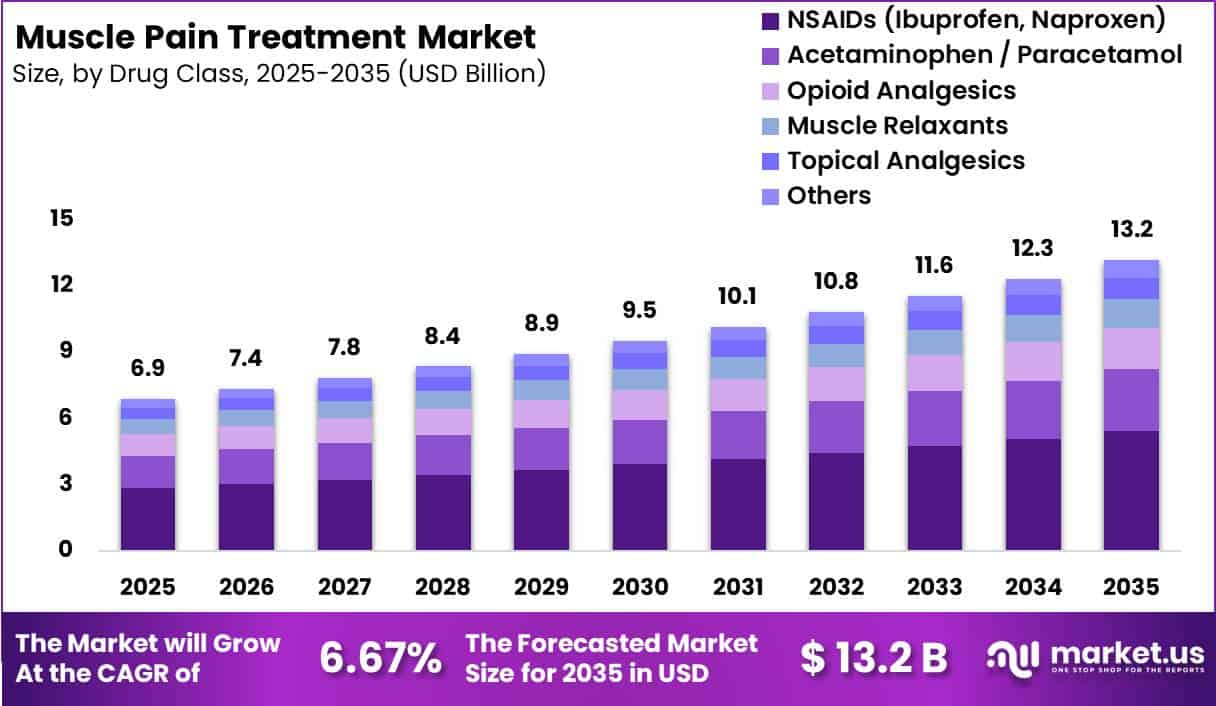
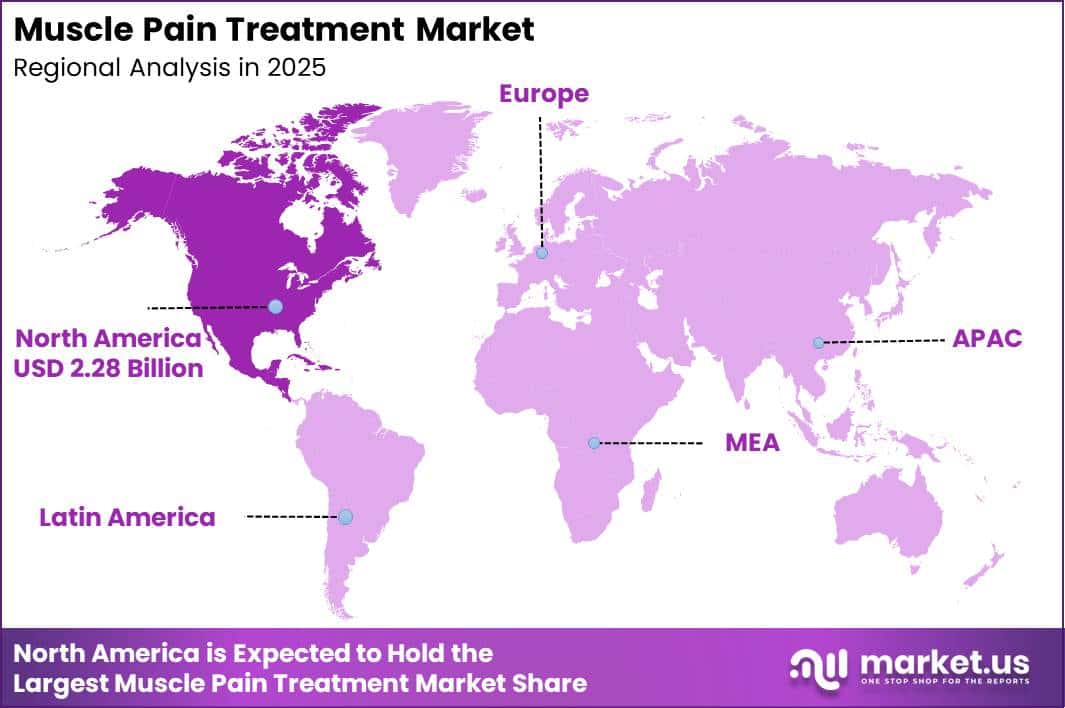
Global Muscle Pain Treatment Market size is expected to be worth around US$ 13.16 Billion by 2035 from US$ 6.90 Billion in 2025, growing at a CAGR of 6.67% during the forecast period from 2026 to 2035. In 2025, North America led the market, achieving over 33% share with a revenue of US$ 2.28 Billion.
The Muscle Pain Treatment Market is experiencing steady growth as the global burden of musculoskeletal disorders continues to rise across all age groups. Increasing cases of sports injuries, occupational strain, arthritis, lower back pain, and age-related muscle disorders are driving demand for effective pain management solutions.
According to the World Health Organization (WHO), approximately 1.71 billion people worldwide live with musculoskeletal conditions, making them the leading contributor to disability globally. Low back pain alone affects around 570 million people and remains the leading cause of disability in 160 countries.
Growing awareness of early diagnosis, rehabilitation, and multidisciplinary pain management is encouraging greater adoption of both pharmacological and non-pharmacological treatment approaches. Healthcare providers are increasingly recommending personalized treatment plans that combine medications, physical therapy, exercise, and lifestyle interventions to improve long-term outcomes.
In the United States, the Centers for Disease Control and Prevention (CDC) reported that 24.3% of adults experienced chronic pain in 2023, highlighting the substantial healthcare burden and the continued need for innovative pain therapies.
Advancements in topical analgesics, non-opioid therapeutics, biologics, and digital rehabilitation technologies are further transforming the treatment landscape. At the same time, growing investments in clinical research and the expansion of outpatient rehabilitation services are supporting innovation across the market.
As healthcare systems continue to prioritize effective pain management and improved quality of life, the demand for advanced muscle pain treatment solutions is expected to remain strong throughout the coming decade.
Key Takeaways
- Market Size : Muscle Pain Treatment Market size is expected to be worth around US$ 13.16 Billion by 2035 from US$ 6.90 Billion in 2025.
- Market Share : The market is growing at a CAGR of 6.67% during the forecast period from 2026 to 2035.
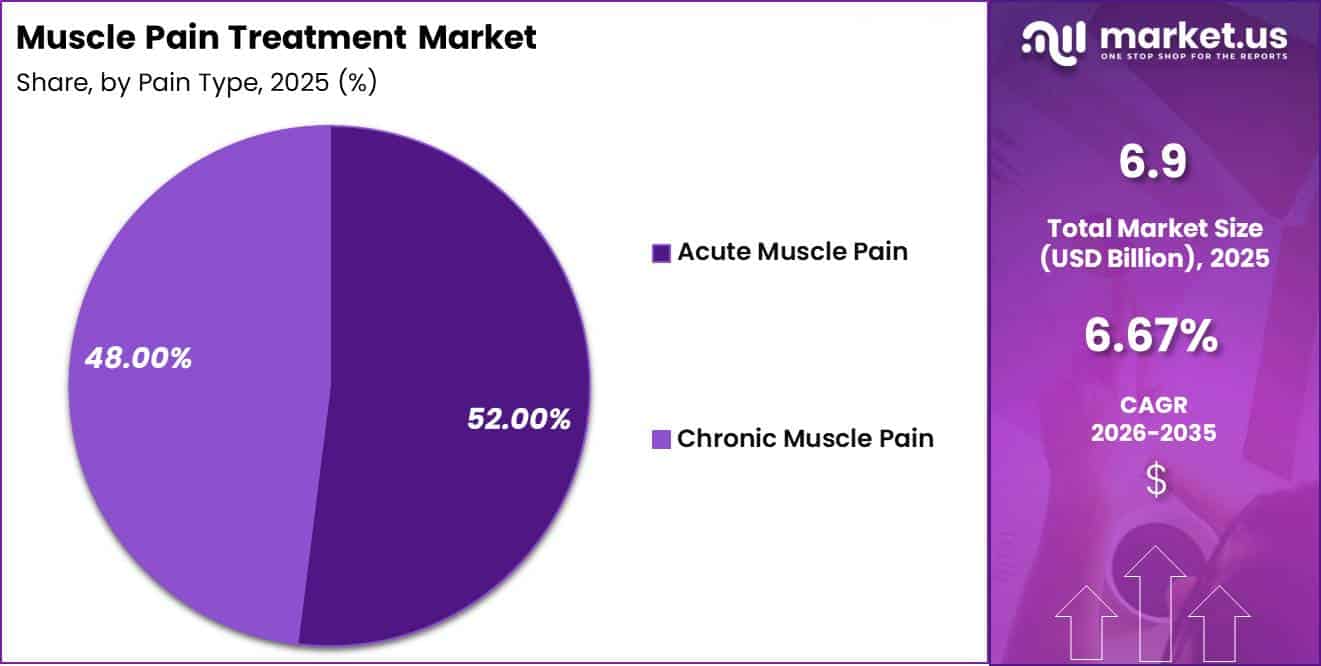
- Pain Type Analysis : The Acute Muscle Pain segment dominated the Muscle Pain Treatment Market in 2025, accounting for 52.0% of the total market share.
- Treatment Type Analysis : The Pharmacological (NSAIDs, Analgesics, Muscle Relaxants) segment held the largest market share of 62.10% in 2025.
- Drug Class Analysis : The NSAIDs (Ibuprofen, Naproxen) segment dominated the market in 2025 with a 41.20% share.
- Distribution Channel Analysis : In 2025, The Retail Pharmacies segment accounted for the largest market share of 31.00%.
- End User Analysis : The Hospitals segment dominated the Muscle Pain Treatment Market in 2025, accounting for 41.20% of total revenue.
- Regional Analysis : In 2025, North America led the market, achieving over 33% share with a revenue of US$ 2.28 Billion.
Pain Type Analysis
The Acute Muscle Pain segment dominated the Muscle Pain Treatment Market in 2025, accounting for 52.0% of the total market share. Acute muscle pain remains the most common condition requiring medical attention because it develops suddenly following sports injuries, muscle strains, falls, accidents, surgery, or physically demanding work.
The CDC defines acute pain as lasting less than one month, and recommends early treatment using NSAIDs, acetaminophen, topical analgesics, ice, heat, and physical therapy to promote recovery and reduce complications.
Increasing participation in sports and fitness activities, along with growing workplace-related musculoskeletal injuries, continues to support demand for acute pain therapies. Rapid diagnosis and immediate intervention help shorten recovery time and reduce healthcare costs.
The Chronic Muscle Pain segment represents the second-largest share and is expected to witness stable growth throughout the forecast period. Chronic muscle pain is generally associated with arthritis, fibromyalgia, persistent lower back pain, aging, and repetitive occupational stress.
The CDC classifies chronic pain as lasting more than three months, while WHO estimates that 619 million people experienced low back pain in 2020, with cases projected to reach 843 million by 2050. Growing awareness of long-term rehabilitation, multidisciplinary care, and personalized pain management is supporting demand for therapies targeting chronic muscle pain.
Treatment Type Analysis
The Pharmacological (NSAIDs, Analgesics, Muscle Relaxants) segment held the largest market share of 62.10% in 2025. Drug-based therapy remains the preferred first-line treatment because it provides rapid pain relief, reduces inflammation, and improves mobility for patients with muscle strains, sprains, and other musculoskeletal conditions.
NSAIDs such as ibuprofen and naproxen continue to be widely prescribed, while muscle relaxants and analgesics are frequently used for moderate-to-severe muscle pain. The CDC recommends maximizing non-opioid medications before considering opioid therapy for many acute musculoskeletal conditions.
Among the remaining segments, Physical Therapy & Rehabilitation represents the second-largest share, supported by growing adoption of exercise therapy, strength training, and mobility restoration programs. Topical Treatments continue to gain popularity because they provide localized pain relief with fewer systemic side effects.
Interventional Procedures, including injections and minimally invasive therapies, are increasingly used for persistent pain that does not respond to conventional treatment. Complementary & Alternative Medicine, including acupuncture, massage, chiropractic care, and yoga, is also expanding as healthcare providers adopt multimodal pain management approaches that improve long-term patient outcomes.
Drug Class Analysis
The NSAIDs (Ibuprofen, Naproxen) segment dominated the market in 2025 with a 41.20% share. NSAIDs remain the most prescribed drug class because they effectively relieve pain and inflammation associated with muscle injuries, sports trauma, tendonitis, bursitis, and lower back pain.
Their availability in both prescription and over-the-counter formulations, combined with strong clinical evidence and physician familiarity, continues to drive widespread use. The CDC recommends NSAIDs as a preferred non-opioid option for many acute musculoskeletal conditions.
Muscle Relaxants represent another important segment due to their effectiveness in treating muscle spasms and acute musculoskeletal injuries. Acetaminophen (Paracetamol) remains widely used for mild-to-moderate pain, particularly among patients unable to tolerate NSAIDs.
Topical Analgesics continue gaining market acceptance because they reduce systemic exposure while providing localized relief. Opioid Analgesics are generally reserved for carefully selected severe pain cases because of safety concerns, while the Others category includes corticosteroids, antidepressants, anticonvulsants, and combination therapies used for specialized pain management.
Distribution Channel Analysis
The Retail Pharmacies segment accounted for the largest market share of 31.00% in 2025. Retail pharmacies remain the primary source for both prescription and over-the-counter muscle pain medications because of their widespread accessibility, pharmacist consultation services, and immediate product availability.
Consumers frequently purchase NSAIDs, topical analgesics, muscle relaxants, and supportive healthcare products through community pharmacies for convenient management of mild-to-moderate muscle pain.
Hospital Pharmacies hold the second-largest share by supplying medications for trauma patients, postoperative recovery, and severe musculoskeletal disorders requiring inpatient care. Online Pharmacies are witnessing rapid growth due to increasing digital healthcare adoption, home delivery services, and electronic prescriptions.
The Others segment includes specialty pharmacies, rehabilitation center pharmacies, and ambulatory care pharmacies that support patients requiring long-term pain management or specialized therapies. Continued expansion of digital health platforms is expected to strengthen online medicine distribution during the forecast period.
End User Analysis
The Hospitals segment dominated the Muscle Pain Treatment Market in 2025, accounting for 41.20% of total revenue. Hospitals remain the leading treatment setting because they provide comprehensive diagnosis, imaging, orthopedic care, surgical management, rehabilitation, and multidisciplinary pain treatment for patients with acute injuries and chronic musculoskeletal disorders.
Growing numbers of trauma cases, sports injuries, orthopedic procedures, and age-related musculoskeletal diseases continue to support strong hospital demand.
The Specialty Clinics & Pain Centers segment is the second-largest contributor, benefiting from increasing referrals for chronic pain management, minimally invasive procedures, and rehabilitation services. Homecare Settings continue to expand as more patients utilize physical therapy, digital monitoring, and self-administered pain therapies at home.
The Others segment includes rehabilitation centers, sports medicine clinics, ambulatory surgical centers, and occupational health facilities that provide specialized treatment for muscle injuries and long-term recovery. Growing emphasis on personalized, patient-centered care is expected to support all end-user segments.
Market Segmentations
By Pain Type
- Acute Muscle Pain
- Chronic Muscle Pain
By Treatment Type
- Pharmacological (NSAIDs, Analgesics, Muscle Relaxants)
- Physical Therapy & Rehabilitation
- Topical Treatments
- Interventional Procedures
- Complementary & Alternative Medicine
By Drug Class
- NSAIDs (Ibuprofen, Naproxen)
- Acetaminophen / Paracetamol
- Opioid Analgesics
- Muscle Relaxants
- Topical Analgesics
- Others
By Distribution Channel
- Retail Pharmacies
- Hospital Pharmacies
- Online Pharmacies
- Others
By End User
- Hospitals
- Specialty Clinics & Pain Centers
- Homecare Settings
- Others
Drivers
Non opioid treatment shift and opioid avoidance protocols
A second major growth driver is the ongoing shift in pain management away from opioid centric prescribing toward non opioid pharmacologic therapies, interventional procedures, and integrated conservative care models. In January 2025, the FDA approved Journavx (suzetrigine), marking a regulatory milestone for non opioid analgesia in moderate to severe acute pain.
Supporting this trend, the OPAL trial published in The Lancet reported no significant pain severity advantage for opioids versus placebo in acute non specific low back and neck pain at 6 weeks, reinforcing skepticism around routine opioid use in common musculoskeletal conditions.
Strategically, this shift redistributes pain care spending from legacy opioid prescribing toward NSAIDs, SNRIs, anticonvulsants, topical agents, regional anesthesia techniques, physical rehabilitation, and behavioral interventions.
It also increases demand for monitoring, functional outcome tracking, and multimodal care coordination platforms, effectively broadening the revenue base across a more diversified pain management ecosystem rather than concentrating value in a single drug class.
The United States remains the primary driver due to strong regulatory pressure, litigation risk, and formulary enforcement, but similar guideline driven transitions are emerging in Canada, Europe, and Australia as health systems increasingly formalize opioid sparing pathways for both acute and chronic pain management.
| Driver | (~) % Impact on CAGR Forecast | Geographic Relevance | Impact Timeline |
|---|---|---|---|
| Aging-led musculoskeletal pain load expansion | +1.9% | North America core, EU, Japan, urban China, developed APAC | Medium term (2-4 years) |
| Non-opioid treatment shift and opioid avoidance protocols | +1.6% | U.S. core, Canada, EU, Australia spill-over | Short term (≤ 2 years) |
| Guideline-led multimodal care adoption | +1.4% | EU, North America, upper-middle-income APAC, selective LATAM | Medium term (2-4 years) |
| Reimbursement support for non-opioid outpatient pain care | +1.2% | U.S. core, payer-influenced private markets | Short term (≤ 2 years) |
| OTC topicals and self-care channel expansion | +1.0% | U.S., EU retail markets, Japan, urban APAC | Short term (≤ 2 years) |
| Digital rehab and remote pain management scaling | +0.9% | U.S., UK, EU, Australia, digitally mature APAC | Medium term (2-4 years) |
Challenges
Fragmented Care Pathways in Muscle Pain Treatment
Fragmented care pathways remain a structural constraint on muscle pain treatment growth because patients typically move through 3 to 5 sequential touchpoints primary care, imaging, orthopedics, pharmacy, and sometimes physical therapy before receiving a coordinated plan.
This fragmented journey introduces 30 to 90 days of treatment delay and increases total episode cost by an estimated 25 to 40 % compared with integrated care models, where diagnosis and therapy initiation occur earlier and in parallel.
Evidence from psychologically informed physical therapy PIPT shows that combining graded activity with cognitive behavioral approaches improves functional outcomes, but adoption is limited in real world systems. In many markets, fewer than 20 % of primary care referrals reach physical therapy within 2 weeks, which delays non pharmacologic intervention and sustains higher reliance on NSAIDs or early opioid prescribing.
This fragmentation also reduces progression into sustained treatment programs often 12 plus physical therapy visits with behavioral support and rehabilitation where conversion rates remain below approximately 30 %, compared with a potential 50 % or higher in integrated pathways.
As a result, repeat utilization, adherence, and cross selling of adjunct therapies such as exercise programs, devices, and digital rehab tools are reduced by approximately 10 to 15 %, limiting overall market efficiency. Overall, these inefficiencies act as a measurable drag on CAGR by weakening continuity of care and delaying intervention.
However, structured care orchestration such as shared digital pathways, PT access within 7 to 14 days, and standardized episode based bundles could reduce fragmentation by 1 to 2 touchpoints, cut avoidable imaging or drug only episodes by 15 to 25 %, and recover approximately 1.0 to 1.3 % points of CAGR over a 2 to 4 year horizon.
| Challenge | (~) % CAGR Friction Drag | Geographic Relevance | Mitigation Horizon |
|---|---|---|---|
| Fragmented care pathways | -1.2% | North America, EU, urban APAC | Medium term (2-4 years) |
| NSAID safety and oversight | -0.9% | North America, EU, aging APAC | Long term (≥ 4 years) |
| Limited non-pharma access | -1.0% | North America, EU, Latin America | Medium term (2-4 years) |
| Reimbursement and coding gaps | -0.8% | U.S., selected EU payers | Long term (≥ 4 years) |
| Musculoskeletal workforce strain | -1.1% | North America, EU, APAC metros | Long term (≥ 4 years) |
| Digital plus PT adoption friction | -0.7% | North America core, EU hubs | Medium term (2-4 years) |
Restraints
Price Controls and Reimbursement Pressure in Muscle Pain Treatment Markets
Price controls and reimbursement pressure are a key structural restraint on muscle pain treatment markets, affecting branded NSAIDs, topical therapies, biologics, and interventional procedures.
Governments and payers increasingly focus on cost containment through reference pricing systems, most favored nation benchmarking, and stronger generic substitution policies, which in many markets drive generics to capture 80 to 85 % plus share of oral analgesic segments.
Net pricing is also under sustained pressure due to rising rebate intensity and discounts. Effective price erosion for branded pain therapies reaches 25 to 35 % of list price, reducing realized revenue versus headline pricing.
Procedure based treatments are similarly impacted, as reimbursement caps and bundled payment models limit per service billing and reduce incentives for repeated interventions such as injections and extended physical therapy sessions.
These dynamics compress profitability across the value chain. Gross margins for innovative therapies decline by an estimated 300 to 500 basis points, while patient co payments of 10 to 20 % can reduce adherence in muscle pain conditions where perceived benefit is moderate rather than essential.
Lower adherence leads to reduced persistence, weaker repeat utilization, and lower lifetime value per patient. Strategically, companies increasingly shift toward payer negotiations, outcomes based contracting, and health economic evidence generation instead of pure volume expansion.
As a result, in major regulated markets including North America, Europe, and parts of APAC, these pricing and reimbursement pressures are estimated to reduce achievable CAGR by approximately 1.8 % points over the next 2 to 4 years, mainly through constrained pricing power and slower utilization growth.
| Restraint | (~) % Impact on CAGR Forecast | Geographic Relevance | Impact Timeline |
|---|---|---|---|
| Opioid stewardship & prescribing controls | -2.0% | North America, EU core | Medium term (2-4 years) |
| Price controls & reimbursement pressure | -1.8% | North America, EU, selected APAC | Medium term (2-4 years) |
| API & excipient supply chain volatility | -1.5% | Global, APAC manufacturing hubs | Short term (≤ 2 years) |
| Slow adoption of non-pharmacologic therapies | -1.2% | Global, high-income regions | Long term (≥ 4 years) |
| Clinical evidence gaps for chronic muscle pain | -1.0% | Global | Medium term (2-4 years) |
| Workforce, capacity & delivery constraints | -0.8% | North America, EU, urban Asia | Short–Medium term (≤ 4 years) |
Opportunity
Employer Funded Musculoskeletal Programs in Muscle Pain Treatment Markets
Employer funded musculoskeletal MSK programs represent a structural white space in muscle pain treatment because a large share of back, neck, and repetitive strain injuries originate in workplace conditions but are still treated through fragmented, reactive clinical care.
MSK disorders are among the leading causes of disability globally and account for hundreds of millions of lost work days annually, with over 130 billion dollars in lost earnings annually in the United States alone, driven largely by back and neck pain and other occupational strain conditions. Despite this burden, employer investment is still dominated by generic wellness programs rather than condition specific MSK pathways.
A bundled MSK program typically priced on a per employee per year basis can integrate early triage, tele rehabilitation, ergonomic assessments, and structured non opioid care pathways aligned with CDC guidance.
For example, a program priced at 50 to 100 dollars per employee annually for a 10,000 employee organization generates 0.5 to 1.0 million dollars in recurring B2B revenue, while improving productivity by reducing lost work days by an estimated 10 to 15 %, providing a clear ROI case for employers.
If adopted by even 3 to 5 % of mid to large employers across North America, Western Europe, and developed APAC markets within the next few years, this model could contribute low single digit billions in incremental market expansion.
It also reduces customer acquisition costs by 30 to 40 % versus direct to consumer approaches due to bulk enrollment. Overall, this shift supports an estimated 1.2 % point CAGR upside, driven by centralized employer purchasing and earlier, structured intervention rather than fragmented care pathways.
| Opportunity | (~) % Potential CAGR Upside | Geographic Relevance | Execution Window |
|---|---|---|---|
| Integrated non-opioid muscle pain centers | +2.0% | North America, EU, APAC urban | Medium term (2–4 years) |
| VR/DTx-enabled neuromuscular rehabilitation | +1.5% | North America, EU, high-income APAC | Medium term (2–4 years) |
| Employer-funded musculoskeletal programs | +1.2% | North America core, EU, developed APAC | Short term (≤ 2 years) |
| AI-guided home therapeutics & wearables | +1.0% | Global, APAC emerging, LATAM | Long term (≥ 4 years) |
| Precision care for high-risk cohorts | +0.8% | North America, EU, Middle East, APAC | Medium term (2–4 years) |
| Value-based bundles for chronic muscle pain | +0.7% | North America, EU | Medium term (2–4 years) |
Regional Analysis
In 2025, North America led the market, achieving over 33% share with a revenue of US$ 2.28 Billion..
The region’s leadership is supported by a high prevalence of musculoskeletal disorders, well-established healthcare infrastructure, favorable reimbursement systems, and continuous investment in pain management research. The United States represents the largest contributor, driven by increasing cases of chronic pain, sports injuries, arthritis, and age-related muscle disorders.
According to the U.S. Centers for Disease Control and Prevention (CDC), approximately 51.6 million U.S. adults (20.9%) experienced chronic pain in 2021, highlighting the substantial need for effective muscle pain therapies.
Healthcare providers across North America are increasingly adopting evidence-based, multimodal pain management strategies that combine medications with physical therapy, exercise, and other non-pharmacological interventions.
The CDC’s latest clinical guidance recommends maximizing non-opioid therapies for many musculoskeletal conditions, including sprains, strains, tendonitis, bursitis, neck pain, and low back pain, encouraging broader use of topical analgesics, NSAIDs, rehabilitation programs, and digital health solutions.
The region also benefits from strong clinical research capabilities, rapid adoption of innovative therapeutics, and the presence of leading pharmaceutical manufacturers and specialty pain management centers. Growing awareness of opioid-related risks has accelerated investment in safer, non-opioid pain treatments and personalized rehabilitation approaches.
These factors, combined with continuous product innovation and supportive clinical guidelines, are expected to sustain North America’s leadership in the Muscle Pain Treatment Market throughout the forecast period.
Key Regions and Countries
North America
- The US
- Canada
Europe
- Germany
- France
- The U.K.
- Italy
- Spain
- Russia & CIS
- Rest of Europe
Asia Pacific
- China
- India
- Japan
- South Korea
- ASEAN
- Australia & New Zealand
- Rest of Asia Pacific
Middle East & Africa
- GCC
- South Africa
- Rest of Middle East & Africa
Latin America
- Brazil
- Mexico
- Rest of Latin America
Key Player Analysis
The Muscle Pain Treatment Market is highly competitive, with leading pharmaceutical companies focusing on innovation, portfolio expansion, and wider patient access. Market participants are investing in non-opioid pain therapies, topical formulations, and advanced anti-inflammatory treatments to address the growing burden of musculoskeletal disorders while meeting evolving clinical and regulatory requirements.
Pfizer Inc. continues to strengthen its pain management pipeline through research-driven therapies and global commercialization capabilities. Johnson & Johnson benefits from its broad healthcare portfolio and expertise in both prescription and consumer health products for pain relief.
Novartis AG focuses on innovative medicines and advanced research to improve musculoskeletal care. AbbVie Inc. leverages its immunology expertise to develop therapies that help manage pain associated with inflammatory diseases.
Teva Pharmaceutical Industries Ltd. expands access to affordable pain medications through its strong generic and specialty pharmaceutical portfolio. Bayer AG maintains a leading position in over-the-counter pain relief with widely recognized analgesic brands and continuous product innovation.
GlaxoSmithKline plc (GSK) supports the market through its consumer healthcare and general medicines business, offering trusted pain management products across multiple regions. Sanofi S.A. continues to invest in research, strategic collaborations, and global distribution networks to enhance access to effective pain therapies.
Collectively, these companies are strengthening their market positions through research and development, regulatory approvals, manufacturing expansion, and patient-focused treatment solutions.
Top Key Players
- Pfizer Inc.
- Johnson & Johnson
- Novartis AG
- AbbVie Inc.
- Teva Pharmaceutical Industries Ltd.
- Bayer AG
- GlaxoSmithKline plc
- Sanofi S.A.
- Eli Lilly and Company
- Sun Pharmaceutical Industries Ltd.
- Ampio Pharmaceuticals Inc.
- Endo International plc
Recent Developments
- In July 2025, Johnson & Johnson MedTech entered a strategic co-promotion agreement with Pacira BioSciences to commercialize ZILRETTA®, an extended-release injection for osteoarthritis knee pain, expanding its early intervention musculoskeletal portfolio.
- In July 2025, GSK completed the acquisition of efimosfermin alfa from Boston Pharmaceuticals for an upfront payment of US$1.2 billion with up to US$800 million in milestone payments, strengthening its inflammation and specialty medicines pipeline.
- In April 2025, Sanofi completed the sale of a controlling 50% stake in Opella to Clayton, Dubilier & Rice while retaining a 48.2% ownership interest, creating a standalone consumer healthcare company with well-known OTC pain brands.
Report Scope
| Report Features | Description |
|---|---|
| Market Value (2025) | US$ 6.90 Billion |
| Forecast Revenue (2035) | US$ 13.16 Billion |
| CAGR (2026-2035) | 6.67% |
| Base Year for Estimation | 2025 |
| Historic Period | 2020-2024 |
| Forecast Period | 2026-2035 |
| Report Coverage | Revenue Forecast, Market Dynamics, Competitive Landscape, Recent Developments |
| Segments Covered | By Pain Type (Acute Muscle Pain, Chronic Muscle Pain), By Treatment Type (Pharmacological (NSAIDs, Analgesics, Muscle Relaxants), Physical Therapy & Rehabilitation, Topical Treatments, Interventional Procedures, Complementary & Alternative Medicine), By Drug Class (NSAIDs (Ibuprofen, Naproxen), Acetaminophen / Paracetamol, Opioid Analgesics, Muscle Relaxants, Topical Analgesics, Others), By Distribution Channel (Retail Pharmacies, Hospital Pharmacies, Online Pharmacies, Others), By End User (Hospitals, Specialty Clinics & Pain Centers, Homecare Settings, Others) |
| Regional Analysis | North America – The US, Canada; Europe – Germany, France, U.K., Italy, Spain, Russia & CIS, Rest of Europe; Asia Pacific – China, India, Japan, South Korea, ASEAN, Australia & New Zealand, Rest of Asia Pacific; Middle East & Africa – GCC, South Africa, Rest of Middle East & Africa; Latin America – Brazil, Mexico, Rest of Latin America |
| Competitive Landscape | Pfizer Inc., Johnson & Johnson, Novartis AG, AbbVie Inc., Teva Pharmaceutical Industries Ltd., Bayer AG, GlaxoSmithKline plc, Sanofi S.A., Eli Lilly and Company, Sun Pharmaceutical Industries Ltd., Ampio Pharmaceuticals Inc., Endo International plc |
| Customization Scope | Customization for segments, region/country-level will be provided. Moreover, additional customization can be done based on the requirements. |
| Purchase Options | We have three licenses to opt for: Single User License, Multi-User License (Up to 5 Users), Corporate Use License (Unlimited User and Printable PDF) |





































