


Market Overview
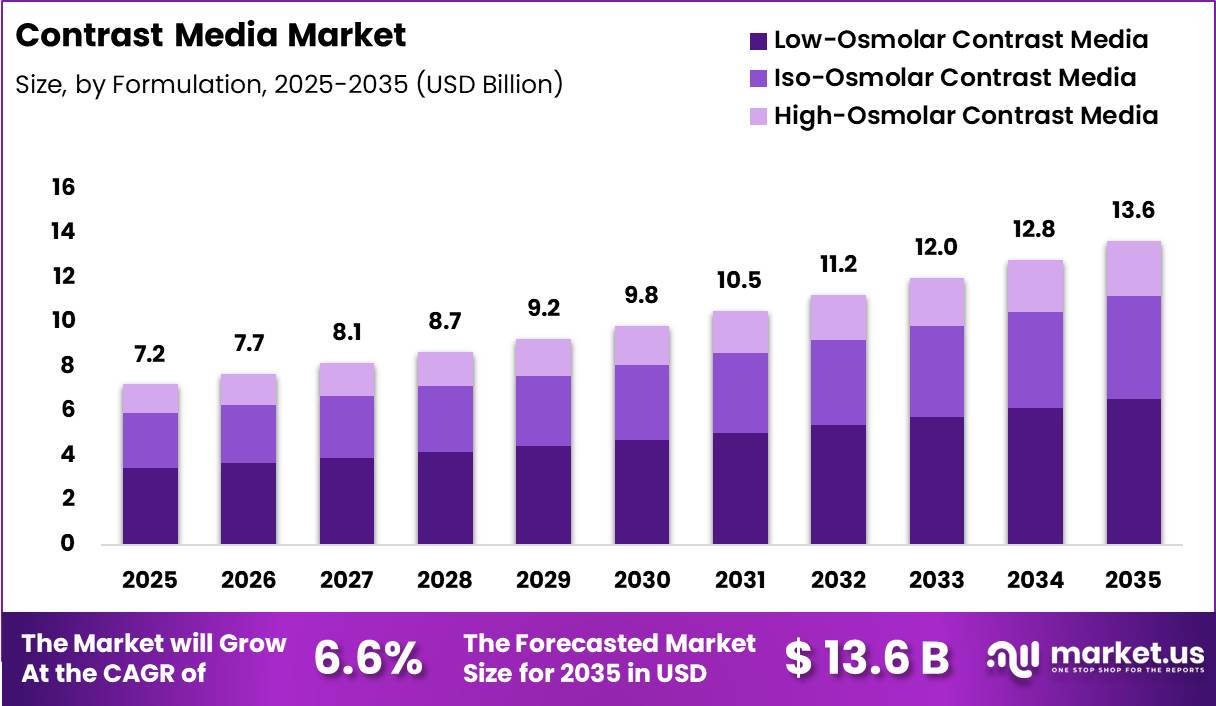
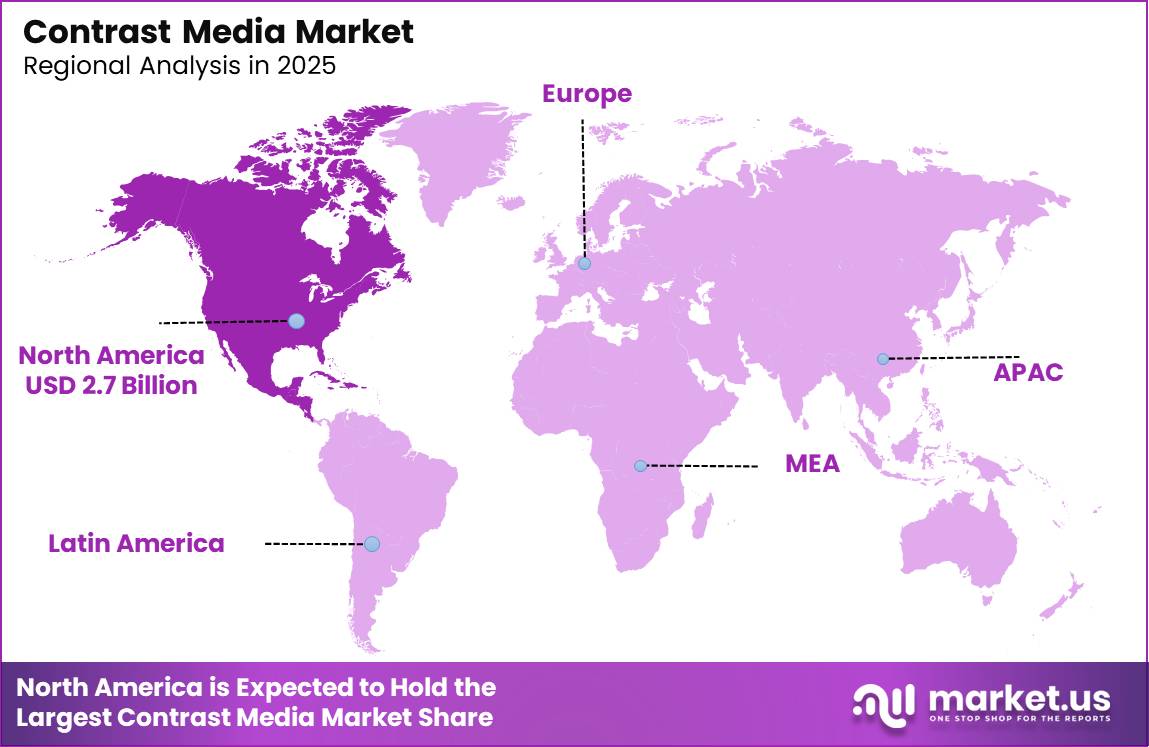
Global Contrast Media Market size is expected to be worth around US$ 13.6 Billion by 2035 from US$ 7.2 Billion in 2025, growing at a CAGR of 6.6% during the forecast period from 2026 to 2035. In 2025, North America led the market, achieving over 38.00% share with a revenue of US$ 2.7 Billion.
The contrast media market is supported by the growing global use of diagnostic imaging for cancer, cardiovascular disease, neurological disorders, and trauma care. Increasing demand for early disease detection has led hospitals and diagnostic centers to perform more computed tomography (CT), magnetic resonance imaging (MRI), angiography, and fluoroscopy procedures, where contrast agents improve image clarity and diagnostic accuracy.
According to the U.S. Food and Drug Administration (FDA), iodinated contrast media are widely used during CT and X-ray imaging to enhance the visualization of blood vessels and internal organs, enabling physicians to make more accurate diagnoses and treatment decisions.
Medical imaging volumes continue to rise worldwide. The Organisation for Economic Co-operation and Development (OECD) reports that member countries collectively perform tens of millions of CT and MRI examinations every year, reflecting the expanding role of advanced imaging in routine healthcare.
At the same time, the World Health Organization (WHO) estimates that nearly two-thirds of global deaths are caused by non-communicable diseases, including cardiovascular disease and cancer, creating sustained demand for diagnostic imaging services. As healthcare systems invest in earlier diagnosis and precision medicine, the need for safe and effective contrast agents continues to increase.
Innovation is also strengthening the market. Manufacturers are developing lower-osmolar iodinated contrast agents and macrocyclic gadolinium-based contrast agents designed to improve patient safety while maintaining high-quality imaging performance. Regulatory agencies continue to monitor product safety.
The FDA recommends thyroid monitoring in newborns and children up to three years of age after exposure to iodinated contrast media because of the rare risk of hypothyroidism, demonstrating continued efforts to improve patient outcomes while supporting the safe use of these products.
Growing investments in diagnostic imaging infrastructure, expansion of outpatient imaging centers, and increasing adoption of AI-assisted radiology workflows are expected to further support the demand for contrast media across both developed and emerging healthcare markets.
Key Takeaways
- Market Size: Contrast Media Market size is expected to be worth around US$ 13.6 Billion by 2035 from US$ 7.2 Billion in 2025.
- Market Share: The market is growing at a CAGR of 6.6% during the forecast period from 2026 to 2035.
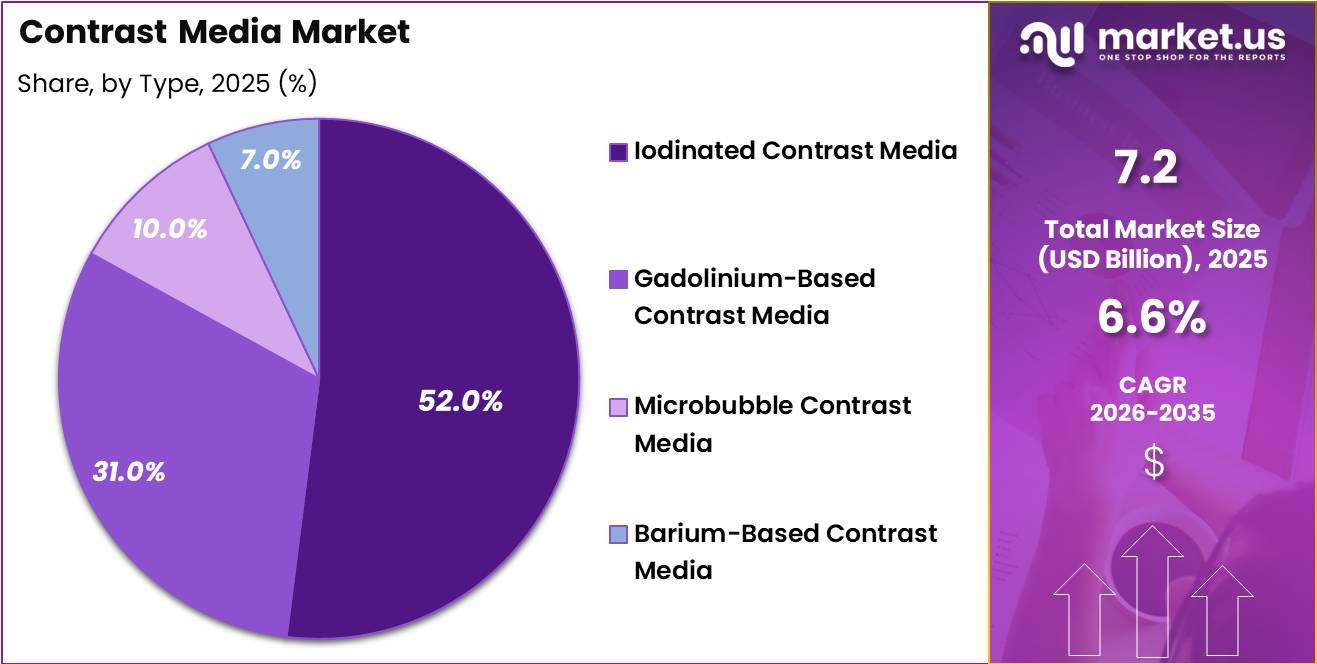
- Type Analysis: The Iodinated Contrast Media segment dominated the contrast media market with 52.00% of the market share in 2025.
- Formulation Analysis: The Low-Osmolar Contrast Media (LOCM) segment held the largest share of 48.00% in 2025.
- Route of Administration Analysis: The Intravenous segment dominated the market with 74.00% share in 2025.
- Application Analysis: The Radiology Imaging segment accounted for the largest market share of 45.00% in 2025.
- End User Analysis: The Hospitals segment dominated the market with 63.00% share in 2025.
- Imaging Modality Analysis : The X-Ray/CT segment led the market with 58.00% share in 2025.
- Regional Analysis: In 2025, North America led the market, achieving over 38.00% share with a revenue of US$ 2.7 Billion.
Type Analysis
The Iodinated Contrast Media segment dominated the contrast media market with 52.00% of the market share in 2025. Its leading position is driven by extensive use in computed tomography (CT), angiography, and interventional radiology procedures.
Iodinated agents provide excellent visualization of blood vessels and internal organs, making them the preferred choice for diagnosing cardiovascular diseases, trauma, cancer, and other conditions. According to the U.S. FDA, iodinated contrast media are routinely administered during X-ray and CT imaging to improve diagnostic accuracy and are available through intravenous, oral, and rectal routes.
The Gadolinium-Based Contrast Media segment accounted for 31.00% of the market in 2025. These agents are widely used in magnetic resonance imaging (MRI) because they provide superior soft-tissue contrast and are essential for neurological, musculoskeletal, and oncological imaging.
Continuous development of macrocyclic formulations has improved their safety profile while maintaining high imaging performance. The Microbubble Contrast Media segment held 10.00%, supported by increasing use in contrast-enhanced ultrasound for liver, cardiac, and vascular imaging due to its non-ionizing nature.
Barium-Based Contrast Media represented 7.00% of the market, remaining important for gastrointestinal examinations such as barium swallow and barium enema procedures, where detailed imaging of the digestive tract is required.
Formulation Analysis
The Low-Osmolar Contrast Media (LOCM) segment held the largest share of 48.00% in 2025. LOCM products are preferred because they offer improved patient tolerance and a lower incidence of adverse reactions than traditional high-osmolar agents.
Their extensive use in CT, angiography, and vascular imaging has made them the standard formulation across hospitals and diagnostic centers. Clinical evidence and FDA-approved products have supported the transition toward low-osmolar, nonionic contrast media for routine imaging.
The Iso-Osmolar Contrast Media (IOCM) segment accounted for 34.00% of the market. These formulations have osmolality similar to blood plasma, making them particularly suitable for patients with kidney impairment or cardiovascular risk who require contrast-enhanced imaging. Their favorable safety profile has encouraged broader adoption in high-risk patient populations.
Meanwhile, High-Osmolar Contrast Media (HOCM) represented 18.00% of the market. Although they remain available for selected imaging procedures, their usage has declined because they are associated with a higher incidence of discomfort and adverse reactions compared with newer formulations. Continuous advancements in low- and iso-osmolar technologies are gradually replacing older high-osmolar products in modern radiology practice.
Route of Administration Analysis
The Intravenous segment dominated the market with 74.00% share in 2025. Intravenous administration is the most widely used route because it enables rapid distribution of contrast agents throughout the bloodstream, providing high-quality enhancement during CT, MRI, and angiography examinations.
It is the preferred method for evaluating cardiovascular diseases, cancers, neurological disorders, and trauma. FDA guidance also identifies intravenous injection as the primary administration route for most iodinated contrast media used in diagnostic imaging.
The Oral segment continues to hold a significant share, particularly for gastrointestinal imaging, where contrast agents improve visualization of the stomach and intestines during CT and fluoroscopic examinations. The Rectal segment is primarily used in lower gastrointestinal procedures, including colon imaging and specific pediatric examinations requiring enhanced bowel visualization.
The Others (Intra-arterial, Intrathecal) segment serves specialized clinical applications. Intra-arterial administration is essential for angiography and interventional cardiology, while intrathecal administration is used during selected spinal imaging procedures. Growth across all routes is supported by increasing diagnostic imaging volumes and expanding access to advanced radiology services worldwide.
Application Analysis
The Radiology Imaging segment accounted for the largest market share of 45.00% in 2025. Growing use of CT scans, X-rays, fluoroscopy, and MRI examinations for early disease diagnosis continues to drive demand for contrast media.
Contrast agents significantly improve visualization of organs, blood vessels, and tissues, helping clinicians make accurate diagnoses and treatment decisions. The increasing burden of chronic diseases and wider availability of advanced imaging equipment further support this segment.
The Cardiology segment represents a major application area because contrast media are widely used during coronary angiography, cardiac CT, and interventional cardiovascular procedures. Oncology Imaging continues to expand with rising cancer screening and treatment monitoring using contrast-enhanced CT and MRI.
Gastrointestinal Imaging remains important for evaluating digestive tract disorders through barium and iodinated contrast studies. Neurology Imaging also contributes significantly, as MRI and CT contrast agents improve detection of brain tumors, stroke, multiple sclerosis, and other neurological disorders. Increasing demand for precision diagnosis and image-guided interventions is expected to support all application segments over the coming years.
End User Analysis
The Hospitals segment dominated the market with 63.00% share in 2025. Hospitals perform a high volume of contrast-enhanced CT, MRI, angiography, and emergency imaging procedures every day. Their advanced imaging infrastructure, specialized radiology departments, and availability of trained healthcare professionals make hospitals the primary users of contrast media.
Increasing admissions related to cardiovascular diseases, cancer, trauma, and neurological disorders further strengthen this segment’s leadership. Diagnostic Imaging Centers accounted for a considerable share because they offer dedicated outpatient imaging services with faster scheduling and lower costs.
Growing demand for preventive health screening and outpatient diagnostics continues to increase patient visits to these facilities. Ambulatory Surgical Centers are gradually adopting contrast-enhanced imaging to support minimally invasive procedures and image-guided interventions.
Research Institutes represent a smaller but growing segment, driven by clinical trials, development of new imaging agents, and research into advanced diagnostic technologies. Rising investments in healthcare infrastructure and medical imaging are expected to support growth across all end-user categories.
Imaging Modality Analysis
The X-Ray/CT segment led the market with 58.00% share in 2025. CT imaging accounts for the largest consumption of contrast media because iodinated contrast agents are extensively used to improve visualization of blood vessels, organs, and soft tissues.
The increasing number of CT examinations for trauma, cardiovascular disease, cancer detection, and emergency care continues to support strong demand. The FDA recognizes iodinated contrast media as essential for enhancing diagnostic accuracy in X-ray and CT imaging.
The MRI segment held the second-largest share, supported by growing use of gadolinium-based contrast agents for neurological, musculoskeletal, and oncological imaging. Advances in macrocyclic gadolinium formulations have further encouraged adoption.
Ultrasound Contrast Imaging continues to expand through the use of microbubble contrast agents, particularly for liver and cardiac imaging, offering radiation-free diagnostic evaluation. Nuclear Imaging represents a smaller but important segment where contrast-enhanced techniques complement molecular imaging for complex disease diagnosis.
Increasing investments in advanced imaging systems and rising demand for accurate, non-invasive diagnostics are expected to drive continued growth across all imaging modalities.
Market Segmentations
Type
- Iodinated Contrast Media
- Gadolinium-Based Contrast Media
- Microbubble Contrast Media
- Barium-Based Contrast Media
Formulation
- Low-Osmolar Contrast Media (LOCM)
- Iso-Osmolar Contrast Media
- High-Osmolar Contrast Media
Route of Administration
- Intravenous
- Oral
- Rectal
- Others (Intra-arterial, Intrathecal)
Application
- Radiology Imaging
- Cardiology
- Oncology Imaging
- Gastrointestinal Imaging
- Neurology Imaging
End User
- Hospitals
- Diagnostic Imaging Centers
- Ambulatory Surgical Centers
- Research Institutes
Imaging Modality
- X-Ray/CT
- MRI
- Ultrasound Contrast Imaging
- Nuclear Imaging
Drivers
CT volume expansion from aging and oncology/cardiac workups
CT is the largest structural demand driver for contrast media due to its high examination volume and extensive use in oncology staging, stroke diagnosis, trauma assessment, coronary imaging, and abdominal diagnostics. The OECD recognizes CT examinations as a major diagnostic activity indicator and tracks CT scanner availability as an important measure of healthcare system capacity.
Since iodinated contrast agents are administered for each CT examination, even modest growth in CT utilization generates consistent increases in contrast media consumption without requiring a significant expansion of the installed scanner base. Aging populations, along with the rising prevalence of cancer and cardiovascular diseases, are increasing the frequency of repeat imaging, resulting in higher annual contrast agent usage per patient.
Commercially, standardized CT imaging protocols enable vendors to secure long-term formulary positions, injector compatibility, and procurement contracts across emergency, oncology, and cardiovascular departments. This volume-driven demand is expected to contribute approximately 1.6% points to market growth, particularly across North America, Europe, Japan, China, and India.
| Driver | (~) % Impact on CAGR Forecast | Geographic Relevance | Impact Timeline |
|---|---|---|---|
| CT volume expansion from aging and oncology/cardiac workups | +1.6% | North America core, EU, Japan, China tier-1/2, India metros | Medium term (2-4 years) |
| MRI mix shift toward macrocyclic gadolinium and repeat-use safety protocols | +1.1% | EU core, North America, Japan, South Korea, Australia | Short term (≤ 2 years) |
| Supply-chain diversification after iodinated contrast shortage | +0.9% | North America core, EU, China manufacturing base, APAC importers | Short term (≤ 2 years) |
| Radiology capacity build-out in APAC diagnostic corridors | +1.4% | China, India, Southeast Asia, Gulf spill-over | Medium term (2-4 years) |
| Higher-value low-dose and protocol-optimized contrast utilization | +0.8% | North America, EU, advanced APAC hospitals | Short term (≤ 2 years) |
| Procedure migration to outpatient and ambulatory imaging networks | +0.7% | United States core, Western Europe, urban APAC | Medium term (2-4 years) |
Challenges
Persistent API concentration risk in contrast media supply
The contrast media industry remains exposed to a narrow manufacturing and precursor base, with the 2022 iodinated contrast crisis demonstrating how disruption at a single major production node can cascade globally and force rationing, modality substitution, and procedure reprioritization across radiology departments.
In 2026, this does not freeze sales, but it still imposes an estimated 1.2% point drag on achievable market CAGR because buyers now carry higher safety stock, vendors duplicate validation across secondary sites, and procurement teams accept less efficient sourcing patterns to avoid single-point failure.
The operational penalty typically appears as 4 to 8 additional weeks of buffer inventory, 3% to 6% higher working-capital absorption, and intermittent product-allocation risk in markets heavily dependent on imported iodinated agents, especially in North America and Europe.
Strategic normalization therefore requires multi-year supplier diversification, regionalized fill-finish redundancy, dual-qualification of excipient and packaging inputs, and more distributed production investments like Bracco’s capacity expansion, which signals progress but also underscores that resilience is capital-intensive and slow to build.
| Challenge | (~) % CAGR Friction Drag | Geographic Relevance | Mitigation Horizon |
|---|---|---|---|
| API concentration risk | -1.2% | North America core; EU imaging hubs; APAC export nodes | Long term (≥ 4 years) |
| Hospital inventory volatility | -0.9% | U.S. integrated delivery networks; EU public hospitals; APAC urban imaging centers | Medium term (2-4 years) |
| Renal-safety workflow burden | -0.8% | North America MRI centers; EU regulatory hubs; Japan and Korea tertiary care | Medium term (2-4 years) |
| Sterile manufacturing complexity | -1.0% | EU production clusters; U.S. fill-finish sites; APAC contract manufacturing corridors | Long term (≥ 4 years) |
| Procedure-mix utilization mismatch | -0.7% | North America outpatient imaging; EU breast imaging programs; China and India private diagnostics | Short term (≤ 2 years) |
| Skilled radiology staffing gaps | -1.1% | U.S. hospital networks; Western Europe; developed APAC metros | Long term (≥ 4 years) |
Restraints
Volatile iodinated contrast supply and single-source dependencies
The shutdown of a major GE HealthCare iodinated contrast manufacturing facility in Shanghai during 2022–2023 highlighted the vulnerability of the global contrast media supply chain. Several U.S. healthcare systems experienced temporary reductions of 50–80% in iodinated contrast availability, resulting in delayed elective CT and angiography procedures and influencing procurement strategies through 2026.
Although manufacturers have expanded production across multiple sites, reliance on just-in-time inventory models and limited 4–8 week buffer stocks continues to expose the market to disruptions caused by plant inspections, transportation delays, or port closures.
Hospitals that faced contrast price increases exceeding 200% between 2017 and 2023 have increasingly adopted dual sourcing, precautionary over-ordering, and rationing measures. Meanwhile, hospitals in emerging markets continue to experience significant inventory fluctuations because of logistics and currency challenges, leading to greater use of non-contrast imaging alternatives.
Collectively, these supply-chain constraints are expected to reduce the achievable global market CAGR by approximately 1.6% points over the next two to three years.
| Restraint | (~) % Impact on CAGR Forecast | Geographic Relevance | Impact Timeline |
|---|---|---|---|
| Escalating safety and renal-risk constraints | -1.9% | North America, Western Europe, Japan | Short–Medium term |
| Volatile iodinated contrast supply and single-source dependencies | -1.6% | North America, EU, East Asia, select EMs | Short term |
| Pricing pressure from input costs and tariffs | -1.4% | US, EU, China-linked supply chains | Short–Medium term |
| Capital expenditure deferrals in imaging infrastructure | -1.2% | Emerging APAC, Latin America, EMEA | Medium–Long term |
| Regulatory and pharmacovigilance compliance burdens | -1.0% | OECD markets, China, Middle East hubs | Medium term |
| Competitive substitution by dose-reduction and alternative modalities | -0.9% | Global tier-1 hospitals and IDNs | Long term |
Opportunity
Accelerating Contrast-Enhanced Ultrasound Adoption in Oncology
Contrast-enhanced ultrasound (CEUS) in liver and abdominal oncology represents a significant future growth opportunity rather than a major driver of the current contrast media market. Although CEUS has demonstrated strong diagnostic performance, its commercial adoption remains limited compared with CT and MRI contrast agents.
The key opportunity lies not in increasing the total number of imaging procedures, but in shifting non-emergent liver lesion characterization, surveillance, and treatment monitoring toward dedicated CEUS-based workflows that combine microbubble contrast agents, advanced imaging software, and standardized interpretation protocols.
CEUS offers several clinical and economic advantages. It eliminates exposure to ionizing radiation, reduces reliance on expensive MRI capacity, and supports faster patient management. Published clinical studies have reported diagnostic accuracy of approximately 97% in liver cancer risk populations, making CEUS a valuable option for follow-up imaging and evaluation of indeterminate liver lesions where cost efficiency and workflow optimization are important.
From a commercial perspective, microbubble contrast agents currently account for only a small share of global contrast media revenue. If their contribution expands to approximately 6%–8% of the market by the early 2030s, suppliers could capture an additional revenue opportunity of about USD 450–700 million, supported by higher-margin, protocol-driven sales.
Europe and Asia are expected to lead adoption because of strong ultrasound utilization and cost-focused healthcare systems, while selective opportunities also exist in the United States. Broader reimbursement, clinician training, and workflow integration will be essential to unlock this long-term market potential.
| Opportunity | (~) % Potential CAGR Upside | Geographic Relevance | Execution Window |
|---|---|---|---|
| CEUS oncology expansion | +1.6% | EU, China, APAC emerging, selective U.S. | Short term |
| Cardio-IR premium bundles | +1.2% | North America core, EU, Japan, GCC | Short term |
| Low-dose AI injectors SaaS | +1.0% | North America, EU, advanced APAC | Medium term |
| Renal-safe premium portfolio | +0.9% | U.S., EU, Japan, South Korea | Medium term |
| Local fill-finish roll-ups | +1.4% | India, China, Brazil, MENA, Eastern Europe | Medium term |
| Theranostic-adjacent agents | +1.8% | U.S., EU, China, Japan | Long term |
Regional Analysis
In 2025, North America accounted for over 38.00% of the global contrast media market, generating approximately US$ 2.7 billion in revenue. The region maintains its leadership due to its well-established diagnostic imaging infrastructure, high adoption of computed tomography (CT), magnetic resonance imaging (MRI), and angiography procedures, as well as strong healthcare spending.
The United States performs one of the highest numbers of diagnostic imaging examinations among OECD countries, supported by widespread availability of CT, MRI, and PET scanners. The presence of major contrast media manufacturers, favorable reimbursement systems, and increasing demand for early diagnosis of cardiovascular diseases, cancer, and neurological disorders.
Further strengthen regional market growth. OECD data also show that the United States ranks among the leading countries in MRI and PET scanner availability, supporting continued demand for contrast-enhanced imaging.
Europe represents the second-largest regional market, supported by extensive public healthcare systems, growing cancer screening programs, and continuous investments in diagnostic imaging technologies. OECD statistics indicate that countries such as France, Germany, Austria, and Italy continue to increase CT and MRI examination volumes, reflecting rising demand for advanced imaging services.
The Asia-Pacific region is expected to register the fastest growth during the forecast period. Governments across China, Japan, India, South Korea, and Australia are expanding healthcare infrastructure and improving access to advanced diagnostic equipment.
OECD and WHO data highlight significant increases in CT and MRI capacity across several Asia-Pacific countries, particularly Japan and Australia, while emerging economies continue investing in imaging technologies to improve disease diagnosis and universal health coverage.
Latin America and the Middle East & Africa currently account for smaller market shares but are witnessing gradual growth through expanding hospital infrastructure, improving access to medical imaging, and increasing government investments in healthcare modernization, which are expected to support future adoption of contrast media.
Key Regions and Countries
North America
- The US
- Canada
Europe
- Germany
- France
- The U.K.
- Italy
- Spain
- Russia & CIS
- Rest of Europe
Asia Pacific
- China
- India
- Japan
- South Korea
- ASEAN
- Australia & New Zealand
- Rest of Asia Pacific
Middle East & Africa
- GCC
- South Africa
- Rest of Middle East & Africa
Latin America
- Brazil
- Mexico
- Rest of Latin America
Key Player Analysis
The global contrast media market is led by companies that focus on innovation, manufacturing capacity, and expanding diagnostic imaging solutions. Bayer AG is one of the leading providers of radiology products, offering a broad portfolio of iodinated and gadolinium-based contrast agents along with injector systems for CT and MRI imaging.
GE HealthCare continues to strengthen its position by investing in contrast media production facilities, iodine recycling programs, and a comprehensive portfolio of imaging agents used across CT, MRI, and ultrasound procedures.
Bracco Imaging S.p.A. develops contrast agents for X-ray, CT, MRI, and ultrasound while investing in precision imaging technologies. Guerbet Group specializes in diagnostic and interventional imaging, combining contrast media with injector systems and AI-enabled imaging solutions to improve clinical workflows.
Lantheus Holdings Inc. is expanding its diagnostic imaging portfolio through radiopharmaceuticals and precision imaging products, supporting advanced disease detection.Mallinckrodt Pharmaceuticals maintains a presence in specialty pharmaceuticals, including diagnostic imaging products for healthcare providers. J.B. Chemicals & Pharmaceuticals Ltd.
manufactures iodinated contrast media and continues to expand its pharmaceutical manufacturing capabilities for global markets. Spago Nanomedical AB is advancing nanoparticle-based MRI contrast agents designed to improve tumor-specific imaging.
Trivitron Healthcare supplies diagnostic imaging technologies and strengthens healthcare access across emerging markets through integrated medical solutions. Unijules Life Sciences manufactures a wide range of iodinated and gadolinium-based contrast media, supporting hospitals and diagnostic centers with product development and global supply capabilities.
Top Key Players
- Bayer AG
- GE HealthCare
- Bracco Imaging S.p.A.
- Guerbet Group
- Lantheus Holdings Inc.
- Mallinckrodt Pharmaceuticals
- J.B. Chemicals & Pharmaceuticals Ltd.
- Spago Nanomedical AB
- Trivitron Healthcare
- Unijules Life Sciences
- Sanochemia Pharmazeutika
- Nano Therapeutics Pvt. Ltd.
- Taiyo Nippon Sanso Corporation
- Hengrui Medicine Co. Ltd.
- Dr. Reddy’s Laboratories
Recent Developments
- In April 2026: Bracco Imaging S.p.A. announced that Health Canada approved VUEWAY® (gadopiclenol) for contrast-enhanced MRI. The macrocyclic gadolinium-based contrast agent delivers high-quality imaging at 0.05 mmol/kg, reducing gadolinium exposure by 50b% compared with the conventional 0.1 mmol/kg dose used by many approved macrocyclic agents.
- In August 2025: Bayer AG announced that the U.S. FDA accepted the New Drug Application (NDA) for gadoquatrane, its investigational low-dose macrocyclic gadolinium-based MRI contrast agent for imaging of the central nervous system and other body regions in adults and pediatric patients, including neonates. The submitted dose represents a 60% reduction in gadolinium compared with standard macrocyclic GBCAs dosed at 0.1 mmol/kg.
- In January 2025: GE HealthCare announced a US$138 million investment to expand its Carrigtwohill, Cork (Ireland) Pharmaceutical Diagnostics manufacturing facility. The new 3,000 m² facility is expected to add capacity for 25 million additional patient doses of contrast media annually by the end of 2027. In 2024, GE HealthCare’s facilities in Ireland, Norway, and China supplied more than 100 million patient doses of contrast media worldwide.
Report Scope
| Report Features | Description |
|---|---|
| Market Value (2025) | US$ 7.2 Billion |
| Forecast Revenue (2035) | US$ 13.6 Billion |
| CAGR (2026-2035) | 6.6% |
| Base Year for Estimation | 2025 |
| Historic Period | 2020-2024 |
| Forecast Period | 2026-2035 |
| Report Coverage | Revenue Forecast, Market Dynamics, Competitive Landscape, Recent Developments |
| Segments Covered | Type (Iodinated Contrast Media, Gadolinium-Based Contrast Media, Microbubble Contrast Media, Barium-Based Contrast Media), Formulation (Low-Osmolar Contrast Media (LOCM), Iso-Osmolar Contrast Media, High-Osmolar Contrast Media), Route of Administration (Intravenous, Oral, Rectal, Others (Intra-arterial, Intrathecal)), Application (Radiology Imaging, Cardiology, Oncology Imaging, Gastrointestinal Imaging, Neurology Imaging), End User (Hospitals, Diagnostic Imaging Centers, Ambulatory Surgical Centers, Research Institutes), Imaging Modality (X-Ray/CT, MRI, Ultrasound Contrast Imaging, Nuclear Imaging) |
| Regional Analysis | North America – The US, Canada; Europe – Germany, France, U.K., Italy, Spain, Russia & CIS, Rest of Europe; Asia Pacific – China, India, Japan, South Korea, ASEAN, Australia & New Zealand, Rest of Asia Pacific; Middle East & Africa – GCC, South Africa, Rest of Middle East & Africa; Latin America – Brazil, Mexico, Rest of Latin America |
| Competitive Landscape | Bayer AG, GE HealthCare, Bracco Imaging S.p.A., Guerbet Group, Lantheus Holdings Inc., Mallinckrodt Pharmaceuticals, J.B. Chemicals & Pharmaceuticals Ltd., Spago Nanomedical AB, Trivitron Healthcare, Unijules Life Sciences, Sanochemia Pharmazeutika, Nano Therapeutics Pvt. Ltd., Taiyo Nippon Sanso Corporation, Hengrui Medicine Co. Ltd., Dr. Reddy’s Laboratories |
| Customization Scope | Customization for segments, region/country-level will be provided. Moreover, additional customization can be done based on the requirements. |
| Purchase Options | We have three licenses to opt for: Single User License, Multi-User License (Up to 5 Users), Corporate Use License (Unlimited User and Printable PDF) |





































