


Market Overview
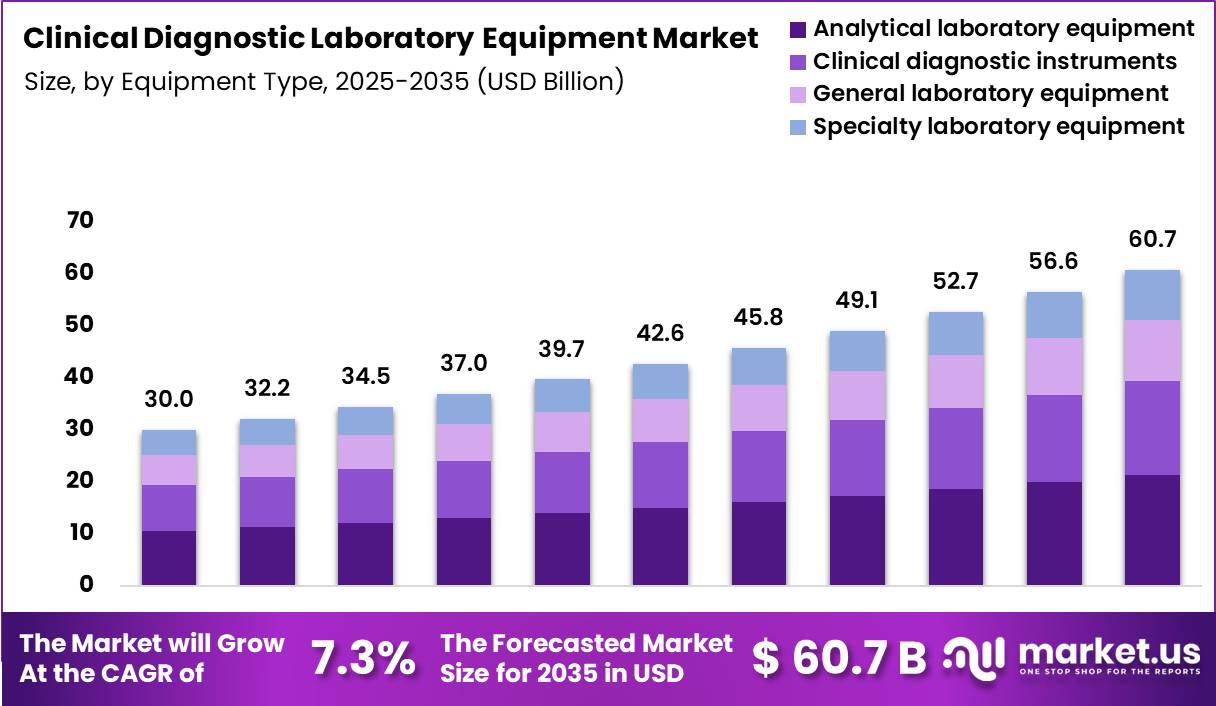
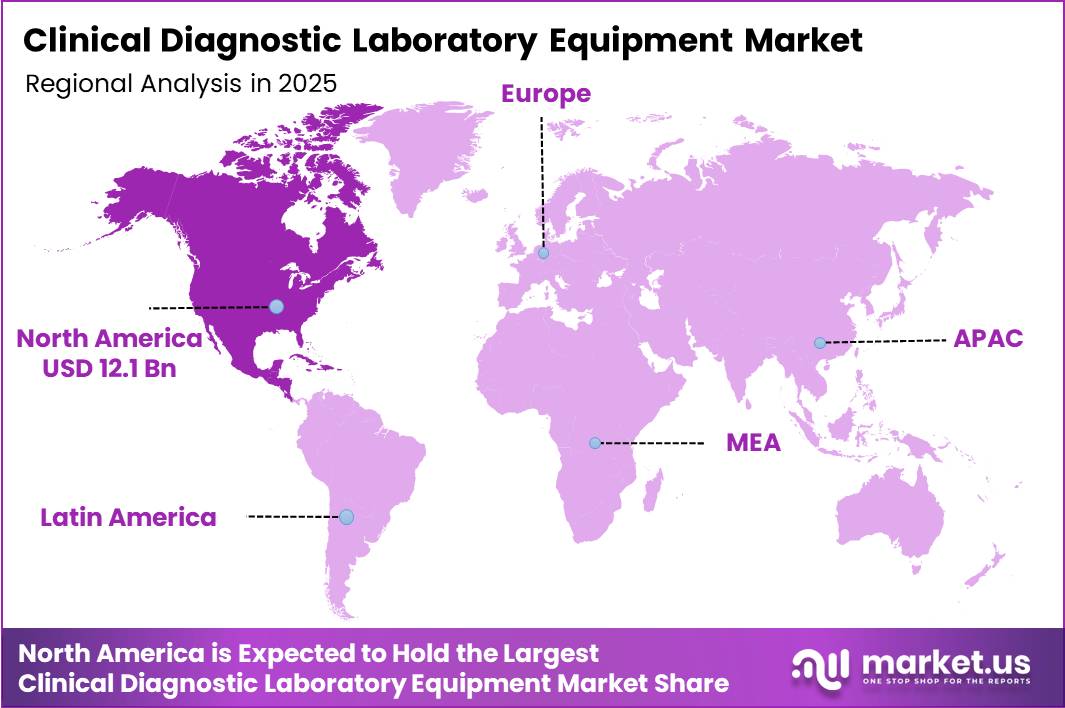
Global Clinical Diagnostic Laboratory Equipment Market size is expected to be worth around US$ 60.7 Billion by 2035 from US$ 30.0 Billion in 2025, growing at a CAGR of 7.3% during the forecast period from 2026 to 2035. In 2025, North America led the market, achieving over 40.5% share with a revenue of US$ 12.1 Billion.
The global clinical diagnostic laboratory equipment market is witnessing steady expansion as healthcare systems increasingly focus on early disease detection, preventive care, and high-throughput testing capabilities.
Clinical diagnostic laboratory equipment includes analyzers, automation systems, molecular diagnostic platforms, hematology analyzers, immunoassay systems, and clinical chemistry instruments used for disease diagnosis and patient monitoring.
Rising demand for accurate and rapid testing for infectious diseases, cancer, cardiovascular disorders, diabetes, and genetic conditions continues to support adoption across hospitals, diagnostic laboratories, and research facilities.
The growing volume of laboratory testing is a major factor driving equipment demand. According to the U.S. Centers for Disease Control and Prevention (CDC), the United States had 33,033 active accredited and compliance clinical laboratories in July 2021, supported by approximately 328,000 testing personnel. These laboratories processed a large share of diagnostic testing activity, highlighting the critical role of advanced laboratory infrastructure.
Technological advancements such as laboratory automation, artificial intelligence integration, digital diagnostics, and molecular testing platforms are transforming clinical workflows by improving accuracy, reducing turnaround time, and increasing testing capacity.
Regulatory bodies such as the U.S. Food and Drug Administration (FDA) continue to support quality standards for in vitro diagnostic (IVD) equipment, with recognized standards covering areas such as electrical safety, performance, and laboratory-use requirements.
Increasing healthcare expenditure, expansion of diagnostic networks in emerging economies, and growing demand for personalized medicine are expected to further accelerate the adoption of advanced clinical diagnostic laboratory equipment worldwide. The market is also benefiting from the rising need for decentralized testing solutions and automated platforms capable of handling increasing diagnostic workloads.
Key Takeaways
- Market Size: Global Clinical Diagnostic Laboratory Equipment Market size is expected to be worth around US$ 60.7 Billion by 2035 from US$ 30.0 Billion in 2025.
- Market Share: The market is growing at a CAGR of 7.3% during the forecast period from 2026 to 2035.
- Equipment Type: The Clinical Diagnostic Laboratory Equipment Market by outsourced Equipment Type is led by Analytical laboratory equipment, which accounted for 35.3% of the global market share in 2025.
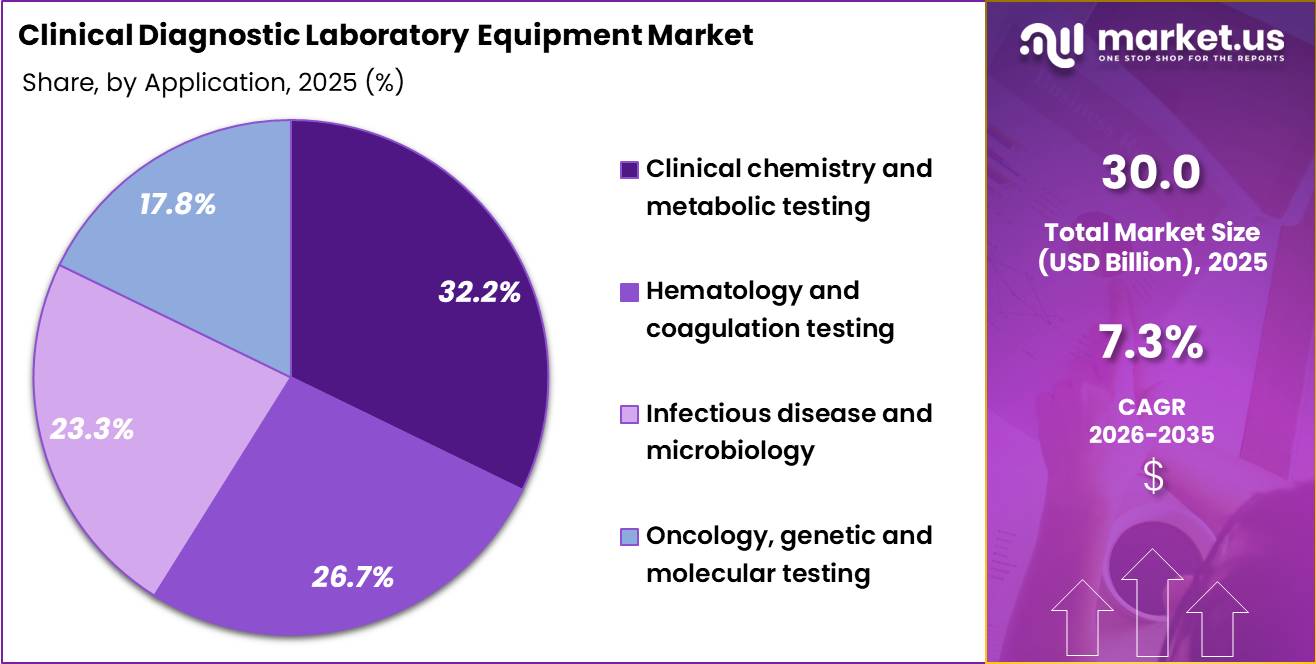
- Application: The Clinical chemistry and metabolic testing segment held the largest share of the Clinical Diagnostic Laboratory Equipment Market, accounting for 32.2% of total revenue in 2025.
- End-user: Hospital laboratories dominate the Clinical Diagnostic Laboratory Equipment Market, accounting for 40.2% of the market share in 2025.
- Regional Analysis: In 2025, North America led the market, achieving over 40.5% share with a revenue of US$ 12.1 Billion.
Equipment Type Analysis
Analytical Laboratory Equipment Dominates the Clinical Diagnostic Laboratory Equipment Market Due to High Testing Volumes and Automation.
Analytical laboratory equipment dominates the Clinical Diagnostic Laboratory Equipment Market, accounting for 35.3% of the market share in 2025. This leadership is driven by the growing demand for high-throughput testing, improved diagnostic accuracy, and automated laboratory workflows.
These systems are widely used for clinical chemistry, immunoassays, molecular diagnostics, and microbiology, enabling laboratories to process thousands of patient samples with minimal manual intervention. Increasing prevalence of chronic diseases, infectious diseases, and routine health screening programs has significantly boosted the adoption of analytical equipment in hospitals and diagnostic centers.
Continuous technological advancements, including AI-enabled analyzers, integrated laboratory automation, and digital connectivity, further strengthen this segment’s position. Major manufacturers are also investing in compact, faster, and more efficient analytical platforms to meet the rising demand for rapid and reliable diagnostics.
Clinical diagnostic instruments represent the second-largest segment with 29.8% of the market, supported by their extensive use in routine patient diagnosis and specialized laboratory testing. General laboratory equipment accounts for 19.3%, driven by steady demand for essential laboratory operations across healthcare facilities, while specialty laboratory equipment holds 15.6%, primarily serving advanced diagnostic applications such as molecular pathology and precision medicine.
Looking ahead, specialty laboratory equipment is expected to witness the fastest growth as healthcare providers increasingly adopt personalized diagnostics, genomic testing, and next-generation laboratory technologies.
Application Analysis
Clinical Chemistry and Metabolic Testing Dominates the Clinical Diagnostic Laboratory Equipment Market Owing to Routine Diagnostic Demand.
Clinical chemistry and metabolic testing leads the Clinical Diagnostic Laboratory Equipment Market, capturing 32.2% of the market share in 2025. The segment dominates because it forms the backbone of routine diagnostic testing for conditions such as diabetes, kidney disorders, liver diseases, electrolyte imbalances, and cardiovascular health.
Hospitals and diagnostic laboratories perform these tests daily, making them one of the highest-volume laboratory applications worldwide. Rising incidences of chronic diseases, expanding preventive healthcare initiatives, and increasing health awareness continue to drive demand.
Furthermore, advances in automated chemistry analyzers, integrated laboratory systems, and faster sample processing have enhanced laboratory efficiency, encouraging healthcare providers to invest in modern clinical chemistry platforms.
Hematology and coagulation testing follows with 26.7% of the market, supported by growing demand for blood disorder diagnosis, surgical monitoring, and anticoagulant therapy management. Infectious disease and microbiology testing contributes 23.3%, fueled by continuous surveillance of bacterial, viral, and fungal infections across healthcare settings.
Oncology, genetic, and molecular testing accounts for 17.8%, reflecting the expanding use of precision medicine and genomic diagnostics. Although currently smaller, molecular and genetic testing is expected to experience the strongest future growth as personalized medicine, cancer biomarker testing, and advanced genomic technologies become increasingly integrated into routine clinical practice.
End-user Analysis
Hospital Laboratories Dominate the Clinical Diagnostic Laboratory Equipment Market Due to High Patient Volumes and Comprehensive Testing.
Hospital laboratories dominate the Clinical Diagnostic Laboratory Equipment Market, accounting for 40.2% of the market share in 2025. Their leadership is attributed to the large number of inpatient, outpatient, and emergency diagnostic tests performed every day.
Hospitals require a broad range of laboratory equipment to support clinical chemistry, hematology, microbiology, immunology, and molecular diagnostics, making them the largest end users of diagnostic technologies. Increasing hospital admissions, expanding healthcare infrastructure, and greater investment in laboratory automation continue to reinforce the segment’s dominance.
In addition, hospitals are increasingly adopting integrated diagnostic platforms that improve workflow efficiency, reduce turnaround times, and support faster clinical decision-making, further driving equipment demand.
Independent diagnostic laboratories represent the second-largest end-user segment, benefiting from rising outsourcing of laboratory testing and growing demand for specialized diagnostic services. Research and academic laboratories continue to expand their equipment investments to support clinical research, biomarker discovery, and the development of innovative diagnostic technologies.
Other healthcare laboratories, including laboratories in specialty clinics and community healthcare facilities, also contribute steadily to market growth by expanding access to routine diagnostic testing. Among these segments, independent diagnostic laboratories are expected to witness the fastest growth as demand for cost-effective, high-volume, and specialized laboratory testing continues to increase worldwide.
Key Market Segments
By Equipment Type
- Analytical laboratory equipment
- Clinical diagnostic instruments
- General laboratory equipment
- Specialty laboratory equipment
By Application
- Clinical chemistry and metabolic testing
- Hematology and coagulation testing
- Infectious disease and microbiology
- Oncology, genetic and molecular testing
By End-user
- Hospital laboratories
- Independent diagnostic laboratories
- Research and academic laboratories
- Other healthcare laboratories
Challenges
Regulatory & Compliance Complexity.
Evolving regulatory frameworks for in vitro diagnostics, particularly the European Union’s IVDR and its proposed 2025 streamlining amendments, continue to create significant compliance burdens that extend product development timelines and increase regulatory costs for diagnostic analyzers and associated assays.
Under current requirements, CE marking for higher-risk IVDs can require an additional 9–18 months of clinical validation, technical documentation preparation, and notified body review compared with pre-IVDR processes, often delaying European launches by one to two budget cycles and leading manufacturers to adopt phased commercialization strategies across regions.
To meet these requirements, companies are reallocating approximately 10–20% of development budgets toward regulatory compliance and post-market surveillance activities, while some delay or limit lower-volume assays that cannot justify the required evidence generation.
This regulatory burden is estimated to reduce near-term market growth potential by approximately 0.5–0.9 percentage points. In response, manufacturers are consolidating assay portfolios onto common platforms, investing in regulatory operations and data infrastructure capable of reducing dossier preparation times by 20–30%, engaging earlier with notified bodies, and leveraging real-world performance data to support lifecycle compliance.
Although these measures can mitigate part of the burden over a 2–4 year period, they are unlikely to fully restore the speed and flexibility of the pre-IVDR regulatory environment.
| Challenge | (~) % CAGR Friction Drag | Geographic Relevance | Mitigation Horizon |
|---|---|---|---|
| Chronic lab workforce gap | -1.2% | North America, Europe, APAC metros | Long term (≥ 4 years) |
| Volatile reagent & capex costs | -0.9% | Global, import-dependent markets | Medium term (2-4 years) |
| Regulatory & compliance complexity | -0.7% | EU regulatory hubs, US, China | Medium term (2-4 years) |
| Fragmented lab IT & interoperability | -0.8% | North America core, EU, large hospital systems | Long term (≥ 4 years) |
| Supply chain & cold-chain fragility | -0.6% | APAC logistics corridors, emerging markets | Long term (≥ 4 years) |
| AI/automation adoption friction | -1.0% | Global tier-1 & tier-2 labs | Medium term (2-4 years) |
Opportunity
Mid-tier automation for tier-2 labs.
Another underpenetrated opportunity is the creation of low-footprint, modular automation systems for tier-2 hospitals, regional labs, and public-health networks that are currently too large for benchtop workflows but too small or capital-constrained for full track automation, a gap that is especially relevant as national essential diagnostics programs push broader test-menu coverage beyond top urban centers.
This is not a baseline driver because current market growth is already being supported by routine test demand in established reference labs; the upside instead lies in monetizing the under-equipped middle layer of laboratory infrastructure, where vendors can design systems priced 30% to 50% below tertiary-lab automation, with 15% to 25% lower service complexity and payback periods under 36 months at 0.8 million to 2.5 million tests annually.
In APAC, Africa, and Latin America, where tiered networks are formalizing and workforce gaps remain severe, a vendor that localizes menu configuration, reagent packs, and financing can capture previously inaccessible sites and widen TAM by an estimated 10% to 15% over baseline instrument demand, while also creating an upgrade ladder into premium automation as volumes mature
| Opportunity | (~) % Potential CAGR Upside | Geographic Relevance | Execution Window |
|---|---|---|---|
| Lab-as-a-Service contracts | +1.4% | North America core, EU, GCC, India | Short term |
| Mid-tier automation for tier-2 labs | +1.7% | APAC emerging markets, LATAM, Africa | Short term |
| Molecular near-patient platforms | +2.1% | North America, EU, APAC urban, Middle East | Medium term |
| Mass-spec menu expansion | +1.2% | North America core, EU, Japan | Medium term |
| AI workflow and middleware monetization | +1.5% | North America, EU, advanced APAC | Short term |
| Roll-up of local distributors and service fleets | +1.8% | India, SEA, Africa, LATAM | Medium term |
Drivers
Chronic disease monitoring volumes.
Chronic disease burden remains the most durable equipment demand engine because it creates recurring test intensity rather than one-off capital demand: WHO reports at least 43 million deaths from noncommunicable diseases globally, equal to 75% of non-pandemic-related deaths, with cardiovascular disease accounting for at least 19 million deaths, cancer 10 million, chronic respiratory disease 4 million, and diabetes more than 2 million.
In the U.S., CDC states three in four adults have at least one chronic condition, over half have two or more, and chronic disease drives $4.9 trillion in annual health costs, while more than 90% of adults aged 65+ have at least one chronic condition.
For equipment vendors, that shifts purchasing toward high-utilization chemistry, immunoassay, hematology, coagulation, HbA1c, cardiac marker, and renal monitoring platforms with low cost-per-reportable-result, high uptime, and reagent-rental economics.
The revenue effect is stronger than simple installed-base growth because every diabetes, oncology, kidney, and cardiovascular monitoring pathway increases analyzer utilization, middleware integration, and service-contract attachment rates. The net effect is a broad-based +1.6 percentage-point lift to forward CAGR, especially in North America, Europe, China, and India where screening, disease management, and hospital-network consolidation convert epidemiology directly into higher annual test throughput.
| Driver | (~) % Impact on CAGR Forecast | Geographic Relevance | Impact Timeline |
|---|---|---|---|
| Chronic disease monitoring volumes | +1.6% | North America core, EU, China, India, Gulf | Long term (≥ 4 years) |
| Aging-led screening and routine chemistry demand | +1.2% | North America, Western Europe, Japan, South Korea, urban China | Medium term (2-4 years) |
| Molecular and precision diagnostics expansion | +1.4% | U.S. core, EU tertiary centers, China, developed APAC | Medium term (2-4 years) |
| Automation investment from lab labor shortages | +1.1% | U.S., EU, Japan, Australia, large APAC hospital chains | Short term (≤ 2 years) |
| Regulatory compliance and assay replacement cycle | +0.9% | U.S. and EU core, spill-over to export-oriented APAC suppliers | Medium term (2-4 years) |
| Decentralized networks and near-patient testing scale-up | +1.0% | India, Southeast Asia, Latin America, Africa, U.S. outpatient corridors | Medium term (2-4 years) |
Restraint
Capital budget tightness in hospital labs.
A separate restraint comes from hospital and integrated-delivery-network budget discipline, where equipment replacement decisions are increasingly filtered through enterprise-wide cost containment even though clinical testing volumes remain resilient, because medical-care inflation is still positive and providers are balancing labor, IT, and service-line investments against finite capital envelopes.
On the supply side, U.S. medical equipment and supplies manufacturing PPI moved from 140.436 in December 2025 to 142.280 by April 2026, indicating that vendors are still operating under an elevated cost base that limits discount flexibility in large instrument tenders.
That combination raises the all-in hurdle rate for automation tracks, chemistry/immunoassay replacements, and lab IT refreshes, pushing procurement committees toward lease extensions, reagent-rental negotiations, and phased rather than full-site modernization.
The commercial effect is slower average selling price realization, longer sales cycles by roughly 3 to 6 months on large accounts, and a plausible 1.0-point CAGR deduction in developed markets where saturated installed bases make upgrade timing highly sensitive to CFO-level approval.
| Restraint | (~) % Impact on CAGR Forecast | Geographic Relevance | Impact Timeline |
|---|---|---|---|
| Regulatory uncertainty in LDT-linked workflows | -1.1% | North America core | Short term (≤ 2 years) |
| IVDR certification and notified-body congestion | -1.4% | EU core, UK-linked EU exporters | Medium term (2-4 years) |
| Capital budget tightness in hospital labs | -1.0% | North America, EU, developed APAC | Short term (≤ 2 years) |
| Consumables and component cost inflation | -0.8% | Global, import-dependent markets | Medium term (2-4 years) |
| Semiconductor and automation lead-time drag | -0.9% | Global, APAC manufacturing corridors | Short term (≤ 2 years) |
| Trade controls and specialty material exposure | -0.7% | US, EU, East Asia imaging-linked chains | Medium term (2-4 years) |
Regional Analysis
North America Leads the Clinical Diagnostic Laboratory Equipment Market with Strong Healthcare Infrastructure.
In 2025, North America dominated the global Clinical Diagnostic Laboratory Equipment Market, accounting for over 40.5% of the total market share and generating approximately US$ 12.1 billion in revenue. The region’s leadership is supported by its advanced healthcare infrastructure, high laboratory testing volumes, and widespread adoption of automated diagnostic technologies across hospitals, independent laboratories, and research institutions.
Growing demand for early disease detection, precision medicine, and molecular diagnostics continues to drive investments in sophisticated laboratory equipment. Favorable healthcare spending, strong reimbursement systems, and continuous modernization of clinical laboratories further strengthen market growth.
The presence of major diagnostic equipment manufacturers, extensive research activities, and rapid integration of digital laboratory solutions also contribute to North America’s leading position. Europe represents the second-largest regional market, supported by well-established public healthcare systems, increasing laboratory automation, and rising demand for accurate diagnostic testing.
Government initiatives promoting disease surveillance and preventive healthcare continue to encourage equipment upgrades across laboratories. Asia Pacific is expected to witness the fastest growth during the forecast period due to expanding healthcare infrastructure, increasing healthcare expenditure, growing patient populations, and improving access to diagnostic services in countries such as China, India, and Southeast Asian nations.
Meanwhile, Latin America and the Middle East & Africa are experiencing steady market expansion, driven by investments in healthcare facilities, improving laboratory capabilities, and rising awareness of early disease diagnosis, although infrastructure and funding limitations continue to moderate growth in certain countries.
Key Regions and Countries
North America
- The US
- Canada
Europe
- Germany
- France
- The U.K.
- Italy
- Spain
- Russia & CIS
- Rest of Europe
Asia Pacific
- China
- India
- Japan
- South Korea
- ASEAN
- Australia & New Zealand
- Rest of Asia Pacific
Middle East & Africa
- GCC
- South Africa
- Rest of Middle East & Africa
Latin America
- Brazil
- Mexico
- Rest of Latin America
Key Player Analysis
The Clinical Diagnostic Laboratory Equipment Market is moderately consolidated, with a mix of established global manufacturers and specialized laboratory technology providers competing through innovation, product quality, and integrated diagnostic solutions. Leading companies are continuously expanding their portfolios to meet the growing demand for automation, precision diagnostics, and high-throughput laboratory workflows.
Beckman Coulter (Danaher), Siemens Healthineers, Abbott Laboratories, F. Hoffmann-La Roche, Thermo Fisher Scientific, Becton, Dickinson and Company (BD), Agilent Technologies, Bio-Rad Laboratories and Horiba Ltd. collectively shape the competitive landscape through broad product offerings that span clinical chemistry, immunoassays, molecular diagnostics, hematology, microbiology, and laboratory automation. Others contribute by serving niche applications, regional markets, and specialized testing requirements, increasing overall market competitiveness.
Competition is increasingly centered on research and development, enabling companies to introduce faster, more accurate, and automated diagnostic systems that improve laboratory efficiency and clinical outcomes. Strategic partnerships with hospitals, research institutions, and healthcare networks help expand technology adoption and strengthen market presence.
Product innovation focuses on AI-enabled analytics, digital connectivity, compact instrument design, and scalable laboratory platforms capable of handling rising testing volumes. Companies are also emphasizing workflow integration, connecting instruments, software, reagents, and data management systems into unified laboratory ecosystems.
This ecosystem-based approach improves interoperability, reduces manual intervention, enhances data accuracy, and supports long-term customer relationships, making comprehensive laboratory solutions a key competitive differentiator across the global market.
Top Key Players
- Beckman Coulter (Danaher)
- Siemens Healthineers
- Abbott Laboratories
- F. Hoffmann‑La Roche
- Thermo Fisher Scientific
- Becton, Dickinson and Company (BD)
- Agilent Technologies
- Bio‑Rad Laboratories
- PerkinElmer / Revvity
- Eppendorf AG
- Shimadzu Corporation
- Bruker Corporation
- Sysmex Corporation
- DiaSorin
- Horiba Ltd.
- Others
Recent Developments
- In March 2026, Beckman Coulter Diagnostics selected Innovaccer Gravity as its AI and data platform partner to modernize clinical laboratory operations and provide advanced analytics for laboratory optimization.
- In March 2026, Abbott Laboratories completed the acquisition of Exact Sciences, expanding Abbott’s position in oncology diagnostics and strengthening its laboratory diagnostics portfolio.
- In June 2026, Siemens Healthineers launched the Atellica HEMA 570 and Atellica HEMA 580 hematology analyzers as replacements for its legacy ADVIA 2120i systems, targeting high-throughput clinical laboratory environments.
- In July 2025, Siemens Healthineers became the first in-vitro diagnostics manufacturer to earn My Green Lab ACT Ecolabel certification for its Atellica analyzers and more than 150 laboratory reagents, strengthening its sustainable laboratory diagnostics portfolio.
Report Scope
| Report Features | Description |
|---|---|
| Market Value (2025) | US$ 30.0 Billion |
| Forecast Revenue (2035) | US$ 60.7 Billion |
| CAGR (2026-2035) | 7.3% |
| Base Year for Estimation | 2025 |
| Historic Period | 2020-2024 |
| Forecast Period | 2026-2035 |
| Report Coverage | Revenue Forecast, Market Dynamics, Competitive Landscape, Recent Developments |
| Segments Covered | By Equipment Type (Analytical laboratory equipment, Clinical diagnostic instruments, General laboratory equipment, Specialty laboratory equipment), By Application (Clinical chemistry and metabolic testing, Hematology and coagulation testing, Infectious disease and microbiology, Oncology, genetic and molecular testing), By End-user (Hospital laboratories, Independent diagnostic laboratories, Research and academic laboratories, Other healthcare laboratories) |
| Regional Analysis | North America – The US, Canada; Europe – Germany, France, U.K., Italy, Spain, Russia & CIS, Rest of Europe; Asia Pacific – China, India, Japan, South Korea, ASEAN, Australia & New Zealand, Rest of Asia Pacific; Middle East & Africa – GCC, South Africa, Rest of Middle East & Africa; Latin America – Brazil, Mexico, Rest of Latin America |
| Competitive Landscape | Beckman Coulter (Danaher), Siemens Healthineers, Abbott Laboratories, F. Hoffmann‑La Roche, Thermo Fisher Scientific, Becton, Dickinson and Company (BD), Agilent Technologies, Bio‑Rad Laboratories, PerkinElmer / Revvity, Eppendorf AG, Shimadzu Corporation, Bruker Corporation, Sysmex Corporation, DiaSorin, Horiba Ltd., Others |
| Customization Scope | Customization for segments, region/country-level will be provided. Moreover, additional customization can be done based on the requirements. |
| Purchase Options | We have three licenses to opt for: Single User License, Multi-User License (Up to 5 Users), Corporate Use License (Unlimited User and Printable PDF) |





































