


Market Overview
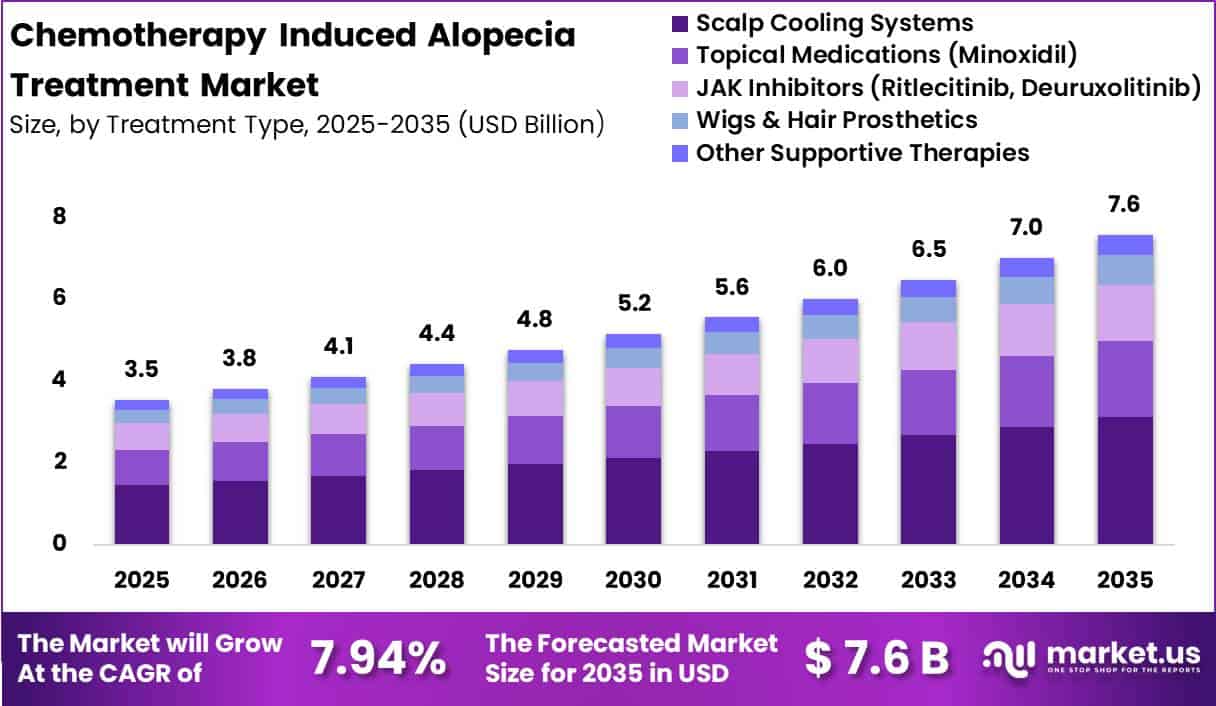
Global Chemotherapy Induced Alopecia Treatment Market size is expected to be worth around US$ 7.58 Billion by 2035 from US$ 3.53 Billion in 2025, growing at a CAGR of 7.94% during the forecast period from 2026 to 2035. In 2025, North America led the market, achieving over 42.00% share with a revenue of US$ 1.48 Billion.
Chemotherapy-induced alopecia (CIA) is one of the most common and emotionally challenging side effects of cancer treatment, affecting a large proportion of patients receiving cytotoxic chemotherapy. The condition occurs because chemotherapy drugs target rapidly dividing cells, including hair follicle cells, leading to temporary hair loss on the scalp and sometimes across the body.
According to the U.S. National Cancer Institute (NCI), hair loss caused by chemotherapy can significantly affect a patient’s emotional well-being, self-image, and quality of life, making supportive care an essential part of cancer treatment.
Growing awareness of patient quality of life is encouraging healthcare providers to integrate hair preservation strategies alongside cancer therapies. Scalp cooling systems have become the leading clinically recognized approach to reduce chemotherapy-induced hair loss.
The U.S. Food and Drug Administration (FDA) has cleared scalp cooling systems for adults with solid tumors receiving alopecia-inducing chemotherapy. These devices work by lowering scalp temperature, reducing blood flow to hair follicles and limiting exposure of follicles to chemotherapy drugs.
Clinical evidence reviewed by the FDA showed that more than 66% of patients using one scalp cooling system retained over half of their hair during treatment. Recent meta-analyses also indicate that scalp cooling can reduce the risk of significant chemotherapy-induced alopecia by approximately 41% to 43% compared with standard care, supporting its increasing adoption in oncology centers.
Continued innovation in scalp cooling technology, supportive oncology services, and patient-centered cancer care is expected to strengthen treatment options. Ongoing clinical research, improved device design, and expanding access through hospitals and cancer centers are helping improve patient experience while supporting comprehensive cancer care worldwide.
Key Takeaways
- Market Size : Chemotherapy Induced Alopecia Treatment Market size is expected to be worth around US$ 7.58 Billion by 2035 from US$ 3.53 Billion in 2025.
- Market Share : The market is growing at a CAGR of 7.94% during the forecast period from 2026 to 2035.
- Treatment Type Analysis : The Scalp Cooling Systems segment dominated the Chemotherapy Induced Alopecia Treatment Market in 2025, accounting for 41.20% of the total market share.
- Drug Analysis : The Minoxidil segment held the largest share of the Chemotherapy Induced Alopecia Treatment Market in 2025, capturing 38.10% of the market.
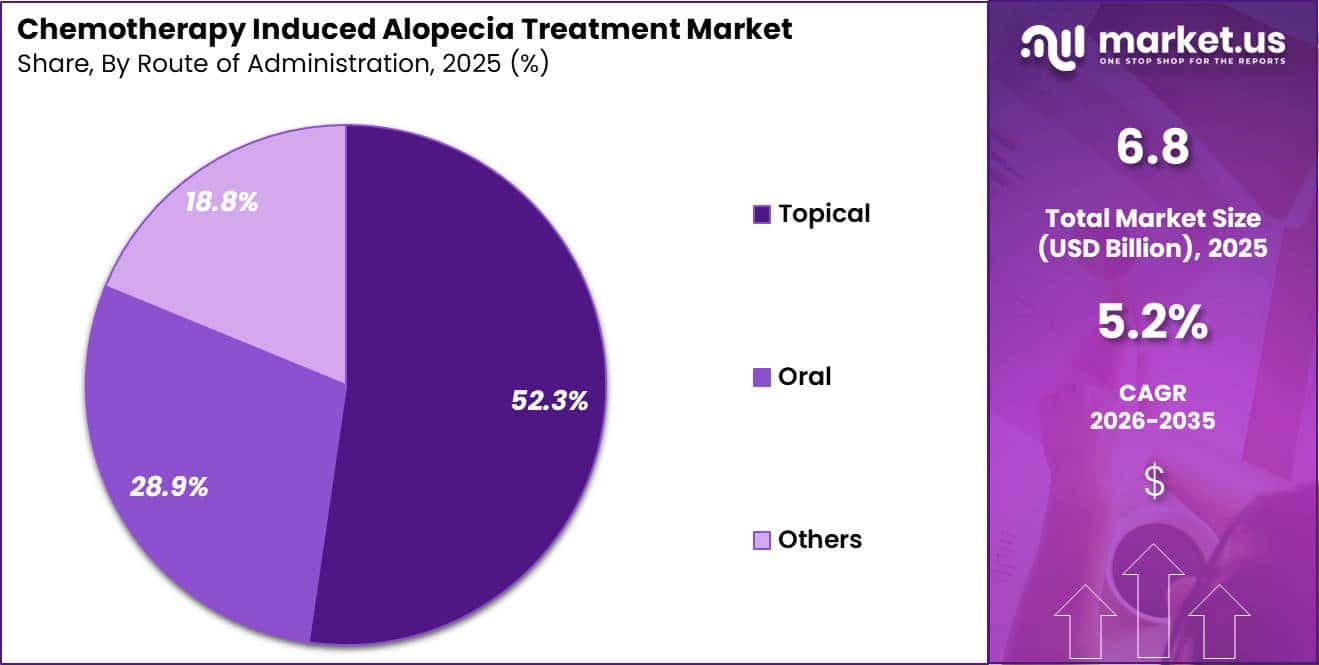
- Route of Administration Analysis : The Topical segment dominated the Chemotherapy Induced Alopecia Treatment Market in 2025, accounting for 52.30% of total revenue.
- Distribution Channel Analysis : The Hospital Pharmacies segment accounted for the largest share of the Chemotherapy Induced Alopecia Treatment Market in 2025, representing 55.10% of total revenue.
- End User Analysis : The Hospitals & Cancer Centers segment dominated the Chemotherapy Induced Alopecia Treatment Market in 2025, accounting for 55.20% of the global market.
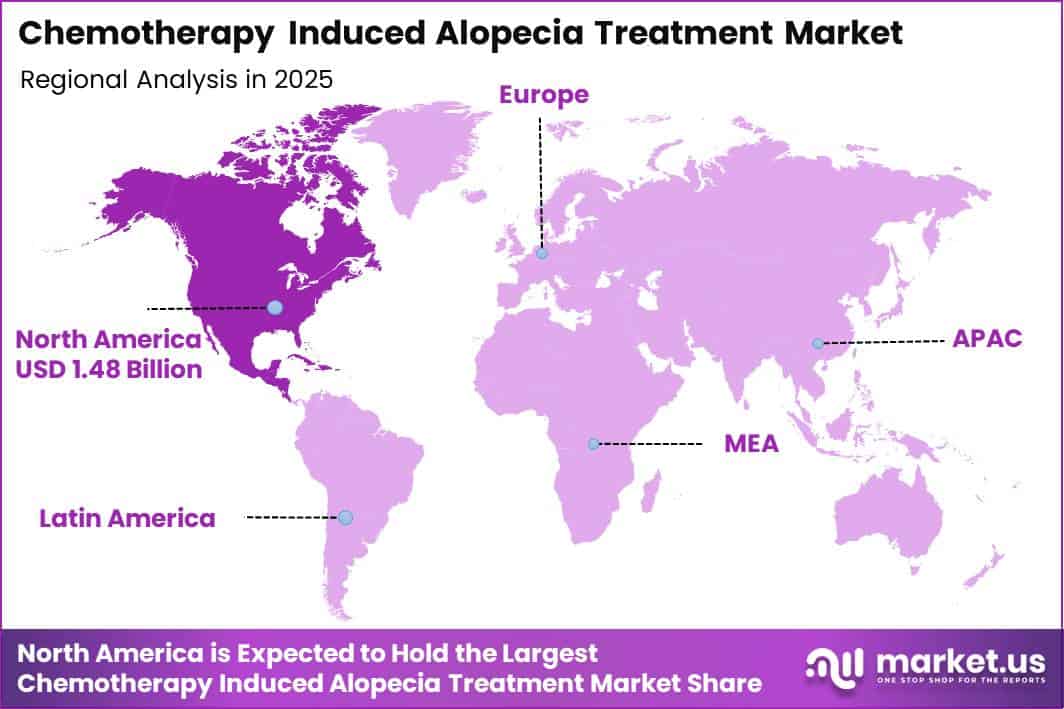
- Regional Analysis : In 2025, North America led the market, achieving over 42.00% share with a revenue of US$ 1.48 Billion.
Treatment Type Analysis
The Scalp Cooling Systems segment dominated the Chemotherapy Induced Alopecia Treatment Market in 2025, accounting for 41.20% of the total market share. This leadership is driven by growing clinical evidence supporting scalp cooling as the most effective method for reducing chemotherapy-induced hair loss in patients with solid tumors.
The increasing availability of FDA-cleared scalp cooling devices in hospitals and cancer centers has also strengthened adoption. Scalp cooling works by lowering scalp temperature during chemotherapy, reducing blood flow to hair follicles and limiting exposure to cytotoxic drugs. Growing awareness of quality-of-life management and supportive oncology care further supports demand.
Topical Medications (Minoxidil) represent another important segment, primarily used to promote hair regrowth after chemotherapy rather than prevent hair loss. JAK Inhibitors, including Ritlecitinib and Deuruxolitinib, are emerging treatment options being explored for selected alopecia conditions, and ongoing research may expand their future role in chemotherapy-induced alopecia management.
Wigs & Hair Prosthetics continue to witness stable demand as they provide immediate cosmetic support and improve patient confidence during treatment. Other Supportive Therapies, including scalp care products, nutritional supplements, counseling services, and hair restoration programs, complement medical treatment by improving patient comfort and emotional well-being.
Increasing patient awareness, expanding oncology supportive care programs, and continuous technological innovation are expected to drive growth across all treatment segments during the forecast period.
Drug Analysis
The Minoxidil segment held the largest share of the Chemotherapy Induced Alopecia Treatment Market in 2025, capturing 38.10% of the market. Minoxidil remains the most widely used drug because of its established role in stimulating hair regrowth following chemotherapy.
It is commonly prescribed in topical form after cancer treatment, while oral formulations are also being evaluated through clinical studies for persistent chemotherapy-induced alopecia. Its wide availability, favorable safety profile, and physician familiarity continue to support strong market demand.
Deuruxolitinib is an emerging JAK inhibitor that has attracted attention for treating autoimmune hair loss disorders and may offer future opportunities as research into chemotherapy-related alopecia advances. Ritlecitinib, another JAK inhibitor, is also being evaluated for broader alopecia management and reflects growing innovation in targeted therapies.
Although these medicines currently represent a smaller share of the market than Minoxidil, expanding clinical research and improved understanding of hair follicle biology could support future adoption. The Others segment includes corticosteroids, nutritional therapies, platelet-rich plasma (PRP), and investigational treatments that are used in selected clinical situations.
Continued investment in dermatology and oncology research is expected to diversify available drug options and improve long-term hair recovery outcomes for cancer survivors.
Route of Administration Analysis
The Topical segment dominated the Chemotherapy Induced Alopecia Treatment Market in 2025, accounting for 52.30% of total revenue. The segment’s leadership is supported by the widespread use of topical Minoxidil and other scalp-based therapies, which offer direct application, ease of use, minimal systemic exposure, and good patient acceptance.
Topical treatments are frequently recommended after chemotherapy to encourage hair regrowth and are widely available through hospitals and pharmacies. Their affordability and convenience further contribute to strong market demand.
The Oral segment is expected to witness steady growth due to increasing research into oral Minoxidil and other systemic therapies for persistent chemotherapy-induced alopecia. Oral medicines may offer advantages for selected patients requiring long-term treatment or those who do not respond adequately to topical therapy.
Growing clinical investigations involving targeted therapies, including JAK inhibitors, are also supporting this segment’s expansion. The Others category includes device-based scalp cooling, injectable therapies, and supportive treatments that do not fit conventional oral or topical administration.
Rising awareness of personalized supportive oncology care, combined with continued innovation in pharmaceutical formulations and targeted therapies, is expected to strengthen growth across all administration routes over the forecast period.
Distribution Channel Analysis
The Hospital Pharmacies segment accounted for the largest share of the Chemotherapy Induced Alopecia Treatment Market in 2025, representing 55.10% of total revenue. Hospital pharmacies remain the primary distribution channel because chemotherapy-induced alopecia treatments are closely linked to oncology care provided in hospitals and specialized cancer centers.
Patients receiving chemotherapy often obtain scalp cooling services, prescription medicines, and supportive care products directly through hospital-based pharmacies, ensuring proper clinical supervision and treatment continuity. Growing adoption of comprehensive supportive cancer care programs further strengthens this segment.
Drug Store & Retail Pharmacies hold a significant market position by supplying over-the-counter and prescription hair regrowth products, including topical Minoxidil and supportive scalp care products. Their wide geographic presence and convenient patient access support continued demand.
Online Pharmacies are experiencing rapid growth due to increasing digital healthcare adoption, home delivery services, competitive pricing, and improved availability of prescription and non-prescription supportive therapies.
The expansion of e-commerce healthcare platforms, particularly in developed and emerging markets, is expected to further accelerate online sales. As patient awareness increases and supportive oncology care expands globally, all distribution channels are anticipated to experience steady growth during the forecast period.
End User Analysis
The Hospitals & Cancer Centers segment dominated the Chemotherapy Induced Alopecia Treatment Market in 2025, accounting for 55.20% of the global market. These facilities remain the primary treatment settings because chemotherapy administration, scalp cooling procedures, and supportive oncology services are typically provided under specialist supervision.
Hospitals also have access to FDA-cleared scalp cooling systems, multidisciplinary oncology teams, and comprehensive patient support programs, making them the preferred choice for chemotherapy-induced alopecia management. Growing investment in supportive cancer care continues to reinforce this segment’s leadership.
Specialty Oncology Clinics represent an important segment, offering personalized cancer treatment, follow-up care, and supportive therapies in dedicated outpatient settings. Their growing number is improving patient access to chemotherapy and hair preservation services.
Ambulatory Care Centers are also gaining popularity as more chemotherapy treatments shift toward outpatient care, providing greater convenience and lower treatment costs. Homecare Settings are expected to witness steady growth as telemedicine, home-based supportive care, and self-administered hair regrowth treatments become increasingly common.
Rising awareness of quality-of-life management, improved access to supportive oncology services, and continued innovation in scalp cooling and pharmaceutical therapies are expected to drive demand across all end-user segments during the forecast period.
Market Segmentations
By Treatment Type
- Scalp Cooling Systems
- Topical Medications (Minoxidil)
- JAK Inhibitors (Ritlecitinib, Deuruxolitinib)
- Wigs & Hair Prosthetics
- Other Supportive Therapies
By Drug
- Minoxidil
- Deuruxolitinib
- Ritlecitinib
- Others
By Route of Administration
- Topical
- Oral
- Others
By Distribution Channel
- Hospital Pharmacies
- Drug Store & Retail Pharmacies
- Online Pharmacies
By End User
- Hospitals & Cancer Centers
- Specialty Oncology Clinics
- Ambulatory Care Centers
- Homecare Settings
Drivers
Shift Toward Supportive Oncology Drives Scalp Cooling Adoption
Commercial momentum improves when chemotherapy-induced alopecia is treated as a quality-of-care issue rather than a discretionary appearance concern.
NCI explicitly described hair loss as one of the most distressing side effects of chemotherapy and cited clinician concern that some patients may avoid recommended treatment because of anticipated hair loss; that reframes intervention value around adherence, emotional burden, and care experience rather than pure aesthetics.
A 2024 review on expanding scalp-cooling availability states that FDA-cleared devices have been successfully used to prevent or reduce chemotherapy-induced alopecia, reinforcing that the category now sits inside evidence-backed supportive care rather than fringe self-care retail.
This framing widens budget access inside hospitals, because supportive oncology programs can justify spend using patient-reported outcomes, retention, and treatment-completion logic; once a center embeds alopecia prevention into survivorship and infusion workflows, revenue shifts from one-off cash-pay purchases toward recurring institution-led service delivery with stronger cross-selling into wigs, dermatology referral, and regrowth management.
| Driver | (~) % Impact on CAGR Forecast | Geographic Relevance | Impact Timeline |
|---|---|---|---|
| Scalp cooling reimbursement unlock | +2.2% | North America core, EU follow-on | Short term (≤ 2 years) |
| Rising chemotherapy-eligible cancer pool | +1.8% | North America, EU, APAC core, LATAM spill-over | Medium term (2-4 years) |
| Shift from cosmetic support to supportive oncology | +1.4% | North America core, Western Europe, urban APAC | Short term (≤ 2 years) |
| Wider solid-tumor protocol coverage | +1.1% | U.S. core, EU, developed APAC | Medium term (2-4 years) |
| Persistent alopecia awareness after taxanes | +0.9% | Breast cancer centers in U.S., EU, APAC | Short term (≤ 2 years) |
| Infusion-center workflow standardization | +0.8% | U.S. core, private hospitals in EU and APAC | Medium term (2-4 years) |
Challenges
Capital-Intensive Scalp Cooling Rollout Slows Market Expansion
Scalp cooling is a key modality in the chemotherapy-induced alopecia (CIA) market, with meta-analyses indicating that it can reduce the odds of moderate-to-severe hair loss by approximately 90% (odds ratio near 0.10). Its effectiveness is also reflected in lower wig utilization, which can decline from 45–84% to approximately 5–33%.
However, adoption is constrained by high infrastructure costs. Multi-station systems typically require low- to mid-five-figure investments per unit, in addition to annual maintenance expenses and cooling-cap consumables. These capital requirements are estimated to create an approximately 1.0 percentage-point drag on global market CAGR as hospitals distribute investments across multiple budget cycles.
High-volume oncology centers may require 6–12 cooling stations to align capacity with chemotherapy chairs. Each station can support approximately 6–8 treatment cycles daily, with chemotherapy sessions lasting 2–3 hours and requiring an additional 30–45 minutes of pre- and post-cooling. This creates utilization and scheduling challenges and can extend ROI periods to 3–5 years, particularly where reimbursement is limited.
To accelerate adoption, vendors are increasingly expected to consider leasing, per-treatment pricing, outcome-based payments, shared-savings models, and modular systems that can scale from 2 to 10 stations without major infrastructure upgrades.
| Challenge | (~) % CAGR Friction Drag | Geographic Relevance | Mitigation Horizon |
|---|---|---|---|
| Fragmented CIA care pathways | -1.2% | North America, EU, APAC metros | Medium term (2–4 years) |
| Capital-intensive scalp cooling rollout | -1.0% | North America core, EU hubs, High-income APAC | Medium term (2–4 years) |
| Limited clinical awareness & training | -0.8% | Global oncology centers | Short term (≤ 2 years) |
| Inequitable patient access & reimbursement | -1.3% | US, Latin America, CEE, LMICs | Long term (≥ 4 years) |
| Evidence gaps beyond breast cancer | -0.7% | Global solid-tumor markets | Medium term (2–4 years) |
| Device workflow & tolerance constraints | -0.6% | High-volume chemo day units | Short term (≤ 2 years) |
Restraints
Infrastructure and Workflow Burden Limits Scalp Cooling Adoption
Operationally, scalp cooling and related CIA interventions introduce an estimated 30–50 minutes of pre-infusion and 20–240 minutes of post-infusion chair time per chemotherapy session, depending on protocol and drug regimen, which meaningfully extends total infusion suite occupancy and stresses already capacity-constrained day-care oncology units.
Many centers report that chemotherapy visits that would otherwise require 2–3 hours in the chair can stretch to 4–6 hours once cooling cycles and device setup are factored in, effectively reducing daily patient throughput by 10–25% when multiple patients per day utilize cooling systems, unless additional chairs, nurses, or extended hours are funded.
Installation of mechanical cooling systems also demands capital-intensive or lease-based investments in specialized refrigeration equipment, maintenance contracts, and staff training, along with changes in scheduling, cleaning protocols, and informed consent workflows.
These elements can add thousands of dollars per device annually and several hours of training per nurse, which smaller or rural centers often cannot absorb without incremental funding. As a result, adoption tends to cluster in large academic or urban hospitals in North America and Europe, with limited diffusion into tier-2/3 cities and emerging market oncology networks where infusion chairs already run at high occupancy, reinforcing geographic inequities and capping total addressable treated volumes despite broad theoretical eligibility.
For vendors, underutilized devices, slower installation pipelines, and higher post-sale support costs lead to elongated payback periods on installed equipment, often stretching beyond 5 years instead of 3, and create pressure to offer lower-margin, pay-per-use models.
This structural friction likely subtracts 2–2.5 % points from global CIA treatment CAGR by delaying capacity build-out and constraining procedure volumes, particularly in APAC and Latin America where capital budgets per infusion chair are tightly controlled.
| Restraint | (~) % Impact on CAGR Forecast | Geographic Relevance | Impact Timeline |
|---|---|---|---|
| High out-of-pocket treatment cost & weak reimbursement | -2.8% | North America, Europe, selective APAC urban | Short–Medium term |
| Limited infrastructure & workflow burden for scalp cooling | -2.3% | North America, Europe, APAC tier-2/3, LatAm | Medium term |
| Narrow eligible patient pool & protocol constraints | -1.6% | Global oncology centers | Short–Medium term |
| Clinical uncertainty, safety perceptions & equity concerns | -1.4% | North America, Europe, emerging APAC | Medium–Long term |
| Fragmented regulatory & coding pathway | -1.2% | US, EU, APAC corridors | Medium term |
| Low awareness among clinicians & patients | -1.1% | Global, especially emerging markets | Long term |
Opportunity
Integrated Survivorship Programs Expand Long-Term Hair Restoration Demand
The opportunity lies in developing comprehensive hair restoration and scalp health programs within survivorship clinics rather than positioning them as stand-alone cosmetic services. Such programs could transform chemotherapy-induced alopecia (CIA) management from a one-time ancillary intervention into a longitudinal care pathway, supporting survivors for 18–36 months.
Although chemotherapy-related hair loss affects approximately 65% of patients and some survivors experience persistent alopecia beyond six months, most health systems continue to provide fragmented counseling, basic wig referrals, or optional scalp cooling during treatment.
The market white space is centered on integrated care modules combining dermatologic assessments, trichoscopy-based monitoring, appropriate pharmacologic interventions, cosmetic camouflage, and psychological support. These services could be packaged within survivorship programs at approximately 3–5% of total oncology episode spending, generating recurring per-patient revenue of US$1,000–2,500 through multiple consultations and follow-ups.
With tens of millions of global cancer survivors experiencing persistent visible hair changes and associated quality-of-life impacts, measurable outcomes can strengthen the value proposition. Distress scores, follow-up adherence, and return-to-work rates could support payer pilots and philanthropic funding.
Achieving penetration of 10–15% among eligible survivors in high-income markets by 2030 could create several billion dollars in incremental TAM and potentially add approximately 2 percentage points to baseline market CAGR.
| Opportunity | (~) % Potential CAGR Upside | Geographic Relevance | Execution Window |
|---|---|---|---|
| Integrated survivorship hair restoration programs | +2.0% | North America, Western Europe, Japan | Medium term (2–4 years) |
| Value-based CIA mitigation pathways with payers | +1.8% | US, UK, Nordics, Australia | Medium term (2–4 years) |
| Pediatric and young adult CIA-focused solutions | +1.5% | Global urban centers, APAC emerging | Long term (≥ 4 years) |
| At-home digital therapeutics and adherence platforms | +1.3% | North America core, EU, tier-1 APAC | Short term (≤ 2 years) |
| Emerging-market day-hospital CIA service bundles | +1.2% | Latin America, Middle East, South & Southeast Asia | Long term (≥ 4 years) |
| Oncology brand-anchored cosmetic and psychosocial ecosystems | +1.0% | Global, with NA/EU early adopters | Short term (≤ 2 years) |
Regional Analysis
North America dominated the Chemotherapy Induced Alopecia Treatment Market in 2025, accounting for over 42.00% of the global market and generating US$ 1.48 billion in revenue. The region benefits from advanced oncology infrastructure, high cancer incidence, strong healthcare expenditure, and early adoption of supportive cancer care technologies.
The United States leads the regional market due to the widespread availability of comprehensive cancer centers and increasing use of FDA-cleared scalp cooling systems to reduce chemotherapy-induced hair loss. Clinical studies reviewed by the U.S. FDA reported that more than 66% of patients using an FDA-cleared scalp cooling device retained over half of their hair during chemotherapy, supporting greater adoption in clinical practice.
Europe represents the second-largest regional market, supported by well-established public healthcare systems, favorable reimbursement in several countries, and growing use of scalp cooling technology across oncology centers. Countries such as Germany, the United Kingdom, France, and the Netherlands are actively adopting supportive cancer care solutions.
The Asia-Pacific region is expected to witness the fastest growth during the forecast period, driven by rising cancer incidence, expanding healthcare infrastructure, increasing awareness of quality-of-life management, and improving access to advanced oncology treatments in China, Japan, India, and South Korea.
Latin America and the Middle East & Africa currently account for a smaller share of the global market. However, increasing investments in cancer care facilities, improving healthcare access, and growing awareness of chemotherapy side-effect management are expected to support gradual market expansion across these regions over the coming years.
Key Regions and Countries
North America
- The US
- Canada
Europe
- Germany
- France
- The U.K.
- Italy
- Spain
- Russia & CIS
- Rest of Europe
Asia Pacific
- China
- India
- Japan
- South Korea
- ASEAN
- Australia & New Zealand
- Rest of Asia Pacific
Middle East & Africa
- GCC
- South Africa
- Rest of Middle East & Africa
Latin America
- Brazil
- Mexico
- Rest of Latin America
Key Player Analysis
The Chemotherapy Induced Alopecia Treatment Market is moderately competitive, with companies focusing on supportive cancer care, scalp cooling technologies, and oncology medicines. Paxman Scalp Cooling and Dignitana AB (DigniCap) are the leading technology providers in this market.
Their automated scalp cooling systems are widely used in hospitals and cancer centers to reduce chemotherapy-induced hair loss. In 2025, Dignitana became part of the Paxman Group, strengthening its global scalp cooling portfolio and expanding access to hair preservation technologies for cancer patients.
Major pharmaceutical companies such as Pfizer Inc. and Eli Lilly and Company support the market through their broad oncology drug portfolios and patient care initiatives, helping improve overall cancer treatment outcomes and supportive care services.
Dr. Reddy’s Laboratories Ltd., Cipla Limited, and Sun Pharmaceutical Industries Ltd. contribute by supplying affordable oncology medicines and expanding access to cancer treatment, particularly in emerging markets. These companies also invest in oncology research, manufacturing capacity, and patient support programs, strengthening the overall cancer care ecosystem.
As awareness of chemotherapy-induced alopecia increases, collaborations between pharmaceutical manufacturers, medical device companies, and healthcare providers are expected to improve patient access to scalp cooling technologies and supportive therapies.
Continuous product innovation, geographic expansion, and partnerships with hospitals are expected to remain key competitive strategies in the global Chemotherapy Induced Alopecia Treatment Market.
Top Key Players
- Pfizer Inc.
- Eli Lilly and Company
- Paxman Scalp Cooling
- Dignitana AB (DigniCap)
- Dr. Reddy’s Laboratories Ltd.
- Cipla Limited
- Sun Pharmaceutical Industries Ltd.
- BPGbio Inc.
- Cosmo Pharmaceuticals N.V.
- Qualtek International (Cold Cap)
- Onda Medical
- Applied DNA Sciences Inc.
Recent Developments
- In June 2025, Dignitana announced that the U.S. Centers for Medicare & Medicaid Services (CMS) increased the average reimbursement rate for scalp cooling by approximately 40% for 2025, improving reimbursement support for providers offering chemotherapy-induced alopecia prevention.
- In May 2025, Sun Pharmaceutical Industries Ltd. completed its acquisition of Checkpoint Therapeutics, Inc., strengthening its innovative oncology portfolio and expanding access to immuno-oncology treatments that support broader cancer care globally. This development enhances Sun Pharma’s long-term oncology business, although it is not specific to chemotherapy-induced alopecia.
- In May 2025, Paxman officially completed the acquisition of Dignitana AB, creating Paxman AB as a unified company. The merger is expected to expand the mechanized scalp cooling footprint in the United States from approximately 600 to 900 treatment sites, while increasing investment in R&D and patient access to scalp cooling technologies.
Report Scope
| Report Features | Description |
|---|---|
| Market Value (2025) | US$ 3.53 Billion |
| Forecast Revenue (2035) | US$ 7.58 Billion |
| CAGR (2026-2035) | 7.94 % |
| Base Year for Estimation | 2025 |
| Historic Period | 2020-2024 |
| Forecast Period | 2026-2035 |
| Report Coverage | Revenue Forecast, Market Dynamics, Competitive Landscape, Recent Developments |
| Segments Covered | By Treatment Type (Scalp Cooling Systems, Topical Medications (Minoxidil), JAK Inhibitors (Ritlecitinib, Deuruxolitinib), Wigs & Hair Prosthetics, Other Supportive Therapies), By Drug (Minoxidil, Deuruxolitinib, Ritlecitinib, Others), By Route of Administration (Topical, Oral, Others), By Distribution Channel (Hospital Pharmacies, Drug Store & Retail Pharmacies, Online Pharmacies), By End User (Hospitals & Cancer Centers, Specialty Oncology Clinics, Ambulatory Care Centers, Homecare Settings) |
| Regional Analysis | North America – The US, Canada; Europe – Germany, France, U.K., Italy, Spain, Russia & CIS, Rest of Europe; Asia Pacific – China, India, Japan, South Korea, ASEAN, Australia & New Zealand, Rest of Asia Pacific; Middle East & Africa – GCC, South Africa, Rest of Middle East & Africa; Latin America – Brazil, Mexico, Rest of Latin America |
| Competitive Landscape | Pfizer Inc., Eli Lilly and Company, Paxman Scalp Cooling, Dignitana AB (DigniCap), Dr. Reddy’s Laboratories Ltd., Cipla Limited, Sun Pharmaceutical Industries Ltd., BPGbio Inc., Cosmo Pharmaceuticals N.V., Qualtek International (Cold Cap), Onda Medical, Applied DNA Sciences, Inc. |
| Customization Scope | Customization for segments, region/country-level will be provided. Moreover, additional customization can be done based on the requirements. |
| Purchase Options | We have three licenses to opt for: Single User License, Multi-User License (Up to 5 Users), Corporate Use License (Unlimited User and Printable PDF) |





































