


Market Overview
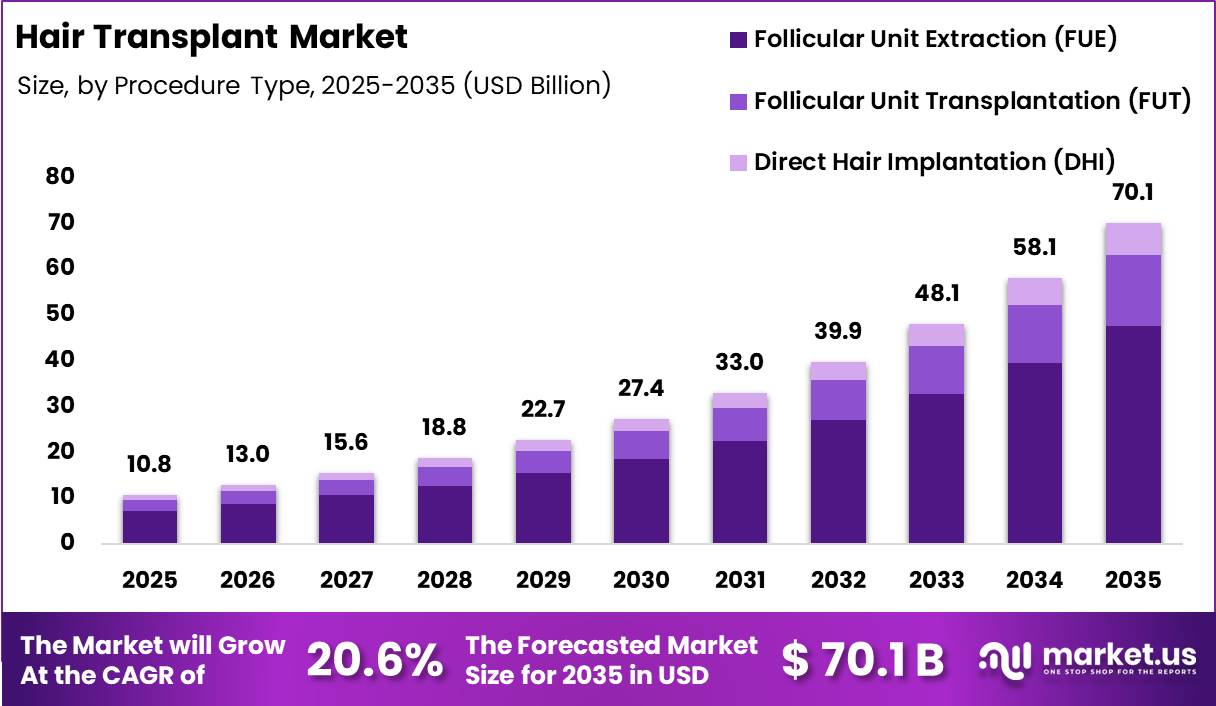
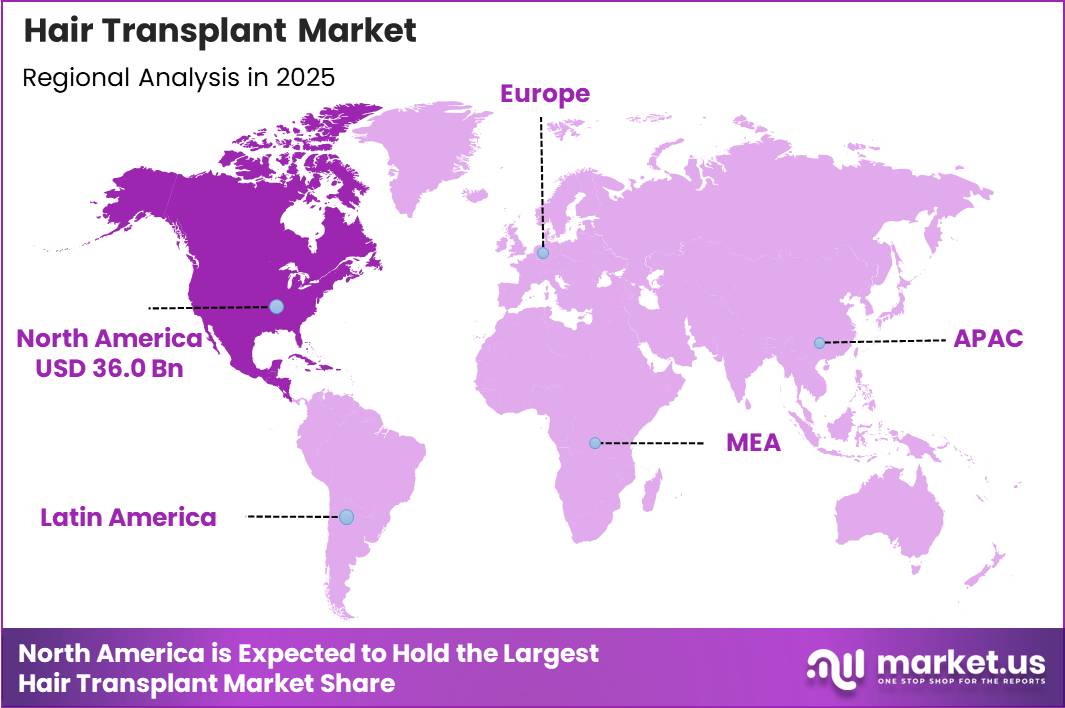
Global Hair Transplant Market size is expected to be worth around US$ 70.1 Billion by 2035 from US$ 10.8 Billion in 2025, growing at a CAGR of 20.6% during the forecast period from 2026 to 2035. In 2025, North America led the market, achieving over 36.00% share with a revenue of US$ 3.89 Billion.
Hair transplant procedures have become an increasingly recognized solution for androgenetic alopecia (pattern hair loss), a condition affecting both men and women worldwide. According to the World Health Organization (WHO), hair loss disorders are not life-threatening but significantly impact psychological well-being, self-esteem, and quality of life.
The U.S. National Institutes of Health (NIH) estimates that up to 50% of men experience visible hair loss by age 50, while female pattern hair loss affects nearly 40% of women at some stage of life. Hair transplantation involves relocating healthy hair follicles, typically from the back or sides of the scalp, to thinning or balding areas.
The two most widely used techniques are Follicular Unit Extraction (FUE) and Follicular Unit Transplantation (FUT), both of which have shown high graft survival rates when performed under proper clinical conditions.
Clinical guidance from the U.S. Food and Drug Administration (FDA) highlights the importance of sterile procedures, qualified practitioners, and regulated medical devices in ensuring patient safety in cosmetic surgical interventions.
Globally, increasing awareness of aesthetic medicine, rising cases of stress-related hair loss, and improved access to minimally invasive procedures are driving demand. The International Society of Hair Restoration Surgery (ISHRS) reports steady growth in surgical hair restoration procedures over the past decade, reflecting broader acceptance of medical hair restoration.
In 2025, North America remains a key adoption region due to advanced dermatology infrastructure, high cosmetic expenditure, and strong clinical standards. Meanwhile, emerging markets are witnessing rising uptake supported by expanding medical tourism and improved dermatology services.
Key Takeaways
- Market Size: The global Hair Transplant Market was valued at US$ 10.8 Billion in 2025.
- Market Share: global Hair Transplant Market is projected to grow at a CAGR of 20.6% and is estimated to reach US$ 70.1 Billion by 2035.
- Procedure Type Analysis: Follicular Unit Extraction (FUE) dominated the market, accounting for 68.00% of the total market share in 2025.
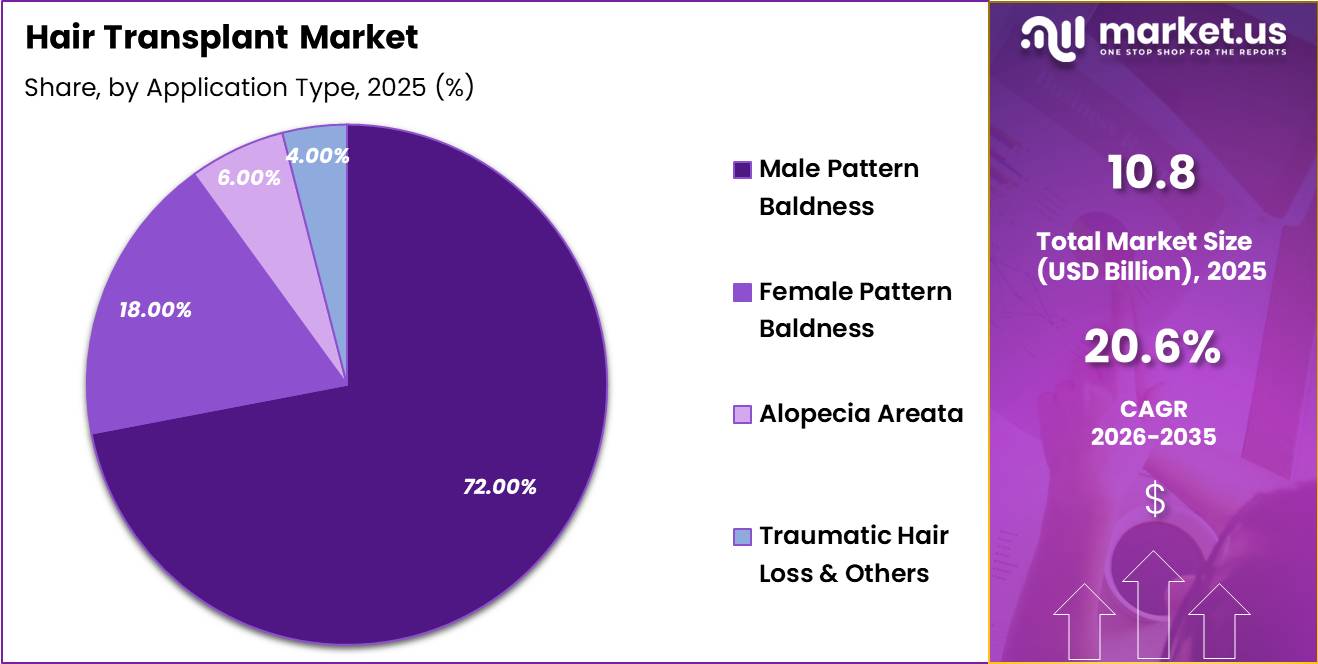
- Application Analysis: Male Pattern Baldness dominated the market, constituting 72.00% of the total market share.
- End User Analysis: Specialty Hair Restoration Clinics dominated the market,constituting 58.00% of the total market share.
- Gender Analysis: Male dominated the market,constituting 78.00% of total market share.
- Technique Type Analysis: Surgical Hair Transplant dominated the market, constituting 63.00% of the total market share
- Regional Analysis: North America emerged as the leading regional market, contributing 36.00% of the global hair transplant market revenue in 2025.
Procedure Type Analysis
The hair transplant market, by procedure type, is strongly shaped by technological refinement, patient comfort, and aesthetic outcomes. Follicular Unit Extraction (FUE) dominated the market in 2025, accounting for 68.00% market share, driven by its minimally invasive nature, absence of linear scarring, faster recovery time, and suitability for both scalp and body hair transplantation.
Rising patient preference for outpatient procedures with natural-looking results continues to reinforce FUE’s leadership, particularly in urban and medical tourism–driven markets.Follicular Unit Transplantation (FUT) held a 22.00% share, maintaining relevance among patients requiring high graft volumes at relatively lower procedural costs.
FUT remains preferred in select clinical settings where donor area density and cost-efficiency are prioritized over cosmetic scarring concerns. However, its adoption is gradually declining due to longer healing times.
Direct Hair Implantation (DHI) captured 10.00% of the market, benefiting from improved implantation precision and higher graft survival rates.
Although DHI commands premium pricing and requires specialized expertise, growing demand for dense hairlines and immediate implantation is expected to support steady niche growth.
Application Analysis
Application-based segmentation of the hair transplant market is primarily driven by demographic prevalence, hormonal factors, and psychosocial awareness. Male Pattern Baldness emerged as the dominant application segment in 2025, accounting for 72.00% market share, reflecting its high global incidence and increasing acceptance of surgical cosmetic interventions among men.
Early-onset androgenetic alopecia and rising disposable income continue to fuel procedural demand in this segment. Female Pattern Baldness represented 18.00% of the market, supported by increasing diagnosis rates, improved surgical techniques suited for diffuse thinning, and growing social acceptance among women. Clinics are increasingly offering customized approaches to address female-specific hair loss patterns, supporting gradual expansion.
Alopecia Areata accounted for 6.00%, constrained by its autoimmune etiology and unpredictable progression, which limits transplant suitability to stable cases. Traumatic Hair Loss and other applications, comprising 4.00%, include scarring alopecia and reconstructive procedures following injuries or burns. Although smaller in share, these segments benefit from advanced grafting techniques and are expected to grow steadily with surgical expertise expansion.
End User Analysis
End user segmentation highlights the evolving delivery landscape of hair transplant services. Specialty Hair Restoration Clinics dominated the market in 2025 with a 58.00% share, driven by their exclusive focus on hair loss treatments, high procedural volumes, and advanced technological adoption. These clinics benefit from brand recognition, standardized protocols, and patient trust built through specialization.
Hospitals and multi-specialty surgical centers account for a substantial portion of the remaining market, particularly in regions where regulatory frameworks or insurance-linked procedures favor hospital-based interventions. Hospitals are preferred for complex cases requiring multidisciplinary support or higher clinical oversight.
Cosmetic surgery centers and dermatology clinics continue to gain traction due to integrated aesthetic service offerings and convenience. These facilities often attract patients seeking bundled cosmetic solutions rather than standalone procedures.
The dominance of specialty clinics reflects increasing consumer preference for expertise-driven care, transparent outcomes, and personalized treatment plans. As competition intensifies, end users are focusing on technology upgrades, surgeon training, and patient experience optimization to strengthen market positioning.
Gender Analysis
Gender-based segmentation underscores the demographic concentration of demand within the hair transplant market. Male patients dominated the market in 2025, capturing 78.00% market share, primarily due to the high prevalence of androgenetic alopecia, earlier onset of hair loss, and greater social acceptance of surgical correction among men. Rising aesthetic awareness and professional image consciousness continue to drive demand across multiple age groups.
Female patients represent the remaining share, supported by increasing awareness of surgical options for hair thinning and advancements in techniques suitable for diffuse hair loss. While adoption remains lower due to social stigma, hormonal complexity, and limited donor area density, female participation is steadily rising as procedural outcomes improve.
The gender imbalance also reflects targeted marketing, procedure customization, and clinical specialization historically aligned toward male hair loss patterns. However, clinics are increasingly developing female-focused treatment protocols, which is expected to gradually narrow the gap over the long term.
Overall, male dominance remains structurally embedded in market demand, but female segmentation presents a meaningful growth opportunity as awareness and accessibility expand.
Technique Type Analysis
Technique-based segmentation illustrates the balance between clinical effectiveness and non-invasive alternatives. Surgical Hair Transplant techniques dominated the market in 2025 with a 63.00% share, supported by permanent results, high graft survival rates, and continuous improvements in extraction and implantation technologies. Surgical approaches remain the gold standard for moderate to severe hair loss.
Non-surgical techniques, including platelet-rich plasma (PRP), laser therapies, and topical solutions, account for the remaining market share. These methods are primarily adopted for early-stage hair loss, maintenance therapy, or as adjuncts to surgical procedures. While non-surgical options offer lower risk and cost, they lack the permanence of surgical transplants.
The dominance of surgical techniques reflects patient preference for definitive outcomes and long-term value. However, the growing integration of non-surgical therapies into comprehensive treatment plans is enhancing overall procedural success and patient satisfaction, supporting a complementary rather than competitive relationship between the two segments.
Market Segmentations
Procedure Type
- Follicular Unit Extraction (FUE)
- Follicular Unit Transplantation (FUT)
- Direct Hair Implantation (DHI)
Application
- Male Pattern Baldness
- Female Pattern Baldness
- Alopecia Areata
- Traumatic Hair Loss & Others
End User
- Specialty Hair Restoration Clinics
- Hospitals
- Dermatology Centers
Gender
- Male
- Female
Technique Type
- Surgical Hair Transplant
- Non-Surgical Hair Restoration
Drivers
Younger entry aesthetic demand and earlier Norwood stage intervention
The shift in demand toward earlier stages of the patient journey is structurally expanding procedure volumes, as hair restoration interventions are no longer limited to individuals with advanced hair loss. According to the International Society of Hair Restoration Surgery (ISHRS), 95% of first-time hair restoration surgery patients in 2024 were between 20 and 35 years of age.
In the same year, physicians reported treating an average of 668 patients across both surgical and non-surgical hair restoration services, reflecting the emergence of a broader, recurring patient pipeline rather than a market driven solely by one-time procedures.
This trend is significant for long-term market forecasting because younger patients are more likely to undergo staged restoration procedures while continuing to invest in maintenance therapies such as medications, platelet-rich plasma (PRP) treatments, low-level laser therapy, and future revision procedures. As a result, the lifetime revenue generated per acquired patient is expected to increase, even when the initial treatment value remains relatively modest.
From an operational perspective, patients seeking treatment at earlier stages of hair loss generally retain stronger donor hair reserves and require fewer corrective interventions, improving graft planning efficiency and overall clinic productivity. This also enables providers to optimize surgical outcomes while reducing procedural complexity.
Commercially, the evolving patient profile is encouraging clinics to adopt business models focused on long-term patient engagement through subscription-based maintenance programs, financing options for staged treatments, and digital lead generation strategies, moving beyond the traditional reliance on one-time surgical procedure revenues.
| Driver | (~) % Impact on CAGR Forecast | Geographic Relevance | Impact Timeline |
|---|---|---|---|
| Younger-entry aesthetic demand and earlier Norwood-stage intervention | +2.4% | North America core, Western Europe, GCC metros, Tier-1 APAC cities | Medium term |
| Turkey-led medical tourism and global price arbitrage | +3.1% | EU outbound, UK, North America outbound, MENA, CIS spill-over | Short term |
| FUE productivity, large-session capability, and clinic throughput scaling | +2.0% | Turkey core, India, Thailand, South Korea, UAE, US specialty clinics | Medium term |
| Surgery-plus-pharma maintenance model expands lifetime patient value | +1.8% | North America, EU, Australia, urban APAC | Medium term |
| Female, transgender, and non-scalp indications broaden addressable pool | +1.5% | North America core, Brazil, Western Europe, Thailand, South Korea | Long term |
| Regulation and consumer safety filtering premium providers from gray-market clinics | +1.2% | US, UK, EU, Turkey, GCC | Short term |
Challenges
Surgeon Talent Bottleneck
The market’s primary operational constraint is not limited patient demand but the slow development of highly skilled hair restoration surgeons. Successful hair transplantation depends on a specialized combination of surgical planning, donor area management, graft handling, and graft survival optimization, which typically requires 3–5 years of supervised clinical experience before a physician can independently perform 2–4 high-density Follicular Unit Extraction (FUE) procedures per day while maintaining low revision rates.
This prolonged training cycle is reflected in the International Society of Hair Restoration Surgery (ISHRS) survey, where respondents had an average of 15 years of professional experience and a mean age of 49 years. Furthermore, only 247 physicians responded from 946 valid survey invitations, highlighting the relatively concentrated nature of the global specialist workforce rather than the presence of a broad talent pool.
In 2024, the average ISHRS member performed 178 hair restoration procedures annually, equivalent to approximately 15 surgeries per month. First-time procedures required an average of 2,347 grafts, while repeat procedures averaged 1,637 grafts. Consequently, even a modest shortage of qualified surgeons significantly reduces the number of procedures and grafts that can be delivered annually by each clinic, resulting in patient waiting periods of approximately 4–12 weeks across mature markets.
According to the OECD, healthcare demand continues to increase due to ageing populations, while many countries face persistent shortages of healthcare professionals and are increasingly dependent on internationally trained workers. This trend intensifies competition for nurses, anesthetic personnel, and other perioperative staff that are equally essential for elective aesthetic procedures such as hair transplantation.
As a result, workforce limitations are estimated to reduce the market’s growth potential by approximately 1.4% points of CAGR. Although clinics can partially mitigate these constraints through extended operating hours and selective international recruitment, long-term capacity expansion will depend on the establishment of structured fellowship programs, improvements in surgeon productivity, standardized operating room workflows, and sustained multi-year investments in workforce development.
| Challenge | (~) % CAGR Friction Drag | Geographic Relevance | Mitigation Horizon |
|---|---|---|---|
| Surgeon Talent Bottleneck | -1.4% | North America core; EU clinics; Gulf hubs; India-Turkiye corridors | Long term (≥ 4 years) |
| Technician Quality Variance | -1.1% | APAC volume hubs; MENA destinations; Latin America value markets | Medium term (2-4 years) |
| Device Supply Chain Friction | -0.8% | US procedure centers; EU regulatory hubs; APAC import-dependent clinics | Medium term (2-4 years) |
| Cross-Border Demand Volatility | -0.9% | Turkiye; India; Thailand; UAE; Mexico | Medium term (2-4 years) |
| Repair Case Burden | -1.0% | Urban clinic clusters globally; price-sensitive metros; medical tourism hubs | Medium term (2-4 years) |
| Compliance and Traceability Load | -0.7% | EU regulatory hubs; North America accredited centers; premium APAC chains | Long term (≥ 4 years) |
Restraints
Procedural cost barriers and weak reimbursement
Hair transplantation is primarily a self-funded cosmetic procedure, with limited insurance reimbursement, making demand highly sensitive to treatment costs. Procedure prices vary significantly across regions. In India and Turkey, a typical Follicular Unit Extraction (FUE) procedure involving 2,500–3,500 grafts generally costs between USD 1,500 and USD 4,000, whereas comparable procedures in the United States and Western Europe typically range from USD 6,000 to USD 15,000, depending on graft volume and surgeon expertise.
These higher costs often represent several months of disposable income for many consumers, reducing affordability and limiting conversion rates from consultation to surgery to approximately 30–40% in many markets. Price transparency through per-graft billing also contributes to treatment deferrals.
Financing conditions have become more restrictive since 2023, with higher interest rates and tighter lending standards increasing monthly installment payments for elective procedures. As a result, many prospective patients postpone or reduce treatment plans.
At the same time, clinics face rising operating expenses, including higher costs for consumables, energy, rent, and labor, while competitive pricing strategies and seasonal discounts place additional pressure on profitability. EBITDA margins for many independent clinics have consequently declined.
Since hair transplantation remains classified as an elective cosmetic procedure, insurance support is minimal. Therefore, declines in disposable income have a disproportionate impact on demand, limiting overall market growth, particularly in regions with limited access to affordable treatment or medical tourism.
| Restraint | (~) % Impact on CAGR Forecast | Geographic Relevance | Impact Timeline |
|---|---|---|---|
| Limited trained surgeons & clinical capacity | -2.2% | North America, EU, GCC, India metros | Medium term (2–4 years) |
| Procedural cost barriers & weak reimbursement | -1.9% | North America, EU, LATAM, APAC ex-Turkey | Short–Medium term (≤ 4 years) |
| Regulatory tightening on medical tourism & advertising | -1.4% | EU, UK, GCC, Turkey, India | Medium term (2–4 years) |
| Donor hair limitations & clinical outcome risks | -1.3% | Global core markets | Long term (≥ 4 years) |
| Economic downturn risk & discretionary spend cuts | -1.7% | North America, EU, LATAM, urban APAC | Short term (≤ 2 years) |
| Competition from non-surgical and regenerative alternatives | -1.5% | North America, EU, Japan, South Korea | Long term (≥ 4 years) |
Opportunity
Female pattern loss platforms
Female hair restoration is still under monetized relative to addressable need, which is why it qualifies as an opportunity rather than a baseline driver: the market already serves women, but mostly through generalized clinic models that were built around male scalp cases and therefore leave conversion, treatment design, and retention economics under optimized.
ISHRS reported that female surgical patients treated in 2024 increased by 16.5% versus 2021, and women also showed rising interest in non scalp transplantation, with eyebrows representing 12% of female recipient areas after scalp, indicating a broader aesthetic pathway than traditional male pattern restoration alone.
Strategically, clinics that build women specific diagnostic funnels, hormonal and diffuse thinning protocols, privacy led consultation pathways, and bundled post op maintenance plans can open a higher value segment where consultation to procedure conversion could plausibly rise 300 to 500 basis points, average revenue per patient can expand 15 to 25% through denser pre and post care attachment, and repeat non surgical revenue can add another 20 to 30 percent of first year ticket value.
Because female hair loss prevalence is large but surgical penetration remains low, even shifting women’s share of global hair transplant procedure value by 4 to 6 percentage points by 2030 would create meaningful white space TAM capture, supporting an incremental market CAGR uplift of roughly 1.4 percentage points above baseline in premium urban markets.
| Opportunity | (~) % Potential CAGR Upside | Geographic Relevance | Execution Window |
|---|---|---|---|
| Female pattern loss platforms | +1.4% | North America, EU, Japan, South Korea, urban India | Short term |
| Facial hair & eyebrow expansion | +1.1% | Middle East, North America, EU, India, Brazil | Short term |
| Medical tourism premiumization | +1.7% | Türkiye core, India, Thailand, GCC inbound corridors | Medium term |
| Repair & correction roll-ups | +1.3% | North America, EU, Türkiye, LATAM metros | Short term |
| Subscription-led lifetime hair care | +1.9% | North America, EU, APAC tier-1 cities | Medium term |
| Regenerative adjunct bundling | +1.6% | U.S., EU, Japan, South Korea, UAE | Long term |
Regional Analysis
In 2025, North America led the market, achieving over 36.00% share with a revenue of US$ 3.89 Billion.
In 2025, the global hair transplant market shows a geographically concentrated structure, with demand driven by rising aesthetic awareness, advanced clinical infrastructure, and increasing adoption of minimally invasive procedures.
North America remains the leading regional market, supported by high disposable income, strong presence of specialized cosmetic surgery clinics, and advanced healthcare systems. The region benefits from early adoption of Follicular Unit Extraction and Direct Hair Implantation techniques, along with strong medical tourism inflows. Increasing prevalence of androgenic alopecia and growing social acceptance of aesthetic enhancement further strengthen demand across the United States and Canada, maintaining its dominant market position.
Europe represents a mature yet steadily growing market, driven by rising demand for cosmetic procedures in countries such as the UK, Germany, and Turkey. Well-established private clinics, coupled with increasing affordability of advanced procedures, continue to support consistent regional expansion and cross-border patient inflows.
Asia Pacific is emerging rapidly, driven by large population base, increasing urbanization, and growing awareness of aesthetic treatments in countries like India, China, and South Korea. Expanding medical tourism hubs and improving healthcare infrastructure further accelerate regional market growth.
Latin America and Middle East & Africa show gradual growth due to improving healthcare access and rising cosmetic awareness.
Key Regions and Countries
North America
- The US
- Canada
Europe
- Germany
- France
- The U.K.
- Italy
- Spain
- Russia & CIS
- Rest of Europe
Asia Pacific
- China
- India
- Japan
- South Korea
- ASEAN
- Australia & New Zealand
- Rest of Asia Pacific
Middle East & Africa
- GCC
- South Africa
- Rest of Middle East & Africa
Latin America
- Brazil
- Mexico
- Rest of Latin America
Key Player Analysis
The hair transplant market is moderately fragmented, comprising global clinic networks, device-enabled platforms, and surgeon-led specialist centers. The industry is in a mature growth stage, driven by rising aesthetic awareness, medical tourism, and expanding adoption of Follicular Unit Extraction (FUE) and Direct Hair Implantation (DHI).
Competitive dynamics are shaped by procedural innovation, minimally invasive techniques, and integration of digital consultation and planning tools, with increasing emphasis on precision graft placement and regenerative adjunct therapies.
Market structure is divided into three competitive tiers with distinct strategic roles. Tier 1 consists of large clinic networks and device leaders focused on scale, brand trust, and procedural standardization, including Bosley Inc., Hair Club, Acibadem Healthcare Group, Aderans Co., Ltd., Venus Concept Inc.
Tier 2 players emphasize clinical specialization and technology-enabled procedures such as FUE and DHI workflows, including DHI Global Medical Group, NeoGraft, Bernstein Medical, Cole Hair Transplant Group, Esteworld Medical Group.
Tier 3 comprises niche and surgeon-led clinics competing on personalized outcomes and medical tourism positioning, including MAXiM Hair Restoration, Limmer Hair Transplant Center, GETFUE Hair Clinics, ASMED Surgical Medical Center, Dr. Serkan Aygin Clinic.
Competitive advantage is driven by procedural innovation, partnerships with device manufacturers, integration of digital planning tools, and ecosystem-based differentiation through training, diagnostics, and regenerative adjunct therapies.
Top Key Players
- Bosley Inc.
- Hair Club
- DHI Global Medical Group
- Bernstein Medical
- NeoGraft
- Venus Concept Inc.
- Cole Hair Transplant Group
- MAXiM Hair Restoration
- Limmer Hair Transplant Center
- Acibadem Healthcare Group
- Aderans Co., Ltd.
- GETFUE Hair Clinics
- ASMED Surgical Medical Center
- Dr. Serkan Aygin Clinic
- Esteworld Medical Group
Recent Developments
- In June 2025, Venus Concept entered into a definitive agreement to sell its Venus Hair business (including NeoGraft and ARTAS hair restoration technologies) to Meta Healthcare Group in a $20 million all-cash transaction.
- In June 2025, Meta Healthcare Group agreed to acquire Meta Robotics LLC from Venus Concept, gaining full ownership of ARTAS robotic hair restoration systems and NeoGraft follicular extraction technologies.
- In April 2026, ModMed acquired Bonsai Health, an AI-powered patient engagement platform, expanding digital scheduling and patient reactivation systems used across specialty dermatology and aesthetic clinics, including hair restoration practices
Report Scope
| Report Features | Description |
|---|---|
| Market Value (2025) | US$ 10.8 Billion |
| Forecast Revenue (2035) | US$ 70.1 Billion |
| CAGR (2026-2035) | 20.6% |
| Base Year for Estimation | 2025 |
| Historic Period | 2020-2024 |
| Forecast Period | 2026-2035 |
| Report Coverage | Revenue Forecast, Market Dynamics, Competitive Landscape, Recent Developments |
| Segments Covered | By Procedure Type (Follicular Unit Extraction (FUE),Follicular Unit Transplantation (FUT),Direct Hair Implantation (DHI))By Application (Male Pattern Baldness,Female Pattern Baldness,Alopecia Areata,Traumatic Hair Loss & Others)By End User (Specialty Hair Restoration Clinics,Hospitals,Dermatology Centers) By Gender (Male,Female) By Technique Type (Surgical Hair Transplant,Non-Surgical Hair Restoration) |
| Regional Analysis | North America – The US, Canada; Europe – Germany, France, U.K., Italy, Spain, Russia & CIS, Rest of Europe; Asia Pacific – China, India, Japan, South Korea, ASEAN, Australia & New Zealand, Rest of Asia Pacific; Middle East & Africa – GCC, South Africa, Rest of Middle East & Africa; Latin America – Brazil, Mexico, Rest of Latin America |
| Competitive Landscape | Bosley Inc. ,Hair Club ,DHI Global Medical Group ,Bernstein Medical ,NeoGraft ,Venus Concept Inc. ,Cole Hair Transplant Group ,MAXiM Hair Restoration ,Limmer Hair Transplant Center ,Acibadem Healthcare Group ,Aderans Co., Ltd. ,GETFUE Hair Clinics ,ASMED Surgical Medical Center,Dr. Serkan Aygin Clinic ,Esteworld Medical Group. |
| Customization Scope | Customization for segments, region/country-level will be provided. Moreover, additional customization can be done based on the requirements. |
| Purchase Options | We have three licenses to opt for: Single User License, Multi-User License (Up to 5 Users), Corporate Use License (Unlimited User and Printable PDF) |





































