


Market Overview
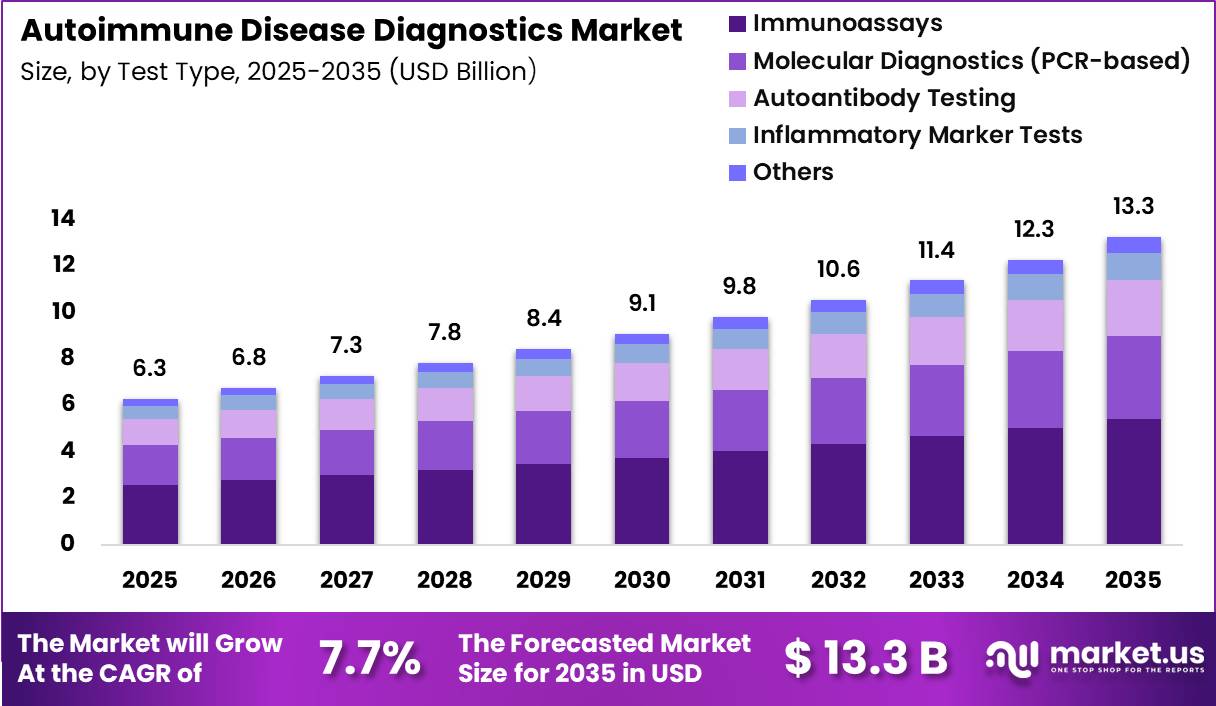
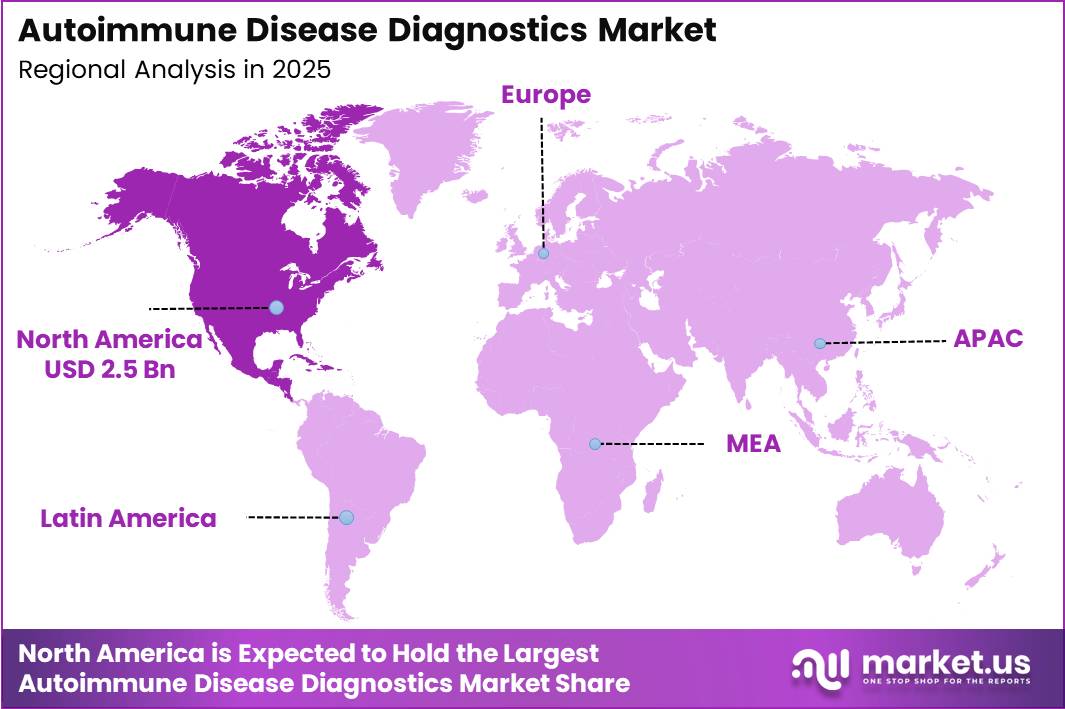
Global Autoimmune Disease Diagnostics Market size is expected to be worth around US$ 13.3 Billion by 2035 from US$ 6.3 Billion in 2025, growing at a CAGR of 7.7% during the forecast period from 2026 to 2035. In 2025, North America led the market, achieving over 40.0% share with a revenue of US$ 2.5 Billion.
The Autoimmune Disease Diagnostics market is gaining significant attention as healthcare systems prioritize earlier and more accurate detection of immune-mediated disorders. Autoimmune diseases occur when the immune system mistakenly attacks healthy tissues, affecting multiple organs and requiring specialized laboratory testing for timely diagnosis.
According to the National Institute of Environmental Health Sciences (NIEHS), scientists have identified more than 80 autoimmune diseases, including rheumatoid arthritis, systemic lupus erythematosus, multiple sclerosis, and type 1 diabetes. These conditions often require a combination of antinuclear antibody (ANA) testing, autoantibody panels, molecular diagnostics, and advanced immunoassays to support clinical decision-making.
The increasing disease burden continues to drive demand for diagnostic innovation. A large U.S. electronic health record study published in 2024 estimated that more than 15 million Americans (4.6% of the population) had been diagnosed with at least one autoimmune disease, while 34% of affected individuals were diagnosed with multiple autoimmune conditions.
The National Academies further reported that previous U.S. estimates placed autoimmune disease prevalence between 7.6% and 9.4% of the population, equivalent to approximately 25–31 million people, highlighting the substantial need for reliable diagnostic testing.
Growing adoption of automated immunoassay analyzers, multiplex testing platforms, and precision diagnostics is improving laboratory efficiency, diagnostic accuracy, and patient management. As healthcare providers increasingly emphasize early intervention and personalized treatment strategies, continuous advancements in biomarker discovery and diagnostic technologies are expected to strengthen the role of autoimmune disease diagnostics in modern clinical care and improve outcomes for millions of patients worldwide.
Key Takeaways
- Market Size: Global Autoimmune Disease Diagnostics Market size is expected to be worth around US$ 13.3 Billion by 2035 from US$ 6.3 Billion in 2025.
- Market Share: The market is growing at a CAGR of 7.7% during the forecast period from 2026 to 2035.
- Test Type: The Immunoassays segment dominated the Autoimmune Disease Diagnostics Market with a 41.0% market share in 2025.
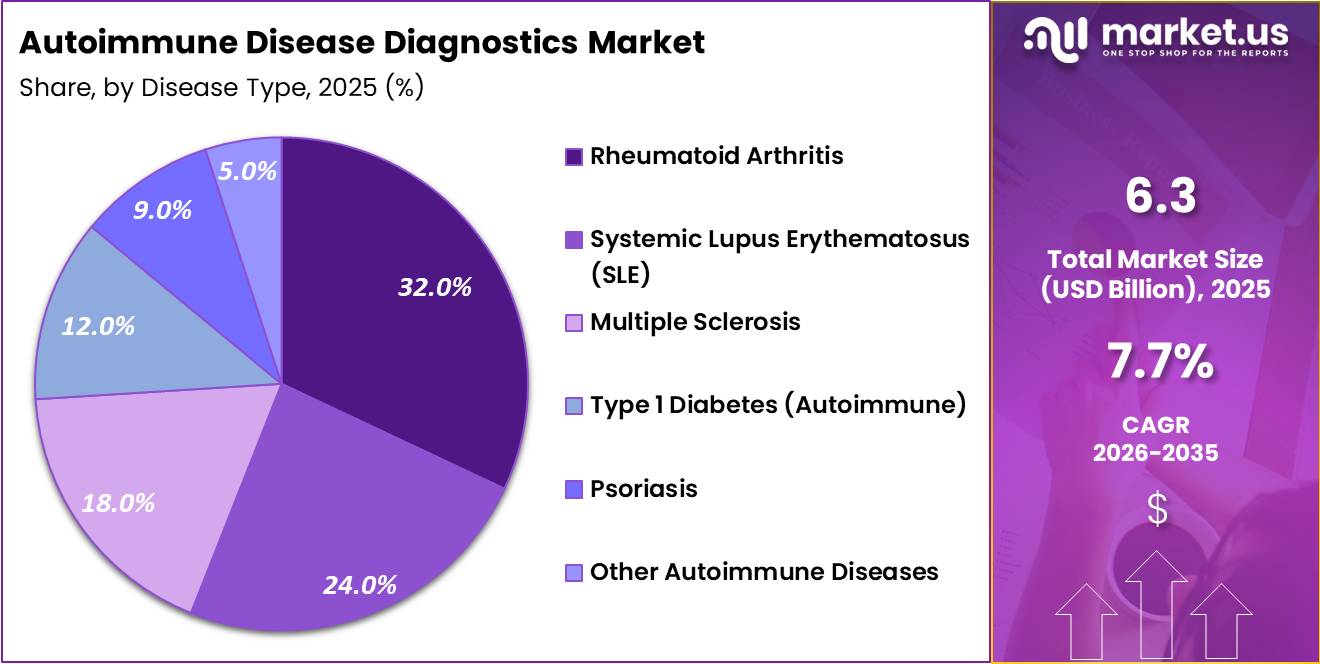
- Disease Type: The Rheumatoid Arthritis segment held the largest share of the Autoimmune Disease Diagnostics Market, accounting for 32.0% in 2025.
- Technology: ELISA-Based Diagnostics dominated the Autoimmune Disease Diagnostics Market with a 38.0% market share in 2025.
- End User: Hospitals & Clinics accounted for the largest share of the Autoimmune Disease Diagnostics Market, representing 49.0% in 2025.
- Sample Type: Blood Samples dominated the Autoimmune Disease Diagnostics Market with a 66.0% market share in 2025.
- Application: The Diagnosis & Early Detection segment led the Autoimmune Disease Diagnostics Market with a 44.0% market share in 2025.
- Regional Analysis: In 2025, North America led the market, achieving over 40.0% share with a revenue of US$ 2.5 Billion.
Test Type Analysis
Immunoassays segment dominated the Autoimmune Disease Diagnostics Market.
The Immunoassays segment dominated the Autoimmune Disease Diagnostics Market with a 41.0% market share in 2025, supported by its widespread adoption for detecting disease-specific autoantibodies with high sensitivity and standardized laboratory workflows.
Hospitals and diagnostic laboratories continue to rely on immunoassays for routine screening of autoimmune disorders because they offer rapid turnaround times, automation compatibility, and cost-effective high-volume testing. The availability of multiplex immunoassay platforms further enhances diagnostic efficiency by enabling simultaneous detection of multiple biomarkers.
Molecular Diagnostics (PCR-based) accounted for 27.0% of the market, driven by increasing demand for genetic and molecular profiling to improve diagnostic precision and disease characterization. Autoantibody Testing represented 18.0%, reflecting its essential role in confirming autoimmune conditions through specific antibody identification.
Inflammatory Marker Tests captured 9.0% of the market, supported by routine measurement of biomarkers such as C-reactive protein and erythrocyte sedimentation rate for assessing inflammatory activity. The Others segment contributed 5.0%, comprising emerging diagnostic assays, multiplex biomarker panels, and specialized laboratory tests.
Continuous advances in assay sensitivity, laboratory automation, and biomarker discovery are expected to strengthen all test categories while improving diagnostic accuracy and supporting personalized disease management.
Disease Type Analysis
Rheumatoid Arthritis segment held the largest share of the Autoimmune Disease Diagnostics Market.
The Rheumatoid Arthritis segment held the largest share of the Autoimmune Disease Diagnostics Market, accounting for 32.0% in 2025, owing to the high global prevalence of the disease and the routine use of rheumatoid factor, anti-CCP antibodies, and inflammatory marker testing for early diagnosis and disease monitoring. Growing awareness regarding early intervention and improved access to specialized diagnostic services have further supported the segment’s leadership.
Systemic Lupus Erythematosus (SLE) represented 24.0% of the market, driven by increasing utilization of antinuclear antibody (ANA) testing, complement analysis, and disease-specific autoantibody panels. Multiple Sclerosis accounted for 18.0%, supported by advances in biomarker research and improved diagnostic protocols combining laboratory and imaging assessments.
Type 1 Diabetes (Autoimmune) captured 12.0%, reflecting rising adoption of autoantibody testing to identify individuals at risk before clinical disease onset. Psoriasis contributed 9.0%, benefiting from expanded diagnostic evaluation and personalized treatment planning.
The Other Autoimmune Diseases segment held 5.0%, encompassing numerous less prevalent disorders requiring specialized diagnostic approaches. Continued improvements in biomarker identification and precision diagnostics are expected to enhance detection across all autoimmune disease categories.
Technology Analysis
ELISA-Based Diagnostics dominated the Autoimmune Disease Diagnostics Market.
ELISA-Based Diagnostics dominated the Autoimmune Disease Diagnostics Market with a 38.0% market share in 2025, driven by their high analytical accuracy, standardized laboratory procedures, affordability, and widespread use for detecting disease-specific autoantibodies.
ELISA platforms remain the preferred technology in hospitals and diagnostic laboratories because they support high-throughput testing while delivering consistent and reproducible results. PCR & RT-PCR represented a significant share of the market, supported by increasing adoption for molecular detection, genetic analysis, and confirmation of autoimmune-related biomarkers with superior specificity.
Flow Cytometry continues to gain importance for immune cell characterization and monitoring immune dysfunction, particularly in complex autoimmune disorders requiring advanced immunophenotyping. Next-Generation Sequencing (NGS) is experiencing rapid growth due to its ability to identify genetic susceptibility, discover novel biomarkers, and support precision medicine strategies for autoimmune disease diagnosis.
Rapid Point-of-Care Tests are expanding steadily as healthcare providers seek faster diagnostic decisions, improved patient accessibility, and decentralized testing capabilities in outpatient settings. Continuous technological innovation, laboratory automation, integration of artificial intelligence, and multiplex testing platforms are expected to improve diagnostic efficiency, reduce turnaround times, and support earlier clinical intervention across autoimmune diseases.
End User Analysis
Hospitals & Clinics accounted dominated the Autoimmune Disease Diagnostics Market.
Hospitals & Clinics accounted for the largest share of the Autoimmune Disease Diagnostics Market, representing 49.0% in 2025, primarily due to the high volume of autoimmune disease screening, diagnosis, and long-term patient management performed in these healthcare settings.
The availability of multidisciplinary specialists, advanced laboratory infrastructure, and integrated patient care pathways supports widespread adoption of comprehensive autoimmune diagnostic testing.
Diagnostic Laboratories formed the second-largest segment, benefiting from increasing demand for high-throughput testing, automated analyzers, and specialized biomarker analysis. Independent and reference laboratories continue to expand their capabilities through advanced immunoassay and molecular diagnostic platforms that improve testing efficiency and accuracy.
Academic & Research Institutes contribute significantly through biomarker discovery, translational research, and clinical validation studies that accelerate the development of innovative diagnostic technologies for autoimmune disorders.
Specialty Centers are also witnessing steady growth as patients increasingly seek specialized rheumatology, neurology, endocrinology, and immunology services requiring disease-specific diagnostic evaluations. Rising healthcare investments, expanding laboratory networks, improved diagnostic accessibility, and greater awareness of early autoimmune disease detection continue to strengthen demand across all end-user categories while supporting more personalized patient care.
Sample Type Analysis
Blood Samples dominated the Autoimmune Disease Diagnostics Market.
Blood Samples dominated the Autoimmune Disease Diagnostics Market with a 66.0% market share in 2025, owing to their convenience, minimally invasive collection, and ability to provide comprehensive information for detecting autoantibodies, inflammatory biomarkers, and other disease-specific indicators.
Blood-based testing remains the standard diagnostic approach across hospitals, diagnostic laboratories, and specialty clinics because it supports a wide range of immunological and molecular assays with reliable clinical performance.
Serum/Plasma represents another important sample category, widely utilized for ELISA, immunoassays, and biomarker quantification due to its excellent analytical consistency and compatibility with automated laboratory systems. Tissue Samples are primarily used in selected autoimmune disorders requiring histopathological examination to confirm diagnosis or assess disease progression, particularly when organ involvement is suspected.
Other Fluids, including cerebrospinal fluid and synovial fluid, play a valuable role in diagnosing specific neurological and rheumatological autoimmune conditions where localized biomarker assessment provides additional clinical insight.
Continued improvements in biomarker detection technologies, sample preparation methods, and laboratory automation are enhancing diagnostic accuracy while expanding the range of sample types available for comprehensive autoimmune disease evaluation.
Application Analysis
Diagnosis & Early Detection segment led the Autoimmune Disease Diagnostics Market.
The Diagnosis & Early Detection segment led the Autoimmune Disease Diagnostics Market with a 44.0% market share in 2025, driven by increasing emphasis on identifying autoimmune diseases before irreversible organ damage occurs.
Growing physician awareness, expanding biomarker availability, and improved access to advanced laboratory testing have significantly strengthened demand for early diagnostic solutions. Early detection enables timely therapeutic intervention, improves patient outcomes, and reduces long-term healthcare costs.
Disease Monitoring represents a major application segment, supported by regular assessment of autoantibody levels, inflammatory biomarkers, and disease activity to guide ongoing clinical management. Prognostic Assessment continues to gain importance as healthcare providers increasingly rely on biomarker-based evaluations to predict disease progression, severity, and potential complications, enabling more personalized treatment strategies.
Treatment Response Monitoring is also expanding steadily with the growing adoption of biologics and targeted therapies that require continuous evaluation of therapeutic effectiveness and patient response. Advances in multiplex diagnostics, molecular testing, artificial intelligence-assisted interpretation, and precision medicine approaches are improving clinical decision-making across all application areas.
These developments are enhancing diagnostic efficiency, optimizing treatment selection, and supporting more individualized management of patients with autoimmune diseases.
Key Market Segments
Test Type
- Immunoassays
- Molecular Diagnostics (PCR-based)
- Autoantibody Testing
- Inflammatory Marker Tests
- Others
Disease Type
- Rheumatoid Arthritis
- Systemic Lupus Erythematosus (SLE)
- Multiple Sclerosis
- Type 1 Diabetes (Autoimmune)
- Psoriasis
- Other Autoimmune Diseases
Technology
- ELISA-Based Diagnostics
- PCR & RT-PCR
- Flow Cytometry
- Next-Generation Sequencing (NGS)
- Rapid Point-of-Care Tests
End User
- Hospitals & Clinics
- Diagnostic Laboratories
- Academic & Research Institutes
- Specialty Centers
Sample Type
- Blood Samples
- Serum/Plasma
- Tissue Samples
- Other Fluids
Application
- Diagnosis & Early Detection
- Disease Monitoring
- Prognostic Assessment
- Treatment Response Monitoring
Drivers
Rising diagnosed autoimmune burden and female-heavy screening load.
The first structural growth driver is the simple expansion of the diagnosed patient base entering autoimmune workups. A large U.S. electronic health record study published in the Journal of Clinical Investigation estimated that more than 15.4 million people, or 4.6% of the U.S. population, had at least one diagnosed autoimmune disease, with women accounting for 63% of cases and female prevalence reaching 5.8% versus 3.5% in men.
That matters commercially because autoimmune diagnostics is not a one test market: a larger symptomatic population creates more first line ANA screening, more confirmatory ENA dsDNA CCP testing, and more repeat testing tied to rheumatology, endocrinology, gastroenterology, and neurology referral pathways.
In practical forecasting terms, this burden expansion lifts volumes faster than population growth alone, especially in high access systems where women’s health utilization and specialist follow up are already stronger, making North America and Western Europe the first markets where test per patient intensity converts cleanly into revenue.
| Driver | (~) % Impact on CAGR Forecast | Geographic Relevance | Impact Timeline |
|---|---|---|---|
| Rising diagnosed autoimmune burden and female-heavy screening load | +1.7% | North America core, EU, Japan, urban APAC spill-over | Short term (≤ 2 years) |
| High multimorbidity and serial testing in complex autoimmune pathways | +1.1% | North America core, EU, advanced APAC | Short term (≤ 2 years) |
| Shift from single-analyte ANA workups to reflex and multiplex autoantibody panels | +1.5% | U.S., EU, Japan, South Korea, China tertiary centers | Medium term (2-4 years) |
| Reimbursement discipline and CLFS price visibility supporting test menu scaling | +0.9% | U.S. core, private-insurance spill-over markets | Short term (≤ 2 years) |
| NIH-led translational infrastructure accelerating biomarker commercialization | +1.0% | U.S. core, EU collaboration nodes, global academic spill-over | Medium term (2-4 years) |
| Post-infection autoimmunity surveillance widening referral funnels | +0.8% | North America, EU, South Korea, selected APAC metros | Medium term (2-4 years) |
Challenges
Optimizing fragmented autoimmune early diagnosis care pathways.
Fragmented early diagnosis pathways remain a structural drag because autoimmune disease patients typically interact with three to five different providers over 12 to 24 months before receiving a definitive diagnosis, with referral lags of 90 to 180 days between primary care, organ specific specialists, and immunology labs in many health systems.
Rising autoimmune prevalence up to an estimated 23.5 to 50 million Americans with autoimmune diseases and associated biomarkers creates diagnostic demand that is growing faster than current pathways can process, resulting in significant underutilization of higher value panels and delayed ordering of confirmatory assays that shifts revenue into later years rather than current periods.
In practice, only a subset of at risk patients reach rheumatology or immunology clinics where advanced diagnostic workups are standard, which means that in a typical high income market, perhaps 25 to 35% of the true eligible population receives comprehensive serologic and imaging based workups within the first year of symptom onset, versus a potential addressable rate above 60%.
The friction appears as lost or deferred test volumes equivalent to an estimated 10 to 15% of potential annual autoimmune diagnostic throughput, which when translated to market growth shaves roughly 1.2 percentage points off an otherwise higher CAGR as test adoption curves remain shallower and more back loaded.
Strategically, diagnostics manufacturers and reference labs must invest in integrated care pathways embedding reflex algorithms into electronic health records, offering bundled multi analyte panels triggered by low cost screening tests, and co developing primary care friendly ordering protocols to compress the time from first symptom to definitive serologic testing by at least 3 to 6 months over the next decade; failure to close this gap will not halt demand, but will continue to convert what should be high velocity diagnostic adoption into slow, friction laden volume accrual.
| Challenge | (~) % CAGR Friction Drag | Geographic Relevance | Mitigation Horizon |
|---|---|---|---|
| Fragmented early-diagnosis pathways | -1.2% | North America, Western Europe, East Asia urban | Long term (≥ 4 years) |
| Assay standardization and QA gaps | -1.0% | North America, EU regulatory hubs, Emerging APAC labs | Medium term (2-4 years) |
| Skilled immunology workforce shortage | -1.3% | US, EU, Japan, GCC tertiary centers | Long term (≥ 4 years) |
| Complex multi-marker data interpretation | -0.9% | Global academic and specialty centers | Medium term (2-4 years) |
| Reagent and instrument supply volatility | -0.8% | APAC logistics corridors, LatAm, Eastern Europe | Short term (≤ 2 years) |
| Under-representation of diverse populations | -0.7% | US, Europe, Latin America, Africa | Long term (≥ 4 years) |
Restraints
Tight reimbursement policies structurally cap diagnostic uptake.
Across major payers, autoimmune disease diagnostics are increasingly constrained by medical necessity rules, test caps, and non coverage of multi marker proprietary panels, which directly suppress test volumes despite rapidly rising disease burden an estimated 25 to 31 million Americans have autoimmune diseases and up to 80% are women, yet many biomarkers remain reimbursed only in narrow indications.
In the U.S. Medicare and commercial plans, policies typically limit antinuclear antibody ANA testing to a single initial workup plus only two additional tests over a lifetime when new or more severe symptoms appear, explicitly denying routine monitoring and wellness screening, and excluding reimbursement for advanced cell bound complement activation products and multi analyte disease activity panels such as for lupus and rheumatoid arthritis.
Similar patterns exist in European and Canadian payers, where advanced multiplex or next generation sequencing based autoimmune panels face delayed inclusion in reimbursement schedules, leaving laboratories to absorb costs or shift price increases to hospitals, which often respond by restricting test ordering to rheumatologists and immunologists, thereby capping utilization growth even as prevalence and biomarker positivity increase by high single digit to low double digit percentages annually.
At the unit economics level, when 10 to 25% of a lab’s autoimmune panel menu is classified as non covered or low value by payers, realized reimbursement per test can fall 15 to 30% below list pricing, driving 200 to 400 basis points of margin erosion and pushing hospital labs to consolidate testing to central reference labs or to cut back on newer panels, translating into a modeled 2.0% point drag on market CAGR through 2026 to 2030 as volume expansion fails to fully offset constrained pricing and restricted test indications.
| Restraint | (~) % Impact on CAGR Forecast | Geographic Relevance | Impact Timeline |
|---|---|---|---|
| Restrictive reimbursement & utilization controls | -2.0% | North America, Western Europe | Short–Medium term |
| High assay cost & capital intensity | -1.6% | North America, EU, high-income APAC | Medium term |
| Chronic reagent & consumables supply fragility | -1.4% | North America, EU, APAC corridors, LATAM urban | Short–Medium term |
| Workforce shortages & lab throughput limits | -1.2% | North America, EU, selected APAC | Medium–Long term |
| Slow regulatory translation of novel biomarkers | -1.0% | North America, EU, Japan, China | Long term |
| Clinical complexity & diagnostic delay | -0.8% | Global (all regions) | Long term |
Opportunitys
Employer and payer funded autoimmune screening programs.
Autoimmune diseases impose a substantial economic burden in high-income countries through direct healthcare spending, disability claims, and productivity losses. Despite this impact, employer-sponsored and payer-funded preventive health programs continue to prioritize cardiovascular disease and diabetes, while autoimmune testing remains largely limited to patients presenting with symptoms.
As a result, current market growth primarily reflects diagnostic demand generated after disease onset rather than proactive screening initiatives.
Studies estimate that direct healthcare costs associated with autoimmune diseases in the United States exceed USD 100 billion annually, while indirect costs from absenteeism, presenteeism, and reduced workforce participation are likely comparable. Much of this burden is attributed to delayed diagnosis and inadequate early disease management, creating opportunities for preventive screening strategies.
If employers and health insurers across North America and Western Europe introduce targeted risk assessments combined with affordable serologic or autoantibody screening for 10–15% of high-risk working-age adults, at a testing cost of USD 40–80 per person every two to three years, diagnostics providers could generate an additional USD 1–3 billion in recurring revenue by 2032, beyond current baseline forecasts.
The expansion of value-based care further supports this opportunity. Bundling screening with education and digital follow-up services can reduce patient acquisition costs by 30–40% through employer and payer channels.
As benefit design frameworks continue to evolve, early market participants could gain a competitive advantage and potentially increase market CAGR by approximately 1.3 percentage points above baseline projections.
| Opportunity | (~) % Potential CAGR Upside | Geographic Relevance | Execution Window |
|---|---|---|---|
| Multi-disease longitudinal screening platforms | +2.5% | North America, Western Europe, high-income APAC | Medium term (2–4 years) |
| Low-cost decentralized diagnostics for emerging markets | +2.0% | APAC emerging, Latin America, Middle East & Africa | Long term (≥ 4 years) |
| AI-driven early risk stratification and triage | +1.8% | North America core, EU, China, advanced GCC | Medium term (2–4 years) |
| Companion diagnostics for targeted immunotherapies | +1.7% | North America, EU5, Japan, China | Medium term (2–4 years) |
| Integrated digital monitoring and relapse prediction | +1.5% | North America, EU, select APAC | Long term (≥ 4 years) |
| Employer and payer-funded autoimmune screening programs | +1.3% | US, Canada, UK, Germany, Nordics | Short term (≤ 2 years) |
Regional Analysis
North America Dominated the Autoimmune Disease Diagnostics Market.
In 2025, North America dominated the Autoimmune Disease Diagnostics Market, accounting for over 40.0% of the global market and generating approximately US$ 2.5 billion in revenue.
The region’s leadership is supported by a highly developed healthcare infrastructure, widespread availability of advanced laboratory testing, and strong adoption of automated immunoassays, molecular diagnostics, and multiplex testing platforms. High awareness of autoimmune disorders among healthcare professionals and patients has encouraged earlier diagnosis, increasing demand for accurate and rapid diagnostic solutions.
The growing prevalence of autoimmune diseases, including rheumatoid arthritis, systemic lupus erythematosus, multiple sclerosis, and autoimmune thyroid disorders, has further strengthened testing volumes across hospitals, specialty clinics, and diagnostic laboratories. Favorable reimbursement policies and extensive health insurance coverage also enable broader access to diagnostic services.
Continuous investments in biomedical research, precision medicine, and biomarker discovery have accelerated the development of innovative diagnostic assays with improved sensitivity and specificity. In addition, collaborations between diagnostic manufacturers, research institutions, and healthcare providers have expanded the availability of next-generation autoimmune testing technologies.
Regulatory support for advanced diagnostic products, combined with increasing integration of laboratory automation and digital pathology, has enhanced workflow efficiency and testing accuracy. The presence of leading diagnostics companies, strong clinical research activity, and substantial healthcare spending continue to reinforce North America’s position as the largest regional market, while ongoing technological advancements and expanding personalized medicine initiatives are expected to sustain regional growth in the coming years.
Key Regions and Countries
North America
- The US
- Canada
Europe
- Germany
- France
- The U.K.
- Italy
- Spain
- Russia & CIS
- Rest of Europe
Asia Pacific
- China
- India
- Japan
- South Korea
- ASEAN
- Australia & New Zealand
- Rest of Asia Pacific
Middle East & Africa
- GCC
- South Africa
- Rest of Middle East & Africa
Latin America
- Brazil
- Mexico
- Rest of Latin America
Key Player Analysis
The Autoimmune Disease Diagnostics Market is moderately consolidated, with established global diagnostics companies competing alongside specialized molecular diagnostics and life science firms. Competitive intensity is driven by continuous innovation in autoimmune biomarker detection, laboratory automation, and high-throughput testing platforms.
Companies are differentiating themselves through expanded diagnostic portfolios, integrated laboratory solutions, and technologies that improve sensitivity, specificity, and turnaround time. The market is also witnessing increased emphasis on precision diagnostics, digital laboratory ecosystems, and scalable testing capabilities that support earlier disease identification and clinical decision-making.
Roche Diagnostics continues to strengthen its position through investments in immunodiagnostic platforms and automated laboratory systems, while Abbott Laboratories focuses on expanding immunoassay technologies and improving workflow efficiency across clinical laboratories. Siemens Healthineers AG and Danaher Corporation are advancing integrated diagnostic ecosystems by combining instruments, software, and laboratory automation to enhance productivity.
Thermo Fisher Scientific Inc., QIAGEN N.V., and Illumina Inc. continue investing in molecular diagnostics, genomics, and next-generation sequencing technologies that support precision autoimmune disease testing. bioMérieux SA and Hologic Inc. are strengthening their product portfolios through innovation in diagnostic assays and laboratory workflow optimization.
Meanwhile, Becton, Dickinson and Company and Grifols S.A. are enhancing diagnostic capabilities with automated sample processing and specialized testing solutions. PerkinElmer Inc., Agilent Technologies Inc., and Myriad Genetics Inc. are expanding research collaborations and biomarker-focused diagnostic development to improve clinical accuracy.
Eurofins Scientific further strengthens market competition through its broad diagnostic laboratory network and testing services, creating an ecosystem that supports faster, standardized, and high-quality autoimmune disease diagnostics.
Top Key Players
- Roche Diagnostics
- Abbott Laboratories
- Siemens Healthineers AG
- Thermo Fisher Scientific Inc.
- bioMérieux SA
- Danaher Corporation
- QIAGEN N.V.
- Becton, Dickinson and Company
- Grifols S.A.
- PerkinElmer Inc.
- Eurofins Scientific
- Myriad Genetics Inc.
- Hologic Inc.
- Illumina Inc.
- Agilent Technologies Inc.
Recent Developments
- In January 2025, Thermo Fisher Scientific Inc. partnered with the UK Biobank Pharma Proteomics Project to support one of the world’s largest human proteomics studies. The collaboration uses the Olink Explore platform to analyze more than 600,000 samples and over 5,400 proteins, accelerating biomarker discovery for immune-mediated and autoimmune diseases.
- In January 2026, Roche Diagnostics reported strong 2025 financial results with 7% sales growth at constant exchange rates, driven by continued demand across its diagnostics portfolio, including molecular and immunodiagnostic testing solutions.
- In June 2025, bioMérieux SA announced a plan to bridge the gap between therapeutics and safety diagnostics by expanding its molecular footprint, later culminating in the April, 2026 rollout of its BIOFIRE® SPOTFIRE® system for the pharmaceutical quality control sector. The automated nucleic acid amplification system targets rapid testing for advanced therapies, ensuring the safety of fast-growing cellular and gene therapies used to treat serious autoimmune disorders and rare diseases.
Report Scope
| Report Features | Description |
|---|---|
| Market Value (2025) | US$ 6.3 Billion |
| Forecast Revenue (2035) | US$ 13.3 Billion |
| CAGR (2026-2035) | 7.7% |
| Base Year for Estimation | 2025 |
| Historic Period | 2020-2024 |
| Forecast Period | 2026-2035 |
| Report Coverage | Revenue Forecast, Market Dynamics, Competitive Landscape, Recent Developments |
| Segments Covered | By Test Type (Immunoassays, Molecular Diagnostics (PCR-based), Autoantibody Testing, Inflammatory Marker Tests, Others), By Disease Type (Rheumatoid Arthritis, Systemic Lupus Erythematosus (SLE), Multiple Sclerosis, Type 1 Diabetes (Autoimmune), Psoriasis, Other Autoimmune Diseases), By Technology (ELISA-Based Diagnostics, PCR & RT-PCR, Flow Cytometry, Next-Generation Sequencing (NGS), Rapid Point-of-Care Tests), By End User (Hospitals & Clinics, Diagnostic Laboratories, Academic & Research Institutes, Specialty Centers), By Sample Type (Blood Samples, Serum/Plasma, Tissue Samples, Other Fluids), By Application (Diagnosis & Early Detection, Disease Monitoring, Prognostic Assessment, Treatment Response Monitoring) |
| Regional Analysis | North America – The US, Canada; Europe – Germany, France, U.K., Italy, Spain, Russia & CIS, Rest of Europe; Asia Pacific – China, India, Japan, South Korea, ASEAN, Australia & New Zealand, Rest of Asia Pacific; Middle East & Africa – GCC, South Africa, Rest of Middle East & Africa; Latin America – Brazil, Mexico, Rest of Latin America |
| Competitive Landscape | Roche Diagnostics, Abbott Laboratories, Siemens Healthineers AG, Thermo Fisher Scientific Inc., bioMérieux SA, Danaher Corporation, QIAGEN N.V., Becton, Dickinson and Company, Grifols S.A., PerkinElmer Inc., Eurofins Scientific, Myriad Genetics Inc., Hologic Inc., Illumina Inc., Agilent Technologies Inc. |
| Customization Scope | Customization for segments, region/country-level will be provided. Moreover, additional customization can be done based on the requirements. |
| Purchase Options | We have three licenses to opt for: Single User License, Multi-User License (Up to 5 Users), Corporate Use License (Unlimited User and Printable PDF) |





































