


Market Overview
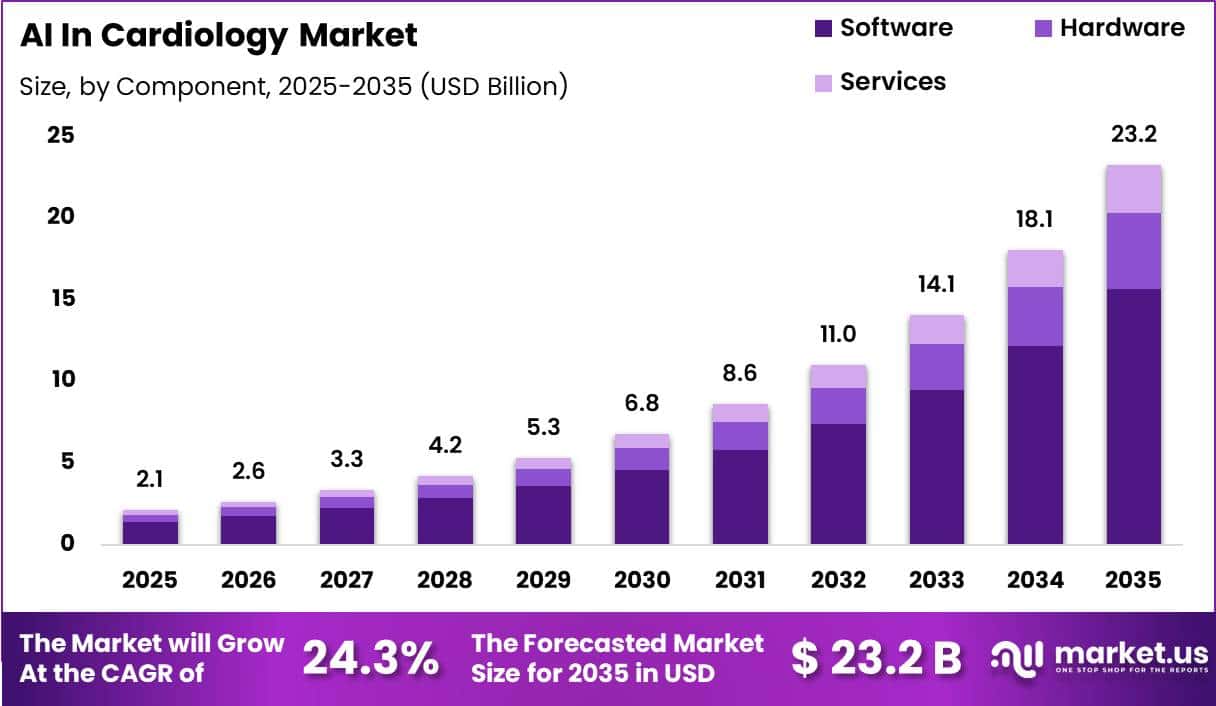
The Global AI in Cardiology Market size is expected to be worth around US$ 23.2 Billion by 2035 from US$ 2.1 Billion in 2025, growing at a CAGR of 24.3% during the forecast period from 2026 to 2035. In 2025, North America led the market, achieving over 39.78% share with a revenue of US$ 0.84 Billion.
The Global AI in Cardiology Market is witnessing significant transformation as artificial intelligence technologies become increasingly integrated into cardiovascular diagnosis, monitoring, imaging, and personalized treatment solutions.
AI-powered cardiology platforms are enabling faster interpretation of electrocardiograms, cardiac imaging analysis, risk prediction, and early identification of conditions such as atrial fibrillation, heart failure, and coronary artery disease.
Cardiovascular diseases remain a major global health challenge, with the World Health Organization reporting that cardiovascular diseases cause approximately 17.9 million deaths annually, representing about 32% of all global deaths. The adoption of AI in cardiology is accelerating through advancements in machine learning, deep learning, and cloud-based clinical decision-support systems.
AI algorithms are being used with ECG, echocardiography, cardiac CT, MRI, and wearable monitoring devices to improve diagnostic accuracy and support clinicians in delivering timely interventions. The U.S. Food and Drug Administration continues to expand regulatory frameworks for AI-enabled medical devices, emphasizing safety, transparency, bias management, and lifecycle monitoring for AI-based healthcare technologies.
Recent FDA records highlight growing approval activity for cardiovascular AI solutions, including AI-based ECG interpretation, cardiac monitoring platforms, and advanced imaging analysis tools. Increasing demand for early disease detection, remote patient monitoring, precision medicine, and workflow automation is expected to drive further adoption of AI across hospitals, diagnostic centers, and cardiovascular care networks worldwide.
Key Takeaways
- Market Size: The Global AI in Cardiology Market size was US$ 2.1 billion in 2025. The market is estimated to grow to US$ 23.2 billion by 2035.
- Market Share: The Compound Annual Growth Rate (CAGR) of the market from 2026 to 2035 will be 24.3%.
- Component: Software leads the segment, accounting for 67.4% of total component revenue.
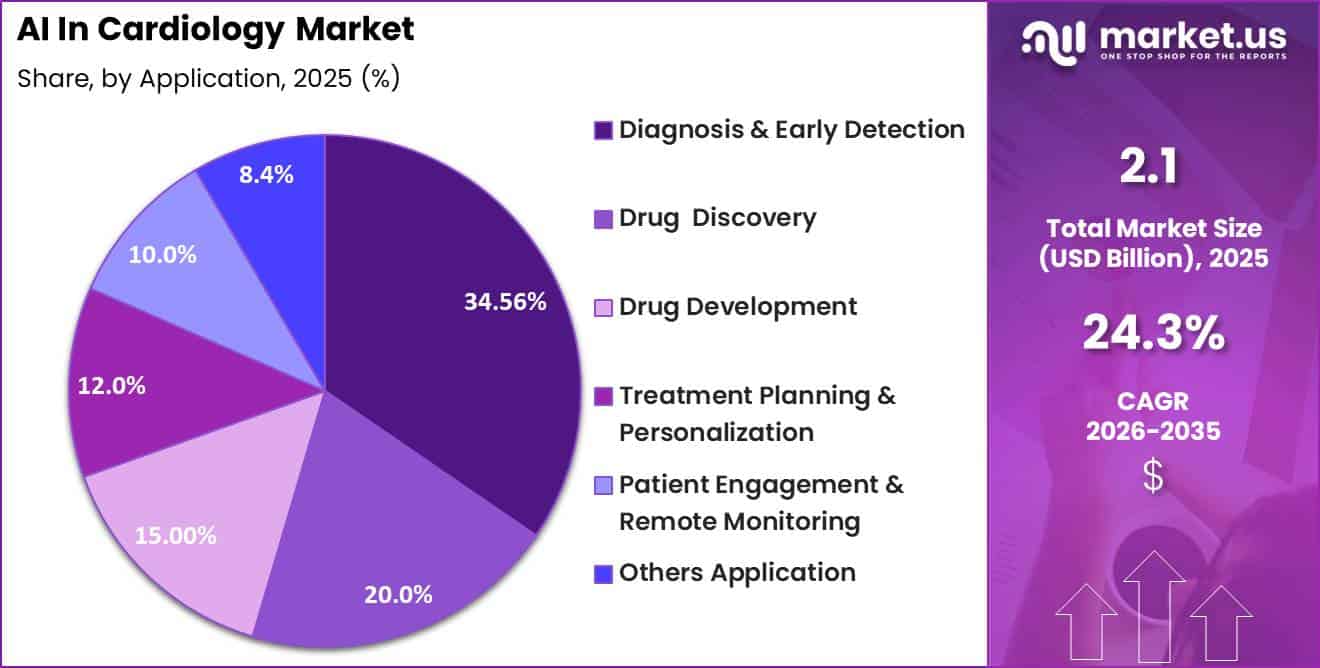
- Application: Diagnosis & Early Detection leads the segment, accounting for 34.56% of total application revenue.
- Indication: Ischemic Heart Disease/CAD leads the segment, accounting for 61.80% of total indication revenue.
- End User: Healthcare Providers lead the segment, accounting for 45.34% of total end-user revenue.
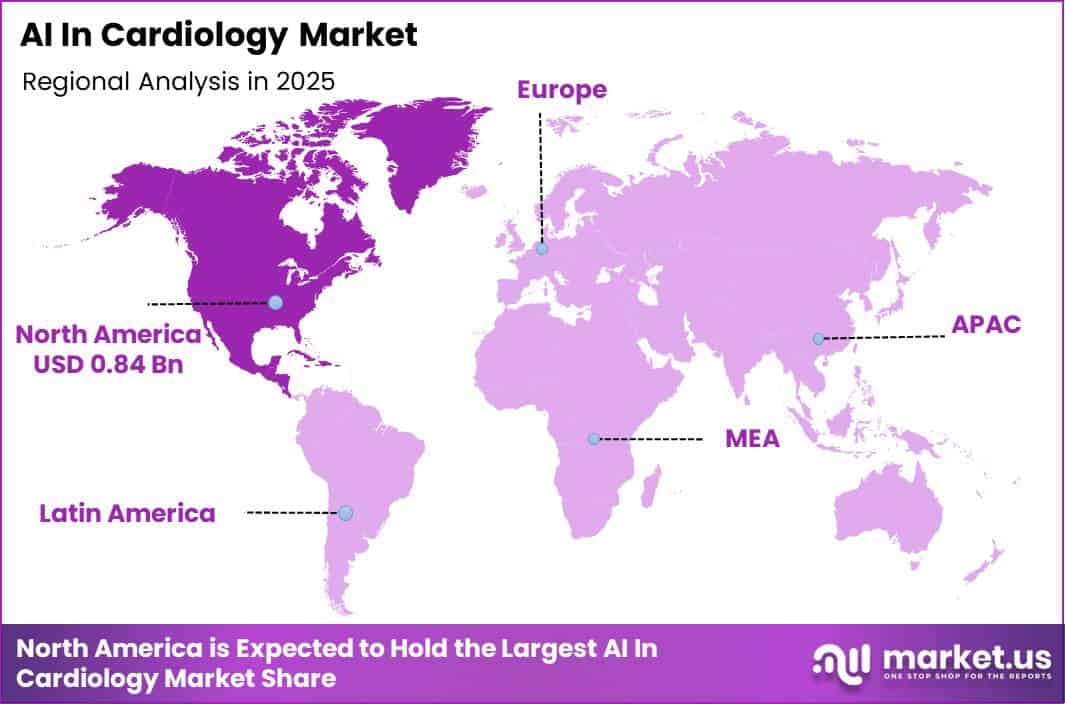
- Regional: North America is the dominant regional market, accounting for 39.78% of global revenue, holding US$ 0.84 billion in revenue in 2025.
Component Analysis
The Software segment dominates the AI in Cardiology Market, accounting for 67.4% market share in 2025, driven by the increasing adoption of AI algorithms, machine learning platforms, clinical decision-support systems, and advanced cardiac analytics solutions. AI software enables healthcare professionals to analyze large volumes of cardiovascular data generated through ECGs, echocardiography, cardiac imaging, and wearable monitoring devices.
The growing demand for automated diagnosis, predictive analytics, and personalized cardiovascular care is accelerating software integration across hospitals and diagnostic centers. The Hardware segment holds a 20.0% market share in 2025, supported by the rising deployment of AI-enabled cardiac imaging systems, smart monitoring devices, wearable sensors, and connected medical equipment. Advanced hardware infrastructure plays a critical role in collecting high-quality cardiovascular data required for AI-based analysis.
The Services segment contributes 12.6% market share in 2025, supported by increasing demand for AI implementation, system integration, maintenance, cloud-based services, and clinical support solutions. As healthcare organizations transition toward digital cardiovascular ecosystems, service providers are helping institutions optimize AI deployment, improve workflow efficiency, and maintain regulatory compliance.
Application Analysis
The Diagnosis & Early Detection segment dominates the AI in Cardiology Market with 34.56% market share in 2025, driven by the increasing use of artificial intelligence for early identification of cardiovascular abnormalities, automated ECG interpretation, imaging analysis, and risk prediction.
AI-powered diagnostic tools help physicians detect conditions such as arrhythmias, coronary artery disease, and heart failure at earlier stages, improving treatment outcomes and reducing diagnostic delays.
The Drug Discovery segment accounts for 20.0% market share in 2025, as AI technologies are increasingly utilized to accelerate cardiovascular drug research, identify therapeutic targets, and analyze complex biological datasets. AI-driven models help pharmaceutical researchers improve efficiency in discovering potential cardiovascular therapies.
The Drug Development segment represents 15.0% market share, supported by AI applications in clinical trial optimization, patient selection, and predictive modeling. Treatment Planning & Personalization contributes 12.0%, enabling customized treatment strategies based on patient-specific cardiovascular profiles.
The Patient Engagement & Remote Monitoring segment holds a 10.0% share, supported by AI-enabled wearable devices and remote cardiac monitoring platforms. Other applications account for 8.4% market share, including healthcare workflow optimisation and research applications.
Indication Analysis
The Ischemic Heart Disease/Coronary Artery Disease (CAD) segment dominates the AI in Cardiology Market with 61.8% market share in 2025, due to the high global burden of coronary conditions and increasing demand for early diagnosis and predictive cardiovascular risk assessment.
AI technologies are widely used in CAD detection through advanced imaging analysis, ECG interpretation, and clinical data evaluation, helping healthcare providers identify patients at higher risk of adverse cardiac events.
The Cardiac Arrhythmias segment is witnessing significant adoption, driven by the growing use of AI-powered ECG monitoring, wearable cardiac devices, and automated rhythm detection systems. AI algorithms can identify irregular heart patterns, including atrial fibrillation, with improved speed and accuracy, supporting timely clinical intervention.
The Heart Failure segment is expanding due to rising demand for predictive analytics and continuous patient monitoring solutions. AI-based platforms help analyze physiological data, predict disease progression, and support personalized management strategies for patients with chronic heart conditions.
The Others segment includes additional cardiovascular indications such as valvular heart diseases, congenital heart conditions, and general cardiovascular risk assessment applications. Increasing clinical adoption of AI across multiple cardiac conditions is expected to strengthen market penetration and expand AI-driven cardiology solutions.
End User Analysis
The Healthcare Providers segment dominates the AI in Cardiology Market with 45.34% market share in 2025, supported by increasing adoption of AI solutions in hospitals, specialty cardiac centers, diagnostic laboratories, and clinics. Healthcare providers are implementing AI-based systems to enhance diagnostic accuracy, improve clinical decision-making, optimize workflow efficiency, and enable personalized cardiovascular care.
The Pharmaceutical & Biotechnology Companies segment is expanding due to growing utilization of AI for cardiovascular drug discovery, biomarker identification, and clinical research activities. AI platforms help companies analyze large datasets and accelerate the development of innovative cardiovascular therapies.
The Medical Device/Equipment Companies segment is gaining momentum through the integration of AI capabilities into ECG systems, imaging equipment, wearable monitors, and cardiac diagnostic devices. These companies are focusing on developing intelligent medical technologies that support real-time monitoring and automated analysis.
The Academic & Research Institutes segment contributes through AI-based cardiovascular research, algorithm development, and clinical validation studies. Increasing collaboration between research organizations and healthcare technology developers is supporting innovation in AI cardiology solutions.
The Other End User segment includes government healthcare organizations, technology providers, and specialized care networks adopting AI tools for improving cardiovascular disease management and healthcare accessibility.
Key Market Segments
By Component
- Software
- Hardware
- Services
By Application
- Diagnosis & Early Detection
- Drug Discovery
- Drug Development
- Treatment Planning & Personalization
- Patient Engagement & Remote Monitoring
- Others
By Indication
- Ischemic Heart Disease/CAD
- Cardiac Arrhythmias
- Heart Failure
- Others
By End User
- Healthcare Providers
- Pharmaceutical & Biotechnology Companies
- Medical Device/Equipment Companies
- Academic & Research Institutes
- Other End Users
Drivers
Regulatory standardization accelerating AI-enabled cardiology software adoption
FDA’s 2025 draft guidance for AI-enabled device software functions is reducing regulatory uncertainty by clearly defining expectations across device description, labeling, risk management, data governance, validation, cybersecurity, and post-market monitoring. This formalization is shifting AI in healthcare from an experimental domain toward a structured, repeatable regulatory category with clearer commercialization pathways.
In cardiology, this transition is already visible at scale. As of 2024, FDA-listed datasets show nearly 100 cardiovascular AI-enabled devices among over 900 AI-enabled medical products, with the vast majority cleared through the established 510(k) pathway. This indicates that most approvals are incremental innovations integrated into existing clinical workflows rather than disruptive standalone systems.
The strategic implication is a move toward standardized regulatory playbooks for AI software, where vendors increasingly compete on their ability to manage documentation, bias assessment, lifecycle validation, and continuous monitoring rather than purely on algorithm performance.
It also raises the importance of post-market surveillance and cybersecurity compliance as ongoing obligations rather than one-time approval steps. Overall, this regulatory formalization supports faster scaling of clinically embedded AI tools in cardiology, while favoring companies that can operationalise end-to-end model governance within regulated medical device frameworks.
| Driver | (~) % Impact on CAGR Forecast | Geographic Relevance | Impact Timeline |
|---|---|---|---|
| Regulatory formalization of AI-enabled cardiology software | +2.1% | North America core, EU follow-through, APAC regulated hubs | Short term (≤ 2 years) |
| RPM reimbursement expansion and digital cardiology billing viability | +1.8% | U.S. core, Canada selective, EU pilots, APAC private-care corridors | Short term (≤ 2 years) |
| Rising cardiovascular burden and screening-capacity deficit | +2.4% | Global, with LMIC urgency and U.S./EU ageing concentration | Medium term (2-4 years) |
| AI-ECG and echo automation improving throughput economics | +2.2% | North America core, EU tertiary centers, Gulf and APAC hospital networks | Medium term (2-4 years) |
| Shift from episodic diagnosis to continuous risk stratification | +1.6% | U.S. core, EU chronic-care programs, East Asia ageing markets | Medium term (2-4 years) |
| Interoperable digital health infrastructure enabling deployment at scale | +1.3% | North America, EU, upper-middle-income APAC, selective emerging markets | Long-term (≥ 4 years) |
Challenges
Clinician trust and liability concerns are slowing AI adoption in cardiology
A key barrier to scaling AI in cardiology is the combined issue of clinician trust and medico-legal uncertainty as algorithms transition from decision support tools to higher-stakes diagnostic and risk stratification systems.
Although 2024–2025 evidence shows AI models performing at or above specialist levels in tasks such as ECG interpretation, echocardiography analysis, and coronary CT assessment, many clinicians still perceive these systems as opaque black boxes, limiting full reliance in clinical workflows.
In high-volume cardiac centers processing tens of thousands of ECGs and imaging studies annually, even partial AI integration can influence decisions across large patient cohorts.
However, surveys and deployment studies indicate that only about one-third of cardiologists are willing to rely on AI outputs without secondary human review in high-risk scenarios such as myocardial infarction detection or structural heart disease triage. This leads to mandatory double-reading workflows, adding several minutes per case and reducing net efficiency gains.
Liability uncertainty further slows adoption. Because responsibility for AI-assisted misdiagnosis is not clearly defined between hospitals, clinicians, and vendors, institutions often restrict AI use to narrow indications, require extensive local validation studies, and extend deployment timelines by 12–24 months. These safeguards increase implementation cost and complexity while limiting algorithm autonomy.
To address this, vendors are investing more heavily in explainability, auditability, and confidence scoring, while health systems are developing formal AI governance frameworks and structured clinical pathways. Although these measures increase upfront costs, they are essential for improving trust and reducing liability barriers that continue to constrain broader AI deployment in cardiology.
| Challenge | (~) % CAGR Friction Drag | Geographic Relevance | Mitigation Horizon |
|---|---|---|---|
| Clinician trust & liability gap | -1.6% | North America core, EU regulatory hubs | Medium term (2-4 years) |
| Fragmented data quality & access | -1.4% | North America core, EU, APAC hospital clusters | Long term (≥ 4 years) |
| Cardiovascular workforce strain | -1.2% | US, Western Europe, selected APAC metros | Medium term (2-4 years) |
| Slow, evolving AI regulatory pathways | -1.1% | US, EU, UK, Japan | Long term (≥ 4 years) |
| Legacy IT & cybersecurity constraints | -1.0% | Global tertiary hospitals, large health systems | Medium term (2-4 years) |
| Algorithm bias & population generalizability | -0.9% | Multiregional, under-served populations | Long term (≥ 4 years) |
Restraints
Fragmented data and privacy compliance limiting AI scalability in cardiology
A major restraint on AI-enabled cardiology adoption is the fragmentation of clinical data across hospitals, combined with increasingly strict privacy and consent regulations. Training high-performance cardiology models requires integrating multimodal datasets, including ECG signals, imaging, laboratory biomarkers, medication histories, and longitudinal outcomes, often across tens or hundreds of thousands of patients.
However, much of this data remains siloed across incompatible PACS systems, proprietary ECG platforms, and inconsistent coding frameworks, making large-scale harmonisation slow and costly. Data preparation alone can extend development timelines by 6–12 months due to the need for normalization, mapping, and quality assurance.
At the same time, regulations such as HIPAA, GDPR, and country-specific health data laws impose strict requirements around consent, de-identification, and purpose limitation. These constraints increasingly push vendors toward federated learning or on premises model training, which improves compliance but can limit performance compared with centralized datasets.
From a cost perspective, a significant share of AI development resources is now allocated to data engineering, governance, and privacy infrastructure, while incomplete or missing records further reduce usable dataset size and model robustness.
This slows validation cycles, delays regulatory submissions, and limits representativeness across diverse populations, including rural and underserved groups.Overall, these data fragmentation and compliance barriers increase development complexity, delay scaling across regions, and reduce the speed at which cardiology AI systems can reach broad clinical deployment.
| Restraint | (~) % Impact on CAGR Forecast | Geographic Relevance | Impact Timeline |
|---|---|---|---|
| High-risk AI regulation drag | -2.0% | EU, North America core | Medium term (2–4 years) |
| Fragmented data and privacy compliance | -1.8% | North America, EU, APAC Tier-1 | Medium term (2–4 years) |
| EHR / imaging interoperability gaps | -1.5% | North America core, EU, GCC | Long-term (≥ 4 years) |
| Clinician trust and workflow misalignment | -1.4% | Global tertiary centers | Short–Medium (≤ 4 years) |
| Cybersecurity and lifecycle cost inflation | -1.2% | North America, EU, APAC corridors | Medium term (2–4 years) |
Opportunity
AI-driven longitudinal cardiovascular risk platforms expansion
This opportunity focuses on AI platforms that continuously integrate multi-modal data such as EHR records, wearable signals, imaging, and claims to generate dynamic, real-time cardiovascular risk scores and guide long-term treatment optimization.
Unlike current AI tools in cardiology, which are mostly limited to single-modality applications like ECG or echocardiography interpretation, these platforms operate at a population and longitudinal level across entire care journeys.
It remains an emerging opportunity because most healthcare systems in 2026 still lack fully integrated longitudinal data infrastructure and reimbursement models that support continuous AI-driven risk monitoring. However, as cardiovascular disease burden continues to rise globally, the demand for proactive, preventive care models is expected to expand significantly.
By 2035, such platforms could target hundreds of millions of high-risk individuals, with a meaningful subset enrolled in structured risk management programs under value-based or shared savings arrangements. Revenue potential would come from per-patient subscription models combined with measurable cost savings from reduced hospitalizations and improved disease management outcomes.
Overall, AI-driven longitudinal cardiovascular risk platforms represent a shift from episodic diagnostics to continuous preventive care management, creating a scalable, high-margin opportunity as healthcare systems move toward value-based and population health-oriented reimbursement models.
| Opportunity | (~) % Potential CAGR Upside | Geographic Relevance | Execution Window |
|---|---|---|---|
| AI-driven longitudinal CVD risk platforms | +2.3% | North America, EU, high-income APAC | Medium term (2-4 years) |
| Low-cost AI cardiology for LMIC primary care | +2.8% | Latin America, Africa, South Asia | Long-term (≥ 4 years) |
| AI-enabled cardiometabolic bundling with diabetes | +1.9% | North America core, EU, urban APAC | Medium term (2-4 years) |
| Automated imaging and echo ops-as-a-service | +1.7% | North America, EU, GCC, East Asia | Short term (≤ 2 years) |
| Enterprise-level AI cardiology data networks | +1.5% | North America, EU, Japan, Australia | Long-term (≥ 4 years) |
| Regulatory-grade AI for value-based cardiology | +1.4% | US, UK, Nordics, select APAC | Medium term (2-4 years) |
Regional Analysis
In 2025, North America led the market, achieving over 39.78% share with a revenue of US$ 0.84 billion. The global AI in Cardiology Market is witnessing significant growth across major regions due to increasing cardiovascular disease prevalence, rising healthcare digitization, and growing adoption of artificial intelligence-based diagnostic and monitoring solutions.
North America dominates the market, supported by advanced healthcare infrastructure, high adoption of AI-enabled medical technologies, strong presence of technology companies, and increasing investments in healthcare innovation. The region benefits from widespread implementation of AI solutions for cardiac imaging, predictive analytics, remote patient monitoring, and clinical decision support.
Europe represents a major market for AI in Cardiology, driven by government initiatives promoting digital healthcare transformation, increasing demand for early cardiovascular disease detection, and strong research collaborations between healthcare institutions and technology providers. Favorable regulatory frameworks and growing adoption of precision medicine approaches are further supporting regional expansion.
Asia-Pacific is expected to witness rapid growth during the forecast period, fueled by rising cardiovascular disease burden, improving healthcare infrastructure, increasing healthcare expenditure, and expanding adoption of AI-powered diagnostic platforms in countries such as Japan, China, South Korea, and Australia. Growing investments in digital health and remote monitoring solutions are accelerating market penetration.
Latin America and the Middle East & Africa regions are emerging markets, supported by improving healthcare accessibility, increasing awareness of advanced cardiac care technologies, and gradual adoption of AI-based healthcare solutions.
However, limited infrastructure and high implementation costs remain key challenges. Overall, global AI adoption in cardiology is expected to expand as healthcare systems prioritize early diagnosis, personalized treatment, and efficient cardiovascular disease management.
Key Regions and Countries
North America
- The US
- Canada
Europe
- Germany
- France
- The U.K.
- Italy
- Spain
- Russia & CIS
- Rest of Europe
Asia Pacific
- China
- India
- Japan
- South Korea
- ASEAN
- Australia & New Zealand
- Rest of Asia Pacific
Middle East & Africa
- GCC
- South Africa
- Rest of Middle East & Africa
Latin America
- Brazil
- Mexico
- Rest of Latin America
Key Player Analysis
Suppliers in the global AI in cardiology market seek competitive advantage through deep learning algorithm development trained on large-scale multicenter cardiac imaging and ECG datasets, enabling diagnostic accuracy that matches or exceeds expert cardiologist interpretation for coronary artery disease detection, arrhythmia classification, and heart failure assessment across echocardiography, cardiac CT, cardiac MRI, and 12-lead ECG modalities.
Key strategic focus areas include FDA De Novo and 510(k) clearance program development for AI-powered cardiac diagnostic software as medical device, real-world clinical validation study generation demonstrating diagnostic accuracy, workflow efficiency, and patient outcome improvement that supports hospital cardiology department.
Value analysis committee procurement approval, and electronic health record and cardiology information system integration enabling seamless AI tool deployment within existing clinical workflow without requiring separate application login or data re-entry burden.
Companies continue investing in federated learning platform development, enabling AI model training across multi-institutional datasets without requiring patient data centralization, regulatory science engagement with the FDA and EMA on AI-SaMD software updates and continuous learning oversight frameworks, and cardiac imaging equipment manufacturer partnership development, embedding AI diagnostic tools within imaging system acquisition workflows at point of care.
The progressive validation of AI-powered cardiac screening tools, particularly for atrial fibrillation detection from wearable ECG devices, subclinical coronary artery disease identification from opportunistic CT imaging, and echocardiographic left ventricular function assessment automation, is creating structurally expanding new clinical application categories that expand the addressable AI in cardiology market scope well beyond initial diagnostic imaging workflow efficiency applications through the forecast period to 2035.
Top Key Players
- GE HealthCare
- Koninklijke Philips N.V.
- HeartFlow Inc.
- Viz.ai Inc.
- Cleerly Inc.
- Ultromics Limited
- Aidoc
- Eko Health Inc.
- Anumana Inc.
- UltraSight
- IDOVEN
- CardiAI
- Vista AI
- Medical AI Co., Ltd.
- Other Key Players
Recent Developments
- In January 2026, GE HealthCare launched its next-generation AI-powered cardiac ultrasound automation platform integrating automated left ventricular function assessment and valvular disease detection, targeting hospital echocardiography laboratory and cardiology department institutional buyers seeking workflow efficiency and diagnostic consistency improvement.
- In February 2026, HeartFlow Inc. expanded its AI-computed fractional flow reserve coronary analysis platform across European hospital cardiology department institutional buyers, securing reimbursement authorization across three additional European national health service frameworks for non-invasive coronary physiology assessment in stable chest pain evaluation.
- In March 2026, Viz.ai Inc. received FDA clearance for an expanded AI cardiac care coordination platform covering heart failure, structural heart disease, and pulmonary embolism triage applications, securing hospital health system institutional deployment agreements across its North American cardiovascular care program network.
- In May 2026, Eko Health Inc. expanded its AI-powered digital stethoscope and ECG platform across primary care and cardiology clinic institutional buyers in Asia Pacific markets, targeting early atrial fibrillation and structural heart disease detection in ambulatory outpatient settings through AI-assisted auscultation and rhythm analysis.
Report Scope
| Report Features | Description |
|---|---|
| Market Value (2025) | US$ 2.1 Billion |
| Forecast Revenue (2035) | US$ 23.2 Billion |
| CAGR (2026-2035) | 24.3% |
| Base Year for Estimation | 2025 |
| Historic Period | 2020-2024 |
| Forecast Period | 2026-2035 |
| Report Coverage | Revenue Forecast, Market Dynamics, Competitive Landscape, Recent Developments |
| Segments Covered | By Component (Software, Hardware, Services), By Application (Diagnosis & Early Detection, Drug Discovery, Drug Development, Treatment Planning & Personalization, Patient Engagement & Remote Monitoring, Others), By Indication (Ischemic Heart Disease/CAD, Cardiac Arrhythmias, Heart Failure, Others), By End User (Healthcare Providers, Pharmaceutical & Biotechnology Companies, Medical Device/Equipment Companies, Academic & Research Institutes, Others) |
| Regional Analysis | North America – The US, Canada; Europe – Germany, France, U.K., Italy, Spain, Russia & CIS, Rest of Europe; Asia Pacific – China, India, Japan, South Korea, ASEAN, Australia & New Zealand, Rest of Asia Pacific; Middle East & Africa – GCC, South Africa, Rest of Middle East & Africa; Latin America – Brazil, Mexico, Rest of Latin America |
| Competitive Landscape | GE HealthCare, Koninklijke Philips N.V., HeartFlow Inc., Viz.ai Inc., Cleerly Inc., Ultromics Limited, Aidoc, Eko Health Inc., Anumana Inc., UltraSight, IDOVEN, CardiAI, Vista AI, Medical AI Co., Ltd., Other Key Players |
| Customization Scope | Customization for segments, region/country-level will be provided. Moreover, additional customization can be done based on the requirements. |
| Purchase Options | We have three licenses to opt for: Single User License, Multi-User License (Up to 5 Users), Corporate Use License (Unlimited User and Printable PDF) |





































