


Global AI In Blood Pressure Monitoring Market By Type (AI-Powered Digital Monitors (Oscillometric), Wearable Cuffless Monitors (Wristbands/Smartwatches), Non-Contact/Continuous Monitoring Systems, AI-Enhanced Photoplethysmography (PPG) Apps and Others), By Technology (Deep Learning (DL) & Neural Networks, Machine Learning (ML) Models, Natural Language Processing (NLP) and Others), By Application (Hypertension Management, Cardiovascular Disease Prediction, Remote Patient Monitoring, Fitness and Wellness and Others), By End Use (Hospitals & Acute Care, Home Care Settings/Patient (Consumers), Clinics & Ambulatory Care and Others), Region and Companies – Industry Segment Outlook, Market Assessment, Competition Scenario, Trends and Forecast 2026-2035
- Published date: March 2026
- Report ID: 181246
- Number of Pages: 308
- Format:
-
keyboard_arrow_up
Quick Navigation
Report Overview
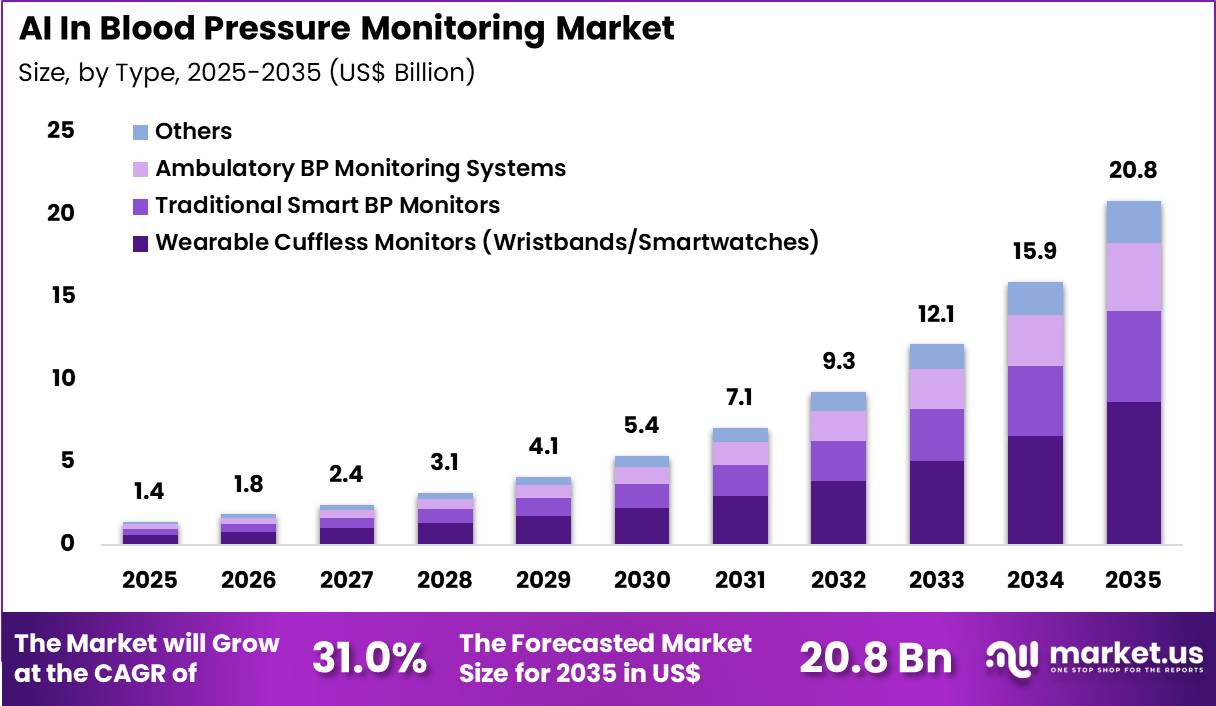
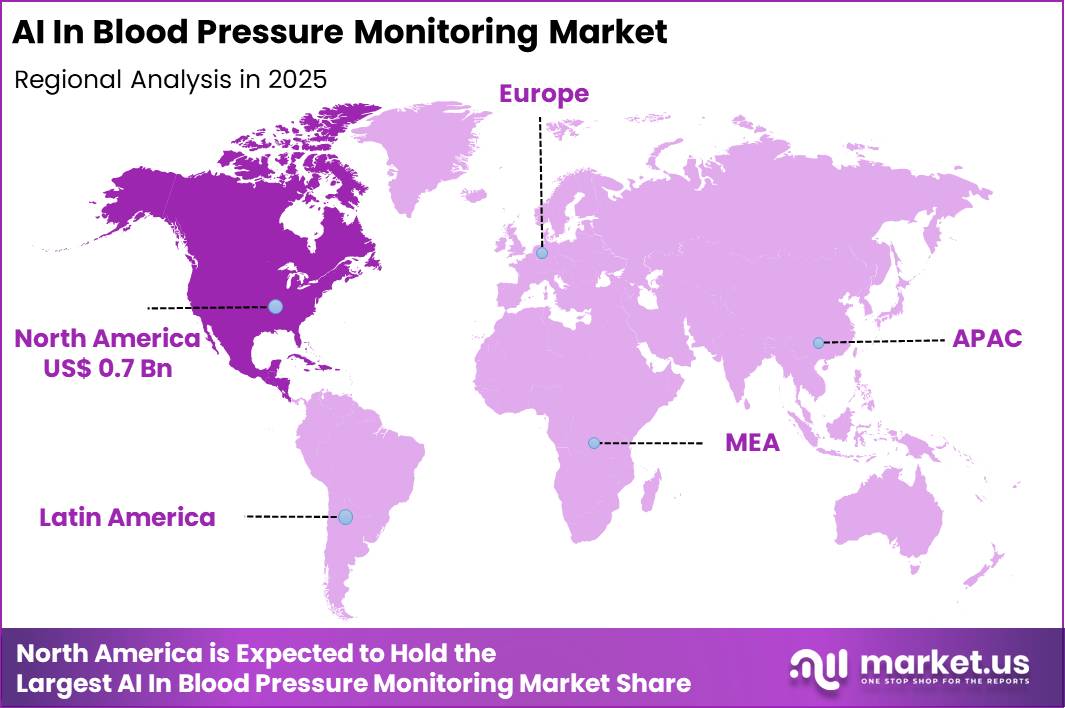
The Global AI In Blood Pressure Monitoring Market size is expected to be worth around US$ 20.8 Billion by 2035 from US$ 1.4 Billion in 2025, growing at a CAGR of 31.0% during the forecast period 2026-2035. In 2025, North America led the market, achieving over 48.6% share with a revenue of US$ 0.7 Billion.
Increasing global awareness of cardiovascular health continues to accelerate the adoption of AI in blood pressure monitoring solutions across modern healthcare systems. Healthcare providers increasingly deploy AI enabled monitoring technologies to detect early signs of hypertension and support continuous patient management beyond clinical settings.
These systems analyze large volumes of blood pressure readings collected through digital monitors, wearable sensors, and connected health devices. AI algorithms identify irregular patterns, predict hypertension risks, and assist physicians in making faster clinical decisions.
Hospitals, outpatient clinics, and telehealth platforms integrate these solutions to monitor patients with chronic cardiovascular conditions, kidney disorders, and metabolic diseases. Physicians also use AI supported monitoring tools to track treatment effectiveness and medication response over time.
Remote patient monitoring programs rely heavily on intelligent blood pressure analytics to reduce hospital visits and improve long term disease control. Digital health platforms further enhance preventive care by integrating blood pressure data with lifestyle indicators such as physical activity, sleep quality, and dietary habits.
These capabilities expand the clinical applications of AI driven monitoring beyond simple measurement toward comprehensive cardiovascular risk management. The growing burden of hypertension and cardiovascular complications therefore drives strong demand for intelligent blood pressure monitoring technologies.
Growing integration of artificial intelligence with connected health ecosystems creates new opportunities and technological advancements within the AI in blood pressure monitoring market. Medical device manufacturers now embed machine learning algorithms into smart blood pressure monitors and wearable devices to improve measurement accuracy and predictive insights.
Healthcare providers increasingly use AI driven platforms to identify patients who require timely medical intervention before severe cardiovascular events occur. In February 2026, Omron Healthcare partnered with Viso Health to launch an AI driven Digital Hypertension Clinic in the US. The platform analyzes home blood pressure readings together with lifestyle indicators using predictive analytics to evaluate cardiovascular risk levels.
Clinicians receive automated alerts when the system identifies rising risk indicators in patient health profiles. Such innovations strengthen the role of AI in supporting proactive hypertension management and personalized treatment planning.
Pharmaceutical companies and digital health developers also collaborate with device manufacturers to integrate monitoring data into broader chronic disease management platforms. Artificial intelligence further supports clinical research by enabling continuous patient data analysis across large populations. These advancements highlight a clear shift toward data driven hypertension care supported by intelligent monitoring technologies.
Key Takeaways
- In 2025, the market generated a revenue of US$ 1.4 Billion, with a CAGR of 31.0%, and is expected to reach US$ 20.8 Billion by the year 2035.
- The type segment is divided into AI-powered digital monitors (oscillometric), wearable cuffless monitors (wristbands/smartwatches), non-contact/continuous monitoring systems, AI-enhanced photoplethysmography (PPG) apps and others, with wearable cuffless monitors (wristbands/smartwatches) taking the lead with a market share of 41.6%.
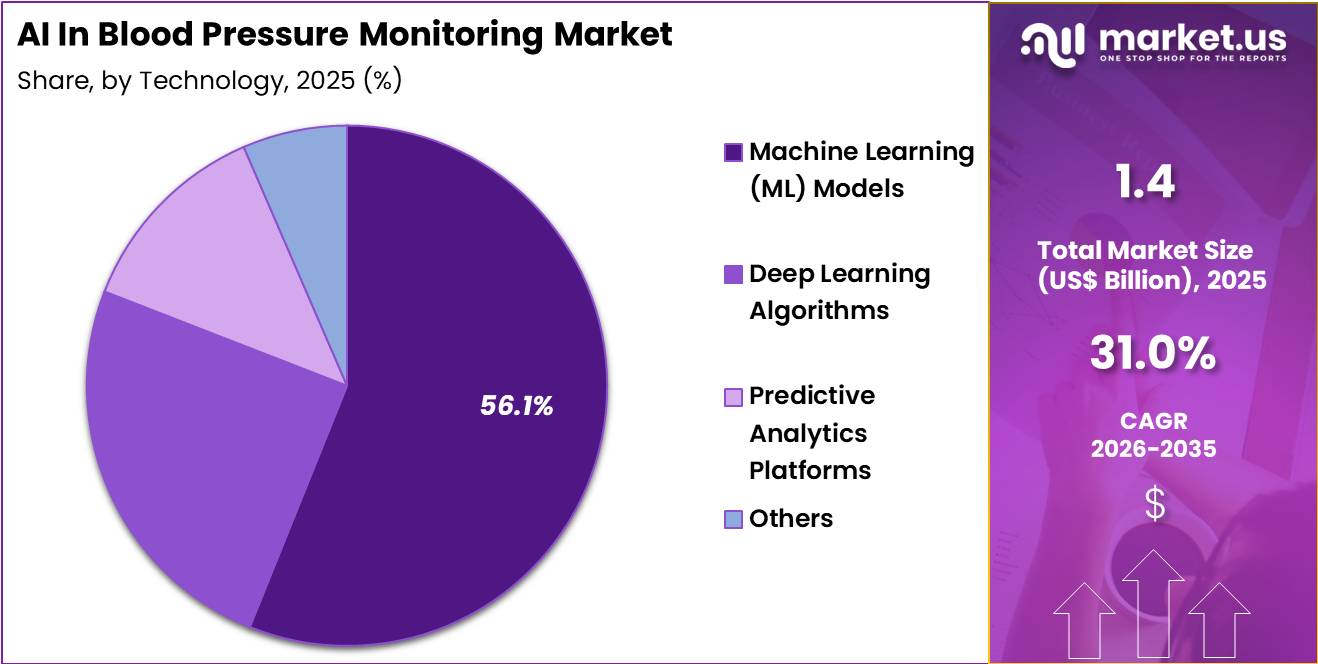
- Considering technology, the market is divided into deep learning (DL) & neural networks, machine learning (ML) models, natural language processing (NLP) and others. Among these, machine learning (ml) models held a significant share of 56.1%.
- Furthermore, concerning the application segment, the market is segregated into hypertension management, cardiovascular disease prediction, remote patient monitoring, fitness and wellness and others. The hypertension management sector stands out as the dominant player, holding the largest revenue share of 37.6% in the market.
- The end use segment is segregated into hospitals & acute care, home care settings/patient (consumers), clinics & ambulatory care and others, with the hospitals & acute care segment leading the market, holding a revenue share of 45.2%.
- North America led the market by securing a market share of 48.6%.
Type Analysis
Wearable cuffless monitors accounted for 41.6% of growth within type and dominate the AI in blood pressure monitoring market due to the rising adoption of wearable health technologies integrated with artificial intelligence. Smartwatches and wristband devices increasingly incorporate optical sensors and AI algorithms that continuously analyze cardiovascular signals.
These devices enable real-time blood pressure estimation without traditional inflatable cuffs, which improves user comfort and monitoring frequency. According to the World Health Organization, approximately 1.28 billion adults worldwide live with hypertension, highlighting the strong need for continuous monitoring solutions.
Wearable monitoring platforms are expected to gain wider adoption as digital health ecosystems integrate mobile applications, cloud analytics, and remote physician dashboards. Technology companies and medical device manufacturers continue to enhance sensor accuracy and algorithm performance. The segment is likely to grow further as consumers increasingly adopt wearable technologies for proactive cardiovascular health management.
Technology Analysis
Machine learning models accounted for 56.1% of growth within technology and dominate the AI in blood pressure monitoring market because these algorithms enable accurate prediction and interpretation of physiological signals captured by sensors. ML models analyze large datasets that include heart rate variability, pulse wave velocity, and photoplethysmography signals to estimate blood pressure trends.
Researchers increasingly train these models using clinical datasets to improve prediction accuracy and early detection of cardiovascular risks. Healthcare providers also integrate machine learning algorithms into remote monitoring systems to support clinical decision-making.
The segment is anticipated to expand as AI-driven diagnostic tools become central components of digital health platforms. Continuous improvements in computational power and medical datasets are expected to strengthen algorithm performance. Machine learning technologies therefore remain a critical foundation for advanced blood pressure monitoring solutions.
Application Analysis
Hypertension management accounted for 37.6% of growth within application and dominate the AI in blood pressure monitoring market due to the increasing global prevalence of hypertension and cardiovascular disease. Continuous monitoring technologies help physicians track blood pressure variations and optimize treatment plans for patients with chronic hypertension.
AI-driven monitoring systems provide personalized insights that support medication adjustments and lifestyle interventions. The World Health Organization reports that hypertension remains a leading cause of premature mortality worldwide.
Healthcare systems increasingly adopt digital monitoring platforms to improve long-term management of hypertensive patients. These solutions enable remote data transmission and allow physicians to identify abnormal blood pressure patterns earlier. The segment is projected to expand as digital health programs prioritize chronic disease management through AI-assisted monitoring tools.
End-Use Analysis
Hospitals and acute care facilities accounted for 45.2% of growth within end use and dominate the AI in blood pressure monitoring market due to their advanced diagnostic infrastructure and high patient volumes. Hospitals frequently manage patients with cardiovascular conditions who require continuous blood pressure monitoring and data analysis.
AI-powered monitoring systems help clinicians detect abnormal trends quickly and support timely clinical intervention. These facilities also integrate digital monitoring tools with electronic health record systems to enhance patient management.
Hospitals are expected to remain the primary adopters of AI-driven monitoring technologies because they provide specialized cardiac care services and intensive monitoring environments. Growing investment in hospital digital health infrastructure further strengthens the adoption of AI-enabled cardiovascular monitoring systems.
Key Market Segments
By Type
- AI-Powered Digital Monitors (Oscillometric)
- Wearable Cuffless Monitors (Wristbands/Smartwatches)
- Non-Contact/Continuous Monitoring Systems
- AI-Enhanced Photoplethysmography (PPG) Apps
- Others
By Technology
- Deep Learning (DL) & Neural Networks
- Machine Learning (ML) Models
- Natural Language Processing (NLP)
- Others
By Application
- Hypertension Management
- Cardiovascular Disease Prediction
- Remote Patient Monitoring
- Fitness and Wellness
- Others
By End Use
- Hospitals & Acute Care
- Home Care Settings/Patient (Consumers)
- Clinics & Ambulatory Care
- Others
Drivers
High pet ownership and humanization are driving the Veterinary X-ray market
The Veterinary X-ray market continues to gain momentum as companion animals become increasingly integrated into household family structures, resulting in higher spending on veterinary diagnostics. According to the 2025 American Veterinary Medical Association (AVMA) Pet Ownership and Demographics Sourcebook, the US dog population reached 87.3 million in 2025, up from 80.1 million in 2023, while the owned cat population increased to 76.3 million in 2025 from 73.8 million in 2024.
Approximately 66% of US households owned at least one pet in 2024, representing nearly 86.9 million homes. The AVMA further reports that 88.8% of dog owners and 84.7% of cat owners consider their pets to be family members. This cultural shift has increased veterinary spending, with the average annual veterinary expenditure reaching about US$1,700 per household in 2025.
Veterinary services accounted for 32.4% of total pet-related household spending. The average cost of a veterinary visit rose to US$200 in 2025 from US$147 in 2024. Dog owners spent an average of US$598 on veterinary care in 2025, while cat owners spent about US$529. Such rising expenditures encourage veterinary clinics to invest in advanced diagnostic technologies, including digital X-ray systems, to deliver higher standards of care.
Restraints
Declining hardware revenues at IDEXX are restraining the market
The Veterinary X-ray market also faces certain limitations due to slowing demand for capital equipment as veterinary practices increasingly shift toward service-based diagnostic models. IDEXX Laboratories reported that although its recurring diagnostics revenue continued to grow, its rapid assay products revenue declined by 2% as reported and 3% organically in the fourth quarter of 2025.
This trend reflects a broader stabilization in the adoption of traditional hardware platforms following the post-pandemic surge. For small and mid-sized veterinary clinics, the high upfront cost of digital radiography systems remains a major barrier. Entry-level systems typically range between US$21,000 and US$35,000, making capital investment challenging for many practices.
Global inflationary pressures and economic uncertainty during the 2023–2025 period have further moderated demand for new imaging equipment. Practitioners often delay upgrades unless immediate financial returns are clear. Specialized wireless X-ray systems designed for equine applications can cost approximately US$28,995, placing additional financial strain on mobile veterinary practitioners.
Ongoing expenses for maintenance, software licensing, and cybersecurity updates further increase operational costs. As a result, many clinics extend the operational life of existing radiography equipment rather than purchasing new systems, which slows the near-term expansion of the market.
Opportunities
Integration of AI for automated interpretation is creating growth opportunities
The emergence of artificial intelligence for real-time radiographic analysis is opening new opportunities to improve diagnostic speed and clinical accuracy in veterinary medicine. In early 2024, SignalPET introduced SignalSTAT, an AI-powered solution capable of delivering radiographic interpretation reports within approximately 45 minutes on a 24/7 basis.
The platform uses machine learning algorithms to evaluate radiographs for more than 50 clinical indicators, including fractures, organ enlargement, and abnormal tissue structures. A 2024 survey found that nearly 30% of veterinarians already use some form of AI within their weekly diagnostic workflows.
Industry participants such as IDEXX have expanded their Web PACS systems to automatically align, label, and categorize radiographic images by anatomical region, significantly reducing manual work for veterinary technicians.
In 2024, IDEXX also incorporated AI-assisted image analysis notes into VetMedStat radiology reports to support general practitioners during clinical decision-making. Zoetis further strengthened this trend in 2025 by introducing the AI Masses module within its Imagyst platform, enabling rapid screening of images for potential cancerous cells directly in clinics.
AI-enabled systems also provide objective second opinions, reducing the need for external specialist consultations that traditionally require several days. These capabilities promote the integration of cloud-based diagnostic platforms with radiography hardware, supporting scalable and efficient veterinary diagnostic ecosystems.
Impact of Macroeconomic / Geopolitical Factors
Macroeconomic conditions influence the AI in blood pressure monitoring market through healthcare technology investment, hospital digitalization budgets, and consumer spending on connected health devices. Inflation raises costs for sensors, microchips, cloud infrastructure, and AI software development, which increases production and deployment expenses for manufacturers.
Higher interest rates reduce venture funding for digital health startups and slow adoption of advanced monitoring platforms in smaller clinics. Geopolitical tensions disrupt the supply of semiconductors, wearable electronics, and connectivity modules that power AI-enabled monitoring devices.
Current US tariffs on imported electronics, sensors, and smart health hardware increase device production costs and narrow margins for technology providers. These pressures can delay large-scale deployments in price-sensitive healthcare systems.
At the same time, companies strengthen domestic manufacturing partnerships and invest in localized supply chains to improve reliability. Growing demand for remote patient monitoring, hypertension management, and data-driven preventive care continues to support steady and confident market growth.
Latest Trends
FDA 510(k) clearance for AI-driven software is emerging as a key industry trend
Regulatory validation of AI-powered imaging software has accelerated adoption of advanced radiography technologies across veterinary practices. In November 2025, Vieworks received US Food and Drug Administration (FDA) 510(k) clearance for its VXvue digital radiography acquisition software.
The platform incorporates PureImpact image-processing algorithms that enhance bone and soft tissue visualization while reducing radiation exposure during imaging procedures. Such innovations address growing clinical demand for low-dose imaging solutions that maintain high diagnostic resolution.
The regulatory clearance confirms that AI-processed radiographic images meet safety and performance standards for veterinary orthopedic and restorative applications. In May 2024, the US Department of Agriculture’s Animal and Plant Health Inspection Service allocated approximately US$22.2 million to strengthen early disease detection technologies, including advanced digital diagnostic tools.
Regulatory expectations are increasingly encouraging veterinary clinics to adopt digital image management systems with cloud storage and automated reporting capabilities. These technologies reduce manual processing requirements and improve diagnostic turnaround times.
The developments observed during 2024 and 2025 highlight a broader industry shift in which software innovation increasingly drives value creation, supporting the transition toward fully integrated, cloud-enabled veterinary diagnostic ecosystems.
Regional Analysis
North America is leading the AI In Blood Pressure Monitoring Market
North America accounted for 48.6% of the AI in blood pressure monitoring market in 2025 as healthcare providers increasingly integrated artificial intelligence with wearable health devices and digital monitoring platforms to improve cardiovascular disease management.
Hospitals and telehealth providers across the United States and Canada expanded remote patient monitoring programs that allow clinicians to track blood pressure continuously and identify abnormal patterns early. According to the Centers for Disease Control and Prevention, nearly 48.1% of adults in the United States had hypertension in 2023, creating a large patient population requiring regular monitoring and clinical intervention.
Growing prevalence of cardiovascular diseases and aging populations have encouraged healthcare systems to adopt AI-enabled monitoring technologies that analyze large volumes of patient data and provide predictive insights. Medical technology companies are introducing smart blood pressure devices that combine machine learning algorithms with connected mobile applications.
Healthcare insurers are also supporting remote monitoring initiatives that reduce hospital visits and enable long-term chronic disease management at home. Academic research institutions across the region are collaborating with technology firms to develop advanced predictive models for hypertension risk assessment. These developments collectively strengthened adoption of intelligent blood pressure monitoring solutions across North America in 2025.
The Asia Pacific region is expected to experience the highest CAGR during the forecast period
Asia Pacific is expected to experience strong expansion during the forecast period as digital health infrastructure and wearable medical technology adoption increase across the region. Countries such as China, India, Japan, and South Korea are investing heavily in artificial intelligence and digital healthcare innovation to improve early detection of cardiovascular diseases.
The World Health Organization reported that cardiovascular diseases account for about 38% of all deaths in the Western Pacific region, highlighting the urgent need for improved monitoring and prevention tools. Governments across the region are supporting national digital health programs that encourage integration of AI technologies into diagnostic and monitoring systems.
Technology companies and medical device manufacturers are developing smart wearable monitors that combine sensors with cloud-based analytics for real-time blood pressure tracking. Hospitals and telemedicine providers are also expanding remote monitoring services to reach patients in rural and underserved areas.
Increasing smartphone penetration and internet connectivity are enabling patients to use mobile health applications that support long-term cardiovascular management. Universities and research institutes across Asia are strengthening AI and biomedical engineering research focused on predictive healthcare technologies. These developments are expected to accelerate the adoption of intelligent cardiovascular monitoring solutions throughout Asia Pacific in the coming years.
Key Regions and Countries
North America
- The US
- Canada
Europe
- Germany
- France
- U.K.
- Italy
- Spain
- Russia & CIS
- Rest of Europe
Asia Pacific
- China
- India
- Japan
- South Korea
- ASEAN
- Australia & New Zealand
- Rest of Asia Pacific
Middle East & Africa
- GCC
- South Africa
- Rest of Middle East & Africa
Latin America
- Brazil
- Mexico
- Rest of Latin America
Key Players Analysis
Key participants in the AI In Blood Pressure Monitoring Market expand their capabilities by integrating artificial intelligence algorithms with wearable sensors, smart cuffs, and mobile health platforms that enable continuous cardiovascular monitoring. Companies collaborate with digital health providers and hospitals to develop predictive analytics tools that help detect hypertension risks earlier and support remote patient management.
They also invest in cloud-based health data systems and machine learning models that analyze long-term patient readings to improve clinical decision making. Omron Healthcare represents a prominent participant in the AI In Blood Pressure Monitoring Market and operates as a global medical device company headquartered in Japan that develops digital blood pressure monitors, wearable health devices, and connected healthcare technologies.
The company focuses on combining AI-driven analytics with home monitoring solutions to support proactive cardiovascular care. Industry competitors continue to launch smart monitoring devices, strengthen digital health partnerships, and expand telehealth integration to accelerate adoption of intelligent blood pressure monitoring technologies.
Top Key Players
- Withings
- Aktiia SA (Hilo)
- Biospectal SA
- Valencell, INC.
- Biofourmis
- Edwards Lifesciences Corporation (now BD)
- Hello Heart
- Shen AI
- Huawei Technologies Co., Ltd.
- Hilo
Recent Developments
- In May 2025, Biobeat received expanded FDA 510(k) clearance for its AI-powered remote patient monitoring platform to include “Cuffless Blood Pressure” tracking for home-use settings. The system utilizes a proprietary wireless chest sensor and AI algorithms to monitor blood pressure continuously, allowing for the identification of nocturnal hypertension without disrupting the patient’s sleep.
- In October 2025, Aktiia announced a major integration deal to license its G-M1 optical blood pressure sensor technology to third-party smartwatch manufacturers. This collaboration allows consumer-grade wearables to capture medical-grade, continuous blood pressure data through the skin, utilizing AI to calibrate readings against the user’s unique arterial pulse wave.
Report Scope
Report Features Description Market Value (2025) US$ 1.4 Billion Forecast Revenue (2035) US$ 20.8 Billion CAGR (2026-2035) 31.0% Base Year for Estimation 2025 Historic Period 2020-2024 Forecast Period 2026-2035 Report Coverage Revenue Forecast, Market Dynamics, COVID-19 Impact, Competitive Landscape, Recent Developments Segments Covered By Type (AI-Powered Digital Monitors (Oscillometric), Wearable Cuffless Monitors (Wristbands/Smartwatches), Non-Contact/Continuous Monitoring Systems, AI-Enhanced Photoplethysmography (PPG) Apps and Others), By Technology (Deep Learning (DL) & Neural Networks, Machine Learning (ML) Models, Natural Language Processing (NLP) and Others), By Application (Hypertension Management, Cardiovascular Disease Prediction, Remote Patient Monitoring, Fitness and Wellness and Others), By End Use (Hospitals & Acute Care, Home Care Settings/Patient (Consumers), Clinics & Ambulatory Care and Others) Regional Analysis North America – The US, Canada; Europe – Germany, France, U.K., Italy, Spain, Russia & CIS, Rest of Europe; Asia Pacific – China, India, Japan, South Korea, ASEAN, Australia & New Zealand, Rest of Asia Pacific; Middle East & Africa – GCC, South Africa, Rest of Middle East & Africa; Latin America – Brazil, Mexico, Rest of Latin America Competitive Landscape Withings, Aktiia SA, Biospectal SA, Valencell, INC., Biofourmis, Edwards Lifesciences Corporation (now BD), Hello Heart, Shen AI, Huawei Technologies Co., Ltd., Hilo. Customization Scope Customization for segments, region/country-level will be provided. Moreover, additional customization can be done based on the requirements. Purchase Options We have three licenses to opt for: Single User License, Multi-User License (Up to 5 Users), Corporate Use License (Unlimited User and Printable PDF)  AI In Blood Pressure Monitoring MarketPublished date: March 2026add_shopping_cartBuy Now get_appDownload Sample
 -
-
- Withings
- Aktiia SA (Hilo)
- Biospectal SA
- Valencell, INC.
- Biofourmis
- Edwards Lifesciences Corporation (now BD)
- Hello Heart
- Shen AI
- Huawei Technologies Co., Ltd.
- Hilo
Our Clients

- 181246
- March 2026






