


Quick Navigation
Overview
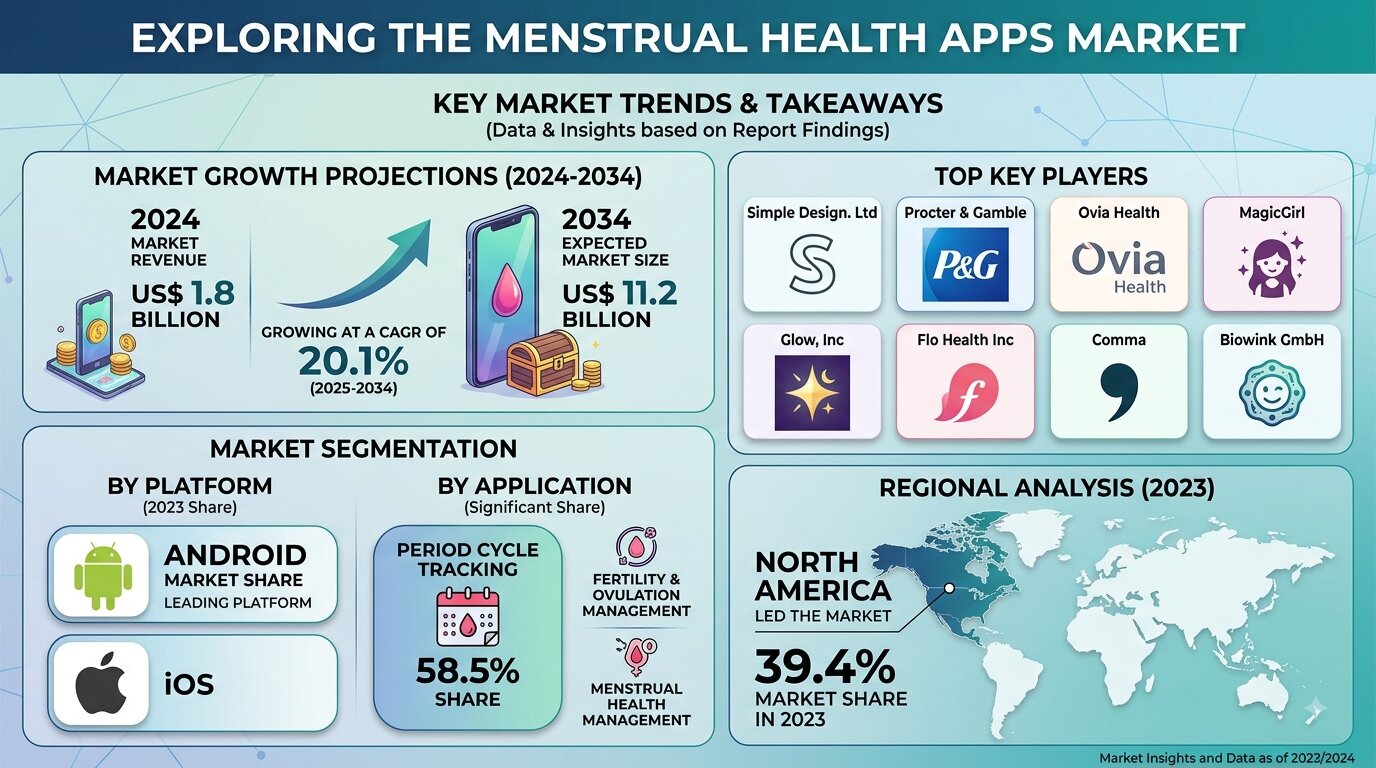
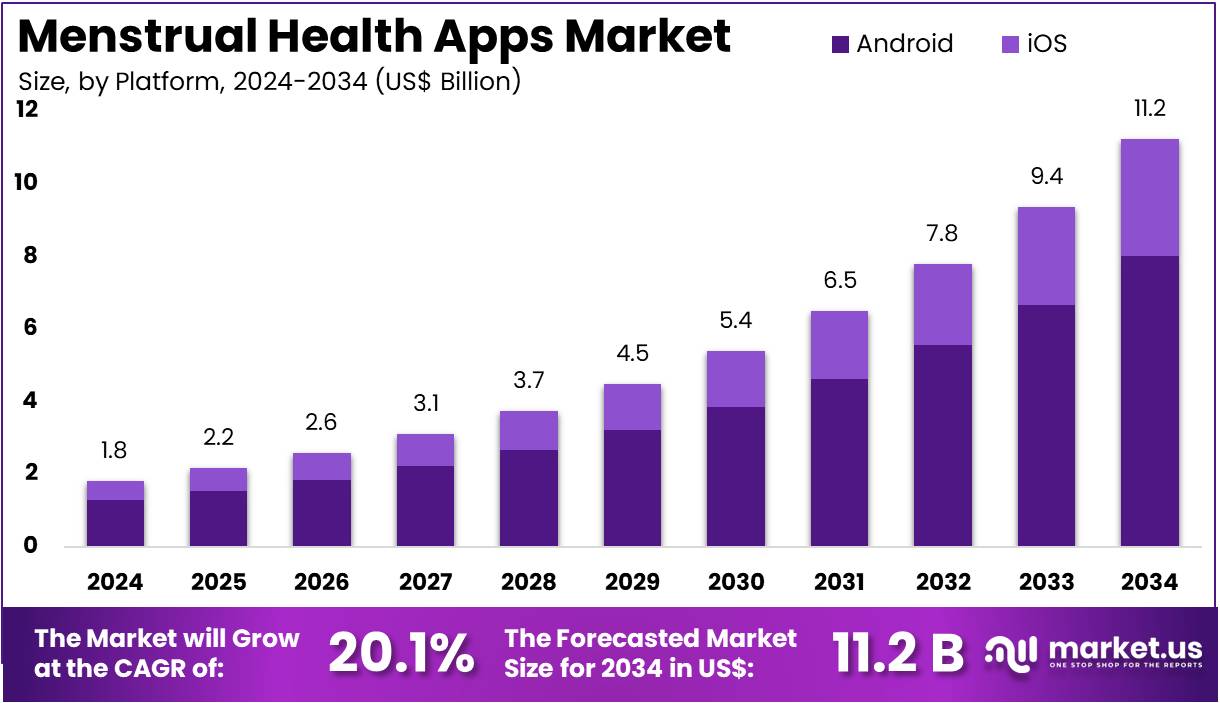
The Menstrual Health Apps Market size is expected to be worth around US$ 11.2 Billion by 2034 from US$ 1.8 Billion in 2024, growing at a CAGR of 20.1% during the forecast period 2025 to 2034.
Digital health is playing an increasingly important role in women’s healthcare, with menstrual health apps helping users monitor menstrual cycles, predict ovulation, track symptoms, and better understand reproductive health. Growing awareness of menstrual wellness, rising smartphone adoption, and increasing acceptance of digital self-care tools are encouraging more women to use mobile applications for personalized health management.
These platforms are also supporting healthcare providers by enabling symptom tracking and facilitating informed discussions around menstrual disorders, fertility, and hormonal health. As artificial intelligence and wearable device integration continue to evolve, menstrual health apps are becoming more accurate and user-centric, strengthening their role in preventive and personalized healthcare.
The demand for menstrual health apps is also supported by persistent global menstrual health challenges. According to the World Health Organization (WHO), an estimated 2.1 billion women and adolescent girls menstruate worldwide, while approximately 500 million people lack access to adequate menstrual materials and appropriate sanitation facilities needed to manage menstruation safely and with dignity.
WHO also notes that more than two-thirds of women and girls experience menstrual pain, highlighting the importance of accessible digital tools that promote symptom awareness, education, and timely healthcare support.
Similarly, UNICEF estimates that 1.8 billion people menstruate every month, emphasizing the growing need for reliable menstrual health information and education. These public health priorities are encouraging innovation in digital menstrual health solutions, creating opportunities for app developers, healthcare providers, and public health organizations to improve health literacy and expand access to reproductive health resources worldwide.
Key Takeaways
- In 2024, the global menstrual health apps market was valued at US$ 1.8 billion and is projected to reach US$ 11.2 billion by 2034, expanding at a CAGR of 20.1% during the forecast period.
- Based on platform, the market is segmented into Android and iOS, with the Android segment accounting for the largest share of 71.3% in 2023, driven by its widespread smartphone adoption and accessibility.
- By application, the market comprises period cycle tracking, fertility & ovulation management, and menstrual health management. Among these, period cycle tracking emerged as the leading segment, capturing 58.5% of the market share in 2023 owing to its broad consumer adoption and ease of use.
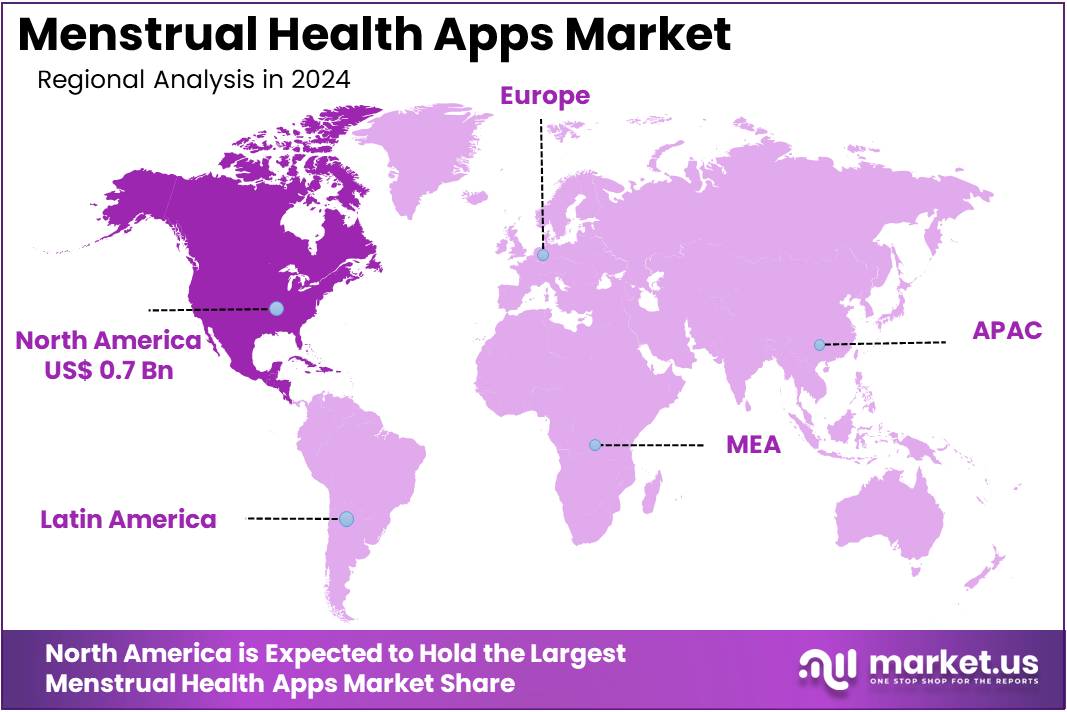
- Regionally, North America dominated the menstrual health apps market in 2023, securing a 39.4% market share, supported by high digital health adoption, increasing awareness of women’s health, and strong smartphone penetration.
Statistical Information
- 82.7% of the first 10,000 participants enrolled in the Apple Women’s Health Study tracked at least one menstrual cycle using Apple’s HealthKit ecosystem, demonstrating strong engagement with digital menstrual tracking.
- Among participants in the same study, 72% reported using an Apple Watch, highlighting the growing integration of wearable devices with menstrual health monitoring.
- Only 24.4% of participants consented to share sensor-based wearable data for research, indicating that while users value health tracking, privacy preferences remain an important consideration.
- Participants in the Apple Women’s Health Study tracked their menstrual bleeding for a median of 4.44 months, showing sustained long-term engagement with cycle tracking applications.
- In Apple’s preliminary Women’s Health Study results, more than 60% of participants who logged symptoms reported experiencing abdominal cramps, bloating, and tiredness during their menstrual cycles.
- More than half of participants who tracked symptoms also reported headaches and acne, demonstrating that users increasingly rely on apps to record symptoms beyond cycle dates.
- 37% of participants logging symptoms tracked less commonly discussed menstrual symptoms such as sleep changes and diarrhea, highlighting demand for comprehensive symptom-monitoring capabilities.
- A published survey of Flo app subscribers found that users reported improved knowledge of menstrual and reproductive health after using the application for at least 30 days, supporting the educational value of menstrual health apps.
- The Apple Women’s Health Study spans participants from all U.S. states and Puerto Rico, creating one of the largest longitudinal digital datasets focused on menstrual health and reproductive conditions.
- Researchers from the Apple Women’s Health Study are using digital cycle tracking to improve understanding of conditions including polycystic ovary syndrome (PCOS), infertility, and menopause, demonstrating expanding clinical applications for menstrual health apps.
Market Segmentation Analysis
Platform Analysis
The Android segment accounted for the largest 71.3% share of the menstrual health apps market in 2023. Its dominance is driven by the widespread availability of Android smartphones, affordable devices, and extensive global user adoption. Android-based menstrual health apps offer features including period tracking, fertility monitoring, symptom logging, and personalized health insights.
Compatibility with a broad range of devices, multilingual support, and integration with wearable technologies are expected to strengthen user engagement, allowing the Android platform to maintain its leading market position.
Application Analysis
The Period Cycle Tracking segment held a dominant 58.5% share of the menstrual health apps market in 2023. Growing awareness of menstrual wellness and increasing adoption of digital health tools continue to support demand for these applications. Period tracking apps help users monitor menstrual cycles, predict future periods, record symptoms, and identify irregularities.
The addition of fertility tracking, ovulation prediction, and personalized health recommendations has further enhanced their value, supporting continued adoption and reinforcing the segment’s leading position in the market.
Regional Analysis
North America accounted for the largest 39.4% share of the menstrual health apps market in 2023, supported by high smartphone penetration, widespread internet connectivity, and growing adoption of digital health technologies.
According to the U.S. National Telecommunications and Information Administration (NTIA), 83% of people aged three years and older used the internet in 2023, while 72% lived in households with both fixed and mobile internet connections, creating a strong foundation for mobile health application usage. Digital platforms are increasingly being used to support reproductive health, symptom monitoring, and personalized wellness management.
In addition, Apple’s Women’s Health Study, conducted with the Harvard T.H. Chan School of Public Health and the National Institute of Environmental Health Sciences (NIEHS), has strengthened awareness of menstrual health by advancing research on cycle tracking and reproductive health. The integration of menstrual cycle tracking into mainstream digital health ecosystems, combined with increasing consumer awareness and ongoing technological innovation, continues to reinforce North America’s leadership in the menstrual health apps market.
Business Opportunities
The menstrual health apps market presents significant business opportunities as digital healthcare becomes more integrated into preventive and personalized care. Mobile health (mHealth), wearable devices, artificial intelligence, and connected health platforms are enabling developers to deliver advanced menstrual tracking, fertility monitoring, and symptom management solutions. According to the U.S. Food and Drug Administration (FDA), digital health technologies empower consumers to better manage their health while improving access, quality, and personalization of care, creating favorable conditions for innovation in women’s health applications.
Another major opportunity lies in partnerships between menstrual health app developers and wearable technology companies. Recent collaborations, such as the integration of wearable biometric data with fertility tracking platforms, demonstrate growing demand for connected reproductive health ecosystems that provide more accurate cycle predictions and personalized insights.
Growing regulatory attention to women’s health, increasing investments in digital health research, and stronger privacy frameworks also create opportunities for companies offering secure, evidence-based applications. Developers that prioritize AI-driven analytics, interoperability with healthcare providers, multilingual support, and robust data protection are well positioned to expand adoption among consumers, employers, insurers, and healthcare organizations seeking comprehensive digital women’s health solutions.
Emerging Trends
- Wearable integration is becoming a major trend. Menstrual health apps are increasingly connecting with smart rings and wearable devices to automatically capture body temperature and other physiological signals for improved fertility and cycle predictions. Recent partnerships between wearable brands and fertility apps are accelerating this shift.
- Global app adoption continues to expand rapidly. Researchers from the University of Oxford found that just three leading menstrual tracking apps exceeded 250 million combined downloads, reflecting strong consumer acceptance across both developed and emerging regions and encouraging developers to introduce more localized digital health services.
- Privacy-focused app development is emerging as a competitive advantage. New academic research shows users increasingly expect stronger protection of reproductive health information, prompting developers to invest in transparent privacy policies, encrypted data storage, and user-controlled data sharing features.
- Artificial intelligence is improving personalized menstrual health insights. Modern applications increasingly combine symptom history, cycle patterns, and biometric information to deliver individualized predictions instead of relying only on calendar-based tracking, supporting more personalized reproductive health management.
- Digital women’s health research is expanding through app-generated data. Large-scale menstrual tracking datasets collected through mobile applications are increasingly supporting research on fertility, reproductive disorders, and menstrual health, encouraging stronger collaboration between healthcare organizations and digital health companies.
Use Cases
- Cycle prediction remains the primary consumer use case. A 2024 study involving 700 participants found that 62.3% used period tracker apps mainly to predict their next menstrual cycle, highlighting continued demand for accurate forecasting and personalized reminders.
- Apps are increasingly supporting fertility planning. Digital menstrual health platforms now combine cycle records with physiological measurements from wearable devices, enabling users to identify fertile windows more accurately for pregnancy planning or natural contraception support.
- Healthcare providers are using app data to improve clinical discussions. Users can export cycle history, symptom records, and health trends, allowing clinicians to better evaluate menstrual irregularities, hormonal changes, and reproductive health concerns during consultations.
- Women are using menstrual apps for broader wellness management. Beyond period tracking, users increasingly monitor mood, sleep, energy levels, and physical symptoms to better understand how hormonal changes influence daily health and lifestyle decisions.
- Population-scale health research has become an important application. Digital menstrual tracking platforms are generating large real-world datasets that help researchers study menstrual patterns, fertility, reproductive disorders, and women’s health outcomes across diverse populations, supporting future public health research.
Recent Developments
- In June 2025, Flo Health partnered with Databricks to deploy the Databricks Data Intelligence Platform for analytics and AI. The collaboration improved personalized cycle predictions, accelerated AI development, and increased Flo’s internal monthly active users by 45%.
- In January 2025, Flo Health and Google agreed to a US$56 million settlement (Google: US$48 million, Flo Health: US$8 million) to resolve a U.S. class-action lawsuit related to reproductive health data privacy. The settlement also requires enhanced privacy practices for users’ health information.
- In 2025, Flo Health expanded its AI-powered women’s health platform by strengthening personalized reproductive health recommendations through advanced analytics infrastructure, supporting menstrual tracking, fertility, pregnancy, and broader women’s health services at global scale.
Conclusion
The menstrual health apps market is experiencing strong momentum as digital health solutions become an essential part of women’s healthcare. Rising smartphone adoption, growing awareness of menstrual wellness, and advancements in artificial intelligence, wearable integration, and personalized health analytics are expanding the market’s potential. Increasing use of menstrual tracking for fertility planning, symptom management, and preventive healthcare is further supporting adoption among consumers and healthcare providers.
Continued investments in privacy, data security, and evidence-based digital health solutions are strengthening user confidence. As innovation accelerates and digital healthcare ecosystems evolve, menstrual health apps are expected to play an increasingly important role in improving reproductive health outcomes and expanding access to personalized healthcare worldwide.




















