


Market Overview
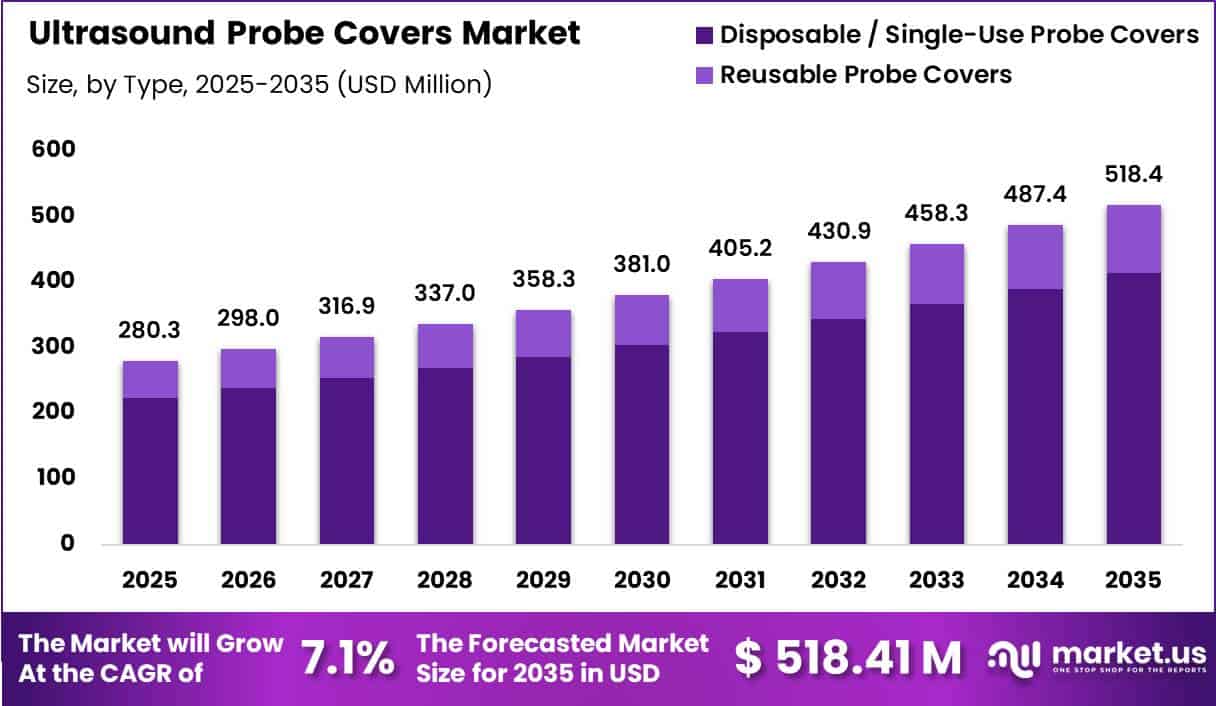
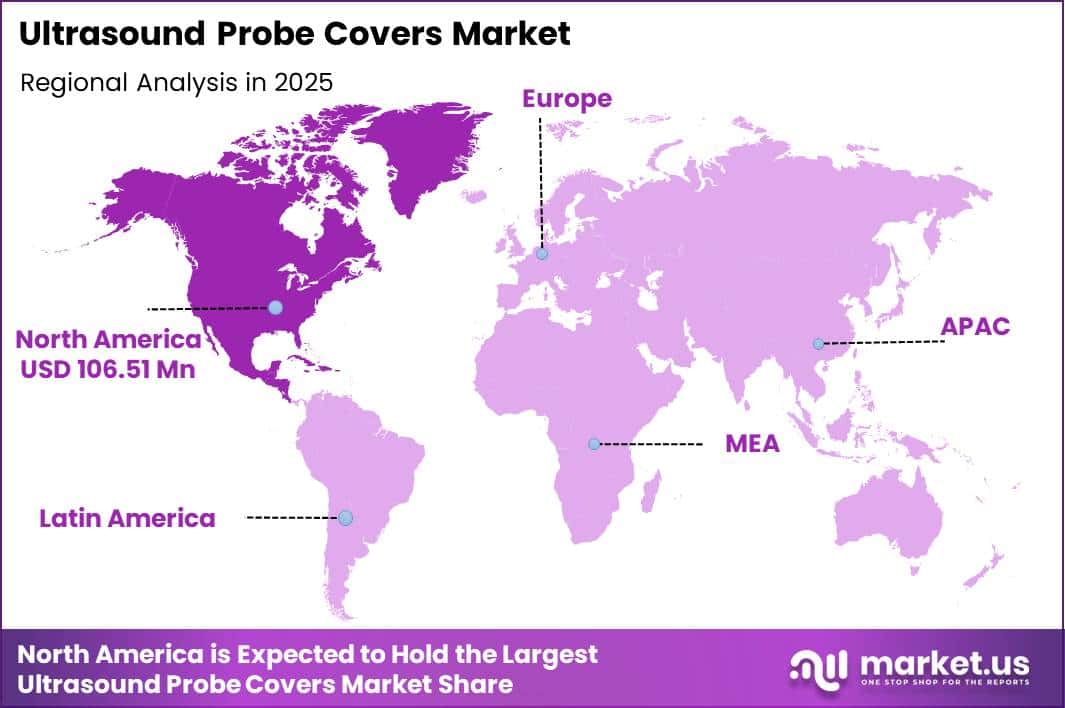
The Global Ultrasound Probe Covers Market size is expected to be worth around US$ 518.41 Million by 2035 from US$ 280.29 Million in 2025, growing at a CAGR of 7.1% during the forecast period from 2026 to 2035. In 2025, North America led the market, achieving over 38% share with a revenue of US$ 106.51 Million.
The global ultrasound probe covers market is gaining importance as healthcare providers strengthen infection prevention protocols during diagnostic imaging and ultrasound-guided procedures. Ultrasound probe covers act as sterile protective barriers that minimise cross-contamination between patients and medical devices, making them essential for invasive procedures such as biopsies, vascular access, regional anaesthesia, and interventional radiology.
Increasing procedural volumes in hospitals, ambulatory surgical centres, and diagnostic imaging facilities continue to support demand for single-use sterile probe covers. Growing emphasis on healthcare-associated infection (HAI) prevention is a major factor supporting market expansion.
According to the U.S. Centres for Disease Control and Prevention (CDC), approximately 1 in 31 hospitalised patients has at least one healthcare-associated infection on any given day, underscoring the need for stringent infection-control practices across healthcare settings.
The World Health Organisation (WHO) also highlights that effective infection prevention and control programs can significantly reduce avoidable HAIs while improving patient safety and healthcare quality. These recommendations have reinforced the routine use of sterile accessories, including ultrasound probe covers, during clinical procedures.
Recent regulatory guidance has further strengthened market adoption. In May 2025, the CDC advised healthcare providers to use only single-use sterile ultrasound gel for percutaneous procedures after investigating contamination linked to non-sterile ultrasound products across multiple countries.
Earlier investigations identified 119 Burkholderia infections across 10 U.S. states associated with contaminated non-sterile ultrasound gel used during ultrasound-guided procedures, emphasising the importance of sterile barriers and infection-control measures.
As healthcare systems continue to prioritise patient safety, compliance with infection prevention standards, and procedural efficiency, demand for high-quality ultrasound probe covers is expected to remain strong across global healthcare facilities.
Key Takeaways
- Market Size: The Global Ultrasound Probe Covers Market size was US$ 280.29 million in 2025. The market is estimated to grow to US$ 518.41 million by 2035.
- Market Share: The Compound Annual Growth Rate (CAGR) of the market from 2026 to 2035 will be 7.1%.
- Type: Disposable/Single-Use Probe Covers has the largest market share, accounting for 80% of total sales.
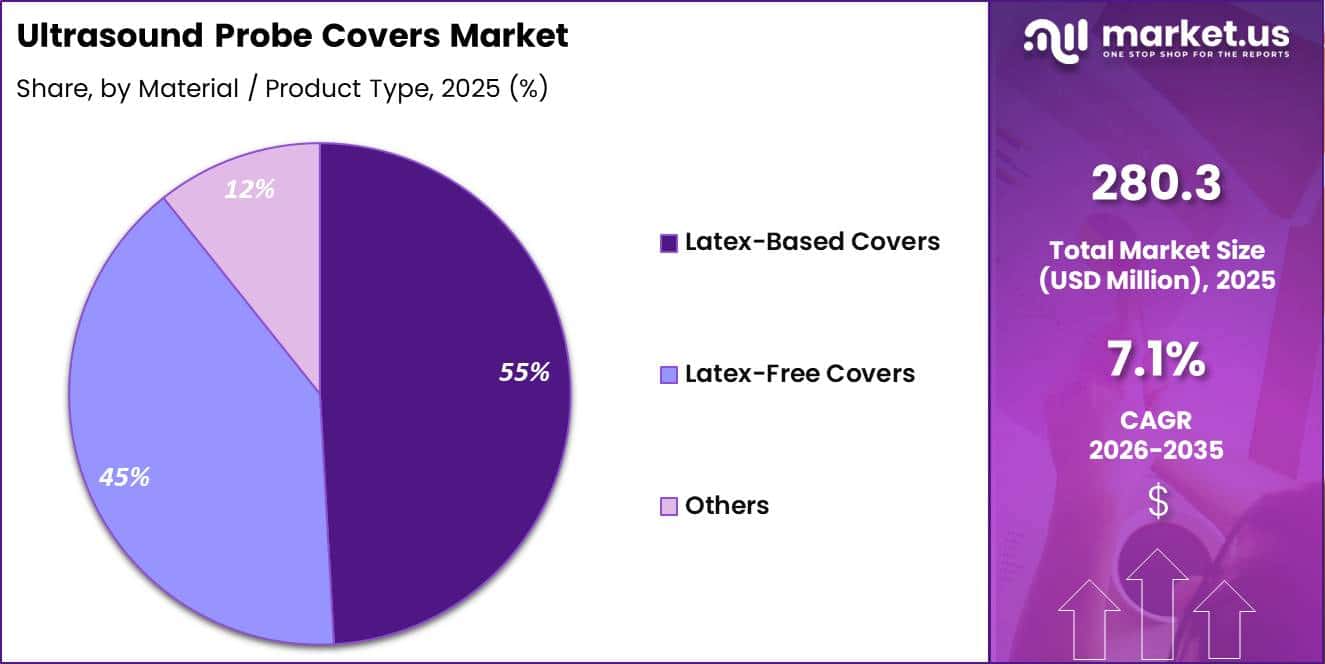
- Material/Product Type: Latex-Based Covers dominate the segment, accounting for 55% of total revenue.
- Application: Endocavitary/Intracavitary Probe Covers lead the segment, accounting for 65% of total revenue.
- End User: Hospitals and Diagnostic Imaging Centres dominate the segment, accounting for 55% of total revenue.
- Regional: North America is the dominant regional market, accounting for 38% of global sales, holding US$ 106.51 million in revenue.
Type Analysis
The Disposable / Single-Use Probe Covers segment dominated the Ultrasound Probe Covers Market, accounting for 80.0% of the market share in 2025. Their leadership is driven by increasing emphasis on infection prevention, compliance with sterilisation protocols, and the widespread use of ultrasound-guided minimally invasive procedures.
Single-use covers eliminate the risk of cross-contamination between patients, making them the preferred option for hospitals, diagnostic imaging centres, emergency departments, and outpatient facilities. The growing number of biopsies, vascular access procedures, regional anaesthesia, obstetric examinations, and interventional radiology procedures has further strengthened demand for disposable products.
Regulatory recommendations promoting sterile barriers during invasive ultrasound procedures have also accelerated their adoption. Manufacturers continue to introduce stronger, tear-resistant, and ergonomically designed disposable covers that maintain image quality while improving clinician convenience.
The Reusable Probe Covers segment accounted for the remaining 20.0% of the market in 2025. These covers are primarily utilised in facilities seeking to reduce recurring procurement costs while maintaining structured sterilisation workflows. They are commonly adopted in resource-conscious healthcare institutions and selected diagnostic settings where validated cleaning and disinfection protocols are consistently followed.
Although reusable products offer long-term economic benefits, concerns regarding reprocessing time, maintenance requirements, and stricter infection-control standards have limited broader adoption. Nevertheless, improvements in durable medical-grade materials and enhanced sterilisation compatibility continue to support their presence in niche healthcare applications.
Material / Product Type Analysis
The Latex-Based Covers segment held the largest share of the Ultrasound Probe Covers Market, representing 55.0% of total revenue in 2025. Latex remains widely used because of its superior elasticity, close anatomical fit, excellent tactile sensitivity, and effective barrier protection during ultrasound-guided procedures. These properties allow clinicians to maintain optimal probe manoeuvrability and imaging performance while ensuring sterile conditions.
Latex-based covers are extensively used across gynaecology, urology, emergency medicine, and interventional radiology due to their cost-effectiveness and reliable performance. Their broad availability and compatibility with a wide range of ultrasound probes continue to support market leadership.
The Latex-Free Covers segment accounted for 45.0% of the market in 2025 and emerged as the fastest-growing category. Rising awareness of latex allergies among patients and healthcare professionals has accelerated the transition toward nitrile, polyurethane, and polyisoprene alternatives. Healthcare facilities increasingly favour latex-free options to comply with allergy prevention policies while maintaining high infection-control standards.
Manufacturers are also improving the flexibility, durability, and imaging transparency of these materials, further supporting adoption. The Others category, including specialised polymer blends and customised protective materials, represented approximately 12.0% of the market, serving specialised clinical applications requiring enhanced durability or unique procedural compatibility.
Application Analysis
The Endocavitary / Intracavitary Probe Covers segment dominated the Ultrasound Probe Covers Market, capturing 65.0% of the market share in 2025. These covers are extensively used during transvaginal, transrectal, and other intracavitary ultrasound examinations where direct contact with mucosal surfaces requires strict infection prevention measures.
The increasing number of gynaecological, obstetric, fertility, urological, and colorectal diagnostic procedures continues to drive demand for sterile endocavitary probe covers. Their routine use minimises cross-contamination risks while supporting compliance with healthcare infection-control guidelines.
Technological advancements have also improved material strength and acoustic transparency, enabling high-quality imaging without compromising patient safety or clinical efficiency.
The External Cavity / Transcutaneous Probe Covers segment represented the remaining share of the market in 2025. These covers are increasingly utilised during ultrasound-guided vascular access, biopsies, regional anaesthesia, musculoskeletal imaging, and emergency procedures requiring sterile conditions. Growth is supported by the expanding use of point-of-care ultrasound (POCUS), minimally invasive interventions, and bedside imaging across hospitals and outpatient settings.
Healthcare providers continue adopting sterile transcutaneous probe covers to reduce contamination risks while maintaining rapid workflow efficiency. Rising demand for portable ultrasound systems and expanding procedural applications are expected to further strengthen this segment throughout the forecast period.
End-User Analysis
The Hospitals and Diagnostic Imaging Centres segment led the Ultrasound Probe Covers Market, accounting for 55.0% of the total market share in 2025. These facilities perform a high volume of diagnostic imaging and ultrasound-guided interventional procedures, making sterile probe covers an essential component of infection prevention protocols. Hospitals routinely utilise probe covers across emergency medicine, obstetrics and gynaecology, cardiology, radiology, surgery, and intensive care units.
The increasing adoption of point-of-care ultrasound, rising patient admissions, and greater emphasis on reducing healthcare-associated infections continue to reinforce demand within this segment. Large healthcare institutions also benefit from standardised procurement practices and strict regulatory compliance, supporting sustained market leadership.
The Ambulatory Surgical Centres & Clinics segment accounted for the remaining share and is witnessing steady expansion due to the growing shift toward outpatient care. Increasing volumes of minimally invasive procedures, improved access to portable ultrasound systems, and shorter patient treatment pathways are driving product demand in these facilities.
Clinics specialising in fertility treatment, pain management, orthopaedics, and vascular medicine increasingly rely on sterile ultrasound probe covers to maintain procedural safety while improving operational efficiency. Continued growth in outpatient diagnostics and cost-effective healthcare delivery is expected to further strengthen adoption across ambulatory settings.
Key Market Segments
By Type
- Disposable/Single-Use Probe Covers
- Reusable Probe Covers
By Material/Product Type
- Latex-Based Covers
- Latex-Free Covers
- Others
By Application
- Endocavitary/Intracavitary Probe Covers
- Transvaginal (OB-GYN, Fertility, Pelvic Imaging)
- Transrectal (Prostate Biopsy, Colorectal Diagnostics)
- Others
- External Cavity/Transcutaneous Probe Covers
By End User
- Hospitals and Diagnostic Imaging Centres
- Ambulatory Surgical Centres & Clinics
Drivers
Shift to single-use sterile gel plus cover bundles after contamination alerts
The 2024 to 2025 ultrasound gel contamination events materially shifted infection control purchasing behaviour. CDC May 8 2025, reported awareness of 40 Paraburkholderia fungorum isolates across four U.S. states and two other countries, with genetically related findings in at least two non-sterile ultrasound gel products.
This broadened procurement decisions from probe cover only toward full sterile barrier workflows, as infection prevention teams tend to standardise the entire sterile field rather than isolate a single consumable.
For manufacturers, this supports bundle adoption combining sterile gel, probe covers, and validated barrier claims, improving attach rates per invasive scan and strengthening pricing power versus commodity gel suppliers.
Hospitals, in turn, reduce operational risk by standardising consumables across procedures, especially under accreditation and CDC-driven compliance pressure in the U.S.Overall, this shift supports an estimated 1.9 % point contribution to CAGR in the near term through higher bundle penetration and improved per procedure revenue.
| Driver | (~) % Impact on CAGR Forecast | Geographic Relevance | Impact Timeline |
|---|---|---|---|
| Sterile-procedure compliance tightening in vascular access and biopsy workflows | +2.4% | North America core, EU hospitals, APAC tertiary centres | Short term (≤ 2 years) |
| Shift to single-use sterile gel plus cover bundles after contamination alerts | +1.9% | U.S. core, Canada, UK, Australia, infection-control-led APAC | Short term (≤ 2 years) |
| Rising high-level disinfection traceability raises cover consumption per probe cycle | +1.6% | U.S. and EU core, selective Gulf and APAC private networks | Medium term (2-4 years) |
| Procedure mix expansion in women’s health, emergency, and point-of-care ultrasound | +2.1% | North America, EU, India, China, Southeast Asia | Medium term (2-4 years) |
| Conversion from improvised barriers to validated FDA-cleared probe covers | +1.3% | U.S. core, export-oriented APAC manufacturers, Latin America private hospitals | Medium term (2-4 years) |
| Throughput economics favours ready-to-use disposable barriers over rework risk | +1.5% | U.S. outpatient centres, EU day-care facilities, APAC high-volume chains | Short term (≤ 2 years) |
Challenge
Reprocessing protocol complexity in ultrasound probe workflows
Ultrasound probe covers sit within a workflow where they reduce contamination risk but do not eliminate the need for full device reprocessing. For semicritical use cases such as vaginal and rectal probes, FDA-cleared high-level disinfection is still required, including pre-cleaning, chemical control, drying, inspection, and proper storage after every patient.
This creates operational friction because each step adds staff touchpoints and increases room turnover time. Facilities using manual versus automated disinfection systems show significant variability, and CMS infection control oversight can flag even single-step breaches as compliance deficiencies in ambulatory settings.
In practical terms, added reprocessing time, often around 4 to 9 minutes per exam, plus documentation requirements and periodic disinfectant validation, can reduce probe throughput by about 6 to 11 %. This slows adoption of premium barrier systems in mid-volume settings, contributing to an estimated 1.4 % point drag on CAGR as providers prioritise workflow efficiency over product expansion.
Manufacturers are increasingly responding by designing faster, simpler, compliance-integrated systems that reduce reprocessing handoffs by 20 to 30 % over time.
| Challenge | (~) % CAGR Friction Drag | Geographic Relevance | Mitigation Horizon |
|---|---|---|---|
| Reprocessing protocol complexity | -1.4% | North America core, EU hospital networks, APAC tertiary care hubs | Medium term (2-4 years) |
| Single-use compliance inconsistency | -1.1% | North America outpatient settings, EU regulatory hubs, LATAM mixed-facility clusters | Short term (≤ 2 years) |
| Probe damage and replacement cycles | -0.9% | Global, high-volume imaging centres, ASC corridors, emerging-market hospitals | Medium term (2-4 years) |
| Skilled infection-control labour gaps | -1.3% | US ASC market, EU public hospitals, APAC expansion corridors | Long-term (≥ 4 years) |
| Diagnostics access-cost imbalance | -1.0% | South Asia, Africa, Southeast Asia, secondary-city public health systems | Long-term (≥ 4 years) |
| Documentation and audit burden | -0.8% | US CMS-linked facilities, Joint Commission-facing hospitals, EU compliance-heavy providers | Short term (≤ 2 years) |
Restraints
Sterile Gel and Infection-Control Consumable Costs Limit Routine Probe Cover Adoption
The increasing emphasis on infection prevention has expanded the use of sterile ultrasound consumables beyond probe covers alone. Clinical guidance for invasive and other higher-risk ultrasound procedures recommends combining single-use sterile ultrasound gel, sterile probe covers, and validated disinfection practices to reduce the risk of cross-contamination.
While these measures improve patient safety, they also increase the overall procedural cost for healthcare providers. Instead of purchasing probe covers as standalone products, hospitals and diagnostic facilities often procure complete sterile procedure kits that include sterile gel packets, drapes, and other disposable accessories.
The combined cost of these infection-control consumables can add approximately US$ 0.8–2.0 per procedure, depending on procurement contracts, regional pricing, and healthcare facility size.
For high-volume imaging departments, this creates a significant recurring operational expense. As a result, many budget-conscious healthcare providers prioritise sterile probe covers primarily for invasive, endocavitary, or semi-critical procedures, while routine external ultrasound examinations may continue using lower-cost protocols where permitted by local guidelines.
This selective utilisation reduces replacement frequency and moderates demand growth for probe covers in standard diagnostic applications, acting as a restraint on overall market expansion during the forecast period.
| Restraint | (~) % Impact on CAGR Forecast | Geographic Relevance | Impact Timeline |
|---|---|---|---|
| Reprocessing burden | -1.2% | North America core, EU hospitals, APAC tertiary care | Short term (≤ 2 years) |
| Sheath failure risk | -0.9% | Global, highest in endocavitary and procedure-heavy units | Short term (≤ 2 years) |
| Latex allergy shift | -0.7% | North America, EU, urban APAC | Medium term (2-4 years) |
| Sterile-gel cost drag | -0.8% | North America, EU, GCC, APAC advanced care | Short term (≤ 2 years) |
| Procurement compression | -1.0% | Public systems in the EU, the UK, Canada, and APAC | Medium term (2-4 years) |
| Supplier concentration | -0.6% | APAC manufacturing hubs, imported-market regions | Long-term (≥ 4 years) |
Opportunity
Compliance-driven ultrasound cover bundle expansion opportunity
This opportunity focuses on closing the gap between infection control guidelines and real-world probe cover usage by converting recommendations into standardised, compliance-linked ultrasound procedure bundles.
While CDC and clinical guidance recommend single-use covers paired with appropriate disinfection, observational data still show approximately 10 to 30 % inconsistent use in endocavitary and semi-critical exams, leaving meaningful unmet adoption potential.
By embedding cover, sterile gel, and disinfection documentation into procedural packs for exams such as transvaginal, transrectal, and biopsy guidance, hospitals can shift from discretionary procurement to protocol-driven consumption. This could increase cover utilisation by about 1.4 to 1.6 times and improve margins via bundled contracting rather than standalone commodity sales.
Because this relies on contracting and workflow standardisation rather than new technology, it is an opportunity rather than a baseline driver, with potential to add around 2 % points to market CAGR over 2026 to 2030 through higher adherence and expanded procedural penetration.
| Opportunity | (~) % Potential CAGR Upside | Geographic Relevance | Execution Window |
|---|---|---|---|
| Proceduralized cover compliance bundles | +2.0% | North America, Western EU | Short term (≤ 2 years) |
| AI-enabled utilisation and inventory optimisation | +1.5% | North America core, APAC tier-1 | Medium term (2-4 years) |
| Ambulatory and home-care ultrasound expansion | +2.3% | APAC emerging, LatAm, North America | Medium term (2-4 years) |
| Premium sterile sheaths for high-risk procedures | +1.8% | Global tertiary hospitals, surgical centres | Short–Medium term (≤ 3 years) |
| Integrated probe-cover-disinfection platform bundles | +2.7% | North America, EU, Middle East | Long-term (≥ 4 years) |
| ESG-linked reusable systems and take-back programs | +1.2% | EU, UK, select APAC | Long-term (≥ 4 years) |
Regional Analysis
In 2025, North America led the market, achieving over 38% share with a revenue of US$ 106.51 million. North America dominated the global Ultrasound Probe Covers Market in 2025, accounting for the largest revenue share. The region benefits from advanced healthcare infrastructure, widespread adoption of ultrasound-guided procedures, and stringent infection prevention protocols across hospitals and diagnostic imaging centres.
Regulatory recommendations promoting sterile ultrasound accessories, coupled with high procedural volumes in interventional radiology, anesthesiology, obstetrics, and emergency medicine, continue to support demand for disposable probe covers. The presence of leading manufacturers and well-established reimbursement systems further strengthens regional market growth.
Europe represented the second-largest market, driven by strong regulatory compliance, universal healthcare systems, and increasing focus on reducing healthcare-associated infections. Countries including Germany, the United Kingdom, France, and Italy have expanded the use of sterile barriers during endocavitary and minimally invasive ultrasound procedures, supporting consistent product adoption across both public and private healthcare facilities.
Asia-Pacific is projected to register the fastest growth during the forecast period. Rising healthcare investments, expanding hospital infrastructure, growing diagnostic imaging volumes, and increasing awareness of infection control are accelerating demand across China, Japan, South Korea, Australia, and Southeast Asian countries. The rapid expansion of private diagnostic centres and outpatient care further contributes to market growth.
Latin America, the Middle East, and Africa are experiencing steady development as healthcare modernisation initiatives, improved access to diagnostic ultrasound equipment, and increasing adoption of standardised infection-control practices gradually expand the use of ultrasound probe covers across both urban hospitals and emerging healthcare facilities.
Key Regions and Countries
North America
- The US
- Canada
Europe
- Germany
- France
- The U.K.
- Italy
- Spain
- Russia & CIS
- Rest of Europe
Asia Pacific
- China
- India
- Japan
- South Korea
- ASEAN
- Australia & New Zealand
- Rest of Asia Pacific
Middle East & Africa
- GCC
- South Africa
- Rest of the Middle East & Africa
Latin America
- Brazil
- Mexico
- Rest of Latin America
Key Player Analysis
Competitive advantage in the global ultrasound probe covers market is achieved through broad product portfolio coverage spanning disposable and reusable cover types across latex-based and latex-free material formulations, established distribution relationships with hospitals, diagnostic imaging centres, and ambulatory surgical centres, and continued investment in infection control-compliant product development addressing endocavitary and intracavitary imaging applications.
Major strategic priorities for leading manufacturers include expansion of latex-free probe cover product lines addressing growing latex allergy sensitivity concerns among patients and healthcare workers, development of sterile endocavitary cover solutions meeting enhanced infection prevention protocols for transvaginal and transrectal ultrasound applications, and growing investment in hospital and diagnostic imaging centre procurement relationships supporting the dominant institutional end-user segment.
Strong direct sales and medical supply distributor relationships, combined with a growing presence across ambulatory surgical centres, represent a critical competitive differentiator for manufacturers serving the dominant disposable probe cover segment globally.
Top Key Players
- CIVCO Medical Solutions (Roper Technologies)
- Parker Laboratories, Inc.
- Ecolab Inc.
- Medline Industries, Inc.
- Cardinal Health
- PDC Healthcare
- CS Medical LLC
- Sheathing Technologies, Inc.
- Advance Medical Designs, Inc.
- Dynarex Corporation
- Karex Berhad
- Fairmont Medical Products Ltd.
- McKesson Medical-Surgical Inc.
- Glen Med Solutions
- Nanosonics Ltd.
- Other Key Players
Recent Developments
- In January 2026, CIVCO Medical Solutions launched an expanded latex-free endocavitary probe cover line with enhanced sterile barrier technology, targeting hospital OB-GYN and radiology departments seeking improved infection prevention compliance for transvaginal and transrectal ultrasound procedures.
- In February 2026, Medline Industries, Inc. introduced a new disposable single-use probe cover portfolio for external transcutaneous ultrasound applications, targeting ambulatory surgical centres and diagnostic imaging clinic buyers seeking cost-effective sterile probe protection solutions.
- In March 2026, Cardinal Health expanded its ultrasound probe cover distribution network across Asia Pacific markets, targeting hospital and diagnostic imaging centre institutional buyers seeking a reliable supply of latex-free and latex-based disposable covers for growing regional ultrasound procedure volumes.
Report Scope
| Report Features | Description |
|---|---|
| Market Value (2025) | US$ 280.29 Million |
| Forecast Revenue (2035) | US$ 518.41 Million |
| CAGR (2026-2035) | 7.1% |
| Base Year for Estimation | 2025 |
| Historic Period | 2020-2024 |
| Forecast Period | 2026-2035 |
| Report Coverage | Revenue Forecast, Market Dynamics, Competitive Landscape, Recent Developments |
| Segments Covered | By Type (Disposable/Single-Use Probe Covers, Reusable Probe Covers), By Material/Product Type (Latex-Based Covers, Latex-Free Covers, Others), By Application (Endocavitary/Intracavitary Probe Covers, External Cavity/Transcutaneous Probe Covers), By End User (Hospitals and Diagnostic Imaging Centres, Ambulatory Surgical Centres & Clinics) |
| Regional Analysis | North America – The US, Canada; Europe – Germany, France, U.K., Italy, Spain, Russia & CIS, Rest of Europe; Asia Pacific – China, India, Japan, South Korea, ASEAN, Australia & New Zealand, Rest of Asia Pacific; Middle East & Africa – GCC, South Africa, Rest of Middle East & Africa; Latin America – Brazil, Mexico, Rest of Latin America |
| Competitive Landscape | CIVCO Medical Solutions (Roper Technologies), Parker Laboratories, Inc., Ecolab Inc., Medline Industries, Inc., Cardinal Health, PDC Healthcare, CS Medical LLC, Sheathing Technologies, Inc., Advance Medical Designs, Inc., Dynarex Corporation, Karex Berhad, Fairmont Medical Products Ltd., McKesson Medical-Surgical Inc., Glen Med Solutions, Nanosonics Ltd., Other Key Players |
| Customization Scope | Customization for segments, region/country-level will be provided. Moreover, additional customization can be done based on the requirements. |
| Purchase Options | We have three licenses to opt for: Single User License, Multi-User License (Up to 5 Users), Corporate Use License (Unlimited User and Printable PDF) |





































