Report Overview
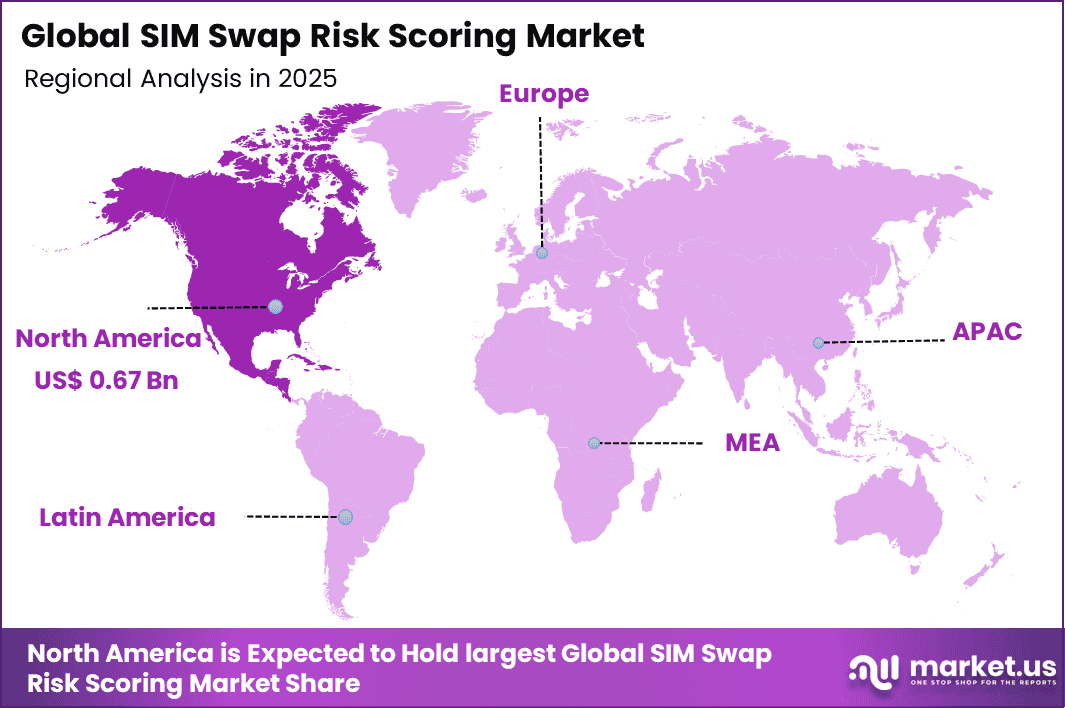
The Global SIM Swap Risk Scoring Market generated USD 1.7 billion in 2025 and is predicted to register growth from USD 2.1 billion in 2026 to about USD 13.1 billion by 2035, recording a CAGR of 22.5% throughout the forecast span. In 2025, North America held a dominant market position, capturing more than a 39.4% share, with USD 0.67 billion in revenue.
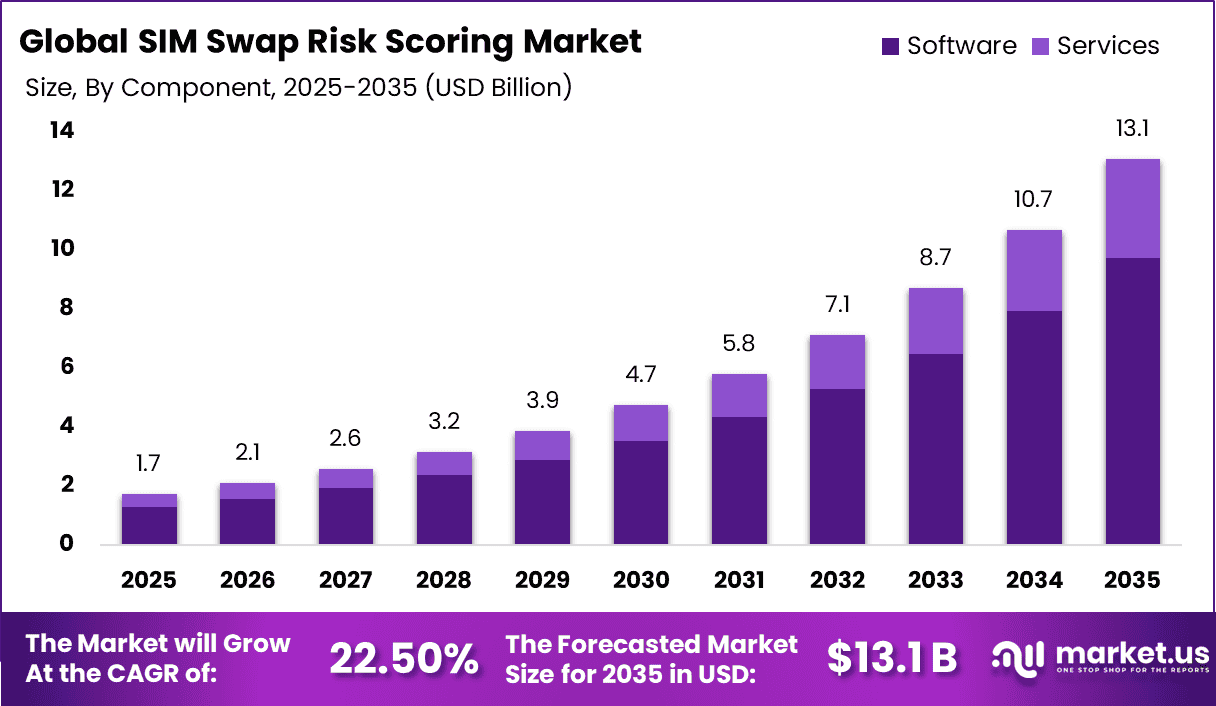
SIM Swap Risk Scoring market refers to fraud prevention solutions that measure the risk linked to recent SIM Card changes on a mobile number. These tools are used by banks, fintech platforms, telecom-linked identity systems, and digital service providers to detect whether a phone number may have been compromised before approving logins, transactions, or account recovery requests.
One of the main factors driving this market is the rising risk of account takeover fraud in digital banking and online services. Businesses want stronger protection around one-time passwords, mobile-based authentication, and password reset processes, where a fraudulent SIM change can create serious exposure.
Demand for SIM Swap Risk Scoring is increasing among financial institutions, payment platforms, digital lenders, and online service providers that need faster fraud decisions with less manual review. These users want practical tools that can identify suspicious mobile identity changes without adding too much friction for genuine customers.
Top Market Takeaways
- By Component, software dominates with a 74.4% share, delivering behavioral biometrics, device fingerprinting, and telecom signal intelligence for real-time SIM swap probability scoring.
- By Application, fraud detection captures 38.9%, powering high-risk transaction blocks, secondary authentication triggers, and automated carrier verification workflows.
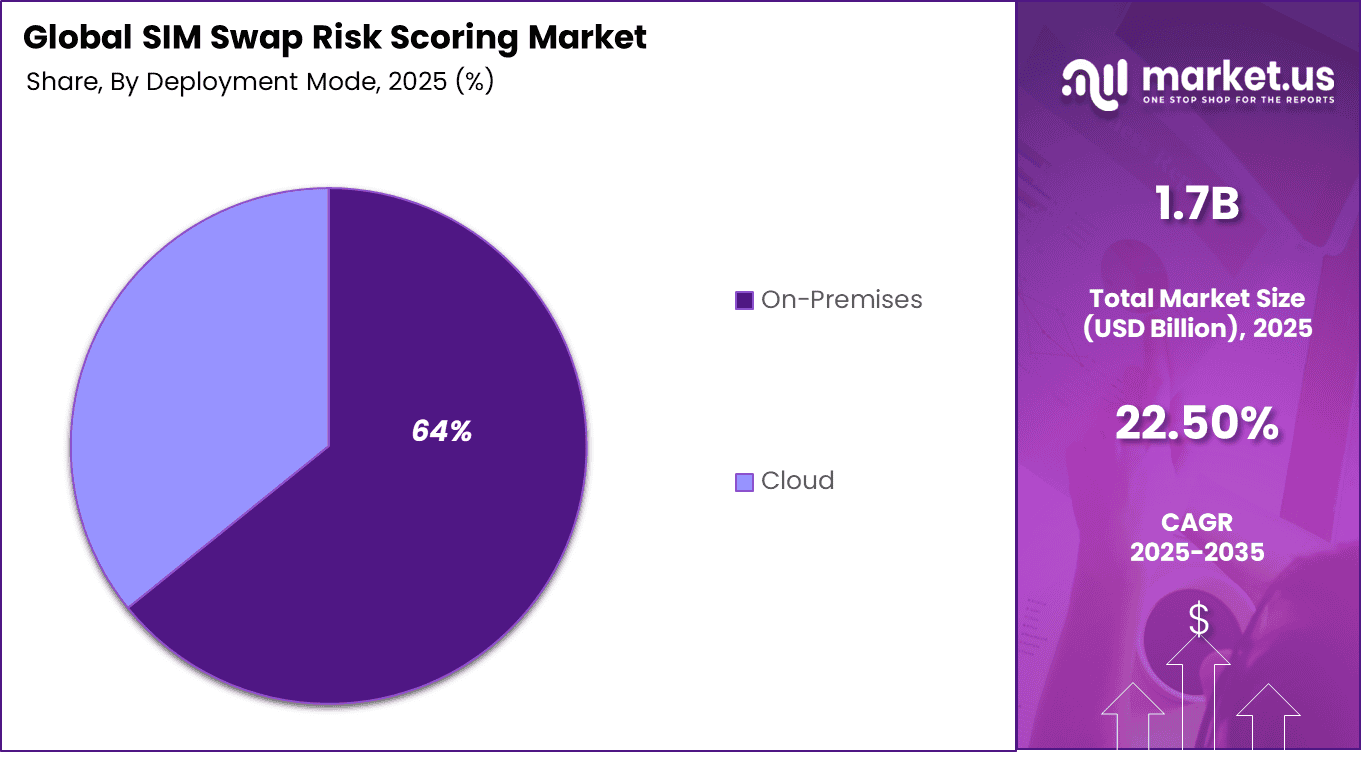
- By Deployment Mode, on-premises claims 64.2%, ensuring data sovereignty, millisecond latency, and seamless integration with core banking and telco SS7 networks.
- By Organization Size, large enterprises hold 70.2%, orchestrating enterprise-wide risk engines across mobile banking, wire transfers, and customer onboarding.
- By End-User, BFSI leads at 39.3%, protecting high-value accounts against SIM-enabled ATOs, IRS refund fraud, and cryptocurrency wallet drains.
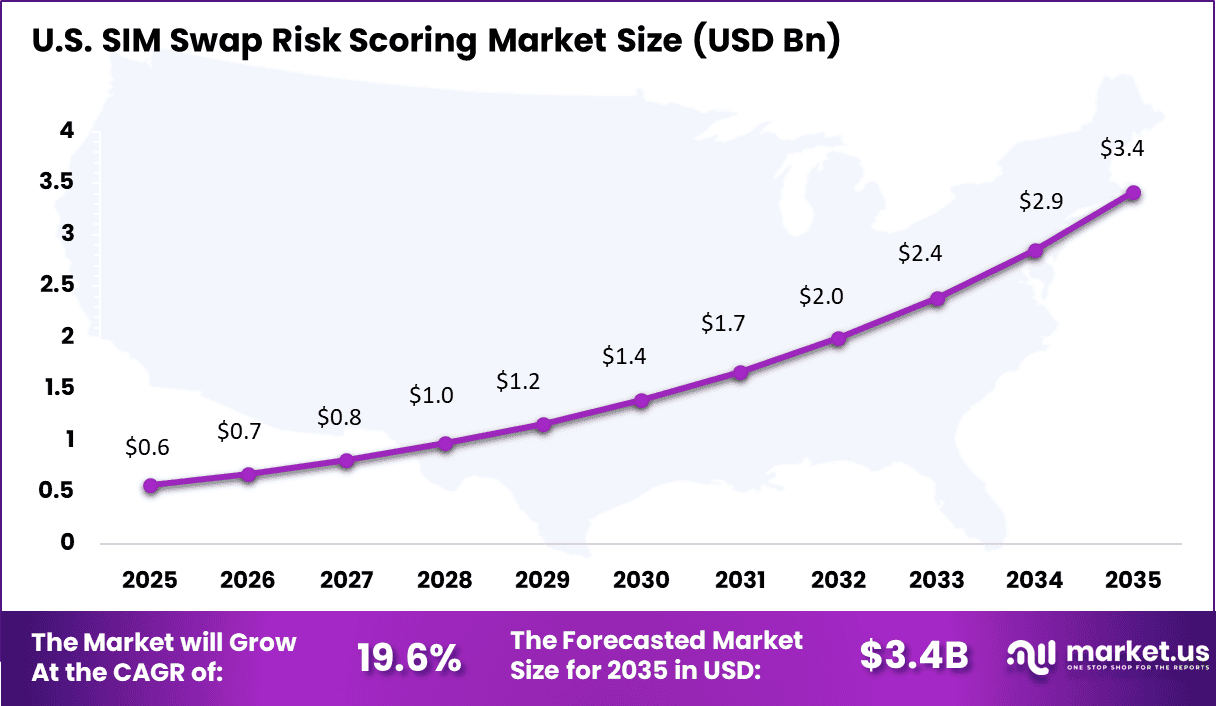
- Regionally, North America accounts for 39.4% global share, with the U.S. market valued at USD 0.57 billion and a CAGR of 19.6%, driven by FCC SIM protection rules and carrier liability shifts.
By Component Analysis
Software accounted for 74.4% of the SIM Swap Risk Scoring Market. This segment leads because organizations rely on advanced platforms to analyze user behavior, detect suspicious SIM changes, and assess risk levels in real time. Software solutions help automate fraud detection processes and improve decision-making across digital transaction systems.
The segment is also supported by the growing need for continuous monitoring and analytics-driven security. Companies prefer software tools that can integrate with existing systems and provide scalable risk scoring capabilities, which strengthens adoption across financial and telecom environments.
By Application Analysis
Fraud detection represented 38.9% of the market. This segment dominates because SIM swap attacks are primarily used to bypass authentication systems and gain unauthorized access to sensitive accounts. Risk scoring tools help identify unusual activity patterns and prevent financial losses.
The segment continues to grow as digital transactions and mobile-based services expand. Organizations increasingly focus on strengthening fraud prevention strategies, and SIM swap detection plays a critical role in protecting user accounts and maintaining trust in digital platforms.
By Deployment Mode Analysis
On-premises deployment held 64% of the market. Many organizations prefer this model because it allows them to maintain direct control over sensitive customer data and internal security processes. Keeping systems within their own infrastructure supports stronger compliance and data protection measures.
The segment is also driven by the need for secure and reliable processing environments. Financial institutions and telecom operators often choose on-premises deployment to manage risk scoring systems with tighter oversight and reduced external exposure.
By Organization Size Analysis
Large enterprises accounted for 70.2% of the market. This segment leads because large organizations handle high volumes of customer data and transactions, making them more vulnerable to SIM swap-related risks. They require advanced systems to monitor activity and manage security at scale.
The segment is supported by higher investment capacity and stronger focus on risk management. Large enterprises prioritize comprehensive fraud detection systems to protect their operations, customer data, and financial assets, which drives demand for risk scoring solutions.
By End User Analysis
BFSI captured 39.3% of the market. This segment dominates because banks and financial institutions are primary targets for SIM swap attacks that aim to access accounts and transfer funds. Risk scoring tools help these organizations detect suspicious activity and prevent unauthorized transactions.
The segment is also driven by strict regulatory requirements and the need to maintain customer trust. BFSI organizations invest heavily in advanced security systems to ensure safe digital banking experiences, which supports strong adoption of SIM swap risk scoring solutions.
Key Market Segments
By Component
- Software
- Services
By Application
- Fraud Detection
- Identity Verification
- Compliance Management
- Others
By Deployment Mode
- On-Premises
- Cloud
By Organization Size
- Small and Medium Enterprises
- Large Enterprises
By End-User
- BFSI
- Telecom
- E-commerce
- Government
- Others
Regional Analysis
North America accounted for 39.4% of the SIM Swap Risk Scoring Market, reflecting strong demand for fraud prevention solutions across telecom operators, banks, and digital service providers. Organizations across the region increasingly adopt risk scoring systems to detect suspicious SIM swap activities that may lead to account takeovers and financial fraud.
The rise in mobile-based transactions and digital identity verification has increased exposure to SIM-related threats, encouraging enterprises to implement real-time monitoring and scoring tools that assess risk before granting access.
The U.S. generated about USD 0.57 Bn within the regional market and is projected to expand at a CAGR of 19.6%. Financial institutions, fintech platforms, and telecom companies across the country continue to strengthen fraud detection frameworks to protect users from identity theft and unauthorized access.
SIM swap risk scoring solutions help analyze user behavior, device changes, and network activity to flag high-risk events. As digital banking and mobile authentication expand, demand for advanced risk assessment tools continues to grow rapidly across the US market.
Key Regions and Countries
- North America
- US
- Canada
- Europe
- Germany
- France
- The UK
- Spain
- Italy
- Russia
- Netherlands
- Rest of Europe
- Asia Pacific
- China
- Japan
- South Korea
- India
- Australia
- Singapore
- Thailand
- Vietnam
- Rest of APAC
- Latin America
- Brazil
- Mexico
- Rest of Latin America
- Middle East & Africa
- South Africa
- Saudi Arabia
- UAE
- Rest of MEA
Drivers Impact Analysis
| Key Driver | Impact on CAGR Forecast (~%) | Geographic Relevance | Impact Timeline | Strategic Effect |
|---|---|---|---|---|
| Rising incidents of SIM swap fraud and identity theft | +4.2% | North America, Europe, Asia Pacific | Short to Mid Term (2025–2031) | Increases demand for fraud detection solutions |
| Growth of digital banking and mobile financial services | +3.9% | US, Europe, India, Southeast Asia | Mid Term (2026–2032) | Expands need for telecom risk monitoring |
| Increasing reliance on mobile-based authentication systems | +3.6% | Global | Short to Mid Term (2025–2030) | Strengthens demand for risk scoring tools |
| Regulatory focus on fraud prevention and data protection | +3.2% | North America, Europe | Mid to Long Term (2026–2035) | Supports adoption in regulated sectors |
| Expansion of fintech and digital identity ecosystems | +2.8% | Global | Mid to Long Term (2026–2035) | Drives integration of risk scoring platforms |
Restraints Impact Analysis
| Key Restraint | Impact on CAGR Forecast (~%) | Geographic Relevance | Impact Timeline | Strategic Effect |
|---|---|---|---|---|
| Limited access to telecom data and integration barriers | -2.6% | Global | Mid Term (2026–2032) | Reduces model effectiveness |
| False positives impacting customer experience | -2.3% | Global | Short to Mid Term (2025–2031) | Lowers trust in automated systems |
| Data privacy and regulatory constraints | -2.1% | Europe, North America | Mid to Long Term (2026–2035) | Limits data sharing capabilities |
| High implementation cost for advanced fraud systems | -1.9% | Global | Mid Term (2026–2032) | Slows adoption among smaller firms |
| Lack of awareness in emerging markets | -1.7% | Asia Pacific, Latin America | Short to Mid Term (2025–2030) | Reduces early-stage adoption |
Key Challenges
- Data availability is a major challenge because telecom and fraud teams often work with incomplete, delayed, or scattered user activity data, which reduces scoring accuracy.
- False positives remain a serious issue because genuine users may be flagged as risky after normal SIM changes, which can interrupt service and create customer dissatisfaction.
- Integration with telecom systems, banking platforms, and fraud monitoring tools can be difficult because many organizations still use old infrastructure and disconnected data sources.
- Privacy and regulatory compliance are important challenges because SIM swap risk scoring tools handle sensitive user identity, device, and communication-related information.
- Fraud patterns keep changing quickly, which makes it difficult for risk scoring models to stay accurate against new attack methods and organized fraud attempts.
Investor Type Impact Analysis
| Investor Type | Growth Sensitivity | Risk Exposure | Geographic Focus | Investment Outlook |
|---|---|---|---|---|
| Venture Capital Firms | Very High | High | US, Europe, Israel | Strong fintech security innovation |
| Private Equity Firms | High | Medium | North America, Europe | Expansion in fraud prevention platforms |
| Strategic Technology Investors | Very High | Medium | US, Japan, South Korea | Strengthens digital identity ecosystem |
| Corporate Venture Arms | High | Medium | Global | Partnerships with telecom and fintech firms |
| Government and Cybersecurity Funds | Medium | Low to Medium | North America, Europe, Asia Pacific | Supports national fraud prevention initiatives |
Technology Enablement Analysis
| Technology Enabler | Impact on CAGR Forecast (~%) | Geographic Relevance | Impact Timeline | Implementation Significance |
|---|---|---|---|---|
| AI-based fraud detection and behavioral analytics | +4.3% | Global | Short to Mid Term (2025–2031) | Improves fraud detection accuracy |
| Real-time telecom data analysis and monitoring | +3.9% | North America, Europe, Asia Pacific | Mid Term (2026–2032) | Enables instant risk scoring |
| Integration with digital identity verification systems | +3.5% | Global | Mid to Long Term (2026–2035) | Strengthens identity authentication |
| Cloud-based fraud detection platforms | +3.2% | Global | Short to Mid Term (2025–2030) | Supports scalable deployment |
| API based connectivity with telecom operators | +2.9% | Global | Mid Term (2026–2032) | Improves system interoperability |
Emerging Trends
A key trend in the SIM Swap Risk Scoring market is the increasing use of real-time behavioral analysis to detect suspicious account activity. Systems now evaluate patterns such as sudden SIM changes, unusual login behavior, and location shifts to assess risk before transactions are completed. These tools are becoming more integrated into authentication processes, allowing organizations to identify potential fraud attempts early. This trend reflects a move toward proactive security, where risks are identified and managed instantly rather than after a breach has occurred.
Growth Factors
The growing reliance on mobile-based services is a major factor supporting the expansion of SIM swap risk scoring solutions. Many financial transactions, account verifications, and digital services depend on mobile numbers for authentication, which makes them vulnerable to SIM-related fraud. Organizations are adopting risk scoring tools to strengthen security and protect user accounts from unauthorized access. Increasing awareness about identity theft and financial fraud also encourages businesses to implement systems that can evaluate risk levels and prevent fraudulent activities in real time.
Competitive Analysis
The competitive landscape of the SIM Swap Risk Scoring market includes credit bureaus, identity verification firms, telecom data specialists, and fraud prevention providers. Experian, TransUnion, Equifax, Telesign, Twilio, Infobip, BICS, Prove, Syniverse, Mobileum, Neustar, IDology, LexisNexis Risk Solutions, Alloy, Trulioo, GBG, FICO, and Kount compete by offering tools that help businesses detect suspicious mobile number changes and reduce account takeover risks.
Competition in this market is shaped by data accuracy, speed of risk assessment, fraud detection strength, and the ability to integrate with digital onboarding and authentication systems. Some players focus more on telecom intelligence, while others bring strength in identity verification, credit data, and fraud analytics. As digital transactions continue to rise, vendors are improving real-time scoring, broader data coverage, and smarter risk models to strengthen their market position.
Top Key Players in the Market
- Experian
- TransUnion
- Equifax
- Telesign
- Twilio
- Infobip
- BICS
- Prove (formerly Payfone)
- Syniverse
- TeleSign
- Mobileum
- Neustar (TransUnion)
- Authy
- IDology
- LexisNexis Risk Solutions
- Alloy
- Trulioo
- GBG (GB Group)
- FICO
- Kount (an Equifax company)
- Others
Future Outlook
The future outlook for the SIM Swap Risk Scoring Market appears strong as banks, telecom operators, and digital platforms place greater focus on detecting SIM changes and related identity risks before approving logins, payments, or account recovery actions. Recent guidance from NIST recommends checking for signals such as SIM change or device swap, while telecom initiatives and anti-fraud network APIs are expanding to help businesses assess this risk in real time. As digital fraud becomes more advanced and compliance expectations increase, demand for SIM swap risk scoring tools is expected to grow steadily in the coming years.
Recent Developments
- In January 2026, Experian launched ConnectID Identity Platform, blocking 85% of SIM swap attempts preemptively through cross-channel intelligence spanning email/SMS/voice patterns, integrated natively with 200+ core banking systems worldwide. Automated policy engines dynamically adjust thresholds during peak fraud hours, maintaining <1% false positives across high-volume deployments.
- In February 2026, TransUnion Neustar lineage enhanced port-out monitoring with 1-second latency alerts serving 2K+ enterprise clients, featuring machine learning models trained on 5 years of swap data achieving 94% true positive rates. Mobile SDKs embed scoring natively into banking apps, blocking attempts before SIM transfer completion.
Report Scope
| Report Features | Description |
|---|---|
| Market Value (2025) | USD 1.7 Billion |
| Forecast Revenue (2035) | USD 13.1 Billion |
| CAGR(2025-2035) | 22.5% |
| Base Year for Estimation | 2024 |
| Historic Period | 2020-2024 |
| Forecast Period | 2025-2035 |
| Report Coverage | Revenue forecast, AI impact on Market trends, Share Insights, Company ranking, competitive landscape, Recent Developments, Market Dynamics and Emerging Trends |
| Segments Covered | By Component (Software, Services), By Application (Fraud Detection, Identity Verification, Compliance Management, Others), By Deployment Mode (On-Premises, Cloud), By Organization Size (Small and Medium Enterprises, Large Enterprises), By End-User (BFSI, Telecom, E-commerce, Government, Others) |
| Regional Analysis | North America – US, Canada; Europe – Germany, France, The UK, Spain, Italy, Russia, Netherlands, Rest of Europe; Asia Pacific – China, Japan, South Korea, India, New Zealand, Singapore, Thailand, Vietnam, Rest of Latin America; Latin America – Brazil, Mexico, Rest of Latin America; Middle East & Africa – South Africa, Saudi Arabia, UAE, Rest of MEA |
| Competitive Landscape | Experian, TransUnion, Equifax, Telesign, Twilio, Infobip, BICS, Prove (formerly Payfone), Syniverse, TeleSign, Mobileum, Neustar (TransUnion), Authy, IDology, LexisNexis Risk Solutions, Alloy, Trulioo, GBG (GB Group), FICO, Kount (an Equifax company), Others |
| Customization Scope | Customization for segments, region/country-level will be provided. Moreover, additional customization can be done based on the requirements. |
| Purchase Options | We have three licenses to opt for: Single User License, Multi-User License (Up to 5 Users), Corporate Use License (Unlimited Users and Printable PDF) |