


Report Overview
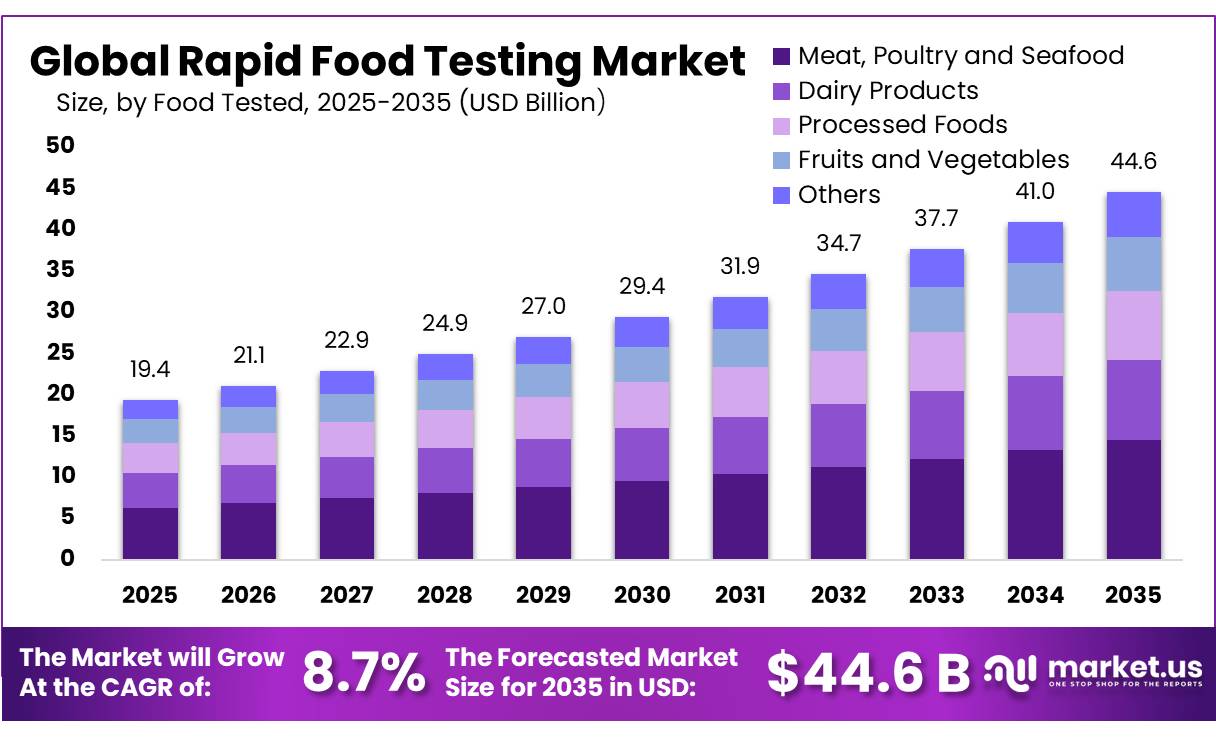
The Global Rapid Food Testing Market size is expected to be worth around USD 44.6 Billion by 2035, from USD 19.4 Billion in 2025, growing at a CAGR of 8.7% during the forecast period from 2026 to 2035. In 2025, North America held a dominant market position, capturing more than a 47.50% share, holding USD 9.2 Billion revenue.
Rapid food testing has become an important part of modern food safety systems as manufacturers, processors, retailers, laboratories, and regulators seek faster identification of pathogens, allergens, toxins, chemical residues, and other contaminants. Technologies such as PCR, immunoassays, biosensors, lateral-flow tests, mass spectrometry, and automated molecular platforms are increasingly used to shorten testing cycles and support quicker product-release decisions.
- The World Health Organization (WHO) reported in June 2026 that contaminated food was associated with an estimated 866 million illnesses and 1.52 million deaths globally in 2021. Unsafe food was also linked with around US$310 billion in annual productivity losses and medical expenses.
Key Takeaways
- Rapid Food Testing Market size is expected to be worth around USD 44.6 Billion by 2035, from USD 19.4 Billion in 2025, growing at a CAGR of 8.7%.
- Athogens held a dominant market position, capturing more than a 42.30% share.
- Meat, Poultry and Seafood held a dominant market position, capturing more than a 32.50% share.
- PCR-Based Testing held a dominant market position, capturing more than a 38.00% share.
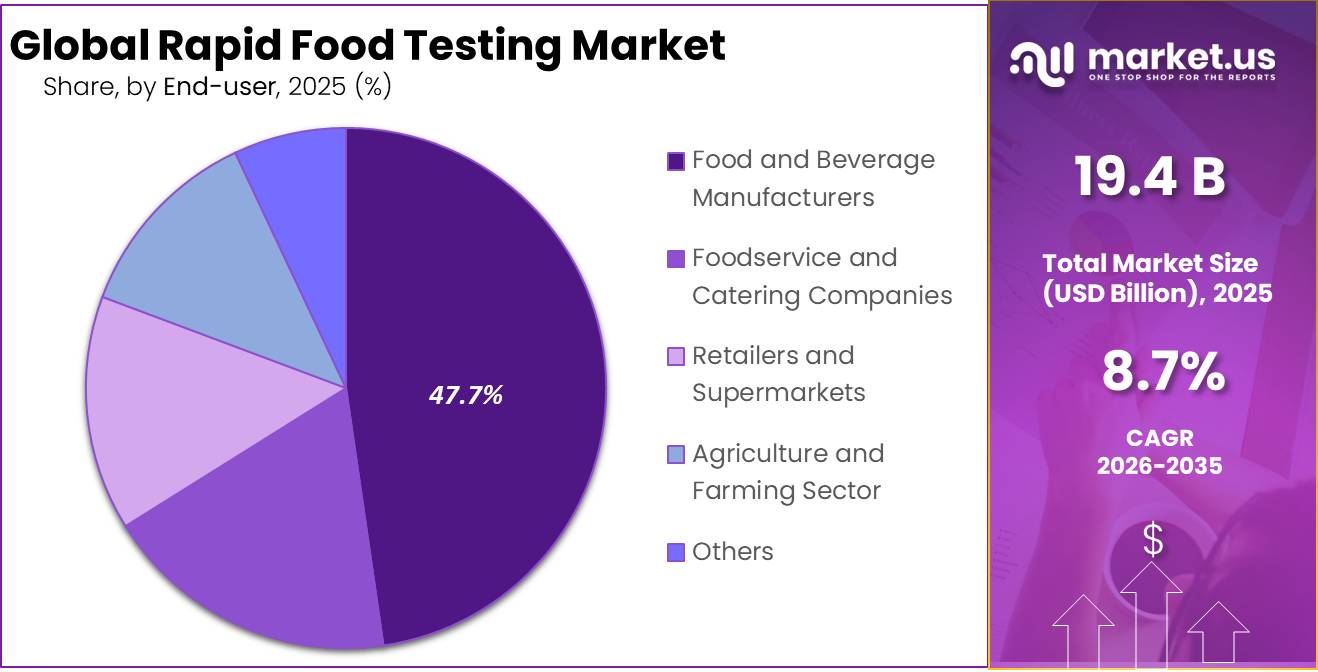
- Food and Beverage Manufacturers held a dominant market position, capturing more than a 47.00% share.
- North America held a dominant market position in the Rapid Food Testing Market, capturing more than a 47.50% share and reaching USD 9.2 billion.
Food companies need rapid results at raw-material intake, processing lines, sanitation checkpoints, finished-product release, and distribution facilities. This shift is particularly relevant for meat, poultry, seafood, dairy products, ready-to-eat foods, fruits, vegetables, and beverages.
- In the United States, the Centers for Disease Control and Prevention (CDC) estimates that foodborne diseases cause about 48 million illnesses, 128,000 hospitalizations, and 3,000 deaths each year. These figures continue to support investment in technologies capable of detecting contamination earlier in the production chain.
International trade and increasingly complex food supply chains are also strengthening demand. WHO notes that unsafe food can contain bacteria, viruses, parasites, chemicals, and other hazards and can cause more than 200 diseases. Longer and more interconnected supply chains can make contamination events harder to isolate, increasing the operational value of faster screening and traceability.
By Target Tested Analysis
Pathogens dominate Rapid Food Testing with a 42.30% share, supported by the continuing need for faster contamination detection
In 2025, “Pathogens” held a dominant market position, capturing more than a 42.30% share. The segment remains important because food processors require rapid identification of Salmonella, Listeria, E. coli, Campylobacter, and other microorganisms before contaminated products reach consumers. Rapid pathogen testing is increasingly used across processing plants and laboratories because molecular and culture-independent techniques can support quicker contamination decisions.
- According to the U.S. Centers for Disease Control and Prevention (CDC), data published in 2025 estimate that foodborne diseases cause around 48 million illnesses, 128,000 hospitalizations, and 3,000 deaths annually in the United States. These public-health risks continue to strengthen the need for sensitive and faster pathogen-screening systems across food manufacturing and supply chains.
Genetically Modified Organisms (GMOs) represent an important target-tested segment within rapid food testing as genetically engineered agricultural commodities continue to move through large food and ingredient supply chains. Testing methods based on molecular technologies help laboratories and food companies identify genetic material associated with modified crops and support ingredient verification, traceability, labeling compliance, and quality-control procedures.
Government agricultural data provide strong numerical support for this testing environment. According to the U.S. Department of Agriculture’s National Agricultural Statistics Service, U.S. farmers planted 95.2 million acres of corn in 2025, with 94% of planted corn acreage using biotech varieties. Soybean planting reached 83.4 million acres, while 96% of soybean acreage used herbicide-resistant seed varieties. For upland cotton, 97% of planted acreage used biotech varieties in 2025.
By Food Tested Analysis
Meat, Poultry and Seafood dominates Rapid Food Testing with a 32.50% share as high-risk proteins require continuous safety verification
In 2025, “Meat, Poultry and Seafood” held a dominant market position, capturing more than a 32.50% share. The segment maintained a strong position because animal-based foods require regular screening for Salmonella, Listeria monocytogenes, E. coli, chemical residues, allergens, and other potential hazards throughout processing and distribution. Rapid testing allows processors to identify contamination earlier, support product-release decisions, and strengthen sanitation controls.
Government testing activity highlights the importance of this segment. In March 2025, the U.S. Department of Agriculture’s Food Safety and Inspection Service reported chemical-residue sampling under the National Residue Program for meat, poultry, and egg products and continued Salmonella verification testing covering raw poultry carcasses, raw chicken parts, and comminuted poultry products. In January 2025, FSIS also stated that large-volume poultry establishments may undergo Salmonella verification sampling four or five times per month.
Dairy Products represent an important food-tested segment within rapid food testing, supported by the need to maintain microbiological safety and product quality across milk, cheese, yogurt, cream, butter, and other processed dairy foods. Dairy processors use testing throughout raw-milk collection, processing, packaging, and finished-product verification to detect pathogens, residues, allergens, and quality-related microorganisms.
By Technology Analysis
PCR-Based Testing dominates the Rapid Food Testing Market with a 38.00% share, supported by sensitive DNA-based pathogen detection
In 2025, “PCR-Based Testing” held a dominant market position, capturing more than a 38.00% share. PCR-based testing remained widely used in rapid food testing because it can identify specific genetic material from foodborne microorganisms with high sensitivity and supports faster confirmation than many conventional workflows. Its use is particularly relevant for Salmonella, Listeria, E. coli, Campylobacter, and other microorganisms monitored across food-processing environments.
- In April 2025, the U.S. Department of Agriculture’s Food Safety and Inspection Service updated its guidance covering independently validated foodborne pathogen test kits for Salmonella, Campylobacter, Listeria species, Listeria monocytogenes, E. coli O157, and non-O157 STEC. This broad pathogen-testing requirement supports continued adoption of validated molecular technologies within food laboratories and processing facilities.
Government testing in 2026 further demonstrates the practical role of PCR. In February 2026, the U.S. Food and Drug Administration collected 48 powdered-milk samples from four suppliers as part of a surveillance assignment. PCR testing produced negative results for 46 samples, while the remaining two PCR-positive samples were taken forward for additional whole-genome sequencing analysis.
By End User Analysis
Food and Beverage Manufacturers dominate Rapid Food Testing with a 47.00% share, driven by routine safety checks across high-volume production
In 2025, “Food and Beverage Manufacturers” held a dominant market position, capturing more than a 47.00% share. Food and beverage manufacturers remain the major users of rapid testing because safety checks are required across raw materials, production environments, processing lines, and finished products. Rapid methods help manufacturers detect pathogens, allergens, chemical residues, and other contaminants earlier while reducing the time needed to hold finished batches before release.
- The large scale of the food supply chain supports continued testing demand. According to the U.S. Department of Agriculture Economic Research Service, inflation-adjusted U.S. food sales reached US$2.51 trillion in 2025. Food-at-home expenditure reached US$1.10 trillion during the year, while grocery stores generated US$617 billion in inflation-adjusted food sales. This high level of food movement through manufacturing and retail channels creates a strong need for dependable testing and quality-control systems.
Foodservice and Catering Companies represent an important end-user segment for rapid food testing because meals are prepared and served across restaurants, cafeterias, catering operations, hotels, institutions, and other commercial kitchens. These businesses need efficient testing and monitoring practices to control microbial contamination, verify sanitation, manage allergens, and maintain food safety across ingredients and prepared foods.
Key Market Segments
By Target Tested
- Pathogens
- Genetically Modified Organisms (GMOs)
- Pesticides
- Mycotoxins
- Antibiotic and Veterinary Drug Residues
- Others
By Food Tested
- Meat, Poultry and Seafood
- Dairy Products
- Processed Foods
- Fruits and Vegetables
- Others
By Technology
- Convenience-Based Testing
- PCR-Based Testing
- Immunoassay-Based Testing
- Chromatography and Spectrometry
- Others
By End User
- Food and Beverage Manufacturers
- Foodservice and Catering Companies
- Retailers and Supermarkets
- Agriculture and Farming Sector
- Others
Driver Analysis
FSMA Agricultural-Water Compliance
Compliance started on 7 April 2025 for large farms, 6 April 2026 for small farms, and is scheduled for 5 April 2027 for very small farms, creating a rolling procurement cycle for rapid microbial screening, portable sampling kits, laboratory confirmation, digital assessment records, irrigation-water monitoring, and corrective-action verification across farms, packhouses, fresh-cut operations, and produce exporters.
The commercial shift is from periodic compliance sampling to risk-triggered testing: a 500-acre leafy-green, berry, tomato, or herb operation may conduct 12–52 water and environmental assessments annually across wells, canals, storage tanks, distribution lines, harvest equipment, and wash water, with an additional 5–20 tests after flooding, runoff, equipment failure, wildlife intrusion, sanitation changes, or altered upstream land use.
A rapid test priced at USD 15–75 per sample, combined with USD 500–3,000 of reader, incubation, sample-preparation, software, and training expenditure per site, can remain economically viable when it prevents one rejected harvest lot worth USD 10,000–250,000 or avoids a multi-state recall.
The driver also propagates into Mexico, Central America, Canada, Peru, Chile, and other produce-export regions whose suppliers must meet U.S. buyer expectations. FSMA water compliance is estimated to add +2.0 percentage points to rapid-food-testing CAGR through 2026–2028.
Drivers Impact Analysis
| Driver | (~) % Impact on CAGR Forecast | Geographic Relevance | Impact Timeline |
|---|---|---|---|
| FSMA agricultural-water compliance | +2.0 pp | U.S., Mexico, Canada, produce exporters | Short term (≤ 2 years) |
| Faster outbreak source attribution | +1.7 pp | North America, EU, Japan, Korea, Australia | Medium term (2–4 years) |
| EU microbiological batch controls | +1.5 pp | EU, UK, Türkiye, export processors | Short term (≤ 2 years) |
| Fresh-food cold-chain expansion | +1.3 pp | APAC, MENA, LATAM, Africa, North America | Medium term (2–4 years) |
| Allergen-label verification | +1.1 pp | North America, EU, developed APAC | Medium term (2–4 years) |
| In-plant automation demand | +0.9 pp | North America, EU, China, Japan, Korea | Long term (≥ 4 years) |
Restraint Analysis
Validation and Confirmation Burden
Consequently, a claimed 4–24-hour molecular workflow may still require 16–48 hours of enrichment plus 24–72 hours of cultural confirmation, meaning that a facility cannot eliminate incubators, biosafety procedures, conventional media, or trained microbiologists; a 500-sample-per-week laboratory may retain 2–5 full-time confirmation staff and USD 50,000–250,000 annually in culture, consumables, and external-reference testing. EU Regulation 2073/2005 permits alternative rapid methods only when they provide equivalent results to the applicable reference method; proprietary methods must be validated and third-party certified in line with EN/ISO 16140 or similar international protocols, while non-validated alternatives require competent-authority authorization.
For an assay developer, generating matrix-specific sensitivity, specificity, inclusivity, exclusivity, robustness, lot-to-lot, enrichment, and reproducibility evidence across 10–30 food matrices can require USD 0.5–3.0 million and 12–36 months, delaying launch and concentrating demand in methods with established validation portfolios. Food plants face an unfavorable unit-cost equation when a USD 20–80 rapid test still triggers USD 50–300 of confirmation work for each presumptive positive, reducing the expected savings from faster release.
Vendors need multiplex designs, lower-inhibition extraction chemistries, digital evidence systems, pre-validated matrix libraries, laboratory-information-system links, and risk-tiered confirmatory protocols, but the scientific and regulatory burden remains a structural brake. Validation and confirmation requirements are estimated to deduct -1.9 percentage points from rapid food testing CAGR in North America, Europe, Japan, South Korea, Australia, and export laboratories over two to four years.
Restraint Impact Analysis
| Restraint | (~) % Impact on CAGR Forecast | Geographic Relevance | Impact Timeline |
|---|---|---|---|
| Validation and confirmation burden | -1.9 pp | North America, EU, Japan, export labs | Medium term (2–4 years) |
| High-throughput automation capex | -1.5 pp | North America, EU, China, Japan, Korea | Short term (≤ 2 years) |
| False-positive hold costs | -1.3 pp | Meat, dairy, produce, seafood, RTE plants | Medium term (2–4 years) |
| Fragmented method acceptance | -1.1 pp | Cross-border food trade, EU, U.S., APAC | Long term (≥ 4 years) |
| Skilled laboratory labor gap | -0.9 pp | North America, EU, developed APAC | Long term (≥ 4 years) |
| Consumable supply concentration | -0.8 pp | Global laboratories, emerging markets | Short term (≤ 2 years) |
Opportunity Analysis
Testing-as-a-Service
Testing-as-a-service is an untapped monetization model rather than a current testing driver because food businesses already buy instruments, kits, or outsourced laboratory work, while the white space is a guaranteed operating outcome that bundles sampling plans, instrument placement, reagents, calibration, quality controls, analyst training, confirmatory routing, digital records, and turnaround-time service levels into one per-sample or per-site contract.
A processor running 20,000–100,000 tests annually can avoid USD 150,000–1.0 million of initial laboratory automation and instead pay an analyst-modelled USD 25–90 per microbiological result, USD 8–35 per ATP or allergen screen, or USD 3,000–25,000 per facility monthly; at 50 sites averaging USD 120,000 of annual contract value, a provider creates USD 6 million of recurring revenue, while centralized procurement and remote support could lower consumable and field-service cost by 10–20% and lift gross margin 8–15 percentage points relative to bespoke laboratory projects.
The model can reduce customer onboarding from 6–12 months to 8–16 weeks through standardized workflows and can raise lifetime value 2–4 times over one-off instrument placement, particularly when minimum-volume commitments exceed 60–70% of installed capacity. Commercial differentiation rests on assuming workflow risk—uptime above 98%, presumptive-positive escalation within 2–6 hours, and validated reporting—not merely shipping kits; ISO 16140 provides common protocols for validating alternative food-chain microbiology methods, including comparison and interlaboratory studies, giving providers a recognized foundation for scalable method portfolios.
This opportunity is distinct from routine compliance because the incremental growth comes from converting capital purchases and fragmented services into multi-year recurring contracts, with the best near-term fit in North America, Europe, GCC, Japan, South Korea, Australia, Singapore, and multinational food plants; successful execution could add approximately +2.0 percentage points to CAGR within two years.
Opportunity Impact Analysis
| Opportunity | (~) % Potential CAGR Upside | Geographic Relevance | Execution Window |
|---|---|---|---|
| Testing-as-a-service | +2.0 pp | North America, EU, GCC, developed APAC | Short term (≤ 2 years) |
| Predictive contamination intelligence | +1.7 pp | U.S., EU, Japan, Korea, Australia | Medium term (2–4 years) |
| Rapid-to-WGS workflows | +1.5 pp | North America, EU, export hubs | Medium term (2–4 years) |
| Emerging-market micro-labs | +1.3 pp | India, ASEAN, Africa, LATAM | Medium term (2–4 years) |
| Accredited laboratory networks | +1.1 pp | U.S., Mexico, LATAM, Asian exporters | Short term (≤ 2 years) |
| Multiplex platform consolidation | +0.9 pp | Global processors, testing labs, retailers | Long term (≥ 4 years) |
Challenges Analysis
Matrix-Dependent Assay Performance
FDA notes that rapid food-pathogen methods often lack sufficient sensitivity and specificity for direct testing and therefore still require culture enrichment, which dilutes inhibitors, repairs stressed cells, and helps distinguish viable from non-viable organisms. ISO 16140-3 consequently requires user laboratories to verify validated reference or alternative methods in their own food applications, including implementation and food-item verification rather than relying only on vendor claims.
An analyst model for a manufacturer serving 20–40 matrix categories assumes 3–8 extraction or enrichment protocols, 20–60 matrix-verification studies annually, and USD 10,000–50,000 of internal labour, controls, reference materials, and comparison testing per difficult matrix, creating USD 0.5–2.0 million of recurring technical-support cost; at the plant level, a 2–6% invalid or repeat rate across 50,000 annual assays consumes 1,000–3,000 additional kits and USD 40,000–300,000 before inventory holds. Performance variation also undermines multiplex economics because one compromised target can force repeat testing of an entire panel, while matrix-specific workflows increase SKU count by 15–40%, training hours by 20–50%, and distributor inventory.
Companies must invest in inhibitor-resistant chemistry, internal amplification controls, standardized homogenization, matrix libraries, AI-assisted result interpretation, and field-application scientists, but continuous product reformulation and novel ingredients prevent complete normalization. This systemic issue is estimated to impose a -1.5-percentage-point CAGR friction across global processors, contract laboratories, ingredient suppliers, and export-testing networks over four or more years.
Challenges Impact Analysis
| Challenge | (~) % CAGR Friction Drag | Geographic Relevance | Mitigation Horizon |
|---|---|---|---|
| Matrix-dependent assay performance | -1.5 pp | Global processors, export labs | Long term (≥ 4 years) |
| Enrichment turnaround bottleneck | -1.3 pp | Meat, dairy, produce, RTE hubs | Medium term (2–4 years) |
| Method harmonization complexity | -1.2 pp | EU, North America, APAC exporters | Long term (≥ 4 years) |
| Laboratory skills scarcity | -1.0 pp | North America, EU, developed APAC | Long term (≥ 4 years) |
| Genomic data integration | -0.9 pp | U.S., EU, Japan, Korea, Australia | Medium term (2–4 years) |
| Distributed quality consistency | -0.8 pp | ASEAN, Africa, LATAM, remote regions | Medium term (2–4 years) |
Geopolitical Impact Analysis
Ongoing Wars Raise Food-Supply Risks and Strengthen the Need for Rapid Food Testing
The ongoing Russia–Ukraine war and wider conflict-related disruption across major shipping routes are creating new pressures for the Rapid Food Testing market in 2026. Damage to agricultural infrastructure, interrupted Black Sea exports, longer transport routes, and constrained storage capacity can increase the time food and agricultural commodities spend in storage and transit. This makes faster checks for pathogens, toxins, chemical residues, and product quality more important for processors, importers, and food laboratories.
The impact is visible in Ukraine’s agricultural system. In August 2026, the UN Food and Agriculture Organization reported that Ukraine’s grain and oilseed production for the 2026/27 season was forecast at 84.18 million tonnes, while effective storage capacity stood at only 58.97 million tonnes because of war-related damage and losses. The resulting storage shortage could reach 11 million tonnes by November 2026.
Trade disruption adds another layer of pressure. UNCTAD reported in September 2026 that more than 80% of world merchandise trade by volume moves by sea, meaning conflict around major maritime routes can quickly affect food supply chains. As supply routes become longer and less predictable, rapid testing can help companies verify food safety faster, manage imported batches, and reduce contamination risks before products enter processing or distribution.
Regional Insights
North America Leads Rapid Food Testing with 47.50% Share and USD 9.2 Billion Market Value
In 2025, North America held a dominant market position in the Rapid Food Testing Market, capturing more than a 47.50% share and reaching USD 9.2 billion. The region benefits from strict food-safety rules, established laboratory infrastructure, large food-processing operations, and increasing use of PCR and other rapid detection methods. Foodborne illness remains a major reason for continued testing. According to the U.S. Centers for Disease Control and Prevention, around 48 million people experience foodborne illness annually, while approximately 128,000 are hospitalized and 3,000 die.
North America’s position is also supported by its complex imported-food supply chain. The U.S. Food and Drug Administration states that imported products account for approximately 15% of the country’s overall food supply. Foreign suppliers provide around 32% of fresh vegetables, 55% of fresh fruit, and 94% of seafood consumed in the United States. Food comes from more than 200 countries or territories and roughly 125,000 food facilities and farms, creating a broad requirement for inspection, sampling, verification, and rapid contamination testing.
Europe is expected to remain an important growth region for rapid food testing as authorities strengthen surveillance of pathogens, pesticide residues, contaminants, allergens, and imported food products. The European Commission’s Rapid Alert System for Food and Feed supports information exchange when food or feed presents risks to public health, allowing authorities to coordinate actions across borders. The European Commission also published its 2025 Health and Food Safety Annual Activity Report in June 2026, highlighting continued regulatory activity covering food and feed safety. 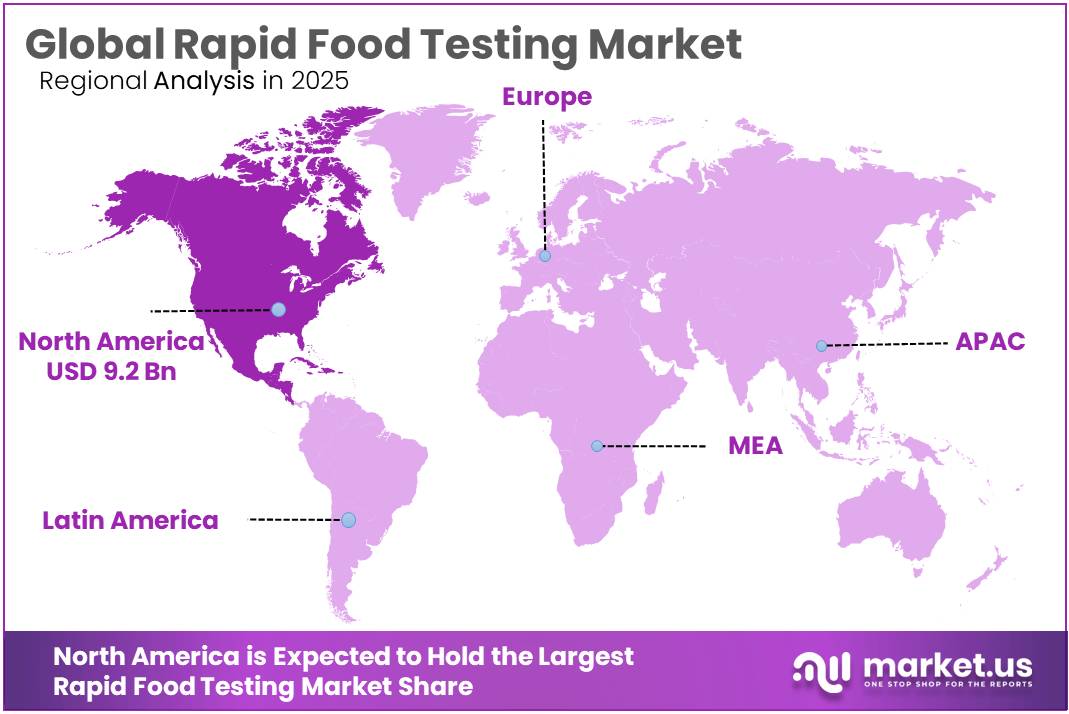
Key Regions and Countries Insights
- North America
- US
- Canada
- Europe
- Germany
- France
- The UK
- Spain
- Italy
- Rest of Europe
- Asia Pacific
- China
- Japan
- South Korea
- India
- Australia
- Rest of APAC
- Latin America
- Brazil
- Mexico
- Rest of Latin America
- Middle East & Africa
- GCC
- South Africa
- Rest of MEA
Key Players Analysis
Thermo Fisher Scientific maintains a strong position in rapid food testing through PCR systems, molecular assays, microbiology products, sample-preparation solutions, and laboratory instruments used for detecting foodborne pathogens. In 2025, the company generated USD 44.56 billion in total revenue, compared with USD 42.88 billion in 2024, representing 4% growth. Its Laboratory Products and Biopharma Services segment generated USD 23.98 billion in revenue. This large analytical and laboratory technology base supports its ability to serve food-testing laboratories and manufacturers requiring fast and reliable testing workflows.
bioMérieux supports the rapid food testing sector through industrial microbiology technologies used to detect microorganisms and strengthen quality control across food-processing environments. In 2025, company sales reached EUR 4.07 billion, representing 6.2% organic growth. Its Industrial Applications business recorded 9% organic sales growth, while the broader microbiology business increased by 4%. Excluding China, microbiology growth reached 6.3%. These results show continued demand for microbiological detection and quality-control technologies, supporting bioMérieux’s presence across food manufacturers and industrial testing laboratories.
Neogen focuses directly on food and animal safety, offering rapid tests for pathogens, allergens, natural toxins, spoilage organisms, sanitation, pesticide residues, and other contaminants. In fiscal 2025, the company generated USD 894.7 million in total revenue, including USD 638.1 million from its Food Safety business. Bacterial and general sanitation products contributed approximately USD 164.8 million, while indicator testing, culture media, and other Food Safety products generated about USD 325.9 million. Neogen also employed 975 people in sales and marketing, supporting its global commercial reach.
Top Key Players Outlook
- Thermo Fisher Scientific Inc.
- bioMérieux SA
- Neogen Corporation
- 3M Company
- Merck KGaA / MilliporeSigma
- Bio-Rad Laboratories, Inc.
- QIAGEN N.V.
- Hygiena LLC
- Agilent Technologies, Inc.
- PerkinElmer Inc.
- Eurofins Scientific SE
- SGS S.A.
- Mérieux NutriSciences
- Charm Sciences, Inc.
- Romer Labs Diagnostic GmbH
Recent Developments
- 3M reported USD 24.948 billion in 2025 net sales and spent approximately USD 1.2 billion on research and development, equal to 4.7% of net sales, alongside roughly USD 0.9 billion in capital expenditure.
- June 2026, Merck KGaA agreed to acquire Bio-Techne for US$73 per share, representing an enterprise value of approximately US$11.3 billion (€9.9 billion), to expand analytical technologies and integrated Life Science workflows.
- By February 2026, Bio-Rad reported 2025 revenue of US$2.583 billion, including US$1.021 billion from Life Science, and generated US$532 million in operating cash flow. The company operated with more than 7,400 employees in 2026.
Report Scope
| Report Features | Description |
|---|---|
| Market Value (2025) | USD 19.4 Bn |
| Forecast Revenue (2035) | USD 44.6 Bn |
| CAGR (2026-2035) | 8.7% |
| Base Year for Estimation | 2025 |
| Historic Period | 2020-2024 |
| Forecast Period | 2026-2035 |
| Report Coverage | Revenue Forecast, Market Dynamics, Competitive Landscape, Recent Developments |
| Segments Covered | By Target Tested (Pathogens, Genetically Modified Organisms (GMOs), Pesticides, Mycotoxins, Antibiotic and Veterinary Drug Residues, Others), By Food Tested (Meat, Poultry and Seafood, Dairy Products, Processed Foods, Fruits and Vegetables, Others), By Technology (Convenience-Based Testing, PCR-Based Testing, Immunoassay-Based Testing, Chromatography and Spectrometry, Others), By End User (Food and Beverage Manufacturers, Foodservice and Catering Companies, Retailers and Supermarkets, Agriculture and Farming Sector, Others) |
| Regional Analysis | North America – US, Canada; Europe – Germany, France, The UK, Spain, Italy, Rest of Europe; Asia Pacific – China, Japan, South Korea, India, Australia, Singapore, Rest of APAC; Latin America – Brazil, Mexico, Rest of Latin America; Middle East & Africa – GCC, South Africa, Rest of MEA |
| Competitive Landscape | Thermo Fisher Scientific Inc., bioMérieux SA, Neogen Corporation, 3M Company, Merck KGaA / MilliporeSigma, Bio-Rad Laboratories, Inc., QIAGEN N.V., Hygiena LLC, Agilent Technologies, Inc., PerkinElmer Inc., Eurofins Scientific SE, SGS S.A., Mérieux NutriSciences, Charm Sciences, Inc., Romer Labs Diagnostic GmbH |
| Customization Scope | Customization for segments, region/country-level will be provided. Moreover, additional customization can be done based on the requirements. |
| Purchase Options | We have three licenses to opt for: Single User License, Multi-User License (Up to 5 Users), Corporate Use License (Unlimited User and Printable PDF) |





































