


Report Overview
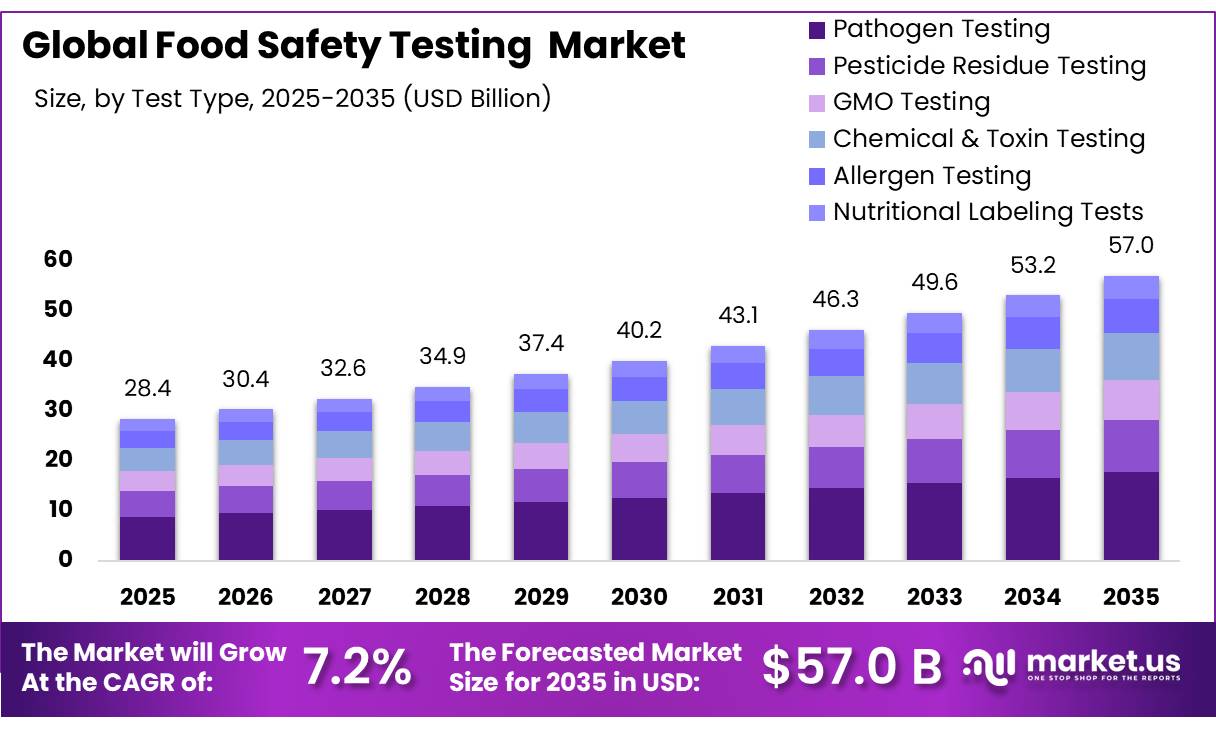
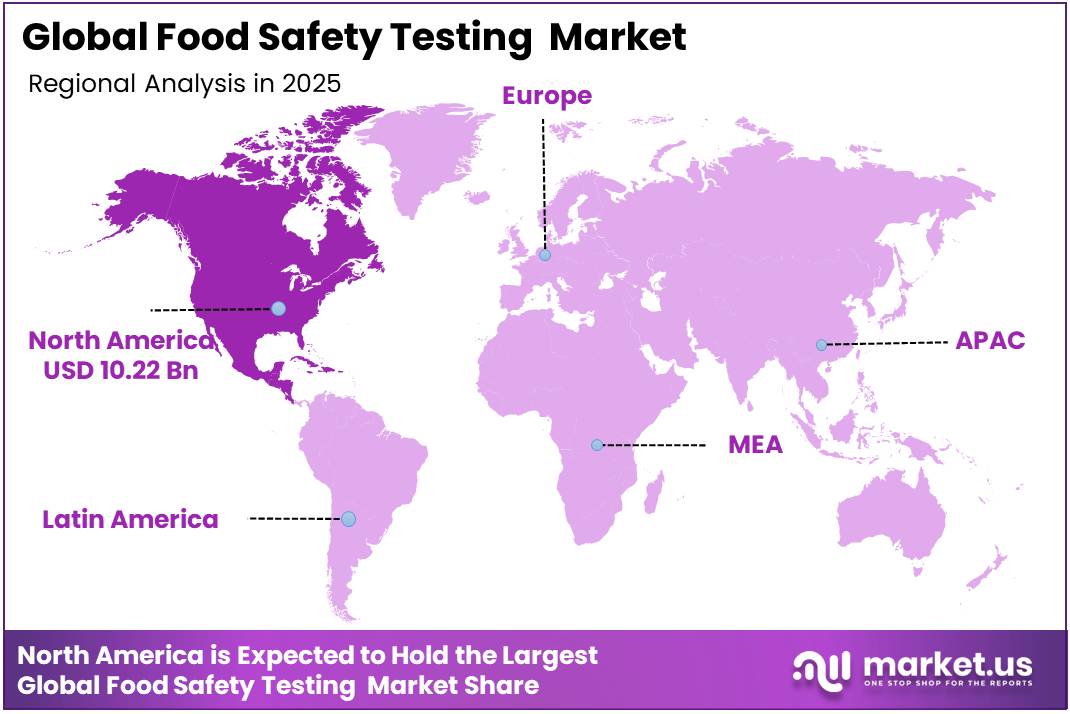
In 2025, the Global Food Safety Testing Market was valued at USD 28.4 billion, and between 2026 and 2035, this market is estimated to register a CAGR of 7.2%, reaching about USD 57.0 billion by 2035. North America held a dominant market position, capturing more than a 36% share, holding USD 10.22 billion in revenue.
Food safety testing has become a strategic component of the global food supply chain as governments, food manufacturers, and retailers strengthen surveillance against microbiological, chemical, allergen, and contaminant risks. The expansion of international food trade, increasingly complex processing networks, and stricter regulatory compliance have accelerated the adoption of advanced laboratory testing and rapid detection technologies.
- According to the World Health Organization (WHO), unsafe food causes approximately 866 million illnesses and 1.5 million deaths annually worldwide, while contaminated food is linked to more than 200 diseases, highlighting the growing necessity for robust food safety testing systems across production, processing, and distribution stages. The Codex Alimentarius Commission, jointly established by FAO and WHO, continues to strengthen globally harmonized food safety standards that facilitate international trade and regulatory consistency.
Key Takeaways
- The global food safety testing market was valued at USD 28.4 billion in 2025.
- The global market is projected to grow at a CAGR of 2% and is estimated to reach USD 57.0 billion by 2035.
- On the basis of test type, pathogen testing dominated the market, constituting 5% of the total market share.
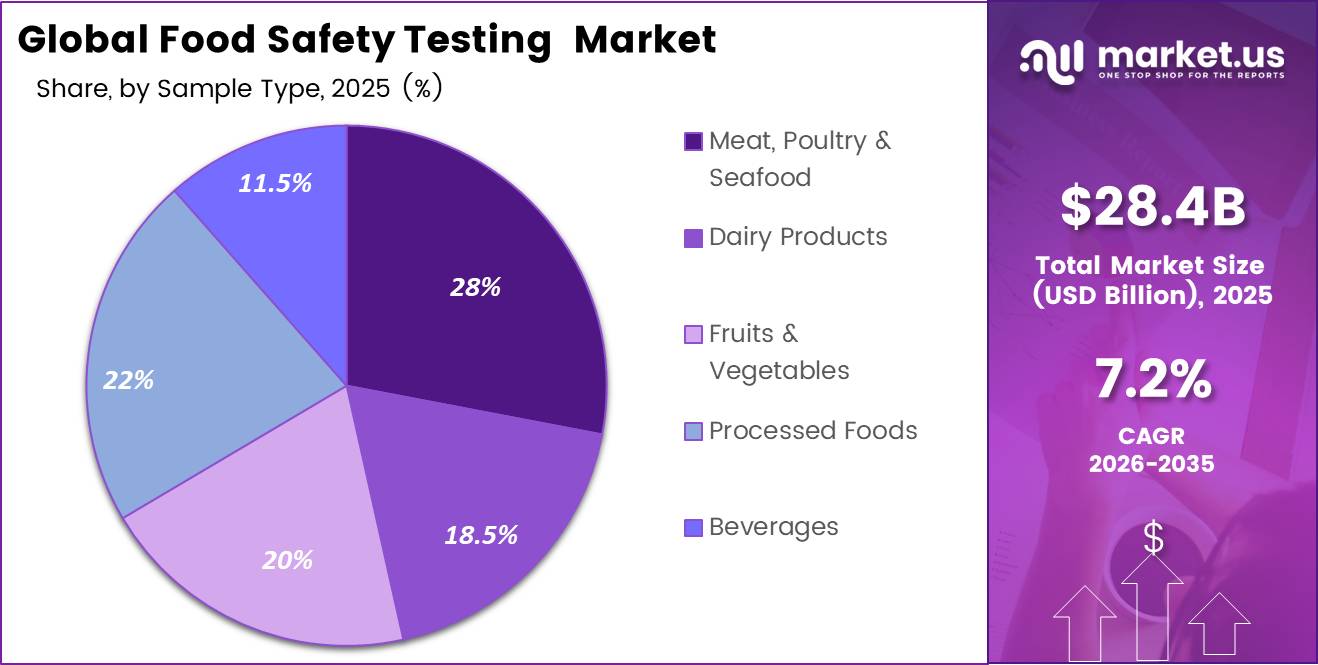
- Based on the sample type, meat, poultry & seafood led the food safety testing market, with a substantial market share of around 28%.
- Based on the technology, PCR-based testing led the market, comprising 29% of the total market.
- Among the target contaminants, pathogens held a major share in the food safety testing market, accounting for 33% of the market share.
- Among the end users, food manufacturers are the most considerable within the market, accounting for around 42% of the revenue.
- Based on the testing category, routine testing dominated the market with a share of 61%.
- In 2025, North America was the most dominant region in the food safety testing market, accounting for 36% of the total global consumption
Industry growth is further supported by government-led food inspection programs, digital traceability initiatives, and stronger surveillance frameworks. The U.S. Department of Agriculture’s Food Safety and Inspection Service (USDA-FSIS) reported that during FY2024 it conducted approximately 7.7 million food safety procedures across 7,100 regulated establishments, while inspecting over 163 million livestock and 9.8 billion poultry carcasses, demonstrating the scale of regulatory oversight supporting food testing demand.
Future opportunities are expected to emerge from AI-enabled diagnostics, whole-genome sequencing, rapid pathogen detection, blockchain-based traceability, and automated laboratory workflows, as governments continue investing in preventive food safety systems to minimize foodborne disease risks and improve global food supply resilience.
Food Safety Testing Market Segments
Test Type Analysis
Pathogen Testing Represents the Dominant Segment in the Market.
Pathogen testing leads the food safety testing market with a 31.5% share because bacterial, viral, and parasitic contaminants represent the most significant food safety risk across global supply chains. Testing for pathogens such as Salmonella, Escherichia coli, Listeria monocytogenes, Campylobacter, and norovirus is routinely conducted across meat, poultry, seafood, dairy, fresh produce, beverages, and processed food products to comply with regulatory requirements and customer safety standards.
The segment’s dominance is reinforced by mandatory testing protocols implemented throughout production, processing, storage, transportation, and retail distribution stages, where early contamination detection is critical to preventing large-scale product recalls and supply chain disruptions. International trade requirements further strengthen demand, as exporting companies must demonstrate compliance with pathogen limits established by importing countries before products can enter key markets.
Sample Type Analysis
Meat, Poultry and seafood Represent the Dominant Segment in the Market.
Meat, poultry, and seafood account for 28% of total sample type demand, making them the largest segment in the market. Their leading position is driven by stringent food safety requirements across global protein supply chains, where routine testing for pathogens, species authentication, veterinary drug residues, and microbial contamination is essential to meet regulatory standards and export requirements.
Processed foods, fruits and vegetables, dairy products and beverages collectively represent a substantial share of total sample type demand, with each category carrying distinct testing requirements across the food value chain. Processed foods require extensive testing because their multi-ingredient and multi-stage manufacturing processes create numerous opportunities for contamination and adulteration before products reach consumers.
- For instance, in August 2024, ALS Limited launched InviRapid a lateral flow assay range for rapid on-site allergen detection across meat, dairy, and processed food samples directly addressing the growing need for fast and field-deployable testing solutions across multiple sample categories.
Technology Analysis
PCR-Based Testing Represents the Dominant Technology Segment in the Market.
PCR-based Testing held the largest share of the food safety testing market at 29%, supported by its rapid and highly sensitive detection of foodborne pathogens. According to the U.S. CDC, the Foodborne Diseases Active Surveillance Network (FoodNet) conducts active surveillance through more than 700 clinical laboratories covering approximately 54 million people (16% of the U.S. population). The extensive laboratory network reflects the increasing dependence of public health agencies on molecular methods, including PCR, for routine pathogen detection and food safety monitoring.
Next-Generation Sequencing (NGS) is expected to witness strong growth as genomic surveillance becomes more integrated into food safety systems. According to the U.S. Food and Drug Administration (FDA), the GenomeTrakr network comprises more than 89 participating laboratories worldwide and has generated over 1.8 million pathogen genome sequences, enabling faster source tracking and outbreak investigations. Continued expansion of public genomic databases is expected to accelerate NGS adoption across regulatory food testing laboratories
Target Contaminant Analysis
Pathogens Represent the Dominant Target Contaminant Segment in the Market.
Pathogens held the largest share of the food safety testing market at 33%, owing to the high incidence of foodborne bacterial infections and the need for rapid microbiological detection. In December 2024, according to the European Food Safety Authority (EFSA) and the European Centre for Disease Prevention and Control (ECDC), the European Union recorded 148,181 confirmed cases of campylobacteriosis and 77,486 confirmed cases of salmonellosis in 2023, making them the two most frequently reported foodborne zoonotic diseases. The persistent disease burden continues to drive routine pathogen screening across food production, processing, and distribution facilities.
Chemical Contaminants are gaining momentum as governments intensify monitoring of contaminants in the food chain. In December 2024, according to the EFSA–ECDC European Union One Health 2023 Zoonoses Report, 15 Member States reported 6,686 official Campylobacter process hygiene tests on broiler carcasses, with 16.0% of samples exceeding the regulatory limit of 1,000 CFU/g, highlighting the increasing emphasis on regulatory monitoring and laboratory analysis across the food industry.
End User Analysis
Food Manufacturers Represent the Dominant End User Segment in the Market.
Food Manufacturers held the largest share of the food safety testing market at 42%, supported by increasing regulatory compliance and preventive quality management across food processing operations. In November 2024, according to the U.S. Food and Drug Administration (FDA), the agency reported that more than 32 million imported food entry lines were electronically screened annually through its import safety program, reinforcing the need for manufacturers to conduct routine microbiological and chemical testing before products enter the supply chain.
Government & Regulatory Bodies is the fastest growing segment in the market as countries strengthen food surveillance systems. In December 2024, according to the European Food Safety Authority (EFSA) and the European Centre for Disease Prevention and Control (ECDC), the European Union recorded 5,691 foodborne outbreaks in 2023, affecting 52,127 people and resulting in 2,894 hospitalizations, prompting greater investment in official food testing and laboratory infrastructure.
Testing Category Analysis
Routine Testing Represents the Dominant Testing Category in the Market.
Routine Testing accounted for 61% of the food safety testing market, reflecting its essential role in preventive food safety management and regulatory compliance. In August 2025, according to the U.S. Food and Drug Administration (FDA), the agency stated that it collects large numbers of food samples under its microbiological surveillance program over approximately 18 months for targeted commodities, publishing the number of samples collected, pathogens detected, and summary reports to strengthen preventive food safety under the Food Safety Modernization Act (FSMA). This continuous surveillance framework supports the widespread adoption of routine food safety testing across the food industry.
Rapid Testing is expanding as regulatory laboratories increasingly adopt validated molecular methods for faster pathogen detection.In March2025, according to the U.S. Department of Agriculture (USDA) Food Safety and Inspection Service (FSIS), the Microbiology Laboratory Guidebook includes validated methods for the detection and identification of major foodborne pathogens, toxins, and antimicrobial residues to support regulatory food safety activities and laboratory standardization. The continued modernization of official laboratory methods is expected to accelerate the adoption of rapid testing technologies.
Key Market Segments
Test Type
- Pathogen Testing
- Pesticide Residue Testing
- GMO Testing
- Chemical & Toxin Testing
- Allergen Testing
- Nutritional Labeling Tests
Sample Type
- Meat, Poultry & Seafood
- Dairy Products
- Fruits & Vegetables
- Processed Foods
- Beverages
Technology
- PCR-based Testing
- Chromatography (HPLC/GC)
- Immunoassay
- Spectroscopy
- Next-Gen Sequencing (NGS)
Target Contaminant
- Pathogens
- Chemical Contaminants
- Toxins
- Heavy Metals
- Others
End User
- Food Manufacturers
- Government & Regulatory Bodies
- Testing Laboratories
- Import/Export Companies
Testing Category
- Routine Testing
- Rapid Testing (Li-Ion)
Drivers Analysis
Rising global foodborne disease burden
The single most powerful structural driver is the rising and more precisely quantified global burden of foodborne disease, which transforms food safety testing from a discretionary quality check into a core risk‑management infrastructure: in 2026, WHO estimated 866 million foodborne illnesses and 1.5 million deaths annually, with 57.1 million disability-adjusted life years (DALYs) and an economic productivity loss of USD 310 billion, rising to USD 647 billion after adjusting for cost‑of‑living differences.
As biological hazards such as non‑typhoidal Salmonella enterica generate the majority of cases, while chemical contaminants such as inorganic arsenic and lead drive 73% of deaths, regulators and corporations are compelled to expand microbiological and chemical screening across more nodes in the supply chain, increasing the number of batches tested per plant per year and widening test menus from 5–7 core assays to 15–25 analytes, often at multiple points from raw material intake through finished product release.
This dynamic directly raises addressable test volumes by 8–12% annually in many markets, supports higher spending per test panel, and drives multi‑year commitments to laboratory capacity; as a result, the quantified disease and cost burden adds roughly +2.3 percentage points to the global food safety testing CAGR beyond what normal consumption growth alone would produce, and the impact is inherently long term (≥ 4 years) because population demographics, pathogen evolution and chronic exposure to chemical hazards evolve slowly and sustain demand over decades rather than single cycles.
Drivers Impact Analysis
| Driver | (~) % Impact on CAGR | Geographic Relevance | Impact Timeline |
|---|---|---|---|
| Rising global foodborne disease burden | +2.3% | Global, LMICs, APAC corridors | Long term (≥ 4 years) |
| Stricter multi-region safety regulations | +2.0% | North America core, EU, China | Medium term (2-4 years) |
| Expansion of processed and ready-to-eat foods | +1.6% | Global urban markets, GCC | Long term (≥ 4 years) |
| Adoption of rapid molecular and digital testing | +1.8% | EU, North America, APAC industrial | Medium term (2-4 years) |
| Globalization and complexity of food supply chains | +1.5% | Global trade hubs, South America | Long term (≥ 4 years) |
| Retail and consumer pressure for traceability | +1.4% | North America, EU, APAC emerging | Medium term (2-4 years) |
Restraints Analysis
Skilled food-safety workforce shortage
A modern lab processing 100,000–300,000 tests per year may require 15–40 specialized staff across scientists, technicians and QA roles, yet universities and certification programs in food science and microbiology often graduate fewer qualified candidates than retiring professionals, leading to vacancy rates of 10–20% and turnover rates above 15% per year in some regions. These shortages force labs to cap shift numbers, run fewer validation projects, and delay method adoption, while processors struggle to maintain mandated roles like Preventive Controls Qualified Individuals (PCQI) and HACCP coordinators, limiting the number of plants that can sustain comprehensive testing regimens.
At the macro level, workforce bottlenecks keep effective capacity utilization below 80–85% in many labs, extend time‑to‑market for new test offerings by 6–12 months, and push wages and training costs up by 10–25%, which feeds back into pricing and slows customer onboarding. This structural human-capital deficit is estimated to subtract around 1.8 percentage points from the global CAGR, with a long‑term timeline because developing and certifying new professionals typically requires 3–7 years, and demographic trends will keep pressure on the pipeline well beyond 2030.
Restraint Impact Analysis
| Restraint | (~) % Impact on CAGR | Geographic Relevance | Impact Timeline |
|---|---|---|---|
| High cost of advanced testing systems | -2.0% | Europe, North America, APAC industrial | Long term (≥ 4 years) |
| Skilled food-safety workforce shortage | -1.8% | Global, especially North America & EU | Long term (≥ 4 years) |
| SME cost barrier and uneven lab access | -1.6% | Europe SMEs, APAC & Africa | Medium term (2-4 years) |
| Lengthy lab TAT and limited throughput | -1.4% | Global conventional labs | Medium term (2-4 years) |
| Fragmented standards and cross-border compliance costs | -1.5% | Global trade corridors | Long term (≥ 4 years) |
| Capex and Opex constraints in emerging markets | -1.7% | APAC emerging, Africa, LatAm | Long term (≥ 4 years) |
Opportunity Analysis
Integrated traceability & testing platforms
Blockchain food-traceability pilots already demonstrate the value of recording dozens of supply-chain events per SKU, yet they rarely embed test results like pathogen negatives, residue levels, or allergen screens; if integrated platforms recorded 1–3 key safety datapoints per batch alongside origin and handling events, they would enable premium claims, automated import clearance, and data-driven risk pricing.
EU and North American retailers treating integrated traceability + testing as a requirement across 30–50% of private‑label SKUs could drive thousands of additional tests per SKU per year and justify 5–10% price premiums, while regulators in export hubs might offer expedited clearance to shipments with cryptographically signed lab records, reducing border dwell time by 0.5–1.5 days and encouraging participation.
If such platforms reach USD 4–7 billion in services and data-licensing revenue by 2035, layered on top of conventional test sales, they could add ~2.0 percentage points of CAGR upside; however, this remains clearly opportunity space today, requiring joint ventures between lab networks, traceability tech firms, and retailers, as well as standardization efforts to align data models with evolving regulations like EUDR and regional food-safety laws.
Opportunity Impact Analysis
| Opportunity | (~) % Potential CAGR | Geographic Relevance | Execution Window |
|---|---|---|---|
| On-site portable testing ecosystems | +2.1% | North America, EU, APAC industrial | Medium term (2-4 years) |
| Integrated traceability & testing platforms (blockchain + labs) | +2.0% | EU, North America, APAC exporters | Medium term (2-4 years) |
| Outcome-based food safety testing services | +1.7% | Global branded FMCG & retail | Medium term (2-4 years) |
| Emerging-market PPP lab networks | +2.4% | APAC emerging, Africa, LatAm | Long term (≥ 4 years) |
| Specialized high-margin niche testing (allergens, residues, novel hazards) | +1.8% | EU regulatory hubs, North America | Short term (≤ 2 years) |
| AI-native predictive risk scoring and dynamic test orchestration | +1.9% | Global tier-1 manufacturers & retailers | Medium term (2-4 years) |
Challenges Analysis
Tariff-exposed lab supply chains
In practice, many validated workflows depend on single-source reagents, proprietary consumables tied to instrument platforms, and imported temperature-controlled materials, so even a 5–15% tariff increase on critical categories can push consumables’ share of cost‑per‑test from 20–30% up toward 30–40%, shaving 100–200 basis points off lab margins or forcing 3–7% price increases that customers must absorb. Lead times for specialized parts can stretch from 6–8 weeks to 10–14 weeks during disruption cycles, obliging labs to carry 1.5–2.0x safety stock on reagents with long lead times and segment inventory by risk as recommended in resilience guidance.
Mapping vulnerabilities and building a “critical materials register” helps, but structured change management and revalidation when swapping suppliers can add 20–80 hours of technical work per method and temporary throughput losses of 5–10%, with hidden costs—expedited shipping, overtime, temporary workarounds—sometimes exceeding direct price increases. Over a multi‑year horizon, these frictions collectively trim achievable growth by an estimated 1.3 percentage points versus a no‑tariff, frictionless baseline, with mitigation requiring 2–4 years of dual‑sourcing, contract restructuring for price/lead‑time clauses, and deeper transparency into sub-supplier dependencies, rather than a quick fix.
Challenges Impact Analysis
| Challenge | (~) % Impact on CAGR | Geographic Relevance | Mitigation Horizon |
|---|---|---|---|
| Tariff exposure across laboratory equipment and consumable supply chains | -1.3% | North America, Europe and industrial Asia-Pacific markets | Medium term, 2–4 years |
| Fragmented laboratory data systems and limited interoperability | -1.1% | Global Tier-1 food manufacturers and testing laboratories | Medium term, 2–4 years |
| Complex compliance requirements across multiple jurisdictions | -1.2% | European regulatory hubs, China and major export corridors | Long term, 4 years or more |
| Shortages of mid-skilled quality-assurance and laboratory professionals | -1.4% | North America, Europe and major Asia-Pacific cities | Long term, 4 years or more |
| Continued reliance on legacy workflows and slow automation adoption | -1.0% | Conventional food-testing laboratories worldwide | Medium term, 2–4 years |
| Uneven adoption of digital inspections and traceability systems | -0.9% | Global retail, foodservice and supply-chain networks | Long term, 4 years or more |
Geopolitical Impact Analysis
Global Trade Tensions and Supply Chain Disruptions are Directly Reshaping Food Safety Testing Demand
Geopolitical tensions and evolving trade regulations are reshaping food safety testing by increasing the need for harmonized standards and stronger border inspection systems. In July 2025, according to the World Trade Organization (WTO), approximately 74% of global trade continued to be conducted under the Most-Favoured-Nation (MFN) principle despite rising geopolitical tensions and changing tariff policies. As countries diversify sourcing strategies and strengthen import controls, exporters are increasingly required to comply with internationally recognized food safety testing protocols, driving greater adoption of microbiological, chemical, and contaminant testing across cross-border food supply chains.
Food security concerns have further accelerated government monitoring of agricultural trade. In September 2025, according to the OECD Inventory of Export Restrictions on Staple Crops, export restrictions on staple crops declined by nearly 50% between August 2024 and June 2025, while 94% of global maize exports, 95% of soybean exports, and 97% of wheat exports originated from Agricultural Market Information System (AMIS) members during 2022–2024. The gradual easing of trade restrictions is encouraging governments and food exporters to strengthen testing infrastructure to ensure regulatory compliance and maintain uninterrupted international food trade.
Regional Analysis
North America Held the Largest Share of the Global Food Safety Testing Market.
In 2025, North America dominated the global food safety testing market accounting for 36% with the largest regional share, driven by its deeply integrated food safety regulatory ecosystem and the highest concentration of mandatory testing requirements of any region in the world.
The United States Food Safety Modernization Act (FSMA) the most sweeping overhaul of US food safety law in decades mandates preventive controls, supply chain verification, and third-party testing across virtually every segment of food manufacturing and distribution, generating an enormous and non-negotiable baseline of testing demand that runs continuously regardless of economic conditions.
In March 2025, China’s State Administration for Market Regulation (SAMR) introduced updated food safety supervision measures that expanded compliance obligations across food production and distribution activities, increasing demand for laboratory testing services. At the same time, large-scale investments in food manufacturing and export-oriented agricultural production are creating sustained testing requirements across meat, seafood, dairy, processed foods, fruits and vegetables, and beverage supply chains, positioning Asia Pacific as the most dynamic regional market for food safety testing services.
Key Regions and Countries Covered
- North America
- The US
- Canada
- Europe
- Germany
- France
- The UK
- Spain
- Italy
- Russia & CIS
- Rest of Europe
- APAC
- China
- Japan
- South Korea
- India
- ASEAN
- Rest of APAC
- Latin America
- Brazil
- Mexico
- Rest of Latin America
- Middle East & Africa
- GCC
- South Africa
- Rest of MEA
Key Players Analysis
The global food safety testing market is led by a small group of large multinational testing, inspection, and certification companies that collectively hold the dominant share of market revenue through their extensive global laboratory networks, deep regulatory expertise, and long-established relationships with food manufacturers, government agencies, and international trade bodies.
Their continued investment in advanced analytical technology, digital platforms, and geographic expansion is steadily widening the gap between the market leaders and the rest of the competitive field. Alongside the large multinationals, a growing layer of specialist and regional testing companies is carving out strong positions in specific food categories, testing methodologies, or geographic markets where deep local expertise and faster turnaround times give them a genuine edge.
Many of these specialists are becoming attractive acquisition targets for larger players looking to expand their capabilities or geographic footprint quickly fuelling a wave of consolidation that is gradually concentrating market share among a smaller number of increasingly comprehensive testing service providers.
The Major Players In The Industry
- SGS
- Eurofins Scientific
- Bureau Veritas
- Intertek Group
- TÜV SÜD
- ALS Limited
- Thermo Fisher Scientific
- Agilent Technologies
- Merieux NutriSciences
- Neogen Corporation
- Romer Labs
- Waters Corporation
- IDEXX Laboratories
- Covance (Labcorp)
- PerkinElmer
Key Development
- In June 2024, Neogen Corporation launched the Petrifilm Automated Feeder a solution designed to help high-volume food safety testing laboratories process quality indicator tests more efficiently, directly addressing throughput challenges in large-scale testing operations.
- In March 2025, Bio-Rad Laboratories launched the XP-Design Assay Salmonella Serotyping Solution a rapid real-time PCR-based tool for fast and accurate Salmonella identification in food and environmental samples directly addressing surging global pathogen testing demand.
Report Scope
| Report Features | Description |
|---|---|
| Market Value (2025) | US$28.4 Bn |
| Forecast Revenue (2035) | US$57.0 Bn |
| CAGR (2026-2035) | 7.2% |
| Base Year for Estimation | 2025 |
| Historic Period | 2020-2024 |
| Forecast Period | 2026-2035 |
| Report Coverage | Revenue Forecast, Market Dynamics, Competitive Landscape, Recent Developments |
| Segments Covered | By Test Type (Pathogen Testing, Pesticide Residue Testing, GMO Testing, Chemical & Toxin Testing, Allergen Testing, and Nutritional Labeling Tests), By Sample Type (Meat, Poultry & Seafood, Dairy Products, Fruits & Vegetables, Processed Foods, and Beverages), By Technology (PCR-based Testing, Chromatography (HPLC/GC), Immunoassay, Spectroscopy, and Next-Gen Sequencing (NGS)), By Target Contaminant (Pathogens, Chemical Contaminants, Toxins, Heavy Metals, and Others), By Testing Category (Routine Testing and Rapid Testing), By End User (Food Manufacturers, Government & Regulatory Bodies, Testing Laboratories, and Import/Export Companies) |
| Regional Analysis | North America – The US & Canada; Europe – Germany, France, The UK, Spain, Italy, Russia & CIS, Rest of Europe; APAC– China, Japan, South Korea, India, ASEAN & Rest of APAC; Latin America– Brazil, Mexico & Rest of Latin America; Middle East & Africa– GCC, South Africa, & Rest of MEA |
| Competitive Landscape | SGS, Eurofins Scientific, Bureau Veritas, Intertek Group, TÜV SÜD, ALS Limited, Thermo Fisher Scientific, Agilent Technologies, Merieux NutriSciences, Neogen Corporation, Romer Labs, Waters Corporation, IDEXX Laboratories, Covance (Labcorp), and PerkinElmer, among others. |
| Customization Scope | Customization for segments, region/country-level will be provided. Moreover, additional customization can be done based on the requirements. |
| Purchase Options | We have three licenses to opt for: Single User License, Multi-User License (Up to 5 Users), Corporate Use License (Unlimited Users and Printable PDF) |





































