


Market Overview
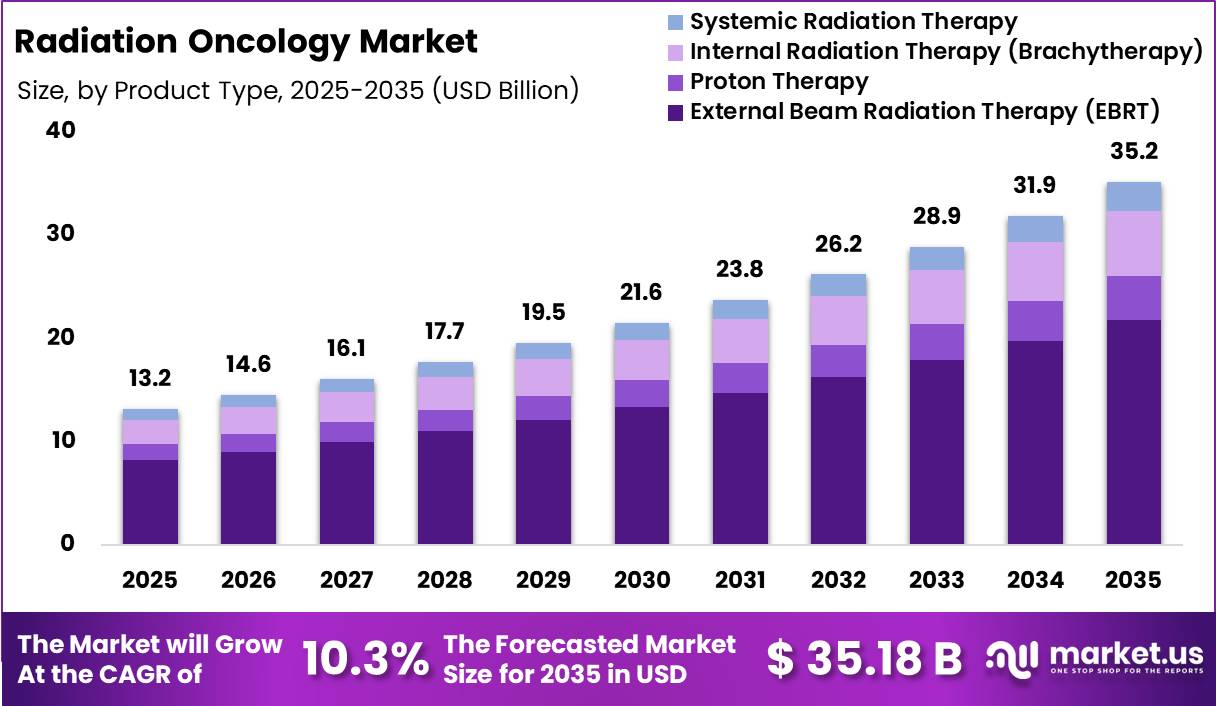
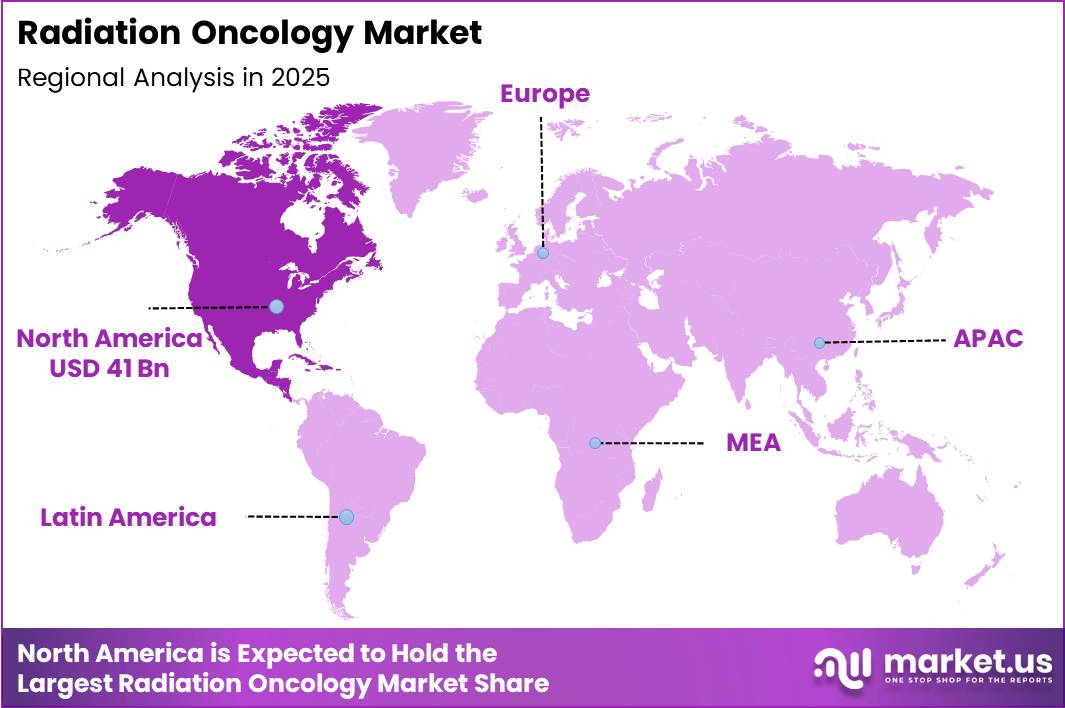
Global Radiation Oncology Market size is expected to be worth around US$ 35.18 Billion by 2035 from US$ 13.20 Billion in 2025, growing at a CAGR of 10.3% during the forecast period from 2026 to 2035. In 2025, North America led the market, achieving over 41.00% share with a revenue of US$ 5.412 Billion.
Radiation oncology refers to the medical specialty that uses high-energy radiation to treat cancer and control tumor growth, playing a critical role in multidisciplinary oncology care worldwide. According to the World Health Organization (WHO), cancer remains a leading cause of death globally, with an estimated 20 million new cases and 9.7 million deaths in 2022.
Nearly half of all cancer patients require radiotherapy at some stage of their treatment, making radiation oncology an essential component of modern cancer care. Growth is driven by increasing cancer burden, aging populations, and technological advancements such as linear accelerators, IMRT, IGRT, and proton therapy systems.
Government and global health bodies, including WHO and the International Atomic Energy Agency (IAEA), are expanding initiatives like the Rays of Hope program to improve access to radiotherapy in low- and middle-income countries.
Overall, the market outlook remains positive, supported by rising demand for precise cancer treatment and expanding healthcare infrastructure worldwide.
Efforts to expand radiotherapy capacity, workforce training, and equipment modernization are expected to reduce treatment gaps, improve survival outcomes, and support equitable access to cancer care across developed and emerging healthcare systems globally today now.
Key Takeaways
- The global Radiation Oncology Market was valued at US$ 13.20 Billion in 2025.
- The global Radiation Oncology Market is projected to grow at a CAGR of 10.3% and is estimated to reach US$ 35.18 Billion by 2035.
- By Product Type,External Beam Radiation Therapy (EBRT) dominated the market, accounting for 62.00% of the total market share in 2025.
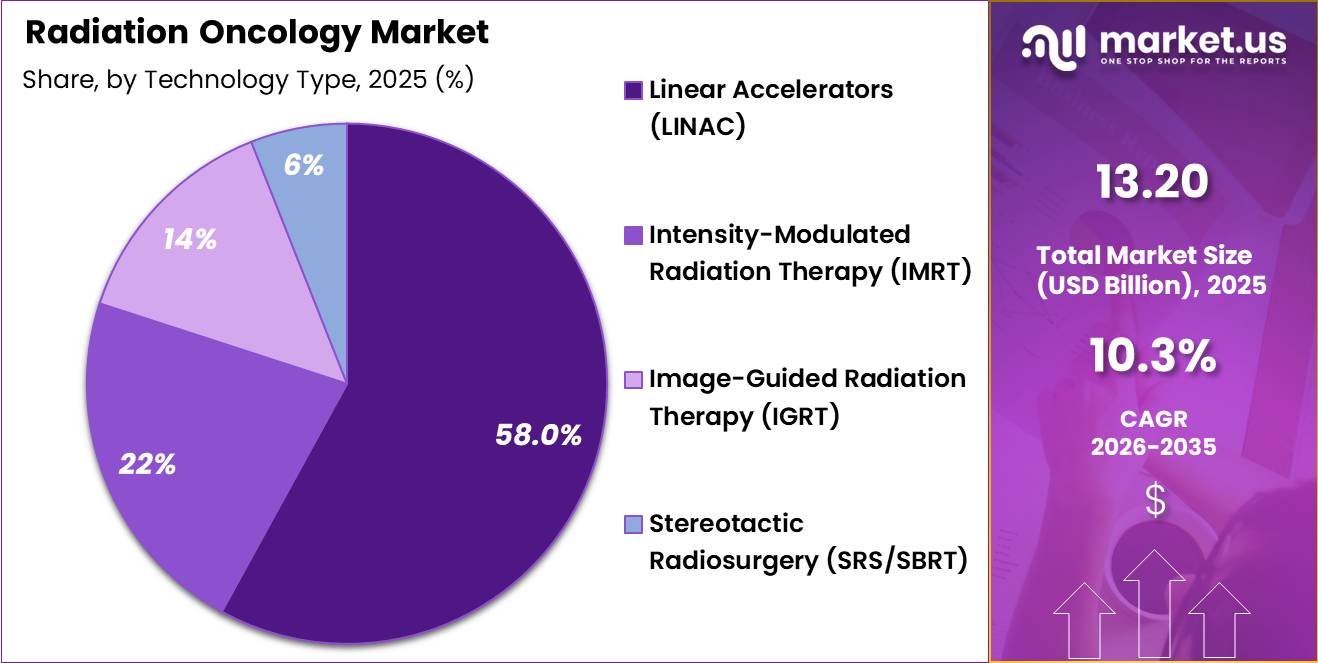
- By Technology,Linear Accelerators (LINAC) dominated the market, constituting 58.00% of the total market share.
- By Application, Breast Cancer dominated the market,constituting 23.00% of the total market share.
- Among End User, Hospitals dominated the market,constituting 54.00% of total market share.
- By Radiation Type, Photon Therapy dominated the market, constituting 71.00% of the total market share
- By Treatment Intent, Curative Treatment dominated the market, constituting 49.00% of the total market share
- Among regions, North America emerged as the leading regional market, contributing 41.00% of the global Global Radiation Oncology Market
Market revenue in 2025.
Product Type Analysis
The Radiation Oncology market by product type is primarily led by External Beam Radiation Therapy (EBRT), which dominates with approximately 62.00% market share in 2025. EBRT continues to be the backbone of modern radiation treatment due to its versatility, non-invasive nature, and ability to target tumors with high precision while minimizing damage to surrounding healthy tissue.
Technological advancements such as image-guided delivery and adaptive planning have further strengthened its dominance across multiple cancer indications. Internal Radiation Therapy, also known as brachytherapy, accounts for around 18.00% share and remains highly effective for localized cancers such as cervical, prostate, and breast cancer, offering high radiation doses directly to tumor sites.
Proton Therapy holds about 12.00% share and is gaining traction due to its superior dose distribution and reduced collateral damage, particularly in pediatric and complex tumor cases, though high costs limit widespread adoption.
Systemic Radiation Therapy contributes approximately 8.00% share, primarily used in advanced or metastatic cancers where radioactive isotopes circulate through the bloodstream. Overall, the segment reflects a strong preference for externally delivered, highly controlled radiation modalities supported by ongoing technological innovation.
Technology Analysis
In the Radiation Oncology market by technology, Linear Accelerators (LINAC) dominate with a substantial 58.00% market share in 2025. LINAC systems form the core infrastructure of modern radiotherapy centers due to their ability to deliver high-energy X-rays or electrons with precision, flexibility, and integration with advanced imaging systems.
Their widespread adoption is further driven by continuous upgrades enabling adaptive radiation therapy and high-throughput clinical workflows. Intensity-Modulated Radiation Therapy (IMRT) holds around 22.00% share, offering superior dose conformity and improved tumor targeting by modulating beam intensity, significantly reducing toxicity to surrounding healthy tissues.
Image-Guided Radiation Therapy (IGRT) accounts for approximately 14.00% share and enhances treatment accuracy through real-time imaging, enabling precise tumor localization and motion management during therapy sessions.
Stereotactic Radiosurgery (SRS/SBRT) represents about 6.00% share, but is rapidly growing due to its ability to deliver high-dose radiation in fewer sessions, making it highly effective for brain, lung, and spinal tumors. Overall, the technology segment is characterized by a shift toward precision-driven, image-integrated, and high-dose efficiency platforms that improve patient outcomes and operational efficiency in oncology care.
Application Analysis
Within the Radiation Oncology market by application, Breast Cancer represents the leading segment, accounting for approximately 23.00% market share in 2025. This dominance is driven by the high global incidence of breast cancer and the strong clinical reliance on radiation therapy as a standard component of post-surgical treatment, particularly after lumpectomy procedures.
Radiation therapy significantly reduces recurrence risk, making it a critical part of breast cancer management protocols worldwide. Other major applications include prostate cancer, lung cancer, and colorectal cancer, which collectively contribute substantial demand due to increasing prevalence and aging populations.
Head and neck cancers also represent a notable share, often requiring highly precise radiation delivery techniques to preserve vital structures and functions. Additionally, brain tumors, including both primary and metastatic lesions, increasingly utilize advanced modalities such as stereotactic radiosurgery for targeted treatment.
The application landscape is evolving with improved early detection rates and expanded screening programs, leading to higher treatment volumes. Overall, the segment reflects a strong correlation between disease prevalence patterns and radiation therapy adoption, with breast cancer maintaining a clear leadership position due to established treatment guidelines and widespread clinical adoption of radiotherapy protocols.
End User Analysis
In the Radiation Oncology market by end user, Hospitals dominate with approximately 54.00% market share in 2025. Hospitals serve as the primary treatment hubs due to their comprehensive infrastructure, availability of multidisciplinary oncology teams, and access to advanced radiation therapy systems such as linear accelerators and image-guided platforms.
They also handle a high volume of complex cancer cases requiring integrated diagnostic, surgical, and therapeutic services under one roof. Cancer treatment centers and specialty oncology clinics represent a significant portion of the remaining market, focusing on dedicated, high-throughput radiation services and often adopting cutting-edge technologies earlier than general hospitals.
Ambulatory surgical centers (ASCs) are gradually expanding their role, particularly for less complex or outpatient-based radiation procedures, driven by cost efficiency and shorter patient stay requirements. Academic and research institutes also contribute to market development through clinical trials, technology validation, and innovation in treatment protocols.
Overall, the end user landscape is characterized by increasing consolidation of advanced radiation services within hospital systems, while specialized centers continue to drive innovation and accessibility in oncology care delivery.
Radiation Type Analysis
In the Radiation Oncology market by radiation type, Photon Therapy dominates with a significant 71.00% market share in 2025. Photon-based radiation remains the most widely used modality due to its deep tissue penetration, versatility across multiple cancer types, and compatibility with existing linear accelerator systems.
It is the standard choice in treating a broad range of malignancies, including breast, lung, and prostate cancers. Electron Therapy, while not explicitly dominant in this dataset, is often used for superficial tumors due to its limited penetration depth, complementing photon-based approaches in clinical practice.
Proton Therapy, although technically a separate modality, continues to expand its presence due to its precision targeting and reduced exit dose, making it especially valuable in pediatric oncology and tumors near critical organs.
Heavy ion therapy, though still niche, is gaining research interest for its enhanced biological effectiveness. Overall, the radiation type segment is heavily skewed toward photon-based systems due to cost efficiency, established clinical workflows, and widespread infrastructure availability, while advanced particle therapies are gradually gaining traction in specialized oncology centers with high investment capacity and research orientation.
Treatment Intent Analysis
In the Radiation Oncology market by treatment intent, Curative Treatment leads with approximately 49.00% market share in 2025. This dominance reflects the increasing use of radiation therapy as a primary or definitive treatment option aimed at complete tumor eradication, particularly in early-stage cancers.
Advancements in precision delivery techniques such as IMRT, IGRT, and stereotactic modalities have significantly improved tumor control rates, making curative intent radiotherapy more effective and widely adopted. Palliative treatment represents a substantial share as well, focusing on symptom relief, pain reduction, and quality-of-life improvement in advanced or metastatic cancer patients.
It is commonly used in cases such as bone metastases and brain lesions, where complete cure is not feasible. Adjuvant and neoadjuvant therapies also contribute meaningfully, with radiation used before or after surgery to reduce tumor size or eliminate residual cancer cells.
Overall, the treatment intent landscape highlights a dual role of radiation oncology—both as a curative modality in early disease stages and as a supportive or palliative tool in advanced disease management—underscoring its critical position across the entire cancer care continuum.
Market Segmentations
Product Type
- External Beam Radiation Therapy (EBRT)
- Proton Therapy
- Internal Radiation Therapy (Brachytherapy)
- Systemic Radiation Therapy
By Technology
- Linear Accelerators (LINAC)
- Intensity-Modulated Radiation Therapy (IMRT)
- Image-Guided Radiation Therapy (IGRT)
- Stereotactic Radiosurgery (SRS/SBRT)
By Application
- Breast Cancer
- Lung Cancer
- Prostate Cancer
- Head & Neck Cancer
- Colorectal Cancer
- Other Cancers
By End User
- Hospitals
- Cancer Treatment Centers
- Ambulatory Surgical Centers
- Academic & Research Institutes
By Radiation Type
- Photon Therapy
- Proton Therapy
- Electron Therapy
By Treatment Intent
- Curative Treatment
- palliative Treatment
- Adjuvant Therapy
Drivers
Rising cancer caseload lifting radiotherapy volumes
The first structural demand driver is simple volume pressure: the U.S. alone is projected to record 2,114,850 new cancer cases and 626,140 cancer deaths in 2026, equal to roughly 5,800 new diagnoses per day, while India’s estimated cancer incidence reached 1,461,427 cases in 2022 and was projected to rise 12.8% by 2025 versus 2020 levels.
This matters commercially because radiotherapy is required for more than 50 percent of cancer patients during the course of care, so even modest incidence growth converts into rising treatment planning demand, immobilization demand, QA workload, and machine hour utilization across linear accelerators, simulators, treatment planning systems, and brachytherapy platforms.
Lung cancer alone is expected to account for 229,410 new U.S. cases in 2026, and these high volume tumor streams directly support demand for IMRT, IGRT, SBRT, and palliative fractions, especially in health systems trying to reduce surgical bottlenecks and systemic therapy waiting times.
Strategically, this driver favors vendors and providers that monetize the full installed workflow rather than only capital equipment, because rising patient counts increase recurring revenue from software licenses, service contracts, dosimetry, imaging integration, and replacement components even when capital budgets remain uneven across regions.
| Driver | (~) % Impact on CAGR Forecast | Geographic Relevance | Impact Timeline |
|---|---|---|---|
| Rising cancer caseload lifting radiotherapy volumes | +1.8% | North America core, EU, China, India, Middle East expansion | Short term |
| Hypofractionation improving throughput and economics | +1.6% | North America core, EU, Japan, Australia, urban APAC | Short term |
| AI contouring and adaptive planning digitizing workflows | +1.4% | North America core, EU, South Korea, Japan, premium China centers | Medium term |
| Capacity build-out in underpenetrated LMIC treatment corridors | +1.9% | India, ASEAN, Africa, Middle East, Latin America | Long term |
| Reimbursement redesign accelerating value-based technology mix | +1.1% | U.S. core, Western Europe spill-over, private Gulf providers | Medium term |
| Regulatory and safety standardization enabling equipment replacement cycles | +0.9% | EU, North America, GCC, Africa, South Asia | Medium term |
Challenges
Clinical workforce and multidisciplinary staffing mix gaps
Radiation oncology’s 2026 labor problem is less a pure physician shortage than a persistent skill mix imbalance across radiation therapists, dosimetrists, medical physicists, oncology nurses, and subspecialty physicians, which keeps installed capacity below theoretical throughput even where patient demand is intact.
ASTRO linked survey reporting that 93 % of practices face shortages of key clinical staff, combined with global workforce modeling showing a 2022 requirement of 51,111 radiation oncologists, 28,395 medical physicists, and 85,184 radiation therapists rising materially by 2050, indicates that today’s bottleneck sits in multidisciplinary staffing elasticity rather than in single role availability alone.
The operational effect is a recurring 5 % to 12 % under utilization of treatment slots, slower contouring and plan check turnaround, vacancy driven overtime inflation, and greater dependence on locums, cross site physics coverage, and centralized planning teams, forcing providers to invest in training pipelines, AI assisted contouring, remote dosimetry models, and retention led scheduling redesign to keep utilization from slipping further over the next 24 to 48 months.
| Challenge | (~) % CAGR Friction Drag | Geographic Relevance | Mitigation Horizon |
|---|---|---|---|
| Clinical staffing mix gaps | -1.4% | North America core; EU treatment hubs; ANZ systems | Medium term (2-4 years) |
| Uneven machine density | -1.8% | Africa; South Asia; LATAM; CEE corridors | Long term (≥ 4 years) |
| Capex and service bottlenecks | -1.1% | APAC import markets; NHS systems; emerging markets | Medium term (2-4 years) |
| Planning workflow complexity | -0.9% | U.S. advanced centers; EU academic hubs; Japan/Korea | Medium term (2-4 years) |
| Reimbursement-fractionation mismatch | -0.8% | Europe; U.S. mixed-pay markets; upper-middle-income systems | Medium term (2-4 years) |
| Global treatment-access divergence | -1.6% | Africa; ASEAN frontier; India; parts of LATAM | Long term (≥ 4 years) |
Restraints
Fragmented Procurement Structures and Capital Rationing
Procurement fragmentation particularly in public health systems across Southern Europe, Latin America, parts of APAC and Africa creates a structurally inefficient demand signal for radiation oncology equipment, characterized by small, sporadic tenders, multi year gaps between procurement waves, and heavy reliance on lowest price wins criteria that disregard lifecycle economics.
In many emerging markets, radiotherapy budgets are nested within broader oncology or radiology line items and are frequently reallocated to drugs or diagnostic imaging during fiscal stress, resulting in only 60 to 70 percent of planned equipment spending actually materializing within the original timeframe and pushing the remainder into subsequent budget cycles or cancelling projects outright.
Multi lateral and donor funded projects add another layer of complexity: lengthy approval processes, currency volatility, and co financing requirements can stretch from initial concept to installation over 4 to 6 years, during which time equipment specifications risk obsolescence and vendors may need to re quote multiple times, compressing pricing power.
For manufacturers, fragmented demand increases cost of sales (more tenders, higher bid no bid overhead), limits economies of scale in service network deployment, and encourages aggressive discounting often 10 to 20 percent below list prices in competitive public tenders to secure volume, eroding gross margins and constraining internal R&D budgets that would otherwise fuel higher value offerings.
On the provider side, capital rationing forces hospitals to opt for mid tier configurations, delay software upgrades, or forego ancillary planning and QA tools that enhance throughput and treatment quality, thereby dampening ASP growth and recurring software and service revenue streams.
Aggregated globally, these procurement and capital allocation inefficiencies are estimated to trim about 1.1% points from the realistic CAGR trajectory of the radiation oncology market, even though population level clinical need would justify significantly higher growth if purchasing were more coordinated and lifecycle value driven.
| Restraint | (~) % Impact on CAGR Forecast | Geographic Relevance | Impact Timeline |
|---|---|---|---|
| High capex and opex inflation for RT infrastructure | -2.2% | North America, EU-27, UK, GCC, Tier-1 APAC | Medium term (2-4 years) |
| Oncology workforce and physicist capacity gaps | -1.8% | North America, Western Europe, select APAC metros | Medium term (2-4 years) |
| RF, imaging and high-end component supply bottlenecks | -1.5% | Global, with acute pressure in APAC and LATAM | Short term (≤ 2 years) |
| Reimbursement, HTA and budget-impact constraints | -1.6% | EU-27, UK, Canada, Middle-income APAC | Long term (≥ 4 years) |
| Regulatory, QA and siting compliance friction | -1.2% | Global; more severe in emerging markets | Long term (≥ 4 years) |
| Fragmented procurement and capital rationing | -1.1% | Public hospital systems in EMs, Southern Europe | Medium term (2-4 years) |
Opportunity
Scaling LMIC Radiotherapy Access Via Platform Models
The expansion of radiotherapy into underserved regions represents a significant upside opportunity rather than a baseline market driver, as current revenues are largely generated from existing installed capacity. According to the WHO, more than 50% of cancer patients require radiotherapy, yet nearly one-third of countries, including 28 in Africa, still lack access to these services. This creates substantial untapped market potential.
Additionally, IAEA guidelines indicate that radiotherapy equipment typically has a 10–15-year lifecycle, generating recurring revenue through equipment replacement, maintenance, software upgrades, quality assurance, commissioning, and service contracts.
Global cancer cases are projected to increase from 20 million in 2022 to 35.3 million by 2050, with the fastest growth expected in low-HDI countries. Companies offering integrated solutions, including financing, workforce training, remote treatment planning, and cost-effective systems, are well positioned to unlock this underserved market, potentially contributing an additional 2.6 % points to the sector’s CAGR through 2035.
| Opportunity | (~) % Potential CAGR Upside | Geographic Relevance | Execution Window |
|---|---|---|---|
| LMIC access build-out platforms | +2.6% | Africa, South Asia, SEA, LatAm | Medium term (2-4 years) |
| Hypofractionation network monetization | +1.9% | North America core, EU, Japan, Australia, urban APAC | Short term (≤ 2 years) |
| Radioligand-RT integrated centers | +1.7% | US, EU5, Japan, GCC, China tier-1 | Medium term (2-4 years) |
| Cervical and women’s oncology hubs | +1.5% | Africa, India, SE Asia, LatAm | Medium term (2-4 years) |
| Equipment lifecycle and uptime services | +1.3% | Global, strongest in emerging markets | Short term (≤ 2 years) |
| Non-oncology precision irradiation | +1.1% | US, EU, Japan, Korea | Long term (≥ 4 years) |
Regional Analysis
North America dominated the global radiation oncology market in 2025, accounting for more than 41.00% of the total market share, with a market value of US$ 5.412 billion. The region’s leadership is supported by its highly developed healthcare infrastructure, widespread adoption of advanced radiation therapy technologies, and strong investments in cancer diagnosis and treatment.
The increasing prevalence of cancer, particularly breast, lung, prostate, and colorectal cancers, continues to drive the demand for precision radiation oncology solutions across the United States and Canada.
The presence of leading medical device manufacturers, specialized cancer treatment centers, and internationally recognized research institutions has accelerated the adoption of innovative technologies such as intensity-modulated radiation therapy (IMRT), image-guided radiation therapy (IGRT), stereotactic body radiation therapy (SBRT), and proton therapy. Favorable reimbursement policies, high healthcare expenditure, and continuous funding for oncology research further strengthen market growth.
In addition, government initiatives promoting early cancer screening and improved access to advanced treatment options have contributed to the increasing utilization of radiation oncology services. The growing integration of artificial intelligence, adaptive radiotherapy, and automation into treatment planning is enhancing clinical efficiency and treatment accuracy.
Rising awareness among patients regarding minimally invasive and targeted cancer therapies also supports market expansion. With continuous technological advancements, increasing investments in precision medicine, and a strong focus on improving patient outcomes, North America is expected to maintain its leading position in the global radiation oncology market throughout the forecast period.
Key Regions and Countries
North America
- The US
- Canada
Europe
- Germany
- France
- The U.K.
- Italy
- Spain
- Russia & CIS
- Rest of Europe
Asia Pacific
- China
- India
- Japan
- South Korea
- ASEAN
- Australia & New Zealand
- Rest of Asia Pacific
Middle East & Africa
- GCC
- South Africa
- Rest of Middle East & Africa
Latin America
- Brazil
- Mexico
- Rest of Latin America
Key Player Analysis
The global radiation oncology market is moderately consolidated, with competition led by a small group of multinational companies and supported by specialized radiation therapy and oncology software providers.
Leading players such as Varian Medical Systems, Elekta AB, Siemens Healthineers AG, GE HealthCare, Hitachi Ltd., and Canon Medical Systems Corporation dominate through comprehensive portfolios that integrate linear accelerators, imaging systems, treatment planning software, and oncology informatics, supported by strong global service networks and continuous R&D investments.
Specialized companies, including Accuray Incorporated, IBA (Ion Beam Applications), Mevion Medical Systems, and ViewRay Inc., focus on advanced modalities such as stereotactic radiosurgery, proton therapy, and MR-guided radiation therapy, enabling differentiation through precision treatment capabilities.
Meanwhile, Brainlab AG, RaySearch Laboratories AB, Panacea Medical Technologies, Theragenics Corporation, and IsoRay Inc. strengthen the market with treatment planning software, radiosurgery, and brachytherapy solutions. Competition is driven by technological innovation, AI-enabled treatment planning, imaging integration, strategic collaborations, and precision oncology advancements that improve clinical outcomes and workflow efficiency.
Top Key Players
- Varian Medical Systems
- Elekta AB
- Accuray Incorporated
- Siemens Healthineers AG
- GE HealthCare
- IBA (Ion Beam Applications)
- Mevion Medical Systems
- ViewRay Inc.
- Brainlab AG
- RaySearch Laboratories AB
- Hitachi Ltd.
- Canon Medical Systems
- Panacea Medical Technologies
- Theragenics Corporation
- Isoray Inc.
Recent Developments
- In October 2025, Elekta AB launched its 2025 Radiotherapy Impact Report during ASTRO 2025, highlighting adaptive radiotherapy, improved global access to radiation therapy, and precision oncology initiatives supported by international clinical experts.
- In January 2026, Varian Medical Systems (Siemens Healthineers) received U.S. FDA 510(k) clearance for its HyperSight imaging solution integrated with the Ethos adaptive radiotherapy platform, expanding AI-enabled adaptive cancer treatment capabilities.
- In January 2026, Siemens Healthineers AG announced FDA 510(k) clearance for the Varian Evo and HyperSight-enabled adaptive radiotherapy technologies, strengthening its integrated oncology imaging and treatment portfolio.
Report Scope
| Report Features | Description |
|---|---|
| Market Value (2025) | US$ 13.20 Billion |
| Forecast Revenue (2035) | US$ 35.18 Billion |
| CAGR (2026-2035) | 10.3% |
| Base Year for Estimation | 2025 |
| Historic Period | 2020-2024 |
| Forecast Period | 2026-2035 |
| Report Coverage | Revenue Forecast, Market Dynamics, Competitive Landscape, Recent Developments |
| Segments Covered | By Product Type(External Beam Radiation Therapy (EBRT),Proton Therapy,Internal Radiation Therapy (Brachytherapy),Systemic Radiation Therapy) By Technology (Linear Accelerators (LINAC),Intensity-Modulated Radiation Therapy (IMRT),Image-Guided Radiation Therapy (IGRT),Stereotactic Radiosurgery (SRS/SBRT)) By Application (Breast Cancer,Lung Cancer,Prostate Cancer,Head & Neck Cancer,Colorectal Cancer,Other Cancers) By End User (Hospitals,Cancer Treatment Centers,Ambulatory Surgical Centers,Academic & Research Institutes) By Radiation Type (Photon Therapy,Proton Therapy,Electron Therapy) By Treatment Intent (Curative Treatment,Palliative Treatment,Adjuvant Therapy) |
| Regional Analysis | North America – The US, Canada; Europe – Germany, France, U.K., Italy, Spain, Russia & CIS, Rest of Europe; Asia Pacific – China, India, Japan, South Korea, ASEAN, Australia & New Zealand, Rest of Asia Pacific; Middle East & Africa – GCC, South Africa, Rest of Middle East & Africa; Latin America – Brazil, Mexico, Rest of Latin America |
| Competitive Landscape | Varian Medical Systems ,Elekta AB ,Accuray Incorporated ,Siemens Healthineers AG ,GE HealthCare ,IBA (Ion Beam Applications) ,Mevion Medical Systems ,ViewRay Inc. ,Brainlab AG ,RaySearch Laboratories AB ,Hitachi Ltd. ,Canon Medical Systems ,Panacea Medical Technologies ,Theragenics Corporation ,Isoray Inc. |
| Customization Scope | Customization for segments, region/country-level will be provided. Moreover, additional customization can be done based on the requirements. |
| Purchase Options | We have three licenses to opt for: Single User License, Multi-User License (Up to 5 Users), Corporate Use License (Unlimited User and Printable PDF) |





































