


Market Overview
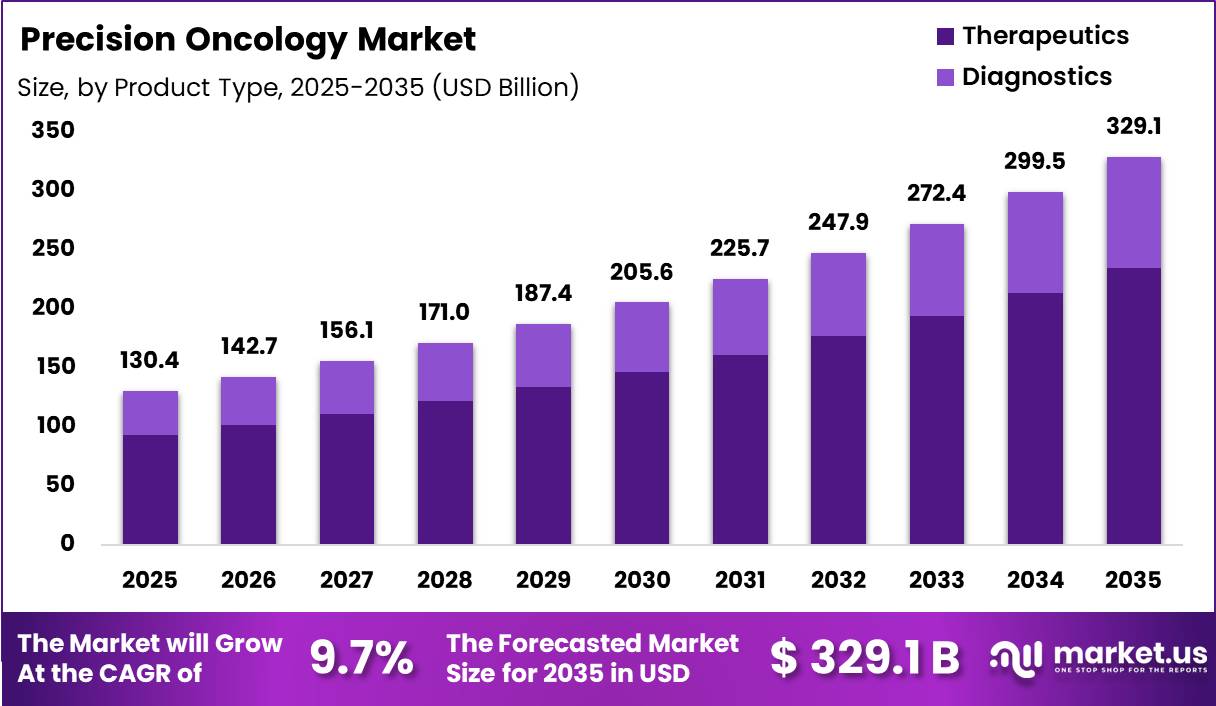
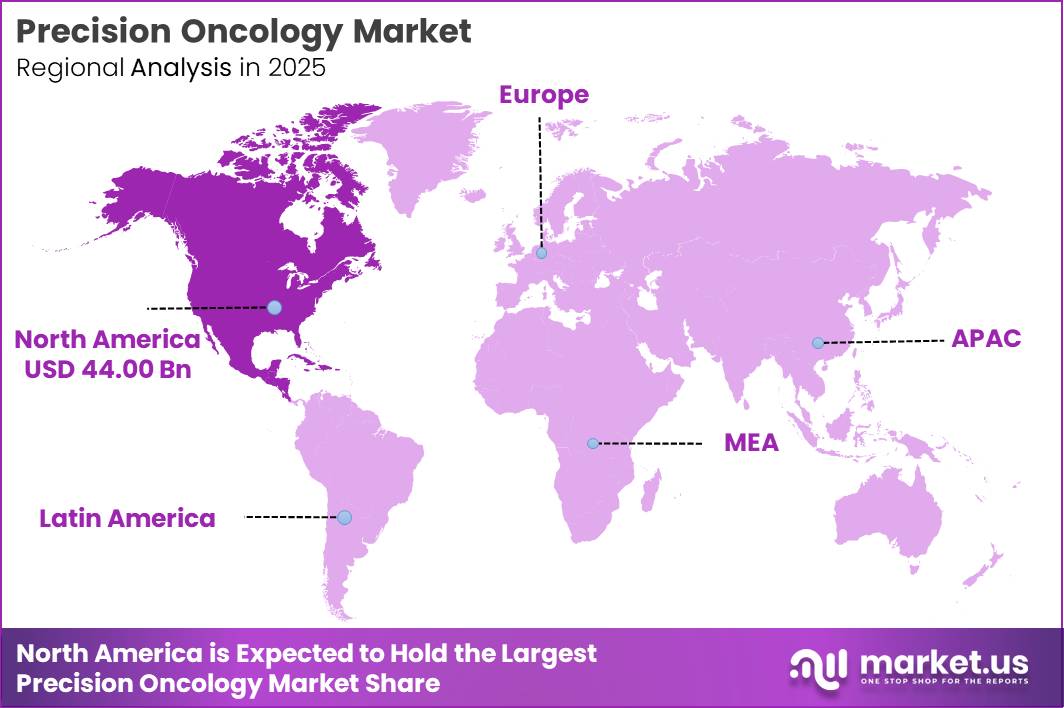
Global Precision Oncology Market size is expected to be worth around US$ 329.1 Billion by 2035 from US$ 130.4 Billion in 2025, growing at a CAGR of 9.7% during the forecast period from 2026 to 2035. In 2025, North America led the market, achieving over 44.0% share with a revenue of US$ 57.38 Billion.
Precision oncology is an advanced cancer care approach that uses genomic profiling, molecular diagnostics, and biomarker-driven therapies to tailor treatment to individual patients. According to the World Health Organization, cancer remains one of the leading causes of death globally, with nearly 20 million new cases and about 10 million deaths reported in recent global estimates.
This growing disease burden is accelerating the adoption of personalized cancer treatment strategies across healthcare systems worldwide. Pioneering research supported by organizations such as the National Cancer Institute and World Health Organization has strengthened the development of precision oncology through advances in next-generation sequencing, immunotherapy, and targeted drug development.
Molecular tumor boards are increasingly used in clinical settings to interpret genetic data and guide treatment selection. Studies indicate that over 60% of cancer therapies in development now incorporate biomarker-based strategies, improving response rates and reducing adverse effects compared to conventional chemotherapy.
Regulatory frameworks and healthcare initiatives from agencies such as the U.S. Food and Drug Administration (FDA) and the National Institutes of Health are supporting faster approval pathways for companion diagnostics and precision therapeutics.
Adoption of artificial intelligence in oncology is expected to improve early detection accuracy by up to 30% in pilot studies. Integration of electronic health records with genomic databases is enhancing real-time clinical decision-making, enabling more personalized and effective cancer care.
Key Takeaways
- The global Precision Oncology Market was valued at US$ 130.4 Billion in 2025.
- The global Precision Oncology Market is projected to grow at a CAGR of 9.7% and is estimated to reach US$ 329.1 Billion by 2035.
- By Product Type, Therapeutics dominated the market, accounting for 71.30% of the total market share in 2025.
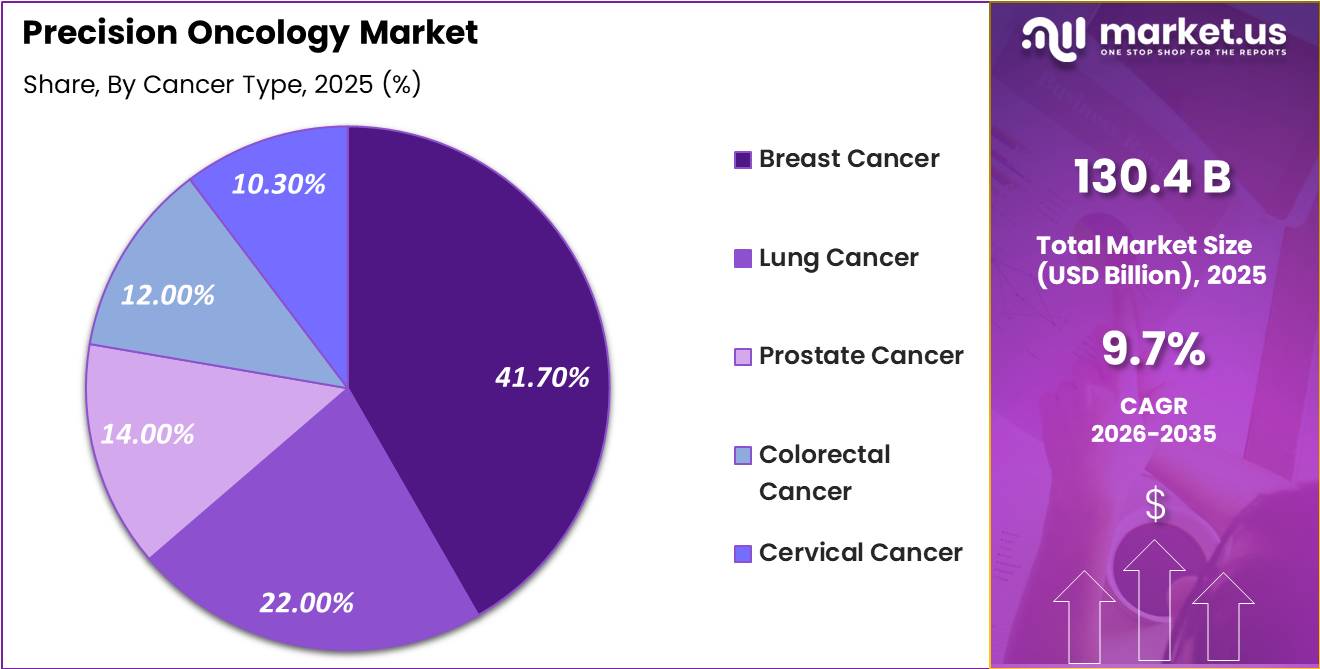
- By Cancer Type,Breast Cancer dominated the market, constituting 41.70% of the total market share.
- By Technology, Next-Generation Sequencing (NGS) dominated the market, constituting 46.00% of the total market share
- Among regions, North America emerged as the leading regional market, contributing 44.0% of the Global Precision Oncology Market revenue in 2025.
Product Type Segmentation
The Product Type segmentation of the Precision Oncology Market is primarily divided into Therapeutics and Diagnostics, with Therapeutics dominating the landscape in 2025 due to the growing shift toward targeted and biomarker-driven cancer treatments.
Therapeutics account for approximately 71.30% of the total market share, reflecting strong clinical adoption of precision medicines such as targeted therapies, immunotherapies, and combination regimens designed to improve patient-specific outcomes.
The rising prevalence of cancer globally, coupled with advancements in molecular biology and drug discovery platforms, has significantly strengthened demand for highly individualized treatment approaches. Pharmaceutical companies are increasingly investing in companion diagnostics-linked drug development, further reinforcing the dominance of the therapeutics segment.
Diagnostics, holding around 28.70% of the market share, play a critical enabling role in precision oncology. This segment includes genomic testing, biomarker analysis, and molecular diagnostics that guide treatment selection and monitor disease progression. Although smaller in share compared to therapeutics, diagnostics are experiencing rapid growth due to expanding adoption of next-generation sequencing and liquid biopsy technologies.
The integration of diagnostic insights into clinical decision-making is becoming essential, as it ensures treatment accuracy and improves therapeutic efficiency. Together, both segments form a tightly interconnected ecosystem, with diagnostics enabling precise therapeutic interventions that define modern oncology care.
Cancer Type Segmentation
The Cancer Type segmentation of the Precision Oncology Market is led by Breast Cancer, which dominates with approximately 41.70% market share in 2025. This dominance is attributed to high global incidence rates, strong screening programs, and significant advancements in biomarker-based therapies such as HER2-targeted treatments and hormone receptor-specific drugs.
Breast cancer has also benefited from well-established companion diagnostic frameworks, making it one of the most advanced areas in precision oncology adoption. Lung Cancer follows with around 22.00% share, driven by increasing prevalence linked to smoking and environmental factors, along with rapid advancements in targeted therapies for EGFR, ALK, and ROS1 mutations.
Prostate Cancer accounts for approximately 14.00%, supported by growing use of genomic profiling to guide hormone-based and radioligand therapies. Colorectal Cancer holds about 12.00%, where molecular testing for MSI and KRAS mutations is increasingly guiding treatment pathways. Cervical Cancer contributes nearly 10.30%, with precision approaches focusing on HPV-related biomarkers and early detection strategies.
Overall, the segmentation reflects a strong shift toward molecularly defined cancer subtypes, where treatment strategies are increasingly determined by genetic and biomarker profiles rather than traditional histological classification, significantly improving patient outcomes and survival rates.
Technology Segmentation
The Technology segmentation of the Precision Oncology Market is dominated by Next-Generation Sequencing (NGS), which holds approximately 46.00% market share in 2025. NGS has become the cornerstone of precision oncology due to its ability to rapidly sequence large sections of DNA and RNA, enabling comprehensive tumor profiling.
Its widespread adoption is driven by declining sequencing costs, improved turnaround times, and increasing clinical utility in identifying actionable mutations for targeted therapies. NGS is extensively used in both research and clinical diagnostics, particularly in companion diagnostic development and liquid biopsy applications.
Other technologies in the market include polymerase chain reaction (PCR)-based testing, immunohistochemistry (IHC), in situ hybridization (ISH), and emerging technologies such as single-cell sequencing and multi-omics platforms.
While these contribute collectively to the broader ecosystem, they are increasingly being integrated with NGS workflows to enhance diagnostic accuracy and clinical relevance. The growing trend toward multi-platform genomic analysis is further strengthening the role of NGS as a foundational technology.
Overall, the technology landscape is evolving toward high-throughput, data-intensive solutions that enable real-time tumor characterization. The dominance of NGS reflects the industry’s transition from single-biomarker testing to comprehensive genomic profiling, enabling more precise and personalized oncology treatment strategies.
End User Segmentation
The End User segmentation of the Precision Oncology Market is led by Hospitals & Diagnostic Centers, which account for approximately 46.80% market share in 2025. This dominance is driven by the increasing integration of precision medicine into routine clinical workflows, particularly in oncology departments where genomic testing and biomarker-based treatment selection are becoming standard practice.
Hospitals benefit from advanced infrastructure, multidisciplinary expertise, and direct access to patient populations, enabling efficient adoption of precision oncology solutions. Diagnostic centers also play a critical role by providing specialized molecular and genomic testing services that support clinical decision-making.
Other key end users include academic and research institutes, specialty oncology clinics, and pharmaceutical and biotechnology companies. Academic and research institutions are essential for innovation, clinical trials, and biomarker discovery, while specialty clinics focus on delivering highly personalized cancer care. Pharmaceutical companies increasingly utilize precision oncology tools during drug development and companion diagnostic validation.
The growing collaboration between hospitals, diagnostic laboratories, and research organizations is accelerating the adoption of precision oncology globally. As healthcare systems shift toward value-based care, end users are increasingly prioritizing technologies that improve treatment outcomes, reduce trial-and-error prescribing, and enhance overall efficiency in cancer management.
Application Segmentation
The Application segmentation of the Precision Oncology Market is primarily driven by Treatment Selection & Personalized Therapy, which holds approximately 39.00% market share in 2025. This segment represents the core value proposition of precision oncology, where genomic and biomarker data are used to tailor treatment plans for individual patients.
The increasing availability of targeted therapies and companion diagnostics has significantly strengthened this application area, enabling oncologists to select the most effective therapies while minimizing adverse effects. Other major applications include cancer screening and early detection, prognosis and risk assessment, drug discovery and development, and monitoring of treatment response.
Screening and early detection applications are gaining traction due to advancements in liquid biopsy and non-invasive diagnostic tools, which allow for earlier intervention and improved survival outcomes. In drug discovery, precision oncology plays a crucial role in identifying actionable targets and stratifying patient populations for clinical trials, thereby improving success rates of new therapies.
Monitoring applications are also expanding, particularly with real-time tracking of minimal residual disease and treatment resistance. Overall, the application landscape highlights a strong shift toward data-driven, patient-centric oncology care, where precision tools are increasingly embedded across the entire cancer care continuum.
Market Segmentations
By Product Type
- Therapeutics
- Diagnostics
By Cancer Type
- Breast Cancer
- Lung Cancer
- Prostate Cancer
- Colorectal Cancer
- Cervical Cancer
By Technology
- Next-Generation Sequencing (NGS)
- PCR
- Immunohistochemistry (IHC)
- In Situ Hybridization (ISH/FISH)
- AI & Bioinformatics Platforms Market Dynamics
By End User
- Hospitals & Diagnostic Centers
- Pharmaceutical & Biotechnology Companies
- Diagnostic Laboratories
- Academic & Research Institutes
By Application
- Treatment Selection & Personalized Therapy
- Companion Diagnostics
- Biomarker Discovery
- Drug Development & Clinical Trials
Drivers
Biomarker linked therapy expansion via companion diagnostics
The strongest structural demand driver in 2026 remains the expanding stock of biomarker gated oncology therapies, because every new targeted indication mechanically enlarges the installed base for associated testing, interpretation software, and workflow services.
FDA’s companion diagnostic list continues to show a deepening menu of oncology linked assays across EGFR, ALK, KRAS, BRAF, RET, NTRK, BRCA, HER2, MSI, TMB, IDH and other markers, with notable additions still appearing through 2023–2024.
Such as tests tied to selpercatinib, larotrectinib, inavolisib, vorasidenib and zolbetuximab linked biomarker workflows; this breadth matters commercially because each approved biomarker drug pair raises testing frequency at diagnosis, relapse, and line switch decisions rather than only creating one time lab revenue.
The revenue model is therefore shifting from single analyte episodic testing toward recurring multi marker decision support, where assay makers, reference labs, informatics vendors, and pharma CDx partners capture value from higher test complexity, re biopsy avoidance, and faster treatment matching.
In practice, markets with dense targeted therapy usage such as the US, Germany, France, Japan, and South Korea see the fastest monetization because therapy labels explicitly require or strongly reinforce biomarker confirmation before prescribing.
| Driver | (~) % Impact on CAGR Forecast | Geographic Relevance | Impact Timeline |
|---|---|---|---|
| Biomarker-linked therapy expansion via companion diagnostics | +2.4% | North America core, EU5, Japan, South Korea, urban China | Medium term (2-4 years) |
| Liquid biopsy and MRD reimbursement broadening | +1.9% | US core, Western Europe lead centers, developed APAC spill-over | Short term (≤ 2 years) |
| Broad-panel NGS standardization in clinical pathways | +1.7% | US academic/community mix, EU reference networks, Gulf tertiary hubs, APAC metros | Medium term (2-4 years) |
| Tissue-agnostic and rare-mutation treatment models | +1.3% | North America, EU, Japan, Australia, selective China uptake | Medium term (2-4 years) |
| Regulatory alignment for CDx under FDA and EU IVDR frameworks | +1.1% | US core, EU, UK associated pathways | Short term (≤ 2 years) |
| Health-system economics favoring responder selection | +1.5% | EU reimbursement markets, US value-based oncology, Canada, advanced APAC | Long term (≥ 4 years) |
Challenges
Reimbursement Pathway Fragmentation
Precision oncology’s reimbursement challenge is not a blanket absence of payment but a multi-layered mismatch between rapidly expanding multigene testing use cases and slower payer coding, coverage, and evidence translation frameworks, particularly where Medicare NCD boundaries leave room for MAC-level interpretation and private payers apply narrower medical necessity logic across tumor type, analyte class, and line of therapy definitions.
The operational drag is reflected in a recurring revenue cycle lag of 30 to 90 days for novel assay categories, along with increased claim denials and rework requirements for unlisted or documentation-intensive claims.
Laboratories also face under-compensation for the clinical interpretation effort involved in complex testing, while broader testing panels often create a persistent margin squeeze because reimbursement structures do not adequately align with the scope of services provided.
Furthermore, legacy molecular diagnostics economics has demonstrated that coding transitions can significantly alter reimbursement levels, and in 2026, payment outcomes continue to depend largely on local coverage determinations and regional reimbursement practices rather than on fully harmonized national coverage pathways.
Strategically, this creates an estimated -1.4% point CAGR friction because laboratories and platform vendors must maintain larger reimbursement teams, duplicate health economic dossiers by payer, redesign test menus around reimbursable biomarker subsets, and sequence commercial launches toward geographies with clearer companion diagnostic and NGS payment pathways before broader diffusion can occur.
| Challenge | (~) % CAGR Friction Drag | Geographic Relevance | Mitigation Horizon |
|---|---|---|---|
| Reimbursement Pathway Fragmentation | -1.4% | North America core, EU payer markets, select APAC private systems | Medium term (2-4 years) |
| Biomarker Workflow Turnaround Delays | -1.1% | U.S. community oncology, EU hospital networks, APAC urban hubs | Short term (≤ 2 years) |
| Molecular Talent Capacity Gap | -0.9% | North America core, Western Europe, advanced APAC labs | Medium term (2-4 years) |
| Actionability Evidence Dilution | -1.0% | Global precision therapy markets, EU guideline hubs, U.S. academic centers | Medium term (2-4 years) |
| Data Interoperability Governance Friction | -0.8% | EU regulatory hubs, U.S. integrated networks, Japan and Korea centers | Long term (≥ 4 years) |
| Global Access Execution Imbalance | -1.6% | LATAM referral corridors, MEA oncology centers, South and Southeast Asia | Long term (≥ 4 years) |
Restraints
Patchy test reimbursement
Precision oncology demand is still constrained less by scientific validity than by uneven payment architecture: in the U.S., CMS reimbursement for Illumina’s FDA-approved TruSight Oncology Comprehensive only became effective on January 1, 2026 at $ 2,989.55 per test, which highlights that broad coverage is still assay-specific rather than universal across comprehensive genomic profiling workflows.
That matters because biomarker testing penetration is already high in some major tumors about 95% in NSCLC and around 80% in breast and ovarian cancer as of December 2024, so incremental market growth increasingly depends on expanding reimbursement into lagging indications, repeat-testing use cases, and community settings rather than early-adopter academic centers.
The quantitative bottleneck is that FDA approval does not automatically guarantee payer uptake, while CMS’s national NGS framework remains tightly tied to advanced cancer settings and FDA-approved or cleared companion diagnostics, leaving many complementary, laboratory-developed, early-line, minimal residual disease, ctDNA, and multi-omic workflows exposed to local or plan-level policy friction.
The strategic result is delayed test ordering, lower attach rates between diagnostics and targeted therapies, elongated revenue-conversion cycles for assay developers, and margin dilution at provider labs that must absorb denial risk, prior-authorization labor, and write-offs before precision oncology volumes can scale profitably.
| Restraint | (~) % Impact on CAGR Forecast | Geographic Relevance | Impact Timeline |
|---|---|---|---|
| Patchy test reimbursement | -2.1% | North America core, EU, select APAC | Short term (≤ 2 years) |
| CDx regulatory drag | -1.6% | U.S., EU, Japan, South Korea | Medium term (2-4 years) |
| Tissue/pathology bottlenecks | -1.8% | U.S. community care, EU, APAC corridors | Short term (≤ 2 years) |
| Trial enrollment mismatch | -1.4% | North America, EU, China hubs | Medium term (2-4 years) |
| Oncology drug shortages | -1.2% | U.S., EU, LMIC spillover | Short term (≤ 2 years) |
| EU IVDR compliance burden | -1.5% | EU core, UK-linked referral flows | Medium term (2-4 years) |
Opportunity
Community oncology SaaS enablement
Community oncology digitization represents a significant untapped growth opportunity, as precision oncology adoption remains concentrated in major academic medical centers, while the next phase of market expansion lies in software-enabled deployment across fragmented community treatment settings that often lack molecular tumor boards, reimbursement coding expertise, and genomics-trained personnel.
In both the United States and Europe, this creates a platform opportunity to provide clinical decision support, prior authorization automation, specimen logistics, and interpretation-as-a-service to thousands of non-academic oncology sites.
Such solutions have the potential to reduce test ordering friction by an estimated 25% to 40%, shorten report turnaround times by 2 to 4 days, improve biomarker testing compliance by 10 to 20 percentage points, and decrease customer acquisition costs per prescribing oncologist by 15% to 25% compared with traditional specialist sales models.
Collectively, these efficiencies could unlock a monetizable mid-market opportunity valued at approximately USD 3 billion to USD 5 billion by 2031. This opportunity is further supported by existing Medicare coverage for FDA-approved next-generation sequencing (NGS) companion diagnostics in advanced cancers and repeat testing in defined clinical settings, making workflow optimization, rather than reimbursement eligibility alone, the primary bottleneck for market monetization.
| Opportunity | (~) % Potential CAGR Upside | Geographic Relevance | Execution Window |
|---|---|---|---|
| MRD-guided treatment orchestration | +2.4% | North America core, EU, Japan | Short term (≤ 2 years) |
| Community oncology SaaS enablement | +1.9% | U.S., EU5, India, Brazil | Short term (≤ 2 years) |
| Pan-ethnic genomic data roll-up | +2.1% | APAC, Middle East, Africa, LatAm | Medium term (2-4 years) |
| Companion diagnostic bundling with ADCs and bispecifics | +1.7% | U.S., EU, South Korea, China | Medium term (2-4 years) |
| Precision oncology entry into earlier-stage disease | +2.8% | North America, EU, developed APAC | Medium term (2-4 years) |
| Cross-border platform M&A and lab consolidation | +1.5% | U.S., EU, APAC emerging markets | Long term (≥ 4 years) |
Regional Analysis
In 2025, North America led the market, achieving over 44.0% share with a revenue of US$ 57.38 Billion.
The North Americas dominance is driven by advanced cancer genomics infrastructure, strong adoption of next-generation sequencing (NGS), and the presence of major pharmaceutical and biotechnology companies. Favorable reimbursement policies and accelerated regulatory approvals from agencies such as the U.S. FDA further support rapid commercialization of targeted therapies and companion diagnostics.
Europe represents the second-largest market, supported by national cancer control programs, expanding biobanking initiatives, and growing integration of precision medicine into public healthcare systems, particularly in Germany, the UK, and France.
Asia-Pacific is emerging as the fastest-growing region, fueled by rising cancer incidence, expanding healthcare expenditure, and increasing investments in genomic research across China, Japan, and India. Additionally, partnerships between global biotech firms and regional hospitals are enhancing access to advanced diagnostics.
Latin America and the Middle East & Africa remain in earlier stages of adoption but are witnessing gradual growth due to improving healthcare infrastructure and rising awareness of personalized cancer treatment approaches. Overall, regional dynamics highlight a shift toward broader global adoption of precision oncology technologies across both developed and emerging markets worldwide adoption.
Key Regions and Countries
North America
- The US
- Canada
Europe
- Germany
- France
- The U.K.
- Italy
- Spain
- Russia & CIS
- Rest of Europe
Asia Pacific
- China
- India
- Japan
- South Korea
- ASEAN
- Australia & New Zealand
- Rest of Asia Pacific
Middle East & Africa
- GCC
- South Africa
- Rest of Middle East & Africa
Latin America
- Brazil
- Mexico
- Rest of Latin America
Key Player Analysis
Precision oncology market is moderately consolidated, shaped by global life sciences leaders and fast-scaling diagnostics and AI-driven firms. Competition is intensifying as the market shifts toward biomarker-guided therapies, genomic profiling, and companion diagnostics. The sector is transitioning toward data-driven personalized cancer care.
Market participants are grouped into multinational life sciences companies, specialized molecular diagnostics providers, and innovation-driven biotech and AI analytics firms. Multinationals provide scale and integrated platforms, while specialty firms focus on liquid biopsy and clinical testing. Innovation-driven players prioritize AI-enabled interpretation and precision biomarker discovery.
Competition is driven by R&D intensity, strategic partnerships, and expansion of genomic data ecosystems. Firms integrate end-to-end workflows from sequencing to clinical reporting. Collaboration with hospitals and research networks accelerates trials and evidence generation. Ecosystem competition centers on diagnostics, biomarkers, and AI-based decision support tools.
Key players include multinational leaders such as Roche Holding AG, Thermo Fisher Scientific Inc., Abbott Laboratories, Agilent Technologies Inc., and Bio-Rad Laboratories Inc., which focus on integrated diagnostics and platform expansion.
Specialty genomic and liquid biopsy firms include Illumina Inc., QIAGEN N.V., Foundation Medicine Inc., Guardant Health Inc., Exact Sciences Corporation, NeoGenomics Inc., Natera Inc., and Myriad Genetics Inc.. Innovation-focused firms such as Tempus AI Inc. and Caris Life Sciences emphasize AI-driven precision oncology and multimodal data integration.
Top Key Players
- Roche Holding AG
- Illumina Inc.
- Thermo Fisher Scientific Inc.
- QIAGEN N.V.
- Foundation Medicine Inc.
- Guardant Health Inc.
- Exact Sciences Corporation
- Tempus AI Inc.
- Agilent Technologies Inc.
- Bio-Rad Laboratories Inc.
- NeoGenomics Inc.
- Natera Inc.
- Myriad Genetics Inc.
- Caris Life Sciences
- Abbott Laboratories
Recent Developments
- In July 2025, Illumina launched an updated TruSight Oncology 500 v2 assay for comprehensive genomic profiling in cancer research and precision medicine applications.
- In October 2025, Thermo Fisher announced an agreement to acquire Clario for up to $9.4 billion to strengthen clinical trial data and oncology research infrastructure.
- In November 2025, Abbott announced an agreement to acquire Exact Sciences in a deal valued at approximately $21–23 billion, expanding into cancer screening and precision oncology diagnostics.
Report Scope
| Report Features | Description |
|---|---|
| Market Value (2025) | US$ 130.4 Billion |
| Forecast Revenue (2035) | US$ 329.1 Billion |
| CAGR (2026-2035) | 9.7% |
| Base Year for Estimation | 2025 |
| Historic Period | 2020-2024 |
| Forecast Period | 2026-2035 |
| Report Coverage | Revenue Forecast, Market Dynamics, Competitive Landscape, Recent Developments |
| Segments Covered | By Product Type (Therapeutics ,Diagnostics) By Cancer Type(Breast Cancer ,Lung Cancer ,Prostate Cancer, Colorectal Cancer ,Cervical Cancer)By Technology (Next-Generation Sequencing (NGS) ,PCR, Immunohistochemistry (IHC) ,In Situ Hybridization (ISH/FISH) ,AI & Bioinformatics Platforms ) By End User (Hospitals & Diagnostic Centers ,Pharmaceutical & Biotechnology Companies ,Diagnostic Laboratories, Academic & Research Institutes) By Application(Treatment Selection & Personalized Therapy ,Companion Diagnostics ,Biomarker Discovery ,Drug Development & Clinical Trials) |
| Regional Analysis | North America – The US, Canada; Europe – Germany, France, U.K., Italy, Spain, Russia & CIS, Rest of Europe; Asia Pacific – China, India, Japan, South Korea, ASEAN, Australia & New Zealand, Rest of Asia Pacific; Middle East & Africa – GCC, South Africa, Rest of Middle East & Africa; Latin America – Brazil, Mexico, Rest of Latin America |
| Competitive Landscape | Roche Holding AG ,Illumina Inc. ,Thermo Fisher Scientific Inc. ,QIAGEN N.V. ,Foundation Medicine Inc., Guardant Health Inc. ,Exact Sciences Corporation ,Tempus AI Inc. ,Agilent Technologies Inc. ,Bio-Rad Laboratories Inc. ,NeoGenomics Inc. ,Natera Inc. ,Myriad Genetics Inc. ,Caris Life Sciences ,Abbott Laboratories |
| Customization Scope | Customization for segments, region/country-level will be provided. Moreover, additional customization can be done based on the requirements. |
| Purchase Options | We have three licenses to opt for: Single User License, Multi-User License (Up to 5 Users), Corporate Use License (Unlimited User and Printable PDF) |





































