


Market Overview
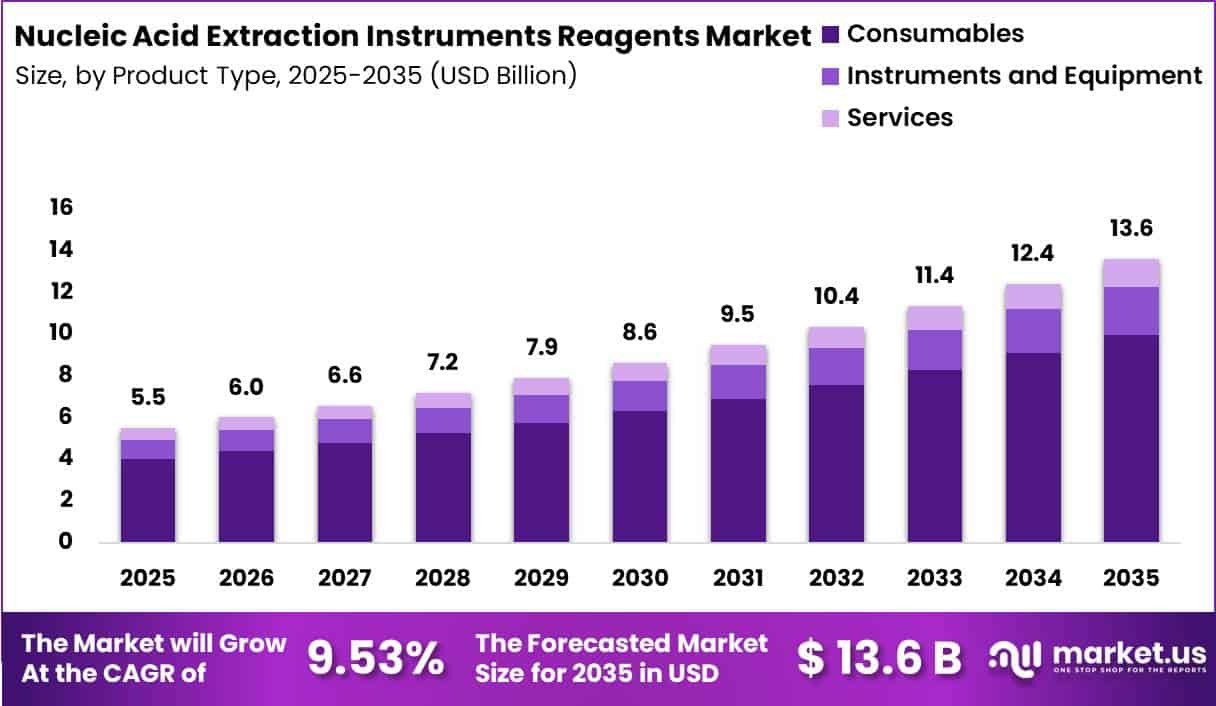
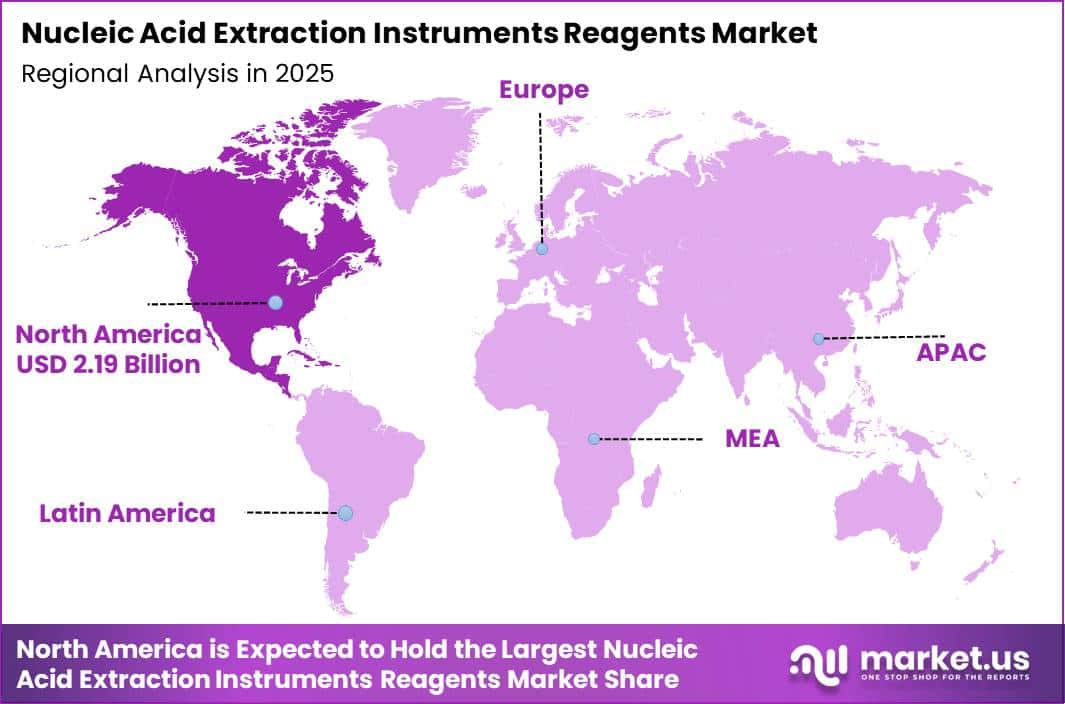
Global Nucleic Acid Extraction Instruments Reagents Market size is expected to be worth around US$ 13.63 Billion by 2035 from US$ 5.49 Billion in 2025, growing at a CAGR of 9.53% during the forecast period from 2026 to 2035. In 2025, North America led the market, achieving over 40.00% share with a revenue of US$ 2.19 Billion.
The global nucleic acid extraction instruments and reagents industry is gaining importance as molecular diagnostics, precision medicine, infectious disease surveillance, and genomic research become central to modern healthcare systems.
Nucleic acid extraction is the first and one of the most critical steps in molecular testing because the quality of extracted DNA or RNA directly influences the accuracy of downstream applications such as PCR, real-time PCR, next-generation sequencing (NGS), and genetic analysis.
The U.S. Food and Drug Administration (FDA) recognizes nucleic acid-based tests as essential diagnostic tools for detecting infectious diseases, inherited disorders, cancer biomarkers, and genetic variations, while also maintaining an expanding list of approved and cleared molecular diagnostic assays. Public health agencies continue to strengthen genomic surveillance capabilities, further increasing the need for reliable extraction technologies.
According to the U.S. Centers for Disease Control and Prevention (CDC), whole-genome sequencing has become a cornerstone of pathogen surveillance, enabling rapid identification of bacteria, viruses, and fungi and supporting outbreak investigations. The sequencing workflow begins with nucleic acid extraction, highlighting the indispensable role of extraction instruments and reagents in laboratory operations.
Demand is also supported by the widespread adoption of molecular diagnostic testing in clinical laboratories. The CDC notes that nucleic acid amplification tests (NAATs), including RT-PCR, provide high sensitivity and specificity for detecting respiratory viruses such as influenza and SARS-CoV-2 and remain the preferred laboratory methods for many infectious diseases. These tests depend on high-quality nucleic acid extraction to ensure accurate and reproducible results.
The FDA also continues to regulate a broad range of nucleic acid testing platforms, including genetic analyzers, microbial detection systems, sequencing-based diagnostics, and blood screening assays, reflecting the expanding clinical adoption of molecular technologies.
As healthcare systems invest in personalized medicine, oncology testing, and infectious disease preparedness, the demand for automated extraction instruments, high-performance reagents, and standardized workflows is expected to remain strong across hospitals, diagnostic laboratories, research institutes, and biotechnology organizations.
Key Takeaways
- Market Size : Nucleic Acid Extraction Instruments Reagents Market size is expected to be worth around US$ 13.63 Billion by 2035 from US$ 5.49 Billion in 2025.
- Market Share : The market is growing at a CAGR of 9.53% during the forecast period from 2026 to 2035.
- Product Type Analysis : The Kits & Reagents segment dominated the Nucleic Acid Extraction Instruments and Reagents Market, accounting for 73.00% of the market share in 2025.
- Extraction Type Analysis : The DNA Isolation & Purification segment held the largest share of the market, accounting for 58.00% in 2025.
- Extraction Method Analysis : The Magnetic Bead-Based Extraction segment accounted for 41.00% of the global market in 2025, making it the leading extraction method.
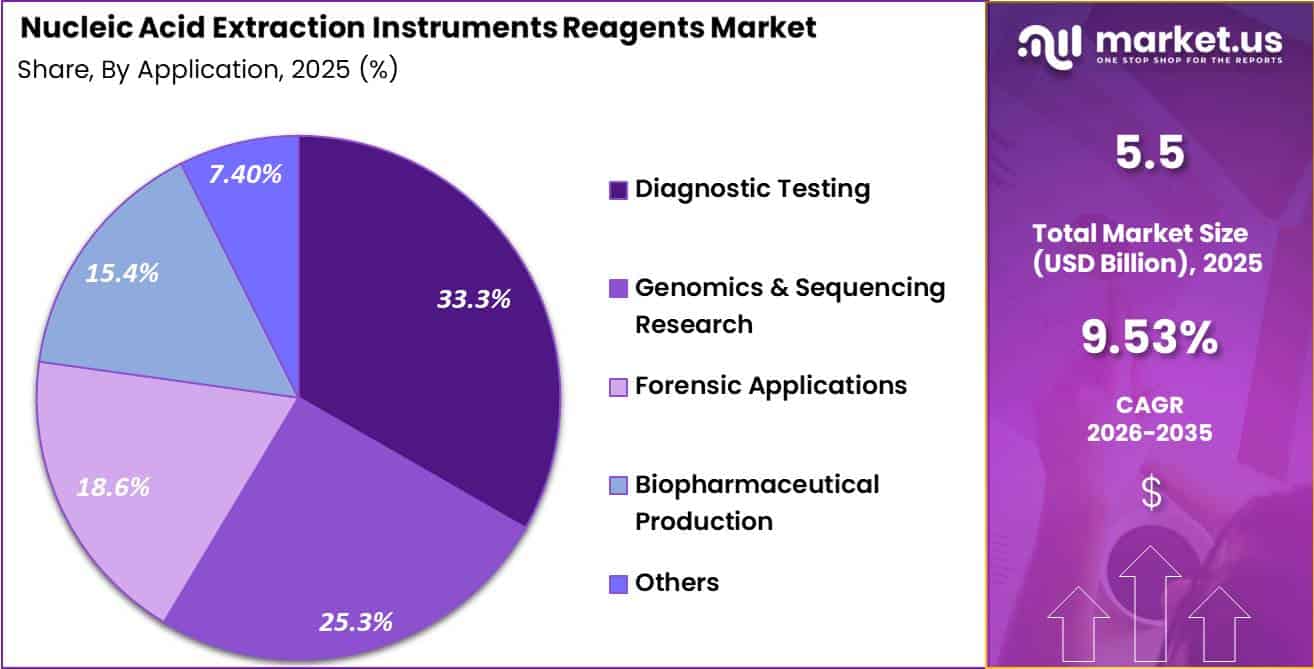
- Application Analysis : The Diagnostic Testing segment dominated the market with 33.30% share in 2025.
- End User Analysis : The Hospitals & Diagnostic Centers segment accounted for the largest market share of 33.30% in 2025.
- Regional Analysis : In 2025, North America led the market, achieving over 40.00% share with a revenue of US$ 2.19 Billion.
Product Type Analysis
The Kits & Reagents segment dominated the Nucleic Acid Extraction Instruments and Reagents Market, accounting for 73.00% of the market share in 2025. This leadership is driven by the recurring demand for extraction reagents, buffers, magnetic beads, enzymes, columns, and purification kits used in every nucleic acid extraction workflow.
Unlike instruments, kits and reagents are consumables that require regular replacement, creating consistent purchasing demand from hospitals, diagnostic laboratories, research institutes, and biotechnology companies. The increasing use of PCR, real-time PCR, next-generation sequencing (NGS), and molecular diagnostic testing has further strengthened the need for high-quality extraction kits.
The U.S. FDA recognizes nucleic acid isolation and purification reagents as essential components of molecular diagnostic systems, emphasizing their role in producing accurate clinical results.
The Automated Extraction Instruments segment is expanding steadily as laboratories adopt automation to improve throughput, reduce manual errors, and standardize workflows. Automated systems are increasingly preferred in high-volume diagnostic laboratories handling infectious disease testing and genomic sequencing.
Meanwhile, the Accessories & Consumables segment, including sample tubes, cartridges, filter tips, plates, and processing components, continues to grow alongside instrument installations. Rising laboratory automation, increasing molecular testing volumes, and expanding genomic research are expected to support demand across all product categories, while recurring purchases of kits and reagents will continue to generate the largest revenue contribution throughout the forecast period.
Extraction Type Analysis
The DNA Isolation & Purification segment held the largest share of the market, accounting for 58.00% in 2025. The segment benefits from the extensive use of DNA extraction in genetic testing, oncology diagnostics, inherited disease screening, forensic investigations, microbial identification, and next-generation sequencing.
DNA purification is a critical first step before PCR amplification and sequencing, making it indispensable in both clinical diagnostics and life science research. Increasing adoption of precision medicine and expanding genomic research programs worldwide continue to support demand for high-quality DNA extraction solutions. FDA-approved molecular diagnostic tests also rely heavily on purified DNA samples for accurate disease detection and genetic analysis.
The RNA Isolation & Purification segment is experiencing strong growth due to rising demand for infectious disease diagnostics, transcriptomics, gene expression studies, and RNA sequencing. RNA extraction gained significant importance during the expansion of RT-PCR testing and remains essential for virology and molecular biology research.
The Total Nucleic Acid (DNA+RNA) Extraction segment is also gaining traction because laboratories increasingly require simultaneous extraction of DNA and RNA from a single specimen to improve workflow efficiency and maximize sample utilization.
This approach supports comprehensive molecular testing while reducing processing time and reagent consumption, making it increasingly valuable in clinical laboratories, research institutions, and pharmaceutical development.
Extraction Method Analysis
The Magnetic Bead-Based Extraction segment accounted for 41.00% of the global market in 2025, making it the leading extraction method. Magnetic bead technology has become the preferred choice because it delivers high nucleic acid purity, excellent recovery rates, automation compatibility, and efficient processing of large sample volumes.
The method is widely used in automated extraction instruments employed for PCR, next-generation sequencing, and clinical molecular diagnostics. Its ability to minimize contamination while supporting high-throughput workflows has made it highly attractive for hospitals, public health laboratories, and research organizations.
The Silica Membrane-Based Extraction segment continues to maintain a significant market presence due to its simplicity, reliability, and broad use in manual laboratory workflows. Silica column kits remain widely adopted for DNA and RNA purification across research and clinical laboratories because they consistently produce high-quality nucleic acids.
The Liquid-Based Extraction segment serves specialized laboratory applications where conventional chemical extraction techniques remain appropriate, particularly for research purposes. The Others category includes emerging extraction technologies designed to improve speed, yield, and automation compatibility.
Continuous technological improvements focusing on workflow simplification, contamination control, and higher processing capacity are expected to strengthen adoption of advanced extraction methods during the forecast period.
Application Analysis
The Diagnostic Testing segment dominated the market with 33.30% share in 2025. The increasing use of molecular diagnostics for infectious diseases, genetic disorders, cancer biomarker detection, and companion diagnostics continues to drive demand for nucleic acid extraction technologies.
High-quality DNA and RNA extraction remains essential for PCR, RT-PCR, and sequencing-based diagnostic assays, making extraction systems a fundamental part of modern clinical laboratory workflows. The FDA continues to clear and approve numerous nucleic acid-based diagnostic tests, further supporting demand for reliable extraction products.
The Genomics & Sequencing Research segment represents another major application area as research institutions and biotechnology companies expand genomic analysis, personalized medicine, and biomarker discovery projects. Forensic Applications utilize nucleic acid extraction for human identification, criminal investigations, and DNA profiling.
The Biopharmaceutical Production segment depends on extraction technologies for vaccine development, cell and gene therapy research, biologics manufacturing, and quality control processes. The Others category includes agricultural genomics, veterinary diagnostics, environmental monitoring, and food safety testing.
Growing investment in molecular biology research and the continued expansion of precision medicine are expected to increase demand across all application areas over the coming years.
End User Analysis
The Hospitals & Diagnostic Centers segment accounted for the largest market share of 33.30% in 2025. This dominance is supported by the increasing number of molecular diagnostic tests performed for infectious diseases, cancer diagnostics, inherited disorders, and routine clinical testing.
Hospitals and diagnostic laboratories require reliable nucleic acid extraction systems to ensure accurate downstream PCR and sequencing results while maintaining rapid turnaround times. Growing adoption of automated extraction instruments has further improved laboratory efficiency and standardized testing procedures.
The Research & Academic Institutes segment remains a major contributor as universities and research centers continue expanding studies in genomics, molecular biology, and precision medicine. Pharmaceutical & Biotech Companies utilize nucleic acid extraction technologies extensively during drug discovery, biomarker identification, clinical research, vaccine development, and gene therapy programs.
The Forensic Laboratories segment also contributes steadily through DNA profiling, criminal investigations, and human identification applications. Increasing investments in genomic research, personalized healthcare, laboratory automation, and molecular testing infrastructure are expected to strengthen demand across all end-user categories, with hospitals and diagnostic centers maintaining their leading market position due to consistently high testing volumes and expanding molecular diagnostic services.
Market Segmentations
By Product Type
- Kits & Reagents
- Automated Extraction Instruments
- Accessories & Consumables
By Extraction Type
- DNA Isolation & Purification
- RNA Isolation & Purification
- Total Nucleic Acid (DNA+RNA) Extraction
By Extraction Method
- Magnetic Bead-Based Extraction
- Silica Membrane-Based Extraction
- Liquid-Based Extraction
- Others
By Application
- Diagnostic Testing
- Genomics & Sequencing Research
- Forensic Applications
- Biopharmaceutical Production
- Others
By End User
- Hospitals & Diagnostic Centers
- Research & Academic Institutes
- Pharmaceutical & Biotech Companies
- Forensic Laboratories
Drivers
Expansion of genomic surveillance & pathogen sequencing capacity
WHO’s 10-year Global Genomic Surveillance Strategy (2022–2032) explicitly targets universal timely access to pathogen sequencing for all 194 Member States by 2032, effectively committing governments and multilaterals to multi-year investment in sequencing and upstream sample-prep workflows, including nucleic acid extraction.
This is reinforced by regional initiatives such as World Bank-backed programs in Africa that have already supported sequencing of over 10,000 SARS-CoV-2 genomes in a single project, with several thousand sequences submitted to public databases from just a subset of participating countries, indicating the order of magnitude of incremental molecular runs once infrastructure is funded.
For extraction vendors, each additional sequenced genome typically requires one or more validated DNA/RNA extraction steps, with high-throughput platforms processing hundreds to thousands of samples per day; a single regional genomic node operating four 96-well automated extractors at 80% utilization can consume tens of thousands of extraction kits per month in reagents alone.
As low- and middle-income countries transition from episodic outbreak sequencing to continuous genomic surveillance.
Under these strategies, we can reasonably expect double-digit annual growth in pathogen-focused extraction volumes in Africa, parts of Asia, and Latin America from a relatively small installed base, which translates into an incremental 2 percentage-point uplift to global market CAGR over the 2026–2031 window, with the strongest inflection from 2027 onward as capital projects, workforce training, and regional sequencing hubs move from planning into operational scale-up.
| Driver | (~) % Impact on CAGR Forecast | Geographic Relevance | Impact Timeline |
|---|---|---|---|
| Expansion of genomic surveillance & pathogen sequencing capacity | +2.0% | North America, EU, APAC corridors, Africa public-health hubs | Medium term (2–4 years) |
| Growth in oncology, hereditary disease & NIPT molecular testing volumes | +1.8% | North America core, EU, East Asia, selected Middle East | Long term (≥ 4 years) |
| Post-COVID molecular lab automation & high-throughput workflows | +1.5% | North America core, EU, APAC tier-1 urban, LatAm spill-over | Short to medium term (≤ 4 years) |
| Decentralization of molecular diagnostics into community & point-of-care settings | +1.2% | North America, EU, APAC emerging, Africa urban nodes | Long term (≥ 4 years) |
| Regulatory standardization and quality-system tightening for nucleic-acid testing | +0.9% | North America core, EU, China, select APAC & LatAm | Medium term (2–4 years) |
| Expansion of biobanks, population genomics and precision-medicine cohorts | +1.4% | North America, EU, APAC corridors, GCC & selected Africa | Long term (≥ 4 years) |
Challenge
Cross-Contamination and Reagent Supply Risks Constrain Growth
Cross-contamination continues to be a significant challenge in nucleic acid extraction because the process is multi-step, involving sample transfer, lysis, purification, and downstream amplification. Each transition between these steps introduces the potential for errors, even in automated systems.
While automated platforms can reduce risks, their effectiveness still relies on several factors, including sealed consumables, negative-pressure containment, HEPA filtration, and strict separation between pre- and post-amplification areas.
In large-volume molecular laboratories, even a small invalidation or rerun rate of 0.3% to 0.6% can lead to an increase of 8–18 minutes of labor per batch, along with 2–5% additional reagent consumption and a measurable decrease in throughput for 96- to 384-well workflows.
The overall frictional impact of approximately 1.4% highlights the fact that while contamination control does not diminish current demand, it necessitates ongoing capital expenditures on closed systems, recurring redesign of consumables, and stricter quality control protocols to maintain confidence in assays at scale.
Reagent availability poses a fundamental operational risk due to the reliance on multi-component chemistry stacks, which include lysis buffers, magnetic beads, silica surfaces, enzymes, and cartridge plastics. These components are often part of long, geographically dispersed supply chains.
An interruption in a single shipment can lead to replenishment delays of 10 to 21 days for high-turnover kits, especially when cold-chain components, sterilized plastics, or specialized beads are sourced from a limited supplier base.
Such volatility typically increases landed costs by 4% to 9% during disruption periods and can reduce the speed of order fulfillment, even when market demand remains strong. The estimated drag of 1.1% CAGR accounts for recurring inventory buffers, dual-sourcing expenses, and regional stockpiling practices, with the most significant vulnerabilities in APAC logistics corridors, EU import nodes, and Latin American distribution networks.
| Challenge | (~) % CAGR Friction Drag | Geographic Relevance | Mitigation Horizon |
|---|---|---|---|
| Workflow contamination control | -1.4% | North America core, EU lab hubs, APAC reference labs | Short term (≤ 2 years) |
| Reagent supply volatility | -1.1% | APAC logistics corridors, EU import nodes, LATAM distributors | Medium term (2-4 years) |
| Automation integration burden | -1.3% | North America core, EU hubs, China tier-1 labs | Medium term (2-4 years) |
| Skilled labor shortage | -0.8% | North America, Western Europe, East Asia | Long term (≥ 4 years) |
| Sample heterogeneity stress | -1.0% | Global, strongest in oncology and infectious disease labs | Medium term (2-4 years) |
| Regulatory validation latency | -1.2% | U.S., EU, Japan, South Korea | Long term (≥ 4 years) |
Restraints
FDA Evidence Requirements Slow US IVD Expansion
In the United States, nucleic acid extraction instruments and reagents that underpin molecular testing fall under FDA’s IVD framework, with device classification and pre-market pathways (510(k), De Novo, PMA) increasingly shaped by risk-based assessments and the experience gained during the COVID-19 emergency use authorization (EUA) period.
While nucleic acid extraction kits themselves are often embedded within broader test systems, the FDA’s growing inventory of nucleic acid-based tests and companion diagnostics, more than 100 human nucleic acid-based tests and dozens of IVD CDx approved, has led to more stringent expectations around lot-to-lot consistency, interference studies, and sample-type claims, which in practice can add 6–9 months and several hundred thousand dollars in incremental study costs for platforms that seek broad clinical claims rather than “for laboratory use” positioning.
Furthermore, the post-COVID push to transition from EUA to full authorization has forced many labs and manufacturers to retrofit existing extraction workflows into fully documented, validated processes, resulting in a wave of supplementary submissions, quality system upgrades, and software validation efforts (for LIMS and automation interfaces) that tie up regulatory and engineering bandwidth.
For smaller and mid-tier reagents companies, the need to maintain US-specific labeling, post-market reporting, and complaint handling infrastructures, with associated headcount of 5–15 FTEs in regulatory and quality roles, can consume 3–5% of annual revenue, leading some to delay or narrow US launches, concentrate on research-use-only segments, or partner with larger OEMs under private-label agreements.
Strategically, this shifts a portion of innovation from standalone kit vendors to integrated system manufacturers and large diagnostics firms, compresses margins during the 12–24 months around key product transitions as validation and field-correction costs spike, and reduces the effective US growth rate for high-complexity extraction systems by roughly 1.5 percentage points versus a scenario with lighter regulatory evidence expectations.
| Restraint | (~) % Impact on CAGR Forecast | Geographic Relevance | Impact Timeline |
|---|---|---|---|
| IVDR-driven compliance overhang | -2.0% | EU, EFTA, UK-linked exporters | Medium term (2-4 years) |
| FDA/US IVD evidence escalation | -1.5% | North America core, export-oriented OEMs | Medium term (2-4 years) |
| Reagent & plasticware supply volatility | -1.8% | Global, especially import-dependent labs in APAC, LATAM, MEA | Short term (≤ 2 years) |
| Workforce & automation-capex constraints | -1.2% | North America, EU, high-throughput APAC hubs | Medium term (2-4 years) |
| Budget pressure in public health & research labs | -1.0% | North America, EU, selected emerging Asia & LATAM | Long term (≥ 4 years) |
| Biosecurity, export controls & data-localization | -0.8% | US–China corridor, high-security reference labs globally | Long term (≥ 4 years) |
Opportunity
Decentralized POC Extraction Ecosystems Expand Market Access
Decentralized and point-of-care (POC) molecular testing is expanding, but most POC platforms rely on cartridge-embedded, proprietary extraction chemistries that do not tap the broader standalone instruments and reagents market, leaving a structural white space for open, POC-ready extraction ecosystems aimed at near-patient hubs in regional hospitals and larger clinics.
Today, high-throughput automated extractors process batches of 48–96 samples in central labs with turnaround times of 12–24 hours, while primary care and peripheral facilities often ship raw specimens, adding 1–2 days of logistics delay and limiting test adoption.
By 2030, emerging markets in APAC, Latin America, and Africa are expected to scale disease surveillance and infectious disease molecular testing, hepatitis, HIV, TB, and respiratory pathogens, to tens of millions of samples yearly under WHO and national public health initiatives, yet only a minority of these sites will justify full central-lab automation.
Vendors that create compact, lower-throughput, ruggedized extraction instruments with room-temperature-stable reagents, simplified maintenance, and connectivity to regional PCR or isothermal platforms can reduce per-sample logistics and labor costs by 20–40% and decrease time-to-result by 12–24 hours, making test economics viable in previously unserved locations.
If such ecosystems capture 15–20% of incremental POC and near-patient molecular test volumes in emerging markets by 2035, they could add roughly 1.5 percentage points of CAGR upside to the global extraction instruments and reagents market versus a baseline that assumes central-lab-only workflows and proprietary cartridge capture of this demand.
| Opportunity | (~) % Potential CAGR Upside | Geographic Relevance | Execution Window |
|---|---|---|---|
| Integrated pre-analytics for CGP & oncology | +2.0% | North America, EU, East Asia | Medium term (2–4 years) |
| Decentralized & POC-ready extraction ecosystems | +1.5% | APAC emerging, Latin America, Africa | Medium term (2–4 years) |
| GMP-grade, automated bioprocess extraction platforms | +1.8% | North America, EU, China | Long term (≥ 4 years) |
| Sample-to-answer agnostic automation (open platforms) | +1.3% | North America core, EU, developed APAC | Short term (≤ 2 years) |
| Low-cost, ruggedized systems for LMIC disease programs | +1.0% | Sub-Saharan Africa, South Asia, LATAM | Long term (≥ 4 years) |
| AI-optimized protocols & subscription chemistry | +1.4% | Global tier-1 labs & reference networks | Medium term (2–4 years) |
Regional Analysis
In 2025, North America dominated the nucleic acid extraction instruments and reagents market, accounting for more than 40.00% of the global market and generating US$ 2.19 billion in revenue. The region’s leadership is supported by its highly developed molecular diagnostics infrastructure, strong public health laboratory network, and continuous government investment in genomics and precision medicine.
The United States remains the primary contributor due to the widespread adoption of polymerase chain reaction (PCR), next-generation sequencing (NGS), and other nucleic acid-based diagnostic technologies across hospitals, clinical laboratories, academic institutions, and research organizations.
The U.S. Food and Drug Administration (FDA) has approved and cleared a broad portfolio of nucleic acid-based diagnostic tests for infectious diseases, genetic disorders, and oncology applications, encouraging the adoption of high-quality extraction instruments and reagents as a critical first step in molecular testing.
Furthermore, the U.S. Centers for Disease Control and Prevention (CDC) continues to strengthen genomic surveillance through its Advanced Molecular Detection (AMD) program, which integrates next-generation sequencing, bioinformatics, and epidemiology to detect and monitor infectious diseases.
The CDC emphasizes that DNA and RNA extraction is the initial stage of genomic sequencing workflows, making reliable extraction technologies essential for accurate pathogen identification and outbreak response.
The agency’s continued investment in genomic surveillance infrastructure and laboratory modernization has increased the demand for automated extraction systems and high-performance reagents across public health laboratories.
These factors, combined with strong research funding and ongoing technological innovation, are expected to help North America maintain its leading position in the global market throughout the forecast period.
Key Regions and Countries
North America
- The US
- Canada
Europe
- Germany
- France
- The U.K.
- Italy
- Spain
- Russia & CIS
- Rest of Europe
Asia Pacific
- China
- India
- Japan
- South Korea
- ASEAN
- Australia & New Zealand
- Rest of Asia Pacific
Middle East & Africa
- GCC
- South Africa
- Rest of Middle East & Africa
Latin America
- Brazil
- Mexico
- Rest of Latin America
Key Player Analysis
The Nucleic Acid Extraction Instruments and Reagents Market is characterized by the presence of several global life science companies that compete through continuous product innovation, laboratory automation, and expansion of molecular diagnostic solutions.
Thermo Fisher Scientific Inc. maintains a strong position with its KingFisher automated purification systems and PureLink extraction kits, which support high-throughput DNA and RNA isolation for research and clinical laboratories. Qiagen N.V. is a leading provider of nucleic acid extraction technologies, offering automated platforms such as the EZ2 Connect and a broad portfolio of DNA and RNA purification kits designed for diverse sample types.
Roche Life Science continues to strengthen its molecular diagnostics portfolio by integrating extraction technologies with PCR and sequencing workflows. Agilent Technologies Inc. supports genomic research through sample preparation and quality analysis solutions that complement nucleic acid extraction processes.
Bio-Rad Laboratories Inc. focuses on molecular biology reagents and PCR technologies that rely on high-quality nucleic acid purification. Promega Corporation provides extraction reagents and automated purification systems for clinical, forensic, and life science applications, while Analytik Jena GmbH offers automated extraction instruments and workflow solutions for research and diagnostic laboratories.
Collectively, these companies emphasize automation, workflow efficiency, reproducible sample preparation, and compatibility with advanced molecular testing platforms, helping drive technological progress and strengthen competition in the global market.
Top Key Players
- Thermo Fisher Scientific Inc.
- Qiagen N.V.
- Roche Life Science
- Agilent Technologies Inc.
- Bio-Rad Laboratories Inc.
- Promega Corporation
- Analytik Jena GmbH
- PerkinElmer Inc.
- Meridian Bioscience Inc.
- LGC Biosearch Technologies
- Bioneer Corporation
- Cytiva (Danaher)
Recent Developments
- In April 2025, QIAGEN N.V. launched its new QIAseq xHYB Comprehensive Genomic Profiling (CGP) Panels and expanded its partnership with Element Biosciences to integrate the assays with the AVITI sequencing platform, helping laboratories simplify genomic profiling workflows and improve efficiency in cancer research and precision medicine.
- In February 2025, Thermo Fisher Scientific Inc. announced an agreement to acquire Solventum‘s Purification & Filtration business for US$4.1 billion. The acquisition expands Thermo Fisher’s bioprocessing portfolio with advanced filtration technologies used in biologics manufacturing and life sciences, with the business joining the company’s Life Sciences Solutions segment after closing.
- In January 2025, F. Hoffmann-La Roche Ltd, through its Diagnostics Division, announced that the U.S. Food and Drug Administration (FDA) granted 510(k) clearance and CLIA waiver for the cobas® liat CT/NG and cobas® liat CT/NG/MG molecular assay panels. The assays expand the company’s point-of-care PCR diagnostics portfolio by delivering results in 20 minutes or less using the fully automated cobas® liat System, supporting rapid diagnosis of sexually transmitted infections.
Report Scope
| Report Features | Description |
|---|---|
| Market Value (2025) | US$ 5.49 Billion |
| Forecast Revenue (2035) | US$ 13.63 Billion |
| CAGR (2026-2035) | 9.53% |
| Base Year for Estimation | 2025 |
| Historic Period | 2020-2024 |
| Forecast Period | 2026-2035 |
| Report Coverage | Revenue Forecast, Market Dynamics, Competitive Landscape, Recent Developments |
| Segments Covered | By Product Type (Kits & Reagents, Automated Extraction Instruments, Accessories & Consumables), By Extraction Type (DNA Isolation & Purification, RNA Isolation & Purification, Total Nucleic Acid (DNA+RNA) Extraction), By Extraction Method (Magnetic Bead-Based Extraction, Silica Membrane-Based Extraction, Liquid-Based Extraction, Others), By Application (Diagnostic Testing, Genomics & Sequencing Research, Forensic Applications, Biopharmaceutical Production, Others), By End User (Hospitals & Diagnostic Centers, Research & Academic Institutes, Pharmaceutical & Biotech Companies, Forensic Laboratories) |
| Regional Analysis | North America – The US, Canada; Europe – Germany, France, U.K., Italy, Spain, Russia & CIS, Rest of Europe; Asia Pacific – China, India, Japan, South Korea, ASEAN, Australia & New Zealand, Rest of Asia Pacific; Middle East & Africa – GCC, South Africa, Rest of Middle East & Africa; Latin America – Brazil, Mexico, Rest of Latin America |
| Competitive Landscape | Thermo Fisher Scientific Inc., Qiagen N.V., Roche Life Science, Agilent Technologies Inc., Bio-Rad Laboratories Inc., Promega Corporation, Analytik Jena GmbH, PerkinElmer Inc., Meridian Bioscience Inc., LGC Biosearch Technologies, Bioneer Corporation, Cytiva (Danaher) |
| Customization Scope | Customization for segments, region/country-level will be provided. Moreover, additional customization can be done based on the requirements. |
| Purchase Options | We have three licenses to opt for: Single User License, Multi-User License (Up to 5 Users), Corporate Use License (Unlimited User and Printable PDF) |





































