


Global Neonatal Thermoregulation Market By Product Type (Incubators, Thermal blankets and mattresses, Temperature monitoring devices, Radiant warmers, Infant warmers and Heated mattresses), By Technology (Servo-controlled systems, Water-based systems and Air-based systems), By Application (Hypothermia management, Normal thermoregulation and Hyperthermia management), By End-User (Hospitals, Specialty clinics, Neonatal intensive care units and Homecare settings), Region and Companies – Industry Segment Outlook, Market Assessment, Competition Scenario, Trends and Forecast 2025-2034
- Published date: Feb 2026
- Report ID: 176655
- Number of Pages: 377
- Format:
-
keyboard_arrow_up
Quick Navigation
Report Overview
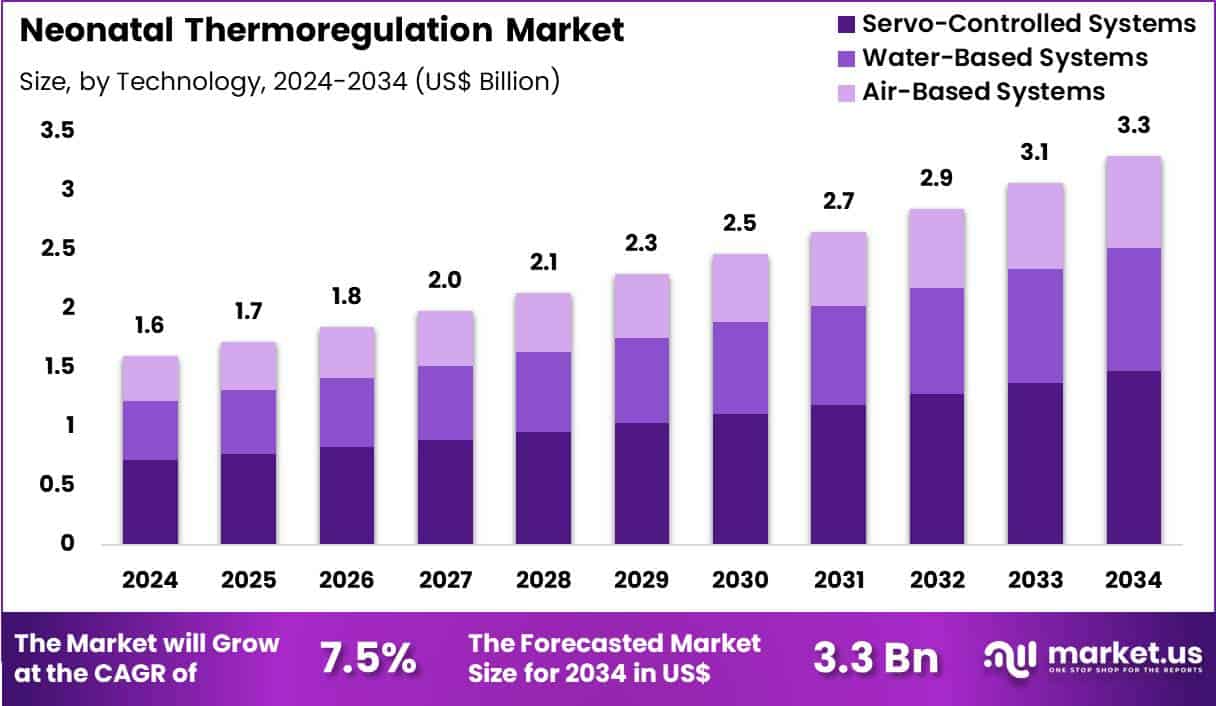
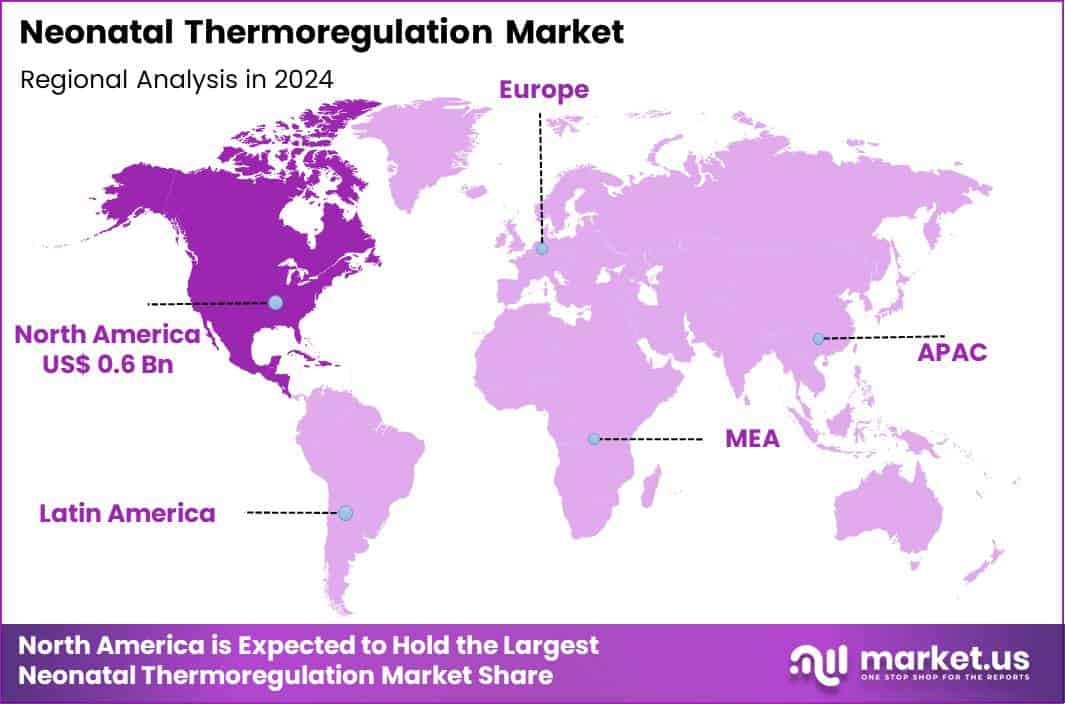
Global Neonatal Thermoregulation Market size is expected to be worth around US$ 3.3 Billion by 2034 from US$ 1.6 Billion in 2024, growing at a CAGR of 7.5% during the forecast period 2025 to 2034. In 2024, North America led the market, achieving over 38.8% share with a revenue of US$ 0.6 Billion.
Increasing prevalence of preterm births and neonatal complications drives the neonatal thermoregulation market as healthcare providers prioritize advanced devices that maintain stable body temperatures in vulnerable infants. Neonatologists increasingly utilize radiant warmers in delivery rooms to prevent hypothermia during initial resuscitation and skin-to-skin contact, ensuring thermal stability for full-term and low-birth-weight newborns.
These systems support incubator applications in neonatal intensive care units, where controlled humidified environments regulate heat for extremely premature infants undergoing mechanical ventilation or phototherapy. Clinicians apply transport incubators during inter-hospital transfers, safeguarding fragile neonates from environmental fluctuations while monitoring vital signs.
Warming mattresses and blankets facilitate kangaroo mother care in resource-constrained settings, promoting bonding while sustaining core temperatures in hypothermic or septic infants. Phototherapy-integrated warmers address jaundice treatment, combining blue light exposure with consistent warmth to optimize bilirubin reduction without thermal stress.
Manufacturers pursue opportunities to integrate sensor-based feedback loops that automate temperature adjustments, expanding applications in home-based care for discharged preterm infants requiring ongoing monitoring. Developers advance hybrid devices that combine thermoregulation with pulse oximetry and apnea detection, broadening utility in transitional care units for moderate-risk neonates.
These innovations facilitate wearable thermoregulatory patches for continuous skin temperature tracking in well-baby nurseries, reducing nurse interventions. Opportunities emerge in sustainable, energy-efficient designs that minimize power consumption while maintaining efficacy in prolonged use.
Companies invest in AI-driven predictive analytics that forecast thermal instability, enhancing proactive interventions. Recent trends emphasize modular, user-friendly systems that support telemedicine integration, positioning the market for enhanced accessibility and outcomes in diverse neonatal care scenarios.
Key Takeaways
- In 2024, the market generated a revenue of US$ 1.6 Billion, with a CAGR of 7.5%, and is expected to reach US$ 3.3 Billion by the year 2034.
- The product type segment is divided into incubators, thermal blankets and mattresses, temperature monitoring devices, radiant warmers, infant warmers and heated mattresses, with incubators taking the lead with a market share of 36.4%.
- Considering technology, the market is divided into servo-controlled systems, water-based systems and air-based systems. Among these, servo-controlled systems held a significant share of 44.8%.
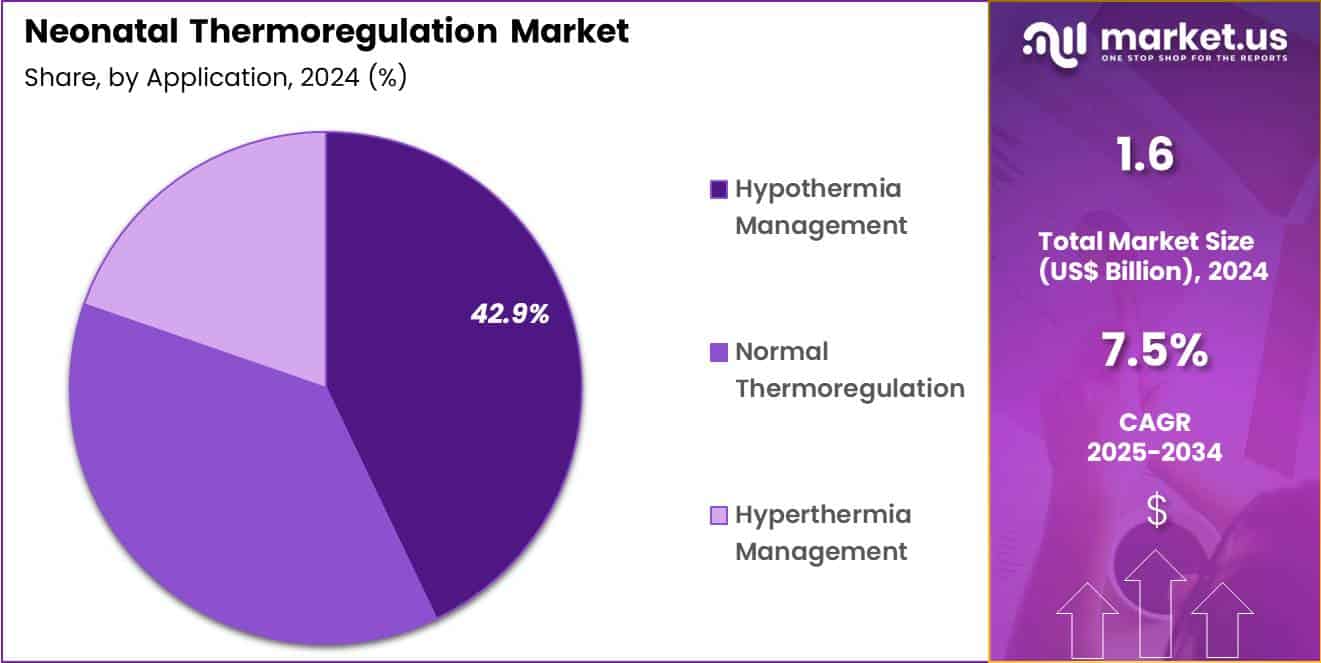
- Furthermore, concerning the application segment, the market is segregated into hypothermia management, normal thermoregulation and hyperthermia management. The hypothermia management sector stands out as the dominant player, holding the largest revenue share of 42.9% in the market.
- The end-user segment is segregated into hospitals, specialty clinics, neonatal intensive care units and homecare settings, with the hospitals segment leading the market, holding a revenue share of 48.6%.
- North America led the market by securing a market share of 38.8%.
Product Type Analysis
Incubators contributed 36.4% of growth within product type and led the neonatal thermoregulation market due to their critical role in maintaining stable thermal environments for premature and low-birth-weight infants.
Hospitals rely on incubators to provide controlled temperature, humidity, and oxygen conditions that support neonatal survival during early developmental stages. Rising preterm birth rates increase demand for prolonged thermal care, where incubators remain essential. Integration of monitoring and alarm systems further strengthens clinical confidence and routine usage.
Growth strengthens as healthcare systems invest in advanced neonatal care infrastructure and modernize maternity wards. Improved incubator designs enhance infection control and caregiver access while maintaining thermal stability. Expanding neonatal intensive care capacity in emerging regions increases procurement volumes.
Clinical protocols emphasize early thermal stabilization, reinforcing incubator dependence. The segment is expected to remain dominant as neonatal survival initiatives continue to prioritize comprehensive thermal support.
Technology Analysis
Servo-controlled systems accounted for 44.8% of growth within technology and dominated the neonatal thermoregulation market due to their ability to automatically adjust heat output based on real-time infant temperature feedback. Clinicians prefer servo-controlled solutions because they reduce the risk of temperature fluctuations and manual errors. These systems support consistent thermal management in vulnerable neonates who lack autonomous temperature regulation.
Automation improves caregiver efficiency in high-acuity neonatal settings. Growth accelerates as hospitals adopt smart monitoring technologies to enhance patient safety. Servo-controlled platforms integrate easily with incubators and radiant warmers, supporting unified care workflows.
Demand rises in facilities managing high preterm infant volumes where precision remains critical. Training standardization further supports adoption. The segment is projected to sustain leadership as neonatal care increasingly relies on automated and responsive thermal systems.
Application Analysis
Hypothermia management generated 42.9% of growth within application and emerged as the leading segment due to the high incidence of neonatal heat loss immediately after birth. Premature and low-birth-weight infants face elevated hypothermia risk due to underdeveloped thermoregulatory mechanisms.
Clinicians prioritize rapid thermal intervention to reduce mortality and complications. Thermal care protocols emphasize early prevention and continuous monitoring during the neonatal period. Growth strengthens as awareness of hypothermia-related morbidity increases across healthcare systems. National maternal and child health programs promote standardized warming practices.
Expansion of facility-based deliveries increases immediate access to thermal equipment. Continuous quality improvement initiatives reinforce adherence to hypothermia prevention guidelines. The segment is anticipated to remain dominant as neonatal outcomes remain closely tied to effective temperature control.
End-User Analysis
Hospitals contributed 48.6% of growth within end-user and dominated the neonatal thermoregulation market due to their comprehensive maternity and neonatal care capabilities. Hospitals manage the majority of high-risk births that require advanced thermal support. Availability of skilled neonatologists and specialized equipment strengthens hospital reliance on thermoregulation systems.
Centralized procurement and standardized protocols drive consistent device utilization. Growth continues as hospitals expand neonatal intensive care units and invest in modern delivery suites. Accreditation requirements emphasize thermal safety and monitoring.
Increasing institutional births support sustained equipment demand. Hospitals also serve as referral centers for complicated neonatal cases. The segment is expected to remain the primary growth driver as hospitals continue to anchor neonatal care delivery and thermal management standards.
Key Market Segments
By Product Type
- Incubators
- Thermal blankets and mattresses
- Temperature monitoring devices
- Radiant warmers
- Infant warmers
- Heated mattresses
By Technology
- Servo-controlled systems
- Water-based systems
- Air-based systems
By Application
- Hypothermia management
- Normal thermoregulation
- Hyperthermia management
By End-User
- Hospitals
- Specialty clinics
- Neonatal intensive care units
- Homecare settings
Drivers
Increasing incidence of preterm births is driving the market.
The escalating rate of preterm births globally has substantially increased the demand for neonatal thermoregulation devices to maintain optimal body temperatures in vulnerable infants. Enhanced medical surveillance and reporting have contributed to the identification of more cases requiring specialized care in neonatal intensive care units. According to the Centers for Disease Control and Prevention, the preterm birth rate in the United States was 10.4% in 2022, affecting approximately one in every ten infants born.
This statistic highlights the growing clinical burden and the necessity for effective thermoregulation solutions to prevent hypothermia-related complications. Neonatal thermoregulation equipment, such as incubators and warmers, plays a critical role in stabilizing premature newborns during their early developmental stages.
Healthcare providers are increasingly prioritizing these devices to improve survival rates and long-term outcomes for preterm infants. The association between preterm births and higher risks of respiratory and neurological issues further underscores the market’s expansion. Government health organizations advocate for advanced neonatal care protocols to address this rising incidence.
Leading manufacturers are investing in product innovations to meet the heightened requirements of specialized units. This driver continues to propel sustained growth in the adoption of thermoregulation technologies across medical facilities.
Restraints
High cost of advanced thermoregulation equipment is restraining the market.
The premium pricing of sophisticated neonatal thermoregulation systems, including hybrid incubators and cooling devices, limits their accessibility in resource-constrained healthcare settings. Manufacturing intricacies involving precise sensors and biocompatible materials contribute to elevated production expenses. Smaller hospitals and clinics often face financial challenges in procuring these high-end technologies, opting for basic alternatives instead.
Regulatory approvals for safety and efficacy add further layers of cost to the supply chain. In public health systems, budget allocations prioritize essential services over capital-intensive equipment investments. Providers may delay upgrades due to the substantial upfront and maintenance expenditures involved.
This restraint impacts market penetration, particularly in low- and middle-income countries with limited funding. Industry efforts to develop cost-effective models aim to address these barriers progressively. Despite clinical efficacy, economic factors hinder equitable distribution of advanced solutions. Mitigating pricing through subsidies remains essential to overcome this market impediment.
Opportunities
Expansion of neonatal care infrastructure in emerging regions is creating growth opportunities.
The rapid development of neonatal intensive care facilities in emerging economies offers avenues for deploying thermoregulation devices in underserved areas. Governmental investments in maternal and child health support the integration of advanced equipment in expanding hospital networks. Increasing awareness of neonatal hypothermia risks drives demand for reliable warming and incubation systems in these regions.
Partnerships with local distributors facilitate regulatory compliance and efficient market entry for international suppliers. The growing burden of preterm deliveries in populous nations amplifies the need for scalable thermoregulation solutions. Educational initiatives for medical staff enhance the effective utilization of these technologies in clinical practice.
This opportunity enables global firms to diversify revenue beyond mature markets. Key corporations are establishing regional manufacturing to reduce logistics costs and ensure supply continuity. Overall, infrastructure expansions align with efforts to improve infant mortality rates in developing areas. Strategic initiatives can secure significant positions in these dynamic healthcare landscapes.
Impact of Macroeconomic / Geopolitical Factors
Macroeconomic forces shape the neonatal thermoregulation market through hospital capital planning, public health spending, and procurement discipline across maternity and NICU units. Inflation and elevated interest rates strain budgets for equipment upgrades, which slows replacement of warmers, incubators, and monitoring accessories in some facilities.
Geopolitical tensions disrupt supplies of electronics, sensors, and medical grade plastics, increasing lead times and inventory risk. Current US tariffs on imported components and finished devices lift production and landed costs, which tightens margins and complicates pricing discussions with providers. These pressures challenge smaller suppliers and can delay deployments in cost sensitive regions.
On the upside, trade uncertainty accelerates local assembly, dual sourcing, and stronger service networks. Clinical emphasis on preventing hypothermia in preterm infants sustains steady demand and supports purchasing justification. With disciplined sourcing, incremental innovation, and strong neonatal care priorities, the market remains positioned for resilient and confident growth.
Latest Trends
Adoption of intelligent temperature control systems is a recent trend in the market.
In 2024, the incorporation of automated algorithms in neonatal thermoregulation devices has improved precision in maintaining infant body temperatures. These systems utilize real-time sensors to adjust environmental conditions without manual intervention. Manufacturers have focused on interoperability with hospital monitoring platforms for seamless data integration.
Clinical applications in intensive care units benefit from reduced risks of thermal instability in premature newborns. Research in 2024 emphasized the role of predictive analytics in preventing hypothermia episodes. This trend responds to demands for enhanced patient safety in high-acuity settings.
Regulatory adaptations have supported the commercialization of these smart technologies. Industry collaborations refine features for compatibility with diverse neonatal profiles. These developments address operational efficiencies in resource-limited environments. This evolution positions intelligent controls as central to future neonatal care protocols.
Regional Analysis
North America is leading the Neonatal Thermoregulation Market
North America holds a 38.8% share of the global Neonatal Thermoregulation market, signifying pronounced development in 2024 motivated by persistent high preterm birth rates and innovations in temperature management systems for vulnerable infants in intensive care units.
Esteemed manufacturers like Drägerwerk and Fisher & Paykel Healthcare have debuted enhanced radiant warmers and servo-controlled incubators that incorporate humidity regulation and non-invasive monitoring, reducing hypothermia risks during transport and resuscitation. The territory’s extensive network of level III and IV neonatal facilities has integrated these tools to support low-birth-weight babies, aligning with protocols for kangaroo care and developmental positioning.
Directives from the American Academy of Pediatrics have underscored thermoneutral environments to prevent morbidity in hypothermic neonates, driving procurements across birthing centers. Increasing multiple gestations from assisted reproduction have escalated requirements for hybrid warmers in labor and delivery suites. Coalitions linking hospitals with device innovators have refined phototherapy-compatible units, elevating survival rates for jaundiced preterm infants.
Furthermore, telemedicine expansions have enabled remote oversight of thermoregulation parameters, optimizing resource allocation in regional hubs. The preterm birth rate in the United States remained at 10.41% in 2024, according to provisional data from the Centers for Disease Control and Prevention.
The Asia Pacific region is expected to experience the highest CAGR during the forecast period
Experts foresee substantial strides in the infant temperature control sector across Asia Pacific over the forecast period, as policymakers ramp up allocations to neonatal wards equipped with advanced warming devices amid efforts to curb early-life mortality.
Firms in Taiwan and Indonesia craft cost-efficient hybrid incubators that blend convective heating with LED displays, while clinicians in Cambodia standardize protocols for servo-humidity to shield preterm newborns from dehydration. Medical hubs in Laos acquire portable radiant units that facilitate skin-to-skin contact, enhancing bonding and stability for low-weight arrivals.
Philanthropists in Papua New Guinea finance upgrades to phototherapy-integrated warmers, targeting jaundice in resource-scarce clinics. Officials in Fiji enforce guidelines for device calibration, ensuring consistent performance during power fluctuations common in island settings. Practitioners in Timor-Leste deploy mobile convection systems for outreach programs, stabilizing temperatures in rural deliveries prone to complications.
Enterprises in Macao refine oxygen-blended airflow models that prevent overheating, gaining favor in humid tropical environments. The OECD and WHO report that the neonatal mortality rate averaged 15.6 per 1,000 live births in lower-middle- and low-income Asia-Pacific countries and territories in 2022.
Key Regions and Countries
North America
- US
- Canada
Europe
- Germany
- France
- The UK
- Spain
- Italy
- Russia
- Netherland
- Rest of Europe
Asia Pacific
- China
- Japan
- South Korea
- India
- Australia
- New Zealand
- Singapore
- Thailand
- Vietnam
- Rest of APAC
Latin America
- Brazil
- Mexico
- Rest of Latin America
Middle East & Africa
- South Africa
- Saudi Arabia
- UAE
- Rest of MEA
Key Players Analysis
Key competitors in the neonatal thermoregulation market drive growth by enhancing product portfolios with advanced warming and temperature-monitoring systems that improve clinical control and support better outcomes for preterm and low-birth-weight infants. They also broaden service offerings by integrating connectivity features and data analytics that help NICU teams standardize care protocols and benchmark performance.
Firms deepen market penetration through education programs for neonatal clinicians and partnerships with hospital networks that accelerate technology adoption. Geographic expansion into Asia Pacific and Latin America complements strong positions in North America and Europe, capturing rising investments in neonatal care infrastructure.
Draegerwerk AG & Co. KGaA exemplifies a global medical technology company focused on critical care and neonatal solutions, combining hardware excellence with service-oriented support and a broad international distribution network. The company reinforces its competitive edge through disciplined innovation funding, responsive customer engagement, and coordinated commercialization strategies that align product development with evolving clinical needs.
Top Key Players
- GE HealthCare
- Dräger
- Philips Healthcare
- Medtronic
- Atom Medical
- Inspiration Healthcare
- Natus Medical
- Fanem
- IncuCare
- Phoenix Medical Systems
Recent Developments
- In 2025, GE HealthCare disclosed that its Patient Care Solutions business, which includes neonatal thermal care technologies, generated revenue of US$ 2.227 billion during the first nine months of the year, reflecting the segment’s strong contribution to overall performance.
- In 2025, Inspiration Healthcare reported strong growth within its neonatal product portfolio, recording an approximate 41% rise in revenue to around US$ 30.5 million for the six-month period ending July 31.
Report Scope
Report Features Description Market Value (2024) US$ 1.6 Billion Forecast Revenue (2034) US$ 3.3 Billion CAGR (2025-2034) 7.5% Base Year for Estimation 2024 Historic Period 2020-2023 Forecast Period 2025-2034 Report Coverage Revenue Forecast, Market Dynamics, COVID-19 Impact, Competitive Landscape, Recent Developments Segments Covered By Product Type (Incubators, Thermal blankets and mattresses, Temperature monitoring devices, Radiant warmers, Infant warmers and Heated mattresses), By Technology (Servo-controlled systems, Water-based systems and Air-based systems), By Application (Hypothermia management, Normal thermoregulation and Hyperthermia management), By End-User (Hospitals, Specialty clinics, Neonatal intensive care units and Homecare settings) Regional Analysis North America – US, Canada; Europe – Germany, France, The UK, Spain, Italy, Russia, Netherlands, Rest of Europe; Asia Pacific – China, Japan, South Korea, India, Australia, New Zealand, Singapore, Thailand, Vietnam, Rest of APAC; Latin America – Brazil, Mexico, Rest of Latin America; Middle East & Africa – South Africa, Saudi Arabia, UAE, Rest of MEA Competitive Landscape GE HealthCare, Dräger, Philips Healthcare, Medtronic, Atom Medical, Inspiration Healthcare, Natus Medical, Fanem, IncuCare, Phoenix Medical Systems Customization Scope Customization for segments, region/country-level will be provided. Moreover, additional customization can be done based on the requirements. Purchase Options We have three licenses to opt for: Single User License, Multi-User License (Up to 5 Users), Corporate Use License (Unlimited User and Printable PDF)  Neonatal Thermoregulation MarketPublished date: Feb 2026add_shopping_cartBuy Now get_appDownload Sample
 -
-
- GE HealthCare
- Dräger
- Philips Healthcare
- Medtronic
- Atom Medical
- Inspiration Healthcare
- Natus Medical
- Fanem
- IncuCare
- Phoenix Medical Systems
Our Clients

- 176655
- Feb 2026






