


Market Overview
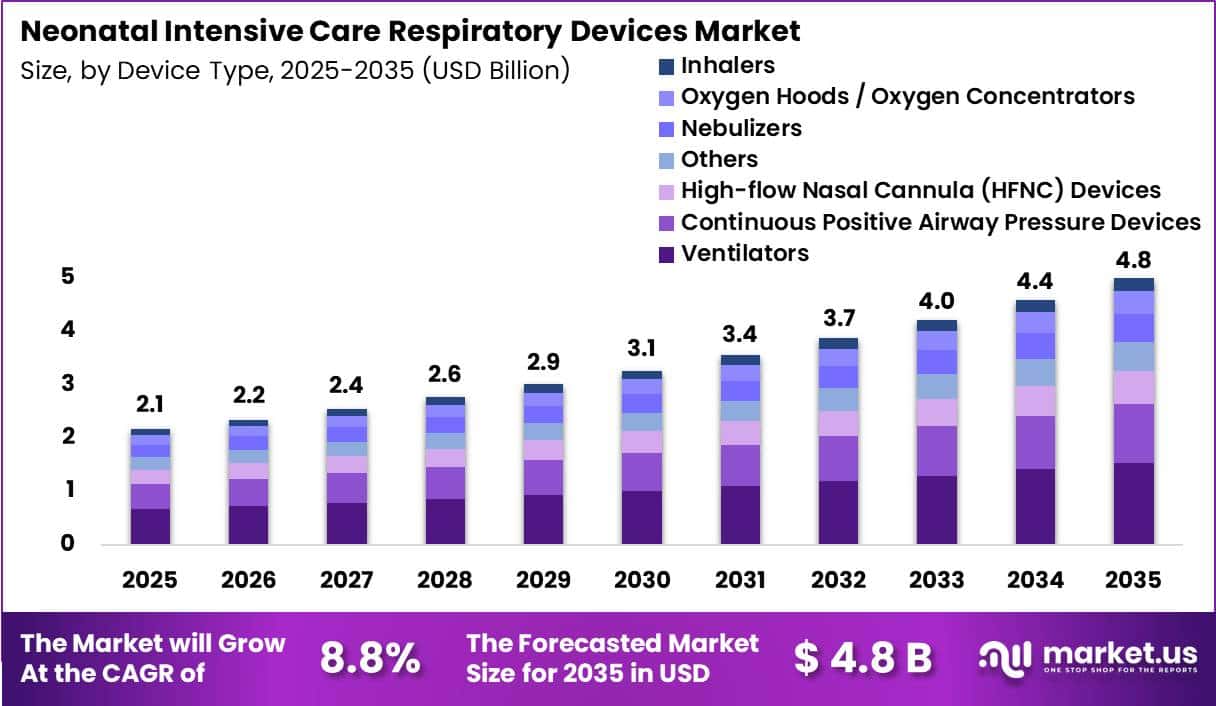
Global Neonatal Intensive Care Respiratory Devices Market size is expected to be worth around US$ 4.8 Billion by 2035 from US$ 2.1 Billion in 2025, growing at a CAGR of 8.8% during the forecast period from 2026 to 2035. In 2025, North America led the market, achieving over 41.4% share with a revenue of US$ 0.85 Billion.
Neonatal respiratory disorders remain one of the leading causes of illness and death among premature and critically ill newborns, creating a strong need for advanced respiratory support systems in neonatal intensive care units (NICUs).
According to the World Health Organization (WHO), around 2.3 million newborns died globally in 2024, accounting for 47% of all under-five deaths, with complications related to preterm birth being one of the major causes. WHO also reports that respiratory problems, including respiratory distress syndrome (RDS), are among the most common complications affecting preterm infants, highlighting the importance of timely respiratory intervention.
Healthcare providers are increasingly adopting neonatal ventilators, Continuous Positive Airway Pressure (CPAP) systems, oxygen therapy devices, humidification systems, and respiratory monitoring technologies to improve survival rates and reduce long-term complications.
WHO recommends the early use of CPAP for newborns diagnosed with respiratory distress syndrome and supports surfactant replacement therapy for ventilated preterm infants when appropriate clinical facilities are available. These evidence-based recommendations continue to encourage hospitals to strengthen neonatal respiratory care capabilities.
Growing rates of premature births, expanding neonatal intensive care infrastructure, and continuous technological improvements in respiratory support equipment are further supporting market growth. Modern NICUs are increasingly adopting integrated monitoring systems, non-invasive ventilation technologies, and smart respiratory devices that improve treatment precision while reducing complications.
In addition, governments and healthcare organizations continue to invest in maternal and newborn healthcare programs, increasing access to specialized neonatal care. According to UNICEF, neonatal mortality has declined worldwide over the past three decades, yet newborn deaths still represent 47% of all under-five deaths, emphasizing the continued need for high-quality respiratory care and advanced neonatal medical devices across both developed and emerging healthcare systems.
Key Takeaways
- Market Size : Neonatal Intensive Care Respiratory Devices Market size is expected to be worth around US$ 4.8 Billion by 2035 from US$ 2.1 Billion in 2025.
- Market Share : The market is growing at a CAGR of 8.8% during the forecast period from 2026 to 2035.
- Device Type Analysis : In 2025, Ventilators accounted for the largest share of the neonatal intensive care respiratory devices market, capturing 32.4% of total revenue.
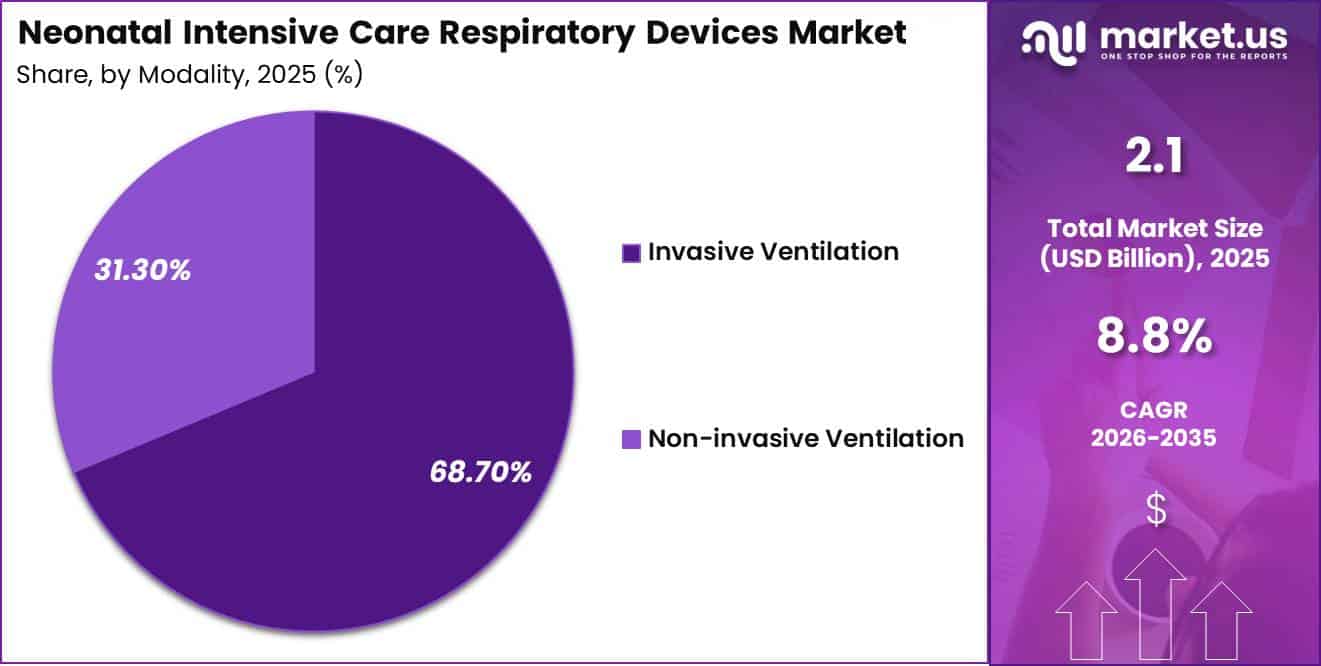
- Modality Analysis : Invasive Ventilation dominated the neonatal intensive care respiratory devices market with a 68.7% share, In 2025.
- Indication Analysis : In 2025, Respiratory Distress Syndrome (RDS) held the largest share of the neonatal intensive care respiratory devices market at 32.4%.
- End-User Analysis: NICU Hospitals dominated the neonatal intensive care respiratory devices market, accounting for 67.8% of total revenue, In 2025.
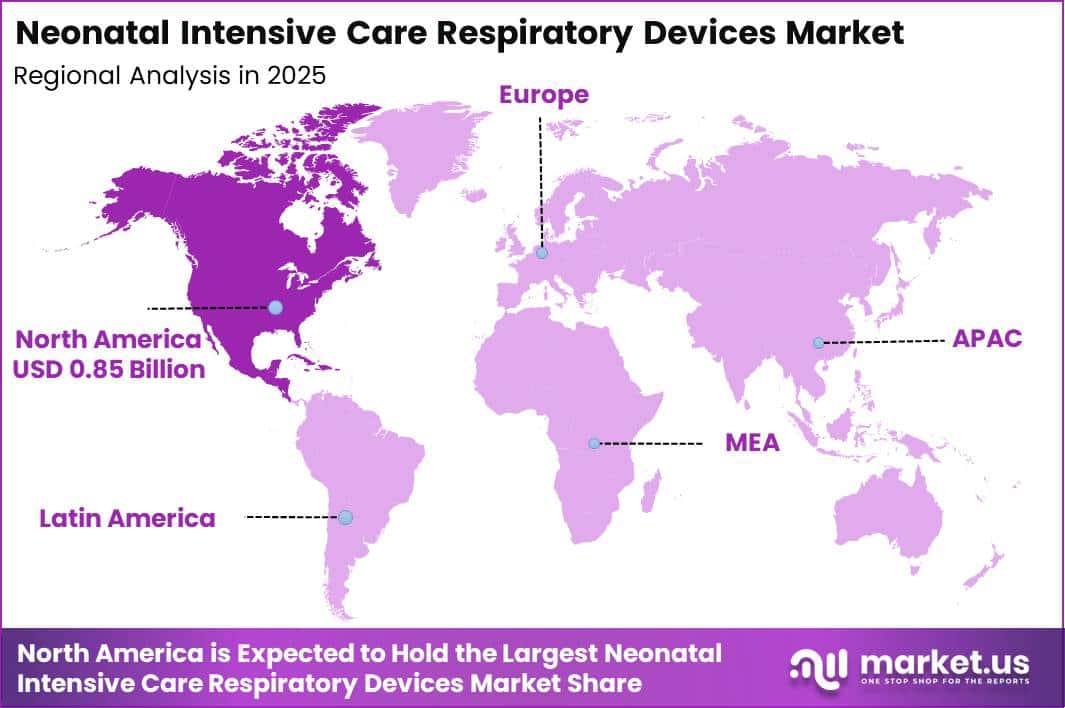
- Regional Analysis: In 2025, North America led the market, achieving over 41.4% share with a revenue of US$ 0.85 Billion.
Device Type Analysis
In 2025, Ventilators accounted for the largest share of the neonatal intensive care respiratory devices market, capturing 32.4% of total revenue. Their leading position is driven by the critical role they play in supporting premature and critically ill newborns experiencing severe respiratory failure, especially those with respiratory distress syndrome (RDS).
Neonatal ventilators provide precise control over oxygen delivery, airway pressure, and tidal volume, making them essential in NICUs. Continuous technological improvements, including volume-targeted ventilation, integrated monitoring, and lung-protective ventilation modes, have further strengthened their adoption.
Continuous Positive Airway Pressure (CPAP) Devices followed with 23.1%, supported by growing clinical preference for non-invasive respiratory support. The World Health Organization (WHO) recommends CPAP as an early treatment for preterm infants with clinical signs of RDS, increasing its use in neonatal care.
High-flow Nasal Cannula (HFNC) Devices represented 13.0%, gaining popularity because they provide comfortable oxygen delivery with reduced airway trauma. Others held 11.4%, while Nebulizers contributed 11.2% by supporting aerosol medication delivery.
Oxygen Hoods/Oxygen Concentrators accounted for 8.9%, particularly in hospitals managing mild respiratory conditions, whereas Inhalers represented 5.3%, reflecting their limited use in neonatal intensive care compared with other respiratory support devices.
Modality Analysis
In 2025, Invasive Ventilation dominated the neonatal intensive care respiratory devices market with a 68.7% share. The segment remains the preferred choice for newborns suffering from severe respiratory failure, respiratory distress syndrome (RDS), meconium aspiration syndrome, and other life-threatening pulmonary complications that require immediate respiratory support.
Mechanical ventilators provide precise control of oxygen concentration, airway pressure, and ventilation parameters, helping clinicians stabilize critically ill infants while minimizing complications. Continuous improvements in ventilator technology, including synchronized ventilation, volume-targeted ventilation, and advanced monitoring capabilities, have strengthened the segment’s leadership in neonatal intensive care units.
WHO also recommends surfactant therapy for intubated and mechanically ventilated newborns with RDS when appropriate clinical facilities are available, further supporting demand for invasive ventilation systems.
Non-Invasive Ventilation accounted for 31.3% of the market and continues to expand as hospitals increasingly adopt less invasive treatment approaches. Modalities such as CPAP and HFNC help reduce the need for intubation, lower the risk of ventilator-associated lung injury, and improve clinical outcomes in preterm infants with mild to moderate respiratory distress.
Growing awareness of lung-protective ventilation strategies is expected to support continued adoption of non-invasive respiratory technologies.
Indication Analysis
In 2025, Respiratory Distress Syndrome (RDS) held the largest share of the neonatal intensive care respiratory devices market at 32.4%. RDS remains the most common respiratory complication among premature infants because of immature lung development and inadequate surfactant production.
The condition frequently requires respiratory support through ventilators, CPAP systems, oxygen therapy, and surfactant administration. WHO recommends early CPAP therapy for preterm infants with clinical signs of RDS, reinforcing the strong demand for neonatal respiratory devices used in its treatment.
Other important indications include Apnea of Prematurity, where respiratory monitoring and non-invasive ventilation are commonly used to manage repeated breathing interruptions in preterm infants. Bronchopulmonary Dysplasia (BPD) also represents a significant application, particularly among infants requiring prolonged respiratory support.
Meconium Aspiration Syndrome (MAS) creates demand for advanced ventilatory assistance and oxygen therapy due to airway obstruction and impaired gas exchange. Persistent Pulmonary Hypertension of the Newborn (PPHN) requires specialized respiratory support combined with intensive monitoring to improve oxygenation.
The Others category includes congenital respiratory disorders and neonatal infections requiring respiratory management. Rising survival rates among premature infants and expanding NICU capacity continue to support demand across all indication segments.
End-User Analysis
In 2025, NICU Hospitals dominated the neonatal intensive care respiratory devices market, accounting for 67.8% of total revenue. These hospitals remain the primary users of neonatal ventilators, CPAP systems, humidifiers, oxygen delivery devices, and respiratory monitoring equipment because they manage the highest number of premature and critically ill newborns requiring continuous respiratory care.
Growing investments in advanced neonatal intensive care infrastructure, skilled neonatal specialists, and integrated monitoring technologies continue to strengthen this segment. Increasing admissions of preterm infants requiring respiratory support further support equipment demand across hospital-based NICUs.
Specialty Clinics represent the second-largest end-user segment, providing respiratory follow-up care, neonatal consultations, and specialized treatment for infants recovering from respiratory complications after hospital discharge.
Nursing Homes account for a relatively small share because neonatal intensive respiratory care is generally delivered in hospitals rather than long-term care facilities. The Others segment includes pediatric care centers, academic medical institutions, and research hospitals that use neonatal respiratory devices for specialized treatment, training, and clinical research.
Continuous expansion of neonatal healthcare services, government support for maternal and child health, and increasing adoption of advanced respiratory technologies are expected to sustain demand across all end-user categories.
Market Segmentations
By Device Type
- Nebulizers
- Ventilators
- Continuous Positive Airway Pressure Devices
- Oxygen Hoods / Oxygen Concentrators
- Inhalers
- High-flow Nasal Cannula (HFNC) Devices
- Others
By Modality
- Invasive Ventilation
- Non-invasive Ventilation
By Indication
- Respiratory Distress Syndrome (RDS)
- Apnea of prematurity
- Bronchopulmonary Dysplasia (BPD)
- Meconium Aspiration Syndrome (MAS)
- Persistent Pulmonary Hypertension of the Newborn (PPHN)
- Others
By End-user
- NICU Hospitals
- Specialty Clinics
- Nursing Homes
- Others
Driver
CPAP First and Less Invasive Surfactant Protocols Lifting Device Intensity
Clinical practice is increasingly shifting toward CPAP first respiratory support and less invasive surfactant delivery in preterm infants, changing how neonatal respiratory care equipment is used. Instead of immediate intubation, many protocols now prioritize noninvasive support, which increases the sustained use of CPAP systems, nasal interfaces, humidification, and oxygen blending devices.
The 2026 European consensus recommends CPAP as the primary support for spontaneously breathing preterm infants, typically starting at pressures of greater than or equal to 6 cm H2O, and maintains an FiO2 threshold of 0.30 for considering surfactant therapy. It also supports thin catheter surfactant delivery.
Similarly, CHOP 2026 guidance favors noninvasive respiratory support in infants 25 to 32 weeks gestation, with evidence showing reduced odds of death or bronchopulmonary dysplasia OR 0.80 compared with more invasive approaches. This transition reduces reliance on invasive ventilation but increases overall device utilization across earlier and longer phases of respiratory support.
CPAP cycles require continuous consumables such as nasal prongs, masks, T piece resuscitators, and monitoring accessories, raising replacement frequency and system attachment rates per NICU bed. Commercially, this expands the model from episodic ventilator use to a broader platform of noninvasive respiratory support.
It also extends adoption into mid tier NICUs and special newborn care units that may not perform invasive ventilation but routinely manage CPAP based care. Overall, the shift supports higher device intensity per patient episode while broadening the installed base and increasing recurring consumable demand across neonatal care systems.
| Driver | (~) % Impact on CAGR Forecast | Geographic Relevance | Impact Timeline |
|---|---|---|---|
| Preterm-birth respiratory burden expanding NICU demand | +2.2% | Global; South Asia, Sub-Saharan Africa, North America tertiary NICUs | Short term (≤ 2 years) |
| CPAP-first and less-invasive surfactant protocols lifting device intensity | +1.8% | North America core, EU, developed APAC, upper-middle-income hospital networks | Short term (≤ 2 years) |
| Oxygen, pulse-oximetry, and newborn survival programs widening installed base | +1.5% | APAC corridors, Africa, Latin America public hospitals, humanitarian procurement markets | Medium term (2-4 years) |
| NICU digitalization and stricter device-quality regulation upgrading premium systems | +1.1% | US, EU, Japan, South Korea, GCC private and academic centers | Medium term (2-4 years) |
| Reimbursement-backed acuity management supporting higher respiratory care spend | +0.9% | United States core, selected private-payer markets, advanced neonatal referral systems | Short term (≤ 2 years) |
| Extreme-prematurity care centralization increasing high-spec ventilator and interface mix | +0.8% | North America, Western Europe, Japan, Australia, urban China referral hubs | Long term (≥ 4 years) |
Challenge
Data and Cybersecurity Burden in Connected Neonatal Respiratory Devices
As neonatal respiratory devices become increasingly connected with remote monitoring, cloud dashboards, and algorithm based support, they are now treated as regulated digital health systems. This brings stricter cybersecurity and data governance requirements from regulators such as the FDA, EU MDR authorities, and national cybersecurity agencies.
In the United States, the FDA QMSR effective 2026 requires manufacturers to embed lifecycle cybersecurity controls, including software bills of materials SBOMs, continuous vulnerability tracking, patch management, and formal risk documentation.
In Europe, MDR and EUDAMED frameworks similarly require ongoing post market cybersecurity surveillance rather than one time compliance. These devices generate continuous clinical data streams ventilator waveforms, tidal volumes, oxygen levels, and alarm logs, often producing tens of gigabytes per NICU bed per week, significantly increasing data security and storage complexity.
Maintaining cybersecurity is operationally intensive. Security validation cycles such as penetration testing, risk assessment, patch verification, and regulatory reporting can take 6 to 12 months for critical firmware updates. Hospitals also operate mixed fleets of devices with different software versions, making consistent security enforcement difficult.
Because NICUs cannot afford downtime, manufacturers tend to delay updates and adopt conservative release strategies, slowing rollout of new digital features and remote care capabilities. This creates a measurable innovation drag, contributing to an estimated 0.9 % point reduction in CAGR until standardized SBOM frameworks, automated compliance tools, and harmonized international regulations reduce the cybersecurity burden.
| Challenge | (~) % CAGR Friction Drag | Geographic Relevance | Mitigation Horizon |
|---|---|---|---|
| Skilled NICU staff deficit | -1.4% | North America, EU, APAC urban | Long term (≥ 4 years) |
| High-acuity device integration | -1.2% | North America core, EU hubs | Medium term (2-4 years) |
| Data & cybersecurity burden | -0.9% | US, EU, advanced APAC | Medium term (2-4 years) |
| Capex & maintenance intensity | -1.0% | Global tertiary centers | Long term (≥ 4 years) |
| Clinical protocol variability | -0.8% | LMICs, mixed-resource regions | Medium term (2-4 years) |
| Supply chain & component fragility | -1.1% | Global, APAC manufacturing | Long term (≥ 4 years) |
Restraints
Hospital Capital Spending Caution in NICU Respiratory Equipment Markets
Hospital capital spending on neonatal respiratory equipment is increasingly constrained despite rising overall healthcare expenditure. In the U.S., national health spending reached about USD 5.3 trillion in 2024 and continues to grow faster than GDP, yet hospitals are becoming more conservative in approving large equipment purchases due to financial and macroeconomic pressure.
A 2025 survey of hospital executives shows that about 75% report macro headwinds affecting capital planning, and roughly 40% plan to delay or reduce equipment purchases. This is leading to longer replacement cycles for NICU respiratory systems, extending from the typical 7-8 years to around 9-11 years, which slows device turnover even when clinical demand remains stable.
Key drivers include higher interest rates, inflation in construction and labor, and reimbursement uncertainty. These factors compress hospital margins and force stricter prioritization of capital budgets toward essential infrastructure, compliance upgrades, and IT/security systems rather than premium clinical technology.
For manufacturers, this results in longer sales cycles, increased discounting pressure, and a shift toward lower-cost or refurbished systems instead of full-feature integrated platforms. It also reduces average selling prices and compresses margins by an estimated 150–250 basis points.
Overall, this cautious capital environment is expected to reduce baseline growth, creating an estimated ~1.4 % point drag on CAGR (2026–2030), particularly in North America and Europe where procurement scrutiny is highest.
| Restraint | (~) % Impact on CAGR Forecast | Geographic Relevance | Impact Timeline |
|---|---|---|---|
| EU MDR & FDA compliance drag | -1.8% | EU core, U.S. | Medium term (2–4 years) |
| Semiconductor & electronics component shortages | -1.3% | U.S., EU, APAC corridors | Short–Medium term (≤ 3 years) |
| Hospital capital spending caution | -1.4% | North America core, EU | Medium term (2–4 years) |
| High device & ownership costs in LMICs | -1.0% | Select APAC, Latin America, Africa | Long term (≥ 4 years) |
| Skilled neonatal respiratory workforce gaps | -0.8% | LMICs, underserved regions | Long term (≥ 4 years) |
| Post-COVID supply chain volatility & logistics costs | -0.7% | Global multi-region | Short–Medium term (≤ 3 years) |
Opportunity
AI Driven Closed Loop Ventilation and CPAP Systems
Neonatal respiratory care is steadily shifting from invasive mechanical ventilation toward CPAP and other noninvasive modalities, with mechanical ventilation use in preterm infants declining from nearly 30 % in 2008 to under 20 % in 2018.
However, most current ventilators and CPAP systems still rely on clinician driven adjustments rather than fully automated control. The emerging opportunity is AI driven closed loop ventilation and CPAP systems that continuously optimize pressure, flow, and oxygen delivery using real time physiological signals such as SpO2, transcutaneous CO2, and respiratory effort. This enables more precise lung protective ventilation while reducing manual workload and variability in care.
From a market perspective, this creates a premium layer above standard respiratory devices. With neonatal respiratory distress affecting 4 to 7 % of births globally, the installed NICU base in high income regions is large enough that even partial conversion to AI enabled systems is meaningful.
If 15 to 20 % of installed devices adopt closed loop functionality at a 20 to 25 % price premium, hospitals can justify adoption through efficiency gains, including 5 to 10 % reductions in length of stay, 10 to 15 % lower clinician workload per patient, and improved outcomes such as reduced chronic lung disease risk.
Currently, adoption is limited because reimbursement frameworks and clinical guidelines do not yet explicitly reward automation. As evidence builds and regulatory pathways mature, AI enabled ventilation could add roughly 2 % points of CAGR upside, driven by value based purchasing and premium platform differentiation.
| Opportunity | (~) % Potential CAGR Upside | Geographic Relevance | Execution Window |
|---|---|---|---|
| Low-resource optimized NICU respiratory bundles | +2.3% | Sub-Saharan Africa, South Asia, APAC LMICs | Medium term (2–4 years) |
| AI-driven closed-loop ventilation & CPAP | +1.9% | North America core, Western Europe, advanced APAC | Medium term (2–4 years) |
| Home and step-down neonatal respiratory support | +1.6% | North America, EU, urban LatAm, selected APAC | Long term (≥ 4 years) |
| Disposable infection-control consumables for NICU respiratory care | +1.4% | Global, strongest in LMICs and crowded tertiary hubs | Short term (≤ 2 years) |
| Platform-based service & data monetization models | +1.3% | North America, EU, pan-regional corporate hospital chains | Long term (≥ 4 years) |
| Regulatory-accelerated breakthrough neonatal devices | +1.1% | US, EU5, Japan, Korea, Gulf states | Medium term (2–4 years) |
Regional Analysis
In 2025, North America dominated the neonatal intensive care respiratory devices market, accounting for over 41.4% of the global market and generating US$ 0.85 billion in revenue. The region’s leadership is supported by advanced healthcare infrastructure, a high concentration of neonatal intensive care units (NICUs), and strong adoption of innovative respiratory support technologies.
Hospitals across the United States and Canada widely use neonatal ventilators, CPAP systems, humidifiers, and respiratory monitoring devices to improve outcomes for premature and critically ill newborns.
According to the U.S. Centers for Disease Control and Prevention (CDC), 9.8% of infants born in the United States were admitted to a NICU in 2023, while preterm and low-birth-weight infants were more than seven times as likely to require NICU care compared with full-term infants, supporting continued demand for neonatal respiratory equipment.
Europe represents the second-largest regional market, driven by well-established neonatal care services, favorable healthcare reimbursement, and continued investment in neonatal research and hospital modernization. Countries such as Germany, the United Kingdom, France, and Italy continue to expand access to advanced respiratory support technologies for newborn care.
The Asia-Pacific region is expected to register the fastest growth during the forecast period due to rising birth rates in several countries, expanding neonatal healthcare infrastructure, increasing healthcare expenditure, and improving access to NICU services in China, India, Japan, and Southeast Asia.
Meanwhile, Latin America and the Middle East & Africa are witnessing gradual market growth as governments strengthen maternal and newborn healthcare programs, increase investments in neonatal intensive care facilities, and improve access to essential respiratory support devices to reduce neonatal mortality.
The World Health Organization (WHO) continues to emphasize that reducing neonatal deaths remains a global health priority, encouraging greater adoption of evidence-based neonatal respiratory care across developing regions.
Key Regions and Countries
North America
- The US
- Canada
Europe
- Germany
- France
- The U.K.
- Italy
- Spain
- Russia & CIS
- Rest of Europe
Asia Pacific
- China
- India
- Japan
- South Korea
- ASEAN
- Australia & New Zealand
- Rest of Asia Pacific
Middle East & Africa
- GCC
- South Africa
- Rest of Middle East & Africa
Latin America
- Brazil
- Mexico
- Rest of Latin America
Key Player Analysis
The neonatal intensive care respiratory devices market is supported by leading medical technology companies that focus on improving respiratory care for premature and critically ill newborns. Medtronic plc, Philips, GE Healthcare, and Getinge AB offer a broad range of neonatal ventilators, respiratory monitoring systems, and intensive care solutions designed to improve patient safety and clinical outcomes.
These companies continue to invest in product development, digital connectivity, and user-friendly technologies that help healthcare professionals deliver precise respiratory support in neonatal intensive care units (NICUs).
Other important participants such as Smiths Group plc, ResMed Inc., Masimo Corporation, and Inspiration Healthcare Group PLC strengthen market competition through specialized respiratory devices, patient monitoring technologies, and neonatal care equipment.
Their focus on innovation, regulatory compliance, and partnerships with hospitals supports wider adoption of advanced neonatal respiratory solutions. Many of these companies are expanding their global presence by improving distribution networks, introducing upgraded products, and enhancing clinical training programs.
Continuous investment in research and development, combined with growing demand for advanced neonatal care, is expected to support steady competition and technological progress across the neonatal intensive care respiratory devices market.
Top Key Players
- Smiths Group plc
- ResMed Inc.
- Philips
- Medtronic plc
- Masimo Corporation
- Inspiration Healthcare Group PLC
- Getinge AB
- GE Healthcare
- Fisher & Paykel Healthcare Limited
- Drägerwerk AG & Co. KGaA
- Cardinal Health Inc.
- Becton & Dickinson and Company
- Ambu A/S
- Vyaire Medical Inc.
- Hamilton Medical AG
Recent Developments
- In September 2025, Masimo Corporation and Philips renewed and expanded their multi-year strategic partnership to accelerate the integration of Masimo SET® pulse oximetry, Radius PPG®, and sensor technologies into Philips’ multi-parameter patient monitoring platforms, including bedside monitors, central stations, and wearable monitoring solutions used in critical care and neonatal settings.
- In June 2025, Getinge AB announced that its Servo-c ventilator was expanded with a neonatal option, enabling respiratory support for premature infants weighing as little as 500 grams without additional hardware. The upgrade allows hospitals to use a single ventilator platform for neonatal, pediatric, and adult patients, supporting broader NICU adoption.
- In February 2025, Philips and Medtronic signed a Memorandum of Understanding (MoU) to train more than 300 clinicians across 15 leading medical institutions in India on advanced imaging techniques. Although focused on structural heart procedures, the initiative expands critical care expertise and strengthens the use of advanced monitoring technologies that are also widely used in neonatal intensive care units (NICUs).
Report Scope
| Report Features | Description |
|---|---|
| Market Value (2025) | US$ 2.1 Billion |
| Forecast Revenue (2035) | US$ 4.8 Billion |
| CAGR (2026-2035) | 8.8% |
| Base Year for Estimation | 2025 |
| Historic Period | 2020-2024 |
| Forecast Period | 2026-2035 |
| Report Coverage | Revenue Forecast, Market Dynamics, Competitive Landscape, Recent Developments |
| Segments Covered | By Device Type (Nebulizers, Ventilators, Continuous Positive Airway Pressure Devices, Oxygen Hoods / Oxygen Concentrators, Inhalers, High-flow Nasal Cannula (HFNC) Devices, Others), By Modality (Invasive Ventilation, Non-invasive Ventilation), By Indication (Respiratory Distress Syndrome (RDS), Apnea of prematurity, Bronchopulmonary Dysplasia (BPD), Meconium Aspiration Syndrome (MAS), Persistent Pulmonary Hypertension of the Newborn (PPHN), Others), By End-user (NICU Hospitals, Specialty Clinics, Nursing Homes, Others) |
| Regional Analysis | North America – The US, Canada; Europe – Germany, France, U.K., Italy, Spain, Russia & CIS, Rest of Europe; Asia Pacific – China, India, Japan, South Korea, ASEAN, Australia & New Zealand, Rest of Asia Pacific; Middle East & Africa – GCC, South Africa, Rest of Middle East & Africa; Latin America – Brazil, Mexico, Rest of Latin America |
| Competitive Landscape | Smiths Group plc, ResMed Inc., Philips, Medtronic plc, Masimo Corporation, Inspiration Healthcare Group PLC, Getinge AB, GE Healthcare, Fisher & Paykel Healthcare Limited, Drägerwerk AG & Co. KGaA, Cardinal Health Inc., Becton & Dickinson and Company, Ambu A/S, Vyaire Medical Inc., Hamilton Medical AG |
| Customization Scope | Customization for segments, region/country-level will be provided. Moreover, additional customization can be done based on the requirements. |
| Purchase Options | We have three licenses to opt for: Single User License, Multi-User License (Up to 5 Users), Corporate Use License (Unlimited User and Printable PDF) |





































