


Market Overview
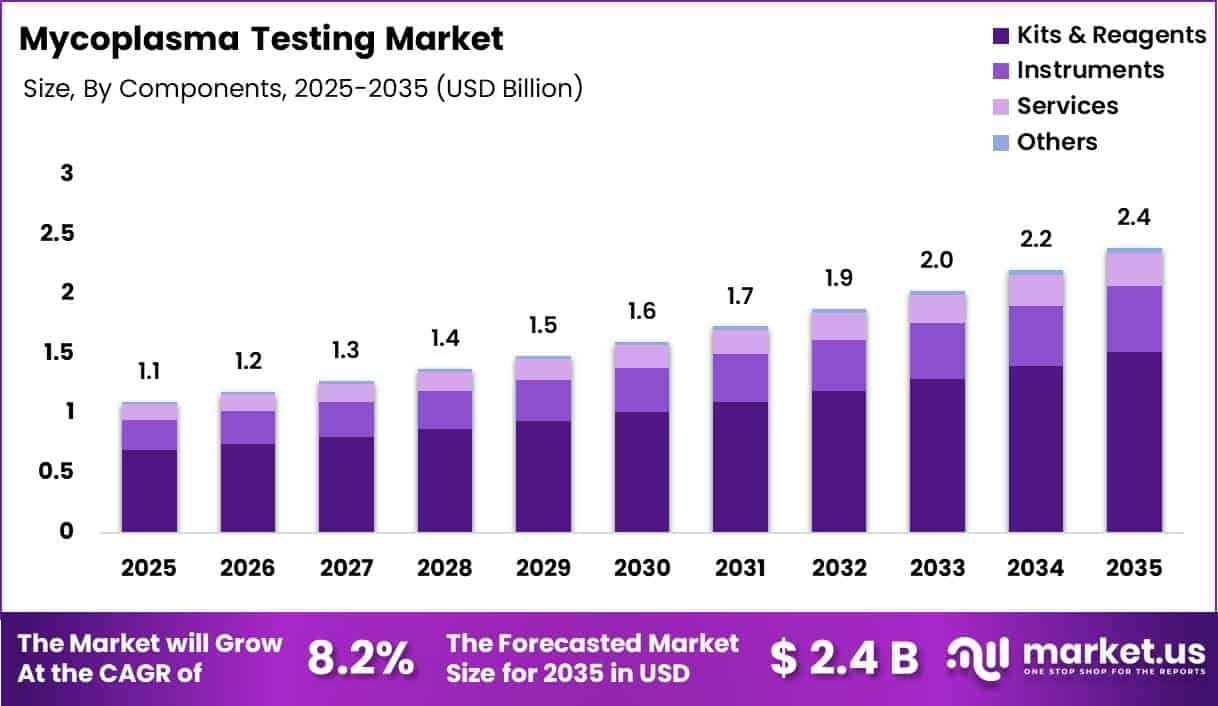
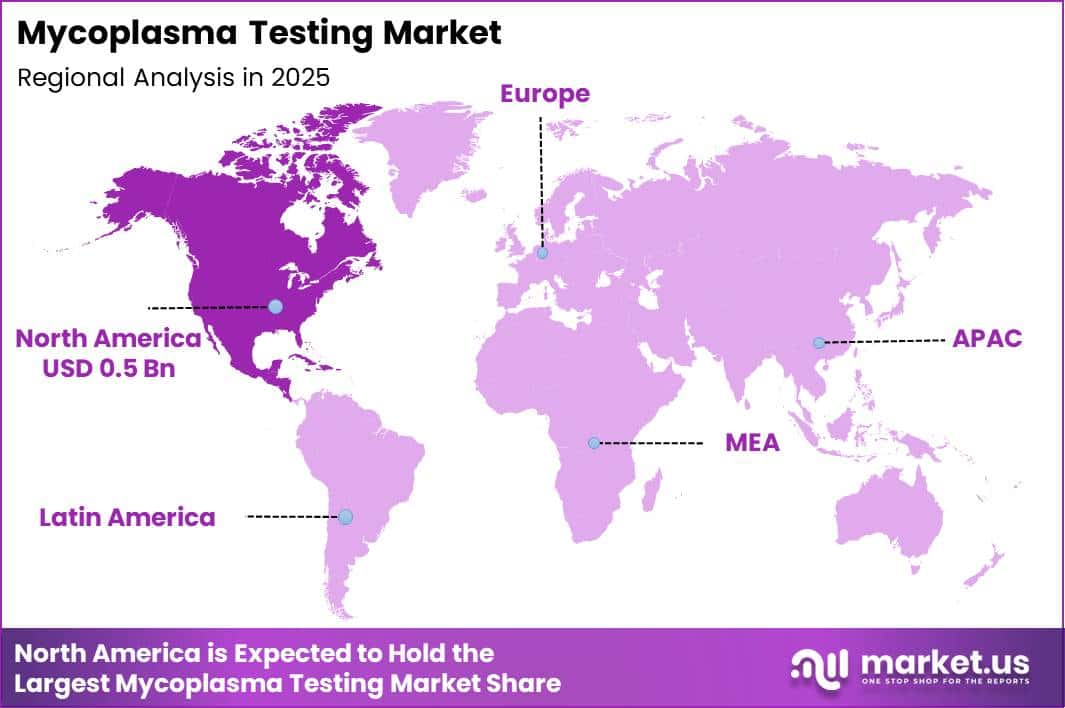
Global Mycoplasma Testing Market size is expected to be worth around US$ 2.4 Billion by 2035 from US$ 1.1 Billion in 2025, growing at a CAGR of 8.2% during the forecast period from 2026 to 2035. In 2025, North America led the market, achieving over 46.2% share with a revenue of US$ 0.5 Billion.
The Mycoplasma Testing Market is witnessing steady growth due to increasing demand for rapid microbial detection, quality control in biopharmaceutical manufacturing, and accurate diagnosis of Mycoplasma pneumoniae infections. Mycoplasma testing plays a critical role in clinical diagnostics, cell culture monitoring, vaccine production, biologics manufacturing, and research laboratories by identifying contamination or infection caused by Mycoplasma species.
In clinical healthcare, molecular testing methods such as nucleic acid amplification tests (NAATs), real-time PCR, and multiplex respiratory panels are gaining importance due to faster turnaround times and improved detection accuracy.
The U.S. Centers for Disease Control and Prevention (CDC) states that NAAT-based methods are the preferred diagnostic approach for Mycoplasma pneumoniae infections, while culture methods require specialized laboratories and may take several weeks for confirmation.
The rising burden of respiratory infections is increasing the need for advanced testing solutions. CDC reported that Mycoplasma pneumoniae infections increased in the United States, particularly among children, with healthcare providers encouraged to perform testing when infection is suspected.
In biotechnology and pharmaceutical applications, Mycoplasma testing is essential for ensuring the safety of cell-based products, vaccines, and biologics. Regulatory agencies such as the U.S. Food and Drug Administration (FDA) recognize Mycoplasma testing as an important quality control requirement for products manufactured using living cell cultures.
Technological advancements in PCR-based assays, automated detection platforms, and rapid screening kits are expected to support market expansion by improving laboratory efficiency, reducing contamination risks, and enabling faster decision-making across healthcare and research environments.
Key Takeaways
- Market Size: Global Mycoplasma Testing Market size is expected to be worth around US$ 2.4 Billion by 2035 from US$ 1.1 Billion in 2025.
- Market Share: The market is growing at a CAGR of 8.2% during the forecast period from 2026 to 2035.
- Components: The Components segment of the Mycoplasma Testing Market is led by Kits & Reagents, accounting for 63.4% of the market share in 2025.
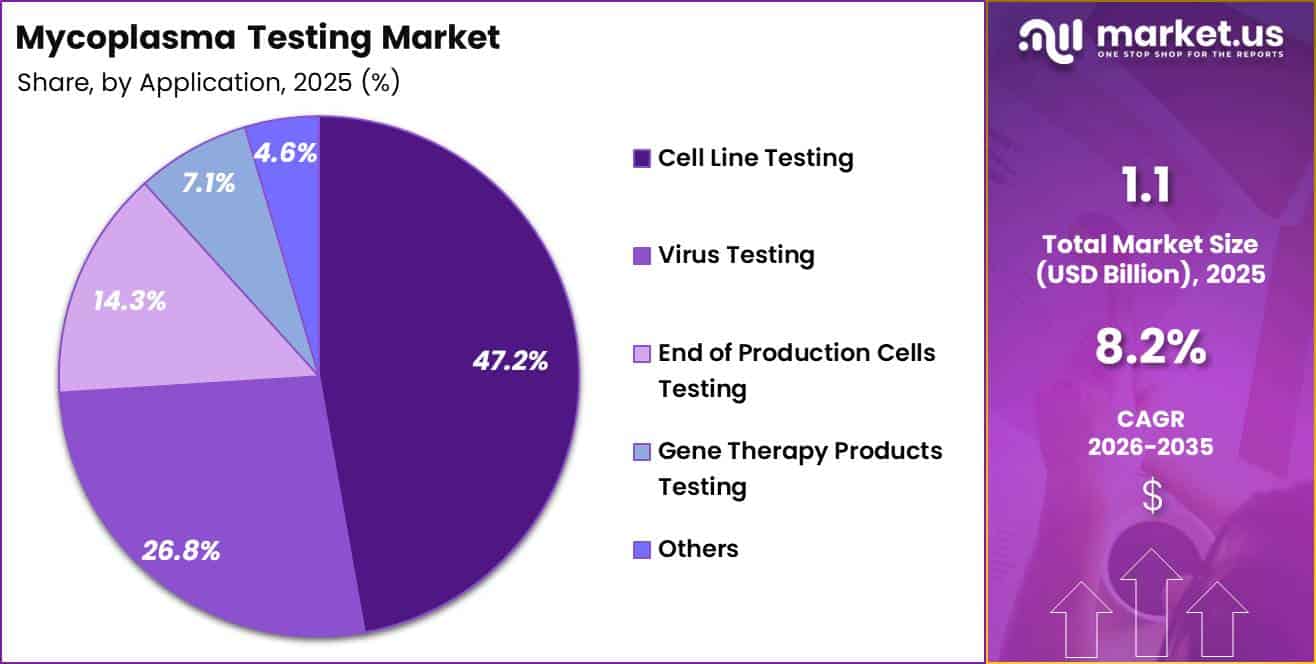
- Application: The Application segment of the Mycoplasma Testing Market is dominated by Cell Line Testing, which captures 47.2% of the market share in 2025.
- End User: The End User segment of the Mycoplasma Testing Market is led by Pharmaceutical & Biotechnology Companies, accounting for 52.7% market share in 2025.
- Sample Type: The Sample Type segment of the Mycoplasma Testing Market is dominated by Cell Culture Supernatants, representing 54.6% market share in 2025.
- Regional Analysis: In 2025, North America led the market, achieving over 46.2% share with a revenue of US$ 0.5 Billion.
Components Analysis
Components segment of the Mycoplasma Testing Market is led by Kits & Reagents.
The Components segment of the Mycoplasma Testing Market is led by Kits & Reagents, accounting for 63.4% of the market share in 2025. The dominance of this segment is driven by the increasing adoption of ready-to-use molecular testing kits, PCR-based detection assays, and advanced reagent solutions used for rapid and accurate identification of mycoplasma contamination.
Pharmaceutical and biotechnology manufacturers widely utilize these kits during cell culture production, vaccine development, biologics manufacturing, and quality control processes to ensure product safety and regulatory compliance.
The Instruments segment holds 23.1% market share in 2025, supported by growing demand for automated PCR systems, nucleic acid amplification platforms, and high-throughput testing equipment in research and manufacturing facilities.
The Services segment contributes 11.8% share, as many organizations outsource specialized mycoplasma testing services to contract laboratories for regulatory validation, contamination monitoring, and quality assurance.
The Others segment represents 1.7% share, including supporting consumables and supplementary testing materials. Overall, increasing biopharmaceutical production, rising cell-based research activities, and strict regulatory guidelines are driving demand across all components of mycoplasma testing solutions.
Application Analysis
Application segment of the Mycoplasma Testing Market is dominated by Cell Line Testing.
The Application segment of the Mycoplasma Testing Market is dominated by Cell Line Testing, which captures 47.2% of the market share in 2025.
Cell line testing plays a crucial role in biopharmaceutical manufacturing, vaccine production, and cell-based research, where detecting mycoplasma contamination is essential to maintain product quality, safety, and regulatory approval. Increasing utilization of mammalian cell cultures for biologics and advanced therapies continues to support segment growth.
The Virus Testing segment accounts for 26.8% market share in 2025, driven by the growing need for contamination screening during viral vaccine production, viral vector development, and gene therapy manufacturing. The End of Production Cells Testing segment holds 14.3% share, supported by regulatory requirements for final product quality assessment before commercialization.
The Gene Therapy Products Testing segment represents 7.1% share, benefiting from increasing development of cell and gene-based treatments requiring strict contamination monitoring. The Others segment contributes 4.6% share, including applications in research laboratories and specialized testing environments. Growing biologics manufacturing and expanding advanced therapy pipelines are expected to strengthen mycoplasma testing adoption across these applications.
End User Analysis
End User segment of the Mycoplasma Testing Market is led by Pharmaceutical & Biotechnology Companies.
The End User segment of the Mycoplasma Testing Market is led by Pharmaceutical & Biotechnology Companies, accounting for 52.7% market share in 2025. This dominance is attributed to the extensive use of mycoplasma testing in biologics manufacturing, vaccine production, cell therapy development, and quality control operations.
Pharmaceutical and biotechnology companies require reliable contamination detection methods to comply with global regulatory standards and ensure the safety of biological products.
Contract Research Organizations (CROs) represent a significant user segment due to increasing outsourcing of analytical testing, validation studies, and regulatory support services by pharmaceutical developers. Academic Research Institutes contribute to market growth through rising cell biology research, molecular studies, and biotechnology investigations requiring contamination monitoring.
Cell Banks utilize mycoplasma testing to maintain the integrity and safety of stored cell lines used in research and manufacturing applications. Hospitals & Diagnostic Laboratories adopt testing solutions for specialized diagnostic and research purposes, while the Others segment includes government laboratories and specialized testing facilities.
Increasing biotechnology investments and expanding cell-based research activities continue to drive demand among diverse end users.
Sample Type Analysis
Sample Type segment of the Mycoplasma Testing Market is dominated by Cell Culture Supernatants.
The Sample Type segment of the Mycoplasma Testing Market is dominated by Cell Culture Supernatants, representing 54.6% market share in 2025.
This segment leads due to the widespread use of cell culture systems in biopharmaceutical production, vaccine manufacturing, and research applications where monitoring culture media for mycoplasma contamination is essential. Testing cell culture supernatants enables early detection of contamination risks and supports effective quality control practices.
Blood Specimens represent an important sample category, primarily used in clinical and diagnostic applications where mycoplasma infections require identification and monitoring. Throat Swabs are utilized for respiratory-related mycoplasma detection, particularly in diagnostic testing environments.
Urine Samples contribute to market demand through applications involving detection of urogenital mycoplasma infections. Respiratory Samples support testing for pulmonary infections caused by mycoplasma species and are increasingly used in molecular diagnostic workflows.
The Others segment includes specialized biological samples used in research and laboratory testing. Growing adoption of molecular diagnostics, increasing biopharmaceutical manufacturing, and rising contamination control requirements are strengthening demand for mycoplasma testing across multiple sample types.
Key Market Segments
By Components
- Kits & Reagents
- Instruments
- Services
- Others
By Application
- Cell Line Testing
- Virus Testing
- End of Production Cells Testing
- Gene Therapy Products Testing
- Others
By End User
- Pharmaceutical & Biotechnology Companies
- Contract Research Organizations
- Academic Research Institutes
- Cell Banks
- Hospitals & Diagnostic Laboratories
- Others
By Sample Type
- Cell Culture Supernatants
- Blood Specimens
- Throat Swabs
- Urine Samples
- Respiratory Samples
- Others
Drivers
Screening and early diagnosis programs increasing paraffin section workload.
Organized screening expands pathology intake by shifting more asymptomatic patients into biopsy and tissue confirmation pathways.
CDC supports screening for breast, cervical, colorectal, and lung cancers based on USPSTF aligned recommendations, while WHO’s cervical cancer strategy targets 70% screening coverage by ages 35 and 45, particularly in low and middle income countries.This increase in screening raises routine laboratory caseloads, especially small biopsies and follow up confirmations, which increases the number of paraffin blocks processed per pathologist.
As a result, demand rises for histology tools such as rotary microtomes, disposable blades, and cryostat systems used in intraoperative diagnostics.The impact is gradual, but once screening programs scale, it creates sustained equipment and consumables demand driven by higher throughput requirements and recurring laboratory workflows.
| Driver | (~) % Impact on CAGR Forecast | Geographic Relevance | Impact Timeline |
|---|---|---|---|
| Oncology biopsy volume expansion driving routine histology throughput | +1.6% | North America core, EU, East Asia, urban APAC hospitals | Short term |
| Screening and early-diagnosis programs increasing paraffin section workload | +1.2% | North America, EU, South-East Asia, Latin America public systems | Medium term |
| Digital pathology rollout requiring higher section consistency and repeatability | +1.0% | North America core, Western Europe, Japan, South Korea, Gulf reference labs | Medium term |
| Translational research and spatial biology programs lifting premium microtome demand | +0.9% | U.S. academic clusters, EU research hubs, China, Japan | Medium term |
| Regulatory and quality-accreditation tightening supporting equipment refresh cycles | +0.8% | U.S., EU, export-oriented APAC manufacturers, private hospital chains | Short term |
| Reimbursement pressure favoring automation, labor savings, and cryostat replacement | +0.7% | U.S. independent labs, EU consolidated pathology networks, developed APAC | Short term |
Challenges
Structural input cost volatility in global microtome manufacturing.
Microtome manufacturers remain exposed to volatile input costs and geopolitical trade dynamics, as precision components such as steel blades, bearings, optical encoders, motors, and control electronics are sourced through multi tier global supply chains. A significant share of the bill of materials is imported and sensitive to tariffs, logistics costs, and currency fluctuations.
Recent tariff changes and elevated freight rates have increased landed costs for laboratory instruments and consumables, while also extending lead times for critical components.Items that previously shipped in a few weeks can now take significantly longer, forcing manufacturers to hold higher safety stock to avoid production delays.
This volatility contributes to higher equipment prices, longer procurement cycles, and delayed replacement decisions in hospitals and laboratories. Overall, it creates a moderate friction on market growth by increasing costs and slowing purchasing decisions, even though underlying demand remains intact.
| Challenge | (~) % CAGR Friction Drag | Geographic Relevance | Mitigation Horizon |
|---|---|---|---|
| Volatile lab equipment inputs | -1.0% | North America, EU, East Asia | Medium term (2-4 years) |
| Diagnostic lab supply fragility | -0.8% | Global hospital hubs, reference labs | Medium term (2-4 years) |
| Pathology workforce bottlenecks | -0.7% | US, EU, Japan, GCC | Long term (≥ 4 years) |
| Capital budget cyclicality | -0.6% | Public health systems, EM hospitals | Medium term (2-4 years) |
| Workflow–digitization mismatch | -0.5% | High-income digital pathology hubs | Long term (≥ 4 years) |
| Quality, uptime, and compliance drag | -0.4% | Global accredited labs | Short term (≤ 2 years) |
Restraints
Structural pathology workforce shortages limiting microtome utilization globally.
A key constraint on microtome demand is the growing mismatch between rising histopathology workload and limited specialist workforce capacity. With global cancer cases reaching about 20 million in 2022 and projected to rise toward 35 million by 2050, biopsy volumes and tissue processing requirements are increasing steadily.
However, pathology and histotechnology workforces in the US and Europe are under pressure due to aging staff, limited training pipeline capacity, and rising burnout. Many hospital labs already operate with noticeable vacancy rates, which forces them to cap daily processing volumes and prioritize urgent cases.
As a result, existing microtome fleets are often run near capacity, but additional equipment purchases are delayed because there is insufficient trained staff to operate new units effectively. This leads to slower replacement cycles and restrained unit growth despite rising clinical demand.
Overall, workforce shortages reduce effective utilization expansion and modestly limit market growth, as laboratories increasingly focus on workflow efficiency, automation, and digital pathology rather than expanding mechanical sectioning capacity.
| Restraint | (~) % Impact on CAGR Forecast | Geographic Relevance | Impact Timeline |
|---|---|---|---|
| 1. Pathology workforce shortages & underutilization | -1.6% | North America, Western Europe, high-income APAC | Long term (≥ 4 years) |
| 2. Capital budget pressure in hospitals & labs | -1.4% | North America core, EU, LatAm tier-2, MEA public | Medium term (2–4 years) |
| 3. Supply chain & precision component volatility | -1.2% | EU, North America, APAC corridors | Short–Medium term (≤ 4 years) |
| 4. Regulatory compliance & quality systems drag | -0.9% | U.S., EU, Japan, China | Medium–Long term (≥ 2 years) |
| 5. Slow digital pathology & automation adoption | -1.0% | North America core, EU, advanced APAC | Long term (≥ 4 years) |
| 6. Competitive commoditization & price erosion | -0.8% | APAC volume markets, LatAm, MEA | Medium term (2–4 years) |
Opportunity
Automation led microtomy platforms for labor constrained pathology.
This is a major upside opportunity driven by the shift from manual microtomy toward semi and fully automated sectioning systems that reduce operator dependence and improve workflow efficiency in high volume pathology labs. Unlike baseline demand, which is driven by routine replacement, this opportunity comes from upgrading installed base systems to automation enabled platforms.
These systems can improve section consistency, reduce trimming waste, and lower labor intensity by around 20 to 35 % in workforce constrained settings, while increasing throughput per shift and standardizing output across multi site laboratory networks. This makes them particularly relevant in regions facing persistent pathology staffing shortages and rising quality requirements.
Commercially, automation shifts capital spending toward higher value systems with stronger ROI justification, supporting faster adoption in North America, Europe, and Japan. Overall, this transition could add meaningful upside to growth by accelerating replacement cycles and increasing equipment value per installation.
| Opportunity | (~) % Potential CAGR Upside | Geographic Relevance | Execution Window |
|---|---|---|---|
| Automated microtomy | +1.8% | North America, EU, Japan | Short term (≤ 2 years) |
| Digital-pathology bundles | +1.2% | North America, EU, APAC advanced | Short term (≤ 2 years) |
| Premium blades | +0.9% | Global, especially EU and APAC | Medium term (2-4 years) |
| Specialty sectioning | +0.8% | North America, EU, China | Medium term (2-4 years) |
| Service and uptime | +0.7% | North America, EU | Short term (≤ 2 years) |
| Emerging lab buildouts | +1.4% | APAC emerging, Middle East, Latin America | Long term (≥ 4 years) |
Regional Analysis
North America dominated the Mycoplasma Testing Market in 2025.
In 2025, North America dominated the Mycoplasma Testing Market, accounting for over 46.2% of the global market share, with revenue reaching approximately US$ 0.5 Billion. The region’s leadership is primarily supported by the strong presence of biotechnology companies, pharmaceutical manufacturers, and advanced research institutions that require reliable contamination detection solutions for cell-based research, vaccine production, and biopharmaceutical manufacturing.
The United States represents the major contributor within North America due to its well-established biopharmaceutical industry and increasing adoption of advanced molecular testing methods. Regulatory requirements from organizations such as the U.S. Food and Drug Administration and United States Pharmacopeia encourage manufacturers to implement strict quality control measures, including routine mycoplasma screening during biologics development and production.
Growing investments in cell and gene therapies, biologics manufacturing facilities, and laboratory automation are further strengthening demand for mycoplasma testing kits, reagents, and instruments across the region. Pharmaceutical companies increasingly rely on PCR-based and rapid detection technologies to reduce testing time and improve manufacturing efficiency.
Additionally, the expansion of contract research organizations (CROs) and biopharmaceutical outsourcing activities is contributing to market growth. With continuous advancements in molecular diagnostics and increasing focus on product safety, North America is expected to maintain its leading position in the global Mycoplasma Testing Market during the forecast period.
Key Regions and Countries
North America
- The US
- Canada
Europe
- Germany
- France
- The U.K.
- Italy
- Spain
- Russia & CIS
- Rest of Europe
Asia Pacific
- China
- India
- Japan
- South Korea
- ASEAN
- Australia & New Zealand
- Rest of Asia Pacific
Middle East & Africa
- GCC
- South Africa
- Rest of Middle East & Africa
Latin America
- Brazil
- Mexico
- Rest of Latin America
Key Player Analysis
The Mycoplasma Testing Market is characterized by a moderately consolidated competitive landscape, with leading life science and biotechnology companies holding significant influence through advanced testing technologies, regulatory expertise, and broad product portfolios.
Competition is primarily driven by innovation in molecular diagnostics, faster detection methods, automation capabilities, and integration of testing solutions into biopharmaceutical manufacturing workflows. Companies are focusing on strengthening R&D pipelines, strategic collaborations, and expanding end-to-end quality control solutions to support pharmaceutical, cell therapy, and biologics production.
Among the major participants, Thermo Fisher Scientific Inc., Merck KGaA, Roche Diagnostics, Charles River Laboratories International Inc., and Lonza Group Ltd. represent some of the key players shaping market development. These companies are investing in advanced PCR-based assays, rapid mycoplasma detection technologies, and automated testing platforms to improve accuracy and reduce turnaround time.
Thermo Fisher Scientific Inc. focuses on integrated laboratory solutions combining instruments, reagents, and analytical technologies. Merck KGaA emphasizes contamination control solutions and bioprocess quality management. Roche Diagnostics continues to advance molecular diagnostic technologies for sensitive microbial detection.
Charles River Laboratories International Inc. strengthens its position through specialized testing services and pharmaceutical quality solutions. Lonza Group Ltd. focuses on supporting cell and gene therapy manufacturing with reliable contamination monitoring workflows.
Competitive strategies across these companies include R&D investments, partnerships, workflow integration, and ecosystem-based solutions that provide comprehensive mycoplasma testing support across the biopharmaceutical value chain.
Top Key Players
- Thermo Fisher Scientific Inc.
- Merck KGaA
- Roche Diagnostics
- Charles River Laboratories International Inc.
- Lonza Group Ltd.
- Sartorius AG
- Agilent Technologies
- Eurofins Scientific
- Bionique Testing Laboratories Inc.
- Minerva Biolabs GmbH
- InvivoGen
- PromoCell GmbH
- Norgen Biotek Corp.
- American Type Culture Collection (ATCC)
- GenProbe, Inc.
- Biotools B & M Labs S.A.
- Nelson Laboratories Fairfield Inc.
- Meridian Bioscience Inc.
- Savyon Diagnostics
- Creative Bioarray
- Others
Recent Developments
- In July 2025, Thermo Fisher Scientific Inc. expanded its strategic partnership with Sanofi by acquiring Sanofi’s sterile manufacturing site in Ridgefield, New Jersey. The expansion strengthens Thermo Fisher’s biopharma manufacturing capabilities and supports growing demand for quality-control solutions, including contamination monitoring and microbial testing workflows used during biologics production.
- In January 2026, Bionique Testing Laboratories Inc. appointed Dr. Andy Bailey as President and Chief Executive Officer. The leadership move is expected to support Bionique’s growth strategy in biosafety testing, including mycoplasma detection services for cell and gene therapy, biologics, and pharmaceutical manufacturing customers. The company also highlighted expansion activities to strengthen rapid biosafety testing capacity.
- In January 2026, Lonza Group Ltd. reported strong 2025 performance and operational expansion across its CDMO business. The company completed integration activities at its Vacaville site and continued investing in manufacturing capabilities, supporting higher demand for advanced biologics production where reliable mycoplasma testing and quality-control solutions are critical.
- In January 2026, Charles River Laboratories International Inc. announced strategic acquisitions and capability expansion plans, including an option to acquire PathoQuest SAS. The move strengthens Charles River’s focus on advanced microbial detection and rapid in-vitro quality-control testing solutions for biopharmaceutical manufacturing.
Report Scope
| Report Features | Description |
|---|---|
| Market Value (2025) | US$ 1.1 Billion |
| Forecast Revenue (2035) | US$ 2.4 Billion |
| CAGR (2026-2035) | 8.2% |
| Base Year for Estimation | 2025 |
| Historic Period | 2020-2024 |
| Forecast Period | 2026-2035 |
| Report Coverage | Revenue Forecast, Market Dynamics, Competitive Landscape, Recent Developments |
| Segments Covered | By Components (Kits & Reagents, Instruments, Services, Others), By Application (Cell Line Testing, Virus Testing, End of Production Cells Testing, Gene Therapy Products Testing, Others), By End User (Pharmaceutical & Biotechnology Companies, Contract Research Organizations, Academic Research Institutes, Cell Banks, Hospitals & Diagnostic Laboratories, Others), By Sample Type (Cell Culture Supernatants, Blood Specimens, Throat Swabs, Urine Samples, Respiratory Samples, Others) |
| Regional Analysis | North America – The US, Canada; Europe – Germany, France, U.K., Italy, Spain, Russia & CIS, Rest of Europe; Asia Pacific – China, India, Japan, South Korea, ASEAN, Australia & New Zealand, Rest of Asia Pacific; Middle East & Africa – GCC, South Africa, Rest of Middle East & Africa; Latin America – Brazil, Mexico, Rest of Latin America |
| Competitive Landscape | Thermo Fisher Scientific Inc., Merck KGaA, Roche Diagnostics, Charles River Laboratories International Inc., Lonza Group Ltd., Sartorius AG, Agilent Technologies, Eurofins Scientific, Bionique Testing Laboratories Inc., Minerva Biolabs GmbH, InvivoGen, PromoCell GmbH, Norgen Biotek Corp., American Type Culture Collection (ATCC), GenProbe, Inc., Biotools B & M Labs S.A., Nelson Laboratories Fairfield Inc., Meridian Bioscience Inc., Savyon Diagnostics, Creative Bioarray, Others |
| Customization Scope | Customization for segments, region/country-level will be provided. Moreover, additional customization can be done based on the requirements. |
| Purchase Options | We have three licenses to opt for: Single User License, Multi-User License (Up to 5 Users), Corporate Use License (Unlimited User and Printable PDF) |





































