


Global Maltitol Market Size, Share, And Business Benefits By Form (Powder and Crystal, Liquid and Syrup), By Source (Corn, Wheat, Others), By Application (Food (Bakery and Confectionery, Dairy Products, Frozen Desserts, Nutritional Supplements, Others), Beverages (Carbonated Drinks, Fruit Drinks and Juices, Powdered Drinks and Mixes, Pharmaceuticals, Personal Care))
- Published date: June 2025
- Report ID: 123184
- Number of Pages: 270
- Format:
-
keyboard_arrow_up
Quick Navigation
Report Overview
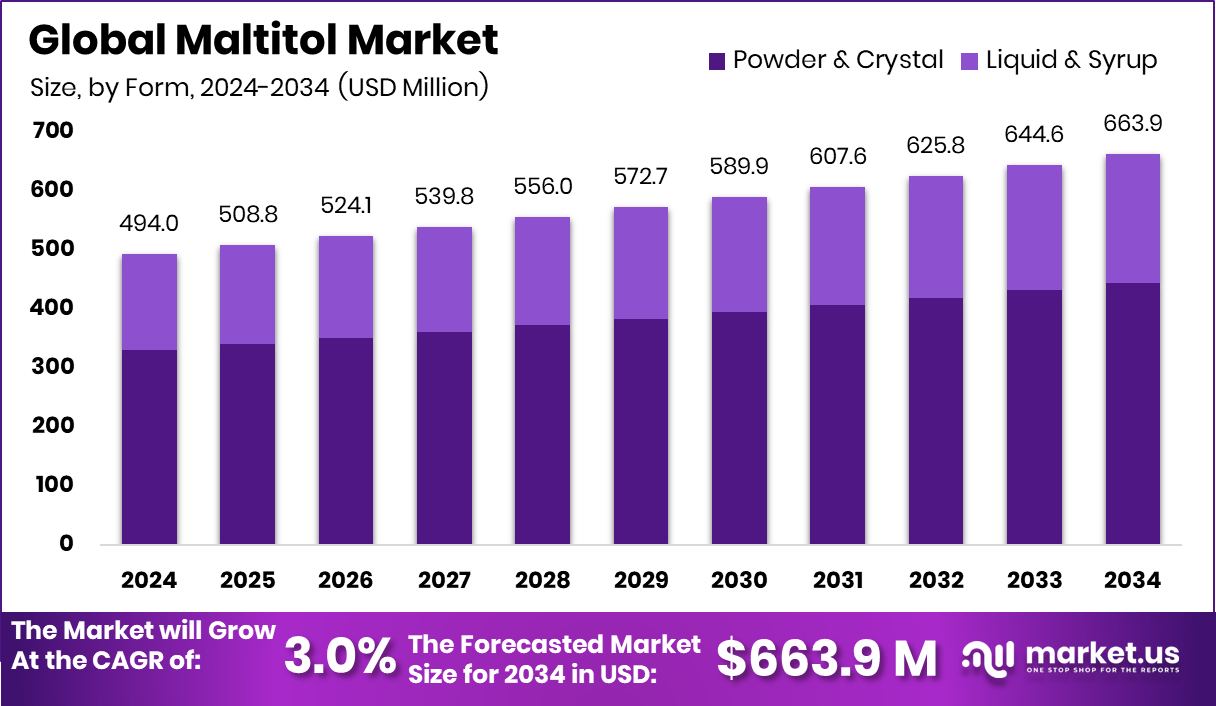
Global Maltitol Market is expected to be worth around USD 663.9 Million by 2034, up from USD 494.0 Million in 2024, and grow at a CAGR of 3.0% from 2025 to 2034. Strong demand for low-calorie sweeteners boosted North America’s 38.3% market share.
Maltitol is a sugar alcohol used as a low-calorie sweetener in food and pharmaceutical products. It is derived primarily from starches such as corn or wheat, and offers about 70–90% of the sweetness of regular sugar with nearly half the calories. Maltitol does not promote tooth decay and has a lower glycemic index than sugar, making it a common choice for diabetic-friendly and low-carb products. It is widely used in sugar-free candies, baked goods, chewing gums, and chocolates due to its similar texture and mouthfeel to sucrose.
The maltitol market refers to the global trade and consumption of maltitol as an ingredient in food, beverage, pharmaceutical, and personal care products. Its demand has grown steadily due to shifting consumer preferences toward low-calorie and sugar-reduced alternatives. The market spans multiple regions and is influenced by trends such as clean-label products, health-conscious eating, and sugar taxation.
The growth of the maltitol market can be attributed to rising health awareness, especially regarding diabetes and obesity. As more consumers seek alternatives to sugar without compromising taste, maltitol is increasingly adopted in sugar-free formulations. Supportive government policies for reduced sugar intake and evolving food labeling standards also play a significant role in market expansion.
There is steady demand from the confectionery and bakery industries, which are increasingly focused on offering sugar-free versions of traditional products. Maltitol’s close resemblance to sugar in terms of taste and texture makes it a preferred ingredient, especially in markets like North America and Europe, where diet-conscious populations are growing.
Key Takeaways
- Global Maltitol Market is expected to be worth around USD 663.9 Million by 2034, up from USD 494.0 Million in 2024, and grow at a CAGR of 3.0% from 2025 to 2034.
- In the Maltitol market, powder and crystal form dominate with a share of 67.2% globally.
- Corn-based maltitol holds a leading position in the market, accounting for 48.1% of total production.
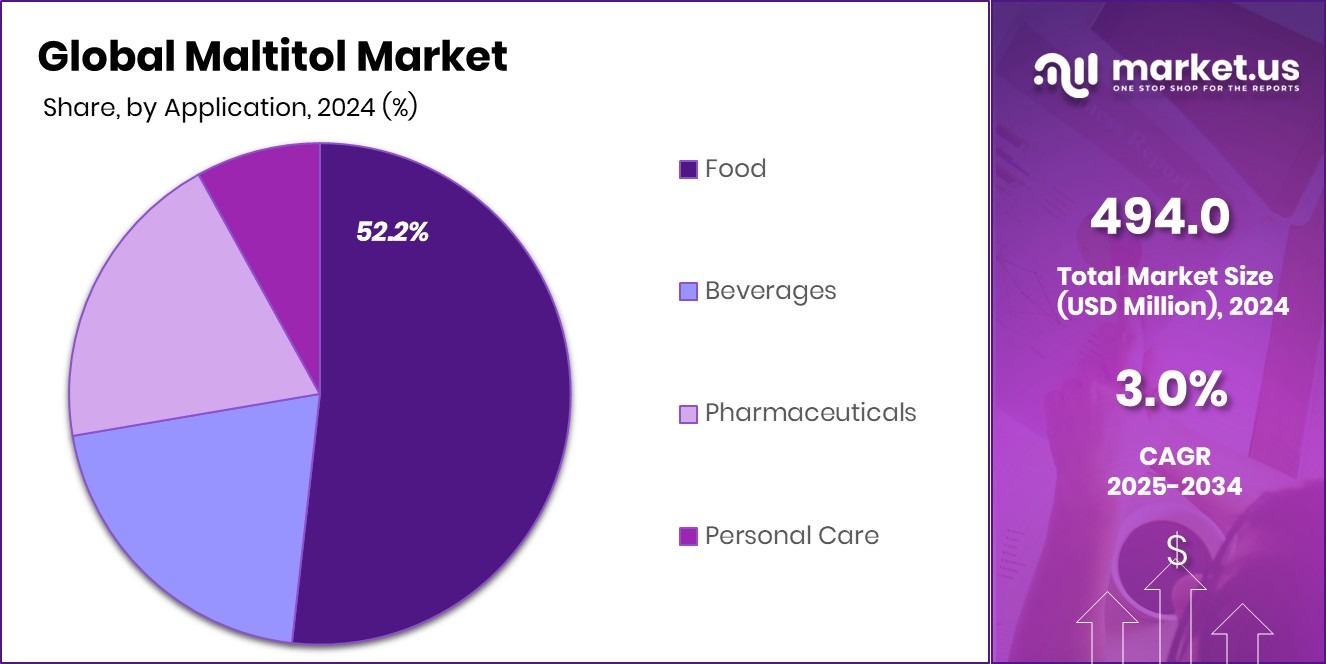
- The food industry remains the top application segment, contributing 52.2% to the overall maltitol demand.
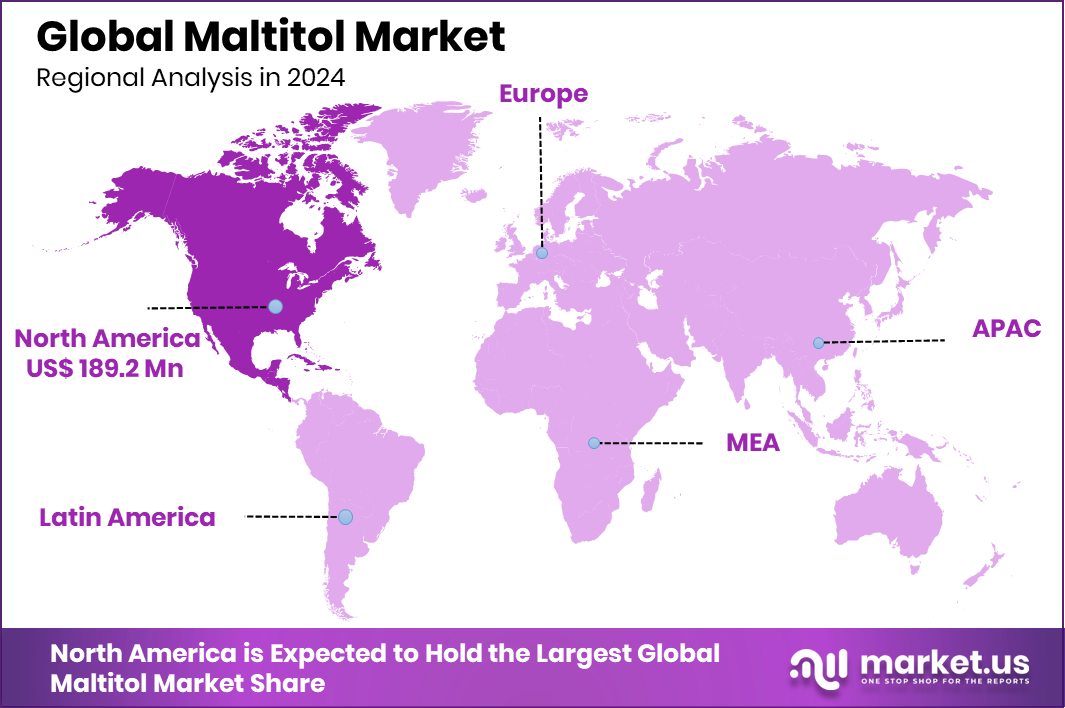
- The North American maltitol market was valued at USD 189.2 million in 2024.
By Form Analysis
Powder and crystal forms dominate the Maltitol market with a 67.2% share.
In 2024, Powder and Crystal held a dominant market position in the By Form segment of the Maltitol Market, with a 67.2% share. This strong market presence is largely due to the widespread application of powdered and crystalline maltitol in sugar-free and reduced-calorie food products. Its ease of blending, stable shelf life, and functional similarity to sucrose make it an ideal ingredient for confectionery items such as chocolates, chewing gums, and hard candies.
Additionally, the powder and crystal form is extensively utilized in baking applications where precise sweetness and texture are crucial, supporting its strong adoption across commercial and industrial food manufacturing.
This segment’s popularity is further supported by its compatibility with existing food processing techniques, requiring minimal adaptation during product reformulation. The ability to substitute sugar in a 1:1 ratio without compromising taste or quality has also contributed to its high preference among manufacturers.
Moreover, rising health consciousness and regulatory encouragement to reduce sugar levels in packaged foods have driven food producers to choose versatile sweeteners like maltitol powder. With consistent demand from both established and emerging economies, the Powder and Crystal form continues to lead the form-based segmentation of the global Maltitol Market.
By Source Analysis
Corn remains the leading source in Maltitol production with 48.1% contribution.
In 2024, Corn held a dominant market position in the By Source segment of the Maltitol Market, with a 48.1% share. This leadership is primarily driven by the abundant availability of corn as a raw material and the well-established infrastructure for its processing across key producing countries. Corn-based maltitol benefits from cost-effective production, scalability, and a consistent supply chain, which makes it a preferred choice among manufacturers focused on large-scale production of sugar-free and low-calorie food products.
The favorable economics of corn-derived starch conversion to maltitol, combined with technological advancements in enzymatic processing, have supported its wide adoption. Moreover, regulatory approvals and consumer perception of corn as a safe and natural source have strengthened its presence in both developed and developing markets. Food manufacturers particularly value the purity and neutral taste of corn-based maltitol, which allows it to be easily integrated into a variety of end-use applications, especially in bakery, confectionery, and dietary supplement sectors.
With rising global demand for healthier alternatives to sugar and the steady supply of corn-based raw material, this segment continues to play a pivotal role in supporting the overall growth and stability of the maltitol market in 2024.
By Application Analysis
The food industry leads maltitol usage, accounting for 52.2% of total demand.
In 2024, Food held a dominant market position in the By Application segment of the Maltitol Market, with a 52.2% share. This significant share reflects the widespread use of maltitol in a variety of food products, particularly in sugar-free and reduced-calorie formulations.
Food manufacturers have increasingly adopted maltitol due to its close resemblance to sugar in both sweetness and texture, making it an effective sugar substitute in baked goods, confectionery, and processed foods. Its non-carcinogenic properties and lower caloric value have further enhanced its acceptance among health-conscious consumers and regulatory bodies promoting sugar reduction.
The growing demand for functional foods and dietary products that align with evolving consumer preferences for clean-label and low-glycemic options has also supported the strong presence of the food segment. Maltitol is frequently used in the development of diabetic-friendly products and low-sugar snacks, catering to both mainstream and niche consumer groups.
Furthermore, the ease of incorporating maltitol into existing food processing systems without major modifications has encouraged its continued usage across global food manufacturing units. With strong consumer demand and a supportive production environment, the food segment continues to lead the application-based segmentation of the maltitol market in 2024.
Key Market Segments
By Form
- Powder and Crystal
- Liquid and Syrup
By Source
- Corn
- Wheat
- Others
By Application
- Food
- Bakery and Confectionery
- Dairy Products
- Frozen Desserts
- Nutritional Supplements
- Others
- Beverages
- Carbonated Drinks
- Fruit Drinks and Juices
- Powdered Drinks and Mixes
- Pharmaceuticals
- Personal Care
Driving Factors
Health-Conscious Consumers Are Driving Sugar Alternatives
One of the main factors pushing the growth of the maltitol market is the rising number of health-conscious consumers who are actively reducing their sugar intake. People are now more aware of health problems like diabetes, obesity, and tooth decay, which are often linked to consuming too much sugar. As a result, many are turning to sugar substitutes like maltitol, which provides sweetness but with fewer calories and a lower glycemic index.
This shift in lifestyle and diet habits is especially noticeable in urban areas where awareness and access to healthier food options are growing quickly. Food companies are responding by using maltitol in their products to meet this demand for low-sugar, yet tasty and satisfying food and drinks.
Restraining Factors
Digestive Discomfort Limits Consumer Acceptance and Usage
A key factor holding back the growth of the maltitol market is the digestive discomfort it may cause when consumed in large amounts. Maltitol, like other sugar alcohols, is not fully absorbed by the body and can lead to side effects such as bloating, gas, or laxative effects, especially when taken in excess. For people with sensitive digestive systems, even small amounts can be uncomfortable.
Because of this, many consumers are cautious or avoid products with maltitol altogether. Food manufacturers are also required to include warning labels in some regions, which may discourage buyers. This has made it harder for maltitol-based products to become mainstream despite their benefits as a sugar substitute.
Growth Opportunity
Rising Demand for Diabetic-Friendly Food Products
A major growth opportunity for the maltitol market lies in the increasing demand for diabetic-friendly food items. With diabetes affecting millions of people worldwide, there is a growing need for sweeteners that do not raise blood sugar levels. Maltitol has a lower glycemic index compared to regular sugar, making it a suitable option for individuals managing diabetes.
As awareness of blood sugar control and healthy eating spreads, food manufacturers are creating more sugar-free and reduced-sugar products using maltitol. This includes items like chocolates, cookies, and meal bars targeted toward diabetic consumers. The growing focus on preventive health and long-term wellness is expected to create steady demand for such products, opening new opportunities for maltitol’s use in specialized nutrition.
Latest Trends
Clean-Label and Natural Ingredients Are Gaining Popularity
One of the latest trends in the maltitol market is the growing demand for clean-label and natural ingredients in food and beverages. Consumers today are paying closer attention to what goes into the products they eat, preferring items with simple, recognizable ingredients. As a plant-based sugar alcohol, maltitol fits well within this trend. It is often used in products marketed as “no added sugar” or “naturally sweetened,” which appeals to health-conscious shoppers.
Many brands are highlighting maltitol’s natural source, such as corn or wheat, on their packaging to build trust with consumers. This trend toward transparency and cleaner ingredient lists is helping maltitol gain more acceptance in both mainstream and specialty food categories.
Regional Analysis
In 2024, North America held a 38.3% market share in maltitol consumption.
In 2024, North America held a dominant position in the global maltitol market, accounting for 38.3% of the total market share and reaching a valuation of USD 189.2 million. The region’s leadership is supported by strong consumer demand for sugar-free and low-calorie food products, especially within the United States and Canada.
With growing awareness around obesity, diabetes, and dental health, maltitol is widely adopted in the production of confectionery, baked goods, and functional snacks. Favorable regulatory frameworks and advanced food processing infrastructure have also contributed to the region’s leadership in this segment.
Meanwhile, Europe, Asia Pacific, Latin America, and the Middle East & Africa represent steadily growing markets, influenced by gradual lifestyle changes, urbanization, and a rising focus on health-conscious diets. However, based solely on the available data, North America emerged as the leading regional market.
The established food manufacturing base, increasing preference for clean-label and diabetic-friendly products, and growing investment in healthy alternatives continue to position North America at the forefront of the global maltitol demand. While other regions show potential, particularly with increasing awareness and access to alternative sweeteners, the dominance of North America in both share and value defines the current landscape of the maltitol market in 2024.
Key Regions and Countries
- North America
- US
- Canada
- Europe
- Germany
- France
- The UK
- Spain
- Italy
- Rest of Europe
- Asia Pacific
- China
- Japan
- South Korea
- India
- Australia
- Rest of APAC
- Latin America
- Brazil
- Mexico
- Rest of Latin America
- Middle East & Africa
- GCC
- South Africa
- Rest of MEA
Key Players Analysis
In 2024, the global maltitol market witnessed steady participation from major food ingredient manufacturers, with Roquette Frères, Cargill Incorporated, ADM, and Ingredion Incorporated playing influential roles in shaping industry direction.
Roquette Frères continues to be a prominent name due to its specialized focus on plant-based ingredients. With strong capabilities in starch processing, the company plays a vital role in the large-scale production of polyols such as maltitol, offering tailored solutions to food and pharmaceutical manufacturers.
Cargill, Incorporated, known for its broad portfolio in food and nutrition, remains a reliable supplier of sugar alternatives. Its deep distribution network and commitment to product consistency help meet demand for clean-label and sugar-reduced applications across key regions. In 2024, Cargill continued to focus on sustainability and innovation in food systems, further reinforcing its relevance in maltitol supply.
ADM is contributing to the maltitol market through its strengths in agricultural processing and ingredient development. The company’s integration of supply chain efficiencies with health-forward product offerings aligns well with growing consumer demand for functional sweeteners.
Meanwhile, Ingredion Incorporated has steadily expanded its presence in specialty sweeteners. In 2024, the company’s focus on formulation support and customer-centric innovation enabled it to cater to the reformulation needs of food manufacturers targeting sugar reduction.
Top Key Players in the Market
- Roquette Frères
- Cargill, Incorporated
- ADM
- Ingredion Incorporated
- B Food Science Co., Ltd.
- Mitsubishi Corporation Life Sciences Limited
- Jungbunzlauer Suisse AG
- Zhejiang Huakang Pharmaceutical Co., Ltd.
- Shandong Futaste Co.
- Makendi WorldWide
- Sinofi
- Other Key Players
Recent Developments
- In November 2024, during the Food Ingredients Europe (FiE) event in Frankfurt, Cargill showcased its expanded low- and no-calorie sweetener range, which included maltitol alongside isomalt, mannitol, sorbitol, and erythritol. This launch highlights Cargill’s commitment to offering a versatile suite of sugar-reduction solutions suitable for various food and beverage applications.
- In June 2024, Roquette Pharma Solutions introduced LYCAGEL® Flex, a plant-based pea starch premix designed for softgel capsules. While not a maltitol variant, this innovation underscores Roquette’s commitment to excipient innovation, supporting its broader range that includes maltitol products like SweetPearl® Maltitol Powder and LYCASIN® Maltitol Syrup.
Report Scope
Report Features Description Market Value (2024) USD 494.0 Million Forecast Revenue (2034) USD 663.9 Million CAGR (2025-2034) 3.0% Base Year for Estimation 2024 Historic Period 2020-2023 Forecast Period 2025-2034 Report Coverage Revenue Forecast, Market Dynamics, Competitive Landscape, Recent Developments Segments Covered By Form (Powder and Crystal, Liquid and Syrup), By Source (Corn, Wheat, Others), By Application (Food (Bakery and Confectionery, Dairy Products, Frozen Desserts, Nutritional Supplements, Others), Beverages (Carbonated Drinks, Fruit Drinks and Juices, Powdered Drinks and Mixes, Pharmaceuticals, Personal Care)) Regional Analysis North America – US, Canada; Europe – Germany, France, The UK, Spain, Italy, Rest of Europe; Asia Pacific – China, Japan, South Korea, India, Australia, Singapore, Rest of APAC; Latin America – Brazil, Mexico, Rest of Latin America; Middle East & Africa – GCC, South Africa, Rest of MEA Competitive Landscape Roquette Frères, Cargill, Incorporated, ADM, Ingredion Incorporated, B Food Science Co., Ltd., Mitsubishi Corporation Life Sciences Limited, Jungbunzlauer Suisse AG, Zhejiang Huakang Pharmaceutical Co., Ltd., Shandong Futaste Co., Makendi WorldWide, Sinofi , Other Key Players Customization Scope Customization for segments, region/country-level will be provided. Moreover, additional customization can be done based on the requirements. Purchase Options We have three licenses to opt for: Single User License, Multi-User License (Up to 5 Users), Corporate Use License (Unlimited User and Printable PDF) 
-
-
- Roquette Frères
- Cargill, Incorporated
- ADM
- Ingredion Incorporated
- B Food Science Co., Ltd.
- Mitsubishi Corporation Life Sciences Limited
- Jungbunzlauer Suisse AG
- Zhejiang Huakang Pharmaceutical Co., Ltd.
- Shandong Futaste Co.
- Makendi WorldWide
- Sinofi
- Other Key Players
Our Clients

- 123184
- June 2025






