Report Overview
The Global Next-Generation Gaming Console Market size is expected to be worth around USD 6.1 billion by 2034, from USD 2.4 billion in 2024, growing at a CAGR of 9.8% during the forecast period from 2025 to 2034. Asia Pacific held a dominant market position, capturing more than a 43.6% share, holding USD 1.04 billion in revenue.
Next-generation gaming consoles are advanced gaming devices designed to offer enhanced graphics, faster processing speeds, and immersive gameplay experiences. These consoles support features like 4K and 8K Technology resolutions, ray tracing, haptic feedback, and cloud gaming integration. Beyond gaming, they serve as multimedia hubs for streaming, esports, and social interaction, catering to a broad user base from casual gamers to professionals. These consoles blend powerful hardware with software ecosystems to deliver richer and more interactive entertainment.
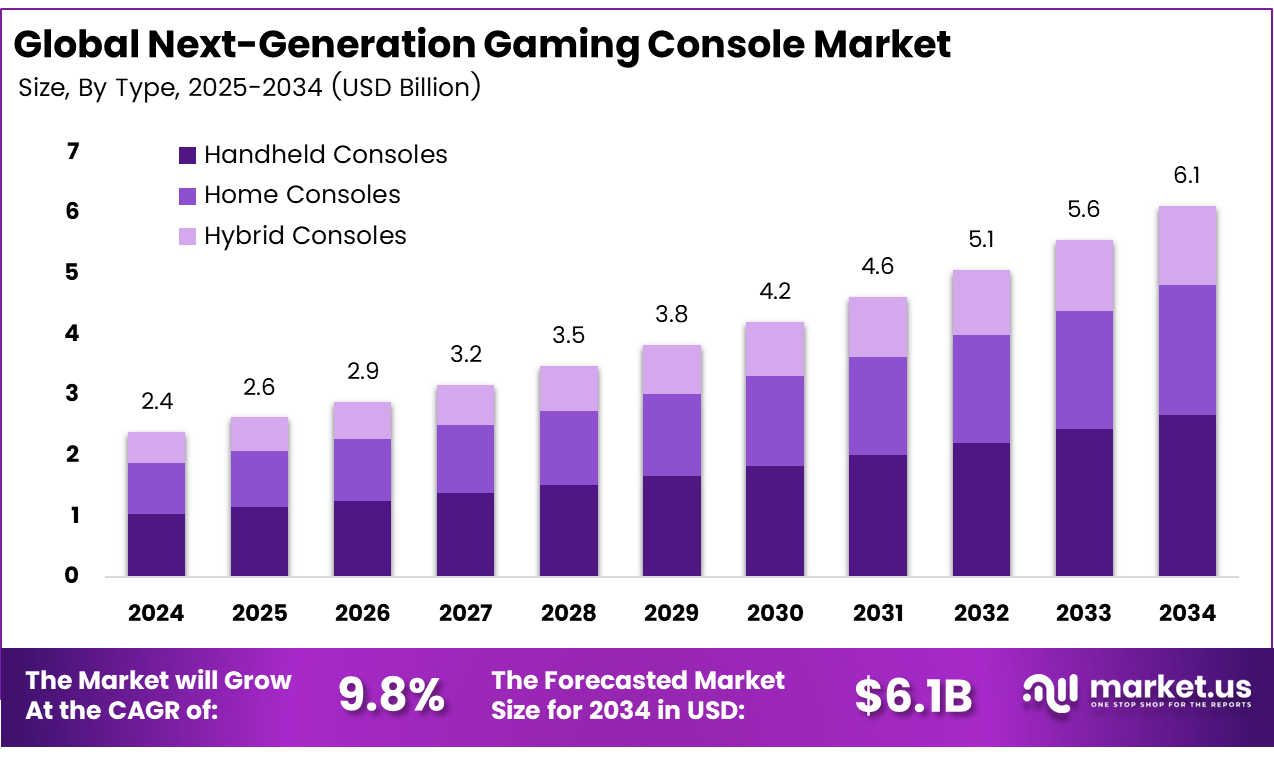
One of the key drivers is the growing demand for immersive online multiplayer experiences and esports, pushing players toward high-performance consoles with real-time connectivity and realistic visuals. Rapid technological advancements in processors, graphics, and storage significantly elevate gameplay quality. The expansion of affordable high-speed internet worldwide fuels the adoption and use of digital game libraries and subscription services. Additionally, integration with VR and AR features attracts users seeking new sensory experiences. These factors combine to drive steady interest and purchases of next-gen consoles.
The market for next-generation gaming consoles is driven by continuous technological advancements that enhance graphics, processing power, and immersive gameplay. High-performance consoles with features like ray tracing and adaptive controls attract gamers seeking more realistic and engaging experiences. The growing popularity of digital game distribution and subscription services expands access to a wide range of games, boosting demand. Additionally, an increasing and diverse gaming audience, fueled by esports and casual gamers alike, supports market growth globally through rising disposable incomes and improved internet penetration.
Demand for next-generation consoles is fueled mainly by the residential segment, which accounts for around 67% of market engagement globally. Consumers increasingly value multiplayer and community-driven gaming, supported by cloud saves, downloadable content, and digital updates that maintain player engagement over time. Subscription models that provide access to vast game libraries at low monthly costs also make consoles more attractive and accessible. However, premium pricing remains a restraint in price-sensitive regions, limiting uptake for a significant portion of potential users.
For instance, in June 2025, NVIDIA and MediaTek are set to launch an Arm-based AI gaming APU with GeForce RTX GPU cores, with the first deployment seen in Dell Alienware gaming laptops at CES 2026. This marks a shift toward AI-empowered gaming hardware and signals continued innovation in gaming laptop processors.
Scope and Forecast
| Report Features | Description |
|---|---|
| Market Value (2024) | USD 2.4 Billion |
| Forecast Revenue (2034) | USD 6.1 Billion |
| CAGR (2025-2034) | 9.8% |
| Largest market in 2024 | Asia Pacific [43.6% market share] |
Key Takeaway
- In 2024, the Handheld Consoles segment held a dominant market position, capturing a 43.8% share of the Global Next-Generation Gaming Console Market.
- In 2024, the Hardware segment held a dominant market position, capturing a 68.4% share of the Global Next-Generation Gaming Console Market.
- In 2024, the Offline segment held a dominant market position, capturing a 59.7% share of the Global Next-Generation Gaming Console Market.
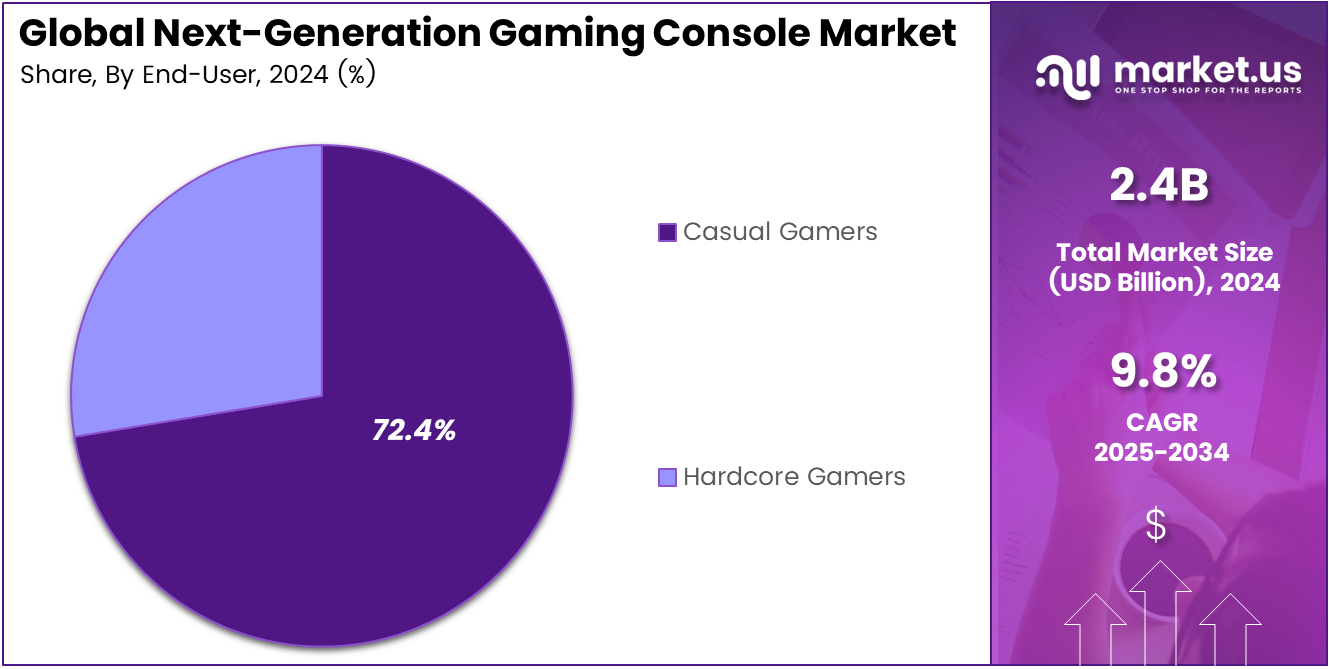
- In 2024, the Casual Gamers segment held a dominant market position, capturing a 72.4% share of the Global Next-Generation Gaming Console Market.
- The China Next-Generation Gaming Console Market was valued at USD 0.42 billion in 2024, with a robust CAGR of 11.3%.
- In 2024, the Asia Pacific held a dominant market position in the Global Next-Generation Gaming Console Market, capturing more than a 43.6% share.
Role of Generative AI
Generative AI is now deeply transforming the next-generation gaming console market. Recent research shows that 97% of game developers agree this technology is reshaping the industry, with 90% already using it in their daily workflows. Generative AI automates repetitive tasks and allows for the creation of dynamic game worlds, intelligent non-player characters, and new gameplay mechanics that were previously difficult to develop. This shift significantly speeds up the game development process while adding depth to player experiences.
Moreover, generative AI fuels innovation by enabling personalized and immersive content. Developers note that it helps produce more engaging narratives and game environments that cleverly adapt to individual player actions. Player retention rates have seen increases up to 30%, underlining how AI-powered content keeps gamers invested longer. The growing deployment of cloud-based AI tools further simplifies access to this technology, supporting creative freedom and quicker iteration cycles for developers.
Investment and Business Benefits
There are promising opportunities in cloud gaming infrastructure, subscription service platforms, VR/AR development, and hybrid console models that blend local and cloud processing. With the gaming ecosystem evolving, investments in cross-platform compatibility, digital content delivery, and scalable online multiplayer environments could yield significant returns. Emerging markets with growing internet penetration also offer new customer bases. Early investment in technologies that reduce costs and increase accessibility, such as modular hardware or efficient networking solutions, presents additional growth avenues.
For console makers and developers, next-gen consoles open recurring revenue streams through digital sales, subscription services, and downloadable content. Enhanced user engagement means longer user lifespans and more monetization opportunities. The consoles serve not only as gaming devices but also as content creation and social interaction hubs, expanding business models to include media streaming and esports platforms. Technological innovation also helps differentiate brands in a highly competitive market, often justifying premium pricing.
Regional Analysis
In 2024, the Asia Pacific held a dominant market position in the Global Next-Generation Gaming Console Market, capturing more than a 43.6% share, holding USD 1.04 billion in revenue. This dominance is largely due to rising internet gaming popularity and increasing household incomes in key countries like China and India. The region’s vast and growing gamer population, supported by expanding digital infrastructure and mobile connectivity, fuels demand for advanced gaming consoles.
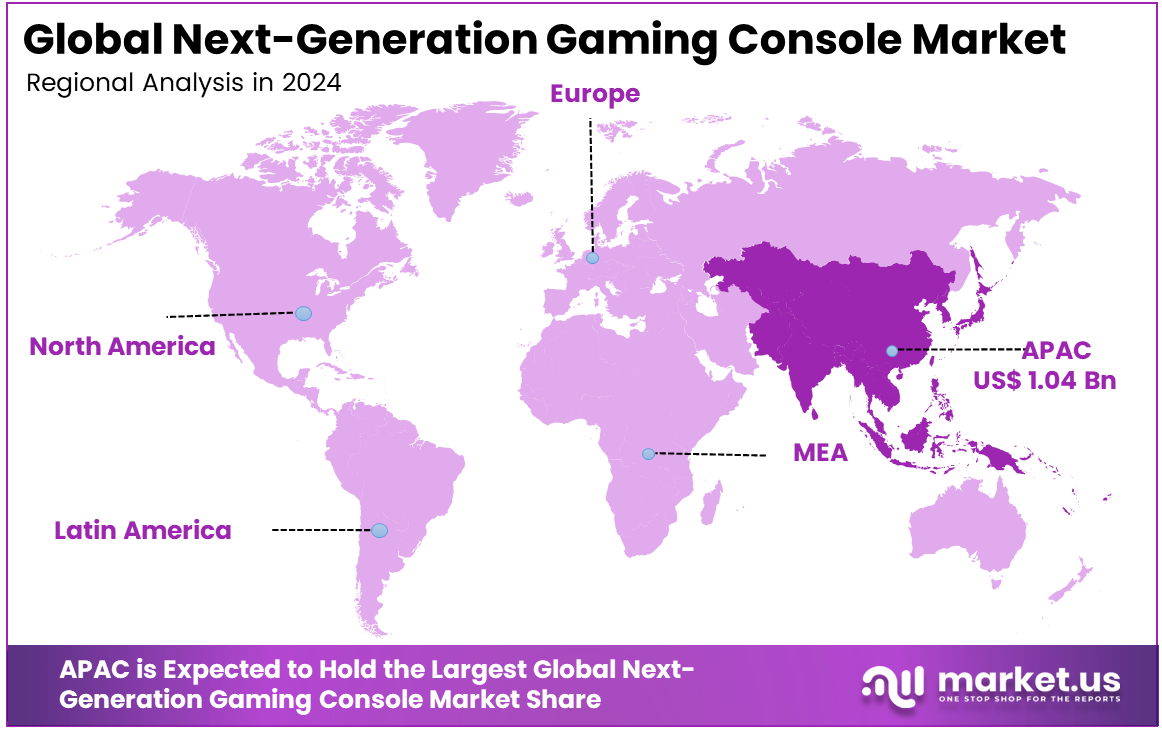
Additionally, major players like Nintendo and PlayStation have strong market presence here, offering exclusive game titles and localizing content to appeal to Asian audiences. The rising esports culture and expanding online multiplayer gaming also contribute significantly to the region’s leadership in the market. These factors combined enable the Asia Pacific to maintain its leading role in global gaming console sales and innovation.
For instance, in January 2025, Nintendo’s launch of the Nintendo Switch 2, with upgrades in graphics and exclusive game offerings, highlighted Japan’s continuing leadership role in gaming innovation. The Switch 2’s success in Asia Pacific underscores the region’s appetite for hybrid and portable gaming devices, strengthening Nintendo’s foundation in its home market and beyond.
China Next-Generation Gaming Console Market Size
The market for Next-Generation Gaming Consoles within China is growing tremendously and is currently valued at USD 0.42 billion; the market has a projected CAGR of 11.3%. This growth is driven by increasing urbanization, rising internet connectivity, and a youthful population eager for advanced gaming technologies. Technological advances such as 3D displays, augmented reality, and cloud gaming further enhance the appeal, making gaming more immersive and accessible. Additionally, a growing esports scene and supportive digital infrastructure contribute to expanding consumer demand for high-performance consoles.
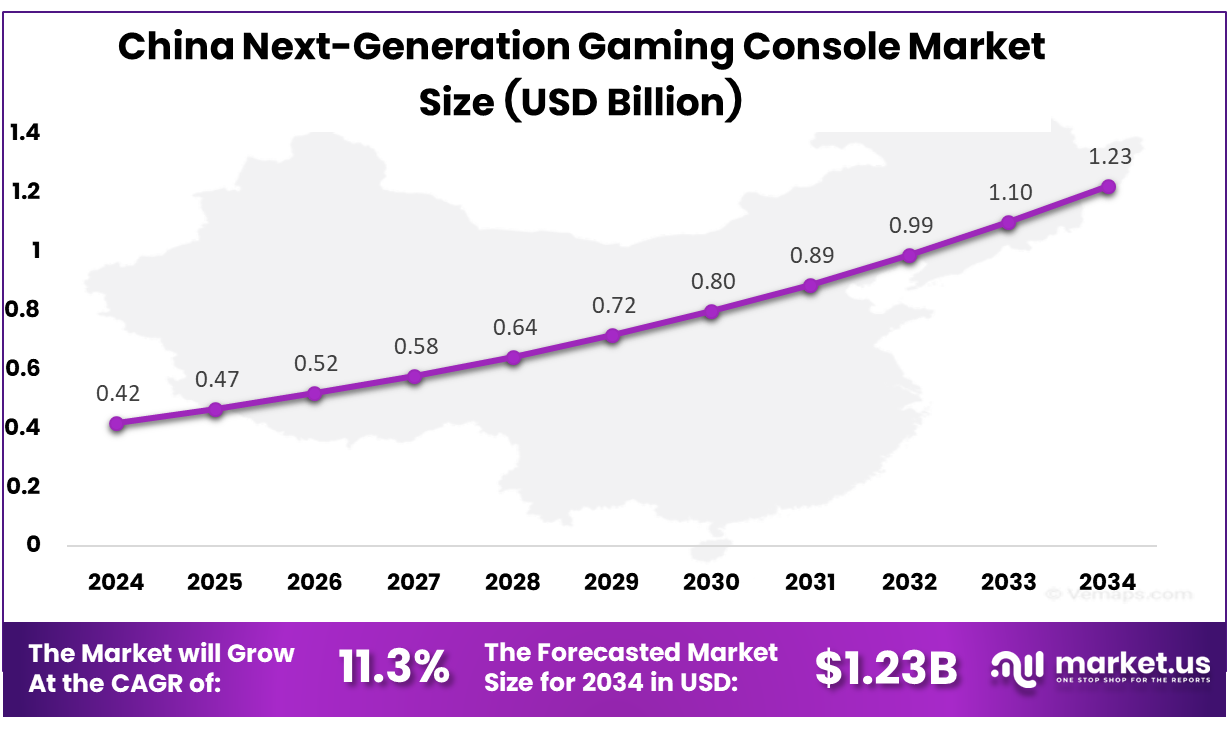
Consumer interest in immersive entertainment experiences is also boosted by rising disposable incomes and broader access to cutting-edge gaming devices. Despite regulatory challenges, the market’s resilience is supported by the increasing availability of localized content and social gaming features that align with Chinese cultural preferences. As a result, the Chinese gaming console market is becoming a vital segment of the global gaming industry, with strong potential for continued expansion.
For instance, in July 2025, AYANEO held its 2025-2026 strategy sharing conference, announcing a comprehensive expansion of its handheld gaming ecosystem. The company unveiled several new products, including the AYANEO NEXT 2 flagship, dual-screen Android handhelds, and its first gaming mobile phone. This effort strengthens China’s presence in the handheld gaming sector, innovating in design and software.
Key Regions and Countries
North America
- US
- Canada
Europe
- Germany
- France
- The UK
- Spain
- Italy
- Russia
- Netherlands
- Rest of Europe
Asia Pacific
- China
- Japan
- South Korea
- India
- Australia
- Singapore
- Thailand
- Vietnam
- Rest of APAC
Latin America
- Brazil
- Mexico
- Rest of Latin America
Middle East & Africa
- South Africa
- Saudi Arabia
- UAE
- Rest of MEA
Type Analysis
In 2024, the Handheld Consoles segment held a dominant market position, capturing a 43.8% share of the Global Next-Generation Gaming Console Market. These devices are favored for their portability and the ability to provide an immersive gaming experience anywhere. Gamers appreciate how handheld consoles combine the convenience of mobility with dedicated controls and high-quality game titles, offering a unique experience compared to smartphone gaming. The versatility and growing popularity of these consoles are key factors behind their strong market position.
The appeal of handheld consoles goes beyond just portability. Their stable hardware design ensures smooth gameplay, which can be better than what smartphones offer due to consistent performance. Their ability to run high-quality games and connect online also adds to their attractiveness. These factors contribute to the steady growth and resilience of handheld consoles in a competitive gaming landscape.
For instance, in October 2025, Valve has been working on a new gaming device called the “Steam Frame,” expected to push the boundaries of handheld gaming by blending performance with portability. Other smaller companies like AYANEO and GPD continue to launch new handheld models focusing on high performance and user customization, showing an active and diversified market for handheld consoles.
Component Analysis
In 2024, the Hardware segment held a dominant market position, capturing a 68.4% share of the Global Next-Generation Gaming Console Market. This reflects the importance gamers place on powerful and reliable consoles that deliver high-quality graphics and fast processing speeds. Hardware advancements remain crucial as they directly impact gameplay experience and keep gamers engaged with improved visuals and responsiveness. As technology evolves, new consoles increasingly offer features like advanced processors and immersive accessories that enhance user experience.
Investing in high-performance hardware also attracts serious and casual gamers alike, as quality hardware supports a wide range of games and long-term use. The focus on hardware shows that, despite growing software and digital content, the physical build and capability of consoles continue to be a major deciding factor when consumers choose their gaming platform.
For instance, in October 2025, Sony and AMD showcased upcoming console hardware technologies for the PS6, emphasizing advanced GPUs, AI-powered upscaling, and cross-platform compatibility. This collaboration signals a major hardware evolution to meet demands for high-quality, immersive game experiences. Microsoft is also advancing its Xbox hardware, with upcoming consoles rumored to combine the power of PCs with gaming-specific enhancements, emphasizing performance and efficiency.
Distribution Channel Analysis
In 2024, the Offline segment held a dominant market position, capturing a 59.7% share of the Global Next-Generation Gaming Console Market. Many consumers still prefer buying consoles from physical stores where they can see and experience the product before purchasing. This channel offers personalized customer service and the reassurance of buying genuine products, which matters especially for expensive gaming consoles.
In addition, offline stores provide gamers with the chance to discuss and explore new releases with knowledgeable staff. These face-to-face interactions and immediate product access keep the offline channel important, even as online sales grow in popularity. The offline retail experience serves as a key touchpoint for many gamers seeking advice and confirmation of their purchase decisions.
For instance, in October 2025, Logitech announced a wide range of gaming peripherals set to be available in retail stores soon, reinforcing the continued importance of offline channels in delivering gaming gear. Physical stores remain valuable platforms for customers wanting hands-on experience and immediate purchases. Alienware showcased several new gaming monitors and devices at CES 2025, often sold through offline retail specializing in gaming tech, maintaining a strong offline presence.
End-User Analysis
In 2024, the Casual Gamers segment held a dominant market position, capturing a 72.4% share of the Global Next-Generation Gaming Console Market. This group values consoles that are easy to use, affordable, and offer a wide variety of games suitable for relaxed or social play. Casual gamers often prefer consoles with user-friendly interfaces and flexible access to games, including subscription or cloud-based libraries that lower barriers to entry.
The rise in casual gamers reflects how gaming has become more mainstream and widely accepted across different age groups. These users prioritize fun and convenience over technical features, shaping console designs toward accessible experiences. The growth in this segment is a major driver of the overall expansion in gaming console adoption worldwide.
For instance, in June 2025, Razer demonstrated its commitment to enhancing casual gaming experiences through accessible, high-quality gear, including gaming chairs and peripherals designed for comfort and ease of use. Microsoft’s Xbox update in September 2025 enhanced the console’s interface and game access features, catering to casual gamers seeking simple, enjoyable gaming sessions. These upgrades highlight efforts by major players to broaden gaming’s appeal beyond hardcore audiences.
Key Market Segments
By Type
- Home Consoles
- Handheld Consoles
- Hybrid Consoles
By Component
- Hardware
- Software
- Services
By Distribution Channel
- Online
- Offline
By End-User
- Casual Gamers
- Hardcore Gamers
Emerging Trends
Emerging trends in the gaming console market reflect significant changes in how players access and engage with games. Cloud gaming has emerged as a key trend, allowing high-quality games to be streamed without heavy reliance on the console hardware itself. This creates flexible gaming options and expanded reach. Additionally, a shift to digital game libraries and subscription models offers consumers extensive game access for a monthly fee, providing great convenience and value.
Cross-platform play is another rising trend, breaking down traditional boundaries between consoles, PCs, and mobile devices. This increases the multiplayer player base and enhances social interaction across games. Advances in haptic feedback and motion controls are also making gameplay more immersive by engaging physical senses, creating richer interactive experiences. These trends highlight the ongoing evolution of consoles into versatile entertainment hubs.
Growth Factors
The growth of next-generation gaming consoles is supported by continuous technology improvements and shifting consumer preferences. High-performance processors and advanced graphics technologies deliver visually stunning and immersive game worlds. Faster load times and reduced latency enhance gameplay fluidity, encouraging gamers to upgrade their consoles more frequently. These hardware enhancements directly impact player satisfaction and engagement.
Additionally, the increasing availability of robust internet connections supports the rise of online multiplayer and streaming gaming experiences. Subscription-based gaming libraries contribute to growth by offering easy access to a wide variety of titles. This approach increases game discovery and usage, helping to sustain the ecosystem. Together, these factors drive steady demand for modern gaming consoles.
Regulatory Trends
Regulatory focus includes data privacy, online content regulation, and consumer protection around online gaming habits. Some regions enforce strict due diligence in online gaming to protect users and provide self-regulatory frameworks for content providers. Meanwhile, energy efficiency standards increasingly influence hardware designs, requiring consoles to meet specific power usage and environmental criteria. These regulations aim to ensure user safety, fair play, and sustainability without stifling innovation.
Market Dynamics
Drivers - Technological Advancements Boost Performance
Next-generation gaming consoles benefit greatly from cutting-edge technological improvements. New consoles incorporate faster processors and more powerful graphics units, which allow games to run more smoothly and look more realistic. Players enjoy sharper visuals, better lighting effects, and quicker load times, all of which contribute to a deeper sense of immersion in gameplay. These advancements also enable developers to create richer and more complex game content that can captivate audiences more effectively.
Additionally, the integration of features like cloud gaming and virtual reality support expands the possibilities for gamers. Cloud gaming lets players access high-end games without needing the most expensive hardware, while VR delivers a more immersive and interactive experience. Together, these features make next-generation consoles attractive, encouraging consumers to upgrade and boosting overall market demand.
For instance, in November 2025, Sony is advancing its next-generation console with a focus on integrating cutting-edge graphics and AI technology. Their lead architect has indicated that Sony’s new hardware will move toward a more PC-like design, breaking away from traditional custom chips. This approach allows developers to create games compatible with multiple platforms, enhancing the performance and flexibility of the console. Alongside this, Sony is working with AMD on advanced upscaling and machine learning capabilities to boost graphics fidelity and efficiency.
Restraint - High Production Costs Limit Accessibility
One key restraint affecting the next-generation console market is the high cost of production. Advanced components such as multicore CPUs, high-end GPUs, and complex cooling systems contribute to substantial manufacturing expenses. These costs translate into high retail prices, limiting the affordability of the latest consoles for many consumers. As a result, certain market segments, especially in less affluent regions, may find it challenging to adopt the newest consoles.
Moreover, the manufacturing process is sometimes complicated by shortages in critical materials and supply chain disruptions. Such factors can lead to delayed releases or limited availability, further restricting consumer access. This barrier slows market penetration compared to what might be expected if prices were lower and supply were steadier.
For instance, in October 2025, Microsoft’s next-generation Xbox console development faces challenges due to its plan to integrate PC-like modular hardware. While this hybrid design promises powerful performance, the complexity of creating a system with swappable components could raise production costs. Microsoft is also managing supply chain risks and component shortages as it develops this premium hardware.
Opportunities - Expanding Audience and Cloud Gaming
The market presents a significant growth opportunity through the expansion of the gaming audience worldwide. As gaming becomes more mainstream, people of various age groups and backgrounds are engaging with consoles. This broader demographic offers a fertile ground for market growth as companies tailor offerings to diverse tastes and needs.
Cloud gaming stands out as a major opportunity. It allows users with less powerful hardware to experience high-quality games streamed over the internet, reducing dependence on expensive local devices. Subscription models providing access to vast game libraries further encourage adoption. By expanding accessibility and convenience, cloud gaming can drive new users into the console ecosystem, boosting sales and engagement.
For instance, in October 2025, ASUS, in partnership with Xbox, launched the ROG Xbox Ally and ROG Xbox Ally X handheld gaming consoles. These devices bring console-level performance into a portable form with high-refresh-rate displays and powerful AMD processors. The handhelds run Windows 11 but offer a full-screen Xbox interface to create a console-like experience.
Challenges - Competition from Alternative Gaming Platforms
The gaming console market faces stiff competition from other platforms such as mobile games, PC gaming, and streaming services. These alternatives often offer lower costs and greater convenience, drawing potential customers away from buying consoles. Mobile gaming’s widespread availability and free-to-play models make it especially hard for consoles to compete for casual gamers.
Additionally, subscription-based cloud gaming platforms that deliver games across multiple devices reduce the need for expensive hardware purchases. Console makers must therefore constantly innovate and offer exclusive titles or unique features to maintain consumer interest. Balancing innovation with cost and building a loyal user base amid this competitive environment remains a significant challenge.
For instance, in August 2025, Valve is preparing to re-enter the home console market with a new device codenamed Fremont, aimed at competing with established next-gen consoles. However, early leaks suggest the device may be underpowered compared to current PC-based handhelds. Running Windows 11 Pro on what appears to be a test model raises questions about performance optimization and user experience.
Key Players Analysis
One of the leading players, in January 2025, Nintendo announced the upcoming release of the Nintendo Switch 2 within the year. This new console will support both exclusive Switch 2 titles and backward compatibility with the existing Switch game library. Nintendo plans to host Switch 2 Experience events in major cities, including Los Angeles, New York, London, and Paris, starting in April 2025, aiming to generate user excitement and market traction early in the year.
Top Key Players in the Market
- Sony
- Microsoft
- Nintendo
- Valve
- Logitech
- Razer
- ASUS
- Alienware
- NVIDIA
- AMD
- Qualcomm
- Zotac
- AYANEO
- GPD
- Panic
- Others
Recent Developments
- In June 2024, Microsoft unveiled new versions of its Xbox Series X and Series S, including a digital variant of the Xbox Series X with 1TB storage priced at approximately $450. Additionally, Microsoft announced a strategic multi-year partnership with AMD to co-engineer custom silicon for future Xbox consoles, strengthening its hardware capabilities.
- In July 2025, AYANEO released the Flip 1S handheld console featuring AMD Ryzen 7 processors and teased upcoming high-end handheld devices as it prepares new product launches. Meanwhile, GPD announced the upcoming advent of the world’s first AMD Strix Halo-powered handheld under its Win 5 model, signaling intensified competition in the high-performance handheld gaming segment.
Report Scope
| Report Features | Description |
|---|---|
| Market Value (2024) | USD 2.4 Billion |
| Forecast Revenue (2034) | USD 6.1 Billion |
| CAGR (2025-2034) | 9.8% |
| Base Year for Estimation | 2024 |
| Historic Period | 2020-2023 |
| Forecast Period | 2025-2034 |
| Report Coverage | Revenue Forecast, Market Dynamics, Competitive Landscape, Recent Developments |
| Segments Covered | By Type (Home Consoles, Handheld Consoles, Hybrid Consoles), By Component (Hardware, Software, Services), By Distribution Channel (Online, Offline), By End-User (Casual Gamers, Hardcore Gamers) |
| Regional Analysis | North America (US and Canada), Europe (Germany, France, The UK, Spain, Italy, and Rest of Europe), Asia Pacific (China, Japan, South Korea, India, Australia, and Rest of APAC), Latin America (Brazil, Mexico, and Rest of Latin America), Middle East & Africa (GCC, South Africa, and Rest of MEA) |
| Competitive Landscape | Sony, Microsoft, Nintendo, Valve, Logitech, Razer, ASUS, Alienware, NVIDIA, AMD, Qualcomm, Zotac, AYANEO, GPD, Panic, Others |
| Customization Scope | Customization at the segment and region/country levels will be provided. Moreover, customization can be tailored to the requirements. |
| Purchase Options | We have three licenses to opt for: Single User License, Multi-User License (Up to 5 Users), Corporate Use License (Unlimited Users and Printable PDF) |